Category: Appetizers, Sides, and Snacks

  • Easy Sweet Potato Casserole Recipe (A Step-by-Step Guide)

    Easy Sweet Potato Casserole Recipe (A Step-by-Step Guide)

    Sweet potato casserole is a classic American side dish, popular during the holidays. It features a base of mashed sweet potatoes mixed with butter, sugar, eggs, and warm spices like cinnamon and nutmeg. The casserole is typically finished with a sweet and crunchy pecan streusel or a soft, toasted marshmallow topping before being baked until golden brown.

    Few dishes evoke warmth and comfort like a classic sweet potato casserole. With its creamy texture and sweet, nutty topping, it’s always a crowd-pleaser, whether as a holiday centerpiece or a comforting side for a weeknight family dinner. However, achieving that perfect balance of flavors can feel overwhelming. You’re not alone if you’ve ever struggled with complex recipes or found it challenging to plan family-friendly meals that are both delicious and easy to prepare.

    That’s where Recipesmondial comes in. We believe cooking should be an enjoyable, stress-free experience for every home cook, regardless of skill level. This easy sweet potato casserole recipe was designed with clear, step-by-step guidance to help you create a flavorful dish without any fuss. It’s perfect for those seeking simple dinner recipes, and its reliable, beginner-friendly results will build your confidence in the kitchen.

    Get ready to transform simple ingredients into a show-stopping sweet potato casserole that everyone will adore. We’re here to show you why this isn’t just another recipe—it’s the best approach for beginners to master this beloved dish with ease and enjoy cooking without stress.

    Why Is This the Best Sweet Potato Casserole Recipe for Beginners?

    Welcome to your new favorite sweet potato casserole recipe! We know that diving into a new recipe can feel daunting, but our goal at Recipesmondial is to make home cooking simple and stress-free. This particular casserole is the perfect beginner-friendly option, and here’s why.

    We designed this easy sweet potato casserole recipe to build your confidence in the kitchen. It delivers fantastic results without complex steps, so you can create a delightful dish effortlessly.

    Key Features for Beginner Cooks

    This recipe’s straightforward approach ensures success, even for those new to baking. We’ve focused on clarity and simplicity at every turn.

    • Simple, Everyday Ingredients: You won’t need to hunt for exotic items. All the ingredients are easy to find at your local grocery store, making shopping a breeze.
    • Clear, Step-by-Step Guidance: We break down the process into simple, manageable steps. Our instructions are easy to follow, so you’ll never feel overwhelmed by technical terms.
    • Foolproof Method: Our recipe is designed to minimize common mistakes, helping you achieve a perfect result every time. You can cook with confidence and joy.
    • Delicious and Reliable Results: Create a rich, creamy sweet potato filling with a crunchy, sweet pecan streusel topping that your family and friends will love.
    • Time-Saving Techniques: We include practical tips to streamline the cooking process, helping you get this delicious meal on the table faster.
    • Flexible and Adaptable: Learn how to customize your casserole with our simple variations, whether you prefer a savory version or a healthier one.

    Solving Common Cooking Challenges

    Many home cooks find complex recipes intimidating or feel unsure how to make healthy, tasty meals quickly. This sweet potato casserole recipe is designed to solve those exact challenges.

    • No More Overwhelm: Our clear, step-by-step instructions banish confusion, allowing you to cook with confidence.
    • Boost Your Confidence: A successful cooking experience is the best way to build skill. This recipe is designed for success, so you’ll be proud of your creation.
    • Stress-Free Meal Prep: Enjoy cooking again with a simple, family-friendly recipe that takes the stress out of mealtime.
    • Practical Tips Included: Throughout the guide, we provide expert advice, including simple substitutions and make-ahead instructions.

    At Recipesmondial, we want you to discover the joy of cooking. This beginner-friendly sweet potato casserole recipe is the perfect starting point. It’s designed to transform uncertainty into confidence and simple ingredients into a truly delicious dish. Get ready to cook with confidence and enjoy every bite!

    What Ingredients Do You Need for This Casserole?

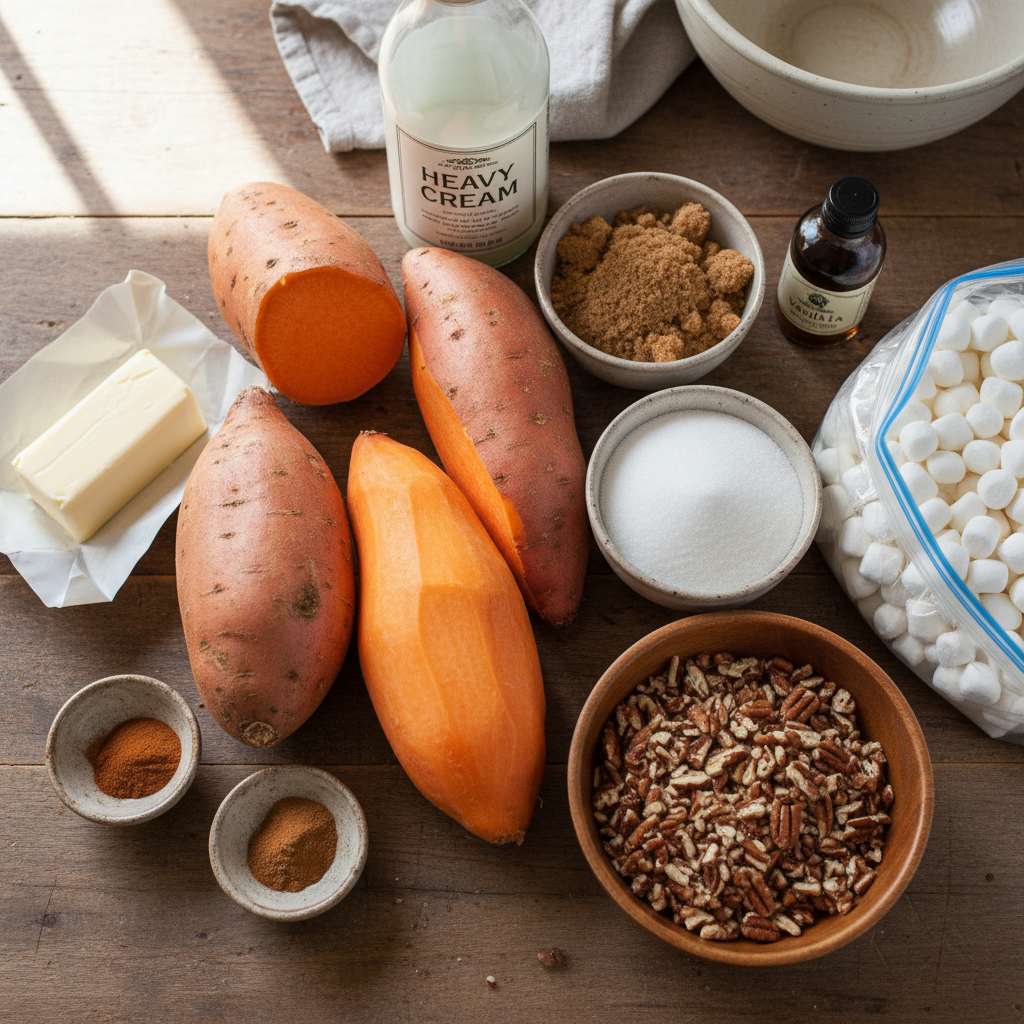
    A professional flat lay photo of all ingredients for sweet potato casserole, including sweet potatoes, butter, sugar, milk, spices, vanilla, marshmallows, and pecans, arranged on a wooden counter.
    Professional food photography, photorealistic, high-quality food magazine photo of all ingredients for a sweet potato casserole laid out neatly on a warm, rustic wooden kitchen counter. Ingredients include: several vibrant orange sweet potatoes (some peeled, some whole), a stick of butter, bowls of brown sugar and granulated sugar, a bottle of milk or heavy cream, a small bowl of ground cinnamon and nutmeg, vanilla extract, a bag of mini marshmallows, and chopped pecans. The items are arranged artfully and invitingly, bathed in soft, natural light, emphasizing freshness and readiness for cooking. The scene evokes a friendly, approachable home cooking environment.

    For the Sweet Potato Filling

    Crafting the perfect sweet potato casserole begins with simple ingredients for the creamy filling, many of which you may already have on hand. This combination creates a rich, flavorful base, making this a truly beginner-friendly recipe. With this step-by-step cooking guidance, you’ll create a delicious filling with confidence.

    • 3 pounds Sweet Potatoes: Look for medium-sized sweet potatoes, which you will bake or boil until tender. They are the star of this family-friendly meal.
    • ½ cup (1 stick) Unsalted Butter: Melted butter adds incredible richness. Use good quality butter for the best flavor.
    • ½ cup Granulated Sugar: This provides the classic, clean sweetness.
    • ¼ cup Brown Sugar (packed): Adds a lovely depth and a hint of caramel flavor.
    • ½ cup Milk: Whole milk creates the creamiest texture, but 2% milk also works well if that’s what you have.
    • 2 Large Eggs: Help bind the filling and give it a light, custardy texture.
    • 1 teaspoon Vanilla Extract: Pure vanilla extract enhances all the sweet flavors. It’s a must-have!
    • ½ teaspoon Ground Cinnamon: Cinnamon’s warm spice perfectly complements the sweet potatoes.
    • ¼ teaspoon Ground Nutmeg: A pinch of nutmeg adds warmth and a classic holiday aroma.
    • ¼ teaspoon Salt: Just a touch of salt is essential to balance all the sweetness.

    These ingredients come together easily, making this a flavorful meal made easy and stress-free. You’re now on your way to a comforting and delicious sweet potato casserole!

    For the Classic Pecan Streusel Topping

    No sweet potato casserole is complete without a crunchy, buttery finish. This pecan streusel adds a delightful texture and nutty sweetness, making it a special but easy recipe addition.

    • ½ cup All-Purpose Flour: This forms the base of the crumbly topping.
    • ½ cup Brown Sugar (packed): Provides a rich, molasses sweetness and a slightly chewy texture.
    • ½ cup Chopped Pecans: Add a wonderful crunch and nutty flavor. You can lightly toast them beforehand for even more depth.
    • ½ teaspoon Ground Cinnamon: This ties the topping’s flavor to the filling below.
    • ¼ cup (½ stick) Unsalted Butter: It’s essential that the butter is very cold and cut into small pieces. This is the key to an irresistible crumbly texture.

    Mixing these simple ingredients quickly creates a crisp, golden-brown topping. This final layer ensures every spoonful of your sweet potato casserole recipe is delicious, making it a perfect addition to your family-friendly meals.

    How to Make Sweet Potato Casserole Step-by-Step

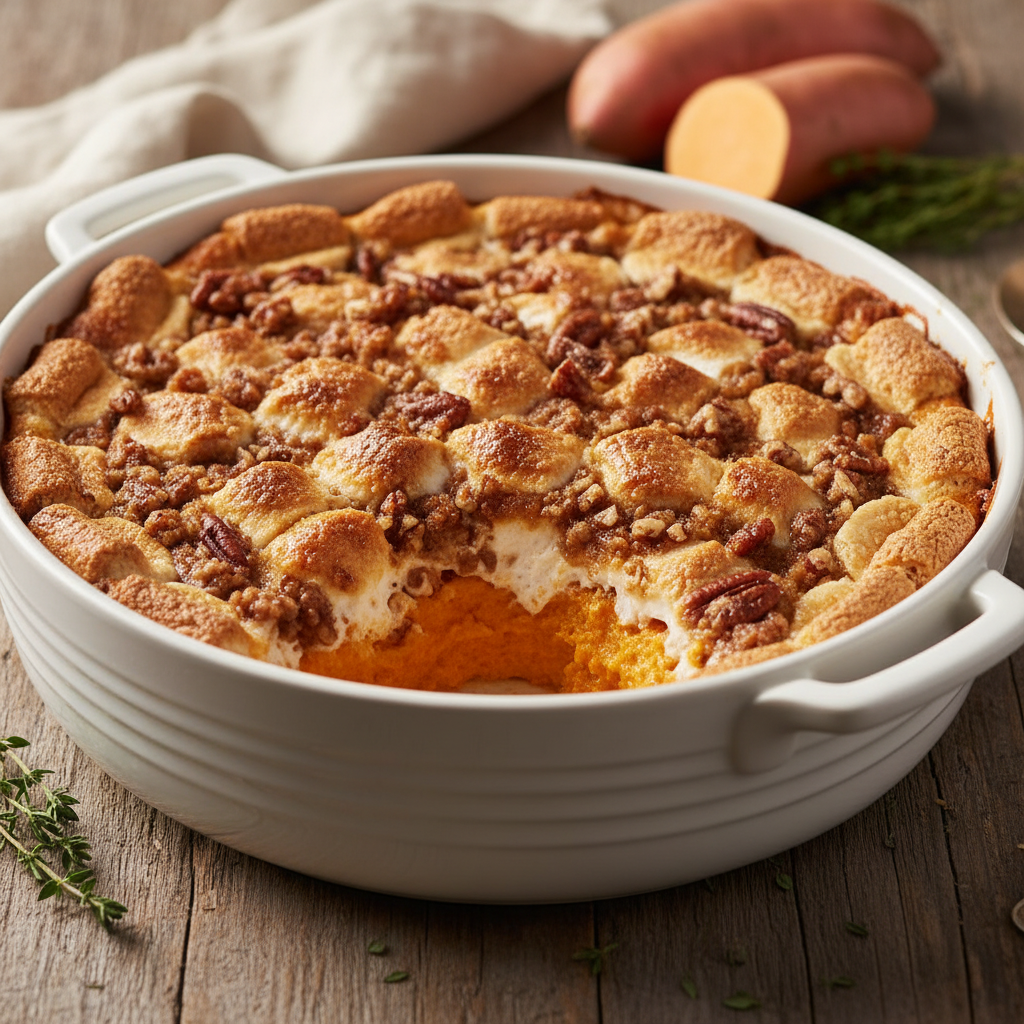
    A professional photo of a freshly baked sweet potato casserole in a ceramic dish, topped with golden-brown marshmallows, on a kitchen table.
    Professional food photography, photorealistic, high-quality food magazine photo of a perfectly baked sweet potato casserole, presented warm and inviting on a clean, light kitchen table. The casserole is in a beautiful ceramic baking dish, with its golden-brown, lightly toasted marshmallow topping glistening. A serving spoon is gently nestled beside the dish, suggesting readiness to be enjoyed. Steam subtly rises from the dish, highlighting its warmth. The background is softly blurred, focusing entirely on the delicious, comforting casserole, evoking a sense of accomplishment and flavor for a home cook.

    Step 1: Cook the Sweet Potatoes

    First, let’s cook the sweet potatoes. This simple step is key to achieving the perfectly smooth and creamy texture everyone loves in a classic casserole. It’s a foundational skill for many easy, family-friendly meals.

    1. Wash and Prep: Thoroughly wash 3 pounds of sweet potatoes. There’s no need to peel them yet.
    2. Boil Until Tender: Place the whole sweet potatoes in a large pot and cover them with cold water by about an inch. Bring to a boil, then reduce the heat to a gentle simmer. Cook for 20-30 minutes, or until a fork easily pierces the potatoes. This ensures they will be easy to mash.
    3. Drain and Cool: Carefully drain the hot water. Let the sweet potatoes cool for 10-15 minutes, or until they are cool enough to handle.
    4. Peel with Ease: Once cooled, the skins will slip off easily. Use your hands or a small paring knife to peel them, then discard the skins.

    Recipesmondial Tip: Boiling is a quick, beginner-friendly method. For a deeper, more caramelized flavor, you can bake the sweet potatoes instead. Prick them with a fork, then bake at 400°F (200°C) for 45-60 minutes until very soft.

    Step 2: Prepare the Creamy Filling

    Now, let’s transform the cooked potatoes into the casserole’s rich and creamy base. This step creates the comforting flavor perfect for family dinners.

    1. Mash the Sweet Potatoes: In a large mixing bowl, mash the peeled sweet potatoes with a potato masher, a fork, or an electric mixer until smooth. A few small lumps are fine and add homemade charm.
    2. Add Wet Ingredients: To the bowl, add ½ cup (1 stick) of melted unsalted butter and ½ cup of milk. For the richest texture, use whole milk or half-and-half. Stir until well combined.
    3. Sweeten and Spice: Mix in ½ cup granulated sugar (adjust to taste), 2 lightly beaten large eggs, 1 teaspoon of vanilla extract, and ½ teaspoon of ground cinnamon for classic warmth and flavor.
    4. Season to Perfection: Stir in ¼ teaspoon of salt to balance the sweetness. Continue mixing until the filling is completely smooth and creamy.
    5. Taste and Adjust: This is the perfect time to taste the filling. Feel free to add another pinch of sugar or cinnamon if you think it needs it.

    Chef’s Tip: For an exceptionally smooth filling, use a hand mixer or a food processor. Be careful not to overmix, which can make the texture gummy. For most home cooks, however, a simple potato masher works perfectly.

    Step 3: Make the Topping

    The streusel topping is what elevates this casserole, adding a wonderful crunch and buttery flavor to complement the creamy filling. This step is quick and simple.

    1. Combine Dry Ingredients: In a medium bowl, whisk together ½ cup all-purpose flour, ½ cup packed light brown sugar, and ½ teaspoon ground cinnamon until evenly mixed.
    2. Cut in the Butter: Add ¼ cup (½ stick) of cold unsalted butter, cut into small pieces. Using a pastry blender, two forks, or your fingertips, cut the butter into the dry mixture until it resembles coarse, pea-sized crumbs.
    3. Stir in Pecans: Gently fold in 1 cup of chopped pecans. They provide a wonderful texture and rich, nutty flavor.

    Recipesmondial Variation: Not a fan of pecans? You can substitute them with chopped walnuts. For a nut-free version, replace the pecans with an equal amount of rolled oats to create a delicious crumble topping.

    Step 4: Assemble and Bake the Casserole

    You’re almost there! This final step brings everything together into one beautiful, comforting casserole. Mastering simple assembly and baking builds confidence in the kitchen.

    1. Preheat Oven and Prep Dish: Preheat your oven to 375°F (190°C). Lightly grease a 9×13-inch baking dish.
    2. Spread the Filling: Spoon the sweet potato filling into the prepared dish and use a spatula to smooth the top.
    3. Add the Topping: Sprinkle the pecan streusel topping evenly over the filling. An even layer ensures a perfect crunch in every bite.
    4. Bake to Perfection: Place the casserole in the preheated oven and bake for 25-30 minutes. It’s done when the topping is golden brown and the filling is bubbly around the edges.
    5. Cool and Serve: Remove the casserole from the oven and let it cool for at least 10-15 minutes before serving. This allows the filling to set, making it easier to scoop.

    Your easy sweet potato casserole is now ready to enjoy! This flavorful, simple dish is sure to impress everyone. With Recipesmondial, you can create delicious, family-friendly meals without the stress.

    What Are Some Popular Recipe Variations?

    Sweet Potato Casserole with Marshmallows

    Adding marshmallows to sweet potato casserole is a classic way to create an irresistible, dessert-like treat. This holiday favorite adds extra sweetness and a wonderfully gooey, toasted top that the whole family will love.

    Here’s how to add them:

    • Mini Marshmallows: The easiest option. Sprinkle 3 to 4 cups of mini marshmallows evenly over the filling during the last 10 to 15 minutes of baking.
    • Large Marshmallows: For a different look, cut large marshmallows in half or quarters and arrange them in a single layer over the casserole.
    • Baking Tip: Watch the casserole carefully as it bakes. The marshmallows should turn golden brown and puffy. Avoid letting them burn.

    This simple addition is ideal for beginner cooks and offers a quick, reliable way to put a popular twist on a classic dish.

    How to Make a Savory Sweet potato Casserole

    For a delicious alternative, try a savory sweet potato casserole. This versatile side dish pairs wonderfully with roasted meats or can be served as a standalone vegetarian meal.

    Creating a savory casserole involves adjusting the filling and topping. Here are some easy modifications:

    • Reduce Sugar: Omit or significantly reduce the brown sugar in the sweet potato filling.
    • Add Aromatics: Sauté finely diced onion, garlic, or shallots in olive oil and mix them into the sweet potato mash for a fragrant base.
    • Spice It Up: Incorporate savory spices like smoked paprika, garlic powder, and onion powder. Fresh or dried herbs like rosemary, thyme, or sage also add depth.
    • Add Cheese: Stir in shredded cheese for richness. Sharp cheddar or Gruyère melt beautifully, while Parmesan adds a salty, umami kick.
    • Savory Topping Ideas: Instead of a sweet topping, try one of these savory options:
      • Crispy Onions: Sprinkle store-bought crispy fried onions over the top before baking.
      • Breadcrumbs and Herbs: Mix panko breadcrumbs with melted butter, Parmesan, and fresh herbs.
      • Bacon Crumbles: Add crispy, cooked bacon for a smoky flavor.
      • Nutty Crunch: Toss chopped pecans or walnuts with savory spices like cumin or chili powder.

    This approach transforms a sweet classic into a flavorful, hearty side dish that’s perfect for any meal.

    Making a Healthier Sweet Potato Casserole

    To make a lighter sweet potato casserole, a few simple adjustments can reduce sugar and fat without sacrificing flavor. These small changes make a big difference to the nutritional profile of this comforting dish.

    Here are practical tips for a healthier version:

    For the Sweet Potato Filling:

    • Reduce Sugar: Cut the brown sugar in half, or replace it with a natural sweetener like maple syrup or honey. You can also rely on the natural sweetness of the potatoes themselves.
    • Dairy Swaps: Instead of heavy cream, use unsweetened almond milk, oat milk, or low-fat milk. Plain Greek yogurt can replace some butter or cream, adding tang and protein.
    • Reduce Butter: Use a smaller amount of butter, or substitute some of it with applesauce or mashed banana to maintain moisture.
    • Boost Flavor Naturally: Add more cinnamon, nutmeg, and ginger. These spices enhance the sweet taste without adding extra sugar.

    For the Topping:

    • Oat and Nut Streusel: Create a crunchy, nutrient-dense topping by combining rolled oats, chopped pecans or walnuts, a small amount of maple syrup, and a touch of coconut oil.
    • Seed Mix: Add texture and healthy fats with a blend of pumpkin seeds, sunflower seeds, and chia seeds.
    • Use Marshmallows Sparingly: If you love marshmallows, simply use fewer of them. You can also look for natural, lower-sugar brands if they are available.

    With these adjustments, you can serve a nutritious and flavorful dish that your family will love, all while making smart, healthy choices. [source: https://www.heart.org/en/healthy-living/healthy-eating/eat-smart/nutrition-basics/added-sugars-infographic]

    Tips for Perfect Results Every Time

    A close-up photo of a serving spoon scooping a perfect portion of creamy sweet potato casserole from a baking dish onto a plate, highlighting its texture.
    Professional food photography, photorealistic, high-quality food magazine photo, close-up shot of a perfectly scooped serving of sweet potato casserole being lifted from a baking dish onto a white plate. A real human hand, belonging to a home cook, is holding a silver serving spoon, revealing the creamy, smooth interior of the casserole beneath a delicate, golden marshmallow or pecan streusel topping. The texture is clearly visible, rich and inviting, emphasizing a successful, delicious result. Soft, warm lighting illuminates the dish, creating a sense of comfort and culinary satisfaction.

    A delicious sweet potato casserole is easier to make than you think. With a few simple tricks, you can ensure your sweet potato casserole recipe is perfectly golden and tasty every single time. These beginner-friendly tips will help you turn simple ingredients into a flavorful, crowd-pleasing dish.

    Selecting and Preparing Your Sweet Potatoes

    • Pick the Right Potatoes: Look for firm, blemish-free sweet potatoes. Jewel or Garnet varieties are wonderful choices for their creamy texture and vibrant color, making them ideal for a classic sweet potato casserole.
    • Cook Them Just Right: For the best flavor and texture, roast or bake your sweet potatoes instead of boiling them. This method enhances their natural sweetness and prevents them from becoming waterlogged. Cook them until they are just tender enough to mash easily, as overcooked potatoes can result in a loose filling.
    • Mash Them Smooth: For a silky-smooth casserole, mash your cooked sweet potatoes thoroughly. A potato masher works well, but for extra creaminess, use an electric mixer or food processor to eliminate any lumps.

    Crafting the Perfect Filling and Topping

    • Balance the Sweetness: Always taste the filling before you bake it. Since the topping also adds sweetness, adjust the sugar in the filling to achieve a perfectly balanced flavor.
    • Room Temperature Ingredients: For the creamiest possible filling, use room-temperature ingredients. Butter, eggs, and milk will combine more smoothly into the sweet potato mixture, ensuring a consistent texture.
    • Even Topping Distribution: Spread the pecan streusel topping in an even layer across the filling. This not only ensures every bite has a delightful crunch but also helps it bake to a perfect golden-brown finish.
    • Prevent Burning the Topping: Keep an eye on your topping as it bakes. If it starts to brown too quickly, loosely cover the casserole with aluminum foil to protect it while the filling finishes cooking.

    Baking and Serving for Success

    • Preheat Your Oven: Always preheat your oven completely before baking to ensure even cooking from the start. A consistent temperature is key for a perfectly baked casserole.
    • Bake Until Bubbly: Your casserole is ready when the filling is set and bubbly around the edges and the topping is golden brown and fragrant. This usually takes about 25-30 minutes.
    • Let It Rest: After baking, let the casserole rest for 10-15 minutes before serving. This important step allows the filling to set, making it much easier to scoop.

    By following these simple tips, you can confidently create a fantastic sweet potato casserole every time. Recipesmondial is here to help you enjoy stress-free cooking and turn everyday ingredients into delicious, visually appealing meals.

    How Do You Store and Reheat Leftovers?

    Having leftover sweet potato casserole is a wonderful thing because it means you get to enjoy this delicious, family-friendly dish all over again. To ensure it tastes just as good the second time, it’s important to store and reheat it correctly. Additionally, mastering a few make-ahead steps can simplify meal prep, which is especially helpful for busy families or special occasions.

    Storing Sweet Potato Casserole

    To keep your sweet potato casserole fresh and safe, follow these simple storage steps:

    • Cool Completely: Before storing, allow the casserole to cool to room temperature, which usually takes 30 to 60 minutes. For safety, do not leave it out for more than two hours.
    • Airtight Container: Transfer the cooled casserole into an airtight container. This prevents it from drying out and absorbing other odors from your fridge.
    • Refrigerate: Your sweet potato casserole will stay fresh in the refrigerator for 3 to 4 days [1].
    • Freeze (Optional): For longer storage, freeze individual portions or the whole casserole. Wrap it tightly in plastic wrap and then foil, or place it in a freezer-safe, airtight container. It will keep for 2-3 months for the best quality [2]. Always label the container with the date.

    Reheating Sweet Potato Casserole

    When you’re ready to enjoy your leftovers, choose the reheating method that best fits your schedule and desired texture:

    • Oven Method (Best for Texture):
      • Preheat your oven to 300°F (150°C).
      • Place the casserole in an oven-safe dish. If it’s frozen, allow it to thaw in the refrigerator overnight first.
      • Cover the dish loosely with foil to prevent the topping from over-browning.
      • Bake for 20-30 minutes, or until heated through. For a crispier topping, uncover it for the last few minutes of baking.
    • Microwave Method (Quickest Option):
      • Scoop a single serving onto a microwave-safe plate.
      • Cover the plate with a microwave-safe lid or a damp paper towel to retain moisture.
      • Heat on medium power for 1-2 minutes, stirring halfway through if possible.
      • Continue heating in 30-second intervals until it’s warmed to your liking. Be careful not to overheat it, which can cause the casserole to dry out.

    Make-Ahead Instructions

    Save time on busy holidays or weeknights by preparing your sweet potato casserole in advance. Following these steps helps you get ahead without the stress.

    • Prepare the Filling: You can cook, mash, and mix the sweet potato filling ingredients ahead of time. Store the mixture in an airtight container in the refrigerator for up to 2-3 days.
    • Make the Topping: The pecan streusel topping can also be prepared in advance. Store it in a separate airtight container in the refrigerator for up to 2-3 days.
    • Assemble Unbaked: For ultimate convenience, assemble the entire casserole up to 2 days before you plan to bake it. Simply spread the filling in your baking dish, sprinkle the topping over it, and cover tightly with plastic wrap before refrigerating.
    • Bake from Chilled: When ready to bake, remove the casserole from the fridge about 30 minutes beforehand to let it come closer to room temperature. You will need to add about 10-15 minutes to the original baking time since the dish is starting cold.
    • Freeze Unbaked: You can also assemble the entire casserole, wrap it tightly, and freeze it for up to 1-2 months. Before baking, thaw it completely in the refrigerator and add extra baking time as needed to ensure it’s heated through.

    Frequently Asked Questions

    Can you make sweet potato casserole from canned sweet potatoes?

    Yes, you absolutely can! Using canned sweet potatoes is a fantastic time-saver for busy home cooks, making this a truly *quick meal* option and a perfect *beginner-friendly recipe*.

    While fresh sweet potatoes often offer a richer flavor and texture, canned ones work beautifully. If you opt for canned, here are a couple of tips for the best results:

    • Drain them well: Be sure to drain all the liquid from the cans. Excess moisture can make your casserole watery.
    • Adjust sweetness: Canned sweet potatoes are sometimes packed in syrup. Taste them before adding other ingredients, as you may need to reduce the amount of sugar in your filling.

    It’s an easy way to enjoy a *flavorful meal made easy*, even when you’re short on time!

    How do you make a sweet potato casserole without marshmallows?

    Our recipe already skips the marshmallows in favor of a delicious pecan streusel topping. It provides a lovely crunch and nutty sweetness without being overly sugary, creating a more sophisticated, less-sweet profile that many people prefer.

    If you’re looking for other alternatives to marshmallows for your *sweet potato casserole recipe*, here are some excellent ideas:

    • Pecan Streusel: Our classic choice, made with brown sugar, flour, butter, and pecans, is both crunchy and flavorful.
    • Oatmeal Crumble: For a hearty, comforting crumble, combine rolled oats, brown sugar, a touch of cinnamon, and melted butter.
    • Toasted Coconut: Sprinkle shredded coconut over the casserole during the last 10-15 minutes of baking for a tropical twist and a golden crunch.
    • Savory Herbs: For a less traditional, savory approach, try a topping of breadcrumbs, Parmesan cheese, and fresh herbs like thyme or rosemary. This is perfect for those seeking *healthy and balanced meals* with less sugar.

    These variations help you customize this *family-friendly meal* exactly how you like it!

    What makes an old fashioned sweet potato casserole?

    An old-fashioned sweet potato casserole is all about its rich, creamy base and comforting, classic flavor. The sweet potatoes are typically sweetened and spiced, making it a beloved *simple dinner recipe* or holiday side dish.

    Key characteristics include:

    • Creamy Sweet Potato Base: Mashed sweet potatoes are mixed with butter, sugar (often brown sugar), milk or cream, eggs, and warming spices like cinnamon and nutmeg to create a smooth, indulgent texture.
    • Classic Topping: The most common old-fashioned toppings are either a sugary marshmallow layer or a buttery, crunchy pecan streusel. Both provide a delightful contrast to the soft filling.
    • Sweet & Savory Balance: While sweet, the casserole has an underlying earthy depth from the sweet potatoes that makes it a versatile side dish.

    This traditional approach has made sweet potato casserole a staple in *family-friendly meals* for generations, especially during holidays.

    Can this recipe be made ahead of time for Thanksgiving?

    Absolutely! Making this *easy sweet potato casserole* ahead of time is a brilliant *meal prep tip* for big holidays like Thanksgiving. Prepping in advance reduces stress and helps you enjoy more time with your loved ones.

    Here’s how to prepare it in advance:

    • Assemble the Day Before: Prepare the sweet potato filling and the pecan streusel topping as directed in the recipe.
    • Layer and Store: Spread the sweet potato mixture into your baking dish, then sprinkle the streusel topping evenly over the top.
    • Cover and Refrigerate: Cover the dish tightly with plastic wrap or aluminum foil and store it in the refrigerator for up to 24 hours.
    • Bake on the Day: When you’re ready, remove the casserole from the fridge about 30 minutes before baking to let it come to room temperature. Since it will be chilled, you will need to add an extra 10-15 minutes to the baking time.

    This simple strategy allows you to serve a delicious, *flavorful meal* without feeling overwhelmed on the big day. It’s perfect for *planning weekly meals efficiently* too, not just holidays!


    Sources

    1. https://www.fsis.usda.gov/food-safety/safe-food-handling-and-preparation/food-safety-basics/how-chill-foods-safely
    2. https://www.fsis.usda.gov/food-safety/safe-food-handling-and-preparation/food-safety-basics/freezing-and-food-safety

  • The Perfect Quesadilla Recipe: Easy, Cheesy, and Ready in 10 Minutes

    The Perfect Quesadilla Recipe: Easy, Cheesy, and Ready in 10 Minutes

    A quesadilla is a traditional Mexican dish consisting of a tortilla, usually a corn or flour tortilla, filled primarily with cheese. It is often folded in half and cooked on a griddle or skillet until the cheese is melted and the tortilla becomes crispy. Optional ingredients like meats, beans, and vegetables can also be added.

    Searching for a speedy, delicious meal the whole family will love? It can be challenging to whip up something satisfying when you’re short on time, especially with overwhelming, complex recipes. That’s why we’re excited to share one of our favorite easy recipes: the humble yet mighty quesadilla. Forget stressing about dinner tonight—this simple dish delivers big flavor with minimal effort.

    At Recipesmondial, our mission is to make cooking enjoyable and accessible for everyone. This quesadilla recipe embodies that mission perfectly. It’s quick to prepare, packed with cheesy goodness, and easily adaptable to whatever ingredients you have on hand. It’s the perfect solution for a speedy lunch, a fun family meal, or a satisfying healthy snack. Our step-by-step guidance helps you create a fantastic dish without any fuss, boosting your kitchen confidence with simple, beginner-friendly recipes.

    Get ready to learn how to make the best quesadillas—consistently crispy on the outside and perfectly gooey on the inside. We’ll walk you through everything you need to know, from essential ingredients and simple techniques to creative filling ideas and practical tips. Let’s turn everyday ingredients into an extraordinary meal and prove that cooking can be easy and stress-free!

    Why You’ll Love This Easy Quesadilla Recipe

    Sliced quesadilla on a wooden board, revealing gooey melted cheese, garnished with cilantro and served with salsa.
    A professional food photography, photorealistic, high-quality food magazine photo of a perfectly golden-brown quesadilla, sliced into wedges, revealing abundant, gooey, melted cheese stretching slightly between the pieces. The quesadilla is artfully arranged on a rustic wooden cutting board, garnished with a sprinkle of fresh chopped cilantro and a small side of vibrant salsa in a ceramic bowl. The lighting is warm and inviting, showcasing the delicious texture and appealing simplicity of the dish. Shot from a slightly overhead angle.

    Discover your new favorite go-to meal with this easy quesadilla recipe. It’s more than just cheese in a tortilla; it’s the perfect solution for busy days and hungry appetites, designed specifically for home cooks like you.

    Whether you need quick breakfast ideas, easy lunches, or simple dinner recipes, this versatile recipe delivers. It helps you enjoy cooking without stress and builds your confidence in the kitchen.

    Here’s why you’ll absolutely adore making these flavorful meals made easy:

    • Ready in Minutes: This easy quesadilla recipe comes together in just 10 minutes, making it perfect for quick meals and impromptu cravings.
    • Incredibly Simple: Forget being overwhelmed by complex recipes. Our step-by-step cooking guidance makes this one of our most beginner-friendly recipes, ensuring anyone can make a perfect quesadilla.
    • Family-Friendly Favorite: Kids and adults alike love these cheesy delights, making it a perfect solution if you’re struggling to plan family-friendly meals. Everyone will be asking for seconds!
    • Customizable for Everyone: This basic recipe is the perfect canvas. Add your favorite proteins or veggies to create endless variations that suit any taste or dietary need.
    • Budget-Friendly: Made with everyday ingredients, this is an excellent choice for budget cooking, letting you create a delicious meal without breaking the bank.
    • Reliably Delicious: Get a golden, crispy tortilla filled with gooey, melted cheese every single time. Say goodbye to dry, bland meals—this recipe guarantees flavorful meals made easy.
    • Build Your Confidence: If you’re lacking confidence in cooking skills, this is the perfect recipe for you. It offers a clear path to success, so you’ll feel like a pro in no time!

    This quesadilla recipe is designed to take you from uncertainty to confidence, turning stressful meal prep into an enjoyable experience. At Recipesmondial, we’re here to help you discover new flavors through approachable home cooking.

    What Ingredients Do You Need for Perfect Quesadillas?

    Flat lay of fresh quesadilla ingredients: tortillas, shredded cheese, diced peppers, onions, and spices.
    A professional food photography, photorealistic, high-quality food magazine photo showcasing a neatly arranged flat lay of fresh, essential quesadilla ingredients on a clean, light-colored kitchen counter. The arrangement includes a stack of soft flour tortillas, a generous pile of shredded Monterey Jack and cheddar cheese, a bowl of diced bell peppers (red and green), a small bowl of diced onions, and a sprinkle of a simple spice blend. The lighting is bright and natural, emphasizing the freshness and simplicity of the ingredients, ready for an easy cooking process.

    For the Basic Cheese Quesadilla

    Perfect quesadillas start with just a few simple ingredients. You don’t need anything fancy to create a delicious, cheesy meal built on classic flavors.

    Here’s what you’ll need to make a basic yet incredibly satisfying cheese quesadilla. This simple recipe is quick to assemble and always a family favorite.

    • Flour Tortillas (8-inch or 10-inch): Soft, fresh flour tortillas are ideal because they fold easily and crisp up beautifully in the pan.
    • Shredded Cheese (1/2 cup per quesadilla): A good melting cheese is key. Monterey Jack, cheddar, or a Mexican blend are all excellent choices. For the best results, grate a block of cheese yourself—it melts better and tastes fresher.
    • Butter or Oil (1 teaspoon per quesadilla): A little fat is essential for achieving a golden-brown, crispy tortilla. Butter adds rich flavor, while a neutral oil like canola or vegetable also works well.
    • Optional: Salt & Pepper (to taste): A pinch can enhance the flavor of the cheese.

    Quick Tip for Success: Using freshly shredded cheese makes a big difference. Pre-shredded varieties often contain anti-caking agents that can prevent the cheese from melting smoothly. For the ultimate gooey quesadilla, opt for a block of cheese and grate it yourself—this extra step is worth it!

    Essential Equipment

    You don’t need a gourmet kitchen to make great quesadillas, just a few basic tools. Having the right items on hand will help you cook confidently and keep the process stress-free.

    Gather these essentials before you start cooking:

    • Non-Stick Skillet or Frying Pan (10-12 inch): A good non-stick pan is crucial for preventing sticking and ensuring your tortillas brown evenly.
    • Spatula: A wide spatula is essential for flipping quesadillas, as it supports the entire tortilla to prevent it from breaking.
    • Cheese Grater (if using block cheese): If you’re following our tip to grate your own cheese, a simple box grater or microplane is all you need.
    • Cutting Board & Knife (optional, for other fillings): You won’t need these for a basic cheese quesadilla, but they are essential if you plan to add other fillings like chicken or vegetables.

    Cook’s Note: Using the right pan size is important. A 10-inch skillet, for example, is perfect for an 8-inch tortilla because it leaves enough space to easily fold the quesadilla without crowding the pan.

    How to Make Quesadillas: A Simple Step-by-Step Guide

    Hands of a home cook pressing down on a golden-brown quesadilla in a skillet on the stovetop.
    A professional food photography, photorealistic, high-quality food magazine photo capturing a close-up of a home cook’s hands gently pressing down on a quesadilla in a hot, non-stick skillet on a gas stovetop. The quesadilla is golden-brown and slightly crispy on one side. The background is a softly blurred, warm-toned home kitchen, suggesting a cozy and inviting cooking environment. The focus is on the action of cooking, emphasizing ease and approachability. Subtle steam might be visible. Real human cook, not a model.

    Ready to create the perfect, cheesy quesadilla? This simple recipe is designed for everyone, from kitchen newcomers to anyone looking for a stress-free meal. Follow our step-by-step guide, and you’ll be cooking with confidence in no time.

    As one of our favorite beginner-friendly recipes, it’s a fantastic solution for easy dinners, quick lunches, or a fun family meal. Let’s get started and turn a few simple ingredients into a delicious, satisfying dish.

    1. Warm Your Pan: Place a non-stick skillet or griddle over medium heat and allow it to warm up for 1-2 minutes. This important first step ensures the tortilla cooks evenly and develops a golden-brown crust.

    2. Add Fat: Drizzle about a half teaspoon of oil or add a small pat of butter (about 1/2 tablespoon) to the hot pan. Swirl the pan to lightly coat the bottom. This adds flavor and helps the tortilla get crispy.

    3. Place Tortilla: Carefully lay one tortilla flat in the pan. Let it warm for about 30 seconds.

    4. Add Cheese: Generously sprinkle 1/4 to 1/3 cup of your favorite shredded cheese over one half of the tortilla. For the best results, remember that freshly grated cheese melts beautifully!

    5. Add Fillings (Optional): If using extra fillings like cooked chicken, beans, or veggies, spread them evenly over the cheese. Avoid overstuffing, as less is more for a perfectly melted quesadilla.

    6. Fold and Cook: When the cheese begins to melt, use a spatula to gently fold the empty half of the tortilla over the filled side. Press down lightly to seal it.

    7. Brown Both Sides: Cook the quesadilla for 2-3 minutes on each side, or until the exterior is golden brown and the cheese inside is completely melted. Keep a close eye on the heat to prevent the tortilla from burning.

    8. Slice and Serve: Carefully remove the quesadilla from the pan and transfer it to a cutting board. Slice it into wedges with a pizza cutter or sharp knife and serve immediately with your favorite dips. Enjoy your delicious, homemade meal!

    Pro Tips for Perfect Quesadillas Every Time

    While making a quesadilla is simple, a few key tricks can make it truly amazing. Keep these tips in mind for delicious, consistent results every time you cook.

    • Don’t Overstuff: It’s tempting to add lots of fillings, but this can prevent the quesadilla from cooking evenly. A thin, even layer ensures everything heats through and the cheese melts perfectly.

    • Medium Heat is Your Friend: Always cook quesadillas over medium heat. High heat will burn the tortilla before the cheese has a chance to melt. Medium heat gives you a crispy, golden tortilla and perfectly gooey cheese.

    • Grate Your Own Cheese: Pre-shredded cheese is often coated in anti-caking agents that prevent smooth melting. For the ultimate cheesy texture, take a moment to grate cheese from a block. It makes a noticeable difference!

    • Pre-Cook Fillings: Make sure any meat or vegetable fillings are already cooked and warm before you add them. This helps them heat through quickly without overcooking the tortilla or making it soggy.

    • Press and Flip: Gently press down on the quesadilla with your spatula as it cooks. This increases contact with the pan, which helps it brown evenly and ensures all the cheese melts. Be sure to flip it carefully.

    • Serve Immediately: Quesadillas are best enjoyed right out of the pan while the cheese is hot and melty. Have your plates and toppings ready to go before you start cooking.

    What should you put in a quesadilla?

    Classic & Popular Cheese Blends

    The heart of any delicious quesadilla is the cheese. Choosing the right blend makes all the difference, creating a perfect melt and amazing flavor. Fortunately, there are many excellent options available.

    Here are some classic and popular cheese blends for your perfect quesadilla:

    • Monterey Jack: A top choice for its mild flavor and excellent melting qualities, this cheese becomes incredibly creamy when hot.
    • Cheddar Cheese: Mild or medium cheddar works wonderfully, adding a familiar, savory taste. For a bolder flavor, try sharp cheddar.
    • Mexican Blend: Many stores offer pre-shredded “Mexican Blend” cheese, which typically combines Monterey Jack, Cheddar, Asadero, and Queso Blanco. It&#x2019s a convenient shortcut for busy families.
    • Asadero or Oaxaca: These authentic Mexican cheeses are fantastic for quesadillas. They have a mild, buttery flavor and melt with a lovely stretch.
    • Provolone: For something a little different, provolone offers a smooth melt and a slightly sharper, more distinctive taste.

    Recipesmondial Tip: For the best results, grate your own cheese. Pre-shredded varieties often contain anti-caking agents that can prevent a smooth melt. Freshly grated cheese ensures the creamiest, gooiest filling and makes a noticeable difference in your final dish.

    Easy Chicken Quesadilla Filling

    Adding chicken is a simple way to turn a basic cheese quesadilla into a hearty meal. This filling is perfect for a quick lunch or an easy weeknight dinner because it comes together in minutes.

    Here’s how to prepare a delicious chicken filling:

    • Pre-Cooked Chicken: The easiest method is to use leftover cooked chicken. Shredded rotisserie chicken is a huge time-saver, but cooked chicken breast or thighs also work well.
    • Quick Sauté Method:
      1. Heat 1 tablespoon of olive oil in a skillet over medium heat.
      2. Add 1 cup of shredded cooked chicken.
      3. Stir in 1/2 teaspoon of chili powder, 1/4 teaspoon of cumin, and a pinch of salt and pepper.
      4. Cook for 2-3 minutes, just until the chicken is warmed through and fragrant.
    • Flavor Boosters: For extra taste, add a tablespoon of your favorite salsa or a squeeze of lime juice to the chicken mixture. This creates a more vibrant filling.

    This simple preparation keeps cooking enjoyable and stress-free, giving you a healthy and tasty meal without a lot of effort.

    Flavorful Beef Quesadilla Filling

    For a rich and savory option, try a ground beef filling. This beginner-friendly recipe is a fantastic choice for a simple and satisfying dinner that delivers reliable results.

    Follow these easy steps for a delicious beef filling:

    • Prepare Your Beef:
      1. In a skillet over medium heat, brown 1/2 pound of ground beef (80/20 lean works well).
      2. Use a spoon to break up the meat as it cooks.
      3. Once the beef is fully cooked, drain any excess fat.
    • Season It Well:
      1. Return the skillet to the heat and stir in 1/2 teaspoon of chili powder, 1/4 teaspoon of cumin, 1/4 teaspoon of garlic powder, and a pinch of salt and pepper.
      2. Alternatively, use 1 teaspoon of your favorite taco seasoning mix.
      3. Cook for another 1-2 minutes to allow the spices to toast and become fragrant.
    • Optional Add-ins: For extra texture and flavor, add a tablespoon of diced onions or bell peppers to the skillet while browning the beef.

    This straightforward recipe is a great solution for busy weeknights, offering clear, step-by-step guidance for a delicious family meal.

    Simple Vegetarian & Vegan Options

    Quesadillas are also incredibly versatile, making them perfect for vegetarian and vegan meals. With a few simple ingredients, you can create a healthy snack or a satisfying main course.

    Here are some simple and flavorful ideas:

    • Black Bean & Corn:
    • Sautéed Veggies:
      • Thinly slice bell peppers, onions, mushrooms, or zucchini.
      • Sauté them in a little olive oil until tender-crisp.
      • Season with salt, pepper, and a dash of garlic powder.
    • Spinach & Mushroom:
      • Sauté fresh spinach and sliced mushrooms in a pan until the spinach wilts and the mushrooms soften.
      • Season simply with salt, pepper, and a touch of nutmeg.
    • Spicy Potato:
      • Dice cooked potatoes (boiled or roasted work well).
      • Toss them with smoked paprika and a pinch of cayenne for a spicy kick.

    To make these quesadillas vegan, use your favorite dairy-free cheese alternative. Many plant-based shreds melt surprisingly well and can be combined with any vegetarian filling for a flavorful, satisfying meal. This flexibility allows you to get creative and adapt the recipe to your dietary needs.

    How do I make my quesadillas better?

    Tip 1: Grate Your Own Cheese

    For the best results, skip the bag of pre-shredded cheese. Store-bought shredded cheese contains anti-caking agents that prevent it from melting smoothly. Freshly grated cheese, on the other hand, melts much more evenly and creates that perfect, gooey texture inside your quesadilla [1].

    Grating your own cheese is easy and adds only a minute or two to your prep time. This simple step elevates the flavor and texture of your quesadilla, making it a quick win for any home cook.

    Tip 2: Don’t Overstuff the Tortilla

    While it’s tempting to load your quesadilla with fillings, overstuffing is a common mistake. Too much filling can tear the tortilla, spill out during cooking, and prevent the quesadilla from heating evenly. This often results in a cold center with unmelted cheese.

    Instead, aim for a thin, even layer of cheese and other ingredients. This ensures the tortilla crisps up perfectly while everything inside gets hot and melted. When it comes to building a great quesadilla, less is often more.

    Tip 3: Cook on Medium Heat for a Crispy Finish

    The right cooking temperature is essential. High heat often burns the tortilla before the cheese has a chance to melt. For a better result, use medium heat. This allows the tortilla to toast slowly to a beautiful, golden-brown and crispy finish. Meanwhile, the cheese inside has enough time to become completely melted and gooey.

    Patience is key. Cooking slowly ensures even heating, creating that irresistible crispy exterior without any burnt spots. This simple technique will help you make delicious and reliable quesadillas every time.

    Tip 4: Use a Little Butter or Oil

    For an extra layer of flavor and crispiness, cook your quesadilla in a small amount of fat. Butter adds a rich, savory flavor, but olive or avocado oil also works well. The fat helps the tortilla turn golden brown and prevents it from sticking to the pan, which makes flipping much easier.

    You only need a teaspoon or two per quesadilla. Spread it evenly across your skillet before cooking to achieve a restaurant-quality crispness. This simple trick makes your homemade quesadillas truly shine.

    What is the spice mix for quesadillas?

    Simple Homemade Quesadilla Seasoning

    The secret to a great quesadilla isn’t just cheese and tortillas—it’s the perfect blend of spices. While you can buy seasoning, making your own is surprisingly easy and adds incredible flavor to any quesadilla. Best of all, you can customize the mix to suit your family’s tastes.

    This go-to recipe transforms simple ingredients into a delicious meal. It’s an approachable home cooking tip that will make you feel more confident in the kitchen.

    What You’ll Need for Your Flavorful Blend

    Gather these common spices from your pantry:

    • 1 tablespoon chili powder: Provides a foundational warmth.
    • 1 teaspoon ground cumin: Adds an earthy, savory depth.
    • 1 teaspoon dried oregano: A classic herb for Mexican-inspired dishes.
    • 1/2 teaspoon garlic powder: For a mellow, aromatic touch.
    • 1/2 teaspoon onion powder: Enhances the savory profile.
    • 1/4 teaspoon smoked paprika (optional): Adds a lovely smoky note.
    • 1/4 teaspoon cayenne pepper (optional): If you enjoy a little heat.
    • 1/2 teaspoon salt: Essential for bringing out all the flavors.
    • 1/4 teaspoon black pepper: A simple, yet effective flavor enhancer.

    How to Mix Your Seasoning

    Creating this blend couldn’t be simpler. Just follow these steps:

    1. Combine all spices: In a small bowl, add the chili powder, cumin, oregano, garlic powder, onion powder, salt, and black pepper. Include the smoked paprika and cayenne if you’re using them.
    2. Mix well: Stir everything together with a spoon or small whisk until the blend is uniform and free of clumps.
    3. Store it: Transfer your homemade seasoning to an airtight container, like a small jar.

    Your seasoning will stay fresh in the pantry for several months, so it’s always ready for family-friendly meals or even quick breakfast quesadillas.

    How to Use Your Quesadilla Seasoning

    It’s easy to add this seasoning to your favorite recipes. Here are a few ideas:

    • For meat fillings: Sprinkle 1-2 teaspoons of seasoning directly onto cooked chicken, beef, or pork. Mix well before assembling the quesadillas to ensure every bite is flavorful.
    • For vegetarian options: Add the seasoning to sautéed vegetables like bell peppers and onions. It also works wonderfully with black beans or corn.
    • Adjust to taste: Start with a small amount of seasoning. You can always add more, but you can’t take it away.
    • Make it a paste: For a deeper flavor, mix 1 tablespoon of seasoning with 1 tablespoon of olive oil. Toss your cooked filling in this paste before adding it to the tortilla.

    This beginner-friendly recipe guarantees your quesadillas will never be bland again. It’s a simple way to make cooking more enjoyable and less overwhelming.

    Is it better to bake or pan fry quesadillas?

    Deciding whether to bake or pan-fry your quesadillas is a common dilemma for home cooks. While both methods yield delicious results, they offer distinct advantages. Your choice often depends on your priorities, like how much time you have and how many servings you’re preparing. Let’s explore each option to help you find the best fit for your needs.

    Pan-Frying for Classic Crispness and Speed

    Pan-frying is the traditional and most popular method, ideal for making just one or two servings. This technique delivers that signature crispy tortilla with a beautifully golden-brown finish. Meanwhile, the cheese melts quickly inside, creating a satisfyingly gooey center.

    • Speed: Pan-frying is incredibly fast, with each quesadilla ready in just a few minutes per side. This makes it perfect for a quick lunch or an easy dinner.
    • Crisp Texture: Direct contact with the hot pan creates an unmatched crispy exterior, delivering a satisfying crunch with every bite.
    • Control: You can easily monitor the browning and adjust the heat as you go. This level of control helps prevent burning and makes the method very beginner-friendly.

    For the best results, use medium heat and add a little butter or oil to your pan to ensure even browning and add flavor. Remember to keep a close eye on your quesadilla and flip it when it’s golden brown and crispy.

    Baking for Convenience and Large Batches

    Baking quesadillas is a fantastic alternative, especially when you need to prepare several servings at once. For busy families or anyone feeding a crowd, this method simplifies the process significantly.

    • Hands-Off Cooking: This method requires less active cooking time. Once the quesadillas are in the oven, you are free to prepare toppings or side dishes.
    • Even Cooking: The oven’s ambient heat cooks everything uniformly, so the cheese melts beautifully and consistently from edge to edge.
    • Great for Batches: You can easily arrange multiple quesadillas on a single baking sheet, making this approach perfect for meal prep or entertaining guests.

    When baking, preheat your oven to a moderate temperature, such as 375°F (190°C), for consistent heat that melts the cheese effectively [2]. A light spray of oil on the tortillas will also help them crisp up.

    Which Method Should You Choose?

    Ultimately, the “better” method depends on your specific needs. If you want a single, super-crispy quesadilla in a hurry, reach for the frying pan. However, if you’re making quesadillas for your whole family, baking is a fantastic time-saver that lets you cook a large batch at once. Both methods yield delicious results and bring warm, cheesy goodness to your table. Just pick the one that fits your cooking style and enjoy a simple, satisfying meal!

    What to Serve with Your Quesadillas

    With your quesadillas hot and ready, the next step is transforming them into a truly memorable meal. Because quesadillas are so versatile, they work equally well as a quick lunch or a satisfying dinner, especially when paired with simple sides. This approach also makes meal planning much easier. At Recipesmondial, we love easy recipes for family-friendly meals, so let’s explore some delicious, beginner-friendly recipes to serve alongside your perfect quesadillas.

    There’s no need to feel overwhelmed by complex recipes. To help you cook healthy and tasty meals quickly and confidently, these suggestions focus on fresh ingredients and simple techniques. You’ll be enjoying stress-free cooking in no time.

    Essential Toppings and Dips

    Start with these classic additions to elevate your quesadilla experience. They introduce fresh flavors and textures and are incredibly simple to prepare.

    • Salsa: A vibrant salsa is a must-have. Try a fresh pico de gallo with diced tomatoes, onions, cilantro, and a squeeze of lime. Alternatively, a zesty salsa verde offers a tangy kick.
    • Guacamole or Sliced Avocado: Creamy, rich avocado adds a wonderful balance. Make a simple guacamole with mashed avocado, lime juice, salt, and a pinch of chili powder. Or, simply serve fresh avocado slices.
    • Sour Cream or Greek Yogurt: A dollop of cool sour cream provides a delightful contrast. For a healthier twist, use plain Greek yogurt, which adds creaminess and a touch of tang.
    • Fresh Cilantro and Lime Wedges: A sprinkle of fresh cilantro brightens every bite, while lime wedges offer a burst of citrus. This simple addition makes a big difference in flavor.

    Fresh and Light Sides

    To create healthy and balanced meals, round out your plate with these vibrant, light options. They add essential nutrients and satisfying textures without feeling heavy.

    • Simple Green Salad: A crisp mixed green salad tossed with a light vinaigrette is a fantastic choice. It offers a refreshing break from the richness of the quesadilla and is a simple way to boost your nutrient intake [3].
    • Black Bean and Corn Salad: This colorful salad is full of flavor. Combine canned black beans (rinsed), corn, diced bell peppers, red onion, and a lime-cilantro dressing for a quick and satisfying option.
    • Fruit Salad: For a sweet and refreshing contrast, serve a simple fruit salad with watermelon, cantaloupe, berries, and mango. It cleanses the palate beautifully.

    Heartier Accompaniments

    For a more substantial dinner, or when quesadillas are part of a larger spread, consider these comforting sides. They are key to creating truly flavorful meals made easy.

    • Cilantro Lime Rice: Fluffy white or brown rice infused with lime juice and fresh cilantro is delicious and an excellent companion for soaking up any extra flavors.
    • Refried Beans: A classic pairing, refried beans add a comforting, savory element. You can find ready-made options or make your own for a fresher taste.
    • Mexican Street Corn (Esquites): For a truly special side, try this warm salad that mixes corn with mayonnaise, cotija cheese, chili powder, and lime juice. It’s a wonderful burst of flavor.

    Cooking at home should be enjoyable, not stressful. We hope these ideas inspire you to create a complete and delicious meal with confidence. Enjoy discovering new flavors with Recipesmondial!

    The Easiest Quesadilla Recipe (Printable Card)

    Looking for the ultimate easy quesadilla recipe? This is it. Our simple guide will help you confidently create delicious, cheesy quesadillas in minutes, perfect for busy weeknights or a quick lunch. Get ready for stress-free mealtimes with this family-friendly favorite.

    Classic Cheese Quesadilla Recipe

    Enjoy a flavorful meal that’s perfect for cooks of all skill levels. This beginner-friendly recipe is a true staple for approachable home cooking.

    Prep Time: 5 minutes

    Cook Time: 5-7 minutes

    Yield: 2 quesadillas (serves 4)

    Ingredients:

    • 4 small (6-inch) or 2 large (8-10 inch) flour tortillas
    • 1 cup shredded cheese (Monterey Jack, cheddar, or a Mexican blend)
    • 1 tablespoon unsalted butter or olive oil
    • Optional: Pinch of salt, black pepper, or a dash of chili powder

    Essential Equipment:

    • Large non-stick skillet or cast-iron pan
    • Spatula
    • Cutting board
    • Pizza cutter or knife

    Step-by-Step Instructions:

    1. Prepare Your Pan: Heat the butter or oil in a large skillet over medium heat until shimmering or fully melted.
    2. Lay Down Tortilla: Place one tortilla flat in the hot pan.
    3. Add Cheese: Sprinkle half of the cheese evenly over one half of the tortilla, leaving a small border to prevent it from spilling out.
    4. Fold or Top: After about 1-2 minutes, once the cheese begins to melt, fold the empty half of the tortilla over the cheese. Press down gently with a spatula. If using two large tortillas, sprinkle the cheese over the entire surface of the bottom tortilla and place the second one on top.
    5. Cook Until Golden: Cook for 2-3 minutes per side, until the tortilla is golden brown and crispy and the cheese is completely melted. Flip carefully to cook the second side.
    6. Remove and Slice: Transfer the quesadilla to a cutting board and let it rest for a moment, which makes it easier to slice.
    7. Slice and Serve: Cut into wedges using a pizza cutter or a sharp knife. Serve immediately with your favorite toppings.

    Tips for Success & Variations:

    Use these tips to guarantee delicious results every time and discover new flavor combinations.

    • Don’t Overstuff: Avoid adding too much filling, as it makes the quesadilla difficult to flip and can prevent it from cooking evenly. Keep it simple for the best results.
    • Low to Medium Heat: Cooking over low to medium heat is essential. This allows the tortilla to get crispy and golden while the cheese melts perfectly without the risk of burning.
    • Cheese Choices: Experiment with different cheeses. Mozzarella offers a great stretch, while a blend provides a more complex flavor. Find your favorite combination!
    • Add Protein: For a heartier meal, include cooked protein like leftover shredded chicken or seasoned ground beef.
    • Vegetarian Boost: Add sautéed onions, bell peppers, or spinach. Black beans or corn are also delicious additions for a more substantial meal.
    • Spice It Up: Elevate the flavor by sprinkling a pinch of cumin, chili powder, or garlic powder over the cheese before cooking.
    • Serving Suggestions: Serve with salsa, guacamole, sour cream, or a squeeze of fresh lime juice to complement these quick meals.
    • Meal Prep Idea: Store cooked quesadillas in the fridge for a quick meal. Reheat gently in a dry pan until warm and crisp for a perfect grab-and-go lunch or breakfast.

    Designed for busy families, this step-by-step quesadilla recipe makes it simple to get a delicious and satisfying meal on the table. Enjoy this easy approach to flavorful home cooking!

    Frequently Asked Questions About Quesadillas

    What should you put in a quesadilla?

    Quesadillas are wonderfully versatile, making them perfect for using up leftovers or whipping up a quick, flavorful meal. While cheese is the essential ingredient, the filling possibilities are nearly endless. Simply consider what you love and what you already have in your fridge.

    Here are some popular and easy filling ideas:

    • Cheese: This is a must! Use a good melting cheese like Monterey Jack, cheddar, or a Mexican blend.
    • Cooked Chicken: Shredded rotisserie chicken makes for a super quick and easy chicken quesadilla. Leftover grilled chicken works beautifully too.
    • Seasoned Ground Beef: Taco-seasoned ground beef adds bold flavor and is great for family-friendly meals.
    • Black Beans & Corn: For a fantastic vegetarian option, combine black beans and corn. Add a sprinkle of chili powder for extra zing.
    • Sautéed Veggies: Bell peppers, onions, mushrooms, or spinach are all delicious additions. Be sure to cook them until tender before adding them to your tortilla.
    • Pork Carnitas: If you have leftover pulled pork, it makes an incredibly tasty and simple dinner.
    • Scrambled Eggs: For a delightful breakfast quesadilla, add some scrambled eggs and a little cooked sausage.

    Remember, don’t overstuff your quesadilla. A thin, even layer of fillings ensures everything cooks through and stays neatly inside the tortilla.

    How do I make my quesadillas better?

    Turning a good quesadilla into a great one is all about technique. These simple tips will elevate your results.

    • Grate Your Own Cheese: Pre-shredded cheese contains anti-caking agents like cellulose, which prevent it from melting smoothly [4]. For that gooey, irresistible texture, freshly grated cheese melts much more evenly.
    • Don’t Overstuff: While it’s tempting to load up on fillings, too much makes the quesadilla difficult to fold and causes it to cook unevenly. A thin, even layer is best to ensure everything heats through and the cheese melts perfectly.
    • Use Medium Heat: Patience is key. Cooking on medium heat allows the tortilla to become golden and crispy while giving the cheese enough time to melt completely. High heat will burn the tortilla before the filling is ready.
    • Add a Little Fat: A small amount of butter or oil in the pan is essential. It adds flavor and helps create a beautifully golden, crispy crust on the tortilla.
    • Pre-cook Fillings: Always cook any raw meat or hard vegetables beforehand. This ensures every component of your filling is tender and hot when the quesadilla is done.

    Following these steps will help you achieve wonderfully crispy, cheesy, and flavorful quesadillas every time.

    Is it better to bake or pan fry quesadillas?

    Both methods have their advantages, so the best choice depends on your priorities. Consider whether you need to make a large batch or want the crispiest possible tortilla.

    Method Pros Cons Best For
    Pan Frying
    • Achieves the crispiest tortillas.
    • Quickest for one or two quesadillas.
    • Excellent cheese melt and golden-brown exterior.
    • Easy to monitor for perfect browning.
    • Requires more hands-on attention.
    • Can be time-consuming for large batches.
    • Only cooks one or two at a time.
    • Single servings.
    • Extra crispy results.
    • Quick lunch or dinner ideas.
    Baking
    • Great for making large batches at once.
    • More hands-off once in the oven.
    • Still results in a warm, melted quesadilla.
    • Good for family meals or gatherings.
    • Less crispy than pan-fried.
    • Can sometimes dry out the tortilla if overcooked.
    • Takes longer overall due to oven preheating.
    • Feeding a crowd.
    • Meal prep for busy families.
    • When you need a more hands-off approach.

    For the ultimate crispy texture, pan-frying is the clear winner. However, baking is a fantastic and convenient option when making several quesadillas for a family dinner. You can even combine methods: lightly pan-fry each quesadilla, then transfer them to a baking sheet in the oven to keep warm and finish melting.

    What kind of cheese is best for quesadillas?

    The best cheese for quesadillas is one that melts beautifully and offers great flavor, giving you that gooey, stringy pull in every bite. Here are some top choices:

    • Monterey Jack: A classic for a reason, this cheese melts incredibly well and has a mild, buttery flavor.
    • Cheddar: Medium or sharp cheddar adds a lovely tangy flavor and melts reliably, especially when freshly grated.
    • Mexican Blend: Found in most grocery stores, these blends typically combine Monterey Jack, cheddar, asadero, and Oaxaca cheeses for convenient, great-tasting results.
    • Oaxaca Cheese: This traditional Mexican cheese is fantastic. It has a mild, milky flavor and a superb stringy melt similar to mozzarella.
    • Asadero Cheese: Similar to Oaxaca, Asadero is another excellent Mexican melting cheese with a mild, smooth taste.
    • Colby Jack: A marbled blend of Colby and Monterey Jack, it melts wonderfully and provides a balanced, mild flavor.

    For the best results, always choose a block of cheese and grate it yourself. This simple step ensures the smoothest, most delicious melt. It’s also wise to avoid overly watery or crumbly cheeses, as they won’t provide that classic, gooey texture.


    Sources

    1. https://www.seriouseats.com/shredded-cheese-vs-block-cheese-best-for-cooking
    2. https://www.bhg.com/recipes/how-to-bake-everything-3022513
    3. https://www.choosemyplate.gov/eat-healthy/vegetables
    4. https://www.seriouseats.com/how-to-choose-the-best-cheese-for-mac-and-cheese

  • The Best Easy Buffalo Chicken Dip Recipe (A Step-by-Step Guide)

    The Best Easy Buffalo Chicken Dip Recipe (A Step-by-Step Guide)

    The best buffalo chicken dip is a creamy, cheesy, and spicy appetizer made from shredded chicken, cream cheese, ranch or blue cheese dressing, and a cayenne pepper hot sauce like Frank’s RedHot. The ingredients are combined and then baked in the oven or heated in a slow cooker until hot and bubbly, perfect for serving with chips, crackers, or vegetables.

    Need a show-stopping appetizer that’s guaranteed to disappear the moment it hits the table? Look no further. While classic buffalo chicken dip is a universal crowd-pleaser, the thought of making party snacks can feel daunting. We know it’s easy to feel overwhelmed by complex recipes when all you want is a reliable, tasty dish. That’s why we at Recipesmondial are thrilled to share our ultimate easy buffalo chicken dip. It’s designed to take the stress out of entertaining and deliver maximum flavor with minimal effort.

    This isn’t just any buffalo chicken dip—it’s your new go-to for creamy, cheesy, and perfectly spicy flavor. We crafted this recipe with beginner-friendly steps and everyday ingredients, ensuring anyone can achieve perfect results. Whether you’re a seasoned cook or just building confidence, our step-by-step guidance makes preparation a breeze. You’ll spend less time in the kitchen and more time enjoying your gathering. Get ready to impress everyone with this irresistible, stress-free dish.

    Ready to transform simple ingredients into an epic party favorite? In this guide, we’ll walk you through everything you need to know. We cover choosing the best chicken and hot sauce, different cooking methods, creative serving suggestions, and clever make-ahead tips. You’ll soon discover why this approachable home cooking staple is a dish you’ll absolutely love.

    Why You’ll Love This Easy Buffalo Chicken Dip Recipe

    This isn’t just another buffalo chicken dip recipe; it’s a game-changer for your gatherings and a comforting treat for your family! At Recipesmondial, we believe cooking should be enjoyable and stress-free. This easy buffalo chicken dip perfectly embodies that philosophy. It’s a crowd-pleaser that delivers big on flavor without requiring hours in the kitchen.

    If complex recipes overwhelm you, this dish is for you. Struggling to find family-friendly meals everyone enjoys? Look no further! We’ve designed it to be incredibly straightforward, using simple ingredients you likely already have. It’s a fantastic way to build confidence in your cooking skills while creating something truly delicious.

    Here’s why this buffalo chicken dip recipe will quickly become a favorite:

    • Super Simple to Make: Forget complicated steps. Our step-by-step guidance makes this recipe a breeze, even for beginners. You’ll be amazed at how quickly it comes together.
    • Unforgettable Flavor: Get ready for a perfect balance of creamy, cheesy, and spicy goodness. This addictive dip is guaranteed to be a hit with everyone.
    • Perfect for Any Occasion: From game day and potlucks to casual family dinners, this versatile dip is a perfect fit. Serve it as a crowd-pleasing snack or a simple dinner recipe alongside fresh veggies.
    • Uses Everyday Ingredients: You won’t need any fancy items for this recipe. It uses common pantry staples, making it both practical and budget-friendly.
    • Reliable Results Every Time: Say goodbye to cooking uncertainty! Our tried-and-true recipe ensures you’ll get a perfectly gooey and delicious dip every single time.
    • Boost Your Confidence: Enjoy a rewarding, pressure-free cooking experience. Successfully making this simple dish is a fantastic way to build your culinary confidence.

    This buffalo chicken dip recipe also offers great flexibility. You can easily adjust the spice level to suit your family’s tastes, making it an ideal solution for a busy weeknight or a quick, impressive appetizer. Get ready to impress your friends and family with minimal effort!

    What Ingredients Do You Need for Buffalo Chicken Dip?

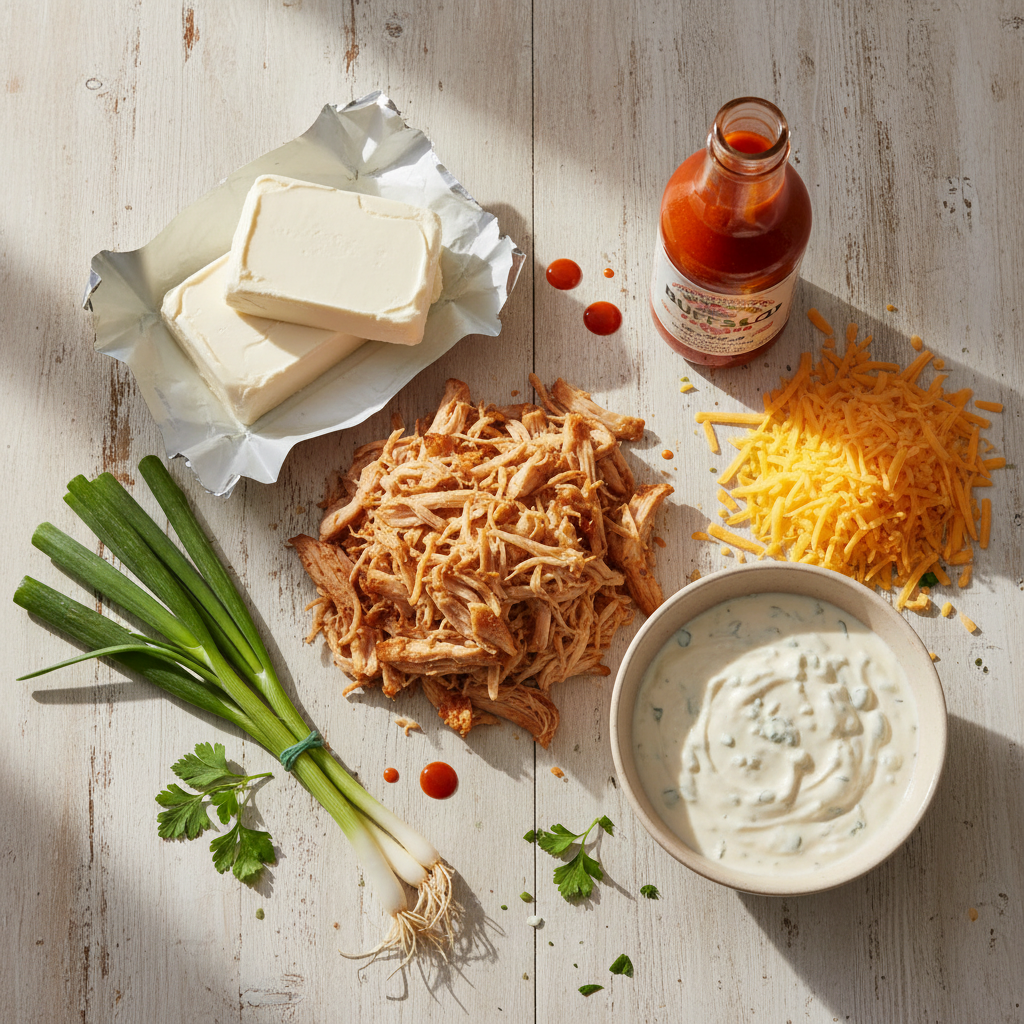
    Overhead view of fresh ingredients for buffalo chicken dip, including shredded chicken, cream cheese, buffalo sauce, dressing, cheddar cheese, and green onions, arranged on a wooden counter.
    A professional food photography shot, photorealistic, of all the key ingredients for Buffalo Chicken Dip laid out invitingly on a clean, rustic wooden kitchen counter. The arrangement is a flat lay, brightly lit with warm, natural light. Ingredients include shredded cooked chicken, blocks of cream cheese, a bottle of vibrant buffalo sauce, a bowl of ranch or blue cheese dressing, a mound of shredded cheddar cheese, and a small bunch of fresh green onions or parsley. Each item is clear, fresh, and perfectly lit, emulating a high-quality food magazine photo.

    The Best Chicken to Use (Rotisserie, Canned, or Fresh)

    Choosing the right chicken is the first step to a delicious dip. To keep this recipe quick and easy, you have a few great options that minimize fuss.

    Here are your best chicken choices for buffalo chicken dip:

    • Rotisserie Chicken: A true time-saver, store-bought rotisserie chicken is already seasoned, tender, and ready to shred. It’s the perfect shortcut for busy families or quick weeknight meals.
    • Canned Chicken: Another fantastic shortcut, canned chicken is a budget-friendly option that’s pre-cooked and ready to use. Just drain it well and shred with a fork to ensure your dip comes together quickly.
    • Fresh Chicken Breast: If you prefer to cook from scratch, boneless, skinless chicken breasts are a wonderful choice. Simply boil or bake them until fully cooked, then shred them into bite-sized pieces. This option gives you complete control over the seasoning.

    Pro Tip for Shredding Chicken: Shredding any cooked chicken is simple. While you can use two forks to pull the meat apart, an even quicker method is to use a stand mixer with the paddle attachment [1]. It will shred warm, cooked chicken in seconds!

    The Creamy and Cheesy Base

    The heart of any great buffalo chicken dip is its creamy, cheesy base. This combination of ingredients is what makes the dip so rich, indulgent, and irresistible.

    You will need these key ingredients for the base:

    • Cream Cheese: For the richest flavor, use full-fat cream cheese. Be sure to soften it to room temperature first, as this helps it blend smoothly and prevents lumps. It’s the essential foundation for a creamy dip.
    • Cheddar Cheese: Freshly shredded cheddar cheese adds a sharp, tangy flavor and melts beautifully. While pre-shredded cheese works for convenience, shredding your own block of cheese will result in a smoother, creamier texture.
    • Ranch or Blue Cheese Dressing: Either ranch or blue cheese dressing will add vital moisture and flavor, helping to bind all the ingredients together. We will discuss which one to choose in a moment.

    Substitution Idea: Want to try different cheeses? Swap some of the cheddar for Monterey Jack, or use mozzarella for a milder, stretchier texture. Feel free to get creative to find your perfect cheese combination.

    Which Hot Sauce is Best? (Frank’s RedHot Guide)

    For the most authentic buffalo chicken dip, one hot sauce stands above the rest: Frank’s RedHot Original [2]. Its distinct flavor profile is the gold standard for that classic buffalo taste.

    Here’s why Frank’s RedHot is often recommended:

    • Classic Flavor: It offers the perfect balance of heat and tang that you’d expect from classic buffalo wings.
    • Vinegar Base: Its vinegar base brightens the rich, creamy dip, cutting through the fats and adding a delicious zing.
    • Consistent Heat: It provides a moderate, approachable level of spice that’s enjoyable for most palates without being overwhelmingly hot.

    Can I use other hot sauces? Absolutely! While Frank’s is traditional, feel free to experiment with other hot sauces. Just be aware that flavor profiles and heat levels can vary significantly. It’s always a good idea to start with less and add more to taste.

    Ranch vs. Blue Cheese Dressing

    The choice between ranch and blue cheese dressing is a classic debate. Both options add creamy flavor and essential moisture, so the decision really comes down to personal preference.

    Let’s compare these two popular options:

    Dressing Type Flavor Profile Texture Best For
    Ranch Dressing Creamy, savory, with hints of herbs like dill and chives. Generally milder. Smooth and thick. Those who prefer a milder, widely appealing taste. Excellent for family-friendly meals.
    Blue Cheese Dressing Tangy, pungent, with a distinct, sharp blue cheese flavor. More intense. Often thicker, with visible specks of blue cheese. Fans of a bold, traditional buffalo wing experience. Adds a gourmet touch.

    Both options create a fantastic dip. If you’re unsure which to choose, ranch is a safe bet for crowds, as its milder flavor is universally loved. For a more authentic and robust buffalo experience, however, blue cheese dressing adds a bold, tangy flavor that truly elevates the dish.

    How to Make Buffalo Chicken Dip in the Oven (Step-by-Step)

    A bubbling hot, golden-brown buffalo chicken dip in a ceramic baking dish, garnished with fresh green onions.
    A close-up, professional food photography shot, photorealistic, of a perfectly baked, bubbling hot Buffalo Chicken Dip in a rustic cast iron skillet or an attractive ceramic baking dish, just pulled from the oven. The dip’s surface is golden brown and visibly cheesy, with subtle steam rising. It’s garnished generously with freshly chopped green onions. The background is a softly blurred, warm and inviting home kitchen setting, suggesting comfort and deliciousness. This is a high-quality food magazine photo, mouth-watering and ready to serve.

    Get ready to make a delicious and easy baked buffalo chicken dip! Perfect for parties, game nights, or a cozy family meal, this simple recipe delivers incredible flavor with minimal effort. We’ll guide you through each step to ensure your dip is a crowd-pleasing success, even if you’re new to cooking. This guide makes it simple to turn basic ingredients into an impressive dish everyone will love.

    What You’ll Need

    Before you start, gather these essential items and ingredients:

    • A 9×13 inch (or similar) baking dish.
    • A large mixing bowl.
    • An electric mixer (optional, but helpful for cream cheese).
    • 2 cups cooked chicken, shredded or finely diced (about 1 pound raw).
    • 8 ounces cream cheese, softened.
    • ½ cup ranch dressing (or blue cheese dressing).
    • ½ cup buffalo hot sauce (like Frank’s RedHot).
    • 1 cup shredded cheddar cheese (or a cheddar-jack blend), divided.
    • Optional: Chopped green onions or fresh parsley for garnish.

    Step-by-Step Instructions

    Making buffalo chicken dip in the oven is one of the easiest recipes you’ll find. Just follow these simple steps for a crowd-pleasing dish:

    1. Preheat Your Oven: Start by preheating your oven to 375°F (190°C) to ensure the dip bakes evenly.
    2. Soften the Cream Cheese: In a large mixing bowl, beat the softened cream cheese until it’s smooth and creamy. A hand mixer makes this quick. If your cream cheese isn’t soft, microwave it for 15-20 seconds.
    3. Mix the Creamy Base: Add the ranch dressing and buffalo hot sauce to the cream cheese. Mix thoroughly until the base is smooth and well combined. This creamy, spicy mixture is the heart of your dip’s flavor.
    4. Fold in the Chicken: Gently fold the shredded chicken into the creamy base until it’s evenly coated.
    5. Prepare for Baking: Spread half of the chicken mixture into your baking dish. Sprinkle with half of the shredded cheddar cheese to create a cheesy middle layer.
    6. Layer and Top: Spread the remaining chicken mixture on top, then sprinkle the rest of the cheddar cheese over the entire dip. This top layer will bake into an irresistible golden crust.
    7. Bake to Perfection: Place the baking dish in your preheated oven and bake for 20-25 minutes. The dip is ready when it’s bubbly around the edges and the cheese on top is melted and lightly golden brown.
    8. Serve Warm: Carefully remove the dip from the oven and let it cool for a few minutes. This allows it to set slightly. Garnish with chopped green onions or parsley, if desired, before serving.

    Tips for Success with Your Buffalo Chicken Dip

    Achieving a perfect buffalo chicken dip is easy with a few extra pointers. These simple tips will help elevate your beginner-friendly recipe:

    • Room Temperature Cream Cheese: Always use softened cream cheese. It mixes much more easily, preventing lumps in your dip. Take it out of the fridge about 30 minutes before you start.
    • Shredding Chicken: For the best texture, shred your chicken evenly. This ensures every bite has chicken. Using two forks or a stand mixer with a paddle attachment works wonders for shredding.
    • Don’t Overbake: Keep an eye on your dip. Overbaking can dry it out. The goal is bubbly edges and melted, slightly golden cheese on top.
    • Make Ahead: You can assemble the dip completely up to 24 hours in advance. Just cover it and refrigerate. When ready to bake, add a few extra minutes to the cooking time [3].
    • Customizing Spice: If you like it spicier, add a little extra hot sauce. For a milder dip, reduce the hot sauce slightly or add a touch more ranch dressing. This flexibility makes it a great family-friendly meal.

    With this simple method, you can consistently create a creamy, cheesy, and perfectly spicy dip. It’s an easy and stress-free way to build confidence in the kitchen. Serve it warm and get ready to impress your friends and family with this incredible homemade buffalo chicken dip!

    How to Make Buffalo Chicken Dip in a Slow Cooker

    Your slow cooker is perfect for making a delicious and easy buffalo chicken dip recipe. Ideal for parties, game days, or a stress-free family dinner, this method simplifies the cooking process and frees up your oven. The slow cooker also keeps your dip warm and ready to serve for hours.

    Here’s how to create this flavorful dip with minimal effort.

    Ingredients for Slow Cooker Buffalo Chicken Dip

    This recipe uses simple, everyday ingredients like cooked chicken, cream cheese, hot sauce, and your favorite dressing to create a fantastic result.

    • Cooked Chicken: About 2 cups, shredded. Rotisserie chicken is a great shortcut!
    • Cream Cheese: 2 blocks (16 oz total), softened.
    • Buffalo Hot Sauce: 1/2 to 3/4 cup (like Frank’s RedHot).
    • Ranch or Blue Cheese Dressing: 1/2 cup.
    • Shredded Cheddar Cheese: 1 to 1 1/2 cups.
    • Shredded Mozzarella (optional): 1/2 cup for extra gooeyness.

    Step-by-Step Slow Cooker Instructions

    Follow these simple steps to make a warm, creamy, and irresistible buffalo chicken dip.

    1. Prepare Your Chicken: Ensure your chicken is cooked and shredded. If using fresh chicken breasts, boil or bake them first, then shred with two forks.
    2. Add Cream Cheese: Place the softened cream cheese blocks into your slow cooker. Using room temperature cream cheese makes this easier.
    3. Combine Liquids: Pour the buffalo hot sauce and ranch or blue cheese dressing into the slow cooker.
    4. Stir in Chicken: Gently add the shredded chicken.
    5. Add Cheese: Sprinkle in about half of the shredded cheddar cheese. If using mozzarella, add it now as well.
    6. Mix Well: Stir everything together until well combined. The cream cheese should begin to break down and mix with the other ingredients.
    7. Cook: Cover and cook on LOW for 1.5 to 2 hours or on HIGH for 45 minutes to 1 hour.
    8. Stir and Add Remaining Cheese: About halfway through the cooking time, stir the dip well to ensure everything is melting evenly. Mix in the remaining shredded cheddar cheese.
    9. Continue Cooking: Let the dip cook until it is hot, bubbly, and all the cheese has melted.
    10. Serve Warm: Switch your slow cooker to the “Keep Warm” setting to keep the dip at the perfect temperature for serving.

    Helpful Tips for Slow Cooker Buffalo Chicken Dip Success

    These practical tips will help you make the best possible easy buffalo chicken dip.

    • Soften Cream Cheese: Always use softened cream cheese to help it melt smoothly and blend easily. Take it out of the fridge about 30 minutes before you start.
    • Stirring is Key: Stir the dip periodically as it cooks. This prevents sticking at the bottom and ensures a consistent, creamy texture.
    • Consistency Check: If your dip seems too thick, add a splash of ranch dressing or a tablespoon of chicken broth. If it’s too thin, a little extra cream cheese or cheddar will help it thicken.
    • The “Keep Warm” Setting: Use the “Keep Warm” function to hold the dip at the perfect temperature for parties. This prevents overcooking and is ideal for events where guests eat at different times.
    • Prep Ahead: You can cook and shred your chicken a day in advance. Store it in an airtight container in the fridge to save time when you’re ready to cook.
    • Customize Your Heat: Adjust the amount of buffalo hot sauce to your liking. Add more for extra spice or use less for a milder flavor.

    Using your slow cooker makes creating delicious, flavorful dips like this one a breeze. Enjoy this simple and satisfying buffalo chicken dip!

    What Should You Serve with Buffalo Chicken Dip?

    Once you’ve mastered our easy buffalo chicken dip recipe, the next fun part is choosing the perfect pairings! This warm, creamy, and spicy dip is incredibly versatile, making it a star at game days, potlucks, or as a fun simple dinner recipe.

    The key to a great spread is balancing textures and flavors with a mix of crunchy, fresh, and hearty options. As part of our mission to help you enjoy flavorful meals made easy, we’ve gathered the best ideas for what to serve with your buffalo chicken dip. These beginner-friendly recipes are guaranteed to be a hit!

    Classic & Crunchy Dippers

    When you need a reliable, satisfying crunch, these go-to dippers are the perfect choice. They are sturdy enough to handle a generous scoop of buffalo chicken dip, making them a crowd-pleaser for any gathering.

    • Tortilla Chips: Sturdy and savory, perfect for scooping. Look for restaurant-style chips.
    • Pita Chips: These offer a slightly softer crunch and have a wonderful toasted flavor.
    • Crackers: Choose hearty options like Ritz or butter crackers to add a salty, buttery note.
    • Pretzel Crisps or Mini Pretzels: Their salty crunch provides a fantastic contrast to the creamy dip.

    Fresh & Healthy Bites

    To balance the dip’s rich flavor, add some fresh and healthy options. Crisp, cool vegetables offer a refreshing counterpoint and make your appetizer spread more colorful and well-rounded.

    • Celery Sticks: The classic pairing. Their crisp texture and mild flavor complement the dip perfectly.
    • Carrot Sticks: Sweet and crunchy, they add a vibrant touch of color.
    • Cucumber Slices: Refreshing and cool, these slices help cut through the richness of the dip.
    • Bell Pepper Strips: Red, yellow, or orange bell peppers provide a sweet, crunchy bite.
    • Broccoli Florets: A great way to add more green, they offer a uniquely satisfying bite.
    • Cherry Tomatoes: These add a juicy pop of freshness with every scoop.

    Warm & Hearty Breads

    For a more substantial pairing, serve the dip with warm breads. These options help turn your appetizer into a mini-meal, making them perfect for a cozy night in or as part of your family-friendly meals.

    • Sliced Baguette: Toast it lightly for the perfect amount of crunch.
    • Toasted Garlic Bread: Adds a delicious, savory layer of flavor.
    • Hawaiian Rolls or Slider Buns: Soft and slightly sweet, these are ideal for making mini sandwiches.
    • Pita Bread (warm): Cut into triangles for an easy and soft scooping option.
    • Potato Wedges or Tater Tots: Bake until crispy and use them as an indulgent dipper.

    Turn it into a Meal!

    Don’t limit this dip to just an appetizer! With a little creativity, you can transform buffalo chicken dip into a satisfying simple dinner recipe. These ideas are excellent quick meal solutions for busy families.

    • Buffalo Chicken Dip Wraps or Sandwiches: Spoon the dip into a tortilla or onto a bun with lettuce and tomato for a quick lunch.
    • Stuffed Bell Peppers: Halve bell peppers, fill them with the dip, and bake until tender for a healthy and balanced meal.
    • Quesadillas: Spread the dip between two tortillas with extra cheese and grill until golden brown.
    • Loaded Baked Potatoes: Top a baked potato with a generous scoop of dip for a comforting and approachable home cooking option.
    • Lettuce Wraps: For a lighter, low-carb meal, spoon the dip into large, crisp lettuce cups.

    With so many delicious options, you can serve your homemade buffalo chicken dip recipe a new way every time. Enjoy experimenting with these pairings to find your favorites! Recipesmondial is here to help you make every meal delicious and stress-free.

    Tips, Variations, and Storage

    How to Make it Spicier (or Milder)

    One of the best things about making homemade buffalo chicken dip is customizing the heat. Whether you love a fiery kick or prefer a milder, creamy flavor, it’s easy to adjust this recipe to your taste.

    Here’s how to tailor the heat:

    • For More Heat:
      • Add More Hot Sauce: Increase the amount of Frank’s RedHot (or your chosen brand) by 1-2 tablespoons.
      • Cayenne Pepper: Stir in a pinch of cayenne pepper with the cheese mixture. A little goes a long way!
      • Red Pepper Flakes: For a visible pop of spice, mix in 1/2 to 1 teaspoon of red pepper flakes.
      • Hotter Sauce: If you’re feeling adventurous, use a spicier variety of hot sauce.
    • For Milder Flavor:
      • Reduce Hot Sauce: Start with less hot sauce than the recipe calls for, such as 1/4 to 1/2 cup, and taste as you go.
      • More Cream Cheese: Add an extra 2-4 ounces of cream cheese to boost creaminess and mellow the heat.
      • More Dressing: Stir in an extra 1/4 cup of ranch or blue cheese dressing to balance the spice.
      • Use Milder Sauce: Some brands offer milder buffalo sauces, which are a great starting point for those who prefer less heat.

    Can You Make Buffalo Chicken Dip Ahead of Time?

    Absolutely! This dip is perfect for making ahead. You can assemble it in advance and bake it just before serving, making it a great option for parties or busy weeknights.

    • Assemble and Refrigerate:

      Mix all the ingredients as directed in the recipe, but do not bake. Transfer the mixture to your baking dish and cover it tightly with plastic wrap or foil.

    • Store in the Fridge:

      Refrigerate the unbaked dip for up to 2-3 days.

    • Bake When Ready:

      When you’re ready to serve, remove the dip from the fridge. Let it sit on the counter for about 15-20 minutes to take the chill off. Bake according to the recipe instructions, adding an extra 5-10 minutes to the baking time to account for the cold temperature.

    How to Store and Reheat Leftovers

    Proper storage will keep your buffalo chicken dip fresh and delicious. Here’s how to store and reheat any leftovers.

    • Storing Leftovers:
      • Cool Completely: Allow the dip to cool to room temperature before storing. This prevents condensation and keeps it fresh.
      • Airtight Container: Transfer the leftover dip to an airtight container.
      • Refrigerate Promptly: Store the dip in the refrigerator for up to 3-4 days [4].
      • Freezing (Optional): While you can freeze this dip, the creamy texture may change slightly upon thawing. To freeze, place it in a freezer-safe, airtight container for up to 2-3 months. Thaw overnight in the refrigerator before reheating.
    • Reheating Leftovers:
      • In the Oven:
        1. Preheat your oven to 350°F (175°C).
        2. Transfer the dip to an oven-safe dish. If it seems dry, stir in a splash of milk or chicken broth.
        3. Cover with foil to prevent it from drying out.
        4. Bake for 15-25 minutes, or until heated through and bubbly.
      • In the Microwave:
        1. Place an individual portion into a microwave-safe dish.
        2. Cover lightly with a paper towel to prevent splatters.
        3. Heat on medium power for 1-2 minutes, stirring halfway through. Continue heating in 30-second intervals until warmed to your liking.

    Frequently Asked Questions About Buffalo Chicken Dip

    What is the best chicken for buffalo chicken dip?

    Choosing the right chicken for buffalo chicken dip is simple, as you have several excellent, low-effort options. Each one helps you create a delicious dip.

    Here are the best types of chicken to use:

    • Cooked Rotisserie Chicken: A fantastic, time-saving choice for easy recipes, rotisserie chicken is already tender and flavorful. Simply shred the meat and add it to your dip for a quick meal solution.
    • Canned Chicken: This convenient pantry staple is another great option. Just be sure to drain it well before shredding it with a fork. It works wonderfully for a fuss-free beginner-friendly recipe.
    • Cooked Chicken Breast or Thighs: For those who prefer cooking from scratch, fresh chicken is ideal. You can poach, bake, or boil chicken breasts or thighs before shredding them. This option gives you full control over the seasoning and is also a great way to use up leftovers.

    Regardless of which chicken you choose, make sure it’s fully cooked and shredded finely. This texture helps it incorporate perfectly into the creamy dip base, making your flavorful meals made easy.

    Can you eat buffalo chicken dip cold?

    While technically safe to eat cold, buffalo chicken dip is almost always served warm. Warming the dip brings out its best flavors, as the cheeses become melty and creamy to create an irresistible, gooey texture. The hot sauce also tastes more vibrant when heated.

    However, eating cold leftovers is perfectly fine. Just know the texture will be different, as it will be much firmer and less spreadable. For the best experience, we always recommend reheating your dip to restore its fresh, delicious flavor. Our goal is to help you enjoy cooking without stress.

    How do you make buffalo chicken dip without ranch?

    Instead of ranch, many classic recipes call for blue cheese dressing. Its tangy, pungent flavor pairs wonderfully with spicy buffalo sauce, providing a deeper, more traditional flavor profile for a truly flavorful meal.

    If you dislike both ranch and blue cheese, you can still make a delicious dip. Consider this simple substitution:

    • Cream Cheese and Sour Cream: For a creamy base without a specific dressing flavor, combine extra cream cheese with a dollop of sour cream. Thin the mixture with a splash of milk or chicken broth. From there, you can customize the dip by adding seasonings like garlic powder or onion powder. This approach is part of our step-by-step cooking guidance.

    Experiment to find your perfect balance. You’ll quickly build confidence in the kitchen.

    What is the best hot sauce for buffalo dip?

    For an authentic buffalo chicken dip, Frank’s RedHot Original is the undisputed classic. This hot sauce offers the perfect balance of heat and vinegary tang, an iconic flavor that many consider essential for the true buffalo experience [5].

    However, you can certainly experiment with other hot sauces, as different brands offer varying heat levels and flavor notes. For example:

    • Louisiana-style Hot Sauces: These offer a similar vinegary kick but may be milder or feature a different chili pepper profile.
    • Spicier Options: If you love extra heat, choose a hotter cayenne pepper sauce or add a touch of habanero or ghost pepper hot sauce. Start small and taste as you go!

    Ultimately, the “best” hot sauce is the one you enjoy most, a principle at the heart of our approachable home cooking philosophy. Choosing a sauce you genuinely like ensures your easy recipes are always a hit.


    Sources

    1. https://www.thekitchn.com/the-easiest-way-to-shred-chicken-237190
    2. https://www.franksredhot.com/en-us/products/franks-redhot-original-cayenne-pepper-sauce
    3. https://www.foodsafety.gov/keep-food-safe/food-safety-by-events-and-seasons/parties-and-buffets
    4. https://www.foodsafety.gov/food-safety-charts/cold-food-storage-chart
    5. https://www.franksredhot.com/en-us/about-us

  • How to Make Perfect Baked Potatoes in the Oven (A Simple Guide)

    How to Make Perfect Baked Potatoes in the Oven (A Simple Guide)

    To make perfect baked potatoes in the oven, first wash and dry russet potatoes, then pierce them several times with a fork. Rub the skins with olive oil and a generous amount of salt. Bake them directly on the oven rack at 425°F (220°C) for 45-60 minutes, until the skin is crispy and the inside is fluffy and tender.

    Is there anything more comforting than a perfectly cooked baked potato? Its golden, crispy skin gives way to a wonderfully fluffy, steaming interior—a simple pleasure that forms the base of countless delicious meals. While it seems straightforward, achieving that ideal texture can be a culinary mystery. Many home cooks are left wondering how to get it right without being overwhelmed by complex techniques.

    At Recipesmondial, we believe simple dinner recipes should always deliver maximum flavor and enjoyment. Our goal is to transform basic ingredients into something extraordinary. That’s why we’re sharing our foolproof method for the best baked potatoes. This guide to approachable home cooking is designed for beginners and busy families, walking you through every step. Forget the guesswork; we guarantee you’ll get that crave-worthy crispy skin and a perfectly fluffy potato every single time. Cook confidently and enjoy the process without stress.

    Whether you need an easy side dish, a hearty lunch, or a creative base for family-friendly meals, this simple baked potato recipe is your new go-to. Elevate your everyday cooking with a classic dish that’s simple, satisfying, and incredibly versatile. Let’s explore why this method stands out and how it can help you make flavorful meals easy in your own kitchen.

    Why This is the Best Baked Potato Recipe

    Welcome to your new favorite way to make incredible baked potatoes! At Recipesmondial, we believe cooking should be simple, enjoyable, and delicious. Our oven-baked potato recipe is designed to deliver just that: a perfectly crispy skin and a wonderfully fluffy interior, every single time.

    Have you ever felt overwhelmed by complex recipes? We’ve stripped away the confusion. This guide takes the guesswork out of making the perfect oven-baked potato, with easy-to-follow steps for both beginners and experienced home cooks.

    So, what makes this the best baked potato recipe you’ll find?

    • Foolproof Results: Our clear, step-by-step guidance ensures you get it right every time. You’ll achieve that perfect combination of a fluffy interior and crisp, delicious skin, so you can say goodbye to dense or burnt potatoes for good.
    • Simple Ingredients, Maximum Flavor: This recipe uses just a few pantry staples to bring out the potato’s natural, delicious flavor. It’s proof that you don’t need complicated ingredients to create an incredible dish.
    • Confidence Building: Perfect for beginners, this easy recipe will boost your confidence in the kitchen. By mastering this simple technique, you’ll have a versatile base for countless family-friendly meals.
    • Stress-Free Cooking: Because this method is so straightforward, you can relax and enjoy the process. It eliminates the pressure of complicated steps so you can focus on creating a delicious meal.
    • Versatile Meal Starter: A great baked potato isn’t just a side dish—it’s the foundation for a complete meal. Use it for quick breakfasts, simple lunches, or satisfying dinners. With endless topping possibilities, it makes meal planning easy.
    • Practical Tips & Tricks: We share our essential secrets for success, helping you avoid common mistakes. These insights ensure your baked potatoes turn out perfectly, so you can cook with confidence.

    Our goal is to help you move from uncertainty to confidence in the kitchen. With this recipe, you’ll learn to transform simple ingredients into a delicious, satisfying meal. Get ready to make mealtime more enjoyable and stress-free with Recipesmondial!

    What You’ll Need: Ingredients & Equipment

    A flat lay of fresh Russet potatoes, olive oil, sea salt, a fork, and a baking sheet on a wooden surface, ready for preparing baked potatoes.
    A professional food photography shot, photorealistic, high-quality food magazine style. The image features a visually appealing flat lay of fresh, clean Russet potatoes, a bottle of olive oil, a small bowl of coarse sea salt, a fork, and a baking sheet. All items are arranged neatly on a rustic wooden cutting board or a light, textured kitchen counter. The lighting is warm and natural, emphasizing the quality and readiness of the ingredients. No artistic filters or effects.

    What is the best type of potato for baking?

    Choosing the right potato is the first step to a perfect baked potato. For a truly fluffy interior and wonderfully crispy skin, we strongly recommend Russet potatoes [1]. These are also commonly known as Idaho potatoes.

    Russets have a high starch content, which makes them light and airy when cooked. Their thick skins also crisp up beautifully in the oven, creating that satisfying contrast between a fluffy interior and a crunchy exterior.

    However, if Russets aren’t available, don’t worry! Yukon Gold potatoes are a fantastic alternative that offer a slightly creamier, richer texture. Red potatoes also work in a pinch, though they will result in a denser, waxier interior. Feel free to experiment to discover your personal favorite!

    Simple Ingredients for Flavorful Spuds

    To create an incredibly flavorful baked potato, you only need a few simple ingredients that you likely already have. This recipe is a quick, reliable, and budget-friendly meal solution.

    • Russet Potatoes: Medium to large size (about 8-10 ounces each). Always choose firm potatoes and avoid any with green spots or sprouts for the best flavor.
    • Olive Oil or Avocado Oil: A light coating helps the skin get super crispy and allows the salt to adhere well.
    • Kosher Salt: Coarse kosher salt is essential for boosting flavor and achieving a perfectly crunchy skin.
    • Freshly Ground Black Pepper (Optional): Adds a nice touch of warmth and subtle spice.

    These simple ingredients are the foundation for a perfect baked potato, proving that delicious, family-friendly meals don’t need to be complicated or require a lot of fuss.

    Essential Kitchen Tools

    You don’t need any special equipment to make perfect baked potatoes. The basic tools required are likely already in your kitchen, making the process smooth and enjoyable.

    • Baking Sheet: A sturdy sheet pan provides even heat distribution. Ensure it’s large enough to hold your potatoes without crowding them.
    • Fork or Paring Knife: Use this to pierce the potato skins before baking. This simple step is crucial to prevent them from bursting in your oven.
    • Pastry Brush (Optional): Great for evenly coating potatoes with oil. Alternatively, you can simply use your clean hands.
    • Oven Mitts: Absolutely essential for safety. Always use them when handling the hot baking sheet and potatoes.

    With these kitchen essentials, you’re all set to begin. Our step-by-step guidance will have you cooking confidently and enjoying the process without any stress.

    How to oven bake the perfect baked potato?

    A perfectly baked Russet potato, split open with steam rising, a pat of butter melting into its fluffy interior, on a white plate.
    A professional food photography shot, photorealistic, high-quality food magazine style. The image captures a single, perfectly baked Russet potato, split lengthwise down the middle. Steam gently rises from its fluffy, white interior. A small pat of butter is melting perfectly into the soft potato flesh. The skin is crispy and golden brown. The potato is presented on a simple, elegant white plate, with a slightly blurred warm kitchen background. The focus is sharp on the potato. No artistic interpretations or filters.

    Step 1: Preheat and Prep

    Preheating your oven is a crucial first step. It ensures consistent heat from the moment the potatoes go in, helping them cook evenly and develop a wonderfully crispy skin. For the best results, set your oven to 400°F (200°C).

    • Preheat your oven: Adjust an oven rack to the middle position and preheat to 400°F (200°C).
    • Prepare your baking sheet: Line a baking sheet with parchment paper or aluminum foil for easy cleanup.

    Step 2: Wash and Pierce the Potatoes

    Properly washing and piercing your potatoes is essential. Washing removes any dirt from the skin, while piercing prevents them from bursting in the oven.

    • Wash the potatoes: Scrub each potato thoroughly under cool running water, using a vegetable brush to remove any stubborn dirt. Pat them completely dry with a kitchen towel.
    • Pierce the potatoes: Using a fork, pierce each potato 6 to 8 times on all sides. This allows steam to escape during baking, which prevents them from bursting [2] and ensures a fluffy interior.

    Step 3: Oil and Season for Crispy Skin

    This step is the secret to an irresistible, crispy skin. A little oil and salt will transform the potato’s exterior into a flavorful, crunchy shell that encases the fluffy interior.

    • Oil the potatoes: Drizzle each potato with about 1 teaspoon of olive or avocado oil. Use your hands to rub the oil evenly over the entire skin.
    • Season generously: Sprinkle coarse salt (like sea salt or kosher salt) and freshly ground black pepper over each potato. The salt not only adds flavor but also helps draw out moisture, making the skin even crispier.

    Step 4: Bake to Fluffy Perfection

    It’s time to bake. Cooking at the right temperature for the correct amount of time is the key to a perfectly tender and fluffy interior. Soon, you’ll have delicious baked potatoes ready for your favorite toppings.

    • Place in the oven: Arrange the potatoes on the prepared baking sheet, making sure to leave some space between them for even air circulation.
    • Bake until tender: Bake for 50 to 70 minutes. The exact time will depend on the size of your potatoes; larger ones will require more time.
    • Check for doneness: The potatoes are ready when a fork slides easily into the center with no resistance, or when they yield to a gentle squeeze (use an oven mitt!).
    • Finish and serve: Carefully remove the potatoes from the oven. To serve, slice them lengthwise, gently squeeze the ends to open them up, and fluff the inside with a fork. Serve immediately with your desired toppings.

    Should you roast potatoes at 400 or 425?

    The question of whether to bake potatoes at 400°F (200°C) or 425°F (220°C) is a common one for home cooks. While both temperatures yield a delicious result, they produce slightly different textures. Understanding this difference is the key to creating your perfect baked potato every time.

    Let’s break down what to expect at each temperature so you can decide which is best for your next easy meal.

    Baking at 400°F (200°C)

    Baking at 400°F is a fantastic and forgiving choice. This temperature allows potatoes to bake evenly, developing a wonderfully fluffy inside while the skin gets nicely crisp. The lower heat also prevents the potato from drying out and reduces the chance of burning. As a result, it’s an excellent temperature for larger potatoes, giving them ample time to cook through. This reliable method guarantees a great baked potato every time, making it perfect for beginner cooks seeking simple dinner recipes.

    Baking at 425°F (220°C)

    If you love an extra-crispy potato skin, then 425°F might be your go-to temperature. The intense heat cooks potatoes faster and creates that desirable deep golden-brown, crunchy exterior. However, you’ll need to watch them more carefully, as the higher heat can sometimes dry out the interior, especially if they overcook. This temperature is perfect when you’re short on time or when that super-crispy texture is your top priority for your family-friendly meals.

    Which Temperature is Best for Your Baked Potato?

    Ultimately, the best temperature depends on your desired outcome and how much time you have. While both settings produce a delicious baked potato, your choice simply refines the final texture and taste.

    • For beginners or larger potatoes: Choose 400°F (200°C). This temperature is more forgiving and reliably produces a fluffy baked potato with great skin, making it a perfect approach for approachable home cooking. [3]
    • For speed and super-crispy skin: Go for 425°F (220°C), but remember to monitor the potatoes closely. To ensure a perfectly cooked interior despite the faster cooking time, check for doneness with a fork or an internal thermometer.

    No matter which temperature you choose, a few simple steps will ensure success. Always prick your potatoes several times with a fork to release steam and prevent them from bursting in the oven. Next, rub them with a little oil and season generously with salt to make the skin extra delicious. With these tips, you’re on your way to making the best baked potato!

    Pro Tips for Foolproof Baked Potatoes

    Unlock the secret to the ultimate baked potato with these expert tips. We’ll show you how to achieve a perfectly fluffy interior and a deliciously crispy skin every single time. Say goodbye to guesswork and hello to your new favorite side dish!

    • Pick the Right Potato: For the best results, always choose starchy potatoes like Russets (also known as Idaho potatoes). Their high starch content is the key to a fluffy, airy texture once baked.
    • Wash and Dry Thoroughly: Scrub your potatoes well under running water, then dry them completely with a clean towel. Removing all moisture is essential for a crispy skin.
    • Don’t Forget to Pierce: Pierce the skin 4-5 times all over with a fork. This crucial step allows steam to escape, which prevents the potato from bursting and helps it cook more evenly.
    • Oil and Salt for Super Crispy Skin: For a wonderfully crisp and savory crust, rub the potato skin with a little olive or vegetable oil. Then, sprinkle generously with coarse sea salt.
    • Bake Directly on the Rack: For the crispiest skin, place potatoes directly on the oven rack. This allows hot air to circulate evenly. Avoid wrapping them in foil, which steams the potato and results in a soft skin.
    • Test for Doneness: To check if your potato is done, a fork should slide easily into the center. It should also feel tender when gently squeezed. For perfect results, the internal temperature should be between 205–210°F (96–99°C) [3].
    • Slit and Fluff Immediately: As soon as the potato is out of the oven, cut a slit down the middle to release steam. This step is essential for a light, fluffy interior. Gently squeeze the ends to open it up, then use a fork to fluff the flesh.
    • Avoid Overbaking: An overbaked potato will be dry and mealy. To ensure a moist, delicious interior, monitor the cooking time and begin testing for doneness as it gets close.
    • Get Creative with Toppings: A baked potato is the perfect canvas for flavor, so think beyond butter and sour cream. To make this simple side dish truly shine, explore our Delicious Topping Ideas section for inspiration.

    Delicious Topping Ideas for Your Baked Potato

    Three baked potatoes, each with different delicious toppings: one with sour cream and chives, one with cheese and bacon, and one with chili.
    A professional food photography shot, photorealistic, high-quality food magazine style. The image showcases a vibrant and appealing spread of three baked potatoes, each generously topped with different, colorful ingredients. One potato is topped with sour cream and freshly chopped green chives, another with melted cheddar cheese and crispy bacon bits, and the third with a spoonful of hearty chili. The toppings are artfully arranged, creating a visually rich and appetizing display. The background is a clean, inviting kitchen counter with soft, natural lighting. No artistic effects or illustrations.

    Classic & Comforting Toppings

    Once your potato is perfectly baked, it’s time for the fun part: the toppings. With a few simple additions, you can transform a simple spud into a delicious, comforting meal. Here are some classic choices to get you started.

    • Fluffy Butter: A pat of real butter melting into the hot, fluffy potato adds a rich, creamy taste. It’s the essential first step for a classic baked potato.
    • Cool Sour Cream: For a tangy, refreshing contrast, add a generous dollop of sour cream. Its perfect balance makes it a staple topping for a reason.
    • Shredded Cheddar Cheese: Sprinkle sharp or mild cheddar over the hot potato and watch it melt into a gooey, savory layer.
    • Crispy Bacon Bits: Crumbled cooked bacon adds a salty, smoky crunch. You can use store-bought bits or cook and chop your own for extra flavor.
    • Fresh Chives: Finely chopped chives provide a mild oniony zest, a hint of freshness, and a lovely pop of green color.
    • Salt and Freshly Ground Black Pepper: Don’t forget the basics. A good pinch of salt and pepper enhances all the other flavors.

    Healthy & Fresh Toppings

    A baked potato can be the foundation of a healthy, balanced meal. By opting for lighter, fresher ingredients, you can add flavor and nutrition without feeling weighed down. These options make creating a quick, healthy dish easy.

    • Greek Yogurt: A fantastic substitute for sour cream, Greek yogurt offers a similar tang with more protein and fewer calories.
    • Salsa: A fresh tomato salsa makes for a vibrant, zesty topping that’s full of vegetables and adds a nice kick.
    • Diced Avocado: Creamy avocado adds healthy fats and a smooth texture. Brighten it up even more with a squeeze of lime juice.
    • Steamed Vegetables: Top with lightly steamed vegetables like broccoli florets, corn, or peas, finished with a dash of salt and pepper.
    • Lean Protein: Turn your baked potato into a protein-packed dish with shredded chicken, black beans, or chickpeas.
    • Herbs and Spices: Add flavor without extra calories by using fresh herbs like parsley and dill or a sprinkle of paprika.

    Loaded Dinner-Style Toppings

    With these hearty, dinner-style ideas, you can turn a baked potato into a satisfying, family-friendly meal. It’s an easy way to elevate a weeknight dinner and find approachable home cooking inspiration.

    • Chili con Carne: Ladle a scoop of your favorite chili over the potato. Top it with cheese and sour cream for a comforting, complete meal.
    • Pulled Pork or Chicken: Use leftover pulled pork or shredded chicken tossed in BBQ sauce for a flavorful and easy supper.
    • Taco Filling: Spoon on seasoned ground beef, turkey, or lentils. Then, add your favorite taco toppings like lettuce, tomatoes, and cheese.
    • Shepherd’s Pie Topping: Try a savory mix of ground meat and vegetables for a deconstructed shepherd’s pie that’s both quick and delicious.
    • Broccoli and Cheese Sauce: Steam fresh broccoli florets and smother them with a simple cheese sauce. This classic combination is always a hit.
    • Mediterranean Style: For fresh, bold flavors, top your potato with olives, feta cheese, sun-dried tomatoes, and a drizzle of olive oil.

    How to Store and Reheat Leftovers

    Don’t let your delicious baked potatoes go to waste! Knowing how to store and reheat them properly is a fantastic meal prep tip that ensures you can enjoy them again. This simple skill helps you create easy recipes from leftovers and keeps your family-friendly meals both safe and flavorful.

    How to Safely Store Baked Potatoes

    Proper storage is key to preventing foodborne illness while keeping your baked potato tasting its best. Follow these simple steps for beginner-friendly recipes and safe food handling.

    • Cool Quickly and Unwrapped: This is a crucial food safety step. Never wrap hot baked potatoes in foil, as this creates an anaerobic environment that can promote the growth of dangerous bacteria like Clostridium botulinum. Let potatoes cool at room temperature for no more than one hour before refrigerating. [4]
    • Refrigerate Promptly: Once cooled, place your baked potato in an airtight container or a resealable bag. Store it in the refrigerator and eat within 3 to 4 days for the best quality.

    Best Ways to Reheat Your Baked Potato

    Reheating a baked potato is quick and simple, but the method you choose affects its final texture. Here are a few reliable options for creating flavorful meals made easy.

    Reheating in the Oven (For Crispy Skin)

    This method is ideal for restoring the potato’s original crispy skin, giving you that best baked potato experience all over again. It’s a great option for quick meal solutions when you have a bit more time.

    1. Preheat your oven to 400°F (200°C).
    2. Place the cold baked potatoes directly on the oven rack.
    3. Heat for 15-20 minutes, or until the internal temperature reaches 165°F (74°C). Note that larger potatoes may need more time.

    Reheating in the Microwave (For Speed)

    The microwave is your fastest option, making it perfect when you need easy recipes fast. Just be aware that this method will result in a softer skin.

    1. Place the baked potato on a microwave-safe plate.
    2. Heat on high for 1-2 minutes to start.
    3. Flip the potato and continue heating in 30-second intervals until it is warmed all the way through.

    Reheating in the Air Fryer (For a Quick Crisp)

    The air fryer offers a great balance of speed and texture. It’s faster than the oven but still delivers a nicely crisped skin, making it a brilliant meal prep tip for quick re-crisping.

    1. Preheat your air fryer to 350°F (175°C).
    2. Place the baked potato in the basket, ensuring not to overcrowd it.
    3. Cook for 5-8 minutes, flipping halfway through, until the skin is crisp and the potato is heated through.

    Tips for Reheating Success

    To make your reheated baked potato taste as good as it did the first time, follow these tips for the best baked potato outcome.

    • Avoid Overheating: An overheated potato will become dry. Check it often and use shorter heating intervals to prevent this.
    • Add Moisture: If the potato seems dry, add a small pat of butter or a sprinkle of water before heating. To get a softer skin in the oven, you can wrap the potato loosely in foil.
    • Keep Toppings Separate: Always reheat potatoes plain. Add fresh toppings like sour cream, cheese, or chives afterward to prevent them from becoming overcooked.

    By following these guidelines, you can confidently store and reheat your baked potatoes. This makes it a breeze to enjoy your simple dinner recipes and leftover baked potatoes in oven, even on busy days. Recipesmondial is here to make your cooking journey stress-free and full of flavor!

    Frequently Asked Questions

    How long does it take a potato to bake at 400 in the oven?

    Baking a potato at 400°F (200°C) typically takes 45 to 60 minutes. However, the exact cooking time depends on the potato’s size. Larger potatoes will naturally require more time to become tender.

    For example, small to medium potatoes might be ready in as little as 40 minutes, while very large ones could take up to 75 minutes. To ensure a fluffy interior every time, always check for doneness before serving.

    To test if your potato is done, pierce it with a fork. It should feel tender all the way through. For guaranteed results, you can use a thermometer; the internal temperature should be between 205-212°F (96-100°C) for a perfectly fluffy texture [5].

    For consistent results, choose potatoes that are similar in size. This simple step helps them cook evenly and makes your meal preparation more reliable.

    Do baked potatoes have to be wrapped in foil in the oven?

    No, you do not need to wrap potatoes in foil to bake them. In fact, for the crispiest skin, it’s best to bake them directly on the oven rack. Wrapping a potato in foil traps moisture and steams it, resulting in a soft, soggy skin rather than a crispy one.

    If you prefer that satisfying crunch, skip the foil. Our cooking guidance focuses on achieving a perfectly crisp skin, which is the hallmark of a great baked potato.

    However, foil can be useful for keeping potatoes warm after they’re cooked. Once they’re out of the oven, you can wrap them loosely to hold in the heat. Just remember not to bake them in foil from the start if a crispy skin is your goal.

    For a truly delicious baked potato, let the skin get golden and crisp in the oven. This simple technique delivers maximum flavor and the best possible texture.

    How to make a baked potato in the oven fast?

    While oven baking takes time, you can speed up the process with a few smart tricks. These shortcuts are perfect for busy families who need quick and enjoyable meal solutions.

    Here are a few tips for faster baked potatoes:

    • Microwave First: Pierce the potatoes several times with a fork and microwave them for 5-10 minutes, depending on their size. Afterward, transfer them to a preheated oven for 20-30 minutes to finish cooking and achieve a crispy skin.
    • Preheat Thoroughly: Always make sure your oven is fully preheated before putting the potatoes in. Starting with a hot oven significantly reduces the overall cooking time.
    • Use a Higher Temperature: You can bake potatoes at 425°F (218°C) or 450°F (232°C) for faster results. Just be sure to monitor them closely to prevent burning.
    • Choose Smaller Potatoes: Unsurprisingly, smaller potatoes cook faster than larger ones. Selecting smaller, uniformly sized potatoes is a simple way to ensure quicker, more even cooking.

    Using these methods will help you get delicious, fluffy baked potatoes on the table much sooner, making weeknight dinners easy and stress-free.

    What’s the difference between a baked potato and a jacket potato?

    A “baked potato” and a “jacket potato” are essentially the same dish. The primary difference is the regional terminology used to describe them. In the United States, the dish is commonly called a “baked potato.”

    In the United Kingdom and Ireland, however, it is known as a “jacket potato.” This name refers to the potato’s crispy skin, which forms a “jacket” around the soft, fluffy interior. Both names describe a potato that has been cooked whole in its skin until tender.

    Regardless of what you call it, the goal is always a tender, fluffy interior with a crisp skin. It’s a classic, comforting, and versatile meal that is perfect for an easy lunch or a simple dinner.

    This simple dish is a perfect example of approachable home cooking that delivers maximum flavor with minimal fuss.


    Sources

    1. https://potatoes.com/potato-varieties/
    2. https://www.seriouseats.com/how-to-make-the-best-baked-potatoes-recipe
    3. https://www.idahopotato.com/recipes/how-to-bake-a-potato
    4. https://www.fda.gov/media/74548/download
    5. https://www.potatogoodness.com/potato-basics/how-to-cook-potatoes/
  • How to Make the Best Mashed Potatoes: An Easy Step-by-Step Recipe

    How to Make the Best Mashed Potatoes: An Easy Step-by-Step Recipe

    To make the best mashed potatoes, start by boiling peeled, evenly-cut potatoes like Russets or Yukon Golds in salted water until fork-tender. Drain them thoroughly, then mash with warmed butter, milk, or cream. Season generously with salt and pepper until you reach a smooth, creamy, and flavorful consistency.

    Few dishes bring comfort to the table quite like a steaming bowl of perfectly creamy mashed potatoes. It’s a classic star side dish for a holiday feast and a simple addition to any weeknight meal. But have you ever felt overwhelmed by complicated recipes? At Recipesmondial, we believe finding reliable and easy recipes for family-friendly meals is key to making cooking enjoyable, not stressful. That’s why we are sharing our ultimate mashed potatoes recipe, designed to take the guesswork out of this beloved side.

    You can forget about dry, lumpy, or gummy results for good. Our best mashed potatoes recipe offers clear, step-by-step cooking guidance that even beginners can follow with confidence. We’ll show you everything, from selecting the right potatoes to the simple techniques for achieving that incredible, melt-in-your-mouth creaminess. With our approachable home cooking tips, you’ll master the best mashed potatoes and serve delicious homemade mashed potatoes everyone will love. Get ready to transform everyday ingredients into truly flavorful meals made easy and build your confidence in the kitchen.

    Why You’ll Love This Easy Homemade Mashed Potatoes Recipe

    Simple, Everyday Ingredients

    You don’t need a pantry full of specialty items to make these incredible homemade mashed potatoes. Our recipe prioritizes common ingredients you likely already have, like humble potatoes, fresh milk, rich butter, and simple seasonings. This budget-friendly approach makes cooking accessible and stress-free, allowing you to create a flavorful meal without extra trips to the store.

    Foolproof for Beginners

    If you’re often overwhelmed by complex recipes or lack confidence in the kitchen, this mashed potato recipe is for you. It’s truly foolproof and designed for beginners. We provide clear, step-by-step guidance to support you through each stage, ensuring you get perfect results every time. This recipe will help you build confidence and make preparing delicious, family-friendly meals an enjoyable experience.

    The Perfect Creamy Texture

    Our recipe delivers wonderfully light, fluffy, and incredibly smooth mashed potatoes—never gummy or lumpy. Each bite offers a rich, comforting experience. The secret lies in a few simple techniques and the perfect ratio of ingredients, allowing you to achieve a restaurant-quality texture right at home. It’s a classic, flavorful dish your family will adore.

    What ingredients to put in mashed potatoes?

    An inviting flat lay of fresh ingredients for mashed potatoes: whole potatoes, butter, milk, salt, pepper, and chives.
    A professional food photography shot, 100 percent photorealistic, high-quality food magazine photo. A clean, organized flat lay composition of fresh, high-quality mashed potato ingredients on a light-colored wooden cutting board or marble countertop. The arrangement includes whole, unpeeled golden Yukon Gold potatoes, a stick of unsalted butter, a small glass pitcher of whole milk or heavy cream, a small ceramic bowl containing a pinch of coarse sea salt and freshly ground black pepper, and a small bunch of fresh green chives. Each ingredient is perfectly lit with soft, natural light, emphasizing freshness and quality, set against a clean, uncluttered background that evokes a bright home kitchen.

    Creating delicious homemade mashed potatoes is simpler than you think—it all starts with choosing the right ingredients. We’ll focus on everyday staples that combine to make a side dish that is both comforting and full of flavor. Selecting the best components will help you build kitchen confidence and achieve perfect results every time.

    The Best Potatoes for Mashing

    The type of potato you choose is crucial for the final texture of your dish. To achieve a light, fluffy, and creamy mash, select a variety that is high in starch. Starchy potatoes break down easily during cooking and absorb dairy without becoming gummy.

    • Russet Potatoes (Idaho Potatoes): Often considered the champions of mashed potatoes, Russets have a high starch content and a fluffy texture. This makes them ideal for absorbing butter and milk, resulting in a wonderfully airy mash. They are excellent for family-friendly meals.
    • Yukon Gold Potatoes: If you prefer a denser, creamier mash with a naturally buttery flavor, Yukon Golds are a fantastic choice. With their medium starch content and lovely golden hue, many home cooks love them for their rich taste, making them perfect for flavorful meals made easy.

    Quick Tip: Avoid waxy potatoes like red bliss or new potatoes. They have less starch and more moisture, which will make them gluey and dense—not light and fluffy—when mashed [1].

    Essential Dairy: Butter, Milk, or Cream

    Dairy is what transforms cooked potatoes into a rich, decadent side dish. For best results, warm your dairy before adding it. This key step keeps the potatoes from cooling down and helps them absorb the liquid more effectively.

    • Unsalted Butter: Using unsalted butter gives you complete control over the saltiness of your dish. It also adds incredible richness and flavor, so don’t be shy.
    • Whole Milk: For a smooth consistency that isn’t overly heavy, whole milk is a reliable choice. It provides a perfect balance of creaminess for your beginner-friendly mashed potatoes.
    • Heavy Cream or Half-and-Half: To create an extra luxurious and ultra-creamy texture, use heavy cream or half-and-half. These additions make your mashed potatoes incredibly indulgent and are wonderful for elevating simple dinner recipes.

    Substitution Idea: For a dairy-free version, you can use a dairy-free milk alternative (like unsweetened almond or oat milk) and plant-based butter. This makes it an adaptable easy recipe for various dietary needs.

    Simple Seasonings for Maximum Flavor

    Proper seasoning is crucial for bringing out the full flavor of your best mashed potatoes recipe. Don’t be afraid to taste as you go and adjust accordingly.

    • Salt: Kosher salt is ideal. Add it to the potato boiling water and again while mashing to layer the flavor beautifully.
    • Black Pepper: Freshly ground black pepper adds a subtle kick and aroma that perfectly complements the creamy potatoes.
    • Optional Flavor Boosters:
      • Garlic Powder or Roasted Garlic: A pinch of garlic powder or a few cloves of mashed roasted garlic offers a wonderful savory depth.
      • Fresh Herbs: Add a bright, fresh note with finely chopped chives, parsley, or thyme. Stir them in just before serving.
      • Onion Powder: Similar to garlic powder, a little onion powder can add another layer of savory taste without being overpowering.

    Start with these basic yet high-quality ingredients, and you’ll be on your way to mastering homemade mashed potatoes. Recipesmondial is here to help you turn simple components into something truly special, making your time in the kitchen enjoyable and stress-free.

    How to Make the Best Mashed Potatoes: Step-by-Step

    A home cook's hands mashing steaming potatoes in a large pot with a potato masher.
    A professional food photography shot, 100 percent photorealistic, high-quality food magazine photo. A close-up, action shot in a real, brightly lit home kitchen. A home cook’s hands are actively using a sturdy, silver potato masher to mash freshly boiled, steaming potatoes in a large, stainless steel heavy-bottomed pot. The potatoes are visibly soft, fluffy, and perfectly cooked, with subtle steam rising from the pot. The cook’s hands are natural and confident, conveying ease and approachability. The background is softly blurred, showing hints of a clean, warm kitchen counter and possibly a window, maintaining a focus on the mashing process.

    Step 1: Peel and Boil the Potatoes

    Properly preparing your potatoes is the cornerstone of creamy mashed potatoes. This first step ensures they cook evenly, setting the stage for a perfectly smooth final texture.

    • Peel your potatoes: Use a vegetable peeler to remove all the skin. A sturdy Y-peeler works best for quick peeling.
    • Cut into equal pieces: Slice the peeled potatoes into uniform 1.5 to 2-inch chunks. This ensures every piece cooks at the same rate, preventing hard spots or overcooked edges.
    • Rinse them well: Place the cut potatoes in a colander and rinse them under cold water. This washes away excess starch, which helps prevent a gummy texture.
    • Place in a pot: Transfer the rinsed potatoes to a large pot and cover them with cold water by about one inch.
    • Add salt: Generously salt the water with about 1 tablespoon of salt per gallon, similar to how you would for pasta. Salting the water seasons the potatoes from the inside out, making a huge difference in the final flavor [2].
    • Boil until tender: Bring the water to a boil, then reduce the heat to a simmer. Cook for 15-20 minutes, or until a fork slides easily into a potato chunk.

    Step 2: Drain and Steam Dry

    Do not overlook this crucial step. Draining and steam-drying the potatoes is the secret to a light, fluffy texture, preventing them from becoming watery or dense.

    • Drain thoroughly: Carefully pour the potatoes into a colander and shake gently to let all the hot water drain away.
    • Return to the hot pot: Return the drained potatoes directly to the still-warm pot. The residual heat will help steam them dry.
    • Steam for a few minutes: Let the potatoes sit for 3-5 minutes, allowing the steam to evaporate any excess moisture. This creates a drier potato, which is essential for a fluffy result.

    Step 3: Warm Your Butter and Milk

    Warming your butter and milk is essential for a smooth, lump-free texture. Cold dairy can cool the potatoes, preventing them from absorbing the fat evenly and resulting in a less silky finish. This quick step ensures creamy results.

    • Combine dairy: Combine the butter and milk (or cream) in a small saucepan or a microwave-safe bowl.
    • Gently heat: Warm the mixture over low heat, stirring occasionally, until the butter is melted and the milk is warm to the touch. Be careful not to let it boil.
    • Keep it ready: Set the warm dairy mixture aside so it’s ready to add to the potatoes.

    Step 4: Mash to Creamy Perfection

    Now it’s time to mash. The key to a perfect creamy texture is to work gently and avoid overmixing, which can make the potatoes gummy.

    • Return potatoes to pot: Ensure the steam-dried potatoes are in the pot you used for boiling.
    • Mash them well: Use a potato ricer or a hand masher to break down the potatoes until they are mostly smooth. A ricer will create the lightest, fluffiest texture.
    • Add warm dairy: Gradually pour in about two-thirds of the warm butter and milk mixture. It’s best to start with less, as you can always add more.
    • Mix gently: Using a sturdy spoon or spatula, fold the dairy into the potatoes until just combined and creamy. Do not overmix! Overmixing develops the starch and leads to gluey potatoes.
    • Season to taste: Season with salt and freshly ground black pepper. Taste and adjust as needed, adding more warm milk for a creamier consistency if desired.
    • Serve immediately: For the best taste and texture, serve your mashed potatoes immediately while they are warm.

    What is the secret to really good mashed potatoes?

    Tip 1: Use the Right Kind of Potato

    Excellent mashed potatoes start with the right type of potato. Starchy potatoes are your best friend here because they break down easily and absorb butter and milk beautifully. This creates the light, fluffy texture everyone loves.

    Waxy potatoes, on the other hand, have less starch and hold their shape well, which is great for salads. However, when mashed, they can become gluey and dense, resulting in a less enjoyable texture.

    For the ultimate creamy, fluffy mashed potatoes, reach for these varieties:

    • Russet Potatoes: Also known as Idaho potatoes, these are high in starch and low in moisture. They cook up light and fluffy, perfect for absorbing all the delicious dairy you add.
    • Yukon Gold Potatoes: These have a naturally buttery flavor and creamy texture. While slightly less starchy than Russets, they still mash wonderfully and give your dish a lovely yellow hue.

    Choosing the right potato from the start makes the entire process easier and helps you avoid common mistakes. [3]

    Tip 2: Always Use Warm Milk and Butter

    This tip is a game-changer for homemade mashed potatoes. Adding cold ingredients to hot potatoes cools them down, which prevents them from fully absorbing the dairy. This can lead to a lumpy or uneven consistency.

    Instead, gently warm your milk (or cream) and butter together in a small saucepan over low heat until the butter is melted. The mixture should be warm, not boiling. Warm ingredients incorporate more smoothly into hot potatoes, creating a silky and perfectly consistent texture. This simple step elevates your mashed potatoes, making them reliably smooth and flavorful.

    Tip 3: Don’t Overwork or Over-mix

    Overworking potatoes is the most common cause of a gummy, gluey texture. When potatoes are mashed too aggressively, their starch cells break down and release excess starch, which creates that unappetizing stickiness.

    To achieve the best results, be gentle. Mash your cooked potatoes until they are mostly broken down. Then, add your warm milk and butter mixture and mix just until everything is combined and creamy. A potato ricer or a hand masher works best for this. Avoid using a food processor or an electric mixer, as these tools are too aggressive and will quickly overwork the potatoes. Remember, stopping at the right moment is the key to a perfectly fluffy result.

    Tip 4: Salt Your Cooking Water

    Building flavor should start early in the cooking process. Salting the cooking water is essential because as the potatoes boil, they absorb the salt, seasoning them from the inside out. Since potatoes are bland on their own, they need this foundation of seasoning.

    Think of it like cooking pasta—you want the water to be well-seasoned. A good guideline is to add 1-2 tablespoons of salt per gallon of water before adding your potatoes. This initial salting makes a huge difference, ensuring every bite of your mashed potatoes is flavorful and well-balanced. It’s a small step that guarantees a delicious result.

    What is a common mistake when making mashed potatoes?

    Mistake 1: Using the Wrong Tool to Mash

    The secret to perfectly creamy mashed potatoes is using the right tool. Many beginners reach for a food processor or an electric mixer, but these high-speed gadgets can actually ruin the texture.

    Here’s why:

    • Overworks the Starch: High-speed blades and beaters break down the potato cells too aggressively. This process releases an excessive amount of starch.
    • Creates a Gummy Texture: All that extra starch is what turns fluffy potatoes into a sticky, glue-like mess.

    For the best results, use a hand-held potato masher or a potato ricer. These tools gently break down the potatoes without overworking the starches, giving you the light and fluffy texture you want.

    Mistake 2: Adding Cold Ingredients

    Adding cold ingredients to hot potatoes can ruin their texture and flavor. This common oversight prevents the potatoes from becoming perfectly smooth and creamy.

    Here’s the impact:

    • Cools the Potatoes Down: Cold dairy instantly lowers the temperature of your potatoes, which makes them more difficult to mash into a smooth consistency.
    • Prevents Proper Absorption: Warm potatoes absorb liquids much more effectively. Adding cold ingredients prevents them from blending seamlessly, resulting in a lumpy, less creamy texture.

    The fix is simple: gently warm your butter, milk, or cream before adding them. This small step ensures all the ingredients combine smoothly for the richest, creamiest result.

    Mistake 3: Not Draining the Potatoes Properly

    Watery mashed potatoes are a common disappointment, usually caused by one simple mistake: not draining them properly. Getting rid of excess moisture is a crucial step for great results.

    Here’s how it affects your dish:

    • Dilutes the Flavor: Excess water dilutes the taste of the potatoes and any seasonings you add, making your final dish bland.
    • Creates a Soupy Texture: Instead of being thick and fluffy, potatoes with too much water will turn thin and runny.
    • Inhibits Creaminess: The presence of water makes it difficult for potatoes to absorb the butter and cream, preventing a rich, creamy result.

    After boiling, drain the potatoes thoroughly in a colander. For an extra step, return them to the hot, empty pot and place it over low heat for a minute. This allows any remaining moisture to steam off, leaving your potatoes perfectly dry and ready to absorb the butter and cream.

    Easy Variations for Your Mashed Potatoes

    Creamy Garlic Mashed Potatoes

    Ready for a simple twist on classic mashed potatoes? Adding garlic creates a wonderful depth of flavor that will impress everyone. This easy variation is perfect for simple dinner recipes and a fantastic way to elevate family-friendly meals.

    Here’s how to make your mashed potatoes deliciously garlicky:

    • Prepare the Garlic: You have two easy options.
      • Sautéed Garlic: Mince 3-4 cloves of garlic, then sauté them gently in a tablespoon of butter or olive oil for 1-2 minutes until fragrant. Be careful not to let the garlic brown, as it can become bitter.
      • Roasted Garlic: For a milder, sweeter flavor, slice the top off a head of garlic. Drizzle it with olive oil, wrap it in foil, and roast at 400°F (200°C) for 30-40 minutes until soft. Simply squeeze the soft cloves out of the peel.
    • Mix It In: After mashing your potatoes, it’s time to add the garlic. For sautéed garlic, stir it in with the warm milk and butter. For roasted garlic, mash the soft cloves directly into the potatoes until well combined.
    • Taste and Adjust: Finally, taste your homemade mashed potatoes and add more salt or pepper if needed. Enjoy this flavorful meal made easy!

    Cheesy Mashed Potatoes

    Who doesn’t love cheese? Turning your best mashed potatoes recipe into a cheesy delight is incredibly simple. This variation adds a comforting flavor and is a guaranteed hit for all your family-friendly meals.

    Follow these quick steps to create a cheesy masterpiece:

    • Choose Your Cheese: Medium or sharp cheddar is a popular choice, but Monterey Jack, Gruyere, or a blend of cheeses also work wonderfully. For a standard batch (about 2 pounds of potatoes), you’ll need about 1 cup of shredded cheese.
    • Add the Cheese: The key is to add the shredded cheese right after you’ve mashed the potatoes and mixed in the warm milk and butter. The residual heat will melt it beautifully.
    • Stir and Serve: Gently stir until the cheese is fully melted and incorporated, creating lovely, gooey strings. For the best texture, serve immediately. This easy recipe adds big flavor!

    Mashed Potatoes Recipe Without Milk (Dairy-Free)

    Need a dairy-free option? You can still enjoy creamy, delicious mashed potatoes without milk or butter. This fantastic beginner-friendly recipe proves that approachable home cooking can cater to everyone’s dietary needs.

    Here are some simple substitutions to make your mashed potatoes dairy-free:

    • Plant-Based Milk: Swap regular milk or cream for an unsweetened, plain variety like almond, oat, or soy milk. Start with a smaller amount and add more as needed, since some plant-based milks are thinner than dairy milk.
    • Dairy-Free Fat: To get that silky texture, replace butter with a high-quality olive oil or your favorite vegan butter alternative. This will add the necessary richness.
    • Flavor Boosters: For a deeper, savory flavor, consider using vegetable broth instead of plant-based milk. You can also add nutritional yeast for a cheesy, umami note.
    • Preparation: Simply follow the main recipe steps, but substitute the dairy ingredients with their plant-based counterparts. Be sure to warm your chosen plant-based milk and dairy-free fat together before adding them to the mashed potatoes.

    Your mashed potatoes recipe without milk will be just as comforting and delicious!

    Herbed Mashed Potatoes

    Adding fresh herbs is an easy way to bring a vibrant, earthy flavor to your homemade mashed potatoes. This simple variation makes a big impact and is a wonderful way to boost your confidence in the kitchen.

    Here’s how to infuse your potatoes with wonderful herbal notes:

    • Choose Your Herbs: Fresh chives, parsley, rosemary, and thyme are all excellent choices. Feel free to use a single herb or create a combination. For a standard batch, aim for 2-3 tablespoons of finely chopped fresh herbs.
    • Prep the Herbs: Thoroughly wash your chosen herbs, pat them completely dry, and then finely chop them.
    • Add at the End: For the best flavor and color, stir the fresh herbs into your mashed potatoes just before serving. Adding them too early can dull both their taste and appearance.
    • Seasoning Tip: Before adding extra salt, taste your herbed mashed potatoes. Some herbs, like chives, have a natural savory note that may be enough.

    Enjoy this delightful and flavorful meal made easy with the simple addition of fresh herbs!

    How to Store and Reheat Leftovers

    Making a big batch of your favorite homemade mashed potatoes is a smart move, as they’re perfect for holiday meals or as a comforting side dish any night of the week. Knowing how to store and reheat them properly turns them into delicious, stress-free leftovers. This also makes them a fantastic option for meal prep ideas that can save you time later.

    Storing Mashed Potatoes Safely

    Proper storage is key to keeping your mashed potatoes fresh, delicious, and safe to eat. Following food safety guidelines is especially important when preparing family-friendly meals.

    • Cool Down Quickly: Let your mashed potatoes cool to room temperature within two hours of cooking. This crucial step prevents harmful bacteria growth [4].
    • Airtight Container: Once cooled, transfer the mashed potatoes to an airtight container. This will prevent them from drying out or absorbing other odors from the fridge.
    • Refrigerate Promptly: Stored in the refrigerator, mashed potatoes will last for 3-4 days, making them perfect for planning quick meals to enjoy throughout the week.

    Can You Freeze Mashed Potatoes?

    Absolutely! Freezing homemade mashed potatoes is a brilliant way to extend their shelf life. This meal-prep hack ensures you always have a delicious side dish ready for future easy recipes.

    Here’s how to freeze your best mashed potatoes:

    1. Cool Completely: Ensure your mashed potatoes are completely cool before freezing to prevent ice crystals from forming.
    2. Portion Out: Divide the mashed potatoes into single-serving or family-sized portions to make thawing and reheating much easier later.
    3. Wrap Well: Place portions in freezer-safe bags or airtight containers. If using bags, press out all excess air to help prevent freezer burn. For extra protection, you can cover the surface of the potatoes with a thin layer of melted butter.
    4. Label and Freeze: Label each container or bag with the date. Your mashed potatoes will keep well in the freezer for up to two months, ensuring they taste great when you’re ready to enjoy them.

    Reheating Mashed Potatoes for the Best Flavor

    Reheating can sometimes dry out mashed potatoes, but a few simple tricks can bring them back to their original creamy glory. This ensures your leftovers contribute to flavorful meals made easy.

    The key to perfect reheating is restoring moisture. No matter which method you choose, plan to stir in a splash of warm milk, cream, or broth and a pat of butter. This will bring back their signature creamy texture.

    Reheating in the Oven (Recommended for Large Batches)

    The oven is the best method for reheating large quantities, especially if you want to create a slightly crisp top. It evenly warms the potatoes, restoring their delicious texture.

    1. Preheat Oven: Set your oven to 350°F (175°C).
    2. Prepare Dish: Spread the mashed potatoes in an oven-safe dish and add a tablespoon or two of milk or broth over the top.
    3. Cover and Heat: Cover the dish tightly with foil to prevent the potatoes from drying out.
    4. Bake: Bake for 20-30 minutes, or until heated through. For the most even heating, give them a stir halfway through the cooking time.

    Reheating on the Stovetop (Quick and Easy)

    The stovetop method is fast, efficient, and perfect for reheating smaller or individual portions of homemade mashed potatoes.

    1. Use a Pot: Transfer the mashed potatoes to a saucepan or pot.
    2. Add Liquid: Add a splash of milk, cream, or broth, using about 1-2 tablespoons per cup of potatoes.
    3. Heat Gently: Heat over medium-low, stirring constantly to prevent sticking and ensure the potatoes warm up evenly.
    4. Serve When Ready: Continue stirring until the potatoes are hot, smooth, and ready to serve.

    Reheating in the Microwave (Fastest Method)

    When speed is your top priority, the microwave is the fastest reheating method. It’s ideal for a quick meal on a busy day.

    1. Microwave-Safe Dish: Place the mashed potatoes in a microwave-safe bowl.
    2. Add Liquid: Stir in a small amount of milk or broth to add moisture.
    3. Cover and Heat: Cover the bowl with a microwave-safe lid or plastic wrap, leaving a corner vented to allow steam to escape.
    4. Heat in Intervals: Heat on medium power for 1-2 minutes, then stir well. Continue heating in 30-second intervals, stirring each time, until the potatoes are hot throughout. This frequent stirring is key to preventing hot spots.

    With these simple tips, your leftover mashed potatoes will be just as comforting and delicious as when they were freshly made. Enjoy confident, approachable home cooking with Recipesmondial!

    Frequently Asked Questions About Mashed Potatoes

    How do you make mashed potatoes creamy and not gummy?

    Gummy mashed potatoes are a common problem caused by overworking the starch. To achieve a perfectly creamy and smooth consistency instead, follow a few key techniques.

    • Choose the Right Potatoes: Select starchy varieties like Russets or Yukon Golds. These are perfect for a fluffy mash because they break down easily and absorb butter and milk beautifully. [5]
    • Cook Evenly: Cut potatoes into uniform pieces to ensure they cook at the same rate. Unevenly cooked potatoes can result in a lumpy or inconsistent mash.
    • Drain and Steam Dry: After cooking, drain the potatoes thoroughly. Return them to the hot pot for a minute or two to steam dry. Removing this excess water is a crucial step to prevent a watery, gummy mash.
    • Warm Your Dairy: Gently warm your milk, cream, and butter before adding them. Cold ingredients cool the potatoes down, making them difficult to mash and preventing the butter from emulsifying properly.
    • Use the Right Tool: For the best texture, use a potato ricer or a handheld masher. Avoid a food processor or blender, as these tools overwork the starch quickly and will make your potatoes gluey.
    • Mash Gently: Be careful not to over-mix. Mash the potatoes gently and stop as soon as they are smooth and combined. Overworking them develops too much starch, which creates a gummy consistency.

    Can I make mashed potatoes ahead of time?

    Yes, you can absolutely make mashed potatoes ahead of time. This is a fantastic time-saver for holiday meal prep or busy weeknights, helping you get a delicious side dish on the table with less stress.

    1. Prepare your homemade mashed potatoes as directed in your recipe, making sure they are perfectly seasoned.
    2. After mashing, allow them to cool completely. This step is important for safe storage.
    3. Transfer the cooled mashed potatoes to an airtight container. Store them in the refrigerator for up to 3-4 days or freeze them for up to one month.

    When you’re ready to serve, reheating is simple. Adding a splash of warm milk or cream while reheating will help restore the potatoes’ original creamy texture and flavor.

    • Oven: Place mashed potatoes in an oven-safe dish with a splash of warm milk or cream. Cover with foil and bake at 350°F (175°C) for 20-30 minutes, stirring occasionally until heated through.
    • Stovetop: Transfer potatoes to a saucepan over low heat. Add a little warm milk or butter and stir frequently until warmed through and creamy.
    • Slow Cooker: For a large batch, place the potatoes in a slow cooker on low. Add a bit of liquid and stir often. This keeps them warm for hours, which is perfect for gatherings.
    • Microwave: For a single serving, place potatoes in a microwave-safe bowl with a tablespoon of milk. Heat in 1-minute increments, stirring between each, until hot.

    Should you peel potatoes for mashed potatoes?

    Traditionally, potatoes are peeled to create the smoothest, most refined texture. Removing the skin ensures your mash is consistently creamy and gives it a classic, elegant look.

    However, for a more rustic and flavorful result, you can leave the skins on. This method works especially well with thin-skinned varieties like Yukon Golds or red potatoes. Just be sure to scrub them thoroughly before boiling.

    Leaving the skins on adds extra fiber and nutrients [6]. It also provides a rustic visual appeal, saves on prep time, and adds more character to the dish.

    The choice really depends on your personal preference. Do you prefer a silky smooth texture or a slightly more wholesome, textured mash? Both are delicious, and Recipesmondial supports your culinary adventure!


    Sources

    1. https://www.idahopotato.com/recipes/mashed-potatoes-faq
    2. https://www.seriouseats.com/the-best-mashed-potatoes-recipe
    3. https://www.potatogoodness.com/potato-fun-facts/potato-types-and-varieties/
    4. https://www.foodsafety.gov/food-safety-charts/cold-food-storage-charts
    5. https://www.idahopotato.com/recipes/how-to-make-mashed-potatoes
    6. https://www.potatogoodness.com/potato-nutrition-facts/
  • The Only Deviled Eggs Recipe You’ll Ever Need (Classic & Easy)

    The Only Deviled Eggs Recipe You’ll Ever Need (Classic & Easy)

    A classic deviled eggs recipe involves boiling eggs until hard, peeling them, and slicing them in half. The yolks are then removed and mashed with mayonnaise, Dijon mustard, vinegar, and seasonings to create a smooth, creamy filling. This mixture is then piped or spooned back into the hollowed egg whites and garnished with paprika.

    Picture the perfect party spread: vibrant, delicious, and utterly irresistible. A platter of creamy, dreamy deviled eggs is likely front and center. This timeless appetizer is a crowd-pleaser for a reason, but achieving the perfect balance of flavor and texture can be tricky. If you’ve ever felt unsure in the kitchen, whether making appetizers or planning family-friendly meals, you’re in the right place.

    At Recipesmondial, we want you to enjoy cooking without stress. Our focus is on new simple dishes that deliver reliable results, and our ultimate classic deviled eggs recipe is a perfect example. With our step-by-step guidance, you’ll go from feeling unsure to cooking with confidence, creating flavorful meals made easy.

    This isn’t just any deviled eggs recipe; it’s a comprehensive guide perfect for busy home cooks and anyone looking for beginner-friendly recipes. We’ll share all our secrets for perfectly cooked eggs, a velvety smooth filling, and even creative variations to inspire your next gathering. Get ready to add this amazing deviled eggs recipe to your repertoire and delight everyone with your newfound confidence!

    Why You’ll Love This Classic Deviled Eggs Recipe

    A beautiful platter of classic deviled eggs, garnished with paprika and chives, ready for serving.
    100 percent photorealistic, professional food photography style, high-quality food magazine photo. A visually stunning platter of perfectly prepared classic deviled eggs, garnished with a sprinkle of vibrant paprika and fresh, finely chopped chives. The eggs are arranged artfully on a light-colored, rustic serving platter, set against a softly blurred, warm home kitchen background that suggests comfort and approachability. Natural, inviting daylight illuminates the scene, highlighting the creamy texture of the filling and the pristine whites. The overall impression is one of deliciousness, ease, and culinary satisfaction. NO artistic interpretations, NO illustrations, NO vector graphics, NO abstract art.

    Welcome to your new favorite deviled eggs recipe! At Recipesmondial, we believe cooking should be enjoyable, not stressful. We crafted this classic, easy-to-follow guide with that philosophy in mind. Get ready to see why this recipe will become a go-to in your kitchen.

    This recipe transforms a simple ingredient into a delightful bite perfect for any occasion. Best of all, it promises consistent, delicious results every single time.

    Why Our Deviled Eggs Recipe Stands Out

    We know home cooks want reliable guidance and easy recipes without complex steps. To solve common kitchen frustrations, we designed this deviled eggs recipe to be as straightforward as possible.

    • Effortlessly Simple: Tired of overwhelming recipes? We keep things straightforward with simple ingredients and clear instructions, so you can create this classic dish without any fuss.
    • Beginner-Friendly Approach: Lacking confidence in the kitchen? This recipe is for you. With step-by-step guidance that breaks down each part, you’ll build basic cooking skills as you go.
    • Irresistibly Delicious Flavor: Our recipe delivers the perfect creamy, tangy, and savory taste that makes deviled eggs a crowd-pleaser. They are an ideal family-friendly meal addition or party appetizer. In fact, deviled eggs are consistently a top favorite appetizer for holidays and gatherings [1].
    • Quick to Prepare: Need a fast snack or appetizer? This recipe comes together quickly, making it a fantastic solution for busy schedules.
    • Reliable Results: Say goodbye to cooking uncertainty. Our method ensures perfectly boiled eggs and a smooth, creamy filling, so you can cook confidently and achieve delicious results every time.
    • Versatile for Any Occasion: Whether it’s a potluck, a picnic, or a simple family dinner, these deviled eggs fit right in. They’re a classic for a reason!
    • Inspiring Creativity: Go beyond the classic with our fun variations. We encourage you to customize your deviled eggs and explore your culinary creativity.

    At Recipesmondial, our goal is to make mealtime stress-free so you can truly enjoy cooking. This deviled eggs recipe is a perfect example of that philosophy, turning simple ingredients into something special. Move from uncertainty to confidence in the kitchen and get ready to impress everyone with your delicious creations!

    What Ingredients Do You Need for Perfect Deviled Eggs?

    A flat lay photo showing all the fresh ingredients for deviled eggs, including whole eggs, halved egg whites, mayonnaise, mustard, and seasonings.
    100 percent photorealistic, professional food photography style, high-quality food magazine photo. A bright, clean flat lay composition showcasing all the fresh, simple ingredients required for classic deviled eggs. Featured items include several whole, perfectly hard-boiled eggs, some halved hard-boiled eggs with the yolks removed, a small bowl of creamy mayonnaise, a dollop of Dijon mustard, a splash of white vinegar, a pinch of salt and pepper, and a small, vibrant bunch of fresh dill or chives. The ingredients are neatly arranged on a pristine white marble or light wooden kitchen counter, bathed in soft, natural window light. The scene is uncluttered, inviting, and easy for a home cook to follow. NO artistic interpretations, NO illustrations, NO vector graphics, NO abstract art.

    You don’t need a long list of fancy ingredients to make perfect deviled eggs. In fact, the most delicious recipes use simple components you probably already have at home.

    At Recipesmondial, we’ll show you how to turn those everyday items into a flavorful, crowd-pleasing snack. Our guide makes crafting this classic deviled eggs recipe surprisingly easy.

    Essential Ingredients for Classic Deviled Eggs

    To create a batch of classic, creamy devilled eggs, you only need a few basic items. Here’s how these simple components come together for the perfect flavor.

    • Large Eggs (6-8): These are the star of your deviled eggs. Using slightly older eggs, about 7-10 days old, often makes them much easier to peel after boiling [2].
    • Mayonnaise (1/4 cup): This provides the creamy base for your yolk filling. Use your favorite brand for the best taste.
    • Dijon Mustard (1 teaspoon): Dijon adds a lovely tang and a hint of sophisticated flavor. If you prefer, classic yellow mustard also works wonderfully for a more traditional taste.
    • White Vinegar or Pickle Juice (1 teaspoon): A touch of acid brightens the filling. Pickle juice adds a unique, zesty twist.
    • Salt (1/4 teaspoon, or to taste): Seasoning is key to bringing out all the other flavors. Start with a little and add more if needed.
    • Black Pepper (1/8 teaspoon, or to taste): Freshly ground black pepper provides a subtle kick.
    • Smoked Paprika (for garnish): This vibrant spice adds color and a delicate smoky note, making it the perfect finishing touch for your deviled eggs.

    Tips for Ingredient Selection

    While the classic ingredients work well, a few smart choices can elevate your easy deviled eggs recipe. Use these tips to maximize flavor.

    • Egg Quality Matters: Start with high-quality eggs, as they form the foundation of your dish.
    • Mayonnaise Choice: Experiment with different mayonnaise brands—some are tangier, while others are sweeter. Finding your favorite is a simple way to customize beginner-friendly recipes.
    • Mustard Variety: Don’t be afraid to try other mustards, like spicy brown or honey mustard, for a fun variation. This simple swap shows how versatile flavorful meals made easy can be.
    • Fresh Herbs (Optional): For extra flair and freshness, add a sprinkle of fresh chives or dill as a garnish.

    With these basic ingredients, you’re ready to create delightful deviled eggs perfect for any occasion. This recipe shows how simple dinner recipes can also be adapted into amazing appetizers or healthy snacks!

    How to Make Deviled Eggs: A Step-by-Step Guide

    A close-up of hands piping creamy deviled egg yolk mixture into halved hard-boiled egg whites on a cutting board.
    100 percent photorealistic, professional food photography style, high-quality food magazine photo. A close-up, dynamic shot of a friendly, encouraging home cook’s hands (a real human cook) expertly piping the creamy, golden deviled egg filling back into the hollowed-out halves of the hard-boiled egg whites. The piping bag is held with a steady hand, creating a perfect swirl. The eggs are neatly arranged on a light-colored cutting board or serving tray, set within a bright, clean, and inviting home kitchen environment. Soft, overhead lighting emphasizes the texture and precision of the action, making the process look simple and achievable. NO artistic interpretations, NO illustrations, NO vector graphics, NO abstract art.

    Step 1: Boil the Eggs Perfectly

    The secret to delicious deviled eggs starts with a perfectly boiled egg. This crucial first step ensures they peel smoothly every time. Follow our simple, stress-free method and say goodbye to struggling with eggshells.

    Here’s how to get it right:

    1. Place Eggs in a Pot: Gently place your eggs in a single layer in a large pot.
    2. Cover with Water: Add enough cold water to cover the eggs by at least one inch.
    3. Bring to a Rolling Boil: Over high heat, bring the water to a full, rolling boil.
    4. Turn Off Heat & Cover: As soon as it boils, remove the pot from the heat and cover it tightly with a lid.
    5. Let Them Sit: Allow the eggs to sit in the hot water for 12-14 minutes. Do not skip this resting time.
    6. Prepare an Ice Bath: While the eggs rest, fill a large bowl with ice and cold water.
    7. Chill Immediately: Using a slotted spoon, carefully transfer the cooked eggs to the ice bath. Let them chill for at least 5 minutes to stop the cooking process and make them easier to peel [3].
    8. Peel with Ease: Once completely cool, gently crack and peel the eggs under cool running water.

    Pro Tip: Older eggs tend to peel more easily than very fresh ones. If you have very fresh eggs, steaming them can also help with peeling!

    Step 2: Prepare the Creamy Yolk Filling

    Next, it’s time to create the irresistible, creamy filling. You’ll be surprised how simple it is to achieve a perfectly smooth and flavorful mixture.

    1. Separate Yolks: Carefully slice each peeled egg in half lengthwise. Gently scoop the yolks into a medium-sized bowl and arrange the egg white halves on a serving platter.
    2. Mash the Yolks: Use a fork to mash the yolks until they are completely smooth and free of lumps.
    3. Add Creamy Ingredients: Add the mayonnaise, Dijon mustard, and a splash of white vinegar to the mashed yolks for a rich and tangy base.
    4. Season Well: Sprinkle in salt and black pepper to taste.
    5. Mix Until Smooth: Stir all the ingredients together with a fork or small whisk until the filling is perfectly smooth and creamy.

    Chef’s Secret for Creaminess: Don’t be shy with the mashing! The smoother your yolks are before adding other ingredients, the creamier your final filling will be. A touch of vinegar also brightens the flavor beautifully.

    Step 3: Fill the Egg Whites

    You’re almost done! Now for the fun part: filling the egg whites. With a few simple techniques, you can make your deviled eggs look professional and inviting.

    1. Choose Your Method: You have two main options for filling the egg whites:
      • Spoon Method (Easy & Quick): Use a small spoon to carefully scoop the yolk filling into each egg white half, creating a small mound.
      • Piping Bag Method (Elegant): For a more polished look, transfer the filling to a piping bag fitted with a star tip. Pipe an attractive swirl into each egg white half.
    2. Garnish (Optional but Recommended!): Lightly sprinkle the tops with a pinch of paprika. For an extra pop of color and flavor, add a tiny sprig of fresh parsley or dill.
    3. Arrange and Serve: Arrange your beautifully filled deviled eggs on your serving platter, and they are ready to be enjoyed!

    Quick Tip: If you don’t have a piping bag, you can snip off a corner of a sturdy Ziploc bag. This works wonderfully as a makeshift piping bag.

    Tips and Tricks for the Best Deviled Eggs Ever

    Want to take your deviled eggs from good to absolutely unforgettable? We’re sharing our favorite tips and tricks to help you master this classic appetizer. These simple techniques ensure every bite is creamy, flavorful, and perfect. Get ready to cook with confidence and impress everyone with your easy deviled eggs recipe!

    Achieving Perfectly Boiled Eggs

    The foundation of amazing deviled eggs starts with perfectly cooked, easy-to-peel eggs. Avoid dreaded green yolks and tricky shells with these simple steps.

    • Start Cold: Place your eggs in a saucepan and cover them with cold water by about an inch. This gradual heating helps prevent the shells from cracking.
    • Gentle Boil, Then Rest: Bring the water to a rolling boil over medium-high heat. Once it boils, immediately turn off the heat, cover the pot, and let the eggs sit for 12-14 minutes. This method cooks the eggs gently, resulting in creamy, evenly cooked yolks.
    • Ice Bath is Key: As soon as the eggs are done, transfer them to a bowl of ice water for at least 5 minutes. This step is crucial because it stops the cooking process and makes the shells much easier to peel.
    • Prevent Green Yolks: The green ring around the yolk is caused by a reaction between sulfur and iron, which happens when eggs are overcooked. Following the precise cooking time and using an ice bath will prevent this [4].

    Creamy, Dreamy Filling Every Time

    The secret to irresistible deviled eggs is a smooth, luscious filling. Follow these pointers for a filling that melts in your mouth.

    • Mash Thoroughly: Use a fork or a potato masher to break down the cooked yolks until they are completely smooth. For the creamiest possible texture, make sure there are no lumps.
    • Room Temperature Ingredients: Mayonnaise and mustard blend more easily when they aren’t cold. Using room temperature ingredients helps create a smoother, more cohesive filling.
    • Balance Flavors: Taste the filling as you mix it. Don’t be afraid to adjust the mustard, vinegar, and salt to your preference. A small splash of vinegar can significantly brighten the flavor.
    • Sieve for Silkiness (Optional): For a truly restaurant-quality filling, push the yolk mixture through a fine-mesh sieve with a spoon. This extra step removes any remaining small lumps, resulting in an exceptionally smooth and silky texture.

    Elevate Your Flavor

    While the classic recipe is wonderful, a few simple additions can take your deviled eggs to the next level. Get creative with these flavor boosters!

    • A Pinch of Heat: Add a dash of cayenne pepper, a tiny bit of hot sauce, or a sprinkle of smoked paprika for a subtle kick.
    • Herby Freshness: Finely chopped fresh chives, dill, or parsley can add a vibrant, fresh note and beautiful color.
    • Umami Boost: A tiny splash of Worcestershire sauce or a pinch of garlic powder can add a deeper, savory dimension.
    • Tangy Twist: A squeeze of fresh lemon juice brightens the overall flavor profile.

    Picture-Perfect Presentation

    Deviled eggs are as much about presentation as they are about taste. Make your deviled eggs visually appealing with these simple finishing touches.

    • Use a Piping Bag: For an elegant look, spoon the filling into a piping bag fitted with a star tip. This creates beautiful, uniform swirls. If you don’t have a piping bag, a ziptop bag with one corner snipped off works just as well.
    • Garnish Generously: A sprinkle of paprika is traditional and adds a pop of color. Also consider fresh herbs, a single caper, a small piece of cooked bacon, or even a tiny shrimp for a gourmet touch.
    • Clean Whites: Before filling, ensure the egg white halves are clean and dry. Gently wipe away any stray yolk to create a neat appearance.

    Prep Ahead for Stress-Free Serving

    Deviled eggs are a fantastic party appetizer because much of the work can be done in advance. Prepping the components separately helps you avoid stress on the day of your event.

    • Separate Components: You can boil and peel the eggs up to two days ahead of time. To maintain freshness, store the egg whites and the mashed yolk filling in separate airtight containers in the refrigerator.
    • Fill Just Before Serving: For the best texture and appearance, fill the egg whites no more than 2-4 hours before you plan to serve them. This prevents the whites from drying out and keeps the filling fresh.
    • Transport Safely: If you’re bringing deviled eggs to a gathering, use a deviled egg platter with indentations to keep them from sliding. Alternatively, place them in a single layer in a container lined with a paper towel.

    Fun Variations on the Classic Recipe

    Once you’ve mastered our classic deviled eggs recipe, it’s time for a kitchen adventure! These fun variations are simple to make and let you explore new flavors with minimal effort. You can easily adapt your trusted recipe to suit any craving or occasion. Get ready to impress your family and friends with these creative twists!

    Southern-Style Deviled Eggs

    Embrace the comfort and flavor of the South with this beloved twist. Often featuring a hint of sweetness and a tangy crunch, Southern-style deviled eggs are a staple at potlucks and family gatherings. These simple additions are an easy way to elevate your appetizer game.

    • Sweet Pickle Relish: Add 1-2 tablespoons of sweet pickle relish to your yolk mixture for a lovely sweetness and texture.
    • Dijon Mustard: Swap some of the classic yellow mustard for 1 teaspoon of Dijon, which offers a sharper, more complex flavor.
    • Apple Cider Vinegar: A tiny splash (about 1/2 teaspoon) can brighten up the entire filling.
    • Garnish: Sprinkle with a generous amount of smoked paprika. For an authentic touch, add a tiny sliver of candied jalapeño.

    With just a few simple changes, you’ll have a deviled egg that tastes wonderfully homemade and is a true crowd-pleaser at any gathering.

    Spicy Deviled Eggs

    If you love a little kick, these spicy deviled eggs are for you. Adding heat is simple and completely customizable, allowing you to make them as fiery or as mild as you like. This variation is a perfect, beginner-friendly way for spice lovers to add a punch to a classic appetizer.

    • Hot Sauce: Mix 1-2 teaspoons of your favorite hot sauce into the yolk filling. Start with a small amount and taste as you go.
    • Jalapeño: Finely mince 1-2 teaspoons of fresh or pickled jalapeño and fold it into the yolk mixture. Remember to remove the seeds for less heat.
    • Cayenne Pepper: Add 1/4 to 1/2 teaspoon of cayenne pepper for an even distribution of heat.
    • Garnish: Top with a sprinkle of red pepper flakes or a thin slice of fresh jalapeño.

    This spicy twist is a quick and reliable way to add excitement to your deviled eggs, helping you serve a memorable appetizer with confidence.

    Million Dollar Deviled Eggs

    Feeling a bit fancy? “Million Dollar” deviled eggs use luxurious ingredients to turn a simple snack into a gourmet treat. This variation is all about rich flavors and textures, and it’s surprisingly easy to make this impressive appetizer.

    • Crispy Bacon: Cook 2-3 slices of bacon until crispy. Crumble it finely, mixing most of it into the yolk filling while saving some for garnish.
    • Cream Cheese or Sour Cream: Add 1-2 tablespoons of softened cream cheese or sour cream to the yolk mixture. This makes the filling extra creamy and rich.
    • Fresh Chives: Finely chop 1 tablespoon of fresh chives and stir them into the filling for a mild oniony flavor.
    • Garnish: Top each deviled egg with a sprinkle of the reserved bacon crumbles and a few extra chives for an elegant look.

    Truly indulgent, these deviled eggs prove that simple ingredients can create a delicious and visually appealing appetizer. You’ll feel like a pro chef without the stress!

    How to Store Leftover Deviled Eggs Safely

    So, you’ve mastered our classic deviled eggs recipe. What’s the best way to keep those delicious leftovers safe and fresh? Storing deviled eggs correctly is crucial for both taste and food safety.

    At Recipesmondial, we want your cooking to be enjoyable and stress-free, from prep to storage. Follow these simple steps to store your deviled eggs with confidence.

    The Golden Rule: Keep Them Cold

    Because they contain mayonnaise and eggs, deviled eggs are highly perishable and require constant refrigeration. If left at room temperature for too long, harmful bacteria can grow quickly. Always follow the two-hour rule: never leave deviled eggs out for more than two hours [source: USDA FSIS], especially on a warm day.

    Best Way to Store Assembled Deviled Eggs

    Once your deviled eggs are assembled, follow these guidelines:

    • Use an Airtight Container: This is your best defense against spoilage and dryness. A shallow, airtight container prevents air from drying out the filling and egg whites.
    • Arrange in a Single Layer: Place the deviled eggs neatly in one layer. Stacking them can crush the delicate filling and toppings.
    • Seal Out Strong Odors: Eggs easily absorb smells from other foods in the refrigerator. Make sure your container is sealed tightly to prevent this.
    • Refrigerate Promptly: Don’t wait. Transfer the deviled eggs to the fridge as soon as you’re done serving. The sooner they are chilled, the safer they’ll be.

    Storing Unassembled Components (Meal Prep Tip!)

    Want to get a head start? Preparing the components of your deviled eggs separately is a fantastic meal prep trick that also extends their freshness.

    • Store Egg Whites: Place the hollowed-out egg white halves in an airtight container lined with a damp paper towel to keep them from drying out.
    • Store Yolk Filling: Keep the yolk mixture in a separate airtight container or a sealed piping bag. Using a piping bag makes assembly quick and clean later on.
    • Keep Separated and Chilled: Store both containers in the refrigerator. For the freshest taste and best texture, assemble the deviled eggs just before you plan to serve them.

    How Long Do Deviled Eggs Last?

    Even when stored properly, deviled eggs don’t last long. For the best quality, enjoy them within 1 to 2 days [source: FoodSafety.gov]. After that, the egg whites may become rubbery and the filling can lose its flavor.

    • Assembled Deviled Eggs: 1 to 2 days in the refrigerator.
    • Separated Components: The boiled egg whites and yolk filling can last up to 2-3 days when stored separately.

    Signs Your Deviled Eggs Have Gone Bad

    When it comes to food safety, trust your senses. You should discard your deviled eggs immediately if you notice any of these signs:

    • Off Smell: A sour, sulfurous, or otherwise unpleasant odor is a clear sign of spoilage.
    • Slimy Texture: The egg whites should be firm, not slimy or sticky.
    • Discoloration: Look for any changes in color on the whites or the filling that weren’t there before.
    • Mold: Any visible mold means the eggs are unsafe to eat and must be thrown away.

    With these tips, you can enjoy your homemade deviled eggs with confidence. At Recipesmondial, we provide easy recipes and practical advice to help you create delicious and safe family-friendly meals every day.

    Frequently Asked Questions About Deviled Eggs

    What is the secret to making good deviled eggs?

    The secret to truly delicious deviled eggs isn’t complicated; it’s all about focusing on a few key elements. These simple steps will help you create the perfect appetizer.

    • Perfectly Cooked Eggs: Start with perfectly boiled eggs that are easy to peel. This foundational step ensures smooth whites and vibrant, creamy yolks.
    • Quality Ingredients: Use fresh, high-quality mayonnaise and fresh herbs like chives or dill. These simple ingredients make a big difference in flavor.
    • Balanced Seasoning: Aim for a balance of tangy, savory, and a hint of spice. Mustard, vinegar or pickle juice, salt, and pepper are essential, while a dash of paprika adds color and mild flavor.
    • Creamy Texture: For a lump-free filling, mash the yolks until they are very fine. We cover this technique in more detail below.
    • Gentle Handling: Be careful when peeling the eggs and mixing the filling to keep the egg whites intact and looking their best.

    By focusing on these fundamentals, you’ll make delicious deviled eggs every time and enjoy the process!

    How do you make the filling so creamy?

    Achieving an irresistibly smooth deviled egg filling is simpler than you might think. Here’s how to get it perfectly creamy:

    • Finely Mash Yolks: First, mash the cooked egg yolks with a fork until they are completely smooth. For an extra-velvety texture, press the yolks through a fine-mesh sieve.
    • Choose Your Mayo Wisely: Full-fat mayonnaise yields the richest, creamiest result. While plain Greek yogurt can be a lighter substitute, it may alter the taste slightly.
    • Add a Touch of Tang: A splash of pickle juice, white vinegar, or apple cider vinegar not only brightens the flavor but also helps create a smoother consistency.
    • Include Mustard: Dijon or classic yellow mustard adds a tangy flavor and contributes to the filling’s silky texture.
    • Mix Thoroughly: Combine all your ingredients and mix well until no lumps remain. This ensures every component is fully incorporated for the best flavor and texture.

    Follow these tips, and you’ll love how easy it is to achieve a luxuriously smooth filling!

    Can you make deviled eggs the day before a party?

    Absolutely! Deviled eggs are a fantastic make-ahead appetizer. To ensure they stay fresh and look their best, it’s best to prepare the components separately.

    Here’s the best method for stress-free prep:

    1. Separate Components: Prepare the egg white halves and the yolk filling, but keep them separate for now.
    2. Store Properly: Place the egg whites in an airtight container. Keep the filling in a separate airtight container or a zip-top bag. Refrigerate both immediately.
    3. Cover the Filling: To prevent a dry crust from forming on the filling, press a piece of plastic wrap directly onto its surface before sealing the container.
    4. Assemble Just Before Serving: When you’re ready to serve, or up to an hour beforehand, pipe or spoon the filling into the egg whites. Garnish right before they go on the table to keep them looking fresh.

    This make-ahead method removes the last-minute rush, making your party planning much more enjoyable.

    What does ‘deviled’ mean in deviled eggs?

    The term ‘deviled’ is a culinary one that refers to food prepared with spicy or zesty seasonings. Despite the name, it has no religious connotation.

    The term first appeared in print in the late 18th century [5] to describe dishes with bold, piquant flavors. Common “deviling” ingredients include:

    • Mustard
    • Cayenne pepper
    • Red pepper flakes
    • Hot sauce
    • Paprika

    In deviled eggs, these ingredients add a delightful kick that elevates the classic recipe. So, when you see ‘deviled’ on a menu, simply think ‘spicy and flavorful.’


    Sources

    1. https://www.instacart.com/company/grocery-trends/thanksgiving-trends-2023/
    2. https://food.unl.edu/article/how-peel-hard-boiled-eggs
    3. https://www.nal.usda.gov/blogs/ask-experts/how-cook-hard-boiled-eggs
    4. https://food.unl.edu/food-safety-qa-eggs
    5. https://www.merriam-webster.com/word/deviled
  • How to Make Perfect Overnight Oats: The Easiest Recipe for Beginners

    How to Make Perfect Overnight Oats: The Easiest Recipe for Beginners

    Overnight oats are a no-cook breakfast made by soaking rolled oats in a liquid, typically milk, yogurt, or water, overnight in the refrigerator. The basic formula is a 1:1 ratio of oats to liquid, plus any desired mix-ins like chia seeds, sweeteners, or fruit. This process softens the oats, creating a creamy, pudding-like texture for a ready-to-eat meal in the morning.

    Are your mornings a whirlwind of activity? Do you struggle to find time for a nutritious, satisfying breakfast? It can be overwhelming to plan family-friendly meals that are both healthy and quick, especially when you lack the confidence to try new recipes. But what if there was a delicious, effortless solution to transform your busy mornings into a calm, flavorful start?

    Enter overnight oats. This simple, versatile dish is the ultimate quick breakfast for anyone seeking easy recipes and a stress-free start to their day. Our beginner-friendly recipe is designed to make cooking enjoyable. We’ll guide you with clear, step-by-step instructions to create a wholesome meal that practically makes itself while you sleep. Whether you need healthy snacks or more quick breakfast ideas, this is a fantastic way to build your kitchen confidence without the stress.

    Get ready to say goodbye to rushed mornings and hello to a delicious, ready-to-eat breakfast. In this guide, you will discover the magic of overnight oats, from the basic formula to exciting variations and practical meal prep tips. Let’s explore why this is the perfect quick breakfast, whether you’re a complete beginner or just looking for new inspiration.

    Why Are Overnight Oats the Perfect Quick Breakfast?

    Are your mornings a whirlwind? Do you struggle to find time for a nutritious meal before heading out the door? If so, overnight oats are the secret weapon you need for quick breakfast ideas.

    Because busy lives demand simple solutions, this easy recipe is designed to transform your morning routine. Overnight oats offer a perfect blend of convenience, nutrition, and flavor, making them the ideal solution for a stress-free start to your day.

    Let’s explore why this beginner-friendly recipe is a game-changer for home cooks everywhere:

    • Ultimate Time-Saver: The biggest advantage of overnight oats is their convenience. Simply prepare them the night before, which means zero cooking is required in the morning. Just grab your jar from the fridge and enjoy! It’s an ideal meal prep tip for hectic schedules.
    • Effortless Preparation: Forget complex cooking steps or intimidating kitchen gadgets. Making overnight oats involves just a few simple stirs. No heat is required, making this a fantastic option for anyone who feels overwhelmed by complex recipes.
    • Endless Customization: Overnight oats are incredibly versatile. You can tailor them to your exact taste preferences and dietary needs. Add your favorite fruits, nuts, seeds, spices, or sweeteners—every day can bring a new flavor adventure!
    • Packed with Nutrition: Oats are a whole grain rich in fiber, which helps you feel full and satisfied. By supporting stable energy levels throughout your morning, overnight oats are a healthy and delicious way to fuel your body [source: https://www.hsph.harvard.edu/nutritionsource/food-features/oats/].
    • Budget-Friendly: Because they’re made with inexpensive pantry staples like rolled oats and milk, this breakfast is very economical. You’ll save money compared to buying breakfast on the go.
    • Family-Friendly Favorite: Kids love the creamy texture and sweet toppings, making overnight oats an easy way to add healthy grains to their diet. You can even involve them in choosing mix-ins, turning it into a family-friendly meal.

    With overnight oats, you can trade mealtime stress for an enjoyable, organized morning. Start your day confidently, knowing a delicious meal is ready and waiting. Recipesmondial is here to help you discover how simple ingredients can lead to fantastic flavors with approachable home cooking.

    What is the basic formula for overnight oats?

    Core Ingredients You’ll Need

    Crafting delicious overnight oats is wonderfully simple, requiring only a few basic pantry staples. These ingredients come together to create a wholesome and satisfying breakfast that’s perfect for busy mornings and friendly for beginners.

    • Rolled Oats (Old-Fashioned Oats): These are the foundation of your recipe. Rolled oats soak up liquid beautifully, creating the perfect chewy texture. Avoid using instant or quick oats, as they can become mushy, and steel-cut oats won’t soften enough with this method.
    • Milk (or Dairy-Free Alternative): The liquid is what softens and transforms the oats. Cow’s milk, almond milk, soy milk, oat milk, or your favorite dairy-free alternative will all work wonderfully to create a creamy base.
    • Chia Seeds: While optional, these tiny powerhouses are highly recommended. They absorb liquid to create a thicker, pudding-like consistency and also add healthy fats and fiber, making your breakfast even more satisfying.
    • Sweetener (Optional): A touch of sweetness enhances the flavor. Maple syrup, honey, agave nectar, or a mashed banana are all great choices. Feel free to adjust the amount to your personal taste.
    • Flavor Boosters (Optional Mix-ins): This is where you can get creative. A pinch of cinnamon, a splash of vanilla extract, or a spoonful of cocoa powder can add wonderful depth of flavor and make your breakfast feel extra special.

    With these core ingredients on hand, you’re ready to create a delicious and convenient breakfast. This simple method saves time on busy mornings and will have you prepping with confidence.

    The Perfect Liquid-to-Oat Ratio

    Getting the right balance of oats to liquid is the key to achieving the perfect consistency—creamy, but not too watery or thick. Following a simple ratio guarantees reliable results every time, removing any guesswork.

    The standard starting point is a simple 1-to-1 ratio, meaning one part oats to one part liquid. If you add chia seeds to make your oats thicker and more nutritious, you will need to increase the amount of liquid.

    Here is a basic formula for a single serving:

    • 1/2 cup Rolled Oats
    • 1/2 cup Milk (or Dairy-Free Alternative)
    • 1 tablespoon Chia Seeds (This is optional, but highly recommended for creaminess and nutrition.)

    When using the optional chia seeds from the recipe above, you may want to increase the liquid to 3/4 cup to achieve that ideal creamy texture. Don’t be afraid to experiment to find what you like best!

    Remember, this is a flexible formula. If you prefer thicker oats, use slightly less liquid. If you like them thinner, add a bit more. Adjusting the ratio to your liking is part of the fun!

    How do you make overnight oats?

    A glass jar of overnight oats topped with fresh strawberries, blueberries, and almonds on a wooden table, with ingredients in the background.
    A photorealistic, professional food photography style image of a clear glass jar filled with classic overnight oats, topped with fresh berries (strawberries, blueberries) and a sprinkle of chopped almonds. The oats are perfectly creamy and inviting. The jar is placed on a light wooden surface, with a soft, warm light coming from the side. In the background, slightly out of focus, are a small bowl of rolled oats, a carton of milk, and a measuring spoon, suggesting the simple ingredients. High-quality food magazine photo, focus on freshness and appealing texture. No people. No artistic interpretations, no illustrations, no vector graphics, no abstract art.

    Step 1: Choose Your Jar and Add Oats

    Overnight oats are one of the easiest make-ahead breakfasts. To start, you’ll need the right container. We recommend a glass jar with a lid, as it lets you see the delicious layers. Mason jars, old jam jars, or even small food storage containers work perfectly.

    Next, add your oats. We suggest using rolled oats (also known as old-fashioned oats) for the best texture. Instant oats can become too mushy, while steel-cut oats won’t soften enough overnight. For a single serving, you will need:

    • ½ cup (45g) rolled oats

    This simple step is the foundation for your breakfast.

    Step 2: Pour in Your Liquid and Add Mix-ins

    Now it’s time to add your liquid, which is the key to creamy results. You can use any milk you prefer—dairy, almond, soy, and oat milk are all great choices. Using the right liquid-to-oat ratio ensures a creamy, not watery, consistency.

    Next, add your mix-ins for flavor and nutrients. Here’s a basic recipe:

    • ¾ cup (180ml) milk (or non-dairy alternative)
    • 1-2 teaspoons sweetener (like maple syrup, honey, or stevia)
    • 1 tablespoon chia seeds (these help thicken the oats and add healthy omega-3s [1])
    • Optional: ½ teaspoon vanilla extract for extra flavor
    • Optional: ¼ teaspoon cinnamon for warmth

    Don’t feel overwhelmed by the choices. Start with these basics, and you’ll see how easy it is to customize your meal.

    Step 3: Stir, Seal, and Refrigerate

    Give everything a good stir in the jar, making sure the oats and mix-ins are fully combined with the liquid. This prevents dry patches and helps the oats soften evenly. A fork or a small spoon works well for this.

    Once stirred:

    • Place the lid tightly on your jar. An airtight seal keeps your oats fresh and prevents them from absorbing other odors from the fridge.
    • Refrigerate for at least 4 hours. For the best texture, leave the jar in the fridge overnight (which is how they get their name!).

    That’s it! You’ve just prepared a delicious breakfast for a stress-free morning.

    Step 4: Add Toppings and Serve

    In the morning, your breakfast is ready to go—no cooking required. Just grab the jar from the fridge. Now for the fun part: toppings. This is where you can get creative and add more flavor, texture, and nutrition.

    Some of our favorite topping ideas include:

    • Fresh berries: blueberries, raspberries, sliced strawberries
    • Sliced banana or other fruits: apples, peaches
    • Nuts: almonds, walnuts, pecans
    • Seeds: flax seeds, pumpkin seeds, sunflower seeds
    • Nut butters: almond butter, peanut butter
    • A sprinkle of granola for crunch
    • A drizzle of honey or maple syrup for extra sweetness

    Enjoy your oats cold, straight from the fridge, or warm them in the microwave for 30-60 seconds if you prefer. Enjoy your delicious, homemade breakfast!

    What are the best recipe variations?

    Three clear glass jars of overnight oats in different flavors: chocolate peanut butter, tropical, and apple cinnamon, topped with various garnishes.
    A high-quality food magazine photo, professional food photography style, showcasing three distinct variations of overnight oats beautifully arranged on a light-colored kitchen counter. The first clear glass jar features chocolate peanut butter overnight oats, topped with a drizzle of melted chocolate and chopped peanuts. The second clear glass jar contains tropical overnight oats, garnished with sliced mango, shredded coconut, and a lime wedge. The third clear glass jar displays apple cinnamon overnight oats, topped with thinly sliced apples and a sprinkle of cinnamon. All jars are clear glass, displaying layers. The lighting is bright and natural, creating a warm and inviting atmosphere. Photorealistic. No people. No artistic interpretations, no illustrations, no vector graphics, no abstract art.

    High-Protein Overnight Oats

    Do you often feel hungry before lunch? If so, this high-protein version is your perfect answer. It helps you stay full and energized all morning, making it an excellent choice for a hearty and quick breakfast. Protein also supports muscle growth and recovery [2]. It’s a fantastic way to boost your morning meal.

    This recipe is incredibly simple, even for beginners. You just add a few key ingredients to our basic overnight oats base.

    Key Ingredients for High-Protein Oats:

    • Rolled Oats: Your base for fiber and slow-release energy.
    • Milk or Plant-Based Milk: Almond, soy, or dairy milk all work wonderfully.
    • Protein Powder: Use vanilla or unflavored whey, casein, or a plant-based option.
    • Chia Seeds: These add omega-3s, fiber, and even more protein.
    • Greek Yogurt (Optional): For an extra creamy texture and a protein boost.

    How to Make Them:

    1. In a jar, combine ½ cup rolled oats and 1 tablespoon chia seeds.
    2. Add 1 scoop of your favorite protein powder.
    3. Pour in ¾ cup milk or plant-based milk.
    4. If using, add ¼ cup plain Greek yogurt for extra creaminess.
    5. Stir thoroughly until the protein powder dissolves completely.
    6. Cover your jar and refrigerate overnight, or for at least 4 hours.
    7. In the morning, top with fresh berries, sliced almonds, or a drizzle of nut butter.

    Recipesmondial Tip: Always choose a protein powder flavor you enjoy. This ensures your breakfast is both nutritious and delicious, solving the struggle to find healthy, tasty meals on busy mornings.

    Overnight Oats with Yogurt

    Adding yogurt to overnight oats transforms them into an incredibly creamy and satisfying treat. This variation offers a delightful texture and a boost of probiotics, which are great for gut health. It also adds a tangy freshness that perfectly complements fruit toppings, resulting in a flavorful, easy-to-make breakfast.

    Why Add Yogurt?

    • Creamier Texture: Yogurt makes your oats rich and luxurious.
    • Probiotic Benefits: Supports a healthy digestive system.
    • Extra Protein: Greek yogurt, in particular, increases the protein content.
    • Tangy Flavor: Adds a lovely counterpoint to sweet fruits.

    Core Ingredients for Yogurt Overnight Oats:

    • Rolled Oats: The foundation of your breakfast.
    • Milk or Plant-Based Milk: Choose your favorite type.
    • Plain or Vanilla Yogurt: Greek yogurt is recommended for its thickness and protein.
    • Sweetener (Optional): A touch of maple syrup or honey works well.

    Making Your Creamy Creation:

    1. In a jar, combine ½ cup rolled oats and ⅓ cup plain or vanilla yogurt.
    2. Add ½ cup milk or plant-based milk.
    3. Stir in 1 tablespoon of your preferred sweetener, if using.
    4. Mix all ingredients thoroughly until well combined.
    5. Cover the jar and refrigerate for at least 4 hours, or overnight.
    6. Serve with toppings like sliced bananas, toasted coconut, or a sprinkle of cinnamon.

    Recipesmondial Tip: For a fruit-flavored version, use a fruit-on-the-bottom yogurt or stir in a spoonful of fruit jam before chilling. It’s a simple way to customize your breakfast with minimal effort.

    Overnight Oats for Weight Loss

    If you’re looking for a healthy, satisfying meal to support your weight loss goals, this overnight oats variation is ideal. It focuses on nutrient-dense ingredients that keep you feeling full without excess calories. Perfect for breakfast (or even a light dinner!), this recipe supports healthy habits without the stress of complex meal prep.

    Key Principles for Weight Loss Oats:

    • High Fiber: Promotes fullness and aids digestion.
    • Lean Protein: Helps maintain muscle mass and keeps you satisfied.
    • Low in Added Sugars: Relies on the natural sweetness from fruit.
    • Portion Control: Mindful serving sizes are essential.

    Ingredients for a Lighter Start:

    • Rolled Oats: Provides sustained energy.
    • Unsweetened Almond Milk: Low in calories and adds creaminess.
    • Chia Seeds: An excellent source of fiber and omega-3s.
    • Fresh Berries: Naturally sweet and packed with antioxidants.
    • A Touch of Sweetener (Optional): Such as stevia or a tiny bit of maple syrup.

    Your Simple Weight Loss Recipe:

    1. In a jar, combine ½ cup rolled oats and 1 tablespoon chia seeds.
    2. Pour in ¾ cup unsweetened almond milk.
    3. Add a pinch of cinnamon for flavor, if desired.
    4. Stir well to combine all ingredients.
    5. Cover and refrigerate overnight.
    6. In the morning, top with ¼ cup fresh berries, like blueberries or raspberries.

    Recipesmondial Tip: Avoid high-calorie add-ins like excessive nuts, chocolate chips, or sugary syrups. Instead, focus on fresh fruits and a sprinkle of spices for flavor. This approach keeps your meal prep simple and aligned with your health goals.

    Simple Overnight Oats for Kids

    Getting kids to eat a healthy breakfast can be a challenge. Simple overnight oats make mornings easy and fun for the whole family! This recipe is designed to appeal to kids with its mild flavor and fun, customizable toppings. It’s a perfect family-friendly solution for busy mornings.

    Making Oats Kid-Friendly:

    • Mild Flavors: Not too strong or spicy.
    • Light Sweetness: Just enough to be tasty, not overly sugary.
    • Fun Toppings: Letting kids choose makes breakfast exciting.
    • Safe Ingredients: Avoid common allergens or choking hazards for very young children.

    Kid-Approved Ingredients:

    • Rolled Oats: The wholesome base.
    • Whole Milk or Vanilla Plant Milk: For a slightly sweeter, richer taste.
    • A Hint of Sweetener: Maple syrup or honey.
    • Fun Toppings: Sprinkles, mini chocolate chips, sliced fruit, or even animal crackers.

    The Easiest Recipe for Little Ones:

    1. In a small jar or container, combine ½ cup rolled oats.
    2. Add ¾ cup whole milk or vanilla plant milk.
    3. Stir in 1 teaspoon maple syrup or honey.
    4. Mix well until everything is combined.
    5. Cover and refrigerate overnight.
    6. In the morning, let your child pick their favorite fun toppings! Ideas include:
      • Sliced strawberries or bananas
      • A few mini chocolate chips
      • A sprinkle of colored sprinkles (in moderation!)
      • A spoonful of applesauce

    Recipesmondial Tip: Involve your kids in choosing their toppings! This helps them feel excited about their healthy breakfast. This simple recipe makes breakfast a fun and stress-free activity for the whole family.

    Tips for Meal Prepping and Storing Overnight Oats

    Four clear glass jars of prepped overnight oats lined up on a kitchen counter, with a person's hands placing a lid on one jar.
    A photorealistic, professional food photography image depicting a set of four identical clear glass jars, neatly lined up on a clean, light-colored kitchen counter. Each jar is filled with classic overnight oats, prepped and ready for storage, with lids placed loosely or on the side. A real human’s hands are gently placing a lid on one of the jars in the foreground, demonstrating meal prep. The kitchen background is bright, warm, and tidy, with soft focus on a fruit bowl or a plant. The scene emphasizes organization, simplicity, and ease of meal prepping. High-quality food magazine photo. No artistic interpretations, no illustrations, no vector graphics, no abstract art.

    Meal prepping overnight oats is a true game-changer, offering a fantastic solution for busy mornings. This approach allows you to enjoy a delicious and quick breakfast idea without any fuss. It not only saves valuable time but also ensures you start your day feeling well-nourished. With a little planning, you can have a week’s worth of easy, flavorful meals made easy. Let’s dive into the best tips for preparing and storing your overnight oats recipe.

    Choosing the Right Containers for Storage

    Selecting the proper container is crucial for keeping overnight oats fresh and tasty. An airtight seal is key, as it keeps your oats from drying out and prevents them from absorbing unwanted fridge odors.

    • Glass Jars: Mason jars (8oz or 12oz are ideal) are a perfect choice. They are durable, visually appealing, reusable, and eco-friendly. Plus, you can easily see your delicious creation inside.
    • Food Prep Containers: Any container with a tight-fitting lid will work. For convenience, look for portion-sized, BPA-free plastic or glass options.
    • Airtight is Best: Always use containers that seal tightly to stop air from getting in. This simple step preserves the texture and flavor of your oats for much longer.

    How Long Do Overnight Oats Last?

    One of the best features of overnight oats is their impressive shelf life. Because you can prepare them well ahead of time, they are ideal for meal prep tips.

    • General Rule: Prepared overnight oats typically last for 3 to 5 days in the refrigerator, though this can depend on the freshness of your ingredients. [3]
    • Ingredient Impact: If you use very ripe fruit, the oats might spoil sooner. For best results, always use fresh milk or milk alternatives.
    • Smell and Sight: Trust your senses. If the oats smell off or look discolored, it’s best to discard them.
    • Freezing: While possible, freezing overnight oats is generally not recommended. The texture can become mushy upon thawing, so it’s better to enjoy them fresh from the fridge.

    Batch Prepping for Effortless Mornings

    Batch prepping overnight oats is a smart move that transforms stressful mornings into enjoyable, organized starts to your day. You’ll thank yourself later!

    • Assembly Line Method: Line up your containers and add the oats to each one. Then, pour in your liquid and add core mix-ins like chia seeds or protein powder. Stir, seal, and refrigerate.
    • Vary Your Flavors: To keep your breakfasts exciting, avoid making the same flavor for every day. Instead, consider different additions for each jar, such as berry, banana-nut, or apple-cinnamon.
    • Label and Date: Use a small label or a marker on your containers to note the date you prepared them. This will help you keep track of freshness.

    When to Add Your Toppings

    Toppings add fantastic flavor, texture, and nutrition to your easy recipes. However, adding them at the right moment is crucial for ensuring the best results.

    • Add Just Before Serving:
      • Fresh Fruit: Items like berries, sliced bananas, diced apples, or mango can get mushy or discolored if added too early.
      • Crunchy Toppings: Granola, nuts, seeds, and shredded coconut will lose their crispness if left to soak overnight.
      • Drizzles: Honey, maple syrup, nut butter, or chocolate sauce are best added last for a fresh finish.
    • Add During Prep (Optional):
      • Spices: Cinnamon, nutmeg, or pumpkin pie spice will meld well with the other ingredients overnight.
      • Protein Powder: This should be mixed in with the oats and liquid so it can dissolve properly and help thicken the mixture.
      • Dried Fruit: Raisins, cranberries, or chopped dates can be added at night, which allows them to soften and plump up.

    Common Mistakes to Avoid

    Even with a recipe as simple as overnight oats, a few common errors can occur. Being aware of them will help you make perfect oats every time.

    • Not Using an Airtight Container: This is a big one. An open container allows air to get in, which can lead to dry oats or the absorption of unwanted fridge flavors.
    • Adding All Toppings Too Early: We discussed this, but it’s worth repeating. Soggy granola or discolored fruit can ruin the experience. Keep those crunchy and fresh items separate until morning.
    • Incorrect Liquid-to-Oat Ratio: Too much liquid makes the oats soupy, while too little makes them thick and dry. For best results, stick to the recommended ratio in the main recipe.
    • Forgetting the Chill Time: Overnight oats need adequate time to thicken and soften. Rushing this step will result in a watery breakfast. Give them at least 4 hours, but ideally a full night, to set.

    Following these simple meal prep tips will help you master the art of making overnight oats. You’ll be able to plan your weekly breakfasts efficiently, ensuring you always have a delicious meal ready to go. Enjoy cooking and eating well with Recipesmondial!

    Frequently Asked Questions About Overnight Oats

    Is overnight oats actually healthy?

    Yes, overnight oats are a healthy choice for a quick breakfast or snack. This simple dish is full of nutritional benefits.

    First, oats are packed with soluble fiber, which helps lower cholesterol and supports digestive health. This fiber also keeps you feeling full for longer, making you less likely to snack before your next meal [source: https://www.hsph.harvard.edu/nutritionsource/food-features/oats/].

    In addition, oats provide complex carbohydrates for sustained energy throughout your morning, helping you avoid a mid-morning slump. They also contain important vitamins and minerals, including manganese, phosphorus, magnesium, and B vitamins.

    The overall healthiness of your overnight oats depends on what you add. With the right mix-ins, you can easily create a nutrient-dense meal:

    • Fresh or frozen fruit for vitamins and natural sweetness.
    • Nuts or seeds for healthy fats and extra protein.
    • A scoop of protein powder for high-protein overnight oats.
    • A dollop of Greek yogurt for added probiotics and creaminess.

    However, be mindful of added sugars from toppings or sweetened milks, as these can increase the calorie count. By making smart choices, overnight oats can be a cornerstone of a healthy, balanced diet.

    What if I eat overnight oats every day?

    Eating overnight oats every day can be a great habit for a healthy lifestyle, especially if you need quick breakfast ideas. You’ll consistently get a good dose of fiber, vitamins, and minerals, which can improve digestion and provide steady energy levels.

    However, variety is key to a healthy diet. To ensure you get a full range of nutrients, switch up your mix-ins. For example, try different fruits each day—use berries one day and sliced bananas or diced apples the next. This introduces a wider range of vitamins and antioxidants.

    Furthermore, alternate your protein and healthy fat sources, such as switching between chia seeds, flax seeds, and almonds. You can also experiment with different types of milk. This strategy prevents dietary boredom and ensures a broader nutrient intake, keeping your daily overnight oats both beneficial and flavorful.

    What not to add to overnight oats?

    While overnight oats are versatile, some additions can detract from their health benefits or ruin the texture. To keep your breakfast delicious and wholesome, here are a few ingredients to avoid or limit:

    • Excessive Added Sugar: While many recipes call for maple syrup or honey, use them sparingly. Too much added sugar can turn a healthy breakfast into a dessert. Instead, opt for the natural sweetness from fruit.
    • Sugary Cereals or Candies: These toppings may add a sweet crunch, but they also add empty calories and refined sugars with little nutritional value.
    • Large Chunks of Hard Fruit: Hard fruits like whole grapes or large apple pieces might not soften enough overnight, leading to an unpleasant texture. For best results, always chop them into small, bite-sized pieces.
    • Too Many High-Calorie Toppings: Although nuts, seeds, and nut butters are healthy, they are also calorie-dense. Be sure to measure your portions, as too much can significantly increase the overall calorie count.
    • Carbonated Liquids: Never use soda or sparkling water, as they will create an unappetizing texture. Stick with milk, water, or plant-based milk alternatives.

    By focusing on simple, fresh ingredients, you can enhance both the flavor and nutritional value of your meal.

    Can I make overnight oats with water instead of milk?

    Yes, you can absolutely make overnight oats with water instead of milk. This is a great option if you are avoiding dairy, want a lighter breakfast, or are looking for a budget-friendly choice.

    Keep in mind that using water will affect the taste and texture. Milk and plant-based milks create a creamier, richer consistency and add more flavor and protein. Oats made with water will have a plainer, less creamy base.

    To enhance the flavor and texture when using water, consider these tips:

    • Add More Fruit: Berries, bananas, or mango naturally sweeten and add creaminess.
    • Include Seeds: Chia seeds or ground flax seeds thicken the mixture while providing healthy fats and fiber.
    • Sweeten Naturally: A touch of maple syrup, honey, or a mashed date can add sweetness.
    • Boost Flavor: A pinch of cinnamon, vanilla extract, or a swirl of nut butter can transform the taste.
    • Add Yogurt: For extra creaminess and protein, stir in a spoonful of yogurt just before serving.

    Using water is a practical and beginner-friendly choice that allows for easy customization. With a few simple additions, you can still enjoy delicious and healthy overnight oats.


    Sources

    1. https://www.hsph.harvard.edu/nutritionsource/food-features/chia-seeds/
    2. https://www.ncbi.nlm.nih.gov/pmc/articles/PMC8308892/
    3. https://food.unl.edu/food-preparation-and-storage

  • 25+ Easy Quinoa Recipes for Breakfast, Lunch, and Dinner

    25+ Easy Quinoa Recipes for Breakfast, Lunch, and Dinner

    Quinoa is a highly versatile, gluten-free seed used in countless healthy recipes. It works well in savory dishes like salads, dinner bowls with chicken or vegetables, and hearty soups, as well as sweet preparations like breakfast porridge. Its mild, nutty flavor and fluffy texture make it a popular and easy-to-prepare base for any meal.

    Struggling with complex recipes and stressful meal prep? Quinoa is the simple solution you’ve been looking for. This versatile superfood, packed with protein and fiber, is a game-changer for anyone wanting quick, healthy, and tasty meals. It’s perfect for busy home cooks, beginner chefs, and everyone who wants to make cooking a stress-free experience.

    At Recipesmondial, we believe cooking should be an enjoyable experience, not a chore. That’s why we’ve gathered over 25 easy quinoa recipes to build your confidence and inspire creativity. Our step-by-step guidance ensures reliable results for every meal, whether you need quick breakfast ideas, simple lunches, or hearty, flavorful dinner recipes. You’ll also discover a world of effortless options, from healthy snacks to comforting global flavors.

    Ready to unlock the full potential of quinoa? We’ll start by showing you how to cook perfect, fluffy quinoa every time—a key foundational skill. Then, we’ll dive into our collection of beginner-friendly recipes. Each one offers practical tips and approachable inspiration to make mealtime delicious and stress-free. Let’s make cooking with quinoa simple, flavorful, and rewarding!

    Why Is Quinoa a Great Choice for Easy Meals?

    Looking for wholesome meals that are also easy to prepare? Quinoa is the perfect solution. This popular “superfood” is a favorite in kitchens worldwide for good reason, making it an excellent choice for anyone who wants to enjoy stress-free cooking.

    At Recipesmondial, we understand the need for quick and reliable meal solutions. Quinoa delivers just that, transforming simple ingredients into delicious, beautiful meals. With this versatile grain, you’ll discover new flavors and build confidence in the kitchen.

    Why Quinoa is a Kitchen Essential

    Quinoa is more than just a trend—it’s a kitchen staple that makes healthy, flavorful meals accessible to everyone. Here’s why it should be your go-to for easy recipes:

    • Nutritional Powerhouse: Quinoa is a complete protein, containing all nine essential amino acids, which makes it a fantastic choice for vegetarians, vegans, and anyone looking to boost their protein intake [source: https://www.hsph.harvard.edu/nutritionsource/food-features/quinoa/]. It’s also rich in fiber to aid digestion and help you feel full longer.
    • Effortless to Prepare: As simple as boiling water, quinoa cooks much faster than other grains—often in just 15–20 minutes. This speed makes it perfect for quick meals on busy days and removes the stress of complex recipes.
    • Incredibly Versatile: Quinoa’s mild, nutty flavor makes it an ideal canvas for any cuisine, from savory to sweet. Use it as a base for simple dinner recipes, a hearty addition to salads, or even a creative ingredient in quick breakfast ideas.
    • Perfect for Meal Prep: Cook a large batch of quinoa at the start of the week to use in various dishes for days. This simple strategy is one of our top meal prep tips because it saves valuable time and keeps you organized during busy weekdays.
    • Naturally Gluten-Free: Quinoa is a safe and delicious option for anyone with gluten sensitivities or dietary restrictions, allowing you to enjoy grain-based meals without worry.
    • Absorbs Flavors Beautifully: While it has a subtle, nutty taste on its own, quinoa readily soaks up the flavors of dressings, sauces, and spices. This unique quality allows you to create flavorful meals made easy without needing complex techniques.

    With quinoa, you can confidently prepare healthy, tasty, and family-friendly meals in minutes. It simplifies home cooking, making it a truly enjoyable and stress-free experience.

    How to Cook Perfect, Fluffy Quinoa Every Time

    A close-up of a bowl of perfectly cooked, fluffy white quinoa, steaming lightly.
    Professional food photography, photorealistic, high-quality food magazine photo. A perfectly cooked bowl of fluffy white quinoa, steaming gently, shot with a shallow depth of field to emphasize the individual grains. The quinoa is presented in a rustic ceramic bowl on a light wooden surface, with soft, natural lighting creating subtle shadows. No artistic interpretations, no illustrations, no vector graphics, no abstract art.

    How to Cook Perfect, Fluffy Quinoa Every Time

    Cooking quinoa perfectly is a simple skill that transforms healthy, tasty meals. While it might seem daunting, our step-by-step guide makes it easy to get fluffy, flavorful results every time. This versatile, grain-like seed is perfect for quick family dinners and beginner-friendly recipes. Let’s make cooking quinoa a stress-free and enjoyable part of your routine.

    The Ideal Quinoa-to-Water Ratio

    The secret to fluffy quinoa is the ratio of grain to liquid. Too much liquid makes quinoa mushy, while too little leaves it undercooked. For the perfect light and airy texture, a reliable ratio is key.

    For most types of quinoa (white, red, or black), use this simple formula:

    • 1 cup dry quinoa
    • 2 cups liquid (water or broth)

    This ratio helps the grains absorb just enough liquid to become tender and separate, preventing them from clumping. Mastering this is a simple step that guarantees great results.

    Step-by-Step Cooking Instructions

    Following these simple steps will give you perfectly cooked quinoa every time. Prepare to go from uncertain to confident in just a few minutes!

    1. Rinse the Quinoa: Place the dry quinoa in a fine-mesh sieve and rinse it under cold running water for about 30 seconds. This crucial step removes saponin, a natural coating that can give quinoa a bitter taste. [1]
    2. Combine Ingredients: Transfer the rinsed quinoa to a medium saucepan. Pour in 2 cups of your chosen liquid (water or broth works well) and add a pinch of salt to enhance the flavor.
    3. Bring to a Boil: Place the saucepan over medium-high heat and bring the liquid to a rolling boil.
    4. Reduce and Simmer: Once boiling, immediately reduce the heat to low and cover the saucepan tightly with a lid. Let it simmer gently for 15 minutes. Try not to lift the lid during this time.
    5. Rest Off Heat: After 15 minutes, remove the saucepan from the heat but keep the lid on. Let the quinoa rest and steam for another 5-10 minutes. This step is essential for making the grains extra fluffy.
    6. Fluff and Serve: Finally, remove the lid and use a fork to gently fluff the quinoa. The grains should be light, separate, and tender. Your perfect quinoa is ready to serve!

    This straightforward method consistently delivers delicious, fluffy quinoa perfect for any meal.

    Tips for Adding More Flavor

    While delicious on its own, quinoa is also a perfect canvas for other flavors. These simple additions can easily transform it from a simple side to the star of the dish.

    • Use Broth: Instead of water, cook your quinoa in vegetable, chicken, or beef broth to instantly infuse it with a savory depth.
    • Aromatics First: Before adding the quinoa, sauté finely diced onion or garlic in a little olive oil in the saucepan until fragrant.
    • Herbs and Spices: Stir in dried herbs like oregano, thyme, or a bay leaf while the quinoa simmers. Add fresh herbs like parsley or cilantro after fluffing.
    • Citrus Zest: After cooking, stir in a teaspoon of lemon or lime zest for a bright, fresh finish that complements many dishes.
    • Toasted Nuts or Seeds: For added texture and flavor, fold in a handful of toasted pine nuts, slivered almonds, or pumpkin seeds after fluffing.
    • A Dash of Fat: Stir in a small pat of butter or a drizzle of extra virgin olive oil after fluffing to add richness and a beautiful sheen.

    Use these tips to get creative in the kitchen. At Recipesmondial, our goal is to help you discover new flavors and make mealtime delicious and stress-free.

    Quick and Healthy Quinoa Breakfast Recipes

    A colorful quinoa breakfast bowl topped with fresh berries, banana, chia seeds, and honey.
    Professional food photography, photorealistic, high-quality food magazine photo. A vibrant and appealing quinoa breakfast bowl, artfully arranged. The bowl contains cooked quinoa topped generously with fresh, colorful ingredients: sliced strawberries, blueberries, a few banana slices, a sprinkle of chia seeds, and a delicate drizzle of maple syrup or honey. The background is softly blurred, suggesting a cozy kitchen setting with natural morning light. No artistic interpretations, no illustrations, no vector graphics, no abstract art.

    Starting your day with a nutritious breakfast sets a positive tone, and quinoa is a fantastic choice. As a complete protein, it contains all nine essential amino acids, making it a powerful ingredient for quick and healthy breakfast recipes [1]. Plus, quinoa is incredibly versatile.

    You can easily transform this superfood into delicious, energy-boosting morning meals. Forget complex instructions; our step-by-step guidance makes it simple. Let’s explore some flavorful ways to enjoy quinoa for breakfast.

    Comforting Quinoa Porridge (Sweet)

    Think of quinoa porridge as a warm, comforting, and gluten-free alternative to oatmeal. This beginner-friendly recipe is perfect for busy mornings, as you can prepare a large batch and enjoy it all week.

    Basic Quinoa Porridge Recipe

    This simple recipe is an excellent starting point for making your own delicious quinoa porridge.

    1. Combine Ingredients: In a small saucepan, combine 1/2 cup cooked quinoa, 1 cup milk (dairy or non-dairy), and 1/4 teaspoon cinnamon.
    2. Simmer Gently: Bring the mixture to a gentle simmer over medium heat, stirring occasionally.
    3. Thicken: Continue cooking for 5-7 minutes until the porridge thickens to your desired consistency.
    4. Sweeten and Serve: Remove from the heat and stir in 1-2 teaspoons of maple syrup or honey. Serve warm.

    Flavorful Variations and Topping Ideas

    Personalize your quinoa porridge to make every bowl unique. These ideas add wonderful flavor and texture.

    • Fresh Fruit: Sliced bananas, berries, diced apples, or peaches add natural sweetness.
    • Nuts and Seeds: A sprinkle of chopped almonds, walnuts, chia seeds, or flaxseeds boosts healthy fats and crunch.
    • Dried Fruit: Raisins, cranberries, or chopped dates are also delicious additions.
    • Spices: A pinch of nutmeg, cardamom, or pumpkin pie spice blend enhances the flavor.
    • Nut Butters: A swirl of almond butter or peanut butter adds creaminess and extra protein.

    Energizing Savory Quinoa Breakfast Bowls

    If you prefer a savory start to your day, quinoa bowls are an excellent choice. They are quick, satisfying, and highly adaptable, making them perfect for meal prep. Best of all, you can use any leftover cooked quinoa.

    Simple Savory Quinoa Bowl Idea

    Follow this basic formula to turn simple ingredients into a delicious and healthy meal.

    1. Warm Quinoa: Gently warm 1 cup of cooked quinoa in a pan or microwave.
    2. Add Protein: Top with a fried egg, scrambled eggs, or some leftover cooked chicken.
    3. Introduce Veggies: Add your favorite cooked vegetables, such as sautéed spinach, roasted bell peppers, or cherry tomatoes.
    4. Garnish and Enjoy: Finish with sliced avocado and a sprinkle of everything bagel seasoning or fresh herbs. A dash of hot sauce is optional.

    Creative Savory Quinoa Toppings

    Experiment with different toppings to keep your breakfast exciting. These combinations offer variety and bold flavor.

    • Cheese: Crumbled feta, goat cheese, or a sprinkle of cheddar.
    • Beans: Black beans or chickpeas for added fiber and plant-based protein.
    • Pesto or Salsa: A spoonful adds a burst of instant flavor.
    • Hummus: A dollop of hummus makes the bowl extra creamy and delicious.

    Handy Quinoa Breakfast Bites (Meal Prep Friendly)

    For truly busy mornings, these grab-and-go quinoa breakfast bites are a lifesaver. They are easy to make ahead, making them a perfect meal prep solution for the whole family.

    How to Make Quinoa Breakfast Bites

    These nutrient-packed bites are like mini frittatas and are incredibly easy to prepare.

    1. Preheat Oven: Preheat your oven to 375°F (190°C) and lightly grease a muffin tin.
    2. Combine Ingredients: In a large bowl, whisk 4 eggs. Stir in 1 cup cooked quinoa, 1/2 cup shredded cheese, and 1/4 cup finely chopped vegetables (e.g., bell peppers, spinach, zucchini). Season with salt and pepper.
    3. Fill Muffin Tin: Spoon the mixture evenly into the muffin cups.
    4. Bake: Bake for 15-20 minutes, or until the bites are set and lightly golden.
    5. Cool and Store: Let the bites cool before removing them from the tin. Store in an airtight container in the fridge for up to 4 days.

    Delicious Flavor Combinations

    Get creative with your breakfast bites! Here are some ideas to inspire you:

    • Mediterranean: Feta cheese, sun-dried tomatoes, and spinach.
    • Southwestern: Black beans, corn, diced jalapeño, and cheddar cheese.
    • Broccoli Cheddar: Steamed, chopped broccoli florets with sharp cheddar.

    Tips for the Best Quinoa Breakfasts

    Keep these practical tips in mind to make your morning routine even smoother.

    • Pre-cook Quinoa: Cook a large batch of quinoa at the start of the week and store it in the fridge. This saves significant time each morning.
    • Customize to Taste: Quinoa is a blank canvas, so feel free to adjust sweetness, spices, and toppings to suit your preferences.
    • Use Up Leftovers: Savory quinoa bowls are fantastic for using up leftover roasted vegetables or cooked meats from dinner.
    • Add Protein: Boost your breakfast by adding eggs, nuts, seeds, or even a scoop of protein powder to sweet porridges.

    With these quick and healthy quinoa breakfast recipes, you’re ready to start your day with a flavorful, stress-free meal. Whether you prefer sweet or savory, quinoa is a simple and versatile ingredient for a nutritious morning. Enjoy!

    Simple Quinoa Recipes for Lunch and Salads

    Looking for a lunch that’s quick, nutritious, and incredibly tasty? Quinoa is your answer. It’s a fantastic choice for satisfying lunches and vibrant salads, packed with protein and fiber to keep you full and energized all afternoon.

    At Recipesmondial, we believe cooking should be enjoyable, not stressful. That’s why we bring you easy quinoa recipes that are flavorful, approachable, and perfect for busy weekdays. Say goodbye to complicated instructions and hello to confidence in the kitchen with our clear, step-by-step guidance.

    Why Quinoa Excels for Lunch & Salads

    Quinoa isn’t just a healthy grain; it’s a versatile foundation for countless easy meals. Here’s why it stands out as a lunch and salad superstar:

    • Quick to Cook: Quinoa cooks in about 15 minutes, making it perfect for last-minute meals.
    • Nutrient Powerhouse: It’s a complete protein with all essential amino acids and is rich in fiber, iron, and magnesium [1].
    • Excellent for Meal Prep: Cook a large batch on the weekend to use in different lunches throughout the week.
    • Absorbs Flavors: Quinoa beautifully takes on the flavors of dressings, herbs, and other ingredients.
    • Naturally Gluten-Free: It’s a safe and delicious option for anyone with gluten sensitivities.

    Crafting the Perfect Quinoa Salad or Bowl

    Building a delicious quinoa lunch is simpler than you think. Just focus on layering complementary flavors and textures. Here are the core components to consider:

    • Fluffy Quinoa: Start with a base of perfectly cooked quinoa.
    • Fresh Vegetables: Add color and nutrients with chopped cucumber, tomatoes, bell peppers, or leafy greens.
    • Protein Boost: To make your meal more satisfying, include grilled chicken, chickpeas, black beans, or feta cheese.
    • Flavorful Dressing: A simple vinaigrette or creamy sauce brings all the elements together.
    • Crunchy Elements: Finish with toasted nuts, seeds, or crispy croutons for a delightful texture.

    Simple Quinoa Recipes for Delicious Lunches

    Ready to get started? Here are a few beginner-friendly recipes perfect for quick lunches, easy dinners, or weekly meal prep.

    1. Zesty Mediterranean Quinoa Salad

    Bursting with fresh Mediterranean flavors, this vibrant salad is a healthy, balanced, and family-friendly meal that’s incredibly easy to make.

    Ingredients:
    • 1 cup cooked quinoa, cooled
    • 1 cup chopped cucumber
    • 1 cup cherry tomatoes, halved
    • 1/2 cup crumbled feta cheese (omit for dairy-free)
    • 1/4 cup chopped red onion
    • 1/4 cup chopped fresh parsley
    • 1/4 cup Kalamata olives, halved
    • For the Lemon Vinaigrette:
      • 3 tablespoons extra virgin olive oil
      • 2 tablespoons fresh lemon juice
      • 1 teaspoon dried oregano
      • 1/2 teaspoon salt
      • 1/4 teaspoon black pepper
    Instructions:
    1. In a large bowl, combine the cooled quinoa, cucumber, tomatoes, feta, red onion, parsley, and olives.
    2. In a small bowl, whisk together the olive oil, lemon juice, oregano, salt, and pepper.
    3. Pour the dressing over the quinoa mixture and toss gently to combine.
    4. Serve immediately, or chill for at least 30 minutes to allow the flavors to meld.
    Tips & Variations:
    • Add Protein: For a heartier meal, stir in grilled chicken or chickpeas.
    • Spice it Up: A pinch of red pepper flakes adds a nice kick.
    • Meal Prep: Prepare the quinoa and chop vegetables ahead of time. Store the dressing separately and combine just before serving to keep it fresh.

    2. Southwestern Black Bean & Corn Quinoa Bowl

    This flavorful, budget-friendly meal is a go-to for quick lunches. Packed with plant-based protein and fiber, it’s also incredibly satisfying.

    Ingredients:
    • 1 cup cooked quinoa, cooled
    • 1 (15-ounce) can black beans, rinsed and drained
    • 1 cup corn (frozen, canned, or fresh)
    • 1/2 cup chopped red bell pepper
    • 1/4 cup chopped red onion
    • 2 tablespoons chopped fresh cilantro
    • 1 avocado, diced
    • For the Creamy Lime Dressing:
      • 1/4 cup plain Greek yogurt or sour cream (use dairy-free for vegan)
      • 2 tablespoons lime juice
      • 1 tablespoon olive oil
      • 1/2 teaspoon cumin
      • 1/4 teaspoon chili powder
      • Salt and pepper to taste
    Instructions:
    1. In a large bowl, combine the cooled quinoa, black beans, corn, red bell pepper, red onion, and cilantro.
    2. In a separate small bowl, whisk together all dressing ingredients until smooth.
    3. Pour the dressing over the quinoa mixture and toss to combine.
    4. Gently fold in the diced avocado just before serving to prevent browning.
    Tips & Variations:
    • Add Heat: Include a diced jalapeño or a dash of your favorite hot sauce.
    • Extra Crunch: Top with crushed tortilla chips for added texture.
    • Roast the Corn: For a deeper, smokier flavor, roast fresh or frozen corn kernels before adding them.

    3. Green Goddess Quinoa Salad

    Wonderfully refreshing and full of fresh herbs, this healthy salad makes a perfect light lunch or a vibrant side dish.

    Ingredients:
    • 1 cup cooked quinoa, cooled
    • 2 cups mixed greens (spinach, romaine, or spring mix)
    • 1/2 cup chopped cucumber
    • 1/2 cup green peas (frozen, thawed)
    • 1/4 cup chopped green onions
    • 2 tablespoons toasted pumpkin seeds or sunflower seeds
    • For the Green Goddess Dressing:
      • 1/2 cup plain Greek yogurt (or dairy-free yogurt for vegan)
      • 1/4 cup fresh parsley leaves
      • 1/4 cup fresh dill sprigs
      • 2 tablespoons fresh chives, chopped
      • 1 tablespoon lemon juice
      • 1 tablespoon olive oil
      • 1 small garlic clove, minced
      • Salt and pepper to taste
    Instructions:
    1. First, prepare the dressing. Combine all Green Goddess dressing ingredients in a blender or food processor and blend until smooth and creamy.
    2. In a large bowl, combine the cooled quinoa, mixed greens, cucumber, green peas, and green onions.
    3. Pour your desired amount of dressing over the salad and toss gently to coat.
    4. Serve immediately, garnished with toasted seeds.
    Tips & Variations:
    • Add Chicken or Chickpeas: For more protein, add shredded cooked chicken or a can of drained chickpeas.
    • Different Veggies: Try adding blanched asparagus, broccoli florets, or diced avocado.
    • Make it a Wrap: Spoon the finished salad into large lettuce leaves or whole wheat tortillas.

    Smart Meal Prep Tips for Quinoa Lunches

    Planning lunches ahead of time is a game-changer for busy weeks. These simple tips will streamline your routine and make healthy eating easy:

    • Cook Quinoa in Bulk: Make a large batch of quinoa once a week. Store it in an airtight container in the fridge for up to 5 days.
    • Chop Ahead: Wash and chop your vegetables on prep day and store them in separate containers for quick assembly.
    • Dressings on the Side: Always store dressings separately from your salad ingredients to prevent sogginess and keep vegetables crisp.
    • Layer Your Bowls: When packing lunches, place quinoa at the bottom, followed by heavier vegetables, and finish with leafy greens on top.
    • Portion Control: Use individual containers for each lunch for easy grab-and-go meals.

    With these approachable recipes, you can confidently cook healthy and tasty meals in no time. Enjoy discovering new flavors with Recipesmondial!

    Hearty and Flavorful Quinoa Dinner Recipes

    Vegetarian Quinoa Recipes

    Looking for easy, healthy dinner ideas that are bursting with flavor? Quinoa is your perfect plant-based hero. It’s a complete protein, meaning it contains all nine essential amino acids [source: https://www.ncbi.nlm.nih.gov/pmc/articles/PMC8900010/], which makes it a fantastic base for satisfying vegetarian meals. With these beginner-friendly recipes, you’ll discover new simple dishes and enjoy stress-free cooking.

    Mediterranean Quinoa Bowls

    Full of fresh tastes, these vibrant bowls are quick to assemble, making them perfect for a light yet filling dinner. To make weeknight meals a breeze, you can easily prep the quinoa and chop the vegetables ahead of time.

    • Ingredients: Cooked quinoa, chopped cucumber, cherry tomatoes (halved), Kalamata olives, crumbled feta cheese, red onion (thinly sliced), chickpeas (rinsed and drained), fresh parsley, lemon vinaigrette.
    • Simple Steps:
      1. In a large bowl, combine the cooked quinoa, cucumber, tomatoes, olives, feta, red onion, and chickpeas.
      2. Drizzle with lemon vinaigrette.
      3. Toss gently to combine all ingredients.
      4. Garnish with fresh parsley before serving.
    • Tips & Variations:
      • Add grilled halloumi or roasted bell peppers for extra flavor.
      • Swap chickpeas for cannellini beans.
      • For a vegan option, omit feta and add avocado slices.
      • For easy meal prep, prepare the components ahead of time and store the dressing separately.

    Black Bean and Corn Quinoa Stuffed Bell Peppers

    A visual treat, these colorful stuffed peppers are an incredibly satisfying and family-friendly way to enjoy a hearty, vegetable-based meal.

    • Ingredients: Large bell peppers (any color), cooked quinoa, black beans (rinsed and drained), corn (fresh, frozen, or canned), diced onion, minced garlic, cumin, chili powder, salsa, shredded cheese (optional), olive oil.
    • Simple Steps:
      1. Preheat your oven to 375°F (190°C).
      2. Cut the bell peppers in half lengthwise, then remove the seeds and membranes.
      3. In a bowl, mix the cooked quinoa, black beans, corn, diced onion, garlic, cumin, chili powder, and salsa.
      4. Lightly grease a baking dish and place the pepper halves inside, cut-side up.
      5. Spoon the quinoa mixture into each pepper half.
      6. Bake for 20-25 minutes.
      7. If using cheese, sprinkle it on top during the last 5 minutes of baking.
    • Tips & Variations:
      • Add diced zucchini or spinach to the filling.
      • For a smoky flavor, add a pinch of smoked paprika.
      • Serve with a dollop of sour cream or Greek yogurt.
      • Use mini bell peppers to create a fun appetizer.

    Quinoa Recipes with Chicken

    For a robust and satisfying dinner, try incorporating chicken into your quinoa dishes. These simple recipes deliver great protein and flavor, making them perfect for busy families or anyone looking for approachable home cooking.

    Lemon Herb Chicken and Quinoa Skillet

    This easy skillet meal brings together tender chicken, fluffy quinoa, and fresh herbs for a quick and flavorful dinner. Plus, with minimal cleanup, it’s a perfect weeknight solution.

    • Ingredients: Boneless, skinless chicken breasts (diced), cooked quinoa, chicken broth, lemon juice, fresh parsley (chopped), dried oregano, garlic powder, olive oil, salt and pepper.
    • Simple Steps:
      1. Heat olive oil in a large skillet over medium-high heat.
      2. Add the diced chicken and season with salt, pepper, and garlic powder.
      3. Cook until the chicken is browned and cooked through, then remove it from the skillet.
      4. Pour the chicken broth into the skillet and bring it to a simmer.
      5. Stir in the cooked quinoa, lemon juice, and oregano.
      6. Return the chicken to the skillet and heat through for 2-3 minutes.
      7. Stir in fresh parsley just before serving.
    • Tips & Variations:
      • Add some frozen peas or chopped spinach for extra vegetables.
      • Use dried thyme or rosemary instead of oregano.
      • A splash of white wine can deepen the flavor.
      • Serve with a side salad for a complete meal.

    Quick Chicken and Veggie Quinoa Stir-Fry

    A versatile and healthy option, this stir-fry incorporates quinoa for added texture and nutrition. It’s also a quick way to use up leftover vegetables, creating a balanced meal in minutes.

    • Ingredients: Cooked chicken (shredded or diced), cooked quinoa, mixed stir-fry vegetables (broccoli, carrots, snap peas, bell peppers), soy sauce (or tamari), ginger (grated), garlic (minced), sesame oil, olive oil.
    • Simple Steps:
      1. Heat olive oil in a large wok or skillet over medium-high heat.
      2. Add minced garlic and grated ginger, and cook for 30 seconds until fragrant.
      3. Add the stir-fry vegetables and cook for 5-7 minutes until tender-crisp.
      4. Stir in the cooked chicken and cooked quinoa.
      5. Pour in the soy sauce and sesame oil, then toss everything to combine.
      6. Cook for another 2-3 minutes to ensure all ingredients are heated through.
    • Tips & Variations:
      • Add a sprinkle of sesame seeds for garnish.
      • Use different vegetables based on what you have.
      • For a spicy kick, add a dash of sriracha.
      • This is a great meal prep idea; portions can be stored for lunches.

    Family-Friendly One-Pan Meals

    One-pan meals are a busy cook’s best friend because they involve simple steps and incredibly easy cleanup. These recipes simplify cooking, so you can enjoy more time with your family without sacrificing a flavorful meal.

    One-Pan Sausage, Veggies, and Quinoa

    The epitome of a simple dinner, this dish combines protein, vegetables, and grain on a single baking sheet. It’s a perfect, crowd-pleasing solution for busy weeknights.

    • Ingredients: Cooked quinoa, chicken or turkey sausage (sliced), broccoli florets, bell peppers (chopped), red onion (wedges), olive oil, garlic powder, paprika, salt, pepper.
    • Simple Steps:
      1. Preheat your oven to 400°F (200°C).
      2. Line a large baking sheet with parchment paper for easy cleanup.
      3. On the baking sheet, toss the sausage, broccoli, bell peppers, and red onion with olive oil, garlic powder, paprika, salt, and pepper.
      4. Spread the ingredients in a single layer.
      5. Roast for 20-25 minutes, or until the vegetables are tender and slightly caramelized.
      6. Remove from the oven and stir in the cooked quinoa directly on the baking sheet.
      7. Serve immediately.
    • Tips & Variations:
      • Add other quick-cooking vegetables like zucchini or cherry tomatoes.
      • A sprinkle of grated Parmesan cheese adds a savory finish.
      • Use your favorite seasonings for a custom flavor profile.
      • This method is great for meal prep throughout the week.

    Cheesy Quinoa Taco Bake

    If your family loves tacos, they will adore this easy, cheesy bake. It offers all the classic taco flavors in a comforting, crowd-pleasing casserole style.

    • Ingredients: Cooked quinoa, ground beef or turkey (cooked and drained), taco seasoning, black beans (rinsed and drained), corn, canned diced tomatoes with green chilies (undrained), shredded cheddar or Mexican blend cheese.
    • Simple Steps:
      1. Preheat your oven to 375°F (190°C).
      2. In a large oven-safe dish (like a 9×13 inch baking dish), combine the cooked quinoa, cooked ground meat, taco seasoning, black beans, corn, and diced tomatoes with green chilies.
      3. Stir well to mix all ingredients evenly.
      4. Sprinkle the shredded cheese generously over the top.
      5. Bake for 20-25 minutes, or until the cheese is melted and bubbly.
      6. Let the dish rest for a few minutes before serving.
    • Tips & Variations:
      • Top with fresh cilantro, sour cream, or avocado slices.
      • Add a layer of crushed tortilla chips before baking for extra crunch.
      • For a vegetarian version, swap the meat for extra beans or lentils.
      • This dish reheats beautifully for next-day lunches.

    Frequently Asked Questions About Cooking With Quinoa

    What are the best quinoa recipes for beginners?

    Starting your quinoa journey is exciting! The best recipes for beginners are simple, use everyday ingredients, and build your confidence. These easy recipes will show you just how versatile quinoa can be.

    We recommend starting with basic preparations to get comfortable with cooking quinoa perfectly. Once you master the basics, you can easily add your favorite flavors.

    • Basic Fluffy Quinoa Side Dish: Simply cook quinoa with water or broth to create a fantastic base. You can serve it instead of rice or pasta, as it pairs well with almost any meal.
    • Quick Quinoa Salad: Once your quinoa is cooked and cooled, toss it with chopped cucumbers, tomatoes, bell peppers, and a simple lemon vinaigrette. It’s a fresh, healthy lunch idea and an easy staple for home cooking.
    • Simple Quinoa Breakfast Bowl: Cook quinoa with milk (dairy or non-dairy), then add a pinch of cinnamon and a touch of maple syrup. Top with fresh berries and nuts for a nourishing and delicious breakfast.
    • Easy Quinoa Stuffed Bell Peppers: Mix cooked quinoa with ground turkey or black beans, corn, and your favorite salsa. Stuff this mixture into bell peppers and bake until tender for a simple dinner that looks impressive.

    These beginner-friendly recipes require minimal fuss and offer a great introduction to cooking with quinoa. You will be making easy, flavorful meals in no time!

    What are some good quinoa recipes for dinner?

    Quinoa is a true dinner hero that easily transforms into hearty, flavorful meals. Because it soaks up flavors so well, it’s perfect for making simple dinner recipes shine on busy weeknights or during relaxed family dinners.

    Here are some excellent quinoa recipes for dinner that are both delicious and easy to make:

    • One-Pan Lemon Herb Chicken and Quinoa: This family-friendly meal cooks everything together for easy cleanup. Combine chicken pieces, quinoa, and vegetables like broccoli or asparagus. Toss them with lemon, herbs, and olive oil, then roast until cooked through.
    • Vegetarian Quinoa Chili: This comforting and robust chili features quinoa, beans, tomatoes, and your favorite chili spices. It is a fantastic option for a healthy, satisfying dinner. Serve with a dollop of Greek yogurt or avocado.
    • Quinoa Stuffed Sweet Potatoes: Bake sweet potatoes until tender, then stuff them with a mixture of cooked quinoa, black beans, corn, and a sprinkle of cheese. A drizzle of lime juice adds brightness to this wonderfully nutritious and tasty dinner.
    • Mediterranean Quinoa Bowls: Build a bowl with a base of cooked quinoa. Top it with grilled chicken or chickpeas, Kalamata olives, feta cheese, cherry tomatoes, and cucumber. Drizzle with a red wine vinaigrette for a vibrant and balanced meal.
    • Spicy Shrimp and Quinoa Stir-Fry: As a great alternative to rice in stir-fries, quinoa pairs perfectly with sautéed shrimp and vegetables. Serve your favorite stir-fry over a bed of fluffy quinoa for a quick and flavorful meal.

    These options provide variety and prove that cooking with quinoa can be both simple and incredibly satisfying for dinner.

    How can I use quinoa for weight loss?

    If you’re focusing on weight loss, quinoa is a fantastic ally. It’s packed with nutrients that support a healthy diet, and its unique nutritional profile helps you feel full longer. That’s why we often feature it in our balanced meals at Recipesmondial.

    Here’s why quinoa is great for weight loss and how to use it:

    • High in Protein: Quinoa is a complete protein, meaning it contains all nine essential amino acids. Protein helps reduce appetite and increase satiety, which can help you eat less overall and maintain muscle mass during weight loss [2].
    • Rich in Fiber: Quinoa is high in dietary fiber, which adds bulk to your meals and helps you feel full faster. Fiber also aids digestion and can prevent overeating, helping you manage hunger.
    • Low Glycemic Index: Quinoa has a relatively low glycemic index, so it causes a slower rise in blood sugar. Stable blood sugar levels can help control cravings and support consistent energy throughout your day.
    • Nutrient Density: Quinoa provides essential vitamins and minerals, including magnesium, B vitamins, iron, and zinc. Eating nutrient-dense foods like quinoa keeps your body nourished and helps prevent deficiencies.

    To use quinoa for weight loss, incorporate it into your meals regularly:

    • Replace Refined Grains: Swap white rice or pasta for quinoa to instantly boost the protein and fiber in your meal.
    • Build Balanced Bowls: Create balanced meal bowls by combining cooked quinoa with a lean protein like chicken or fish, plenty of non-starchy vegetables, and a light dressing.
    • Meal Prep with Quinoa: Cook a large batch of quinoa at the start of the week. Use it for quick breakfasts, easy lunches, or simple dinners. This simple meal prep strategy ensures you always have a healthy option ready.
    • Mindful Portions: While healthy, quinoa still contains calories. Pay attention to portion sizes to support your weight loss goals. A half-cup serving of cooked quinoa is a good starting point for most meals.

    By making these simple changes, you can enjoy delicious, filling meals with quinoa that help you work towards your weight loss goals without feeling deprived.


    Sources

    1. https://www.hsph.harvard.edu/nutritionsource/food-features/quinoa/
    2. https://www.hsph.harvard.edu/nutritionsource/what-should-you-eat/protein/

  • How to Make The Best Green Bean Casserole (Easy Step-by-Step Recipe)

    How to Make The Best Green Bean Casserole (Easy Step-by-Step Recipe)

    Green bean casserole is a classic American baked side dish perfect for holidays like Thanksgiving. It combines tender green beans and a creamy sauce made from cream of mushroom soup, which is then topped with crispy fried onions. This simple, comforting dish is baked until golden and bubbly, making it a family-friendly favorite.

    Are you dreaming of that classic, creamy, and crispy green bean casserole? It’s a beloved staple for holiday tables and a comforting side dish for any family dinner, but making it can feel daunting. Perhaps you’ve been overwhelmed by complex recipes or are simply looking for a foolproof method for perfect results. We believe cooking should be an enjoyable experience, not a source of stress.

    Here at Recipesmondial, we make home cooking simple, flavorful, and inspiring. That’s why we perfected this easy, step-by-step green bean casserole recipe—it delivers the best results without any fuss. This guide is perfect for beginner cooks building confidence and for busy home cooks seeking reliable meal solutions. You’ll learn how to transform simple ingredients into a memorable dish, ensuring your table is always set for success.

    Get ready to impress your family and friends with an exceptional green bean casserole. We’re confident this method will become your go-to for the timeless classic. So, what makes this recipe stand out? Let’s dive in and discover exactly why this is the best green bean casserole recipe you’ll ever make.

    Why Is This the Best Green Bean Casserole Recipe?

    Are you searching for the ultimate green bean casserole recipe? You’ve found it. This isn’t just another recipe—it’s your new go-to for a dish that consistently shines. At Recipesmondial, we specialize in reliable and delicious recipes with easy-to-follow instructions.

    Our goal is to make cooking enjoyable and stress-free, and this green bean casserole is a perfect example. It delivers incredible flavor without complicated steps or hard-to-find ingredients. Say goodbye to guesswork and hello to confidence in the kitchen!

    Here’s why this recipe stands out as the best:

    • Uncomplicated Steps: We provide simple, step-by-step guidance. You won’t be overwhelmed by confusing instructions or technical terms.
    • Everyday Ingredients: This recipe uses accessible, common ingredients you likely already have. No special shopping trips are needed.
    • Reliably Delicious: Enjoy a creamy, savory, and perfectly crispy green bean casserole every time. It’s a family-friendly dish that’s guaranteed to be a hit.
    • Flavorful Simplicity: We focus on maximizing classic, comforting flavor with minimal fuss. You can get rich taste without endless effort.
    • Quick to Prepare: Designed for busy schedules, this recipe helps you get a delicious side dish on the table fast.
    • Versatile & Adaptable: This recipe works beautifully with fresh, frozen, or canned green beans. We also include simple variations to suit different tastes and dietary needs.
    • Boosts Your Confidence: Our clear instructions help you build skills in the kitchen, so you can create flavorful meals like a pro.

    At Recipesmondial, we believe in stress-free cooking. This green bean casserole is the perfect example of how simple ingredients can create truly delicious results. Get ready to impress your family and friends with this foolproof dish!

    What Ingredients Do You Need for Green Bean Casserole?

    Choosing Your Green Beans: Canned, Frozen, or Fresh?

    Your green bean casserole journey begins with choosing the right beans. Each option—canned, frozen, or fresh—offers unique benefits, so let’s explore which is best for you.

    • Canned Green Beans: Super convenient and pre-cooked, canned beans are ready to use, making them perfect for quick meals and simple dinner recipes. Be sure to drain them well before mixing.
    • Frozen Green Beans: Frozen beans often taste fresher than canned and still save on prep time. Simply thaw them or blanch them quickly to help maintain their bright color. They are a great middle-ground choice.
    • Fresh Green Beans: For the best flavor and crisp-tender texture, choose fresh green beans. You will need to trim the ends and blanch them briefly to ensure they are perfectly tender, but fresh beans elevate the casserole with a vibrant, garden-fresh taste.

    Tip: No matter which type you choose, ensure your green beans are tender-crisp, not mushy, to create the best possible texture for your casserole.

    For the Creamy Mushroom Sauce

    The rich, creamy sauce is the heart of any classic green bean casserole, bringing all the ingredients together with incredible savory depth. Making it is straightforward with these key ingredients.

    • Canned Cream of Mushroom Soup (10.5 ounces): This traditional base provides instant creaminess and a savory, earthy mushroom flavor. Using canned soup is a significant time-saver, perfect for a family-friendly meal.
    • Milk (1/2 cup): Any type of milk works, though whole milk makes the sauce extra rich. Milk helps thin the soup slightly to create a smoother, more pourable consistency.
    • Soy Sauce (1 teaspoon): This secret ingredient adds a boost of umami! It deepens the savory notes and balances the flavors beautifully, so don’t skip this small but mighty addition.
    • Black Pepper (1/4 teaspoon): A pinch of pepper adds a little kick and enhances all the other flavors. Freshly ground pepper is always best.

    Substitution Tip: If you prefer a homemade approach, you can make your own mushroom sauce for a fresher taste. While we cover this variation later, canned soup is a winner for an easy, stress-free recipe.

    For the Crispy Onion Topping

    The iconic crispy onion topping is a must-have, providing a delightful crunch that makes this casserole truly special. It’s the perfect finishing touch.

    • Canned Crispy Fried Onions (2.8 ounces): These are the classic choice, offering a golden, crunchy texture and savory flavor that perfectly complements the creamy beans. For the best result, divide the onions: use some in the casserole and save the rest for the top to ensure a final crunch.

    Variation Idea: Feel free to get creative with your topping. Crushed crackers, panko breadcrumbs, or even homemade crispy fried onions are all excellent alternatives. Trying these variations is a fun way to create personalized, flavorful meals and discover new simple dishes.

    How to Make Green Bean Casserole From Scratch

    Step 1: Prepare Your Green Beans

    The first step is preparing the green beans. Whether you use fresh, frozen, or canned, follow these simple instructions.

    For Canned Green Beans:

    • Thoroughly drain two (14.5-ounce) cans of cut green beans.
    • Pat them dry with a paper towel to prevent a watery casserole.

    For Frozen Green Beans:

    • Cook two (10-ounce) packages of frozen cut green beans according to package directions until tender-crisp.
    • Drain thoroughly to remove all excess water.

    For Fresh Green Beans:

    • Wash and trim one pound of fresh green beans.
    • Blanch in boiling, salted water for 5-7 minutes or steam until tender-crisp.
    • Immediately plunge into an ice bath to stop the cooking and preserve their vibrant green color.
    • Drain completely before using.

    Tip: Draining the green beans properly is the key to a creamy, not soupy, casserole.

    Step 2: Mix the Casserole Base

    Now it’s time to mix the creamy casserole base. This step comes together in just a few minutes.

    1. Preheat the oven to 375°F (190°C) and lightly grease a 1½-quart baking dish.
    2. In a large bowl, whisk together the cream of mushroom soup, milk, black pepper, and garlic powder until smooth.
    3. Gently fold in the prepared green beans until they are evenly coated.
    4. Pour the mixture into the prepared baking dish and spread evenly.

    Beginner-Friendly Tip: Feel free to taste the sauce before adding the green beans and adjust the seasonings to your liking.

    Step 3: Bake to Bubbly Perfection

    The first bake heats the casserole through, creating a warm, bubbly base for the crispy topping.

    1. Place the baking dish in the preheated oven.
    2. Bake for 25-30 minutes, until the sauce is bubbly around the edges and the beans are tender.

    Watch Out For: Avoid overbaking at this stage. You are simply heating the casserole before adding the topping in the final step.

    Step 4: Add the Final Crispy Topping

    The final step adds the classic crunchy texture that makes this dish a favorite.

    1. Carefully remove the casserole from the oven.
    2. Sprinkle the crispy fried onions evenly over the top.
    3. Return the casserole to the oven and bake for an additional 5-10 minutes, until the onions are golden brown and crisp.

    Serving Suggestion: Let the casserole rest for a few minutes before serving. This allows the sauce to set slightly.

    Enjoy your homemade green bean casserole! Recipesmondial is here to help you discover more approachable recipes that build confidence in the kitchen.

    What are some variations on the green bean casserole recipe?

    Cheesy Green Bean Casserole

    Want to elevate your classic green bean casserole? Adding cheese is a fantastic and easy way to make it richer and more comforting. This family-friendly variation introduces new textures and flavors that everyone will love.

    For a cheesy twist, simply mix shredded cheese into the green bean and mushroom sauce mixture before baking. You can also sprinkle extra cheese on top during the last few minutes in the oven to create a gorgeous, melted crust.

    • Cheese Options:
      • Cheddar: Sharp or mild, it adds a familiar, savory tang.
      • Monterey Jack: This cheese melts beautifully and offers a milder flavor.
      • Parmesan: Sprinkle this on top for a salty, umami kick.
      • Swiss: This brings a slightly nutty note to the casserole.
    • When to Add: Stir about 1 cup of shredded cheese into the green bean mixture before transferring it to the baking dish. For a bubbly, golden-brown top, sprinkle an additional 1/2 cup over the casserole during the last 10-15 minutes of baking.
    • Pro Tip: For an extra-crispy topping, mix the shredded cheese with panko breadcrumbs before sprinkling it over the casserole. This creates a wonderful textural contrast.

    Homemade Mushroom Sauce (No Canned Soup)

    Prefer cooking from scratch and avoiding canned ingredients? Making your own mushroom sauce is a surprisingly simple, beginner-friendly way to elevate your green bean casserole. A homemade sauce delivers a fresh, vibrant flavor that canned soup can’t match, and it’s often a healthier choice for family-friendly meals.

    Here’s how to create a rich, creamy sauce without any canned soup:

    • Ingredients You’ll Need:
      • 2 tablespoons unsalted butter
      • 8 ounces fresh mushrooms (cremini or button), sliced
      • 1/2 cup finely diced yellow onion
      • 2 cloves garlic, minced
      • 1/4 cup all-purpose flour
      • 2 cups chicken or vegetable broth
      • 1/2 cup heavy cream (or milk for a lighter version)
      • Salt and black pepper to taste
    • Step-by-Step Instructions:
      1. Sauté Aromatics: Melt butter in a medium saucepan over medium heat. Add the mushrooms and onion, cooking until the mushrooms release their liquid and brown, about 5-7 minutes. Stir in the garlic and cook for one more minute until fragrant.
      2. Make a Roux: Sprinkle the flour over the mushroom mixture and cook, stirring constantly, for 1-2 minutes to cook out the raw flour taste.
      3. Whisk in Liquid: Slowly whisk in the broth a little at a time to keep the mixture smooth. Continue whisking as the sauce thickens and comes to a gentle boil.
      4. Finish with Cream: Reduce the heat to low and stir in the heavy cream or milk. Season with salt and pepper, then simmer for a few minutes until the sauce is creamy and heated through.
    • Why You’ll Love It: This homemade sauce offers a deeper, more natural mushroom flavor and gives you complete control over the ingredients. Knowing exactly what’s in your food is a great confidence booster. Furthermore, homemade sauces often contain less sodium than their canned counterparts [1].

    Adding Bacon for Extra Flavor

    For a smoky, savory kick, add bacon to your green bean casserole. This simple addition is a game-changer, bringing incredible texture and a new depth of flavor that makes this family-friendly dish even more exciting.

    You can mix crumbled bacon into the casserole, sprinkle it on top with the crispy onions, or do both for maximum flavor.

    • How to Prepare Bacon:
      1. Cook Bacon: Cook 6-8 slices of bacon in a skillet over medium heat until crispy.
      2. Drain & Crumble: Transfer the bacon to a paper towel-lined plate to drain the grease. Once cool enough to handle, crumble it into small pieces.
    • When to Add Bacon:
      • Into the Mix: Stir half of the crumbled bacon into the green bean and sauce mixture before baking to infuse the entire casserole with smoky flavor.
      • As a Topping: Sprinkle the remaining bacon over the casserole along with the crispy fried onions during the last few minutes of baking. This adds a delightful crunch and visual appeal.
    • Chef’s Tip: Save a tablespoon or two of the rendered bacon fat and use it in your homemade mushroom sauce instead of butter. This simple trick creates an even richer, smokier flavor profile, adding a whole new dimension to the dish.

    Tips for the Perfect Casserole Every Time

    A friendly home cook proudly holding a perfectly baked green bean casserole with a golden, crispy topping.
    A professional food photography scene of a home cook, a friendly and encouraging woman in her 40s, smiling warmly while holding a freshly baked, perfectly golden green bean casserole. She is in a clean, inviting kitchen with warm lighting. Her hands are gently supporting the casserole dish, which is steaming slightly. The casserole top is beautifully browned with abundant crispy fried onions. The image conveys success, ease, and the joy of home cooking. Photorealistic, high-quality food magazine photo.

    How to Avoid a Watery Casserole

    A watery green bean casserole is a common and frustrating problem. Luckily, you can prevent it with a few simple tricks. Follow these tips to ensure a perfectly creamy and delicious result every time.

    • Drain Green Beans Thoroughly: This is the most crucial step to prevent a soupy casserole. Whether you&#39re using canned or frozen green beans, drain them well in a colander. For the best results, gently press on the beans to remove any remaining water.
    • Thicken Your Sauce: If you&#39re making a homemade sauce, ensure it’s properly thickened. A roux (a simple butter and flour mixture) is perfect for this. Cook it into a smooth paste before adding your liquids to create a rich, creamy base.
    • Don’t Overcrowd the Dish: Give your casserole ingredients room to breathe in the baking dish. An overcrowded dish traps steam, which creates excess moisture. If your ingredients seem too packed, simply switch to a larger dish.
    • Bake at the Right Temperature: A hot, properly preheated oven helps excess moisture evaporate as the casserole bakes. This ensures a consistent texture and prevents a watery bottom.

    Make-Ahead and Storage Instructions

    Preparing your green bean casserole in advance can save so much time, making it a perfect dish for holidays or busy weeknights. Here’s how to make it ahead and store any leftovers.

    Make-Ahead Instructions:

    • Assemble Without Topping: Mix the green beans and creamy sauce, then pour the mixture into your baking dish. Cover it tightly with plastic wrap or foil.
    • Refrigerate: You can store the unbaked casserole in the refrigerator for up to 2 days.
    • Before Baking: Let the casserole sit at room temperature for about 30 minutes to help it bake more evenly. Add the crispy onion topping just before baking as directed. You may need to add 5-10 minutes to the total baking time.

    Storing Leftovers:

    • Cool Completely: Let the casserole cool to room temperature before storing.
    • Refrigerate: Transfer leftovers to an airtight container and store them in the refrigerator for up to 3-4 days.
    • Freezing (Optional): For longer storage, place cooled leftovers in a freezer-safe container. The casserole will keep well for up to 2-3 months. Thaw it overnight in the refrigerator before reheating.
    • Reheating: Reheat individual portions in the microwave or warm larger amounts in a 300°F (150°C) oven until heated through. If it seems dry, add a splash of milk or broth.

    What to Serve with Green Bean Casserole

    A beloved classic, green bean casserole pairs wonderfully with many main courses, from holiday feasts to simple weeknight dinners. Here are some family-friendly and delicious pairings to consider.

    • Roasted Turkey or Chicken: This is a classic combination, as the savory flavors complement each other perfectly.
    • Ham: A glazed ham is another fantastic partner. The sweetness of the ham balances the richness of the casserole.
    • Pot Roast: For a comforting dinner, serve it alongside a tender pot roast for a hearty and satisfying meal.
    • Pork Loin: A juicy pork loin is a lighter, yet equally delicious, option.
    • Mashed Potatoes: You can never go wrong with another comforting side. Mashed potatoes create a truly indulgent plate.
    • Cranberry Sauce: The tartness of cranberry sauce cuts through the richness and provides a lovely contrast in flavors.
    • Simple Salad: A fresh, crisp green salad adds brightness and a healthy balance to the creamy casserole.
    • Dinner Rolls: Warm dinner rolls are perfect for soaking up any delicious sauce.

    Frequently Asked Questions

    Can you make green bean casserole with fresh green beans?

    Yes, you absolutely can! Using fresh green beans is a wonderful way to bring a vibrant, garden-fresh flavor to this classic comfort food.

    Fresh beans offer a crisp-tender texture that contrasts beautifully with the creamy sauce, giving the casserole a more gourmet touch.

    Here’s how to adapt your recipe for fresh green beans:

    • Prepare the Beans: Wash and trim about 1 1/2 pounds of fresh green beans, snapping off both ends.
    • Blanch Them: Bring a pot of salted water to a boil. Add the green beans and cook for 5-7 minutes until they are bright green and tender-crisp.
    • Shock Them: Immediately transfer the blanched beans to an ice bath. This stops the cooking process, helping them retain their bright color and snap.
    • Drain Well: Drain the beans thoroughly and pat them dry with a paper towel. Excess water can make your casserole watery.
    • Proceed with Recipe: Use these prepared beans in place of canned or frozen ones, then follow the rest of your green bean casserole recipe as written.

    This simple switch results in a truly flavorful meal and is a perfect step up for home cooks wanting to impress!

    How do you make a 3 ingredient green bean casserole?

    Making a green bean casserole with just three ingredients is incredibly easy, making it a perfect quick meal for busy families or beginner cooks. This recipe proves that delicious dishes don’t need to be complex.

    Here’s what you need and how to do it:

    • Ingredients:
      • 2 (14.5 ounce) cans green beans, drained (or 1 pound frozen green beans, thawed and drained)
      • 1 (10.5 ounce) can condensed cream of mushroom soup
      • 1 (6 ounce) can crispy fried onions
    • Instructions:
      1. Preheat Oven: Set your oven to 350°F (175°C).
      2. Combine: In a medium mixing bowl, gently stir together the drained green beans and cream of mushroom soup.
      3. Pour: Transfer the mixture into an 8×8 inch baking dish.
      4. Bake: Bake for 20-25 minutes, or until the casserole is hot and bubbly.
      5. Add Topping: Remove from the oven and sprinkle the crispy fried onions evenly over the top.
      6. Finish Baking: Return to the oven for another 5 minutes, until the onions are golden brown and extra crispy.
      7. Serve: Let it cool for a few minutes before serving warm.

    This easy recipe is a true time-saver and a fantastic option for a stress-free meal.

    What is in a classic old fashioned green bean casserole recipe?

    A beloved side dish, the classic old-fashioned green bean casserole has been a staple on dinner tables for decades, especially during holidays. This simple yet satisfying recipe was invented in 1955 by Dorcas Reilly at Campbell’s Soup Company [2].

    Famous for its creamy texture and crispy topping, this iconic dish relies on just a few key ingredients that blend together to create a comforting, flavorful experience. It’s an approachable home cooking classic.

    The essential ingredients for a classic green bean casserole recipe are:

    • Canned Green Beans: Usually cut or French-style, they provide the tender vegetable base.
    • Condensed Cream of Mushroom Soup: This is the secret to the signature creamy sauce, adding a rich, savory flavor.
    • Milk: A splash of milk thins the soup slightly to ensure a smooth consistency.
    • Black Pepper: This simple seasoning enhances the overall taste.
    • Crispy Fried Onions: Sprinkled on top, these provide a delightful crunchy texture and savory kick.

    These straightforward components combine to create a timeless and delicious side—a true taste of tradition.

    Can you make green bean casserole in a slow cooker?

    Absolutely! Making green bean casserole in a slow cooker is a fantastic and convenient option, especially during busy holidays. This method frees up valuable oven space and allows you to prepare the side dish with minimal effort, making it perfect for any home cook.

    Using a slow cooker is simple and results in a wonderfully creamy and flavorful dish, making it a great choice for a family-friendly meal.

    Here’s how you can adapt your favorite green bean casserole recipe for the slow cooker:

    • Grease the Slow Cooker: Lightly grease the inside of your slow cooker insert to prevent sticking.
    • Combine Ingredients: In a large bowl, mix together the green beans (drained canned or thawed frozen), cream of mushroom soup, milk, and any seasonings like black pepper or garlic powder.
    • Transfer: Pour the mixture into your prepared slow cooker.
    • Cook Time:
      • Cook on LOW for 3-4 hours.
      • Alternatively, cook on HIGH for 1.5-2 hours.

      The casserole should be heated through and bubbling around the edges.

    • Add Topping: About 15-20 minutes before serving, stir in about half of the crispy fried onions and sprinkle the remaining onions on top.
    • Finish: Continue cooking until the onions are warm. For extra crispiness, you can then transfer the casserole to a baking dish and broil for a few minutes. Watch carefully to prevent burning!

    This flexible method is a reliable way to make a comforting side dish without stress.


    Sources

    1. https://www.heart.org/en/healthy-living/healthy-eating/eat-smart/sodium/sodium-and-your-health
    2. https://news.campbells.com/how-the-green-bean-casserole-became-an-american-classic/

  • 60+ Easy Appetizers, Sides, and Snacks: The Ultimate Guide for Any Occasion

    60+ Easy Appetizers, Sides, and Snacks: The Ultimate Guide for Any Occasion

    Appetizers, sides, and snacks are small dishes served before a meal, alongside a main course, or between meals. They range from simple finger foods like dips and crackers to more elaborate small plates and vegetable dishes, designed to complement a meal or satisfy a craving. Their primary purpose is to enhance the dining experience, provide variety, or offer a light bite.

    Struggling to decide what to make for a potluck, a casual family dinner, or just a quick snack? It’s easy to feel overwhelmed by complex recipes, especially when you want to impress without the stress. We’ve all felt that pressure, lacking the confidence or the right plan when an occasion calls for something special.

    At Recipesmondial, we believe cooking should be enjoyable and stress-free. That’s why we created the ultimate guide to over 60 easy appetizers, sides, and snacks. This collection is your go-to resource for approachable home cooking, filled with flavorful recipes perfect for any occasion. From quick finger foods and comforting casseroles to fresh salads and creamy coleslaw, we provide beginner-friendly instructions to ensure every dish is a success.

    Whether you’re creating a visually appealing holiday feast, seeking simple party food, or just need reliable inspiration for everyday bites, you’ll find it all right here. We’ll help you replace kitchen uncertainty with cooking confidence, making mealtime organized and enjoyable. Ready to discover the difference between appetizers, sides, and snacks and unlock a world of delicious possibilities?

    What’s the Difference Between Appetizers, Sides, and Snacks?

    Ever wonder about the real difference between an appetizer, a side dish, and a snack? While these terms are often used interchangeably, each plays a unique role in a meal. Knowing the distinctions can help you plan more delicious and balanced menus. Let’s break it down!

    Here is a quick overview of their main distinctions:

    Category Main Purpose When Served Key Characteristics Example Recipes
    Appetizer To stimulate appetite Before the main meal; social events Small portions, varied, often finger foods, shareable Crispy bruschetta, vibrant homemade salsa with chips, mini quiches
    Side Dish To complement the main course Alongside the main meal Balances flavors, adds nutrition, often larger portion Creamy coleslaw, fluffy Mexican rice, comforting Jiffy corn casserole
    Snack To curb hunger or for enjoyment Between meals; anytime Quick, convenient, portable, can be healthy or indulgent Fresh fruit, nuts, crackers with cheese, a small portion of Ambrosia salad

    Appetizers: Setting the Stage for Flavor

    Appetizers, or starters, are the small, flavorful bites served before the main course. Their primary purpose is to stimulate the appetite, not to fill you up. Think of them as a preview that awakens your taste buds for the dishes to come.

    Common at parties, gatherings, or as the first course of a dinner, appetizers are typically small and easy to share. Many easy recipes are perfect for creating these shareable bites.

    • Purpose: To stimulate the appetite and excite the palate.
    • When: Before the main meal or during social events.
    • Characteristics: Small, flavorful, often shareable finger foods.
    • Examples:

    Appetizers kick off your meal with a burst of flavor and make the dining experience more enjoyable.

    Side Dishes: The Perfect Companions

    A side dish is served alongside the main event to create a complete and well-rounded family-friendly meal. Its role is to complement the central protein or entrée by adding flavor, texture, and nutrition. Unlike appetizers, sides aren’t meant to be eaten alone but work as part of a team on the plate.

    Typically made from vegetables, grains, or starches, side dishes turn a simple main course into a more satisfying and complete dining experience.

    They bring all the flavors and textures together into one harmonious meal.

    Snacks: Bites for Any Time

    A snack is any small portion of food eaten between main meals. Its purpose is straightforward: to satisfy hunger, provide a quick energy boost, or simply for enjoyment. Unlike appetizers and side dishes, snacks are designed to stand alone.

    Snacks are all about convenience and portability, making them perfect for satisfying afternoon cravings or as healthy snacks on the go.

    • Purpose: To curb hunger, provide energy, or offer a quick treat.
    • When: Between meals, or anytime you need a small bite.
    • Characteristics: Quick, convenient, portable, and versatile.
    • Examples:
      • Fresh fruit, such as an apple or a banana.
      • A handful of nuts or seeds.
      • Yogurt with a sprinkle of berries.
      • A small portion of a sweet treat, like a light Ambrosia salad.
      • Crackers with cheese, or cucumber sticks with leftover homemade salsa.

    Snacks keep you fueled and satisfied between your main meals and are a practical way to manage hunger.

    The Best Easy Appetizer Recipes for a Crowd

    A festive, overhead view of a rustic wooden table filled with a variety of easy appetizers, including mini quiches, bruschetta, a cheese board, and fruit skewers, ready for a crowd.
    Professional food photography, photorealistic, high-quality food magazine photo. A vibrant and appealing overhead shot of a beautifully arranged rustic wooden table laden with a diverse spread of easy-to-make, crowd-pleasing appetizers. Include mini quiches, colorful bruschetta with fresh tomatoes and basil, an elegant cheese and cracker board with grapes and berries, and skewers of colorful fruit. The lighting is warm and inviting, casting soft shadows, highlighting the textures and freshness of the ingredients. The background is slightly blurred, focusing on the abundance of food. The setting feels cozy yet refined, perfect for a friendly gathering. No people visible, focus is purely on the food.

    Crowd-Pleasing Dips and Spreads

    When you’re feeding a hungry crowd, dips and spreads are your best friends. They’re easy to prepare, always disappear quickly, and are a great way to cook confidently. These simple and reliable ideas will help you make amazing-tasting appetizers with minimal stress.

    Simple & Flavorful Dip Ideas:

    • Homemade Salsa: Making a vibrant salsa recipe is incredibly easy. Simply chop fresh tomatoes, onions, cilantro, and jalapeños, then add a squeeze of lime juice. It’s much fresher than store-bought versions and always a crowd-pleaser. For a tangy twist, try a salsa verde recipe with tomatillos.
    • Creamy Spinach Dip: Mix frozen spinach (thawed and squeezed dry) with cream cheese, mayonnaise, and a packet of vegetable soup mix. Serve chilled with crusty bread or crackers for an instant classic.
    • Quick Hummus: Blend canned chickpeas, tahini, lemon juice, garlic, and a splash of water until smooth. A drizzle of olive oil on top completes this healthy and delicious option.

    These dips require minimal cooking skills, making them perfect for beginners. Best of all, most can be prepared ahead of time, saving you precious time on the day of your event.

    Quick & Easy Finger Foods

    Finger foods are ideal for parties, allowing guests to mingle and munch without needing cutlery. These simple recipes transform basic ingredients into delicious, visually appealing bites that keep the atmosphere casual and fun.

    Effortless Finger Food Suggestions:

    • Caprese Skewers: For a simple yet elegant starter, thread cherry tomatoes, small mozzarella balls (bocconcini), and fresh basil leaves onto skewers. Drizzle with balsamic glaze right before serving.
    • Mini Quiches: Use store-bought puff pastry or pie crust. Press small circles of pastry into mini muffin tins. Add a whisked egg mixture with cheese and your favorite fillings, like chopped ham or spinach, and bake until golden.
    • Veggie Sticks with Dip: A classic for a reason! Arrange colorful bell pepper strips, cucumber slices, carrot sticks, and celery. Serve with one of the dips mentioned above for a fresh and crunchy option.

    These approachable recipes are perfect for any gathering and make party planning a breeze, even for busy families.

    Simple & Elegant Starters

    Impress your guests without spending hours in the kitchen. These easy-to-follow starters prove that sophisticated doesn’t have to mean complicated, helping you serve an elegant first course with confidence.

    Stylish Starter Ideas:

    • Prosciutto-Wrapped Melon: Simply wrap thin slices of prosciutto around cubes or balls of cantaloupe or honeydew melon. The sweet-and-salty combination is a timeless favorite.
    • Goat Cheese and Fig Bites: This starter looks fancy but takes just minutes to assemble. Spread soft goat cheese on crostini or crackers, then top with a dollop of fig jam and a sprinkle of chopped walnuts.
    • Marinated Olives and Feta: Combine a mix of your favorite olives with cubes of feta cheese, fresh herbs like rosemary or oregano, and a good quality olive oil. Let the mixture marinate for at least an hour before serving with crusty bread.

    Each of these options is an enjoyable, stress-free way to discover a new favorite dish for your entertaining rotation.

    Global Flavors to Share

    Broaden your culinary horizons with accessible appetizers inspired by global flavors. These dishes bring exciting new tastes to your table with minimal effort, making international cooking easy for any skill level.

    Easy International Appetizer Ideas:

    • Guacamole with Tortilla Chips: A classic Mexican staple, fresh guacamole is always a hit. Mash ripe avocados with lime juice, chopped onion, cilantro, and a pinch of salt. Avocados have been cultivated in Mexico for thousands of years [1].
    • Mexican Corn Dip: Mix canned corn (drained), sour cream, mayonnaise, chili powder, and cotija cheese. Serve with tortilla chips for a creamy, zesty snack reminiscent of street corn. This is a quick alternative to a full corn casserole recipe.
    • Spiced Chickpea Salad Cups: Toss canned chickpeas with finely diced red onion, bell pepper, and a dressing of olive oil, lemon juice, cumin, and paprika. Serve in small lettuce cups for a light and healthy snack.

    These reliable recipes are a quick and flavorful way to introduce your guests to exciting new tastes from around the world.

    Simple & Flavorful Side Dishes for Any Meal

    An inviting display of simple and flavorful side dishes on a kitchen counter, featuring roasted root vegetables, a fresh green salad, and a light grain salad.
    Professional food photography, photorealistic, high-quality food magazine photo. A beautifully composed shot on a light-colored kitchen countertop, showcasing an array of simple yet flavorful side dishes. Feature a bowl of perfectly roasted root vegetables (carrots, parsnips, sweet potatoes) garnished with fresh herbs, a vibrant green salad with mixed greens, cherry tomatoes, and a light vinaigrette in an elegant glass bowl, and a simple grain salad (like quinoa or couscous) with chopped vegetables. The dishes are presented on modern, clean ceramic plates and bowls. Natural daylight illuminates the scene, enhancing the fresh colors and inviting textures. The overall mood is fresh, wholesome, and approachable, highlighting practical home cooking.

    Classic Potato Sides

    Potatoes are a true kitchen hero. They are versatile, affordable, and incredibly satisfying. These easy recipes transform humble potatoes into delicious side dishes for any meal.

    The simplicity of potato dishes makes them a favorite for many home cooks. They are perfect for beginners and great for family-friendly meals. These recipes will help you cook potatoes with confidence, no complex techniques required.

    • Garlic Herb Roasted Potatoes: Dice potatoes into bite-sized pieces. Toss them with olive oil, minced garlic, rosemary, and thyme, then roast until golden and crispy. This simple yet flavorful side dish is perfect for any dinner.
    • Creamy Mashed Potatoes: Boil peeled potatoes until fork-tender. Mash them with butter, warm milk, salt, and pepper. For extra richness, add a touch of cream cheese or sour cream. This classic side is a comforting staple.
    • Quick Potato Salad: Cook and dice potatoes. Combine them with a simple dressing of mayonnaise, mustard, celery, red onion, and fresh dill. It is a refreshing side, ideal for potlucks or picnics.

    Tip: For extra crispy roasted potatoes, soak the cut potatoes in cold water for 30 minutes before roasting. Pat them completely dry before seasoning.

    Comforting Casserole Recipes

    Casseroles are the ultimate solution for busy families seeking quick, reliable meals. They are hearty, require minimal hands-on time, and can be prepared ahead, making mealtime stress-free.

    These dishes are ideal for approachable home cooking and deliver incredible flavor without requiring advanced skills. Here are a few of our favorite comforting casserole ideas:

    • Easy Corn Casserole: This beloved, family-friendly dish combines a can of whole kernel corn (drained), a can of creamed corn, a box of Jiffy cornbread mix, sour cream, and melted butter. Bake until golden and bubbly. It is a beginner-friendly recipe that always impresses.
    • Cheesy Potato Casserole: Layers of thinly sliced potatoes, creamy sauce, and plenty of cheese create a rich side dish perfect for potlucks or special occasions. You can easily adapt it with different cheeses or herbs.
    • Green Bean Casserole (from scratch!): Elevate this classic with fresh green beans and a homemade mushroom sauce. Top with crispy fried shallots instead of canned onions. This from-scratch version is a rewarding and flavorful upgrade to the classic.

    Substitution: For the corn casserole, you can add diced jalapeños for a little kick or shredded cheddar cheese for extra flavor.

    Roasted, Grilled, and Baked Vegetables

    Adding a vibrant vegetable side dish is an excellent way to boost nutrition and flavor. These cooking methods bring out the natural sweetness of vegetables, helping you create healthy, tasty meals quickly and easily.

    These simple techniques are perfect for beginners and turn basic ingredients into delicious, visually appealing sides. Discover how easy it is to prepare flavorful vegetables.

    • Sheet Pan Roasted Broccoli and Carrots: Toss chopped broccoli florets and carrot slices with olive oil, salt, pepper, and a pinch of garlic powder. Roast at a high temperature until tender-crisp and slightly caramelized. This easy recipe creates a healthy and delicious side dish.
    • Grilled Asparagus with Lemon: Snap off the woody ends of fresh asparagus. Toss with olive oil, salt, and pepper. Grill over medium-high heat for 3-5 minutes, then squeeze fresh lemon juice over them before serving.
    • Baked Sweet Potatoes: Pierce sweet potatoes several times with a fork and bake until very tender. Slice them open and top with a pat of butter, a sprinkle of cinnamon, or a drizzle of maple syrup. They are naturally sweet and full of nutrients [2].

    Tip: Don’t overcrowd the pan when roasting vegetables. This ensures they roast rather than steam, leading to better flavor and texture.

    Fresh Salads and Slaws

    Fresh salads and slaws offer a crisp, refreshing contrast to richer main dishes. They are quick to prepare, easily customized, and can simplify your meal prep.

    These recipes are excellent for adding healthy, balanced meals to your table. They provide approachable inspiration for creative, flavorful dishes.

    • Classic Creamy Coleslaw: Finely shred green cabbage and carrots. For the dressing, whisk together mayonnaise, a splash of apple cider vinegar, a touch of sugar, and a pinch of salt and pepper. Combine with the vegetables and chill. This easy recipe is a crowd-pleaser.
    • Tangy Vinegar Slaw: If you prefer a lighter option, mix shredded cabbage and carrots with a dressing made from olive oil, white vinegar, a little Dijon mustard, and herbs. This is a great, fresh alternative to creamy slaws.
    • Easy Garden Salad: Combine mixed greens, cherry tomatoes, cucumber, and bell peppers. Top with your favorite vinaigrette. It is a simple yet effective way to add fresh vegetables to any meal.
    • Ambrosia Salad: A sweet and fluffy fruit salad. Combine canned pineapple chunks, mandarin oranges, shredded coconut, mini marshmallows, and sour cream or whipped topping. It is a delightful, family-friendly treat.

    Variation: Add thinly sliced red onion or chopped celery to your coleslaw for extra crunch and flavor.

    Hearty Grains, Beans, and Rice

    Grains, beans, and rice are foundational elements in many cuisines worldwide. As economical, filling, and versatile staples, they are an excellent way to add value and nutrition to your meals.

    These recipes transform simple ingredients into delicious, satisfying sides. Learn basic cooking skills effortlessly with these step-by-step ideas.

    • Simple Mexican Rice: Sauté white rice in a little oil until lightly toasted. Add diced onion, garlic, tomato sauce, chicken broth, and common spices like cumin and chili powder. Simmer until the liquid is absorbed and the rice is fluffy. This easy recipe is a perfect companion to tacos or fajitas.
    • Quick Spanish Rice: Similar to Mexican rice, this version often includes bell peppers and peas. A rich tomato base is the key to creating a family-friendly dish that bursts with flavor.
    • Black Beans with Cilantro and Lime: Simmer canned black beans with a little onion, garlic, cumin, and oregano. Finish with fresh cilantro and a squeeze of lime juice. This makes a healthy and balanced side.
    • Fluffy Quinoa Pilaf: Cook quinoa according to package directions. Sauté diced vegetables like zucchini and bell peppers, then combine with the cooked quinoa and a light dressing. It is a nutritious and quick side.

    Pairing Tip: Serve your Mexican or Spanish rice with homemade salsa or salsa verde for an extra layer of fresh flavor.

    Healthy & Delicious Snack Ideas for Everyone

    A home cook's hands reaching for a variety of healthy and delicious snacks, including fresh fruit, vegetable sticks with hummus, and homemade energy bites, arranged on a cutting board in a brightly lit kitchen.
    Professional food photography, photorealistic, high-quality food magazine photo. A bright and airy kitchen scene featuring a home cook’s hands reaching for a selection of healthy and delicious snacks arranged on a light marble or wooden cutting board. The snacks include perfectly sliced vibrant fruits (berries, orange slices, apple wedges), crisp vegetable sticks (carrots, celery, bell peppers) with a small bowl of creamy hummus, and homemade energy bites or granola bars. The scene is well-lit with soft, natural light coming from a window, emphasizing freshness and natural colors. The human element of a home cook’s hands adds an approachable, encouraging cooking companion vibe. The background shows a clean, modern kitchen environment.

    Snacks are essential for bridging the gap between meals, boosting your energy, and satisfying cravings. At Recipesmondial, we believe snacks should be delicious, easy to make, and contribute to your well-being. You don’t need complex recipes to eat well—we have you covered!

    Quick and Healthy Bites

    Fueling your body with smart choices is simple. These healthy snacks can be prepared quickly, making them perfect for busy schedules and supporting your healthy eating goals. You’ll find these easy recipes are truly beginner-friendly.

    • Greek Yogurt with Berries and Honey: This protein-packed classic combination keeps you feeling full. Simply combine 1 cup of plain Greek yogurt with ½ cup of mixed berries and add a drizzle of honey or maple syrup. Berries are rich in antioxidants [3].
    • Apple Slices with Peanut Butter: A satisfying crunch meets creamy goodness. Slice one medium apple and spread 2 tablespoons of natural peanut butter on the slices. This snack provides healthy fats and fiber. For a nut-free option, use sunflower seed butter.
    • Veggies with Hummus: This is an easy way to get your daily dose of vegetables. Cut up carrots, celery, bell peppers, or cucumber and serve with ¼ cup of your favorite hummus. Hummus offers plant-based protein and fiber, and you can even make your own at home!
    • Hard-Boiled Eggs: A protein powerhouse, hard-boiled eggs are also incredibly convenient. Boil a batch at the start of the week, then grab one or two whenever hunger strikes for a perfect on-the-go snack.
    • Avocado Toast on Whole Grain: This nutritious option works well as a quick breakfast or a snack. Mash ¼ avocado onto one slice of whole-grain toast and season with a pinch of salt and pepper. For a kick, add a sprinkle of red pepper flakes.

    Chef’s Tip: Prepare your healthy snacks ahead of time by washing and chopping vegetables or portioning out yogurt and berries. This simple meal prep saves time and makes healthy choices effortless throughout the week.

    Fun Party Snacks

    Hosting a gathering should be fun, and preparing snacks for guests should be easy. Forget overwhelming recipes; these simple, family-friendly dishes are guaranteed crowd-pleasers. Your guests will love these flavorful and easy-to-make snacks.

    • Homemade Salsa and Tortilla Chips: Vibrant and full of flavor, fresh salsa is always a hit. Our recipe uses fresh tomatoes, onion, cilantro, and lime for a delicious result.
      • Quick Salsa Recipe:
        1. Dice 3 ripe Roma tomatoes.
        2. Finely chop ½ small red onion.
        3. Chop ¼ cup fresh cilantro.
        4. Combine all ingredients in a bowl.
        5. Squeeze in the juice of ½ lime.
        6. Add salt and pepper to taste and mix well.

        Serve immediately with your favorite tortilla chips for a perfect appetizer.

    • Easy Corn Casserole (Jiffy Corn Casserole Style): This comforting side dish doubles as a great party snack. It’s creamy, slightly sweet, and incredibly satisfying.
      • Simple Corn Casserole Steps:
        1. Preheat the oven to 350°F (175°C).
        2. In a large bowl, combine 1 (15 oz) can of drained whole kernel corn and 1 (15 oz) can of undrained cream-style corn.
        3. Add 1 (8.5 oz) package of Jiffy corn muffin mix.
        4. Stir in 1 cup of sour cream and ½ cup of melted unsalted butter.
        5. Pour the mixture into a greased 8×8 inch baking dish.
        6. Bake for 45-60 minutes, or until golden brown and set.

        This cornbread casserole is a guaranteed crowd-pleaser.

    • Creamy Coleslaw: A refreshing and crunchy addition to any spread, our easy coleslaw recipe uses a simple dressing.
      • Basic Creamy Coleslaw:
        1. In a large bowl, combine 1 (14 oz) bag of shredded coleslaw mix (cabbage and carrots).
        2. For the dressing, whisk together ½ cup of mayonnaise, 2 tablespoons of apple cider vinegar, 1 tablespoon of sugar, ½ teaspoon of celery seed, and salt and pepper to taste.
        3. Pour the dressing over the coleslaw mix and toss to combine.
        4. Refrigerate for at least 30 minutes before serving to allow the flavors to meld.

        It’s a fresh alternative to heavier snacks.

    Chef’s Tip: Many party snacks, like salsa and coleslaw, can be prepared in advance. Making them ahead of time reduces last-minute stress and helps you enjoy the party with your guests.

    Sweet Treats and Fruit Salads

    When you’re craving something sweet, these refreshing options offer natural sweetness without being too heavy. They deliver fantastic flavor and are simple enough for everyone to love.

    • Colorful Fruit Salad: A bowl of fresh fruit is always appealing, especially when you combine seasonal varieties for the best flavor.
      • Easy Fruit Salad Mix:
        1. Dice 1 cup of strawberries, 1 cup of blueberries, 1 cup of green grapes (halved), and 1 cup of melon (cantaloupe or honeydew).
        2. Gently mix them together in a large bowl.
        3. For a brighter taste and to prevent browning, squeeze the juice of half a lime over the fruit.

        This sweet, visually appealing dish is simple to make.

    • Classic Ambrosia Salad: This sweet and creamy retro favorite brings a touch of nostalgia. Our version is approachable and uses simple ingredients.
      • Simplified Ambrosia Salad:
        1. In a large bowl, gently combine 1 (15 oz) can of mandarin oranges (drained), 1 (15 oz) can of pineapple chunks (drained), and 1 cup of miniature marshmallows.
        2. Add ½ cup of shredded coconut and ¼ cup of chopped pecans (optional).
        3. Fold in 1 cup of whipped topping (like Cool Whip) or freshly whipped cream.
        4. Chill for at least 1 hour before serving.

        It’s a delightful sweet treat that’s perfect for a gathering.

    • Berry Yogurt Parfaits: Create a satisfyingly sweet and crunchy snack by layering Greek yogurt, fresh berries, and granola. This treat is easily customizable—just use your favorite berries!

    Chef’s Tip: For the best fruit salads, always use fresh, ripe fruit to maximize flavor. Store leftovers in an airtight container in the fridge, where they will stay fresh for 2-3 days.

    How Do You Choose the Right Dish for an Occasion?

    Perfect Thanksgiving and Christmas Side Dishes

    Choosing the right side dishes for Thanksgiving and Christmas can feel overwhelming. These holidays are all about comfort, tradition, and delicious food, but you don’t need complex recipes to create a memorable feast. At Recipesmondial, we help home cooks prepare easy, family-friendly meals that truly shine.

    When planning your holiday menu, consider dishes that can be prepared ahead of time to reduce stress on the big day. Many classic sides are surprisingly simple to make, yet they deliver incredible taste. We focus on approachable home cooking, ensuring every step is clear and easy to follow.

    Consider these popular and straightforward options:

    • Corn Casserole: A holiday staple, this dish is incredibly easy to make and always a crowd-pleaser. Our simple corn casserole recipe uses everyday ingredients, like Jiffy corn mix for extra convenience. It’s creamy, slightly sweet, and pairs wonderfully with roasted meats. It’s also a great make-ahead option that reheats beautifully.
    • Ambrosia Salad: For a touch of retro charm and fruity sweetness, ambrosia salad is a fantastic choice. This light and fluffy “salad”—made with fruit, marshmallows, and coconut—offers a refreshing contrast to rich holiday fare. It’s a beginner-friendly recipe that adds a lovely pop of color to your table.
    • Classic Green Bean Casserole: This quintessential holiday side is always a hit. You can easily elevate a simple version with fresh ingredients or stick to the traditional comfort of cream of mushroom soup.
    • Roasted Vegetables: Sweet potatoes, Brussels sprouts, or carrots roasted with simple seasoning make a perfect, healthy side. They add vibrant color and essential nutrients to your meal, and the process is as easy as chop, toss, and roast.

    Remember, the goal is to enjoy cooking for your loved ones. Our step-by-step guidance helps you easily create flavorful meals and build confidence in the kitchen.

    Winning Super Bowl and Game Day Food Ideas

    Game day calls for exciting, shareable food that’s easy to eat while cheering on your team. Forget being stuck in the kitchen—with Recipesmondial, you can prepare delicious appetizers and sides that let you join the fun. We provide quick and reliable meal solutions packed with flavor.

    These dishes are perfect for a casual gathering, as they are often hearty, flavorful, and simple to serve buffet-style.

    • Homemade Salsa: A fresh salsa recipe is a must for any game day party. It’s incredibly versatile, pairing well with chips, tacos, or grilled chicken. You can whip up a classic tomato salsa or try a vibrant salsa verde recipe for something different. Making your own is easier than you think and tastes so much better than store-bought options [4].
    • Creamy Coleslaw: For a refreshing crunch, a simple coleslaw recipe is unbeatable. It’s a fantastic side for sliders, pulled pork sandwiches, or hot dogs, and a good dressing is key to delicious slaw. Many home cooks love to recreate a KFC coleslaw recipe for that familiar, tangy-sweet flavor. Best of all, this quick side can be prepped ahead of time.
    • Chilaquiles: For something more substantial and unique, consider chilaquiles. This classic Mexican dish, often eaten for breakfast, also makes a fantastic game-day snack. Our chilaquiles recipe guides you through creating crispy tortilla pieces smothered in salsa and topped with cheese and other additions. It’s a flavorful, comforting dish that’s easy to customize.
    • Loaded Nachos: Nachos are a game day staple. They are easy to make with simple ingredients and can be piled high with your favorite toppings like salsa, cheese, and beans.

    Ultimately, the best game day food is easy to grab and enjoy. These ideas will help you discover simple new dishes and make cooking a stress-free part of the fun.

    Easy Recipes for Potlucks and Parties

    Bringing a dish to a potluck or party shouldn’t be stressful. The best potluck recipes travel well, can be made ahead, and appeal to a wide variety of tastes. Recipesmondial provides easy options that ensure you always have a winning dish to share.

    When selecting a dish, think about practicality and broad appeal. You want something simple to prepare that still delivers on flavor. These options are perfect for sharing:

    • Hearty Mexican Rice or Spanish Rice: A flavorful Mexican or Spanish rice is an excellent choice for a potluck. It’s budget-friendly, feeds a crowd, and pairs wonderfully with many main courses. This dish is robust enough to travel well and can be kept warm easily. It’s also a great way to incorporate global comfort foods into your meal.
    • Versatile Coleslaw: Coleslaw is a true potluck hero. Its fresh, tangy crunch makes it a perfect complement to richer dishes. You can prepare it hours in advance, allowing the flavors to meld beautifully. It’s a healthy and balanced component that requires minimal effort.
    • Comforting Corn Casserole: This potluck superstar is always a hit. Its creamy texture and sweet corn flavor are universally loved, and the recipe is simple enough for any beginner to get delicious results every time.
    • Homemade Salsa and Chips: Never underestimate the power of a good homemade salsa. It’s quick to prepare, relatively inexpensive, and always disappears fast. A fresh salsa recipe shows thoughtfulness without requiring hours in the kitchen.

    Our goal is to make mealtime stress-free so you can enjoy the gathering. With approachable recipes and step-by-step guidance, you’ll feel confident sharing your culinary creations at any party.

    Frequently Asked Questions About Appetizers, Sides, and Snacks

    What is the difference between an appetizer and a side dish?

    Understanding the role of each dish makes meal planning much easier. Although appetizers and side dishes both add flavor and variety to your table, they serve distinct purposes during a meal.

    Appetizers: Setting the Stage

    An appetizer, also known as a starter, is served before the main course. Its purpose is to stimulate the appetite and offer a small preview of the meal to come.

    • Purpose: To awaken the appetite and offer a small taste of what’s to come.
    • Timing: Served before the main meal.
    • Portion Size: Typically small, bite-sized, or shareable portions.
    • Examples: Mini spring rolls, bruschetta, a small bowl of olives, or a simple dip like homemade salsa with tortilla chips. Many appetizers are designed to be easy-to-eat finger foods.

    Side Dishes: Complementing the Star

    A side dish is served alongside the main course. It’s designed to complement the main dish, adding balance, texture, and extra nutrition to complete the meal.

    • Purpose: To enhance the main dish and provide variety on the plate.
    • Timing: Served at the same time as the main meal.
    • Portion Size: Larger than appetizers, usually a single serving per person.
    • Examples: Roasted vegetables, mashed potatoes, a fresh garden salad, or a hearty cornbread casserole.

    In short, appetizers get the party started, while side dishes complete the main event. Both are fantastic ways to add more delicious food to your meal!

    What are some good cold appetizers for a party?

    Cold appetizers are a host’s best friend. They are perfect for party planning because you can often make them ahead of time, freeing you up to enjoy your guests.

    Here are some of our favorite easy recipes that are always a hit:

    • Classic Homemade Salsa with Tortilla Chips: This is a vibrant, fresh option. Our simple recipe uses ripe tomatoes, onions, cilantro, and lime juice. You can easily adjust the spice level to your liking.
    • Creamy Veggie Dip with Crudités: A colorful platter of carrot sticks, cucumber slices, bell pepper strips, and cherry tomatoes is always refreshing. Pair it with a simple ranch or dill dip.
    • Caprese Skewers: Thread cherry tomatoes, small mozzarella balls, and fresh basil leaves onto toothpicks. For an elegant touch, drizzle with balsamic glaze right before serving.
    • Hummus Platter: Whether store-bought or homemade, hummus is a fantastic choice. Serve it with warm pita bread, cucumber slices, and bell pepper strips. Add a sprinkle of paprika for visual appeal.
    • Cucumber Bites with Herbed Cream Cheese: Slice a cucumber into thick rounds. Top each slice with a dollop of cream cheese mixed with fresh herbs like dill or chives for a light and refreshing finger food.
    • Fruit Skewers: This is a healthy and refreshing option. Alternate pieces of melon, berries, grapes, and pineapple on skewers to add beautiful color to any food spread.

    These beginner-friendly recipes require minimal cooking but deliver maximum flavor, making them perfect for family gatherings or any special occasion.

    What are the easiest snacks to make for a crowd?

    When you need quick and reliable snacks for a gathering, simplicity is key. The best crowd-pleasers are straightforward to prepare, use everyday ingredients, and deliver big on flavor.

    Here are some fantastic, easy recipes for feeding a crowd:

    • Jiffy Corn Casserole (or Cornbread Casserole): This comforting, family-friendly dish is incredibly easy to make with a box of Jiffy mix, canned corn, and a few other staples. It bakes up golden and delicious, perfect for any potluck.
    • Sheet Pan Nachos: On a baking sheet, layer tortilla chips with cheese, seasoned ground beef (optional), beans, and jalapeños. Bake until the cheese is melted and bubbly. Serve with bowls of sour cream, homemade salsa, and guacamole.
    • Popcorn Bar: Offer a large bowl of freshly popped popcorn alongside various toppings. Include options like melted butter, nutritional yeast, chili powder, parmesan cheese, or even mini chocolate chips for a sweet and salty twist.
    • Fruit Platter with Yogurt Dip: Arrange a colorful assortment of sliced fruits like strawberries, grapes, melon, and apples. Serve it with a simple dip made from Greek yogurt, honey, and a splash of vanilla extract for a healthy snack everyone enjoys.
    • Pretzel Bites with Cheese Sauce: Warm up a bag of frozen pretzel bites and serve them with a creamy, easy-to-make cheese sauce. This is always a crowd-pleaser, especially on game day.

    These ideas focus on approachable home cooking, helping you serve flavorful food with ease, even when you’re short on time. They prove you don’t need to be a gourmet chef to whip up delicious party snacks.

    How do you make a simple coleslaw dressing?

    Making your own coleslaw dressing is simple, and it tastes much fresher than store-bought versions. This classic, creamy recipe is perfect for elevating a bag of shredded cabbage or your own homemade slaw mix.

    Simple Creamy Coleslaw Dressing Recipe

    This recipe yields about 1 cup of dressing, enough for a 14-16 oz bag of slaw mix (about 6-8 cups).

    Ingredients:

    • ½ cup mayonnaise
    • 2 tablespoons apple cider vinegar
    • 1 tablespoon granulated sugar (or to taste)
    • 1 teaspoon Dijon mustard
    • ¼ teaspoon salt
    • ⅛ teaspoon black pepper
    • 1-2 tablespoons milk or buttermilk (optional, for a thinner consistency)

    Step-by-Step Instructions:

    1. Combine Ingredients: In a medium bowl, whisk together the mayonnaise, apple cider vinegar, sugar, and Dijon mustard until smooth.
    2. Season: Add the salt and black pepper and whisk again until everything is well combined.
    3. Adjust Consistency (Optional): If you prefer a thinner dressing, slowly whisk in 1 to 2 tablespoons of milk or buttermilk until you reach the desired consistency.
    4. Taste and Adjust: Taste the dressing and adjust the seasoning if needed. You can add more sugar for sweetness, vinegar for tang, or salt for flavor.
    5. Mix with Slaw: Pour the dressing over your shredded cabbage and carrot mix. Toss gently to coat everything evenly.
    6. Chill: For the best flavor, cover the coleslaw and refrigerate for at least 30 minutes before serving. This allows the flavors to meld together.

    Tips for Perfect Coleslaw:

    • Freshness is Key: For the best texture, use fresh, crisp cabbage and carrots.
    • Make Ahead: The dressing can be made a day or two in advance and stored in an airtight container in the refrigerator. To prevent sogginess, mix it with the vegetables just before serving.
    • Spice It Up: Add a pinch of celery seed for a more traditional flavor, or include a dash of hot sauce for a spicy kick.
    • KFC-Inspired Coleslaw: For a sweeter, creamier dressing similar to KFC’s, increase the sugar slightly and be sure to chop your vegetables very finely.

    This beginner-friendly recipe ensures reliable results and shows how easy it is to make delicious sides at home.


    Sources

    1. https://www.smithsonianmag.com/arts-culture/a-brief-history-of-avocado-180963283/
    2. https://www.healthline.com/nutrition/sweet-potato-benefits
    3. https://www.hsph.harvard.edu/nutritionsource/food-features/berries/
    4. https://www.foodnetwork.com/recipes/articles/50-salsas