Category: Baking, Breads, and Desserts

  • The Best Easy Sugar Cookie Recipe (Perfect for Decorating!)

    The Best Easy Sugar Cookie Recipe (Perfect for Decorating!)

    This easy sugar cookie recipe creates perfectly soft, buttery cookies with a hint of vanilla that hold their shape for decorating. Using simple ingredients like flour, butter, sugar, and eggs, this approachable recipe is perfect for beginners and includes tips for both chewy and crispy results, with a no-chill option for when you’re short on time.

    There’s something magical about a classic sugar cookie. It might be their sweet simplicity, their soft, melt-in-your-mouth texture, or the blank canvas they offer for decorating. Yet, for many home cooks, baking the perfect batch can feel daunting. If you’ve ever been overwhelmed by complex recipes, you’re in the right place to discover the joy of effortless baking.

    At Recipesmondial, we believe cooking should be enjoyable and stress-free. That’s why we perfected the best easy sugar cookie recipe for home cooks like you. This guide will help you create tender, flavorful sugar cookies that hold their shape perfectly. They are ideal for all your decorating whims, from holiday festivities to everyday delights. Our step-by-step cooking guidance ensures reliable results, helping you build confidence and enjoy your time in the kitchen.

    Get ready to turn simple ingredients into a batch of delicious cookies that will impress family and friends. We’ll cover everything from essential tips to making the perfect icing—and even a beginner-friendly no-chill option! With clear instructions and a sugar cookie recipe that truly works, you’ll see just how approachable home cooking can be. Let’s make some magic in your kitchen!

    Why You’ll Love This Easy Sugar Cookie Recipe

    If you’re searching for an easy recipe that brings joy, look no further. Our easy sugar cookie recipe is special because it delivers perfect results every time. It’s straightforward and fun, allowing you to say goodbye to being overwhelmed by complex recipes. Get ready to love making these delightful cookies!

    Here’s why this will become your new favorite best sugar cookie recipe:

    • Effortlessly Simple Steps: Designed for home cooks of all levels, our clear step-by-step cooking guidance makes baking a breeze and builds your confidence in the kitchen.
    • Perfect for Decorating: These sugar cookies bake up flat and stable, creating the ideal canvas for your creative decorating ideas. Say goodbye to spreading or misshapen cookies!
    • Incredibly Flavorful: With a classic vanilla flavor, these cookies are perfectly sweet, wonderfully tender, and taste as amazing as they look. This is flavorful meals made easy.
    • A Family-Friendly Meal Favorite: Baking sugar cookies is a wonderful activity to share. Gather your loved ones to have fun and create lasting memories together.
    • Build Your Cooking Confidence: This beginner-friendly recipe is designed for success, helping you gain confidence with each batch. You’ll be a cookie expert in no time!
    • Enjoy Cooking Without Stress: Our philosophy of approachable home cooking lets you forget the stress and focus on the joy of creating.

    With this recipe from Recipesmondial, you’re guaranteed a delightful baking experience and delicious results. Get ready to bake, decorate, and enjoy!

    What Ingredients Do You Need for Perfect Sugar Cookies?
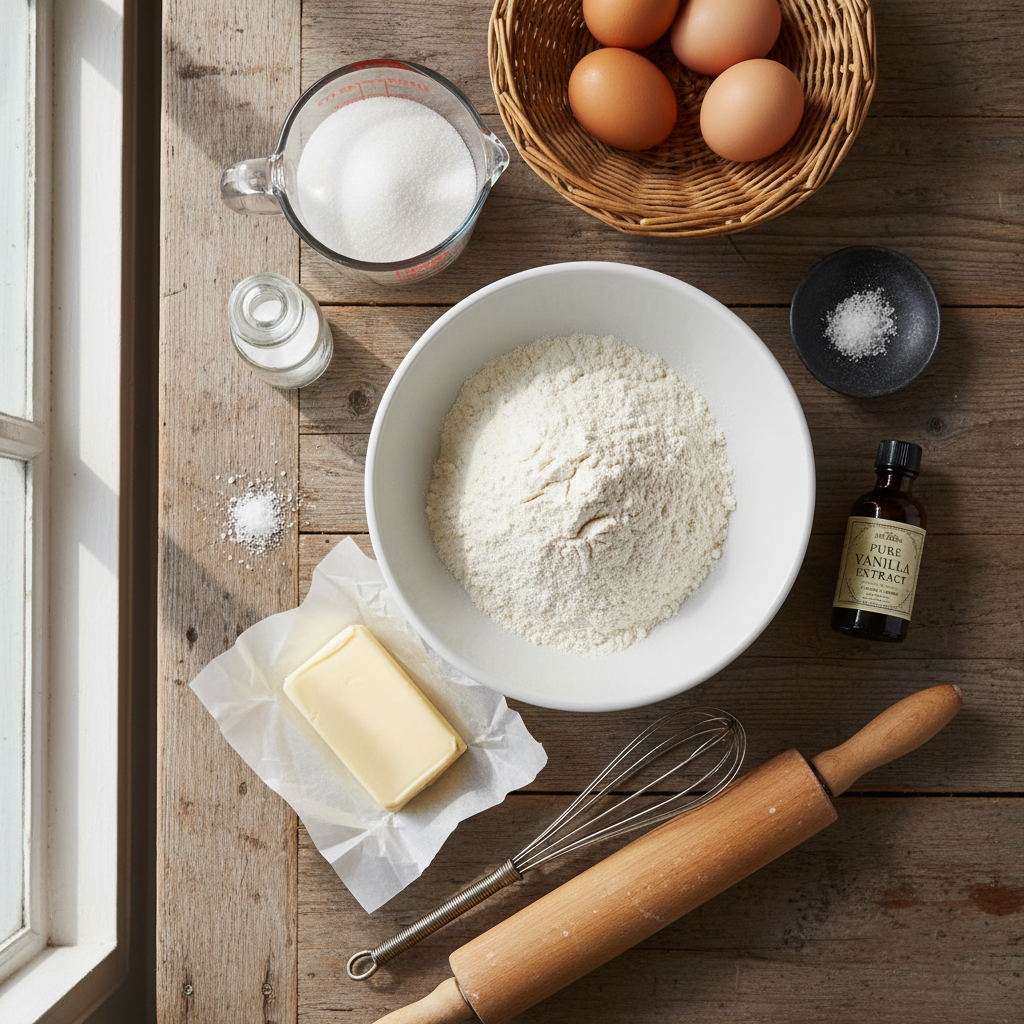
    An overhead shot of all the dry and wet ingredients for sugar cookies neatly laid out on a wooden counter.
    Professional food photography, photorealistic, high-quality food magazine photo of a beautifully arranged flat lay of all the sugar cookie ingredients on a rustic wooden kitchen counter. Ingredients like flour, unsalted butter, granulated sugar, eggs, pure vanilla extract, baking powder, and a pinch of salt are neatly displayed in appealing ceramic bowls or their original packaging. The scene is bathed in soft, natural daylight, emphasizing the freshness and quality of each component. No artistic interpretation, no illustrations, no vector graphics.

    Essential Pantry Staples

    Perfect sugar cookies start with a few simple, everyday ingredients you likely already have in your kitchen. We focus on using basic items to make home cooking easy and approachable for everyone.

    • All-Purpose Flour: This is the foundation of your delicious sugar cookie recipe. It gives cookies their structure and helps them hold their shape for decorating.
    • Granulated Sugar: Beyond sweetness, sugar contributes to the cookie’s tender texture and helps create that lovely crisp edge.
    • Unsalted Butter: For the best flavor and tenderness, unsalted butter is a must. It allows you to control the exact salt content in your cookies.
    • Large Egg: The egg acts as a binder, bringing all the ingredients together. It also adds moisture and richness to the dough, ensuring your cookies are soft.
    • Pure Vanilla Extract: A touch of vanilla is crucial, giving your cookies that classic, warm, and irresistible flavor.
    • Baking Powder: A small amount of baking powder helps your cookies rise slightly, keeping them soft and preventing them from becoming too dense.
    • Salt: Just a pinch of salt is vital. It balances the sweetness beautifully and enhances all the other flavors in the dough.

    Ingredient Substitutions & Tips

    Don’t let a missing ingredient or a dietary need stop your baking fun! Here are some practical tips and easy substitutions to help you adapt the recipe and make the best sugar cookies for your kitchen.

    • Butter Temperature is Key: For a smooth dough, softened butter is vital because it creams easily with sugar to create an airy texture. If you forgot to take it out, you can soften it quickly: Cut the cold butter into small pieces and microwave for 10-15 seconds, or beat it with a rolling pin until pliable.
    • Measure Flour Correctly: Adding too much flour is a common mistake that leads to dry, crumbly cookies. To measure accurately, spoon the flour into your measuring cup, then level it off with a flat edge like a knife. This prevents you from packing in too much.
    • Vanilla Extract Alternatives: Out of vanilla? Almond extract is a wonderful substitute for a unique flavor, but use half the amount since it’s stronger. For a bright, fresh twist, you can also use a little lemon zest.
    • Salted vs. Unsalted Butter: Our recipe calls for unsalted butter. If you only have salted, simply reduce the added salt in the recipe by about 1/4 teaspoon to maintain the perfect flavor balance.
    • Make it Gluten-Free: You can absolutely make delicious gluten-free sugar cookies. Just swap the all-purpose flour for a 1-to-1 gluten-free baking blend that includes xanthan gum for the best results.
    • Vegan Cookie Options: For a plant-based version, use vegan butter sticks and replace the egg with a “flax egg.” To make one, mix 1 tablespoon of ground flaxseed with 3 tablespoons of water and let it sit for 5 minutes to gel.
    • Enhance Flavor with Extracts: Consider adding a drop of another extract, like peppermint, almond, or lemon. This is a simple way to introduce new and exciting flavors to your classic sugar cookies.

    How to Make Sugar Cookies: A Step-by-Step Guide

    A close-up of a home cook's hands using a star cookie cutter to cut shapes from rolled-out sugar cookie dough.
    Professional food photography, photorealistic, high-quality food magazine photo of a home cook’s hands, belonging to a friendly and approachable individual, gently pressing a star-shaped cookie cutter into perfectly rolled-out sugar cookie dough on a lightly floured wooden surface. The dough is smooth, even, and appears easy to work with. A few already cut cookie shapes are visible around the main action. The lighting is warm and natural, creating an inviting kitchen atmosphere. No artistic interpretation, no illustrations, no vector graphics.

    Step 1: Cream the Butter and Sugar

    The first crucial step is to cream the butter and sugar. This process incorporates air into the dough, which is the secret to light, tender cookies.

    1. In a large mixing bowl, add your softened unsalted butter.
    2. Next, add the granulated sugar.
    3. Using an electric mixer, beat them together on medium speed.
    4. Mix until the mixture is light in color and fluffy. This usually takes about 2 to 3 minutes.

    Helpful Hint: If your butter is too cold, microwave it for 10-15 seconds. It should be soft enough to indent with your finger, but not melted.

    Step 2: Mix in Eggs and Vanilla

    Next, it’s time to mix in the eggs and vanilla. These ingredients add moisture and bind the dough together.

    1. Crack one large egg into the creamed butter and sugar mixture.
    2. Beat it on medium speed until just combined.
    3. Add the second large egg. Continue beating until it is fully incorporated.
    4. Stir in the pure vanilla extract. Beat briefly until everything is smooth and well-mixed.

    Flavor Tip: A high-quality vanilla extract will significantly improve the flavor and aroma of your cookies.

    Step 3: Combine the Dry Ingredients

    Preparing your dry ingredients separately ensures an even distribution. This avoids pockets of unmixed flour or leavening.

    1. In a separate medium bowl, whisk together the all-purpose flour, baking powder, and salt.
    2. Gradually add this dry mixture to the wet ingredients in the large mixing bowl.
    3. Mix on low speed until just combined. Be careful not to overmix!

    A Quick Note: Be careful not to overmix. Overmixing develops the flour’s gluten, which will make your cookies tough rather than tender.

    Step 4: Chill the Dough (and a No-Chill Option!)

    Chilling your dough is a game-changer for sugar cookies. It helps prevent spreading and makes the dough easier to handle.

    Why Chill Your Dough?

    • Prevents Spreading: Cold butter melts slower in the oven. This helps your cookies keep their shape beautifully.
    • Easier to Roll: Chilled dough is less sticky and much simpler to roll out.
    • Deeper Flavor: Chilling allows the flavors to meld together, enhancing the cookie’s taste.
    1. Gather the dough into a ball.
    2. Flatten it into a disk shape.
    3. Wrap the disk tightly in plastic wrap.
    4. Refrigerate for at least 30 minutes, or up to 2 hours. For best results, chill for 1 hour.

    No-Chill Option for Quick Baking!

    If you’re short on time, you can skip the chilling step. This option is perfect for when you need cookies in a hurry.

    Simply roll out the dough immediately after mixing. Your cookies may spread slightly more, but they will still be delicious!

    Speedy Solution: If skipping the chill, ensure your kitchen is cool. This helps keep the dough firm while you work.

    Step 5: Roll and Cut Your Cookies

    This is where the fun begins, especially if you’re decorating!

    1. Lightly flour a clean surface or use parchment paper.
    2. Take half of your chilled dough. Keep the other half refrigerated.
    3. Roll out the dough to about ¼-inch thickness. Aim for an even thickness across the whole sheet to ensure uniform baking.
    4. Dip your cookie cutters in flour before each cut. This prevents sticking.
    5. Press firmly to cut out your desired shapes.
    6. Carefully transfer the cut-out cookies to a baking sheet lined with parchment paper. Leave about 1 inch between each cookie.
    7. Gather any dough scraps. Gently combine them, re-roll, and cut more cookies.

    Pro Tip: Don’t overwork the dough scraps when re-rolling. Too much handling can make the cookies tough.

    Step 6: Bake to Perfection

    Almost there! Your kitchen will soon smell amazing.

    1. Preheat your oven to 375°F (190°C).
    2. Place your baking sheet with cookies into the preheated oven.
    3. Bake for 8 to 10 minutes. Baking time can vary slightly depending on your oven and cookie thickness.
    4. Look for cookies that are lightly golden at the edges. The centers should still look pale.
    5. Remove the baking sheet from the oven. Let the cookies cool on the sheet for 5 minutes.
    6. Carefully transfer the cookies to a wire rack. Allow them to cool completely before decorating or storing.

    Doneness Check: Underbaked cookies will be very soft and prone to breaking. Overbaked cookies will be too crispy. A light golden edge is your perfect cue!

    How Do You Make The Best Sugar Cookie Icing?

    A perfectly decorated round sugar cookie with smooth white royal icing and sprinkles on a blurred background.
    Professional food photography, photorealistic, high-quality food magazine photo showcasing a beautifully decorated sugar cookie with vibrant, smooth royal icing. The cookie is a classic round shape, meticulously decorated with simple yet elegant designs, such as a crisp border and a perfectly smooth flood fill, possibly with a few delicate sprinkles. The icing has a glossy, appealing texture. The background is softly blurred, hinting at other perfectly iced cookies or a clean, warm kitchen setting, creating an inviting and inspiring visual. No artistic interpretation, no illustrations, no vector graphics.

    Simple Buttercream Frosting

    The best sugar cookie needs the perfect icing, and this simple buttercream is a wonderful choice. It’s creamy, sweet, and incredibly easy to make, giving your cookies a lovely, soft finish. This recipe is perfect for home cooks of all levels.

    Because it’s so forgiving and delicious, buttercream is a fantastic option for fun family decorating sessions. It’s one of our favorite easy recipes for sweet treats.

    Ingredients for Simple Buttercream Frosting:

    • 1/2 cup (1 stick) unsalted butter, softened
    • 2 cups powdered sugar (confectioners’ sugar)
    • 1-2 tablespoons milk or cream
    • 1/2 teaspoon vanilla extract
    • Pinch of salt (optional, to balance sweetness)
    • Food coloring (optional)

    How to Make Simple Buttercream Frosting:

    1. Cream the Butter: In a medium mixing bowl, beat the softened butter with an electric mixer until it is light and fluffy. This usually takes about 2-3 minutes.
    2. Add Sugar Gradually: Slowly add the powdered sugar, about 1/2 cup at a time. Mix on low speed until combined after each addition. This prevents a sugar cloud!
    3. Mix in Liquids: Once all the sugar is incorporated, add the milk or cream and vanilla extract. Beat on medium speed until the frosting is smooth and creamy. Start with one tablespoon of milk and add more if you need a thinner consistency.
    4. Adjust and Color: If desired, add a pinch of salt to enhance the flavor. Mix in food coloring a drop at a time until you reach your desired shade.

    Tips for Perfect Buttercream:

    • Softened Butter is Key: Ensure your butter is truly softened, not melted. It should give slightly when pressed.
    • Consistency: For a thicker frosting, add less milk. For a thinner, spreadable frosting, add a bit more milk, half a teaspoon at a time.
    • Flavor Variations: You can swap vanilla extract for almond extract, lemon extract, or even a dash of peppermint for festive cookies.
    • Storage: Store leftover buttercream in an airtight container in the refrigerator for up to a week. Let it come to room temperature and re-whip before using.

    Easy Royal Icing for Decorating

    For an icing that dries firm with crisp, clean lines, royal icing is your go-to choice. It’s perfect for adding detailed, professional-looking designs to your sugar cookies. This easy recipe uses meringue powder, which makes it beginner-friendly, safe, and consistent. [1] Meringue powder ensures you get great results every time, helping you create visually stunning treats.

    Ingredients for Easy Royal Icing:

    • 3 cups powdered sugar (confectioners’ sugar)
    • 2 tablespoons meringue powder
    • 1/4 teaspoon vanilla extract (or other clear extract like almond)
    • 4-6 tablespoons warm water
    • Food coloring (optional)

    How to Make Easy Royal Icing:

    1. Combine Dry Ingredients: In a large mixing bowl, whisk together the powdered sugar and meringue powder. This ensures there are no lumps.
    2. Add Wet Ingredients: Add the vanilla extract and 4 tablespoons of warm water. Beat with an electric mixer on medium-high speed for 5-7 minutes. The icing should become very thick, glossy, and form stiff peaks.
    3. Adjust Consistency:
      • For Outlining/Piping: The icing should be thick enough to hold its shape. If it’s too stiff, add water a few drops at a time.
      • For Flooding/Filling: Add additional warm water, 1 teaspoon at a time, until the icing reaches a “10-second” consistency. This means if you drag a knife through it, the line disappears within 10 seconds. This is perfect for filling in your cookie designs.
    4. Color Your Icing: Divide the icing into separate bowls for different colors. Add gel food coloring slowly with a toothpick until you achieve your desired hues. Gel colors are best as they don’t thin the icing.

    Tips for Using Royal Icing:

    • Keep it Covered: Royal icing dries quickly! Always cover your mixing bowl and piping bags with a damp cloth or plastic wrap when not in use.
    • Piping Bags and Tips: Use small piping bags and decorating tips (like PME #1.5 or Wilton #2) for fine details and outlines. For flooding, you can use a slightly larger tip or a squeeze bottle.
    • Drying Time: Allow royal icing to dry completely before stacking or packaging your cookies. This can take anywhere from 6-24 hours, depending on humidity and thickness.
    • Practice Makes Perfect: Don’t be overwhelmed by intricate designs. Start with simple outlines and flood fills. You’ll gain confidence with practice and soon create cookies that look as amazing as they taste.

    Tips for Success: Making the Best Sugar Cookies

    For Soft and Chewy Cookies

    Achieving soft and chewy sugar cookies is a delightful goal, and these tips will help you create that tender, melt-in-your-mouth texture. The secret lies in careful preparation and timing.

    • Don’t overmix the dough: Mix dry and wet ingredients only until they are just combined. Overmixing develops too much gluten, which can lead to tough cookies.
    • Use room temperature ingredients: Softened butter and eggs mix together more evenly, creating a smoother and more consistent dough.
    • Slightly underbake your cookies: Remove cookies from the oven when the edges are set but the centers still look a little soft. They will continue to bake on the hot sheet, which helps them retain moisture.
    • Add an extra egg yolk: For a simple trick with a big impact, add an extra egg yolk to the dough. This boosts both richness and chewiness.
    • Chill the dough longer: Chilling allows the ingredients to meld and prevents the cookies from spreading too much. A well-chilled dough bakes up thicker and chewier.

    For Crispy, Snappy Cookies

    If you prefer a cookie with a delightful snap, making crispy sugar cookies is just as easy. A few small adjustments are all it takes to get that satisfying crunch.

    • Roll the dough thinner: Thinner cookies bake faster and dry out more in the oven, which leads to a crispier final texture.
    • Bake until golden brown: Keep your cookies in the oven a little longer, until they are a light golden brown around the edges. This ensures they are fully baked and crisp.
    • Use only granulated sugar: Granulated sugar contributes to a crispier texture and helps prevent the soft, chewy bite found in other recipes.
    • Increase baking time slightly: Just a minute or two extra in the oven can transform chewiness into crispiness. Be sure to watch them closely.
    • Cool completely on racks: Transfer cookies to a wire rack immediately after baking. Proper air circulation prevents sogginess and ensures maximum crispness.

    How to Prevent Spreading

    Cookie spreading is a common challenge, but nobody wants flat, misshapen sugar cookies. Luckily, a few easy steps can help you achieve beautifully shaped treats, which is especially important when making sugar cookies for decorating.

    • Chill your dough thoroughly: This is the most crucial step. Because cold butter melts slower, chilled dough helps cookies hold their shape. Chill for at least 30 minutes, but an hour or more is even better.
    • Measure ingredients precisely: An imbalance of ingredients, like too much butter or not enough flour, can lead to spreading. Use a kitchen scale for the best accuracy. [2]
    • Don’t overcrowd the baking sheet: Leave enough space between cookies. Overcrowding lowers the oven’s effective temperature, which can cause the cookies to spread more as they bake.
    • Use parchment paper or silicone mats: These surfaces regulate heat and prevent sticking, allowing cookies to bake more evenly and better hold their shape.
    • Maintain correct oven temperature: An oven that’s too cool will cause butter to melt before the cookie structure sets, leading to spreading. Always preheat it thoroughly and consider using an oven thermometer for accuracy. [3]

    Storing Your Sugar Cookies

    Proper storage is key to keeping your sugar cookies fresh and delicious for as long as possible. Follow these tips for storing both plain and decorated cookies to ensure they stay enjoyable.

    • For undecorated cookies:
      • Store them in an airtight container at room temperature.
      • They will stay fresh for up to 5-7 days.
      • Adding a slice of bread to the container can help keep them soft.
    • For decorated cookies (with royal icing):
      • Allow icing to fully harden, which can take 6-12 hours.
      • Store in a single layer in an airtight container.
      • Keep at room temperature for up to 2 weeks.
      • Avoid stacking until the icing is completely dry to prevent smudging.
    • For decorated cookies (with buttercream frosting):
      • Since buttercream is softer, store these cookies in an airtight container.
      • Keep them in the refrigerator for up to 3-5 days.
      • Let them come to room temperature before serving for the best flavor and texture.
    • Freezing baked cookies:
      • Baked, undecorated cookies freeze very well.
      • Place cooled cookies in a freezer-safe airtight container.
      • Separate any layers with parchment paper.
      • Freeze for up to 3 months.
      • Thaw at room temperature before decorating or serving.
    • Freezing raw cookie dough:
      • Wrap the dough tightly in plastic wrap, then place it in a freezer bag.
      • Freeze for up to 1 month for the best quality.
      • Thaw dough in the refrigerator overnight.
      • Proceed with rolling and baking as the recipe directs.

    Frequently Asked Questions About Sugar Cookies

    What is the best sugar cookie recipe for decorating?

    This is our best sugar cookie recipe for decorating because the dough holds its shape beautifully while baking. This means you won’t get puffy, uneven cookies, ensuring your intricate designs stay clear and crisp. The key is a perfect balance of ingredients that creates a sturdy yet tender base. For the best results, chill the dough to prevent spreading [4], which makes decorating much more enjoyable. Pair them with our simple buttercream frosting or easy royal icing to achieve professional-looking sugar cookies and build your baking confidence.

    How do you make a crispy sugar cookie recipe?

    Making a crispy sugar cookie recipe is simple—it just requires a few adjustments. First, try increasing the baking time slightly or using a lower oven temperature, around 325°F (160°C), to allow more moisture to evaporate. You can also use a higher ratio of granulated sugar and less fat to contribute to crispiness. Roll your dough thinner than usual and bake until the edges are golden brown. Letting them cool completely on a wire rack helps them crisp up even more, creating a delightful snap for those who prefer a firmer texture. It’s an easy way to customize your baking.

    Can I make this a sugar cookie recipe with no chill time?

    Yes, you can absolutely make a sugar cookie recipe with no chill time! Our recipe includes a no-chill option that’s perfect for busy families who need a quick dessert. While chilling dough helps prevent spreading and makes it easier to handle, you can skip this step if you’re in a hurry. Here’s how to do it successfully:

    • Work quickly with the dough.
    • Keep your countertop and kitchen cool.
    • Roll the dough between two sheets of parchment paper.
    • This prevents sticking and helps maintain shape.

    Your cookies might spread a tiny bit more, but they will still be delicious and hold their shape well. This option is great for busy weeknights, letting you enjoy freshly baked sugar cookies without the wait. Don’t let chill time stop you from baking!

    What makes a sugar cookie chewy?

    Several factors create a wonderfully chewy sugar cookie, and the type of sugar plays a big role. Adding brown sugar significantly increases chewiness because its molasses content adds moisture and softness. A higher fat content, like using a good amount of butter, also helps create a chewy texture. Slightly underbaking the sugar cookies is another key. Remove them from the oven when the edges are set but the centers still look slightly soft. They’ll continue to cook on the hot baking sheet, which creates that desirable soft, bendy texture. Proper mixing is also important. Be careful not to overmix the dough after adding flour, as this can develop too much gluten and result in a tougher, less chewy cookie. Our best sugar cookie recipe can be easily adapted for extra chewiness.


    Sources

    1. https://www.foodsafety.gov/keep-food-safe/food-safety-by-topic/eggs
    2. https://www.kingarthurbaking.com/blog/2015/05/29/weighing-vs-measuring
    3. https://www.epicurious.com/ingredients/why-you-need-an-oven-thermometer-article
    4. https://www.kingarthurbaking.com/blog/2017/10/26/why-chill-cookie-dough
  • The Best Homemade Baklava Recipe (Surprisingly Simple!)

    The Best Homemade Baklava Recipe (Surprisingly Simple!)

    Baklava is a rich, sweet dessert pastry made from layers of flaky filo dough filled with chopped nuts and held together with a sweet syrup or honey. This iconic dessert, popular across the Middle East and Mediterranean, is celebrated for its crispy texture and deliciously sweet, nutty flavor.

    Many of us dream of creating perfect, flaky baklava at home—layers of golden filo pastry, a sweet and spiced nut filling, all drenched in fragrant syrup. This dessert evokes warmth and celebration, but the thought of making it can feel overwhelming. You may have admired it from afar, thinking an authentic recipe is too complex for your kitchen, leaving you unsure of where to start.

    At Recipesmondial, we believe that every home cook, regardless of experience, deserves to create incredible flavors without intimidation. That’s why we’re sharing our simple baklava recipe, designed with beginner-friendly steps and everyday ingredients. Our approachable home cooking guide walks you through each stage, building your confidence and ensuring a satisfying result.

    Get ready to transform simple ingredients into a show-stopping dessert that is as delicious as it is rewarding to make. With our clear, step-by-step guidance, you’ll see how easy it is to achieve crisp, buttery layers and a perfectly balanced sweet syrup. Stop struggling with intricate desserts and discover the joy of making the best homemade baklava. Let’s start creating your new favorite treat!

    Why Is This the Best Baklava Recipe for Home Cooks?

    Welcome to your new favorite baklava recipe! We know making baklava at home can seem daunting, especially if you’ve been overwhelmed by complex recipes in the past. Here at Recipesmondial, we believe every home cook can create amazing dishes with confidence. That’s why we designed this simple, clear recipe just for you.

    We’ve simplified traditional techniques without sacrificing any of the incredible flavor, allowing you to enjoy cooking without the stress. This guide will help you create a delicious, golden, and perfectly sweet baklava that you’ll be proud to share with your loved ones.

    So, why is this the best baklava recipe for home cooks? It’s all about making gourmet accessible. Here’s what makes our recipe stand out:

    • Simplified Steps for Success: We break down the process into simple, easy-to-follow actions. You won’t find any overwhelming technical terms here, just clear guidance to build your confidence in the kitchen.
    • Everyday Ingredients, Exceptional Flavor: This recipe uses readily available ingredients you likely already have in your pantry. We’ll show you how to transform these simple items into a dessert with a rich, authentic taste.
    • Perfectly Crisp Results: Soggy baklava can be disappointing, but not with this recipe. Our specific tips for baking and pouring the syrup guarantee a delightfully crisp, flaky pastry every time.
    • Beginner-Friendly Approach: This is a truly beginner-friendly recipe. You will succeed even if you’ve never worked with filo dough before.
    • Practical Tips and Troubleshooting: We include helpful advice throughout to ensure a smooth process. You’ll learn how to handle filo dough and avoid common mistakes, boosting your cooking skills along the way.
    • Inspiring Creativity: We offer suggestions for customizing your baklava, such as using different nuts or adding new flavorings. We encourage you to experiment and make this recipe your own.
    • Reliable and Rewarding: By following our clear instructions, you’ll transform simple ingredients into a visually stunning and incredibly tasty dessert. The process is designed to be as rewarding as the final result.

    At Recipesmondial, our mission is to make home cooking enjoyable and stress-free. This baklava recipe perfectly embodies that philosophy. Get ready to impress yourself and your family with this surprisingly simple and delicious treat!

    What Ingredients Do You Need for Baklava?

    A flat lay of baklava ingredients including phyllo dough, chopped walnuts, melted butter, sugar, water, and fresh lemon slices.
    A professional food photography, photorealistic, high-quality food magazine photo of all the necessary ingredients for baklava laid out on a light, rustic wooden surface. The composition is a beautiful flat lay, featuring a stack of golden phyllo dough sheets, a ceramic bowl filled with finely chopped walnuts, a small dish of melted butter, granulated sugar, a measuring cup of water, and fresh lemon slices. The lighting is bright and natural, creating a warm, inviting atmosphere, emphasizing freshness and readiness for baking.

    Crafting delicious homemade baklava is much simpler than you might imagine, and this easy recipe relies on just a few core ingredients, most of which are available at your local grocery store. Don’t be overwhelmed by the idea of making this impressive dessert. We’ll break down what you need for each component, focusing on common items for approachable home cooking. Our goal is to make family-friendly meals and treats accessible to everyone.

    You’ll need specific ingredients for the pastry layers, the flavorful nut filling, and the sweet, glistening syrup. Let’s gather your essentials for this beginner-friendly recipe!

    For the Filo Layers

    The magic of baklava starts with delicate filo pastry, which provides those incredibly crisp, golden layers. Here’s what you’ll need:

    • Filo Dough (Frozen): This is your primary building block. Look for it in the freezer section and thaw it completely in the refrigerator overnight before baking to help prevent tearing. Using pre-made filo makes this an easy recipe for home cooks.
    • Unsalted Butter: You’ll need a generous amount of melted unsalted butter, which we’ll brush between each layer of filo to create a beautiful golden-brown color and flaky texture. While clarified butter (ghee) is an option for a richer flavor, regular melted butter works perfectly for a delicious result.

    Working with filo can seem intimidating at first. However, the key is to keep it covered with a damp cloth to prevent it from drying out. You’ll master it in no time!

    For the Nut Filling

    The heart of your baklava is its aromatic nut filling, which gives the pastry its signature crunch and flavor. You have some flexibility here, which is great for creative, flavorful meals.

    • Chopped Nuts: We recommend either walnuts or pistachios, but a mixture of both creates a delightful taste and texture. Walnuts are a classic choice, while pistachios offer a vibrant color and distinct flavor. Nuts are also a great source of healthy fats and protein [1].
    • Granulated Sugar: A small amount of sugar enhances the sweetness of the nuts.
    • Ground Cinnamon: This spice adds warmth and depth to the nut mixture and is a key flavor in many traditional baklava recipes.
    • Optional: Ground Cloves: A tiny pinch of ground cloves can add an extra layer of fragrant spice.

    For simple dinner recipes and desserts, a food processor makes chopping nuts a breeze. Just pulse them until they are finely chopped but not yet a paste.

    For the Sweet Syrup

    The final touch for your baklava is the sweet, fragrant syrup that transforms the crispy pastry into a luscious treat. Getting this part right is crucial for a perfect, non-soggy outcome.

    • Granulated Sugar: This forms the base of your syrup.
    • Water: This dissolves the sugar and creates the right consistency.
    • Fresh Lemon Juice: A squeeze of lemon juice is essential, as it prevents the sugar from crystallizing and adds a bright, fresh counterpoint to the sweetness.
    • Optional: Honey: Adding a touch of honey gives the syrup extra richness and a beautiful golden hue, a common variation in many easy baklava recipes.
    • Optional: Orange Blossom Water or Rose Water: For a truly authentic flavor, consider adding a teaspoon of either of these floral waters to impart a wonderful aroma.

    Preparing the syrup is straightforward: simply combine and simmer the ingredients. The key is to let it cool completely before pouring it over your hot, freshly baked baklava. This temperature difference is what keeps the pastry wonderfully crispy. It’s a vital tip for beginner-friendly recipes like this!

    How to Make Baklava: A Step-by-Step Guide

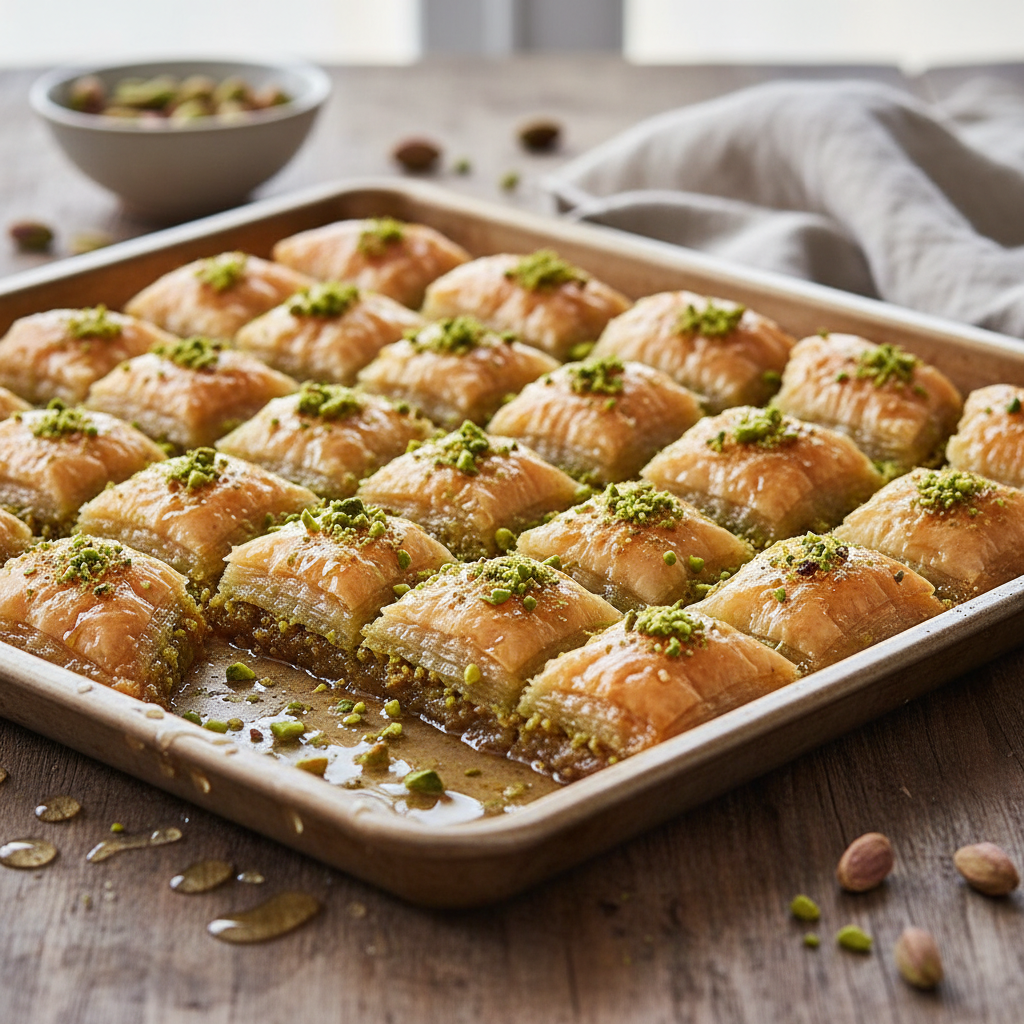
    A tray of freshly baked, golden-brown baklava cut into diamond shapes, glistening with syrup and topped with chopped pistachios.
    A professional food photography, photorealistic, high-quality food magazine photo showcasing a beautifully finished tray of homemade baklava. The baklava is golden-brown, glistening with a generous pour of clear, sweet syrup, and adorned with a sprinkle of bright green chopped pistachios. It is neatly cut into traditional diamond shapes, with individual pieces clearly defined. The background is softly blurred to keep focus on the delicious dessert, suggesting a cozy, inviting kitchen environment. The image exudes warmth and success, encouraging home cooks.

    Step 1: Prepare the Sweet Syrup

    Begin by making the syrup, as it needs several hours to cool completely. The contrast between the cool syrup and hot pastry is the secret to crispy baklava.

    1. In a medium saucepan, combine the sugar, water, and honey.
    2. Add a strip of lemon peel and a cinnamon stick for flavor.
    3. Bring the mixture to a boil over medium-high heat, stirring just until the sugar dissolves.
    4. Reduce the heat to low and simmer gently for 10-15 minutes, or until the syrup thickens slightly.
    5. Remove the saucepan from the heat. Discard the lemon peel and cinnamon stick.
    6. Set the syrup aside to cool completely to room temperature, which can take several hours.

    Chef’s Tip: Avoid stirring the syrup once it boils, as this can cause it to crystallize. A squeeze of lemon juice added at the end also helps prevent crystallization [2].

    Step 2: Create the Nut Filling

    Next, prepare the nut filling. This mixture is the flavorful heart of the baklava and comes together in just a few minutes.

    1. Place your chosen nuts (walnuts, pistachios, or a mix) in a food processor.
    2. Pulse until the nuts are finely chopped but still have texture. Avoid processing them into a paste.
    3. Transfer the chopped nuts to a medium bowl.
    4. Add the ground cinnamon and a pinch of ground cloves, if using.
    5. Add the granulated sugar and stir until all ingredients are well combined.

    Chef’s Tip: Be careful not to over-process the nuts. A coarse, crumbly texture—not a fine powder—is essential for the baklava’s satisfying bite.

    Step 3: Assemble the Baklava Layers

    Now it’s time to assemble the baklava. Don’t be intimidated by the filo dough; working with it is easier than it looks. Follow these steps carefully for a stunning result.

    1. Preheat the oven to 325°F (160°C).
    2. Melt 1 cup (226g) of unsalted butter.
    3. Carefully unroll the filo dough. To prevent it from drying out, keep the stack covered with a damp kitchen towel while you work.
    4. Brush the bottom and sides of a 9×13 inch baking pan with melted butter.
    5. Lay one sheet of filo in the pan and lightly brush its entire surface with butter. Repeat to create a base of 8-10 buttered layers.
    6. Sprinkle one-third of the nut mixture evenly over the top layer of filo.
    7. Layer another 5-6 sheets of filo on top, brushing each one with butter.
    8. Add the second third of the nut mixture.
    9. Repeat with another 5-6 buttered filo sheets.
    10. Spread the remaining nut filling over the top.
    11. Finish by layering the last 8-10 filo sheets, making sure to butter each one, including the very top layer.

    Chef’s Tip: Work gently with the filo dough. If a sheet tears, don’t worry—simply patch it with another piece or cover it with the next buttered sheet. Minor imperfections will be hidden in the final layers.

    Step 4: Cut the Baklava Before Baking

    It’s crucial to cut the baklava before baking. This allows the syrup to penetrate every layer and creates clean, individual portions.

    1. Using a very sharp knife, cut the assembled baklava all the way through to the bottom of the pan.
    2. Make straight cuts across the width of the pan, about 1.5 to 2 inches apart.
    3. To create the classic diamond pattern, make diagonal cuts across the length of the pan.

    Chef’s Tip: For the cleanest cuts, warm your knife under hot water and wipe it dry between slices. A ruler can also help you create perfectly uniform pieces.

    Step 5: Bake Until Golden Brown

    Now, it’s time to bake the baklava. Your kitchen will soon be filled with a delightful aroma.

    1. Place the pan in the preheated 325°F (160°C) oven.
    2. Bake for 50-60 minutes, until the top is a deep golden-brown and the layers look crisp.
    3. If the top begins to brown too quickly, loosely cover it with aluminum foil for the remaining bake time.
    4. Carefully remove the baklava from the oven.

    Chef’s Tip: Oven temperatures can vary, so start checking the baklava after 45 minutes. It’s ready when the top is a uniform golden-brown.

    Step 6: Pour Syrup Over the Hot Pastry

    This final step is what makes baklava so special. The sizzling sound of cool syrup hitting the hot pastry is not only satisfying—it’s the key to a perfectly crisp and sweet result.

    1. As soon as you take the baklava out of the oven, slowly and evenly pour the cooled syrup over the entire surface.
    2. Allow the baklava to cool completely in the pan at room temperature for at least 4-6 hours, or preferably overnight. This gives it time to absorb the syrup and become crisp.
    3. Once fully cooled, carefully re-cut along the original lines to separate the pieces.
    4. Garnish with crushed pistachios before serving, if desired.

    Chef’s Tip: Patience is essential. Resist the temptation to serve the baklava warm. The long cooling time is necessary for the syrup to fully permeate the layers, creating the perfect balance of crisp pastry and sweet filling.

    Expert Tips for a Perfect, Non-Soggy Baklava

    A close-up of a single piece of baklava, showing its crisp, golden-brown flaky layers and perfectly absorbed syrup.
    A professional food photography, photorealistic, high-quality food magazine photo, close-up shot of a single, perfect piece of baklava, showcasing its incredibly crisp, flaky, golden-brown top layers. The focus is sharp on the delicate texture of the phyllo dough and the perfectly absorbed, non-soggy syrup. The nutty filling is subtly visible. The lighting highlights the beautiful golden hue and the intricate layers, conveying perfection and a delicious crunch. The background is a soft, warm bokeh.

    Mastering the Syrup Application

    A perfect baklava—golden, crisp, and sweet without being soggy—is achievable for any home cook. At Recipesmondial, we want to make complex desserts simple and stress-free. For baklava, the secret to success is the syrup. While it’s a common concern for beginners, one simple trick ensures perfect results every time: creating a temperature contrast for optimal absorption.

    • Hot Baklava, Cold Syrup: This is the golden rule. Take your baklava straight from the oven while it’s piping hot. In contrast, your syrup must be completely cool, either at room temperature or slightly chilled. Pouring cold syrup over hot pastry allows the filo to absorb the sweetness slowly and evenly, preventing it from getting waterlogged. If both are hot, the baklava essentially “cooks” in the syrup and turns mushy.
    • Pour Slowly and Evenly: Resist the urge to dump the syrup all at once. Instead, use a ladle to drizzle it gradually over the entire surface. Make sure to cover the edges and pour along the pre-cut lines so every piece gets an equal share. This careful method ensures even absorption and prevents any single area from becoming too saturated.
    • Let It Rest: Patience is key after you’ve poured the syrup. Your baklava needs to rest uncovered at room temperature for at least 6-8 hours, or preferably overnight. This crucial waiting period allows the pastry to fully absorb the syrup, which develops a deeper flavor and guarantees that signature, non-soggy crunch.

    Butter Up for Success

    Butter is a vital component for both flavor and texture in baklava. Choosing the right kind—and using the right amount—is essential for achieving maximum crispiness.

    • Use Clarified Butter (Ghee): While regular unsalted butter is acceptable, clarified butter (ghee) is the best choice for baklava. It has a higher smoke point because the milk solids have been removed. These solids can burn during baking, resulting in a bitter taste and less crispy texture. To make your own for a professional touch, simply melt butter over low heat, skim the foam from the top, and carefully pour off the clear golden liquid, leaving the milky solids behind.
    • Brush Lightly, Not Heavily: To get crisp layers, you need enough butter to lightly coat the filo sheets. However, too much will make the final product greasy. The goal is a light, even brushing on every layer, not a pool of butter. This perfect balance creates that signature flaky texture and rich flavor without being oily.

    Handling Filo Dough Like a Pro

    Delicate filo dough can seem intimidating to beginners, but it’s easy to manage with a few key techniques. Follow these tips to build beautiful, crisp layers for your homemade baklava, stress-free.

    • Keep It Covered: Filo dough dries out extremely fast when exposed to air, causing it to crack and become brittle. To prevent this, always keep the stack of filo you aren’t using covered with a damp—but not wet—kitchen towel. Only uncover one sheet at a time as you work.
    • Handle Layers Gently: The magic of baklava is in its numerous, paper-thin layers. As you work, lay each sheet down gently without pressing. A light, even brushing of butter between layers is all you need. This technique traps small pockets of air that expand during baking, creating that essential, flaky crunch.
    • Score Before Baking: This is a non-negotiable step. Before the baklava goes into the oven, use a sharp knife to cut it into your desired shapes, like diamonds or squares. Be sure to cut all the way through to the bottom of the pan. This serves two crucial purposes: it helps the layers cook evenly, and it creates channels for the syrup to penetrate every piece for perfect flavor distribution.

    By following these simple tips, you can confidently create a stunning, non-soggy baklava that will impress everyone. At Recipesmondial, we believe cooking should be enjoyable. Our guidance is here to help you build kitchen confidence, one delicious recipe at a time.

    How Can You Customize Your Baklava?

    Choosing Your Nuts: Pistachio vs. Walnut

    Baklava is wonderfully versatile, and its flavor profile changes significantly based on the type of nut you use. Let’s explore the two most popular options for your homemade recipe.

    • Classic Walnuts: Walnuts offer a robust, earthy flavor and a slightly coarser texture. Because they are often more affordable, walnuts are a great choice for budget-conscious baking and a staple in many traditional baklava recipes.
    • Elegant Pistachios: Pistachios provide a delicate, sweet, and slightly floral taste with a finer, almost buttery texture. Their vibrant green color gives the final dessert a stunning, elegant appearance. However, keep in mind that pistachios can be more expensive [3].

    Tips for Your Nut Choice:

    • Flavor Preference: Do you prefer a strong, traditional taste? Choose walnuts. For a milder, sweeter note, go with pistachios.
    • Budget-Friendly: For a more economical option, especially for everyday baking, walnuts are typically the less expensive choice.
    • Visual Appeal: The beautiful green hue of pistachios makes for a visually striking dessert.
    • Mixing Nuts: Don’t feel limited to just one type of nut. A blend of walnuts and pistachios creates a delightful complexity in both flavor and texture. You can also add a touch of almond to enhance the richness.

    Recipe Variations: Greek, Turkish, and More

    Baklava boasts many regional variations, each with its own unique character. Exploring these different styles can inspire your own homemade baklava recipe.

    Popular Regional Styles:

    • Greek Baklava: Often featuring a rich, spicy flavor, this style typically includes walnuts with a generous amount of cinnamon and cloves. The syrup is usually honey-based, sometimes flavored with lemon or orange zest. Greek baklava also tends to have fewer, thicker layers than its Turkish counterpart.
    • Turkish Baklava: Turkish baklava is typically less spicy, highlighting the delicate flavor of pistachios. It’s known for having numerous, paper-thin layers that create an incredibly delicate and crispy texture. The syrup is usually a lighter, sugar-based concoction, sometimes infused with a hint of lemon juice or rosewater [4].

    Other Exciting Ways to Customize Your Baklava:

    • Spice It Up: Add other spices like cardamom, nutmeg, or a dash of allspice to your nut filling for a unique flavor profile.
    • Syrup Swaps: Experiment with the syrup by infusing it with orange blossom water for a floral note or rosewater for a fragrant touch. To create a lighter dessert, simply reduce the amount of sugar.
    • Add Dried Fruits: For extra chewiness and flavor, include finely chopped dried apricots or figs in your nut mixture. This adds a lovely fruity twist.
    • Chocolate Drizzle: For a decadent, modern twist, drizzle melted dark or white chocolate over the baklava after it has cooled.
    • Shape Shifters: Instead of using a classic rectangular pan, try making individual rolls, triangles, or cups. For an easy, beginner-friendly approach, use muffin tins to create mini baklava portions.
    • Dietary Adjustments: To accommodate dietary needs, consider using a sugar substitute in the syrup or exploring vegan butter alternatives for a dairy-free version.

    Remember, the best part of home baking is making a recipe your own. Feel free to mix and match these ideas to create your perfect baklava. Enjoy the journey of discovering your favorite customization!

    How Should You Store Homemade Baklava?

    You’ve put in the effort to create the perfect homemade baklava. Storing it correctly is the key to ensuring every bite remains as delightful as the first. Proper storage maintains its crisp texture and rich flavor.

    Baklava has unique storage needs. Its generous syrup acts as a natural preservative because sugar reduces water activity. This process inhibits microbial growth and keeps your pastry fresh longer [5].

    Room Temperature Storage (Recommended)

    For the best texture and flavor, storing baklava at room temperature is the recommended method. This approach keeps the filo layers delightfully crisp and ensures the syrup remains liquid and fully infused throughout the pastry.

    • Airtight Container: Always store your baklava in a tightly sealed, airtight container. This is crucial for protecting its delicate layers from humidity, which can make it soggy.
    • Location: Choose a cool, dry spot in your kitchen away from direct sunlight or heat sources like appliances.
    • Shelf Life: When stored this way, homemade baklava stays fresh for up to two weeks, making it an ideal dessert to prepare in advance.

    Refrigeration

    While refrigerating baklava isn’t usually necessary, it’s a good option if you live in a very warm climate or want to extend its shelf life. Be aware, however, that the cold can alter the pastry’s texture.

    • Airtight Container: As with room temperature storage, an airtight container is essential to prevent the baklava from absorbing refrigerator odors or drying out.
    • Potential Changes: The cold can make the filo dough less crisp and may cause the syrup to thicken or crystallize.
    • Serving Tip: To restore its best qualities, let refrigerated baklava sit at room temperature for about 30 minutes before serving. Stored in the fridge, it can last for up to three weeks.

    Freezing for Long-Term Storage

    Freezing is an excellent choice for long-term storage, especially if you’ve made a large batch. This method ensures you always have a delicious treat ready for future guests or cravings, making entertaining effortless.

    • Prepare for Freezing: Allow the baklava to cool completely so the syrup can fully set.
    • Wrap Individually: For easier serving later, wrap individual pieces or small sections tightly in plastic wrap.
    • Foil and Container: For extra protection against freezer burn, add a second layer of aluminum foil over the plastic wrap. Then, place the pieces in a freezer-safe airtight container or a heavy-duty freezer bag.
    • Shelf Life: Frozen baklava can last for up to three months.
    • Thawing: To thaw, move the baklava from the freezer to the refrigerator to rest overnight. Allow it to come to room temperature before serving to ensure it thaws gently and retains its optimal quality.

    By following these simple tips, you can enjoy your homemade baklava at its peak. Proper storage ensures your delicious creation stays perfectly crisp and flavorful for longer, adding joy to your home cooking experience with Recipesmondial!

    Frequently Asked Questions About Making Baklava

    How many calories are in baklava?

    As a rich dessert, baklava is best enjoyed in moderation. The exact calorie count can vary significantly depending on the ingredients and serving size. For example, recipes that use more butter or sugar will naturally have more calories.

    A single piece of baklava (about 40 grams) generally contains 250 to 300 calories [6], but this number can fluctuate. Our easy recipes focus on great flavor without unnecessary extras. Knowing the calorie count helps you make informed choices while still enjoying your favorite treats.

    What are the main baklava ingredients?

    Making baklava is surprisingly simple, relying on a few core ingredients to create its signature flaky layers and sweet flavor. The primary components are:

    • Filo Pastry: These paper-thin sheets of dough bake into crispy, golden layers.
    • Nuts: A generous filling of chopped nuts is essential. Walnuts and pistachios are most common, but you can also use pecans or almonds.
    • Butter: Melted butter or clarified butter (ghee) is brushed between each filo layer to create a wonderfully flaky texture.
    • Sweet Syrup: A simple syrup made from sugar, water, and often lemon juice is poured over the hot, baked baklava. Some recipes also add honey or floral water (like rose or orange blossom) for extra flavor.

    Together, these components create an irresistible dessert, proving that simple ingredients can produce a truly stunning result.

    What is the difference between Greek and Turkish baklava recipes?

    While both Greek and Turkish baklava are delicious, several key differences highlight the unique culinary traditions of each region. Here’s a quick comparison:

    Feature Greek Baklava Turkish Baklava
    Main Nuts Primarily walnuts, though almonds are also used. Traditionally made with finely ground pistachios.
    Spices Spiced with cinnamon and cloves for a warm, aromatic flavor. Uses fewer spices, sometimes with a subtle hint of cardamom.
    Syrup Base Uses a honey-based syrup, often with lemon juice for brightness. Uses a sugar-based syrup, sometimes flavored with rose or orange blossom water.
    Sweetness Tends to be sweeter due to the richness of the honey. Offers a more balanced sweetness, allowing the pistachio flavor to stand out.
    Cut/Shape Often cut into diamond or rectangular shapes. Found in various shapes, including squares, triangles, or cylindrical rolls.
    Number of Layers May have fewer layers compared to some Turkish varieties. Known for having many very thin layers of filo.

    Ultimately, both versions are a testament to skillful layering and offer a unique, delightful experience. Our beginner-friendly recipes make it easy to try either style at home!

    How do you pronounce baklava?

    Wondering how to say the word? You’re not alone. The pronunciation is quite straightforward: “BAH-klah-vah.”

    The key is to emphasize the first syllable. Now you can confidently order or discuss this wonderful dessert.


    Sources

    1. https://www.heart.org/en/healthy-living/healthy-eating/eat-smart/nutrition-basics/nuts-and-your-heart
    2. https://www.seriouseats.com/how-to-prevent-sugar-syrup-crystallization
    3. https://www.baklava.org/faq
    4. https://www.istanbul.com/blog/turkish-baklava-a-history-of-sweetness
    5. https://nchfp.uga.edu/publications/nchfp/factsheets/FoodPres.pdf
    6. https://fdc.nal.usda.gov/fdc-app.html#/food-details/172283/nutrients

  • How to Make the Perfect Cheesecake: An Easy, Step-by-Step Recipe Guide

    How to Make the Perfect Cheesecake: An Easy, Step-by-Step Recipe Guide

    A classic cheesecake is a rich, creamy dessert made with a buttery biscuit base and a smooth filling of cream cheese, sugar, eggs, and sour cream. To achieve the perfect texture, it is typically baked slowly in a water bath, which prevents cracks and ensures it sets evenly. This method creates the decadent, dense dessert that is loved worldwide.

    Is there anything more satisfying than a perfectly creamy slice of cheesecake? With its rich, velvety texture and sweet, tangy flavor, this dessert often feels like a luxurious restaurant treat. While many home cooks dream of baking a stunning cheesecake, the idea of tackling such a classic can feel daunting. You might worry about cracks, a soggy crust, or achieving that signature smooth finish.

    Here at Recipesmondial, we believe every home cook deserves to experience the joy of baking impressive desserts without the stress. That’s why we’re excited to share our ultimate cheesecake recipe, designed to guide you through every step. Our method isn’t just easy; it’s reliable, ensuring you get a gloriously smooth, crack-free result every time. Forget complex techniques or intimidating jargon. We’re here to build your confidence and make approachable home cooking a delicious reality.

    Get ready to transform simple ingredients into a show-stopping dessert. In this guide, we’ll walk you through the entire process, from selecting the right components to mastering the baking technique. We’ll also share crucial tips for that perfect finish. Let’s dive into what truly makes a great cheesecake irresistible!

    What Makes a Great Cheesecake Recipe?

    Making a truly amazing cheesecake might seem challenging, but it’s very achievable for any home cook. At Recipesmondial, we believe the best recipes transform simple ingredients into a show-stopping dessert without stress or complicated steps. It all comes down to a few key elements that make a cheesecake recipe shine.

    The Hallmarks of a Fantastic Cheesecake

    What sets a great cheesecake recipe apart? It comes down to clarity, flavor, and a perfect texture every time. A great recipe should also build your confidence, not leave you feeling overwhelmed by complex steps.

    • Simple, Quality Ingredients: A great cheesecake relies on fresh, everyday ingredients like full-fat cream cheese, fresh eggs, and quality sugar. These items are easy to find and form the backbone of your delicious dessert. For instance, using high-quality cream cheese makes a huge difference in the final texture and taste.
    • Clear, Step-by-Step Instructions: The best recipes guide you effortlessly through each stage with clear, actionable steps. They avoid technical jargon, which is crucial for beginners. From preparing the crust to cooling the final cheesecake, you’ll know exactly what to do, preventing any uncertainty in the kitchen.
    • Velvety Smooth Texture: A superior cheesecake should have an incredibly creamy, smooth texture that melts in your mouth with no graininess. Achieving this perfect consistency involves gentle mixing and correct baking temperatures—details our best cheesecake recipe focuses on.
    • Balanced Flavor Profile: A great cheesecake is never overly sweet. Instead, it features a lovely tang from the cream cheese that balances beautifully with the sugar. Subtle hints of vanilla or lemon zest can further enhance the flavor, creating a rich and satisfying taste.
    • A Sturdy, Flavorful Crust: As the foundation of your cheesecake, the crust should be buttery, slightly crumbly, and a perfect complement to the creamy filling. A classic graham cracker crust is a favorite for a reason: it adds a wonderful textural contrast to every bite.
    • Reliable Results and Troubleshooting Tips: A superior recipe anticipates common questions and offers helpful solutions, such as how to prevent cracks or achieve a perfect golden crust. These practical tips make the process more enjoyable and less stressful, helping you build confidence in your skills.

    At Recipesmondial, our goal is simple: to provide easy recipes that deliver fantastic results. We ensure every cheesecake recipe is simple to follow and incredibly flavorful, helping you move from uncertainty to confidence in the kitchen. Get ready to create delicious, visually appealing meals and discover new simple dishes you can enjoy making without stress!

    Our Best Cheesecake Recipe for Beginners

    A whole New York-style cheesecake on a wooden board with a slice on a plate, garnished with raspberries and powdered sugar.
    A stunning, perfectly baked classic New York-style cheesecake, presented whole on a rustic wooden cutting board, with one perfect slice carefully cut and placed on a white ceramic plate. The cheesecake has a smooth, golden-brown top and a visibly creamy, dense interior. It’s garnished simply with a sprinkle of fresh vibrant red raspberries and a light, delicate dusting of powdered sugar. The background is a soft-focus, warm, inviting home kitchen counter, bathed in natural daylight, with a subtle hint of a marble countertop. The overall mood is approachable and elegant. Professional food photography, photorealistic, high-quality food magazine photo, showcasing texture and inviting presentation. No artistic interpretations, no illustrations, no vector graphics, no abstract art.

    Ready to bake a show-stopping dessert without the fuss? This beginner-friendly cheesecake recipe is your ticket to a creamy, dreamy masterpiece. At Recipesmondial, we believe baking should be enjoyable, not stressful. That’s why we’ve designed this guide to make a perfect cheesecake achievable for anyone.

    Say goodbye to feeling overwhelmed by complex instructions. We’ve broken down every step to help you gain confidence in the kitchen. This recipe promises a delicious dessert made easy, perfect for family gatherings or impressing guests.

    Cheesecake Ingredients You’ll Need

    Gathering your ingredients is the first exciting step. This recipe uses common, everyday items you can find easily. For the creamiest texture and richest flavor, be sure to use full-fat dairy products as listed below.

    For the Graham Cracker Crust:

    • 1 ½ cups (180g) graham cracker crumbs: About 10-12 full graham cracker sheets, finely crushed.
    • ¼ cup (50g) granulated sugar: Adds a touch of sweetness.
    • 6 tablespoons (85g) unsalted butter: Melted. This binds the crumbs together.
    • Pinch of salt: Enhances the flavor.

    For the Cheesecake Filling:

    • 32 ounces (4 blocks) full-fat cream cheese: Softened to room temperature. This is crucial for a smooth batter.
    • 1 ½ cups (300g) granulated sugar: For sweetness.
    • ¼ cup (60ml) heavy cream (or sour cream): Adds richness and tang.
    • 2 teaspoons vanilla extract: Pure vanilla is best for flavor.
    • 4 large eggs: Room temperature. Also important for a smooth, uniform batter.
    • 1 tablespoon all-purpose flour: Helps prevent cracking.

    Step-by-Step Baking Instructions

    Now, let’s get baking! Follow these simple instructions carefully to ensure a perfect, stress-free result every time.

    Prepare the Crust:

    1. Preheat your oven: Set it to 350°F (175°C).
    2. Prepare your pan: Use a 9-inch springform pan. Wrap the outside tightly with two layers of heavy-duty aluminum foil to prevent water from seeping in during the water bath.
    3. Combine crust ingredients: In a medium bowl, mix the graham cracker crumbs, sugar, and salt. Pour in the melted butter and stir until all crumbs are evenly moistened.
    4. Press into pan: Press the mixture firmly and evenly into the bottom of the prepared springform pan. The bottom of a measuring cup works well for this.
    5. Bake the crust: Bake for 8-10 minutes to help it set. Remove it from the oven and let it cool slightly while you prepare the filling. Reduce the oven temperature to 325°F (160°C).

    Make the Cheesecake Filling:

    1. Beat cream cheese: In a large bowl using an electric mixer, beat the softened cream cheese on medium speed for 2-3 minutes until completely smooth and creamy.
    2. Add sugar: Gradually add the granulated sugar and beat until just combined. Scrape down the sides of the bowl to ensure everything is mixed in. Do not overmix.
    3. Mix in cream and vanilla: Add the heavy cream (or sour cream) and vanilla extract. Beat on low speed until well incorporated.
    4. Incorporate eggs: Add the eggs one at a time, beating on low speed just until each yolk disappears. Overmixing at this stage can introduce too much air, which leads to cracks.
    5. Add flour: Sprinkle in the flour and mix on low speed just until combined.

    Bake Your Cheesecake:

    1. Pour filling: Pour the cheesecake batter over the cooled crust in the springform pan.
    2. Prepare water bath: Place the foil-wrapped springform pan inside a larger roasting pan. Carefully pour hot water into the roasting pan until it comes about halfway up the sides of the springform pan. The water bath is key for even baking and a crack-free surface. [1]
    3. Bake: Carefully transfer the roasting pan to the preheated 325°F (160°C) oven. Bake for 60-75 minutes. The edges of the cheesecake should be set, but the center will still be slightly jiggly.
    4. Cool gradually: Turn off the oven and prop the door open slightly with a wooden spoon. Let the cheesecake cool slowly in the water bath inside the oven for 1 hour. This prevents sudden temperature changes that cause cracks.
    5. Chill: Remove the cheesecake from the water bath and roasting pan. Carefully remove the foil. Let it cool completely on a wire rack. Once at room temperature, cover it lightly and refrigerate for at least 6 hours, or preferably overnight, to allow it to set and develop its full flavor.

    Tips for a Perfect, Crack-Free Cheesecake

    Achieving a perfectly smooth top is easier than you think. Follow these key tips to prevent cracks and ensure a flawless result.

    • Room Temperature Ingredients are Key: Using room temperature cream cheese and eggs is essential. They combine more easily, preventing lumps and reducing the need for overmixing.
    • Don’t Overmix the Batter: Overmixing adds air bubbles that can expand and burst during baking, leading to cracks. Mix on low speed and stop as soon as the ingredients are just combined.
    • Use a Water Bath: The steam from a water bath creates a moist, humid environment. This promotes gentle, even baking and prevents the top from drying out and cracking.
    • Cool Slowly: Sudden temperature changes are a cheesecake’s enemy. To avoid cracks, cool it gradually: first in the turned-off oven, then on a wire rack at room temperature, and finally in the refrigerator.
    • Avoid Opening the Oven Door: Resist the urge to peek while the cheesecake is baking. Opening the door causes the oven temperature to drop dramatically, which can disrupt the baking process and cause cracks.
    • Run a Knife Around the Edges: Before refrigerating, gently run a thin knife around the edge of the pan. As the cheesecake chills and shrinks slightly, this step prevents it from sticking to the sides and cracking.

    What Are the Different Types of Cheesecake?

    A flat lay of three cheesecake slices: classic baked, no-bake berry, and fluffy Japanese cotton.
    A visually appealing flat lay arrangement featuring three distinct types of cheesecake slices, each on a unique, elegant dessert plate. The first is a dense, golden-brown classic baked cheesecake slice, perfectly smooth. The second is a vibrant, no-bake fruit cheesecake slice with a visible swirl of mixed berries and topped with fresh mint leaves. The third is a tall, incredibly fluffy and airy Japanese cotton cheesecake slice, showcasing its unique texture. All are presented on a polished light wood table, gently illuminated by soft, natural window light, creating subtle highlights. The composition is clean and inviting. Professional food photography, photorealistic, high-quality food magazine photo, emphasizing the variety in texture and style. No artistic interpretations, no illustrations, no vector graphics, no abstract art.

    The Classic Baked New York Cheesecake

    When you think of a traditional cheesecake, the iconic New York style often comes to mind. This classic is beloved for its incredible richness, wonderful density, and a creamy texture that melts in your mouth.

    A true New York cheesecake recipe relies on a few key ingredients, including a generous amount of full-fat cream cheese, eggs, and sugar. A touch of sour cream is often added to the filling, which makes the cheesecake extra smooth and tangy. The crust is typically a simple, buttery, and firm graham cracker base. Arnold Reuben is widely credited with creating the New York style cheesecake in the early 20th century [2].

    The secret to its signature texture is gentle, slow baking. To achieve perfect results, many home cooks use a water bath. This method helps the cheesecake bake evenly and prevents cracks from forming on top. Mastering this baked cheesecake recipe is a rewarding experience for any home cook, as it creates a truly luxurious dessert and builds confidence in the kitchen.

    Recipesmondial offers a reliable, step-by-step guide for this indulgent treat. Our best cheesecake recipe is simple to follow and ensures a creamy, crack-free masterpiece every time.

    Easy No-Bake Cheesecake Variations

    If you’re short on time or prefer a lighter dessert, no-bake cheesecakes are an excellent choice. Perfect for busy families, these easy recipes come together quickly and effortlessly, with no oven required.

    Instead of baking, no-bake cheesecakes firm up in the refrigerator. While their texture is typically lighter and airier than their baked counterparts, they still offer that beloved tangy and sweet flavor. This makes them a fantastic option for a refreshing afternoon treat or even for quick breakfast ideas.

    The beauty of a no-bake cheesecake recipe lies in its simplicity:

    • Simple Ingredients: They often use cream cheese, whipped cream or Cool Whip, and a sweetener.
    • Quick Assembly: You simply mix the ingredients and pour the mixture over your chosen crust.
    • Versatile Bases: Common crusts include crushed graham crackers or crumbled cookies.
    • Minimal Effort: Just chill it for a few hours, and your delicious dessert is ready to enjoy.

    These beginner-friendly recipes are ideal for anyone new to baking. They prove that creating delicious, easy meals is truly possible and help you enjoy cooking without stress.

    Popular Flavor Ideas (Strawberry, Lemon)

    Once you master the basic cheesecake recipe, a world of flavors opens up. It’s easy to customize your creation by adding different fruits, zests, or extracts to transform your dessert. Let’s explore some popular and simple flavor ideas that are always a hit.

    Strawberry Cheesecake

    Strawberry cheesecake is a beloved classic, irresistible for its vibrant color and sweet-tart flavor. You have several options to incorporate the strawberries:

    • Fresh Berry Topping: Simply arrange fresh, sliced strawberries over the finished cheesecake.
    • Strawberry Compote: Cook down fresh or frozen strawberries with a little sugar to create a rich, spoonable topping.
    • Swirl Design: Gently swirl strawberry sauce or compote into the cheesecake batter before chilling or baking for a beautiful marbled effect.

    This variation makes a stunning centerpiece for any gathering. When loaded with fresh fruit, it can even serve as a healthier snack option.

    Lemon Cheesecake

    For a wonderfully refreshing dessert, lemon cheesecake offers a bright, zesty counterpoint to the richness. The citrus notes awaken your palate. Here’s how to infuse that sunny lemon flavor:

    • Lemon Zest: Grate fresh lemon zest directly into the cream cheese filling for an intense lemon oil flavor.
    • Lemon Juice: Add a splash of fresh lemon juice to the filling to brighten the flavor and add a subtle tang.
    • Lemon Curd Topping: Spread a layer of store-bought or homemade lemon curd over the chilled cheesecake for an extra layer of zing.

    These simple additions turn a basic cheesecake into an exciting, flavorful treat, perfect for family-friendly meals or special occasions. Recipesmondial encourages you to experiment and discover your favorite combinations. You can easily adapt these ideas for other fruit flavors, like raspberry or blueberry. It’s all about approachable home cooking and creative meal prep tips!

    How to Properly Store Your Cheesecake

    Cooling Your Cheesecake Correctly

    You’ve baked a magnificent cheesecake! Proper storage is key to keeping it fresh and delicious for every slice. Following this guidance will also make your meal prep easier for future indulgence. These simple steps will help you keep your dessert at its best.

    The first and most important step after baking is cooling. Do not rush this process, as haste can lead to cracks and a poor texture.

    • First, let your cheesecake cool on a wire rack at room temperature for at least 1 to 2 hours.
    • Allowing it to cool completely is crucial. This step prevents condensation from forming when you move it to the refrigerator, which can make the crust soggy.
    • Once the pan is cool to the touch, you can move on to refrigeration.

    Refrigerating Your Cheesecake

    For short-term storage, the refrigerator is the best place to keep your cheesecake fresh and safe to eat for a few days.

    • Cover It Well: After it has completely cooled, wrap your cheesecake tightly in plastic wrap, followed by a layer of aluminum foil. A dedicated cheesecake carrier is an even better option for protection.
    • Keep Odors Away: Cheesecake easily absorbs flavors from other foods, so ensure it is sealed well to prevent this.
    • Storage Duration: A properly stored baked cheesecake will last for 3 to 4 days in the refrigerator [3]. No-bake varieties may last up to 5 days. Always check for freshness before serving.
    • Sliced vs. Whole: If you’ve already cut the cheesecake, wrap each slice individually to prevent the edges from drying out and to keep them flavorful.

    Freezing Your Cheesecake for Longer Enjoyment

    For long-term storage, freezing is an excellent option. It allows you to enjoy your homemade cheesecake weeks later, which is perfect for meal prepping or making a dessert ahead of a special occasion.

    Freezing a Whole Cheesecake:

    1. First, ensure the cheesecake is completely cool to prevent ice crystals from forming.
    2. Place the uncovered cheesecake in the freezer for about one hour to let it firm up.
    3. Once firm, remove it and wrap it tightly in several layers of plastic wrap.
    4. Add a final, protective layer of aluminum foil. This helps prevent freezer burn and shields its delicate flavor.
    5. Return the fully wrapped cheesecake to the freezer for storage.

    Freezing Individual Slices:

    1. Start by cutting the cooled cheesecake into individual portions.
    2. Arrange the slices on a parchment-lined baking sheet and freeze for 1-2 hours, or until they are firm.
    3. Wrap each firm slice individually, first in plastic wrap and then in aluminum foil for extra protection.
    4. Place the wrapped slices in an airtight freezer-safe container or a freezer bag.

    Thawing Frozen Cheesecake:

    • Transfer the frozen cheesecake or slices from the freezer to the refrigerator.
    • Thaw it slowly in the refrigerator overnight. This method is best for maintaining the original texture and preventing sogginess.
    • Avoid thawing it at room temperature, as this can create condensation and result in a soggy crust.
    • For best results, enjoy your thawed cheesecake within 2-3 days.

    A properly frozen cheesecake can be stored for 1 to 2 months. For the best quality and flavor, try to enjoy it within this period. This way, you’ll always have an easy dessert ready to go!

    Tips for the Best Cheesecake Experience

    Here are a few final tips to ensure your cheesecake is always perfect, from the first slice to the last.

    • Avoid Strong Odors: Since cheesecake easily absorbs smells, always store it away from pungent foods like onions, garlic, or leftover savory dishes.
    • Freeze Toppings Separately: If your cheesecake has toppings like fresh fruit, ganache, or whipped cream, it’s best to freeze it plain. Add fresh toppings just before serving for the best taste and appearance.
    • Label and Date: Always label your frozen cheesecake with the date it was frozen. This helps you keep track of its freshness and use it while it’s at its prime.

    Following these simple storage steps will ensure your homemade cheesecake remains a delicious delight. Whether you’ve made a classic baked cheesecake or an easy no-bake version, proper care guarantees more enjoyable moments. Recipesmondial helps you with approachable home cooking every step of the way.

    Frequently Asked Questions About Cheesecake

    What is in the original cheesecake recipe?

    The concept of cheesecake is surprisingly ancient, with roots tracing back to Greece. Early versions were made with fresh cheese, honey, and flour and were even served to athletes at the Olympic Games [4].

    However, the “original” cheesecake most people know today is the classic New York style. Made famous in the United States, this version is known for its rich, dense, and creamy texture, all supported by a simple graham cracker crust.

    The core ingredients for this beloved classic are quite simple:

    • Cream Cheese: High-quality, full-fat cream cheese is key for that signature tang and richness.
    • Eggs: These act as a binder, giving the cheesecake its structure and smooth texture.
    • Sugar: Just enough to sweeten without overpowering the cheese flavor.
    • Sour Cream or Heavy Cream: Often added to create an extra creamy consistency and a slight tang.
    • Vanilla Extract: A touch of vanilla enhances all the other flavors beautifully.
    • Crust: Typically made from crushed graham crackers mixed with melted butter and a little sugar.

    Our step-by-step recipe on Recipesmondial builds on this classic foundation to help you create a perfect, flavorful cheesecake every time.

    Can you make a cheesecake recipe without eggs?

    Yes, you can absolutely make a delicious cheesecake without eggs! It’s a popular option for those with egg allergies or anyone who prefers a different texture.

    Egg-free cheesecakes typically come in two main forms:

    • No-Bake Cheesecakes: The easiest and most popular egg-free option, these cheesecakes set without baking. Instead of eggs, they rely on binders like gelatin, whipped cream, or condensed milk to create structure. The filling is often light, airy, and quick to prepare.
    • Baked Cheesecakes (Egg Substitutes): Though more challenging, you can adapt baked recipes using egg substitutes. Options range from commercial egg replacers to pureed silken tofu or a cornstarch mixture [5]. Be aware that the final texture may be less custardy and slightly firmer than a traditional cheesecake.

    For a beginner-friendly, egg-free option, a no-bake cheesecake is a fantastic starting point. It delivers delicious results with minimal fuss.

    What is the best Philadelphia cheesecake recipe?

    When you hear “Philadelphia cheesecake,” it generally refers to a classic New York-style cheesecake made using Philadelphia brand cream cheese. Many home cooks and chefs prefer this brand for its consistent quality and rich, tangy flavor, making it an ideal choice for a delicious cheesecake.

    The “best” Philadelphia cheesecake recipe emphasizes a few key elements to achieve that iconic rich, smooth, and crack-free result:

    • Full-Fat Philadelphia Cream Cheese: Always opt for the full-fat block cream cheese, not the whipped or spreadable versions. It provides essential richness and structure.
    • Room Temperature Ingredients: This is a golden rule! Using room temperature cream cheese, eggs, and sour cream helps them blend smoothly and prevents lumps.
    • Gentle Mixing: Overmixing adds too much air, which can cause cracks as the cheesecake bakes and cools. Mix just until the ingredients are combined.
    • Water Bath Baking: This technique is crucial for a creamy, even bake. Surrounding the pan with steam prevents cracking and ensures the cheesecake cooks slowly and gently.
    • Slow Cooling: Don’t rush the cooling process. Let the cheesecake cool gradually in the turned-off oven with the door ajar, then on the counter, before chilling it in the refrigerator. This prevents cracks caused by sudden temperature changes.

    Our baked cheesecake recipe on Recipesmondial incorporates all these crucial tips. We guide you step-by-step to help you achieve that perfect “Philadelphia-style” result for any occasion.

    How do you make an easy baked cheesecake?

    Making a great baked cheesecake is easier than you think. With a few smart techniques, you can achieve a creamy, crack-free result without feeling overwhelmed. At Recipesmondial, our goal is to make sophisticated desserts accessible to everyone.

    Here is how to simplify the process:

    • Choose a Reliable Recipe: Start with a trusted recipe that offers clear, step-by-step guidance. A good guide removes the guesswork and helps you cook with confidence.
    • Room Temperature is Key: Always bring your cream cheese, eggs, and dairy to room temperature. This simple step makes a huge difference in creating a smooth, lump-free batter.
    • Prepare Your Pan Properly: Use a springform pan and wrap the bottom tightly with heavy-duty foil to prevent water from seeping in during the water bath.
    • Mix Gently: Use a mixer on low speed and mix just until the ingredients are combined and smooth. Overmixing creates air bubbles that lead to cracks.
    • Bake in a Water Bath: This is a game-changer for preventing cracks. Place your wrapped pan in a larger pan and add hot water. The steam creates a moist environment for even baking.
    • Don’t Overbake: The cheesecake is done when it still has a slight wobble in the center. It will continue to set as it cools.
    • Cool Slowly: First, let the cheesecake cool in the turned-off oven with the door cracked for one hour. Then, cool it completely on a wire rack before refrigerating.
    • Chill Thoroughly: For the best flavor and texture, chill the cheesecake for at least 4-6 hours, but preferably overnight. This also makes it much easier to slice.

    By following these simple tips, you can create a stunning and delicious baked cheesecake without the stress.


    Sources

    1. https://www.seriouseats.com/why-use-a-water-bath-for-cheesecake
    2. https://whatscookingamerica.net/History/CheesecakeHistory.htm
    3. https://www.foodsafety.gov/food-safety-by-events/holiday-or-party-food-safety
    4. https://www.smithsonianmag.com/arts-culture/a-brief-history-of-cheesecake-11910609/
    5. https://www.masterclass.com/articles/egg-substitutes
  • The Best Classic Strawberry Shortcake Recipe (Quick & Easy)

    The Best Classic Strawberry Shortcake Recipe (Quick & Easy)

    Strawberry shortcake is a classic dessert featuring a sweetened biscuit or cake layered with fresh, sliced strawberries and fluffy whipped cream. This simple recipe is perfect for beginners, using everyday ingredients to create tender, golden shortcakes that perfectly complement the juicy berries and light cream for a timeless and refreshing treat.

    Is there anything more delightful than a strawberry shortcake piled high with fresh berries and clouds of homemade whipped cream? For many home cooks, creating this classic dessert can feel intimidating. You might worry about dry biscuits or soggy berries, but our recipe proves that a show-stopping, fluffy shortcake doesn’t have to be complicated.

    At Recipesmondial, we believe cooking should be an enjoyable experience, especially when it comes to sweet treats. That’s why we designed this strawberry shortcake recipe to be simple for beginners and quick for busy families. With no complex instructions or technical terms, our step-by-step guidance helps anyone—even those new to baking—create a dessert that looks as good as it tastes. This isn’t just another recipe; it’s your new go-to for approachable home cooking.

    Ready to build your confidence and master a dessert that everyone will rave about? Let’s transform simple ingredients into a beautiful, indulgent treat. Discover why this is the only strawberry shortcake recipe you’ll ever need.

    Why Is This the Only Strawberry Shortcake Recipe You Need?

    A beautifully plated slice of classic strawberry shortcake with a golden biscuit, fresh strawberries, and fluffy whipped cream, garnished with mint on a white plate.
    100 percent photorealistic, professional food photography of a stunningly delicious classic strawberry shortcake. A single, perfectly assembled slice sits on a delicate, charming white dessert plate. The golden-brown, flaky shortcake biscuit is split and generously filled with bright red, glistening macerated fresh strawberries and a generous cloud of homemade, fluffy whipped cream. The top of the shortcake is slightly dusted with powdered sugar. The background is softly blurred, showing a warm, inviting kitchen scene with natural light, resembling a high-quality food magazine photo. A few stray strawberry slices and a small sprig of fresh mint are artfully placed on the plate for garnish.

    Searching for the perfect strawberry shortcake? Your hunt ends here with a recipe that’s both quick to make and unbelievably delicious.

    We know you want impressive delicious desserts without the stress of a complex recipe. That’s why we designed this strawberry shortcake to make you feel like a pro, even if you’re just starting your cooking journey.

    Why This Recipe is Your Go-To

    Cooking should be enjoyable, not stressful. This recipe embodies that philosophy by offering a simple, reliable path to a classic dessert. You’ll discover just how easy it is to achieve sweet perfection.

    • Effortless & Beginner-Friendly: We break down every step into clear, easy-to-follow instructions. You won’t find any intimidating culinary jargon here.
    • Guaranteed Delicious Results: Say goodbye to baking guesswork. Our method ensures fluffy shortcakes, perfectly sweet strawberries, and luscious whipped cream every single time, helping you build confidence in the kitchen.
    • Quick & Convenient: We know you’re busy. This recipe minimizes prep and cook time, allowing you to enjoy a homemade treat without spending hours in the kitchen.
    • Uses Everyday Ingredients: You won’t need a special trip to a specialty store. This recipe relies on common pantry staples, making it incredibly approachable and budget-friendly.
    • Customizable & Adaptable: While it’s a classic, we provide tips and substitutions so you can adapt it to your taste or dietary needs. For instance, try using different berries!
    • Pure, Unforgettable Flavor: This isn’t just an easy recipe; it’s a dessert bursting with the fresh, vibrant taste of summer, sure to delight everyone at your table.

    This recipe transforms simple ingredients into a show-stopping dessert, making the act of baking a truly joyful experience. Get ready to stop searching—you’ve found your ultimate strawberry shortcake recipe!

    What Ingredients Do You Need for Classic Strawberry Shortcake?

    A flat lay of fresh, high-quality ingredients for strawberry shortcake, including whole strawberries, flour, sugar, cold butter, heavy cream, and vanilla extract on a rustic wooden surface.
    100 percent photorealistic, professional food photography of a flat lay displaying all the fresh, high-quality ingredients needed for classic strawberry shortcake. The arrangement includes vibrant, ripe whole strawberries, white all-purpose flour, granulated sugar, baking powder, a pinch of salt, cold unsalted butter cut into small cubes, heavy cream, and a small bottle of pure vanilla extract. These ingredients are artfully arranged on a rustic, light-colored wooden surface or a clean white marble countertop. The lighting is soft and natural, emphasizing the freshness and texture of each ingredient, creating a high-quality food magazine photo.

    For the Fluffy Shortcake Biscuits

    Making truly fluffy shortcake biscuits is easier than it looks. This recipe uses simple, everyday ingredients to create tender, golden biscuits that are perfect for soaking up sweet strawberry juices.

    Here’s what you need to gather:

    • 2 cups all-purpose flour
    • 1/4 cup granulated sugar, plus extra for sprinkling
    • 1 tablespoon baking powder
    • 1/2 teaspoon salt
    • 1/2 cup (1 stick) unsalted butter, very cold and cut into small cubes
    • 3/4 cup cold buttermilk
    • 1 teaspoon vanilla extract (optional, but it adds a lovely aroma!)

    Pro Tip: Using very cold butter and buttermilk is the secret to a light and airy texture. The cold ingredients prevent the butter from melting too quickly, which creates pockets of steam as the biscuits bake. It’s a key technique for many beginner-friendly recipes involving baking.

    For the Sweet Strawberry Topping

    The strawberry topping is the heart of this classic dessert. In this simple recipe, fresh, ripe strawberries are transformed into a vibrant, juicy mixture bursting with natural sweetness.

    Here’s what you’ll need for the topping:

    • 4 cups fresh strawberries, hulled and sliced or quartered
    • 1/4 cup granulated sugar (adjust to your taste and strawberry sweetness)
    • 1 tablespoon fresh lemon juice (optional, but it brightens the flavor beautifully)

    A Quick Note: A squeeze of lemon juice enhances the berries’ natural sweetness while adding a subtle tang. This step creates a more balanced and flavorful topping.

    For the Homemade Whipped Cream

    Nothing beats fresh, homemade whipped cream. It’s lighter, airier, and far more delicious than store-bought versions. Plus, it’s incredibly easy to make and adds the perfect finishing touch to your dessert.

    You only need three simple ingredients:

    • 1 1/2 cups heavy whipping cream, very cold
    • 1/4 cup powdered sugar (also known as confectioners’ sugar)
    • 1 teaspoon vanilla extract

    Helpful Hint: For the best results, make sure your cream, bowl, and beaters are very cold. You can even chill your mixing bowl and whisk attachment in the freezer for 10-15 minutes before starting. This simple trick helps the cream whip up faster and hold its shape, ensuring a perfect result every time.

    How Do You Make Strawberry Shortcake Step-by-Step?

    A home cook's hands assembling strawberry shortcake, spooning whipped cream onto a biscuit already topped with fresh strawberries in a warm kitchen.
    100 percent photorealistic, professional food photography capturing a close-up, inviting scene of a real human home cook’s hands (with clean, simple attire, focus on hands and forearms) in the process of assembling a classic strawberry shortcake. One hand is gently scooping a dollop of fresh, homemade whipped cream with a spoon, poised to place it onto a split, golden-brown shortcake biscuit. The biscuit is already topped with vibrant, glistening macerated strawberries. The setting is a clean, warm-toned kitchen countertop, with a large bowl of whipped cream and a bowl of macerated strawberries slightly out of focus in the background. The lighting is soft, natural, and warm, creating a high-quality food magazine photo that emphasizes the ease and joy of home baking.

    Step 1: Prepare the Strawberry Mixture

    First, let’s prepare the strawberries. This simple step sets the stage for a truly flavorful shortcake by creating a rich, natural syrup.

    1. Wash and Hull the Strawberries: Gently rinse 4 cups (about 1 pound) of fresh strawberries under cool water and pat them dry. Remove the green leafy tops (the hull) with a small knife or a strawberry huller.
    2. Slice the Berries: Slice the cleaned strawberries into uniform, bite-sized pieces to ensure they macerate evenly.
    3. Sweeten and Macerate: Place the sliced strawberries in a medium bowl and sprinkle with ¼ cup of granulated sugar. Feel free to adjust the sugar based on the berries’ sweetness and your preference. Gently stir to combine.
    4. Let Them Rest: Cover the bowl and let the strawberries sit at room temperature for at least 30 minutes, or up to an hour. This process, called maceration, draws out the natural juices to create a sweet syrup essential for classic strawberry shortcake.

    Chef’s Tip: Using ripe, in-season strawberries will provide the most vibrant flavor. If your berries aren’t very sweet, a little extra sugar can work wonders.

    Step 2: Make the Shortcake Dough

    Now for the tender shortcake biscuits. For a perfect, flaky texture, remember that using very cold ingredients is the key to success.

    1. Combine Dry Ingredients: In a large bowl, whisk together 2 cups of all-purpose flour, 1 tablespoon of baking powder, ½ teaspoon of baking soda, and ¼ teaspoon of salt to ensure the leavening agents are evenly distributed.
    2. Cut in Cold Butter: Add ½ cup (1 stick) of very cold, cubed unsalted butter. Using your fingertips, a pastry blender, or a fork, quickly cut the butter into the flour until it resembles coarse crumbs with some pea-sized pieces of butter still visible. This step is crucial for creating flaky layers.
    3. Add Wet Ingredients: Pour in ¾ cup of cold buttermilk. To make a substitute, add 1 tablespoon of lemon juice or white vinegar to a measuring cup, then add regular milk to the ¾-cup line. Let it sit for 5 minutes before using.
    4. Mix Just Until Combined: Gently mix with a fork or your hands until the dough just comes together. Do not overmix, as this can lead to tough shortcakes. A few floury patches are okay.
    5. Lightly Knead: Turn the dough out onto a lightly floured surface and gently knead it 4-5 times. This brings the dough together without developing too much gluten.

    Beginner’s Guide: If you’re new to baking, remember that a light touch is always best when handling dough. This helps create wonderful, airy layers in your shortcakes.

    Step 3: Bake the Shortcakes

    It’s time to bake. This process is quick, and your kitchen will soon smell amazing as the shortcakes turn golden brown.

    1. Preheat and Prepare: Preheat your oven to 400°F (200°C). Line a baking sheet with parchment paper to prevent sticking and for easy cleanup.
    2. Shape the Dough: On a lightly floured surface, gently pat the dough to a ¾-inch thickness. Use a 2 ½-inch round biscuit cutter to cut 6-8 shortcakes. Push the cutter straight down without twisting, as twisting can seal the edges and prevent a good rise. Gently re-pat the scraps to cut more shortcakes.
    3. Place on Baking Sheet: Transfer the shortcakes to the prepared baking sheet, placing them about 1 inch apart.
    4. Add Finishing Touches: For beautiful browning, brush the tops of the shortcakes with a little extra buttermilk or heavy cream. Sprinkle a pinch of granulated sugar on top of each for a slightly crisp crust.
    5. Bake to Golden Perfection: Bake for 12-15 minutes, or until the tops are golden brown and a toothpick inserted into the center comes out clean.
    6. Cool: Let the shortcakes cool on the baking sheet for a few minutes before transferring them to a wire rack to cool completely. Whipped cream will melt on warm shortcakes.

    Quick Tip: Avoid opening the oven door while baking. This helps the shortcakes rise evenly and achieve a light, fluffy texture.

    Step 4: Whip the Cream

    No classic strawberry shortcake is complete without a generous dollop of homemade whipped cream. It’s easy to make and tastes much better than store-bought varieties.

    1. Gather Ingredients: For the whipped cream, you will need 1 ½ cups of cold heavy cream, ¼ cup of powdered sugar (confectioners’ sugar), and 1 teaspoon of vanilla extract.
    2. Chill Your Tools (Optional but Recommended): For best results, chill your mixing bowl and whisk attachments in the freezer for 10-15 minutes. Cold tools help the cream whip up faster and hold its shape better.
    3. Whip the Cream: Pour the cold heavy cream into the chilled bowl. Using an electric mixer, beat on medium speed. As the cream begins to thicken, gradually add the powdered sugar and vanilla extract.
    4. Reach Soft Peaks: Continue beating until the cream forms soft to medium peaks. This is when the peak that forms on the whisk gently folds over on itself.
    5. Avoid Over-Whipping: Be careful not to beat the cream for too long, or it will become grainy and turn into butter. Stop as soon as you reach the desired consistency.

    Family-Friendly Meals Pro-Tip: For a firmer cream that holds its shape longer, add ½ teaspoon of cream of tartar along with the powdered sugar. This helps stabilize the whipped cream, making it ideal to prepare ahead of time.

    Step 5: Assemble Your Strawberry Shortcake

    This is the fun part: assembling the shortcakes! This final step brings all your hard work together into a beautiful and delicious dessert.

    1. Split the Shortcakes: Once the shortcakes have cooled completely, use a serrated knife to carefully split each one in half horizontally.
    2. Spoon Strawberries: Place the bottom half of a shortcake on a plate. Spoon a generous amount of the macerated strawberries and their syrup over the top.
    3. Add Whipped Cream: Top the strawberries with a large dollop of freshly whipped cream.
    4. Crown Your Creation: Place the top half of the shortcake over the cream. For a decadent finish, add another spoonful of strawberries and a final dollop of whipped cream on top.
    5. Serve Immediately: Strawberry shortcake is best enjoyed right after it’s assembled to ensure the shortcakes are fresh and the cream is perfectly fluffy.

    Easy Recipe Variation: For a delightful twist, gently fold one tablespoon of lemon zest into the finished whipped cream. This adds a bright, zesty counterpoint to the sweet strawberries and creates another layer of flavor in your homemade shortcake.

    What Are Some Tips for the Best Strawberry Shortcake Ever?

    Don’t Overwork the Dough

    The secret to perfect, tender shortcakes is to handle the dough gently. Overworking it leads to a tough texture because too much kneading develops excess gluten in the flour.

    To avoid this, mix your ingredients only until they are just combined. The dough should look shaggy, and a few dry spots are perfectly fine—they will hydrate as the shortcakes bake. Remember, a light touch is the key to a wonderfully fluffy texture, making this a great beginner-friendly technique.

    Use Cold Butter and Buttermilk

    Temperature is your secret weapon for creating truly flaky shortcakes. Always start with very cold butter and buttermilk. As the cold butter melts in the oven, it creates pockets of steam that push the dough upward, forming those irresistible flaky layers.

    Cold buttermilk not only adds a slight tang and moisture but also helps keep the butter firm while you mix. For an extra guarantee of flakiness, cut your butter into small cubes and chill it in the freezer for 10-15 minutes before adding it to the flour.

    Let the Strawberries Macerate

    While the shortcakes bake, prepare the strawberries. The key is to macerate them, which simply means tossing sliced strawberries with a little sugar. This process draws out their natural juices, creating a sweet, delicious syrup and deepening the fruit’s flavor.

    This step also softens the berries to the perfect texture. For the best results, let them sit for at least 30 minutes, or up to an hour. This simple technique is what makes the strawberry topping so vibrant and juicy, elevating the entire dessert.

    What Are Some Easy Recipe Variations?

    Using Different Berries

    While classic strawberry shortcake is a delight, don’t hesitate to get creative. Swapping strawberries for other berries is an easy way to vary this classic dessert. This simple change keeps things fresh, letting you enjoy shortcake all year with your favorite seasonal fruits.

    You can use any of your favorite berries—just prepare them the same way as the strawberries. Slice any large berries, and gently mash a few to help release their juices.

    • Raspberry Shortcake: With their lovely tartness and vibrant color, raspberries are perfect on their own or mixed with a few sliced strawberries.
    • Blueberry Shortcake: Lightly crushed blueberries become wonderfully jammy, and their sweetness pairs beautifully with the fluffy shortcakes.
    • Mixed Berry Shortcake: Why choose just one? A medley of raspberries, blueberries, and blackberries creates a flavorful and visually stunning dessert.
    • Peach Shortcake: While not a berry, ripe peaches are incredible when sliced and macerated. They bring a comforting, sweet twist to this classic.

    Experimenting with different fruits is an easy way to customize this dessert to suit your tastes. It’s a great method for discovering new flavor combinations you love.

    Adding Lemon Zest

    For an easy upgrade, add a little lemon zest to your strawberry shortcake. The bright, citrusy note beautifully complements the sweet berries and rich whipped cream, adding a layer of fresh flavor.

    Here are a few ways to add it:

    • In the Berries: Add 1 teaspoon of fresh lemon zest to the sliced strawberries as they macerate. It brightens the berry flavor without making it sour.
    • In the Shortcake Dough: Mix 1/2 teaspoon of lemon zest into the dry ingredients before adding the butter. This will give the biscuits a subtle, fragrant lift.
    • In the Whipped Cream: Gently fold 1/2 teaspoon of lemon zest into your homemade whipped cream. It adds a refreshing zing that cuts through the richness.

    This simple trick is a great way to add a professional touch to a homemade classic. It transforms simple ingredients into something truly special with minimal effort.

    Making a Single Large Shortcake

    If individual shortcakes feel like too much fuss, try making one large shortcake instead. This streamlined approach is perfect for serving a family and requires less assembly time, all without sacrificing the classic flavor.

    Follow these steps:

    1. Form the Dough: Instead of cutting individual biscuits, gently pat the dough into a single large disk, about 6–7 inches round and 1 1/2 inches thick.
    2. Bake: Place the disk on a parchment-lined baking sheet. Bake at the usual temperature but for a bit longer—about 20–25 minutes. It’s ready when it’s golden brown and cooked through.
    3. Cool and Slice: Let the large shortcake cool completely. Once cool, use a serrated knife to carefully slice it horizontally into two layers.
    4. Assemble: Spread half the strawberry topping over the bottom layer, followed by a generous amount of whipped cream. Place the top layer on, and finish with the remaining strawberries and cream.

    This “shortcake cake” variation simplifies the process and creates a beautiful, rustic dessert that’s perfect for sharing. It delivers all the comforting flavors of the classic recipe with an easier, more streamlined assembly.

    How Should You Store Strawberry Shortcake?

    After putting so much love into your classic strawberry shortcake recipe, you’ll want to enjoy every last bite. Knowing how to store it correctly is key to keeping it fresh and flavorful. However, for the best taste and texture, strawberry shortcake is always best enjoyed the moment it’s made.

    Storing Assembled Shortcake

    Once assembled, strawberry shortcake doesn’t keep well for long. The whipped cream tends to soften, and the juicy strawberries will quickly make the fluffy biscuits soggy—a texture we want to avoid!

    • Best Eaten Fresh: For the ultimate experience, serve your strawberry shortcake immediately after assembling. This ensures the biscuits are perfectly light and the cream is delightfully airy.
    • Short-Term Storage: If you have leftovers, cover them loosely and place them in the refrigerator. Plan to eat them within a few hours, as the quality will decline noticeably after that, with the biscuits losing their delicate texture.
    • Not Ideal for Meal Prep: Assembled shortcake is not suitable for meal prep ideas. The goal of this easy recipe is fresh enjoyment.

    To truly enjoy this family-friendly meal, be sure to serve it right after you put it together.

    Storing Components Separately

    For the best results, store the components separately and assemble fresh portions right before serving. This approach is perfect for meal prep tips and makes this one of our favorite beginner-friendly recipes for stress-free entertaining.

    • Shortcake Biscuits:
      • Room Temperature: Let the biscuits cool completely, then store them in an airtight container. They will stay fresh for up to 2 days.
      • Freezing for Longer: To freeze, wrap each cooled biscuit individually in plastic wrap and place them in a freezer-safe bag. They can be frozen for up to 1 month. Thaw at room temperature before using.
      • Revive Them: To restore a fresh-baked taste, warm thawed or day-old biscuits in a 300°F (150°C) oven for 5-7 minutes. This simple step brings back their wonderful crispness.
    • Strawberry Topping:
      • Refrigerate: Store the prepared strawberry mixture in an airtight container in the refrigerator for up to 3 days.
      • Stir Before Serving: Before serving, give the strawberries a gentle stir to redistribute their delicious juices.
    • Whipped Cream:
      • Make Fresh: Whipped cream has the best light and airy texture when made just before serving.
      • Short-Term Refrigeration: If necessary, you can store leftover whipped cream in an airtight container in the refrigerator for up to 24 hours, though it may lose some volume.
      • Re-whipping: To revive chilled whipped cream, you can try re-whisking it briefly. Be careful not to over-whip, or it may turn granular.

    By storing the components separately, you can guarantee a wonderfully fresh strawberry shortcake experience every time. This strategy helps home cooks create delicious, flavorful meals made easy.

    Frequently Asked Questions

    How do I make an easy strawberry shortcake recipe?

    Creating a delicious strawberry shortcake doesn’t have to be complicated. Our recipe is designed for simplicity, making it perfect for beginners and anyone needing a quick dessert. The entire dessert comes together in just a few straightforward steps.

    • First, slice fresh strawberries and gently mix them with a little sugar. This simple step helps the berries release their sweet, natural juices.
    • Next, prepare the shortcake biscuits using everyday pantry ingredients. You’ll mix flour, sugar, baking powder, salt, cold butter, and buttermilk until the dough just comes together, creating a light, flaky base.
    • Bake the biscuits for under 15 minutes, or until they are golden brown.
    • While the shortcakes cool, whip fresh cream with a touch of sugar to create a fluffy, airy topping.
    • Finally, assemble the dessert. Split each shortcake, spoon on the juicy strawberries, and add a generous dollop of whipped cream for a beautiful dessert in no time!

    This simple approach turns a seemingly fancy dessert into an easy home baking project. It’s one of our easiest recipes, designed to build your confidence in the kitchen.

    What makes this a fluffy strawberry shortcake recipe?

    Achieving perfectly fluffy shortcakes is simple with a few key tricks. Our recipe incorporates these techniques to ensure your biscuits are wonderfully light and tender every time.

    • Cold Butter is Crucial: We use very cold butter, cut into small pieces. When baked, these cold butter pockets melt and create steam. This steam helps lift the dough, resulting in airy layers and a tender crumb.
    • Minimal Handling: Overworking the dough develops too much gluten, which can make shortcakes tough instead of fluffy. We guide you to mix the ingredients just until combined to keep the dough delicate.
    • Leavening Agents: Baking powder is the primary leavening agent in this recipe. It creates gas bubbles within the dough that expand in the oven, ensuring a significant rise and a light texture.
    • Buttermilk Boost: Buttermilk’s acidity reacts with the baking powder, enhancing the leavening action. It also contributes to a softer, more tender crumb for an amazing final texture.

    By following these simple techniques, you’ll bake incredibly fluffy and flavorful shortcakes every time. This beginner-friendly recipe is sure to impress your family and friends.

    What is in a classic strawberry shortcake recipe?

    A classic strawberry shortcake consists of three distinct yet harmonious components. Together, they create an iconic dessert beloved for generations, especially during strawberry season [1].

    • Sweet Biscuits (Shortcakes): The foundation of the dessert is a rich, slightly sweet biscuit. Unlike a cake, these are typically made with butter or shortening and have a flaky, crumbly texture designed to absorb the delicious strawberry juices.
    • Macerated Strawberries: Fresh, ripe strawberries are the star of the show. Sliced and tossed with a bit of sugar—a process called maceration—the berries release their natural juices. This creates a sweet, syrupy topping that infuses the shortcakes with incredible flavor.
    • Homemade Whipped Cream: A generous dollop of freshly whipped cream completes the classic shortcake. Made simply from heavy cream, sugar, and sometimes a hint of vanilla, it provides a light, airy contrast to the rich biscuits and sweet berries.

    Together, these ingredients create a delightful balance of textures and flavors. It’s a simple addition to any meal that always brings smiles and is perfect for highlighting the fresh taste of summer.


    Sources

    1. https://www.foodtimeline.org/foodfaq2.html#strawberryshortcake

  • The Perfect Bundt Cake Recipe: A Simple, Step-by-Step Guide

    The Perfect Bundt Cake Recipe: A Simple, Step-by-Step Guide

    A bundt cake is a cake that is baked in a Bundt pan, which gives it a distinctive ring shape with fluted sides. This unique shape allows for even baking and creates a beautiful cake that requires minimal decoration, often just a simple glaze or a dusting of powdered sugar. Any type of cake batter, from vanilla to chocolate, can be used to make a bundt cake.

    There’s nothing quite like a beautifully moist bundt cake. With its elegant curves, it often seems like a challenge reserved for experienced bakers. Many home cooks feel intimidated by complex instructions and technical jargon, which can take the joy out of cooking. The good news? Baking a stunning bundt cake is surprisingly simple, even if you’re new to the kitchen.

    That’s why we’re here. At Recipesmondial, we believe that delicious, flavorful meals made easy should be accessible to everyone, and baking should be a joy. This article is your ultimate beginner-friendly guide to mastering the bundt cake. We provide clear, step-by-step instructions to help you build confidence and create a show-stopping dessert. With our guidance, you can say goodbye to sticky pans or dry cakes and discover easy recipes for success.

    Get ready to unlock the secrets to the perfect bundt cake. We cover everything you need, from choosing and prepping the right pan to our most delicious recipe and clever tips for variations. Let’s dive in and discover how to easily bake this timeless dessert.

    What Makes a Bundt Cake So Special?

    Does the elegant look of a Bundt cake seem intimidating? You’re not alone. While they look impressive, Bundt cakes are actually one of the most delightful and approachable desserts you can make. At Recipesmondial, we believe cooking should be enjoyable and stress-free. So, let’s explore what makes a Bundt cake so special and why it deserves a spot on your table.

    A Bundt cake instantly elevates any dessert spread. Its signature fluted design turns a simple cake into a stunning centerpiece without any complex decorating. In fact, a simple dusting of powdered sugar or a quick glaze is often all you need for a spectacular finish. This “less is more” approach makes them perfect for anyone seeking an impressive dessert without the fuss.

    The secret to a Bundt cake’s success is its unique pan. The fluted shape and central tube allow heat to circulate evenly, ensuring the cake bakes perfectly from the inside out. This means you get a moist, tender result every time—no more undercooked centers or dry edges. For new bakers, this reliable performance is a fantastic way to build confidence in the kitchen.

    Beyond their simple beauty, Bundt cakes are incredibly versatile. You can use almost any cake batter, from rich chocolate to bright lemon or classic vanilla. The result can be moist and dense like a pound cake or wonderfully light and airy. This flexibility allows for endless flavor combinations, making a Bundt cake perfect for any occasion—from a quick breakfast treat to a simple dinner dessert.

    Here are a few reasons why we love Bundt cakes at Recipesmondial:

    • Stunning Presentation: The iconic shape creates a professional-looking dessert with minimal effort.
    • Easy Decoration: No advanced skills are needed; a simple glaze or dusting of sugar is all it takes.
    • Even Baking: The pan’s design guarantees a perfectly cooked cake and reliable results every time.
    • Incredible Versatility: Works with countless cake recipes and flavors, from dense pound cake to light sponge.
    • Perfect for Any Occasion: Ideal for everything from holiday gatherings to a simple weeknight treat.
    • Beginner-Friendly: Their impressive appearance hides a surprisingly simple baking process perfect for all skill levels.

    In short, a Bundt cake proves that magnificent desserts don’t require complicated techniques. It embodies what we stand for at Recipesmondial: simple, flavorful recipes that make cooking a joy. Now you’re ready to discover just how easy it is to bake a perfect Bundt cake of your own!

    Essential Equipment: Choosing Your Bundt Pan

    Why Your Bundt Pan Matters

    A beautiful bundt cake begins with the right pan. This choice is a crucial first step for any bundt cake recipe because it directly impacts how your cake bakes, releases, and ultimately looks. A quality pan helps you avoid common baking frustrations, leading to less stress and more enjoyment in the kitchen.

    The pan’s unique shape transforms simple ingredients into a stunning dessert, creating visually appealing flavorful meals made easy. To help you pick the perfect one and gain confidence with our beginner-friendly recipes, this guide will walk you through the essentials.

    Key Features to Look For

    When selecting a bundt pan, focusing on a few key features will make your baking experience much smoother. These considerations lead to reliable results every time you bake one of our easy recipes.

    Material Matters for Baking

    A bundt pan’s material determines its heat distribution, which directly impacts how evenly your cake bakes.

    • Cast Aluminum: The most popular choice, cast aluminum heats up quickly and evenly, ensuring your cake bakes uniformly. This durable material is also a favorite among professional bakers.
    • Non-Stick Coating: A high-quality non-stick interior is essential for an easy release. It prevents the cake from sticking, saving you from frustration and making cleanup a breeze.
    • Silicone: While flexible and very easy to release cakes from, silicone pans are less common for bundts. They can be too wobbly, which may compromise the cake’s intricate design.

    Choosing the Right Size

    Most bundt cake recipes call for a standard-sized pan. Knowing your pan’s capacity is important because it prevents messy overflows and ensures your cake bakes correctly.

    • Standard Size: A 10 to 12-cup bundt pan is ideal. This size fits most family-friendly meals and bundt cake recipes. It is the perfect starting point for your baking journey [1].
    • Mini Bundt Pans: These are fun for individual servings and great for parties or small gifts. Just remember to adjust baking times accordingly.

    Always check your pan’s capacity to ensure it can hold all the batter. This simple step helps you avoid messy kitchen mishaps and achieve a perfectly baked cake.

    Simple vs. Intricate Designs

    Bundt pans come in countless designs, from simple to highly detailed. Your choice will impact how easy the pan is to prepare before baking and to clean afterward.

    • Classic Fluted Designs: These are wonderful for beginners because they are easier to grease thoroughly. This simple preparation reduces the risk of sticking and makes the pan straightforward to clean.
    • Intricate Patterns: While these create stunning cakes, they require extra care when greasing. Every nook and cranny needs attention to ensure a perfect release. Consider a baking spray with flour for these detailed designs.

    Tips for Buying Your First Bundt Pan

    Ready to choose your perfect pan? These final tips will help you make a confident purchase and start baking delicious bundt cake creations in no time.

    • Read Reviews: Check what other home cooks say about a pan’s performance. Reviews offer practical insights and can highlight common issues to avoid.
    • Consider Your Experience Level: If you’re new to baking, start with a classic, less intricate design to build your confidence before exploring more complex patterns.
    • Sturdy Construction: Feel the pan’s weight. A heavier pan often indicates better quality and will conduct heat more consistently for superior baking results.
    • Check Non-Stick Quality: Look for a durable non-stick coating that feels smooth and even. This is crucial for ensuring your cake releases easily every time.

    Choosing the right bundt pan is an empowering first step toward creating amazing cakes. It makes cooking without stress a reality and ensures our step-by-step cooking guidance at Recipesmondial leads you to sweet success!

    How to Perfectly Prep Your Bundt Pan (And Avoid Sticking!)

    Hands demonstrating how to grease and flour a decorative metal Bundt cake pan on a kitchen counter.
    Professional food photography, photorealistic, high-quality food magazine photo of a home cook’s hands, clearly demonstrating the technique of greasing and flouring a decorative metal Bundt cake pan. The pan is on a clean, light-colored kitchen counter. The lighting is warm and natural, highlighting the texture of the flour coating the pan’s intricate details. The hands are clean and show gentle, precise movements, emphasizing ease and accessibility. No artistic interpretations, no illustrations, no vector graphics, no abstract art.

    Properly prepping your bundt pan is the most important step for a perfect cake. It guarantees your beautiful creation will slide out of the pan without sticking or breaking. This simple step truly makes all the difference.

    There are two reliable methods for achieving a picture-perfect bundt cake every time. Read about both below and choose the one that suits you best.

    The Grease and Flour Method

    This classic technique creates a reliable non-stick barrier between the batter and the pan, ensuring a clean release for a stress-free baking experience.

    Here’s how to do it:

    1. Gather your ingredients: You will need softened unsalted butter (or solid shortening) and all-purpose flour.
    2. Apply the grease: Using your fingers or a pastry brush, thoroughly coat the entire interior of the bundt pan. Be sure to cover every nook, cranny, and detailed design.
    3. Add the flour: Sprinkle about 1-2 tablespoons of flour into the greased pan.
    4. Coat evenly: Tilt and rotate the pan, allowing the flour to stick to all the greased surfaces in a thin, even layer.
    5. Tap out excess: Turn the pan upside down over a sink and tap it gently to remove any loose flour. This prevents a white, dusty coating on your finished cake.

    Expert Tip: For chocolate bundt cake recipes, use cocoa powder instead of flour! This prevents white spots on your dark cake. It’s a simple trick for a professional finish.

    Using Baking Spray with Flour

    For a quick and convenient option, use a baking spray that contains flour. This all-in-one product saves time by eliminating the need to grease and flour the pan in separate steps.

    Here’s how to use it effectively:

    1. Choose the right spray: Be sure to use a baking spray that includes flour. Regular cooking spray will not create a sufficient non-stick layer and can cause the cake to stick.
    2. Shake well: Give the can a good shake before using to ensure the flour is evenly mixed.
    3. Spray generously: Hold the can about 6-8 inches from the pan and apply a consistent, even coat to the entire interior surface. Pay special attention to the central tube and any intricate patterns.
    4. Avoid puddles: A thin, even coat is all you need. Do not allow the spray to pool in the bottom of the pan.

    Why it works: Baking sprays with flour are specially formulated to adhere to metal and create a strong non-stick barrier. This makes them a reliable choice for both new and experienced bakers.

    By following these simple guidelines, you can master bundt cake prep and enjoy a perfect, clean release every single time. A properly prepared pan is the key to a beautiful, stress-free result.

    Our Easiest, Most Delicious Bundt Cake Recipe

    A beautifully golden Bundt cake, lightly dusted with powdered sugar, presented on a ceramic cake stand.
    Professional food photography, photorealistic, high-quality food magazine photo of a perfectly baked, golden-brown Bundt cake, fresh out of the oven, cooled and elegantly presented on a simple, rustic wooden cutting board or a beautiful ceramic cake stand. The cake should have a delicate powdered sugar dusting or a light, glossy glaze gently drizzled. The background is a warm, inviting kitchen setting with soft, natural light. The focus is on the cake’s intricate shape, inviting texture, and overall delicious appeal. No artistic interpretations, no illustrations, no vector graphics, no abstract art.

    Ready to bake a showstopper with minimal fuss? There’s a reason this easy bundt cake is a favorite on Recipesmondial. It uses everyday ingredients to create a tender, moist cake with incredible flavor. Perfect for beginner bakers and seasoned home cooks alike, this recipe lets you create a delightful dessert for any occasion without the stress.

    Ingredients You’ll Need

    This recipe uses common pantry staples to keep things simple. You likely have most of these baking essentials in your kitchen already [2], so you won’t be overwhelmed by a complex shopping list.

    • For the Cake:
    • 1 ½ cups (3 sticks) unsalted butter, softened
    • 2 cups granulated sugar
    • 4 large eggs
    • 1 teaspoon vanilla extract
    • 3 cups all-purpose flour
    • 1 tablespoon baking powder
    • ½ teaspoon salt
    • 1 cup whole milk
    • For the Simple Glaze (Optional):
    • 1 ½ cups powdered sugar
    • 3-4 tablespoons milk or heavy cream
    • ½ teaspoon vanilla extract

    Step-by-Step Instructions

    Follow these simple steps to bake a perfect bundt cake. Our clear instructions will guide you through the process, ensuring a delicious result every time.

    1. Prep Your Bundt Pan: Thoroughly grease your bundt pan with butter or baking spray, then lightly flour it. This crucial step prevents the cake from sticking and ensures a clean release.
    2. Preheat Oven: Preheat your oven to 350°F (175°C) to ensure it reaches a consistent temperature for even baking.
    3. Combine Dry Ingredients: In a medium bowl, whisk together the flour, baking powder, and salt. Set aside.
    4. Cream Butter and Sugar: In a large mixing bowl, use an electric mixer to beat the softened butter and granulated sugar until light and fluffy, about 3-4 minutes.
    5. Add Eggs and Vanilla: Beat in the eggs one at a time, mixing well after each one. Once the eggs are incorporated, stir in the vanilla extract.
    6. Alternate Dry and Wet Ingredients: Add the dry mixture in three parts, alternating with the milk. Begin and end with the dry ingredients. Mix on low speed until just combined—be careful not to overmix, as this can make the cake tough.
    7. Fill the Pan: Pour the batter evenly into your prepared bundt pan. Gently tap the pan on the counter a few times to remove any air bubbles.
    8. Bake the Cake: Bake for 50-60 minutes, or until a wooden skewer or toothpick inserted into the center comes out clean.
    9. Cool the Cake: Let the cake cool in the pan on a wire rack for 10-15 minutes. This allows it to firm up slightly before you invert it. Then, carefully invert the cake onto the rack to cool completely.
    10. Make the Glaze (Optional): While the cake cools, whisk together the powdered sugar, milk or cream, and vanilla extract in a small bowl. Adjust the liquid amount for your desired consistency.
    11. Glaze and Serve: Once the cake is completely cool, drizzle the glaze over the top. Let the glaze set for a few minutes before slicing and serving. Enjoy!

    Tips for a Moist and Perfect Bundt Cake Every Time

    A close-up of a slice of Bundt cake on a white plate, revealing its moist and tender crumb texture.
    Professional food photography, photorealistic, high-quality food magazine photo of a single, generous slice of Bundt cake on a pristine white dessert plate, with a fork gently resting beside it. The focus is a close-up on the cut surface of the cake, clearly showcasing its moist, tender, and uniform crumb texture. The lighting is soft and inviting, emphasizing the cake’s deliciousness and perfect consistency. There might be a subtle hint of steam or a glistening crumb. No artistic interpretations, no illustrations, no vector graphics, no abstract art.

    Creating a moist, delicious bundt cake doesn’t have to be a challenge. With a few simple tricks, you can avoid common pitfalls and enjoy a perfect cake every time. Follow these tips to bake with confidence and make your next bundt a true showstopper!

    Mastering Your Bundt Cake Batter

    • Use Room Temperature Ingredients: This is a crucial step for success. Cold ingredients don’t combine well and can create a lumpy batter. Using room temperature butter, eggs, and dairy allows them to blend smoothly into a stable emulsion, which traps air and creates a lighter cake texture. [3]
    • Measure Accurately: Precision is essential in baking, especially for flour and leavening agents. Too much flour can make a cake dry, while too little leavening will affect its rise. Using a kitchen scale is the best way to ensure consistent, reliable results with your bundt cake recipes.
    • Don’t Overmix the Batter: Overmixing the batter develops too much gluten, resulting in a tough, dense cake. To achieve a tender crumb, mix only until the ingredients are just combined and no streaks of flour remain.
    • Sift Dry Ingredients: Sifting dry ingredients like flour, baking powder, and baking soda is important because it breaks up clumps and incorporates air. This simple step ensures even distribution, helping the leavening agents work effectively for a uniform rise.

    Baking for Perfect Moisture

    • Grease Your Pan Thoroughly (Again!): The importance of a well-greased and floured pan cannot be overstated. This critical step not only prevents the cake from sticking but also promotes even baking, saving you the frustration of a broken cake.
    • Don’t Overbake: Overbaking is the number one cause of dry bundt cakes. To prevent this, start checking for doneness a few minutes before the recipe suggests. Insert a wooden skewer into the thickest part; it should come out clean or with a few moist crumbs attached. For ultimate precision, the ideal internal temperature for most cakes is between 200-205°F (93-96°C) [4].
    • Add Moisture Boosters: Certain ingredients can significantly boost a cake’s moisture while also adding richness and tenderness.
      • Sour Cream or Plain Yogurt: These add fat and acidity, which react with baking soda for extra lift and keep cakes wonderfully moist.
      • Mashed Banana or Applesauce: These natural additions provide moisture and subtle flavor, and can even allow you to reduce sugar slightly.
      • Mayonnaise: Believe it or not, mayonnaise adds incredible moisture. It’s essentially oil and eggs, both of which are common cake ingredients.

    Cooling and Finishing Touches

    • Cool Properly in the Pan: Once baked, allow the bundt cake to cool in its pan for 10-15 minutes. This important step allows the cake to set, which helps prevent it from crumbling when you invert it.
    • Invert Onto a Wire Rack: After the initial 10-15 minutes, carefully invert the pan onto a wire rack to release the cake. Letting it cool completely on the rack allows air to circulate, preventing the bottom from becoming soggy. A fully cooled cake is also firmer, making it easier to frost and slice.
    • Glaze While Warm (Sometimes): While thick frostings should be applied to a completely cooled cake, some glazes are designed to be drizzled on while the cake is still slightly warm. This allows the glaze to soak in, adding extra moisture for a melt-in-your-mouth texture.

    By following these tips, you’ll be well on your way to baking a truly impressive bundt cake. Say goodbye to dry, crumbly results and hello to delicious, show-stopping creations. Recipesmondial is here to help you enjoy baking without the stress.

    Easy Bundt Cake Recipe Variations

    Classic Chocolate Bundt Cake

    Who can resist a rich, chocolatey bundt cake? This variation infuses our perfect bundt cake recipe with a deep, satisfying chocolate flavor that’s sure to please everyone at your table.

    To transform the base recipe, simply add a few extra ingredients. The result is a wonderfully moist and decadent treat, perfect for family gatherings or a comforting evening dessert.

    What You’ll Need (Adjusted Ingredients):

    • Unsweetened Cocoa Powder: 1/2 cup (sifted with flour)
    • Chocolate Chips (optional): 1 cup (milk, semi-sweet, or dark)
    • Hot Water or Coffee (optional): 1/2 cup (to deepen chocolate flavor)

    Simple Steps for Your Chocolate Bundt:

    1. Prepare your dry ingredients: Sift the cocoa powder together with your flour, baking powder, and salt to ensure no lumps and even distribution.
    2. Enhance the flavor: To intensify the chocolate notes, whisk the hot water or coffee into the wet ingredients before adding the dry mixture. Coffee is especially effective at deepening the flavor [5].
    3. Combine: Gently fold the chocolate chips into your batter just before pouring it into the prepared bundt pan.
    4. Bake: Follow the baking time and temperature from the main recipe.
    5. Serve: A simple dusting of powdered sugar is lovely. For extra indulgence, drizzle the cake with a chocolate ganache.

    This chocolate bundt cake is a true crowd-pleaser. It’s a wonderful example of how easy it is to create delicious desserts for any home cook!

    Zesty Lemon Bundt Cake

    Brighten your day with a refreshingly zesty lemon bundt cake! This variation adds a delightful tang and fragrant citrus aroma, making it a fantastic choice for spring brunches or a light dessert after any meal.

    This straightforward recipe infuses bright lemon flavor into both the cake and a simple glaze, creating a vibrant, cheerful dessert that’s surprisingly easy to make.

    What You’ll Need (Adjusted Ingredients):

    • Lemon Zest: 2 tablespoons (from 2-3 large lemons)
    • Fresh Lemon Juice: 1/4 cup (for the cake) + 1/4 cup (for the glaze)
    • Powdered Sugar: 1 1/2 cups (for the glaze)

    Simple Steps for Your Zesty Lemon Bundt:

    1. Infuse the batter: Add the lemon zest to your wet ingredients and cream them together well. This releases the zest’s oils, deeply flavoring the cake.
    2. Add lemon juice: Substitute 1/4 cup of the milk in the original recipe with fresh lemon juice for added moisture and a tangy kick.
    3. Bake: Prepare your bundt pan and bake according to the main recipe’s instructions.
    4. Prepare the glaze: While the cake cools, whisk together the powdered sugar and the remaining 1/4 cup of lemon juice in a small bowl. Adjust with more sugar or juice until you reach your desired drizzling consistency.
    5. Glaze and serve: Once the cake is completely cool, drizzle the lemon glaze generously over the top for an inviting finish.

    This zesty lemon bundt cake shows how simple ingredients can create a truly delicious dessert. It’s an approachable home cooking delight!

    Simple Vanilla Bundt Cake

    Sometimes, the simplest flavors are the most comforting. This vanilla bundt cake celebrates the timeless appeal of pure vanilla, creating an elegant and versatile dessert that’s always a hit.

    This beginner-friendly recipe highlights the pure, delicate flavor of vanilla and allows the quality of your ingredients to shine. It’s perfect for any occasion, from a casual coffee break to a special celebration.

    What You’ll Need (Key Ingredient Focus):

    • Good Quality Vanilla Extract: 2 teaspoons (or 1 teaspoon vanilla bean paste)

    Simple Steps for Your Vanilla Bundt:

    1. Emphasize vanilla: Use a high-quality vanilla extract or vanilla bean paste. Adding a little extra (up to 2 teaspoons total) will make the vanilla flavor the star of the show.
    2. Mix and bake: Follow all steps for mixing and baking from the main recipe, as no other ingredient changes are needed.
    3. Cool completely: Let the bundt cake cool fully on a wire rack to help it set properly and ensure a perfect slice.
    4. Decorate simply: A dusting of powdered sugar is elegant. You can also serve it with fresh berries and whipped cream, or make a simple glaze by mixing 1 cup powdered sugar with 2-3 tablespoons milk and 1/2 teaspoon vanilla extract.

    This simple vanilla bundt cake is a true home cooking staple, proving that easy recipes can be incredibly delicious and satisfying.

    Quick Bundt Cake Using a Cake Mix

    When life gets busy, you need a delicious dessert without all the fuss. This quick bundt cake using a cake mix is a fantastic shortcut. It’s incredibly easy, yet tastes surprisingly homemade—perfect for busy families who need a quick dessert.

    Don’t be overwhelmed by complex recipes when time is short. A boxed cake mix, with a few simple additions, can create a moist, flavorful bundt cake that saves time without sacrificing taste.

    What You’ll Need (Adjusted Ingredients for a Box Mix):

    • Boxed Cake Mix: 1 box (any flavor, like yellow, vanilla, or chocolate)
    • Eggs: Add 1 extra egg than the box calls for (e.g., if it says 3, use 4).
    • Milk: Instead of water, use the same amount of milk.
    • Melted Butter: Instead of oil, use the same amount of melted butter.
    • Instant Pudding Mix (optional): 1 small box (3.4 oz), matching your cake flavor or vanilla.

    Simple Steps for Your Quick Bundt:

    1. Prep your pan: Properly preparing your bundt pan is a crucial step, especially when using a boxed mix.
    2. Combine ingredients: In a large bowl, combine the cake mix, extra egg, milk, melted butter, and the optional instant pudding mix.
    3. Mix well: Beat with an electric mixer on medium speed for about 2-3 minutes, until the batter is smooth. Be careful not to overmix, which can result in a dry cake.
    4. Pour and bake: Pour the batter evenly into your prepared bundt pan.
    5. Adjust baking time: Boxed mixes often bake faster, so start checking for doneness around 30-35 minutes. A toothpick inserted into the center should come out clean.
    6. Cool and serve: Let the cake cool in the pan for 10-15 minutes before inverting it onto a wire rack. Serve with a simple glaze, powdered sugar, or fresh fruit.

    This quick bundt cake is a great example of a beginner-friendly recipe that delivers delicious results. You’ll be building confidence in the kitchen in no time!

    Frequently Asked Questions About Bundt Cakes

    How do you get a bundt cake out of the pan without it sticking?

    Getting your beautiful bundt cake out of the pan in one piece is crucial for avoiding kitchen frustration. Properly preparing your pan is the secret to ensuring your cake slides out easily, giving you perfect results every time.

    Here’s our reliable, step-by-step guide to prevent sticking:

    • Grease Generously: Use a solid shortening, softened butter, or a baking spray. Make sure to cover every nook and cranny, paying close attention to the pan’s intricate designs. A small pastry brush is a great tool for reaching tight spots.
    • Flour Lightly (or use cocoa powder for chocolate cakes): After greasing, dust the pan with a thin layer of flour. Rotate the pan to coat all surfaces evenly, then tap out any excess. For chocolate bundt cakes, use unsweetened cocoa powder instead of flour to keep the cake’s color consistent.
    • Try Baking Spray with Flour: For an effective shortcut, many home cooks use baking sprays that contain flour. These all-in-one sprays offer dual protection by greasing and flouring in one quick step, making them a great time-saver.
    • Chill Your Pan: After greasing and flouring, place the pan in the fridge for a few minutes. This simple step helps the coating adhere better, creating a firmer barrier that prevents the batter from sticking.
    • Cool Properly: Let your bundt cake cool in the pan for about 10-15 minutes. This allows the cake to set and shrink slightly from the sides. Then, invert it onto a wire rack to cool completely. Don’t leave it in the pan for too long, as over-cooling can cause it to stick.

    Following these steps will help you enjoy stress-free baking and confidently release your delicious bundt cake.

    What is the difference between a pound cake and a bundt cake?

    It’s easy to confuse these two wonderful treats, but pound cakes and bundt cakes are distinct. The main difference lies in the recipe versus the shape. A pound cake gets its name from its traditional recipe, which called for a pound each of butter, sugar, eggs, and flour [6], resulting in a dense, rich crumb.

    A bundt cake, on the other hand, is defined by the shape of the pan it’s baked in—one with a distinctive fluted design and a central hole. Any cake recipe baked in a bundt pan can be called a “bundt cake.” This means a pound cake can be a bundt cake if baked in that specific pan, but a bundt cake is not necessarily a pound cake.

    Here is a quick comparison:

    Feature Pound Cake Bundt Cake
    Definition A type of cake recipe. A cake baked in a specific pan shape.
    Typical Texture Dense, rich, moist, fine crumb. Can vary widely based on the recipe used.
    Key Ingredients Equal parts (by weight) butter, sugar, eggs, flour. Varies (can be any cake recipe).
    Shape Traditionally baked in loaf pans or tube pans. Always baked in a fluted, ring-shaped pan.

    On Recipesmondial, you can find many easy recipes, from traditional pound cakes to simple dinners, all designed for enjoyable cooking.

    How many calories are in a typical bundt cake?

    The number of calories in a bundt cake can vary significantly depending on several factors, primarily the ingredients and serving size. A typical slice can range from 300 to 600 calories. For example, a slice of a rich chocolate bundt cake will naturally have more calories than a lighter lemon version.

    Consider these points for calorie estimation:

    • Recipe Type: Cakes rich in butter, sugar, and add-ins (like chocolate chips or nuts) are higher in calories.
    • Serving Size: A larger slice naturally means more calories.
    • Glazes and Toppings: Syrups, cream cheese glazes, or heavy frosting add extra calories.

    For a more precise count, online food calculators can provide a nutritional estimate based on your specific ingredients [7]. At Recipesmondial, our goal is to make flavorful meals easy. We believe in enjoying everything, including dessert, in moderation as part of a balanced diet.

    Can I use any cake recipe in a bundt pan?

    While you can generally adapt most cake recipes for a bundt pan, some types work better than others. Denser cakes—like pound cakes, coffee cakes, and many easy dessert recipes—are ideal. Their sturdier batter is perfect for holding the pan’s intricate shape.

    For best results, keep these tips in mind:

    • Choose Denser Batters: Choose recipes with a thicker, more stable batter that will fill the pan’s crevices and release cleanly.
    • Adjust Baking Time: Because bundt pans conduct heat differently, you may need to adjust the baking time. Start checking for doneness 10-15 minutes earlier than the recipe suggests. The cake is ready when a wooden skewer inserted into the center comes out clean.
    • Fill Correctly: To prevent overflow during baking, fill the pan no more than two-thirds full.
    • Avoid Delicate Cakes: Avoid very delicate or airy cakes, as their structure may not hold the pan’s shape. Thin batters can also make it difficult to achieve clean, defined lines.

    With a little adjustment, many of your favorite dessert recipes can become beautiful bundt cakes. At Recipesmondial, we aim to inspire creativity in your cooking, so feel free to experiment with confidence!


    Sources

    1. https://www.kingarthurbaking.com/blog/2016/06/07/choosing-the-right-pan
    2. https://www.tasteofhome.com/article/baking-pantry-essentials/
    3. https://www.seriouseats.com/what-is-emulsification-why-it-matters-in-baking
    4. https://www.kingarthurbaking.com/blog/2016/09/27/cake-doneness
    5. https://www.seriouseats.com/does-coffee-enhance-chocolate-flavor
    6. https://www.britannica.com/story/what-is-the-difference-between-a-pound-cake-and-a-bundt-cake
    7. https://www.myfitnesspal.com/food/calorie-calculator
  • Classic Tiramisu vs. Tiramisu Cake: An Easy Recipe Guide

    Classic Tiramisu vs. Tiramisu Cake: An Easy Recipe Guide

    Tiramisu is a classic Italian no-bake dessert made from layers of coffee-soaked ladyfingers (savoiardi) and a rich, airy cream of mascarpone cheese, eggs, and sugar. It is traditionally finished with a dusting of cocoa powder, offering a perfect balance of sweet, creamy, and bitter coffee flavors.

    Few desserts capture hearts quite like tiramisu, with its rich coffee-soaked layers and delicate, creamy mascarpone. This true culinary delight is celebrated worldwide for its irresistible balance of bitter and sweet. But have you ever wondered about the difference between a classic tiramisu and a delightful Tiramisu Cake? It’s a common question, especially if you want a perfect, impressive dessert without a complex recipe or are unsure how to achieve that authentic flavor easily.

    At Recipesmondial, we believe making delicious, show-stopping desserts should be an enjoyable experience, not a source of stress. Our step-by-step guidance and foolproof methods are designed for everyone, from beginners building confidence to intermediate cooks seeking a new challenge. That’s why we created this ultimate guide: to help you master both the traditional no-bake tiramisu and its charming baked cake counterpart.

    Get ready to discover the key differences in texture, flavor, and preparation for each dessert. We will provide easy-to-follow instructions and practical tips to demystify the process. With our help, you can whip up a perfectly authentic classic tiramisu or a wonderfully moist tiramisu cake with confidence and joy. Let’s dive into the delicious world of tiramisu and find out which one will become your new favorite!

    Tiramisu vs. Tiramisu Cake: Which Should You Make?

    A side-by-side comparison of classic tiramisu in a glass dish and a slice of tiramisu cake on a plate, both dusted with cocoa.
    A professional food photography shot, photorealistic, high-quality food magazine photo, showcasing a side-by-side comparison. On the left, a classic tiramisu in a rustic clear glass serving dish, with a spoon gently scooping out a portion, revealing its creamy, layered texture of espresso-soaked ladyfingers and rich mascarpone. On the right, a perfectly sliced piece of tiramisu cake on a simple white dessert plate, displaying its distinct cake layers, coffee syrup, and smooth mascarpone frosting. Both are dusted with cocoa powder. The setting is a warm, inviting rustic kitchen scene with soft, natural lighting, emphasizing freshness and deliciousness. The focus is on the textural differences.

    What is Classic Tiramisu?

    Classic Tiramisu is a beloved Italian dessert whose name means “pick me up” or “cheer me up”—a perfect description for its rich, indulgent flavor.

    This delightful no-bake dessert consists of coffee-soaked ladyfingers layered with a sweet, creamy mascarpone cheese mixture. The rich filling typically includes eggs, sugar, and sometimes a hint of liqueur.

    A dusting of cocoa powder provides the finishing touch, offering a slight bitterness to balance the sweetness. Renowned for its velvety, melt-in-your-mouth texture, Tiramisu is an elegant treat that’s surprisingly simple to prepare [1]. At Recipesmondial, we believe making this easy recipe should be a joyful experience, not one where you feel overwhelmed by complex recipes.

    What is a Tiramisu Cake?

    A Tiramisu Cake adapts the beloved flavors of the classic dessert into a traditional cake format, creating a delicious fusion that brings together the best of both worlds.

    This version starts with soft, moist sponge cake layers, often flavored with vanilla or coffee. To get that signature Tiramisu taste, each layer is generously brushed with a coffee-infused syrup.

    In place of layered ladyfingers, the cake is filled and covered with a creamy mascarpone frosting. This provides the familiar tangy sweetness, and a final dusting of cocoa powder completes the dessert, just like its namesake.

    A Tiramisu Cake is a fantastic choice for celebrations. It offers a more structured dessert while delivering the classic flavors you love, making it one of our favorite flavorful meals made easy. It’s a great option for anyone who wants to enjoy cooking without stress and create something truly impressive.

    Key Differences: Texture, Flavor, and Preparation

    Texture and Layers

    The biggest difference between classic tiramisu and a tiramisu cake often comes down to texture. Understanding this distinction can help you choose the perfect dessert for your occasion. Let’s compare how each one is constructed.

    Feature Classic Tiramisu Tiramisu Cake
    Overall Texture Soft, creamy, melt-in-your-mouth. Almost pudding-like. Structured, sliceable, like a traditional layer cake. Firmer overall.
    Layers Distinct layers of coffee-soaked ladyfingers and smooth mascarpone cream. Layers of baked sponge cake (or similar) and a tiramisu-inspired cream filling.
    Ladyfingers/Cake Slightly softened, delicate ladyfingers that absorb flavors. Often a denser, more robust cake that provides a solid base.
    Cream Light, airy, and very creamy. It often features raw egg yolks for richness and lightness. Can be a firmer mascarpone frosting or a lighter whipped cream-based filling, designed to hold shape.

    Classic tiramisu offers a luxurious, almost ethereal experience. Its layers of espresso-soaked ladyfingers become so tender they practically melt on your tongue. The light yet rich mascarpone cream makes each spoonful a delightful blend of soft textures and bold flavors. This dessert provides an elegant finish to any family-friendly meal.

    In contrast, a tiramisu cake provides a more familiar experience with sturdy, baked cake layers that hold their shape. The cream filling is also firmer, which ensures clean slices and easy serving. It’s a fantastic choice if you want to enjoy tiramisu flavors in a traditional cake format and is an approachable home cooking option for those new to baking layer cakes.

    Flavor Profile

    While both desserts share the same beloved taste, their flavor intensity and nuances can vary depending on the recipe. Understanding these differences will help you decide which version you’re craving.

    Flavor Aspect Classic Tiramisu Tiramisu Cake
    Coffee Intensity Strong, bold espresso flavor from soaked ladyfingers. Coffee flavor can be present in a syrup, cake, or cream. It might be less intense.
    Mascarpone Richness Pronounced richness from high-quality mascarpone and sometimes raw egg yolks. Richness from mascarpone cream or frosting. It might be balanced by the cake’s flavor.
    Liqueur Presence Often includes Marsala wine, rum, or coffee liqueur for depth. Liqueur can be added, but sometimes omitted for a family-friendly version.
    Cocoa Dusting A generous dusting of unsweetened cocoa powder is essential. Cocoa powder is used for garnish. It might be integrated into the cake or frosting too.

    Classic tiramisu delivers a powerful punch of espresso, as the ladyfingers soak up the coffee to create an intense experience in every bite. The mascarpone cream provides a luxurious, slightly tangy richness, while a hint of liqueur adds complex depth. A final dusting of unsweetened cocoa powder perfectly balances the sweetness, resulting in a harmonious blend of bitter, sweet, and creamy notes. Many consider this the true authentic Italian taste [2].

    A tiramisu cake, on the other hand, often has a milder flavor profile. The coffee is typically used in a syrup to moisten the cake layers, and the mascarpone cream may be sweeter to complement the cake itself. Here, the focus is on a delicious cake experience with tiramisu notes. As a great simple dinner recipe idea for dessert lovers, its coffee and liqueur levels can be easily adjusted, making it a versatile and beginner-friendly recipe.

    Bake vs. No-Bake

    For the home cook, one of the most practical differences is the preparation method. Whether a dessert requires baking significantly impacts its preparation time and complexity. Let’s look at the effort involved in making each.

    Preparation Method Classic Tiramisu Tiramisu Cake
    Baking Required No. It is a no-bake dessert. Yes. The cake layers need to be baked.
    Assembly Steps Simple layering of soaked ladyfingers and cream. Baking cake, cooling, then assembling layers with filling and frosting.
    Time Commitment Quicker to assemble. Requires significant chilling time. Longer overall due to baking, cooling, and then assembly.
    Skill Level Excellent for beginner-friendly recipes. Focuses on simple assembly. Involves basic baking skills, cooling, and cake decorating.

    Classic tiramisu is a fantastic no-bake dessert, meaning no oven is required. You simply prepare the cream, soak the ladyfingers in coffee, and assemble the layers. The most time-consuming part is chilling, which allows the flavors to meld beautifully. Because it’s easy to make ahead, it simplifies entertaining and helps build confidence in the kitchen without the stress of baking.

    On the other hand, a tiramisu cake requires baking. The process involves baking the cake layers, letting them cool completely, and then assembling the dessert, which adds significant time. While this can be a rewarding project for those exploring basic baking skills, the no-bake classic version is a better choice if you’re short on time. Both options are delicious, but one requires an oven while the other does not.

    How to Make the Perfect Classic Tiramisu (Easy Recipe)

    A perfect slice of classic tiramisu on a white plate, showing layers of cream and coffee-soaked ladyfingers, dusted with cocoa.
    A professional food photography shot, photorealistic, high-quality food magazine photo, featuring a decadent, perfectly plated slice of classic tiramisu on a simple white plate. The slice clearly showcases the distinct layers of espresso-soaked ladyfingers and fluffy mascarpone cream, generously dusted with high-quality cocoa powder on top. A silver dessert spoon rests beside the plate, inviting a taste. The background is a subtly blurred warm, inviting kitchen counter with hints of rustic elements, bathed in soft, natural light, emphasizing its rich flavor and inviting texture.

    Classic Tiramisu Ingredients

    Making a classic tiramisu is simpler than you might think. This easy recipe relies on fresh, accessible ingredients to bring an authentic taste of Italy to your kitchen.

    • 6 large egg yolks
    • ¾ cup granulated sugar, divided
    • 16 ounces mascarpone cheese, chilled
    • 1 ½ cups strong brewed coffee or espresso, cooled
    • ¼ cup coffee liqueur or rum (optional, see note below for alcohol-free)
    • 24-30 savoiardi ladyfingers (about 7-8 ounces)
    • 2 tablespoons unsweetened cocoa powder, for dusting
    • 1 teaspoon pure vanilla extract
    • Pinch of salt

    Ingredient Note: If you prefer a tiramisu recipe without alcohol, simply omit the coffee liqueur or rum. You can substitute it with an equal amount of strong coffee, or a splash of non-alcoholic vanilla extract for extra flavor. This ensures a family-friendly dish everyone can enjoy!

    Step-by-Step Instructions

    Ready to assemble your tiramisu? These step-by-step instructions will guide you through the process, making it perfect for beginners and busy home cooks alike.

    1. Prepare the Mascarpone Cream Base: In a large heatproof bowl, whisk the egg yolks and ½ cup of sugar until pale and creamy. Place the bowl over a saucepan of simmering water (a bain-marie), making sure the bottom of the bowl does not touch the water.
    2. Cook the Egg Yolks: Whisk constantly for about 8-10 minutes, until the mixture thickens and reaches 160°F (71°C) on an instant-read thermometer. This process gently cooks the eggs for safety and creates a stable base for the cream [3]. Remove the bowl from the heat.
    3. Cool the Egg Mixture: Continue whisking for a minute as it begins to cool. Stir in the vanilla extract and a pinch of salt, then set the mixture aside to cool completely.
    4. Whip the Mascarpone: In a separate bowl, gently whisk the chilled mascarpone cheese with the remaining ¼ cup of sugar until smooth. Be careful not to overmix, as mascarpone can curdle.
    5. Combine Cream Layers: Gently fold the cooled egg yolk mixture into the mascarpone cheese with a spatula until just combined and smooth. This creates your luscious, creamy filling.
    6. Prepare Coffee Mixture: In a shallow dish, combine the cooled coffee or espresso with the optional coffee liqueur or rum.
    7. Dip Ladyfingers: Working one at a time, quickly dip each side of a ladyfinger into the coffee mixture. A brief dip is all you need—soaking them will make the tiramisu soggy.
    8. Assemble the First Layer: Arrange a single layer of dipped ladyfingers in the bottom of an 8×8 inch (20×20 cm) baking dish.
    9. Add Cream: Spread half of the mascarpone cream evenly over the ladyfingers.
    10. Repeat Layers: Arrange a second layer of dipped ladyfingers on top of the cream, followed by the remaining mascarpone mixture.
    11. Chill the Tiramisu: Cover the dish with plastic wrap and refrigerate for at least 4-6 hours, or preferably overnight. Chilling allows the flavors to blend and helps the tiramisu set perfectly.
    12. Dust and Serve: Just before serving, generously dust the top with unsweetened cocoa powder. Slice and enjoy this classic Italian dessert!

    Tips for the Creamiest Filling

    The key to a great tiramisu is its iconic, silky-smooth filling. Follow these simple tips to ensure your cream is perfect every time.

    • Use Chilled Mascarpone: Always start with cold mascarpone cheese straight from the fridge. This helps prevent it from breaking or becoming grainy when mixed.
    • Gentle Mixing: Mascarpone is delicate. Whisk it lightly with sugar, then use a spatula to gently fold in the egg mixture. Overmixing can cause the cheese to separate.
    • Proper Egg Cooking: Don’t skip the bain-marie step for the egg yolks. It not only makes the tiramisu safe to eat but also creates a stable, airy base that helps the cream hold its shape.
    • Cool Ingredients Completely: Ensure your cooked egg yolk mixture and brewed coffee are fully cooled before assembling. Warm ingredients can melt the mascarpone and create a runny filling.
    • Quality Vanilla Extract: A good quality vanilla extract enhances the cream’s overall flavor, adding a warmth that complements the coffee and cocoa.
    • Avoid Soggy Ladyfingers: Ladyfingers are highly absorbent, so dip them very quickly. A brief dunk on each side is enough to moisten them without making your tiramisu watery.

    With these practical tips, you’re on your way to making a delicious, creamy classic tiramisu without stress!

    How to Make an Easy Tiramisu Cake

    A beautiful tiramisu layer cake on a stand with one slice removed, revealing the cake layers and creamy frosting.
    A professional food photography shot, photorealistic, high-quality food magazine photo, featuring a beautifully decorated, whole tiramisu layer cake on a elegant white cake stand. One slice has been carefully removed, revealing the moist cake layers, coffee-infused syrup, and luscious mascarpone cream frosting. The top of the cake is artfully dusted with cocoa powder and perhaps a few chocolate shavings. The setting is a bright, clean, and modern kitchen background, with warm, inviting light highlighting the cake’s delicious appearance and homemade appeal.

    Tiramisu Cake Ingredients

    Making a tiramisu cake at home is incredibly rewarding, especially with this simplified recipe. We focus on common, easy-to-find ingredients, making it perfect for home cooks who want a delicious dessert without the fuss of a complex recipe.

    Here’s what you’ll need to bake this delightful dessert:

    • For the Cake Layers:
      • 1 box (around 15.25 oz or 432g) yellow or white cake mix (plus ingredients listed on the box, typically eggs, oil, and water)
      • Alternatively, 2 pre-baked 8-inch or 9-inch vanilla or plain sponge cake layers for a quicker approach
    • For the Coffee Syrup:
      • 1 cup strong brewed coffee, cooled
      • 2 tablespoons granulated sugar
      • 1 teaspoon vanilla extract
      • 2 tablespoons coffee liqueur or rum (optional, for an adult version)
    • For the Mascarpone Cream Filling:
      • 16 ounces (2 blocks) mascarpone cheese, softened
      • 1 ½ cups heavy cream, very cold
      • ½ cup powdered sugar (confectioners’ sugar)
      • 1 teaspoon vanilla extract
    • For Dusting:
      • 2 tablespoons unsweetened cocoa powder

    Quick Tip: If you’re short on time, using pre-baked cake layers is a fantastic shortcut. It turns this into a dessert you can assemble in minutes!

    Step-by-Step Baking and Assembly

    Our detailed instructions will guide you through each stage of the process, from baking the layers to the final assembly. This beginner-friendly approach makes baking simple and ensures you get reliable, delicious results every time.

    Let’s make your easy tiramisu cake:

    1. Prepare the Cake Layers:
      • If using a cake mix, follow the package directions to bake two 8-inch or 9-inch round cake layers.
      • Let the cakes cool completely on a wire rack. This step is crucial, as warm cakes are difficult to handle and may fall apart.
      • Once cooled, use a serrated knife to carefully level the tops of your cakes if they are domed. This will create flat, even surfaces for stacking.
      • If you’re using pre-baked layers, simply unwrap them and proceed.
    2. Make the Coffee Syrup:
      • In a small bowl, whisk together the cooled coffee, granulated sugar, and vanilla extract until the sugar fully dissolves.
      • If using, stir in the coffee liqueur or rum. Set aside.
    3. Whip the Mascarpone Cream:
      • In a large mixing bowl, combine the softened mascarpone cheese, cold heavy cream, powdered sugar, and vanilla extract.
      • Using an electric mixer, beat the mixture on medium-high speed until it forms stiff peaks.
      • Be careful not to overbeat, as the cream can curdle. The final texture should be thick, creamy, and easily spreadable.
    4. Assemble Your Tiramisu Cake:
      • Place one cake layer on your serving plate or cake stand.
      • Generously brush it with about half of the coffee syrup, allowing the cake to absorb the liquid.
      • Spread half of the mascarpone cream evenly over the coffee-soaked layer.
      • Carefully place the second cake layer on top.
      • Brush this second layer with the remaining coffee syrup.
      • Spread the remaining mascarpone cream over the top and sides of the cake, using an offset spatula for a smooth finish.
    5. Chill the Cake:
      • Cover the cake loosely with plastic wrap.
      • Refrigerate for at least 4 hours, or ideally overnight. Chilling is essential for the flavors to meld and the cake to set properly.
    6. Dust and Serve:
      • Just before serving, use a fine-mesh sieve to dust the top of the cake evenly with unsweetened cocoa powder.
      • Slice and enjoy your homemade tiramisu cake!

    This recipe transforms simple ingredients into a beautiful and delicious dessert. It’s a perfect, reliable choice for special occasions or whenever you crave a classic Italian treat.

    Tips for Decorating Your Cake

    Adding a few decorative touches can elevate your tiramisu cake from delicious to stunning. These simple, practical tips will help you create a beautiful presentation without any special skills required.

    • Classic Cocoa Dusting:
      • The simplest and most traditional decoration is a generous dusting of cocoa powder.
      • A fine-mesh sieve ensures an even, lump-free coat.
      • For a creative touch, place stencils (like a star or heart) on the cake before dusting, then carefully lift them off to reveal a design.
    • Shaved Chocolate:
      • Use a vegetable peeler to scrape delicate curls from a bar of dark chocolate.
      • Scatter these curls over the top or press them gently around the base of the cake.
    • Coffee Beans:
      • For an aromatic and sophisticated look, arrange a few whole roasted coffee beans on top of the cocoa dusting.
    • Whipped Cream Border:
      • If you have leftover heavy cream, whip a small amount to stiff peaks.
      • Transfer it to a piping bag fitted with a star tip to create a decorative border around the top edge of the cake.
    • Edible Flowers:
      • For a special occasion, place a few edible flowers like pansies or violas on top. [4]
      • Always ensure they are food-safe and have not been treated with pesticides.

    Remember, presentation is part of the fun. Enjoy making this delicious dessert your own!

    Common Recipe Questions and Variations

    How do you make tiramisu without alcohol?

    Many home cooks want to enjoy the rich flavors of tiramisu but prefer to skip the alcohol. Fortunately, making a delicious, family-friendly tiramisu without it is incredibly simple.

    While classic tiramisu uses Marsala wine or rum for depth and warmth, you can achieve an amazing flavor without them. With the right substitutes, your dessert will be just as impressive.

    Here are some fantastic non-alcoholic substitutes for your tiramisu:

    • Strong Brewed Coffee or Espresso: This is the easiest and most common swap. Simply use extra strong, cooled coffee or espresso to provide the signature flavor everyone loves.
    • Decaffeinated Coffee: If you’re serving tiramisu in the evening, decaf coffee is a perfect choice. It delivers all the taste without the caffeine.
    • Non-Alcoholic Coffee Syrups: Many stores offer coffee-flavored syrups in varieties like hazelnut, caramel, or vanilla. These add sweetness and complexity, but be sure to check that they are truly alcohol-free.
    • Vanilla Extract: Add a splash of high-quality vanilla extract to your coffee or a little milk. This enhances the overall sweetness and aroma of the dessert.
    • Almond Extract: For a unique twist, try a tiny amount of almond extract. It adds a lovely, subtle nutty flavor. Remember, a little goes a long way!

    Recipesmondial Tip: Always taste your coffee mixture before dipping the ladyfingers and adjust the sweetness if needed. This simple step ensures your delicious, alcohol-free tiramisu will be a hit!

    Can you make tiramisu with a tiramisu recipe no egg?

    Absolutely! You can make a delightful tiramisu without eggs. While traditional recipes use eggs to give the cream its rich, stable texture, many cooks seek egg-free options due to dietary preferences or concerns about raw eggs.

    Creating an egg-free tiramisu is easy, and you can still achieve a wonderfully creamy and light filling. Here are a few methods:

    • Whipped Heavy Cream: This is the key to an egg-free tiramisu. Whip cold heavy cream with granulated sugar until it forms stiff peaks, then gently fold it into the mascarpone cheese for a light, airy texture.
    • Cream Cheese for Stability: A small amount of softened cream cheese can add a bit of tang and firmness to the mixture. Blend it well with your mascarpone and sugar before folding in the whipped cream.
    • Pre-Made Custard (Cooled): You can use a store-bought or homemade cooked vanilla custard. Just make sure it’s completely chilled before carefully folding it into your mascarpone and whipped cream mixture.
    • Plant-Based Alternatives: For a vegan option, use a plant-based mascarpone substitute paired with a vegan whipping cream. Many excellent dairy-free options are available today.

    Recipesmondial Tip: For the best volume and texture, ensure your heavy cream and mascarpone are very cold before whipping. This simple trick makes all the difference!

    What can I use for a tiramisu recipe without mascarpone?

    Mascarpone cheese is the star of classic tiramisu, offering a rich, slightly tangy, and velvety texture. But if it’s hard to find or a bit pricey, don’t worry. You can still make a delicious tiramisu using other common ingredients. Here are some fantastic and approachable substitutes:

    • Cream Cheese: As the most popular substitute, full-fat cream cheese works best. It’s thicker and tangier than mascarpone.

      How to use: To mimic mascarpone’s softer texture, blend the cream cheese with a little heavy cream, milk, or sour cream until smooth.

    • Ricotta Cheese: Whole milk ricotta is a lighter, less rich option.

      How to use: It’s crucial to drain the ricotta well to remove excess moisture—placing it in a cheesecloth-lined sieve overnight works perfectly. Afterward, blend it until smooth before mixing with your other ingredients.

    • Crème Fraîche: This French cultured cream offers a lovely tangy flavor and a richness similar to mascarpone.

      How to use: Lightly whip the crème fraîche before combining it with sugar to achieve a creamy, luxurious feel.

    • Heavy Cream and Cream Cheese Blend: This combination often gets you closest to the classic mascarpone texture.

      How to use: Soften the cream cheese, then whip heavy cream to soft peaks. Gently fold the softened cream cheese into the whipped cream, then add sugar and vanilla.

    Recipesmondial Tip: When using a substitute, always taste the cream mixture before assembling the tiramisu. You may need to adjust the sugar to ensure your dessert is perfectly balanced.

    Frequently Asked Questions

    What is the origin of tiramisu?

    While tiramisu is a beloved Italian dessert, its exact origin remains a sweet mystery. Most food historians believe it originated in the Veneto or Friuli Venezia Giulia regions of Italy and became widely popular during the 1960s and 7s [5].

    The name “Tiramisu” literally translates to “pick me up” or “cheer me up” in Italian. This perfectly describes the dessert’s uplifting combination of coffee, cocoa, and creamy mascarpone. It has since become a classic comfort food enjoyed worldwide.

    What does tiramisu cake taste like?

    A tiramisu cake delivers the classic dessert’s wonderful flavors in an easy-to-slice, layered form. It features moist, coffee-soaked sponge cake nestled between layers of rich, creamy mascarpone frosting.

    You can expect a delightful balance of:

    • Sweetness: From the cake and frosting.
    • Coffee: A strong, aromatic presence from espresso or strong brewed coffee.
    • Cocoa: A dusting of unsweetened cocoa powder adds a lovely, slightly bitter contrast.
    • Creaminess: The mascarpone cheese provides a smooth, luxurious texture.
    • Hint of Liqueur: Often Marsala wine, rum, or coffee liqueur is used for an extra layer of flavor, though you can easily make it alcohol-free.

    Overall, this is an indulgent yet balanced dessert. Its sophisticated flavor profile is incredibly satisfying, making it a perfect choice for any celebration or family meal.

    How do you pronounce tiramisu?

    The correct Italian pronunciation for tiramisu is:

    tee-rah-mee-SOO

    Place the emphasis on the final syllable, “SOO.”

    What ingredients are in a tiramisu?

    Classic tiramisu uses a few key ingredients to achieve its signature flavor and texture. These components are typically easy to find, making this a great dessert for home cooks.

    A traditional tiramisu recipe includes:

    • Ladyfingers (Savoiardi): These are light, dry, finger-shaped biscuits perfect for soaking up coffee without becoming soggy.
    • Mascarpone Cheese: A rich, creamy Italian cheese that forms the base of the luxurious filling.
    • Eggs: Traditionally, egg yolks are gently cooked with sugar to create a rich custard. For simplicity, many beginner-friendly recipes are egg-free.
    • Sugar: To sweeten both the cream and the coffee.
    • Espresso or Strong Coffee: Used for dipping the ladyfingers, this ingredient gives tiramisu its iconic coffee flavor.
    • Cocoa Powder: Dusted over the top for a classic finish and visual appeal.
    • Liqueur (Optional): Marsala wine, rum, or a coffee liqueur adds depth but can be omitted for an alcohol-free version.

    These simple ingredients combine to create an unforgettable dessert. Recipesmondial provides step-by-step guidance to help you master classic tiramisu with confidence, even if you are a beginner.


    Sources

    1. https://www.tasteatlas.com/tiramisu
    2. https://www.eataly.com/us_en/magazine/eataly-recipes/original-tiramisu-recipe
    3. https://www.foodsafety.gov/food-safety-by-topic/food-type/eggs
    4. https://sfyl.ifas.ufl.edu/media/sfylifasufledu/gadsden/docs/pdf/Gardening-Solutions-Fact-Sheet—Edible-Flowers_2020.pdf
    5. https://www.accademiaitalianacucina.it/en/content/tiramisu-origins

  • The Best Easy Chocolate Chip Cookie Recipe (Perfectly Chewy Every Time)

    The Best Easy Chocolate Chip Cookie Recipe (Perfectly Chewy Every Time)

    The best chocolate chip cookie recipe combines softened butter with both brown and white sugar, eggs, and vanilla for a chewy texture and rich flavor. The dough is made with all-purpose flour, baking soda, and salt, then loaded with semi-sweet chocolate chips and baked until the edges are golden brown but the center remains soft.

    There’s something magical about a warm, perfectly baked chocolate chip cookie. It’s a comforting classic that brings joy with every bite, whether as a special treat or a simple dessert after a family-friendly meal. But have you ever felt overwhelmed by complex recipes or struggled to get that ideal soft, chewy texture with crispy edges? You’re not alone. Many home cooks dream of mastering the perfect chocolate chip cookie recipe without the fuss.

    At Recipesmondial, we believe cooking should be enjoyable, especially when it comes to beloved treats. That’s why we’ve perfected an incredibly easy chocolate chip cookie recipe designed for every home cook, from beginners to those seeking quick, reliable results. Forget long chill times and complicated steps. This step-by-step guide helps you create a batch of incredibly flavorful, chewy cookies every single time. It’s a go-to for busy families and anyone wanting to boost their confidence in the kitchen.

    We’ll dive into what makes these chocolate chip cookies stand out, from their simple ingredients to our practical tips for storage and freezing. You will discover why this is truly the best chocolate chip cookie recipe you’ll ever need, ensuring delicious homemade cookies are always within your reach. Let’s get started on baking some pure joy!

    Why Is This The Best Chocolate Chip Cookie Recipe?

    Close-up of freshly baked, perfectly chewy chocolate chip cookies on a rustic cooling rack.
    Professional food photography, photorealistic, high-quality food magazine photo. A close-up, inviting shot of several freshly baked chocolate chip cookies. The cookies should have perfectly golden-brown, slightly crisp edges and soft, chewy centers with gooey, melted chocolate chips visible. Some cookies are stacked on a rustic wooden cooling rack, while others are artfully arranged on a warm-toned ceramic plate. Natural, soft, warm lighting highlights the texture and deliciousness. The background is a gently blurred, warm kitchen counter, hinting at a cozy home cooking environment. No artistic interpretations, no illustrations.

    Simple Ingredients for Amazing Flavor

    What makes our chocolate chip cookie recipe so special? It all comes down to the ingredients. We believe the best cookies rely on simple, high-quality staples you already have in your pantry, not fancy or obscure items.

    Our approach focuses on quality, not complexity. Because this recipe uses common ingredients, you can whip up homemade chocolate chip cookies whenever the craving strikes.

    • Accessible Ingredients: No need to hunt for special items. This recipe uses basic butter, sugar, flour, and eggs.
    • Pure Taste: Simple ingredients let the classic flavors shine. You get that beloved, comforting cookie taste every time.
    • Budget-Friendly: Making delicious treats for your family shouldn’t break the bank. These easy chocolate chip cookies are affordable to make.
    • Flavorful Results: Combining these simple ingredients creates a rich, deep flavor. It’s a taste that brings comfort and joy.

    This commitment to simplicity means you can create delicious treats with confidence. You won’t feel overwhelmed by a complex recipe, and you’ll love the delicious results.

    A Truly Easy, No-Fuss Recipe

    Baking should be enjoyable, not stressful. That’s why this chocolate chip cookie recipe is designed for ease, making it a perfect example of approachable home baking.

    Many home cooks find complex instructions intimidating. Our step-by-step guidance simplifies the process, helping you build confidence in the kitchen.

    • Beginner-Friendly: Every step is clear and straightforward. This recipe is perfect if you are just starting your baking journey.
    • Quick Prep Time: You can mix up this dough in no time. It’s an ideal dessert to follow any of your quick meals on a busy day.
    • Reliable Results: Our clear instructions ensure consistently perfect chewy chocolate chip cookies, so you can trust this recipe to deliver every time.
    • Stress-Free Baking: Say goodbye to worrying about failures. This easy recipe helps you enjoy the baking process without the stress.

    This recipe transforms the baking process from uncertain to confident. You’ll go from following complicated steps to effortlessly creating delightful desserts. We empower you to make delicious cookies, building your skills one batch at a time.

    What Ingredients Do You Need for Chocolate Chip Cookies?

    Overhead shot of all the fresh ingredients for chocolate chip cookies, neatly arranged on a kitchen counter.
    Professional food photography, photorealistic, high-quality food magazine photo. An overhead flat lay composition showcasing all the fresh, high-quality ingredients required for chocolate chip cookies. Neatly arranged on a light, clean, warm-toned kitchen counter or a light wooden board are individual bowls containing white flour, granulated sugar, brown sugar, a stick of butter, two fresh eggs, a bottle of vanilla extract, a small measuring spoon with baking soda, a pinch of salt, and a generous pile of chocolate chips. The lighting is bright, natural, and inviting, emphasizing the freshness of each ingredient. No artistic interpretations, no illustrations, no shadows obscuring details.

    Unsalted Butter

    First, you’ll need unsalted butter. We recommend it for simple recipes because it gives you complete control over the total salt content. Butter also provides incredible flavor and tenderness, helping your cookies spread beautifully in the oven.

    Remember to bring your butter to room temperature—this is a crucial step for a perfect chewy texture. Room temperature butter creams much better with sugar, a process that incorporates tiny air pockets. As a result, your cookies will have a lighter, more tender texture [1].

    Sugars: Brown and Granulated

    This recipe uses both granulated and brown sugar. Each type plays a vital role in creating the perfect texture and flavor.

    • Granulated Sugar: This adds sweetness and helps the cookies spread. It also contributes to the slightly crisp edges we all love.
    • Brown Sugar: This is the secret to perfectly chewy chocolate chip cookies. Brown sugar contains molasses, which adds moisture and a rich, caramel-like flavor [2]. This extra moisture keeps your cookies soft long after baking. So, for that ultimate chewiness, don’t skip the brown sugar!

    Eggs & Vanilla Extract

    These simple ingredients are essential for any delicious cookie recipe.

    • Eggs: Eggs act as a binder, holding the ingredients together while adding richness and moisture. Using room temperature eggs helps them blend in smoothly, creating a more uniform batter.
    • Vanilla Extract: Vanilla acts as a flavor enhancer, deepening the sweet, buttery notes of your cookies. For the best taste, always choose a good-quality pure vanilla extract. It truly makes a difference.

    All-Purpose Flour

    All-purpose flour forms the structure of your cookies, providing the necessary bulk for that classic shape. Using the correct amount is important, as too much flour can lead to dry, crumbly cookies.

    For the best results, always measure your flour correctly. Instead of scooping it directly from the bag, spoon the flour into your measuring cup, then level it off with a straight edge. This method prevents packing in too much flour, ensuring your cookies will be perfectly soft and chewy.

    Baking Soda & Salt

    These small but mighty ingredients are crucial for your best chocolate chip cookies.

    • Baking Soda: This is the leavening agent. It helps the cookies spread, gives them a slight puff, and contributes to their beautiful golden-brown color. It reacts with the acidic brown sugar, creating tiny air bubbles that make your cookies tender.
    • Salt: A pinch of salt is vital to balance the sweetness from the sugars and chocolate. It also enhances all the other flavors, so don’t skip it, or your cookies might taste flat.

    The Best Chocolate Chips to Use

    Now for the star of the show: the chocolate! The right choice makes all the difference. While any chocolate chips will work, certain types can truly elevate your cookies.

    • Semi-Sweet Chocolate Chips: A classic for a reason, these offer a balanced sweetness and melt wonderfully.
    • Dark Chocolate Chunks or Chips: For a more intense, rich flavor, use dark chocolate. Chunks are great for creating gooey puddles of chocolate.
    • Milk Chocolate Chips: If you prefer a sweeter, creamier cookie, milk chocolate is an excellent choice.
    • Mix and Match: For the ultimate flavor, try a blend! Combine semi-sweet chips with dark chocolate chunks, or even add a handful of milk chocolate chips. This variety creates a complex and irresistible flavor. For the best results, always choose good-quality chocolate.

    How to Make Homemade Chocolate Chip Cookies From Scratch

    A home cook's hands mixing chocolate chip cookie dough in a large bowl with a wooden spoon.
    Professional food photography, photorealistic, high-quality food magazine photo. A warm and inviting scene of a real human home cook, a friendly-looking woman with sleeves rolled up, actively mixing chocolate chip cookie dough in a large ceramic mixing bowl with a sturdy wooden spoon. Her hands are in motion, suggesting the act of combining ingredients. The dough should look rich, thick, and delicious, with plenty of visible chocolate chips. The setting is a clean, well-lit home kitchen with soft, natural light coming from a nearby window, creating a warm, encouraging atmosphere. The focus is on the action and the appealing texture of the dough. No artistic interpretations, no illustrations.

    Step 1: Cream the Butter and Sugars

    In a large mixing bowl, use a stand mixer or a hand mixer to cream the butter and sugars. This important step creates air pockets, which give the cookies their light and chewy texture.

    • Add the room temperature unsalted butter to your bowl.
    • Next, add both granulated sugar and packed light brown sugar.
    • Beat these ingredients together on medium speed.
    • Continue mixing for 2-3 minutes, until the mixture is light, fluffy, and pale in color.
    • Scrape down the sides of the bowl as needed to ensure everything is combined.

    Step 2: Add Eggs and Vanilla

    Next, it’s time to add the eggs and vanilla. The eggs act as a binder, while the vanilla provides that classic, comforting cookie flavor.

    • Add one large egg at a time.
    • Beat well after each addition to ensure it is fully incorporated.
    • Then, stir in the vanilla extract.
    • Mix just until combined; be careful not to overmix at this stage.

    Step 3: Combine the Dry Ingredients

    Here’s a pro tip: always mix your dry ingredients in a separate bowl first. This ensures everything is distributed evenly, guaranteeing a perfect cookie in every bite.

    • In a separate medium bowl, combine the all-purpose flour, baking soda, and salt.
    • Whisk them together until they are thoroughly blended.

    Step 4: Mix Wet and Dry Ingredients

    Now, combine the wet and dry mixtures. Be careful not to overmix at this stage. Overmixing develops too much gluten, which results in tough, dense cookies instead of soft, chewy ones.

    • With the mixer on low speed, gradually add the dry ingredients to the wet ingredients.
    • Stop mixing as soon as the streaks of flour disappear. The dough will look slightly shaggy.
    • Do not overmix. This common mistake is the primary cause of dry, tough cookies.

    Step 5: Fold in the Chocolate Chips

    Now for the best part: the chocolate! Gently fold in your favorite kind to make these easy chocolate chip cookies truly special.

    • Add your preferred chocolate chips to the dough.
    • Use a spatula or wooden spoon to gently fold them in.
    • Mix just until the chocolate chips are evenly distributed.

    Step 6: Scoop and Bake to Perfection

    You’re almost there! Follow these final tips to bake your cookies to perfection.

    • Preheat your oven to 375°F (190°C).
    • Line a baking sheet with parchment paper to prevent sticking.
    • Use a cookie scoop or spoon to drop rounded tablespoons of dough onto the prepared sheet.
    • Leave about 2 inches between each cookie to allow for spreading.
    • Bake for 9-11 minutes, or until the edges are golden brown.
    • The centers should still look slightly soft when you remove them from the oven.
    • Let the cookies cool on the baking sheet for 5 minutes to help them set.
    • Finally, transfer them to a wire rack to cool completely.

    Enjoy your warm, fresh, and incredibly delicious homemade chocolate chip cookies! This beginner-friendly recipe is perfect for any occasion.

    Tips for Perfect, Chewy Chocolate Chip Cookies

    Don’t Overmix the Dough

    One common mistake can ruin your cookies: overmixing the dough. Once you add the flour, mix only until the ingredients are just combined. It is perfectly fine to see a few streaks of flour.

    Overmixing develops too much gluten, which results in tough, cake-like cookies. For a chewy, tender texture, mix gently and stop as soon as the dry ingredients are incorporated. This simple step is the key to perfectly chewy chocolate chip cookies every time.

    Measure Your Flour Correctly

    Accurate measurements are vital in baking. When it comes to chocolate chip cookies, the amount of flour is crucial. Too much flour will make them dry and crumbly, while too little can cause them to spread too thin.

    Many home cooks scoop flour directly from the bag, but this compacts it and leads to using too much. Instead, use the “spoon and level” method for better accuracy:

    • Gently spoon the flour into your measuring cup.
    • Avoid packing it down.
    • Use the back of a knife to level off the top, removing any excess flour.

    This technique ensures your cookies have the ideal texture and gives you more reliable results with every batch.

    Room Temperature Ingredients are Key

    Ever wonder why recipes call for room temperature butter and eggs? This step is surprisingly important for creating the best texture. Room temperature butter creams more efficiently with sugar, trapping air to create a lighter, chewier cookie.

    Similarly, room temperature eggs blend into the batter more smoothly, creating a uniform emulsion that prevents the dough from separating. The result is a wonderfully consistent dough that bakes into perfect, flavorful cookies. Simply take your butter and eggs out of the fridge 30-60 minutes before you begin baking. This small wait makes a big difference.

    How to Store Your Cookies

    Once your chocolate chip cookies have baked and cooled, proper storage will keep them fresh. To maintain their delicious, chewy texture for longer, follow these tips:

    • Airtight Container: Store cooled cookies in an airtight container to prevent them from drying out.
    • Room Temperature: Keep the container at room temperature, as refrigerating cookies can make them dry out faster.
    • Bread Trick: For extra softness, add half a slice of bread to the container. The cookies will absorb its moisture. Replace the bread every couple of days.
    • Shelf Life: For the best quality, enjoy your homemade cookies within 3-5 days.

    These simple storage ideas will keep your treats tasty, making them perfect for snacks throughout the week.

    Can You Freeze Cookie Dough?

    Absolutely! Freezing cookie dough is a fantastic meal prep strategy that lets you enjoy warm, homemade cookies whenever a craving strikes. Here is how to freeze your dough for later:

    • Scoop Portions: Scoop the cookie dough into individual balls and place them on a parchment-lined baking sheet.
    • Flash Freeze: Freeze the dough balls on the sheet for 30-60 minutes, or until they are firm enough not to stick together.
    • Transfer to Bag: Move the frozen dough balls to a freezer-safe airtight bag or container and label it with the date.
    • Store: Frozen cookie dough will last for up to 3 months in the freezer.
    • Bake from Frozen: When you’re ready to bake, place the frozen dough balls on a baking sheet. Add an extra 2-4 minutes to the recipe’s baking time. This gives you freshly baked, chewy cookies with minimal effort.

    This beginner-friendly technique makes it easy to have homemade treats ready for any occasion, even on the busiest days.

    Frequently Asked Questions

    What makes chewy chocolate chip cookies?

    Achieving a perfectly chewy texture in your homemade chocolate chip cookies is easier than you think. The secret comes down to a few key ingredients and simple techniques.

    Here’s what helps create that wonderful chew:

    • Brown Sugar Power: Brown sugar contains molasses, which adds a rich flavor and contributes significantly to the chewiness and moisture of your cookies.
    • Melted Butter: Using melted butter, rather than softened butter, helps create a denser, chewier cookie by changing how the gluten develops in the flour.
    • The Right Flour Ratio: An accurate measurement of all-purpose flour is crucial. Too much flour can make your cookies dry and cakey instead of chewy.
    • Just Enough Baking Time: Do not overbake. For chewy cookies, bake them until the edges are golden brown, but the centers still look slightly soft. They will firm up as they cool.

    Follow these tips, and you’ll be on your way to baking perfectly chewy chocolate chip cookies every single time.

    Can I make a chocolate chip cookie recipe without brown sugar?

    Yes, you can make chocolate chip cookies without brown sugar, but it will definitely change their texture and flavor. Brown sugar is the key ingredient for creating a classic chewy, moist cookie.

    Here’s what to expect if you use only white sugar:

    • Crispier Cookies: Since white sugar has less moisture, your cookies will likely be crispier and spread more during baking.
    • Sweeter Flavor: White sugar is sweeter than brown sugar, so your cookies may have a more pronounced sweetness.
    • Less Depth of Flavor: You’ll miss the caramel-like notes from the molasses in brown sugar, resulting in a simpler flavor.

    So, while you can use all granulated sugar in a pinch, just be prepared for a different result. For the best chewy texture, we highly recommend sticking with brown sugar.

    What is the secret to a soft chocolate chip cookie recipe?

    The secret to achieving melt-in-your-mouth soft chocolate chip cookies lies in a few simple tricks. With the right approach, anyone can master them.

    To make your homemade cookies wonderfully soft, focus on these key steps:

    • Brown Sugar is Your Friend: Just as it does for chewiness, brown sugar is vital for softness. Its molasses content keeps cookies moist and tender.
    • Don’t Overmix: Once you add the dry ingredients, mix only until they are just combined. Overmixing develops too much gluten, which leads to tough cookies.
    • Accurate Flour Measurement: Measure your flour correctly—preferably by weight. Too much flour absorbs excess moisture, making cookies dry and hard.
    • Bake Just Until Set: This is the most crucial step! Take your cookies out of the oven when the edges are lightly golden, but the centers still look slightly underbaked. They will continue to cook on the hot baking sheet.
    • Room Temperature Eggs: Using eggs at room temperature helps them emulsify better with the butter and sugar. This creates a smoother batter and a more tender cookie.

    By following these tips, you’ll bake perfectly soft and delicious cookies that build your confidence in the kitchen with every batch.

    How do you know when chocolate chip cookies are done baking?

    Knowing exactly when to pull your chocolate chip cookies from the oven is crucial for achieving the perfect soft and chewy texture. While it’s a common worry for home bakers, the signs are quite easy to spot.

    Look for these three visual cues:

    • Golden Edges: The edges of the cookies should be set and a light golden brown.
    • Slightly Pale Center: The very center should still look soft, puffy, and slightly underbaked. Do not wait for it to turn golden.
    • No Raw Dough: The surface should appear dry and set, not wet or shiny like raw dough.

    Remember that cookies continue to bake on the hot pan even after leaving the oven—this is called “carryover baking.” Pulling them out while the centers are still soft is the secret to a perfect finish. Overbaking is what leads to hard, dry cookies, so trust these simple cues!


    Sources

    1. https://www.kingarthurbaking.com/blog/2018/02/21/butter-temperatures
    2. https://www.thespruceeats.com/what-is-brown-sugar-1807099

  • The Ultimate Simple Cake Recipe: A Step-by-Step Guide for Beginners

    The Ultimate Simple Cake Recipe: A Step-by-Step Guide for Beginners

    A simple cake recipe consists of basic pantry ingredients like flour, sugar, butter, eggs, milk, and a leavening agent such as baking powder. The method typically involves creaming butter and sugar together, beating in eggs, and then alternately adding the dry and wet ingredients to form a smooth batter before baking.

    Have you ever wanted to bake a beautiful, moist cake from scratch but felt intimidated by complex instructions or long ingredient lists? You’re not alone. Many home cooks worry about a flat, dry, or disastrous outcome. At Recipesmondial, we believe baking should be a joyful, confidence-building experience—not a stressful one. That’s why we created our ultimate simple cake recipe. It’s specifically designed for beginners to achieve bakery-quality results in their own kitchen. Say goodbye to complicated recipes and hello to delightful, easy baking!

    This isn’t just any cake recipe; it’s your guide to a wonderfully fluffy and flavorful vanilla cake that’s simple to make. We’ve broken down every step, from gathering your ingredients to mixing the batter and baking it to golden perfection. Our step-by-step guidance will give you the confidence to create other delicious family-friendly meals and treats, too. You’ll discover how approachable home cooking can be by transforming simple pantry staples into a show-stopping dessert. Let’s start this sweet journey and make baking fun and stress-free!

    Why This Is the Perfect Beginner’s Cake Recipe

    Welcome to your baking adventure! We know that diving into the world of cakes can feel daunting, especially when faced with complex recipes. At Recipesmondial, we believe everyone deserves the joy of baking. That’s why we designed this vanilla cake recipe to be the perfect, stress-free starting point for beginners.

    This isn’t just a simple recipe; it’s a foundation for building your baking confidence. It’s designed to be approachable, reliable, and incredibly delicious. We guide you every step of the way, transforming kitchen stress into pure baking pleasure. You’ll soon discover just how rewarding it is to cook without worry.

    Here’s what makes this the perfect beginner-friendly cake recipe:

    • Simple, Everyday Ingredients: No need for a trip to a specialty store. This recipe calls for basic pantry staples you likely already have on hand, making it convenient and budget-friendly to get started.
    • Crystal-Clear, Step-by-Step Guidance: We break down every instruction into manageable, easy-to-follow steps so you’ll never feel lost or unsure. By removing the guesswork, we let you focus on the fun of baking.
    • Guaranteed Delicious Results: This tried-and-true recipe consistently produces a moist, flavorful vanilla cake. Each success will boost your confidence and prove you can achieve delicious, homemade results.
    • Builds Essential Baking Skills: You’ll master fundamental techniques like creaming butter and sugar, properly mixing ingredients, and checking for doneness. These are core skills that will serve you well in countless other recipes.
    • A Foundation for Creativity: Once you master this simple vanilla cake, it becomes the perfect canvas for your own ideas. It’s ideal for experimenting with different frostings, glazes, and fillings, encouraging you to get creative in the kitchen.

    This recipe empowers you to create something wonderful from scratch. It’s all about making home cooking approachable and helping you transform simple ingredients into a delightful treat. Get ready to enjoy the rewarding experience of baking your own delicious cake with Recipesmondial!

    What are the ingredients of a simple cake?

    A flat lay photo showing simple cake ingredients: flour, sugar, eggs, milk, butter, and vanilla extract, neatly arranged on a light kitchen counter.
    Professional food photography, photorealistic, high-quality food magazine photo: A meticulously arranged flat lay of essential simple cake ingredients on a clean, light kitchen counter or a light marble surface. The ingredients include all-purpose flour in a ceramic bowl, granulated sugar in another bowl, fresh eggs in a small nest or carton, a stick of softened butter, a measuring cup of milk, and a bottle of vanilla extract. Each item is neatly presented, well-lit with bright, natural light from above, emphasizing freshness and readiness for baking. The composition is clean, organized, and inviting, suitable for a beginner’s recipe.

    Essential Pantry Staples

    Making a delicious, simple cake doesn’t require a trip to a specialty store. In fact, you likely have most of the ingredients in your pantry right now! This means less stress and more time for baking. Our beginner-friendly recipes focus on using everyday items to create flavorful desserts with ease.

    Here are the core ingredients for our simple vanilla cake recipe:

    • All-Purpose Flour: This provides the cake’s structure, holding everything together. We use all-purpose because it’s widely available.
    • Granulated Sugar: Sugar adds sweetness, helps with browning, and keeps the cake moist and tender.
    • Unsalted Butter: Butter provides rich flavor and creates a tender crumb. Using unsalted butter allows you to control the salt content.
    • Large Eggs: As a binder, eggs add richness and help the cake rise to achieve a perfect texture.
    • Milk: Milk adds moisture and helps activate the baking powder. For the best flavor, we recommend whole milk.
    • Baking Powder: As the leavening agent, this is crucial for making the cake light, fluffy, and well-risen.
    • Vanilla Extract: Pure vanilla extract brings warmth and depth of flavor, essential for a classic vanilla cake.
    • Salt: A pinch of salt balances the sweetness and enhances all the other flavors in the cake.

    With these common staples on hand, you can whip up a treat anytime. These ingredients are so essential, in fact, that surveys show over 90% of U.S. households regularly purchase sugar, flour, and eggs [1]. This high availability makes our simple cake recipe incredibly accessible.

    Ingredient Substitutions & Variations

    Don’t worry if you’re missing an ingredient or want to try something new. This recipe is flexible! Below, we offer practical substitutions and variations to help you confidently adjust the recipe to fit your needs.

    Here are some common substitutions and delightful variations:

    • For Milk:
      • Dairy-Free: Unsweetened almond, soy, or oat milk work well. Ensure they are plain to avoid altering the cake’s flavor.
      • Buttermilk: For an extra tender and tangy crumb, use buttermilk. To make your own, combine 1 cup of regular milk with 1 tablespoon of lemon juice or white vinegar and let it sit for 5 minutes before using.
    • For Butter:
      • Margarine: Use an equal amount of good-quality baking margarine.
      • Oil: Substitute a neutral oil like vegetable or canola. Use 3/4 cup of oil for every 1 cup of butter. Note that this will make the cake denser but very moist.
    • For Eggs (Egg-Free Cake):
      • Applesauce: Use 1/4 cup of unsweetened applesauce per egg.
      • Mashed Banana: Use 1/4 cup of mashed ripe banana per egg. This will add a subtle banana flavor.
      • Flax Egg: Combine 1 tablespoon of ground flaxseed with 3 tablespoons of water. Let it sit for 5 minutes to thicken. This mixture replaces one egg.
      • Commercial Egg Replacer: For a reliable substitute, follow the package instructions.
    • Flavor Variations:
      • Lemon Zest: Add 1-2 tablespoons of fresh lemon zest to the batter for a bright, refreshing lemon cake.
      • Almond Extract: For a lovely nutty flavor, swap half of the vanilla extract with almond extract.
      • Chocolate Cake: Replace 1/4 cup of flour with 1/4 cup of unsweetened cocoa powder. You can also add chocolate chips for a rich chocolate cake.
      • Spices: A pinch of cinnamon or nutmeg adds a touch of warmth, perfect for a cozy dessert.
    • Flour Alternatives:
      • Gluten-Free Flour Blend: Most 1-to-1 gluten-free baking blends work well. Just ensure your blend contains xanthan gum.

    These simple swaps and flavor twists make it easy to adapt the recipe to your liking. They also ensure that everyone can enjoy a slice of homemade cake, regardless of their dietary preferences. Our goal is to inspire creativity in your kitchen!

    How to Make a Simple Cake at Home: Step-by-Step

    A home cook's hands gently mixing smooth, creamy cake batter in a large white bowl with a silicone spatula, ready for baking.
    Professional food photography, photorealistic, high-quality food magazine photo: A close-up, top-down shot of a real human home cook’s hands (identifiable as a friendly, encouraging presence, possibly female) gently mixing smooth, pale yellow cake batter in a large, white ceramic mixing bowl with a silicone spatula. The batter has a perfect, creamy consistency, with no lumps visible. The background is a clean, modern kitchen countertop with soft, diffused lighting, highlighting the mixing action. The scene evokes ease, confidence, and the enjoyable process of home baking.

    Step 1: Gather Your Tools & Preheat the Oven

    Starting any baking adventure with your tools and ingredients ready makes the process much smoother. For this simple cake recipe, being organized is key! This initial preparation helps avoid last-minute rushes and ensures your cake bakes evenly.

    Here’s what you need to do:

    • Preheat your oven: Set it to 350°F (175°C). A consistent temperature is essential for even baking.
    • Prepare your baking pan: Grease and lightly flour a 9-inch round cake pan. This simple step prevents the cake from sticking, making it easy to remove later.
    • Gather your tools: You will need a large mixing bowl, a medium mixing bowl, an electric mixer (handheld or stand), a whisk, a rubber spatula, and measuring cups and spoons.
    • Prepare your ingredients: Bring the butter, eggs, and milk to room temperature. This is a crucial step for creating a smooth, well-emulsified batter. [2]

    Thorough preparation is the first step toward baking success. This is a top tip for beginner-friendly recipes!

    Step 2: Combine the Dry Ingredients

    Mixing the dry ingredients first helps distribute the leavening agents evenly throughout the flour. This ensures your cake will rise beautifully and have a consistent texture. No one wants a flat cake!

    Here’s how to do it:

    • In your medium mixing bowl, add 1 ½ cups (190g) of all-purpose flour.
    • Add 1 ½ teaspoons of baking powder.
    • Add ¼ teaspoon of salt.
    • Whisk these ingredients together for about 30 seconds. This step removes lumps and ensures everything is evenly mixed.

    Set this bowl aside for now. You’re doing great with this step-by-step cooking guidance!

    Step 3: Cream the Butter and Sugar

    Creaming is a fundamental technique for many cakes, including this delicious vanilla cake recipe. The process incorporates air into the butter and sugar, which creates a light, fluffy texture and helps the cake rise.

    Follow these simple steps:

    • In a large mixing bowl, use an electric mixer to cream together ½ cup (113g) of room-temperature unsalted butter and 1 cup (200g) of granulated sugar.
    • Beat on medium-high speed for 2-3 minutes.
    • The mixture is ready when it becomes light in color and fluffy in texture. Be sure to scrape down the sides of the bowl periodically with a spatula.

    This stage is where the magic begins for a truly flavorful meal made easy!

    Step 4: Add Eggs and Vanilla

    Eggs provide structure and richness, while vanilla extract adds its classic, comforting flavor. Adding them one at a time is key to preventing the batter from separating.

    Here’s the process:

    • Crack 2 large eggs into a small bowl first to ensure no shell fragments get into your batter.
    • Add the eggs to the creamed butter and sugar mixture one at a time.
    • Beat well after each addition until it is fully incorporated.
    • Next, stir in 1 teaspoon of vanilla extract.
    • Mix until just combined. The mixture should look smooth and creamy.

    This careful process ensures a smooth, stable batter for your simple cake recipe.

    Step 5: Mix the Batter

    Now it’s time to combine the wet and dry ingredients. To avoid a tough, dense cake, be careful not to overmix the batter during this step.

    Follow these instructions carefully:

    • Add one-third of your dry ingredients to the wet mixture and mix on low speed until just combined.
    • Pour in half of the ¾ cup (180ml) room-temperature milk and mix again on low.
    • Add another third of the dry ingredients, mix, and then add the remaining milk.
    • Finish by adding the last of the dry ingredients.
    • Mix on low speed only until the last streaks of flour disappear. Do not overmix! A few small lumps are perfectly fine.

    This alternating method creates a wonderfully tender and moist cake. It’s a key practical tip for any home baker.

    Step 6: Bake to Perfection

    You’re almost there! Baking transforms your batter into a golden-brown, delicious cake. Patience is a virtue in this final stage.

    Here’s how to bake your cake:

    • Pour the batter into your prepared cake pan and use a spatula to spread it evenly.
    • Gently tap the pan on the counter a couple of times to release any large air bubbles.
    • Bake for 28-32 minutes in the preheated oven.
    • The cake is done when a wooden skewer or toothpick inserted into the center comes out clean.
    • The top should also be golden brown and spring back when you touch it lightly.

    Watching your cake rise is one of the most rewarding parts of baking! This easy recipe delivers reliable results.

    Step 7: Cool and Frost

    Properly cooling your cake is just as important as baking it. If you rush this step, the cake might break or your frosting could melt. For the best results, allow it to cool completely.

    Finish your cake with these steps:

    • Remove the cake from the oven and place the pan on a wire rack.
    • Let the cake cool in the pan for 10-15 minutes. This allows it to firm up, making it easier to handle.
    • After it has rested, carefully invert the pan to release the cake onto the wire rack.
    • Remove the pan and let the cake cool completely, which usually takes 1-2 hours.
    • Once the cake is fully cool, you can frost it. A simple buttercream or your favorite store-bought frosting works wonderfully with this cake recipe.

    Congratulations! You’ve just created a delicious homemade cake from scratch. Enjoy cooking without stress with this simple dinner recipe companion, perfect for dessert!

    Tips for the Best Homemade Cake

    The Importance of Room Temperature Ingredients

    To bake a wonderfully smooth and delicious homemade cake, start with a simple yet crucial step: using room temperature ingredients. This means your butter, eggs, and dairy (like milk or buttermilk) should be taken out of the fridge ahead of time, not used cold.

    Why does this matter for your simple cake recipe?

    • Better Emulsification: Room temperature butter creams beautifully with sugar, creating the tiny air pockets essential for a light, fluffy cake texture. In contrast, cold butter struggles to combine properly.
    • Smooth Batter: Similarly, room temperature eggs mix evenly into the butter and sugar, forming a stable emulsion with other liquids. The result is a smooth batter that is less likely to look curdled.
    • Even Baking: When all ingredients are at the same temperature, they blend together more uniformly. This helps your cake batter bake more consistently, which is key for ensuring an even rise and texture [source: King Arthur Baking].

    Quick tip for busy home cooks: If you forget to take ingredients out early, you can speed things up. Cut butter into small pieces and let it sit for 15-20 minutes. Place eggs in a bowl of warm water for 5-10 minutes. For milk, microwave it for just 10-15 seconds.

    How to Avoid Overmixing

    You’re making excellent progress on your vanilla cake recipe. The next step is mixing, but be careful—it’s a common pitfall for beginners to overmix the batter. Overmixing can turn a potentially tender cake into a tough one.

    What happens if you overmix?

    • Gluten Development: When you mix flour with liquid, the gluten inside it begins to develop. Too much mixing overdevelops these gluten strands, making them too strong for a delicate cake.
    • Tough Texture: As a result, your cake can become chewy and dense, losing the delicate crumb you want in a simple cake.
    • Dry Cake: Overmixing can also make your cake dry. This happens because the overdeveloped gluten network traps moisture differently.

    Here’s the golden rule for great cakes: Once you add the dry ingredients to the wet, mix on low speed only until they are just combined. Stop as soon as you no longer see streaks of dry flour; a few small lumps are perfectly fine. This gentle approach ensures a light, tender crumb every time.

    Checking for Doneness

    Knowing when your cake is perfectly baked is a true confidence booster for any home cook. You want it cooked through but not overbaked. Here are a few easy, reliable ways to check your simple cake recipe:

    • The Toothpick Test: Insert a clean toothpick or thin skewer into the center of the cake. If it comes out clean or with a few moist crumbs, your cake is ready. If it’s gooey, it needs a few more minutes.
    • Gentle Touch Test: Lightly touch the center of the cake with your fingertip. If the surface springs back, it’s done. If your finger leaves an indentation, it needs more time.
    • Visual Cues: Look for edges that are golden brown and have started to pull slightly away from the sides of the pan. The top of the cake should also look set and firm.

    Avoid opening the oven door too often, especially early on, as this can cause your cake to sink. By trusting these simple checks, you can confidently bake a delicious cake every time.

    Storing Your Cake to Keep It Fresh

    You’ve baked a fantastic homemade cake! Now, how do you keep it tasting fresh and delicious? Proper storage is key to making sure your hard work pays off for days.

    To keep your cakes at their best:

    • Use an Airtight Container: Always store your cake in an airtight container to protect it from drying out and absorbing other odors. For a whole cake, a cake dome works well.
    • Room Temperature for Short Term: Unfrosted cakes or those with buttercream are generally fine at room temperature for up to 2-3 days. Just keep them away from direct sunlight and heat.
    • Refrigeration for Longer Freshness: Cakes with cream cheese frosting, fresh fruit, or whipped cream fillings require refrigeration. Store them in an airtight container for up to 5-7 days [source: FoodSafety.gov]. Let slices come to room temperature before serving for the best flavor.
    • Freezing for Future Enjoyment: For long-term storage, baked cakes freeze beautifully. Wrap unfrosted cake layers tightly, first in plastic wrap and then in a layer of aluminum foil. They can be frozen for up to 2-3 months. Thaw overnight in the refrigerator. This is a great meal prep tip for busy families!

    With these simple storage methods, you can enjoy your homemade cake for longer and even plan ahead for easy family-friendly meals or special occasions.

    Which cake is best for beginners?

    Starting your baking journey is exciting, but it can also feel a little daunting. At Recipesmondial, we believe every home cook can create delicious treats with the right guidance. When it comes to cakes, some recipes are much more approachable for beginners. Choosing the right one builds confidence and guarantees a tasty reward!

    Here are some of the best beginner-friendly cake options that promise delightful results without the stress.

    Simple Vanilla Cake (This Recipe!)

    Our Simple Vanilla Cake is the perfect starting point for new bakers. We designed this recipe to be clear and achievable, using everyday ingredients you likely already have. The techniques are also fundamental to baking, giving you a fantastic foundation for future kitchen adventures.

    • Why it’s great: It’s incredibly forgiving, so small mistakes often won’t ruin the final product.
    • Flavor Profile: A classic, comforting taste that everyone loves. This is a perfect dessert for the whole family.
    • Skills Learned: Creaming butter and sugar, properly combining wet and dry ingredients, and understanding baking times.
    • Recipesmondial Tip: Don’t rush the creaming step. This is the key to creating a light and airy texture in your cake.

    Easy Chocolate Fudge Cake

    For the chocolate lovers, an easy fudge cake is another excellent choice. Many versions are “one-bowl” recipes, which means less cleanup and simpler mixing. The process often involves melting butter or oil with cocoa before adding the other ingredients.

    • Why it’s great: The rich, moist texture is very forgiving and can easily mask minor baking imperfections.
    • Flavor Profile: Deep, indulgent chocolate that satisfies any sweet craving.
    • Skills Learned: Basic mixing techniques, understanding leavening agents, and creating a rich, moist batter.
    • Recipesmondial Tip: Use good-quality cocoa powder for the best flavor. It makes a significant difference in the final taste.

    Classic Sponge Cake

    A classic sponge cake might sound fancy, but simple versions are perfect for building foundational baking skills. This recipe requires more precision, especially with separating eggs and folding the batter, but the techniques are invaluable. Think of it as a great “next step” after you’ve mastered a basic vanilla cake.

    • Why it’s great: It teaches delicate folding techniques and the importance of incorporating air for a light texture.
    • Flavor Profile: Light, airy, and versatile. It pairs wonderfully with fresh fruit and a dollop of cream.
    • Skills Learned: Separating eggs, whipping egg whites to soft peaks, and gently folding ingredients to maintain air.
    • Recipesmondial Tip: Ensure your eggs are at room temperature. They will whip up much better, giving your sponge cake a lovely lift [3].

    Lemon Pound Cake

    For a bright, zesty option, try a lemon pound cake. Pound cakes are traditionally dense and moist, and their name comes from the simple formula of using a pound each of butter, sugar, eggs, and flour. This makes the recipe easy to remember, and the method is straightforward: cream the butter and sugar, then add the remaining ingredients.

    • Why it’s great: Its dense texture is very forgiving and less prone to drying out than other cakes.
    • Flavor Profile: Tangy and sweet with a comforting, buttery richness. It’s a fantastic cake for any occasion.
    • Skills Learned: Mastering the creaming method and learning how citrus adds both moisture and flavor.
    • Recipesmondial Tip: Don’t skip the lemon zest, as it provides most of the vibrant flavor. Use a microplane to get fine zest without the bitter white pith.

    Frequently Asked Questions

    What is the easiest cake to make?

    A simple vanilla cake, like the one featured in this article, is often the easiest type to make. It’s an excellent beginner-friendly recipe. This kind of cake uses everyday ingredients you likely already have, and the steps are straightforward. This makes it a perfect choice if you’re feeling overwhelmed by complex recipes.

    Here at Recipesmondial, we specialize in approachable home cooking that builds your kitchen confidence. Simple vanilla cakes are a fantastic starting point because they:

    • Use basic baking techniques like creaming butter and sugar.
    • Require minimal equipment.
    • Offer a classic, crowd-pleasing flavor for family-friendly meals.
    • Can be easily customized with different frostings or sprinkles.

    Other easy options include chocolate fudge cake, mug cakes, or a simple sheet cake. These are all great ways to learn basic cooking skills and enjoy the process of baking without stress!

    What should I bake quick and easy?

    If you’re looking for something quick and easy to bake, you have many delicious options besides cake. To help you find easy recipes fast and solve mealtime decisions, here are some fantastic ideas for quick baking projects:

    • Muffins: Perfect for quick breakfast ideas or snacks. The batter mixes up in minutes, and they bake quickly. Try classic blueberry, banana nut, or chocolate chip muffins.
    • Cookies: Drop cookies, such as chocolate chip or oatmeal, are incredibly simple. They often don’t require chilling the dough and bake in about 10-15 minutes.
    • Brownies or Blondies: A one-bowl recipe for brownies or blondies is a go-to for a fast, satisfying dessert. They are rich, fudgy, and bake beautifully.
    • Quick Breads: Loaves like banana bread or zucchini bread are moist, flavorful, and come together quickly. They are wonderful for breakfast or as a treat.
    • Mug Cakes: The ultimate in quick baking! You can whip up a single-serving cake in a mug in just a few minutes using a microwave.

    These easy recipes are designed to help you enjoy baking and discover new flavors without spending hours in the kitchen. They are truly flavorful meals made easy!

    Can I make this a cake recipe without egg?

    Absolutely! You can adapt many cake recipes, including a simple vanilla cake, to be egg-free. This is a great solution for creating family-friendly meals that accommodate allergies or specific dietary preferences. In baking, eggs provide structure, moisture, and leavening, so choosing the right substitute is key to success [4].

    Here are some popular and effective egg substitutions:

    • Applesauce: Use 1/4 cup of unsweetened applesauce per egg. It adds excellent moisture but can make the cake a bit denser.
    • Mashed Banana: Use 1/4 cup of very ripe mashed banana per egg. This works well but will add a distinct banana flavor to your cake.
    • Flax Egg: Combine 1 tablespoon of ground flaxseed with 3 tablespoons of water. Let it rest for 5-10 minutes until it forms a gel. Use this entire mixture as one egg.
    • Commercial Egg Replacers: Many brands offer powdered egg replacers that work well. Follow the package instructions for the correct ratio.
    • Yogurt or Buttermilk: Use 1/4 cup of plain yogurt or buttermilk to replace one egg. This adds moisture and a slight tang.

    Keep in mind that the final texture may be slightly different—your cake might be a little denser or softer. However, with these simple substitutions, you can still enjoy a delicious, homemade cake!

    How do you make a simple cake moist?

    Achieving a wonderfully moist cake is easier than you think. A dry cake is a common frustration for home cooks, but with a few simple tips, you can transform your baking and lock in moisture for a perfect result.

    Here’s how to ensure your simple cake is moist and tender every time:

    • Don’t Overmix the Batter: When you mix flour with liquids, you develop gluten. Overmixing creates too much gluten, which results in a tough, dry cake. Mix only until the ingredients are just combined.
    • Use Room Temperature Ingredients: Butter, eggs, and even milk at room temperature form a smoother batter. This traps air more effectively, leading to a lighter, moister cake.
    • Measure Flour Correctly: Too much flour is a primary cause of dry cakes. Instead of scooping from the bag, spoon flour into your measuring cup and level it off with a straight edge.
    • Don’t Overbake: This is crucial, as overbaking dries out a cake incredibly fast. Start checking for doneness a few minutes before the recipe suggests. A toothpick inserted into the center should come out with a few moist crumbs attached, not wet batter [5].
    • Add Moisture-Rich Ingredients: Using ingredients like buttermilk, sour cream, yogurt, or oil can add significant moisture and richness to your cake.
    • Seal in Freshness: Once the cake is completely cool, wrap it tightly in plastic wrap or store it in an airtight container to keep it from drying out.

    By following these practical tips, you’ll be baking incredibly moist, delicious cakes—proving that flavorful meals made easy are well within your reach!


    Sources

    1. https://www.ers.usda.gov/data-products/food-availability-per-capita-data-system/
    2. https://www.thekitchn.com/why-room-temperature-ingredients-matter-when-baking-210452
    3. https://www.seriouseats.com/why-room-temperature-eggs-are-best-for-baking
    4. https://www.eggs.ca/eggs101/view/17/egg-substitutes-in-baking
    5. https://www.kingarthurbaking.com/blog/2017/04/24/how-to-tell-when-cake-is-done
  • The Best Moist Banana Bread Recipe: A Simple Step-by-Step Guide

    The Best Moist Banana Bread Recipe: A Simple Step-by-Step Guide

    The best banana bread recipe combines mashed overripe bananas with flour, sugar, eggs, and a fat like butter or oil. The wet and dry ingredients are mixed separately before being gently combined, poured into a loaf pan, and baked until a toothpick inserted into the center comes out clean. This simple method ensures a perfectly moist, flavorful, and easy banana loaf.

    Are your bananas looking a little too ripe on the counter? Don’t toss them! That speckled, soft fruit is the secret ingredient for one of life’s most comforting treats: a perfectly baked loaf of homemade banana bread. Yet for many home cooks, the idea of baking can feel overwhelming, especially when you just want a simple, satisfying snack or a quick breakfast idea. You need a recipe that delivers incredible flavor without requiring a culinary degree.

    That’s where Recipesmondial comes in. We believe cooking should be an enjoyable, stress-free experience, so we’ve crafted the ultimate easy banana bread recipe. This isn’t just any recipe—it’s designed to be the best, giving you a consistently moist loaf every single time. Whether you’re a seasoned baker or new to the kitchen, our step-by-step guidance will help you turn those overripe bananas into a golden, fragrant masterpiece your whole family will love.

    Forget feeling unsure or intimidated. Get ready to discover how simple it is to whip up this family-friendly classic. We’ll walk you through everything, from choosing the right bananas to our top tips for achieving that irresistible moist texture. With our help, you can bake with confidence and enjoy a delicious, flavorful treat made easy.

    Why Is This the Easiest Banana Bread Recipe?

    Are you searching for an easy banana bread recipe that delivers incredible flavor without the fuss? Look no further. At Recipesmondial, we believe cooking should be enjoyable, not intimidating, and this best banana bread recipe is proof. It’s designed for everyone, from kitchen newbies to seasoned home cooks, making it the perfect quick win in the kitchen.

    We know complex recipes can feel overwhelming, so our approach is all about simplicity. This easy banana bread is designed to deliver delicious, stress-free results every time. As you bake each perfect loaf, you’ll not only enjoy the process but also build confidence in your skills.

    Here’s why this stands out as the easiest banana bread recipe you’ll ever make:

    • Everyday Ingredients: You only need common pantry staples for this approachable home cooking project, so no special shopping trip is required.
    • Simple, Clear Steps: Our step-by-step cooking guidance is straightforward and easy to follow, making this a truly beginner-friendly recipe.
    • Minimal Cleanup: This recipe comes together in just one or two bowls, which means less cleanup and more time for you to enjoy your creation.
    • Incredibly Forgiving: Don’t toss those overripe bananas—they’re your secret weapon! The darker they are, the richer the flavor. It’s hard to mess this up, which is why it always yields a perfectly moist banana bread recipe.
    • Fast Prep Time: The batter comes together in minutes, so you’ll have a warm, fragrant banana loaf recipe baking in no time. It’s perfect for a quick breakfast idea or family-friendly meals.
    • Consistently Delicious: Enjoy a reliably moist banana bread every time you bake. This comforting classic is guaranteed to be a hit.

    Embrace approachable home cooking with a recipe that proves delicious doesn’t have to be difficult. Give this delightful flavorful meals made easy recipe a try, and you’ll discover why it’s about to become your new go-to banana bread recipe!

    What Ingredients Do You Need for Banana Bread?

    A flat lay photo showing all the fresh ingredients for banana bread, including ripe bananas, flour, sugar, eggs, and butter, arranged on a wooden countertop.
    A beautiful, photorealistic professional food photography shot. A top-down flat lay view of all the ingredients for a classic banana bread recipe, neatly arranged on a warm, rustic wooden kitchen counter. Overripe bananas (peeled and unpeeled), all-purpose flour in a bowl, granulated sugar, large eggs, melted butter in a small dish, baking soda, salt, and vanilla extract. The lighting is soft and natural, creating a warm and inviting atmosphere. Focus on fresh, high-quality ingredients. High-quality food magazine photo, photorealistic.

    The Best Bananas for Banana Bread

    The secret to the best moist banana bread recipe is using the right bananas—they are the most crucial ingredient.

    For the most flavorful banana bread, always choose overripe bananas. Look for ones with plenty of brown spots or even peels that have turned completely black. While they may not look appealing for a snack, they are perfect for baking.

    Why use overripe bananas? As bananas ripen, their starches convert to sugar, which adds natural sweetness to your loaf. Their soft texture also makes them easy to mash, helping create a wonderfully moist result every time. [1]

    Pro Tip: If your bananas aren’t ripe enough, you can speed up the process. Bake them on a baking sheet at 300°F (150°C) for 15–30 minutes until their peels turn shiny and black. Let them cool completely before mashing.

    Key Wet Ingredients

    In addition to bananas, a few other wet ingredients are essential for this easy banana bread recipe. They provide moisture, richness, and structure, ensuring a delicious result for any home cook.

    • Unsalted Butter (½ cup or 113g), melted: Butter provides a rich flavor and contributes to a tender crumb. While this recipe uses melted butter, you can also use softened butter that has been creamed with the sugar.
    • Granulated Sugar (½ cup or 100g): This not only sweetens the bread but also helps it brown. It balances the banana flavor beautifully.
    • Large Eggs (2), at room temperature: Eggs bind the ingredients, add structure, and provide moisture. Using room-temperature eggs helps them mix more evenly into the batter for a smoother texture.
    • Vanilla Extract (1 teaspoon): A touch of vanilla enhances the other flavors in the bread and adds a warm, comforting aroma.

    Substitution Idea: For a slightly healthier banana bread recipe, you can swap half the butter for a neutral oil, like canola or vegetable. For an even healthy banana bread, try replacing some of the butter or oil with unsweetened applesauce or plain Greek yogurt to reduce fat while maintaining moisture.

    Essential Dry Ingredients

    The dry ingredients are just as important for the structure and rise of your easy banana bread. Measuring them correctly is a key step for success, especially for beginner bakers.

    • All-Purpose Flour (1½ cups or 180g): This forms the main structure of the bread. Accurate measurement is crucial to prevent the loaf from becoming too dense.
    • Baking Soda (1 teaspoon): This leavening agent helps your banana bread rise. It reacts with the acidity in the bananas to create a light and airy texture.
    • Salt (½ teaspoon): A little salt doesn’t make the bread salty; it enhances the other flavors and balances the sweetness.
    • Ground Cinnamon (½ teaspoon, optional): Cinnamon adds a lovely warmth and depth of flavor that pairs wonderfully with banana.

    Quick Tip for Measuring Flour: A common mistake is using too much flour, which can lead to a dense, dry loaf. To measure correctly, spoon the flour into your measuring cup instead of scooping it. Then, level it off with the back of a knife. This simple technique ensures a moist and tender result for your banana loaf recipe.

    These simple ingredients combine to create a delicious, family-friendly treat. You will love how easy it is to bake this flavorful loaf!

    How to Make Banana Bread Step-by-Step

    Step 1: Preheat and Prep Your Pan

    To start, preheat your oven. This is a vital first step for any successful bake, as it ensures an even temperature from the moment your batter goes in.

    Set your oven to 350°F (175°C). This temperature is perfect for baking a moist banana bread with a golden-brown crust.

    Next, prepare your 9×5 inch loaf pan. Here’s how to prep it:

    • Grease the pan: Lightly coat the inside of your pan with butter, cooking spray, or shortening, making sure to get into all the corners.
    • Dust with flour: Sprinkle a spoonful of all-purpose flour into the greased pan. Tilt and tap it to coat the entire inner surface.
    • Remove excess: Turn the pan upside down and gently tap out any extra flour. This simple trick prevents your loaf from sticking.

    Properly preparing your pan prevents sticking and ensures your banana bread comes out perfectly. It’s a small step that makes a big difference.

    Step 2: Mash the Bananas and Mix Wet Ingredients

    Now for the star ingredient: bananas. For the best flavor, use very ripe ones—look for bananas with many brown spots or even black peels. Riper bananas are sweeter and easier to mash, which adds incredible flavor to your bread [2].

    In a large mixing bowl, combine the following wet ingredients:

    • Mashed bananas: Peel 3 ripe medium bananas. Use a fork or a potato masher to mash them until mostly smooth. A few small lumps are perfectly fine.
    • Melted butter: Add 1/2 cup (113g) of melted unsalted butter.
    • Sugar: Stir in 3/4 cup (150g) of granulated sugar.
    • Eggs: Whisk in 2 large eggs.
    • Vanilla extract: Add 1 teaspoon of vanilla extract for a lovely aroma.

    Stir these ingredients together until well combined. This creamy mixture will be the flavorful base for your banana bread.

    Step 3: Combine the Dry Ingredients

    Next, combine your dry ingredients in a separate bowl. Whisking them together first ensures that the leavening agents and spices are evenly distributed, which prevents pockets of flour and helps your loaf rise perfectly.

    In a medium bowl, whisk together the following:

    • All-purpose flour: 1 1/2 cups (180g) of all-purpose flour.
    • Baking soda: 1 teaspoon of baking soda to help the bread rise.
    • Salt: 1/2 teaspoon of salt to balance the sweetness.
    • Cinnamon (optional): 1/2 teaspoon of ground cinnamon for a hint of warmth and depth.

    Whisking these ingredients thoroughly is the key to achieving a consistent, fluffy texture in your finished loaf.

    Step 4: Mix Everything Together (Without Overmixing!)

    Now it’s time to combine the wet and dry ingredients. The secret to tender, moist banana bread is to avoid overmixing. Overmixing the batter develops too much gluten in the flour, which can result in a tough, dense loaf.

    Follow these steps:

    • Add dry to wet: Pour the dry ingredient mixture into the bowl containing the wet ingredients.
    • Fold gently: Use a spatula or wooden spoon to fold the ingredients together.
    • Mix until just combined: Stop mixing as soon as you no longer see streaks of dry flour. A few lumps in the batter are expected and desirable.

    Since overmixing is a common mistake, be sure to mix gently. This quick but important step is crucial for achieving the perfect moist texture.

    Step 5: Bake to Perfection

    Your banana bread batter is ready for the oven. You’re just a short bake away from a delicious homemade treat.

    Follow these instructions for baking:

    • Pour the batter: Carefully pour the batter into your prepared 9×5 inch loaf pan and spread it evenly with a spatula.
    • Bake: Place the pan in your preheated 350°F (175°C) oven.
    • Baking time: Bake for 50-65 minutes. Ovens can vary, so it’s a good idea to start checking your loaf around the 50-minute mark.
    • Check for doneness: Insert a wooden skewer or toothpick into the center of the loaf. It’s ready if the skewer comes out clean or with a few moist crumbs attached.
    • Cool in the pan: Once baked, remove the pan from the oven and let the banana bread cool in the pan for 10-15 minutes. This helps it set.
    • Cool completely: Carefully invert the loaf onto a wire rack to finish cooling. This prevents the bottom from becoming soggy.

    Congratulations! You’ve just made a fantastic, flavorful banana bread. Enjoy this simple and delicious homemade treat.

    Our Top Tips for the Most Moist Banana Bread Recipe

    A golden-brown loaf of sliced banana bread on a wooden cutting board, with two slices revealing its moist, tender interior.
    A stunning, photorealistic professional food photography shot of a perfectly baked, golden-brown loaf of moist banana bread resting on a rustic wooden cutting board. Two thick, irregular slices are cut from the loaf and placed beside it, showcasing the tender, moist interior crumb. A subtle wisp of steam rises from a fresh slice. A single perfect banana slice or a light dusting of powdered sugar artfully garnishes the scene. Soft, inviting warm light illuminates the bread. High-quality food magazine photo, photorealistic.

    Don’t Overmix the Batter

    For wonderfully moist banana bread, a gentle touch is key. A common reason banana bread turns out dry is overmixing the batter. When you mix flour too much, gluten develops, which creates a tough, chewy texture instead of the tender, moist result you want.

    For perfect results, follow this simple rule:

    • Combine your wet and dry ingredients only until they are just blended.
    • Don’t worry about a few small lumps; they are perfectly fine.
    • Stop mixing as soon as you no longer see streaks of dry flour.

    This easy technique is a crucial step for keeping your banana bread incredibly soft and ensuring a moist texture every time.

    Use Overripe Bananas

    Using overripe bananas is a game-changer for the best banana bread. They are essential for providing both fantastic flavor and vital moisture. As bananas ripen, their starches convert to sugar, which gives your bread natural sweetness and a more intense banana flavor. They also become much softer, making them easier to mash and adding more moisture to the batter.

    Look for bananas with plenty of brown spots or even fully brown skins, and they should feel very soft. If your bananas aren’t ripe enough, you can speed up the process by placing them in a paper bag for a day or two. Alternatively, bake them unpeeled on a baking sheet at 300°F (150°C) for 15-30 minutes, or until the skins are black [3].

    Measure Flour Correctly

    How you measure flour is vital for a moist banana bread recipe. Too much flour will result in a dry, dense loaf. Many people scoop flour directly from the bag, but this compacts it, causing you to use up to 25% more than the recipe calls for [4].

    For better accuracy, follow this easy method:

    • Lightly spoon the flour into your measuring cup until it overflows.
    • Level off the top with a straight edge, like the back of a knife.

    This simple step ensures the perfect balance of ingredients, guaranteeing a tender and flavorful banana loaf.

    Don’t Overbake

    Overbaking is another common reason for dry banana bread. Keep a close eye on your loaf as it bakes, since even a few extra minutes in the oven can dry it out.

    Here’s how to check for doneness:

    • The top should be golden brown.
    • A toothpick inserted into the center should come out clean.
    • A few moist crumbs on the toothpick are okay, but there should be no wet batter.
    • The edges of the bread will begin to pull away slightly from the sides of the pan.

    Remove the bread from the oven immediately. Let it cool in the pan for 10-15 minutes, then transfer it to a wire rack to cool completely. This prevents the loaf from continuing to cook in the hot pan and helps you achieve the perfect texture every time.

    Fun Banana Bread Variations to Try

    Once you master our classic moist banana bread recipe, a world of delicious variations opens up. Customizing your loaf is a simple way to add new flavors and textures, making each batch unique and exciting. These easy variations transform basic banana bread into something special and are perfect for beginners and busy families alike.

    Chocolate Chip Banana Bread

    A timeless favorite, chocolate chip banana bread combines the comforting sweetness of ripe bananas with indulgent chocolate. This variation is a guaranteed hit with families and makes a perfect quick breakfast.

    How to make it:

    • Add 1 cup (about 170g) of your favorite chocolate chips to the batter.
    • Gently fold them in during Step 4, after you’ve mixed the wet and dry ingredients.
    • To prevent the chocolate chips from sinking, toss them with a tablespoon of flour before adding them. This helps keep them evenly suspended in the batter.

    Tips for success:

    • Use semi-sweet chocolate chips for a balanced sweetness. Milk or dark chocolate also work well, so choose whichever your family enjoys most.
    • For extra indulgence, sprinkle a few more chocolate chips on top of the batter before baking.

    Nutty Banana Bread

    Adding nuts provides a delightful crunch, earthy flavor, and a bit of extra nutrition. The satisfying texture makes this variation a wonderful, healthy snack option.

    How to make it:

    • Choose your favorite nuts, such as classic walnuts or pecans.
    • Coarsely chop 1/2 to 1 cup (about 60-120g) of nuts.
    • Fold the chopped nuts into the batter in Step 4, at the same time as any other mix-ins.

    Tips for success:

    • To significantly enhance their flavor, lightly toast the nuts before adding them. Simply spread them on a baking sheet and bake for 5-7 minutes at 350°F (175°C).
    • Almonds or macadamia nuts are also delicious alternatives.
    • For a nut-free option, consider sunflower or pumpkin seeds for a similar crunch.

    Cinnamon Spice Banana Loaf

    Warm spices elevate banana bread to a new level of cozy flavor. Perfect for cooler mornings, this cinnamon spice loaf is a wonderful accompaniment to coffee or tea.

    How to make it:

    • In Step 3, add extra spices when you combine the dry ingredients.
    • Increase the ground cinnamon to 1 teaspoon.
    • Add 1/2 teaspoon of ground nutmeg.
    • For more depth, include 1/4 teaspoon of ground cloves or allspice.

    Tips for success:

    • Ensure your spices are fresh for the best flavor, as older spices lose their potency.
    • A pinch of ground ginger can also add a lovely warmth.
    • This spiced variation pairs wonderfully with cream cheese frosting.

    These simple additions show just how easy it is to customize your favorite banana bread recipe. Have fun experimenting with these flavorful variations!

    How to Make a Healthy Banana Bread Recipe

    Substituting Sugar

    Making delicious banana bread doesn’t require a lot of refined sugar. It’s easy to swap some or all of it for healthier alternatives. This simple change helps you enjoy a sweet treat you can feel good about.

    There are many natural ways to sweeten your banana bread and still achieve an amazing flavor.

    • Reduce the Amount: The natural sweetness from very ripe bananas often provides plenty of flavor. You can start by cutting the sugar in your recipe by one-quarter or even one-third. Most people won’t even notice the difference!
    • Maple Syrup or Honey: These natural liquid sweeteners add wonderful flavor. For every cup of granulated sugar, try using 3/4 cup of maple syrup or honey. Remember to reduce other liquids in your recipe by about 1/4 cup to balance the moisture.
    • Applesauce: Unsweetened applesauce can replace some sugar while adding moisture. Use it cup for cup to replace sugar, but reduce other liquids by about 2-4 tablespoons to maintain the right consistency.
    • Dates: Pitted dates, whether finely chopped or in a paste, offer natural sweetness and fiber. Dates are known for their nutritional benefits [5]. For easy mixing, blend pitted dates with a little water to create a smooth paste.
    • Stevia or Erythritol: If you are looking for zero-calorie options, baking-specific stevia or erythritol blends work well. Always check the package for substitution ratios, as they are often much sweeter than sugar.

    Reducing added sugar is a great step towards healthier eating [6]. You’ll still get that comforting banana bread flavor you love.

    Using Whole Wheat Flour or Oats

    Adding more whole grains to your diet is a smart choice for better health, and your banana bread can be part of this healthy choice. Incorporating whole wheat flour or oats is an easy, beginner-friendly way to boost fiber and nutrients.

    • Whole Wheat Flour: This flour adds a nutty flavor and a denser texture. It’s rich in fiber, which is great for digestion [7]. Since 100% whole wheat can be too heavy, a good starting point is to substitute half of the all-purpose flour with whole wheat. For instance, if a recipe calls for 2 cups of all-purpose flour, use 1 cup of all-purpose and 1 cup of whole wheat.
    • Oat Flour: You can buy oat flour or make your own by blending rolled oats into a fine powder. This substitution offers a milder flavor than whole wheat and provides extra fiber and protein. Oat flour can be used to replace up to half of the all-purpose flour in your recipe.
    • Rolled Oats: For added texture, stir 1/2 to 1 cup of old-fashioned rolled oats directly into your batter. This not only makes your banana bread healthier but also gives it a lovely, rustic feel. Plus, oats are known for their heart-healthy benefits.

    When using whole wheat or oat flour, your batter might seem a bit thicker. This is perfectly normal. Just be sure to combine all ingredients well without overmixing.

    Making it with Yogurt

    Yogurt is a fantastic secret ingredient for a healthier and more moist banana bread. Using it is a surprisingly easy substitution that brings several benefits, making your bread a better choice for a quick breakfast or healthy snack.

    • Replaces Fat: Yogurt can replace some of the butter or oil in your recipe. This cuts down on saturated fat while keeping your banana bread wonderfully moist.
    • Adds Moisture: Its creamy texture ensures your banana bread stays tender, so you won’t miss the extra oil or butter.
    • Boosts Protein: Using Greek yogurt, in particular, will add a good dose of protein to your loaf. Greek yogurt is well-regarded for its protein content [8].
    • Flavor Enhancer: Plain, unsweetened yogurt also adds a slight tang that brightens the overall flavor of your banana bread.

    To make the substitution, replace half or all of the butter or oil with an equal amount of plain, unsweetened yogurt. For example, if your recipe calls for 1/2 cup of oil, you can use 1/4 cup of oil and 1/4 cup of yogurt, or simply use a full 1/2 cup of yogurt. The result is a delightfully moist and tender loaf, making this an easy and effective tweak for a more balanced snack.

    How to Store Your Banana Bread

    At Room Temperature

    Storing banana bread at room temperature is ideal if you plan to eat it within a few days. To maintain its moisture and freshness, first allow the loaf to cool completely.

    • Duration: Banana bread stays fresh for 2 to 3 days at room temperature [source: https://food.unl.edu/food-storage-chart].
    • Method: Wrap the cooled loaf tightly in plastic wrap, then place it in an airtight container. This step is key to locking in moisture.
    • Placement: Keep the container in a cool, dry spot on your kitchen counter and away from direct sunlight.

    This approach ensures your banana bread is always ready for a quick breakfast or an easy dessert.

    In the Refrigerator

    To make your banana bread last longer, store it in the refrigerator. This is a good option for warmer climates and is essential if your bread includes perishable ingredients like cream cheese frosting.

    • Duration: When refrigerated, banana bread can stay fresh for up to a week [source: https://food.unl.edu/food-storage-chart].
    • Method: Let the bread cool completely before wrapping it tightly in plastic wrap. Place it in an airtight container to prevent it from drying out in the refrigerator.
    • Tips: For the best flavor and texture, allow chilled slices to come to room temperature before serving. You can also warm them gently in the microwave for a few seconds.

    Refrigeration gives you more time to enjoy every slice.

    Freezing for Later

    Freezing is the best method for long-term storage. It’s an excellent meal-prep strategy that ensures you always have a quick breakfast or an easy snack ready to go.

    • Duration: Properly frozen, banana bread will last for 2 to 3 months [source: https://food.unl.edu/food-storage-chart].
    • Preparation:
      1. First, let the banana bread cool completely. Freezing warm bread creates condensation, which leads to ice crystals.
      2. Next, decide whether to freeze the loaf whole, in halves, or in individual slices. Pre-slicing makes thawing much faster.
      3. Wrap each piece (or the whole loaf) tightly in plastic wrap. For best results, double-wrap it to protect against freezer burn.
      4. Finally, place the wrapped bread in a freezer-safe bag or an airtight container and label it with the date.
    • Thawing:
      • Whole Loaf: Thaw the frozen loaf in the refrigerator overnight. Afterward, let it sit at room temperature for an hour before serving.
      • Slices: Individual slices can thaw at room temperature in about 30 minutes. You can also warm them in a microwave or toaster oven.

    Freezing is a simple way to make sure a comforting treat is always on hand.

    Frequently Asked Questions About Banana Bread

    What is the secret to a moist banana bread?

    Achieving a truly moist banana bread is easier than you might think, and it transforms a simple dessert into a delectable treat. While many home cooks struggle with dry results, you can master the perfect loaf with a few simple tips.

    The key to a perfectly moist banana bread lies in several factors:

    • Very Ripe Bananas: This is arguably the most important ingredient. Use bananas with plenty of brown spots, as the dark spots indicate the fruit is sweeter and contains more moisture. This contributes directly to the bread’s tenderness and rich flavor.
    • Don’t Overmix: Overmixing the batter develops the gluten in the flour, which leads to a tough, dry texture. To avoid this, mix your wet and dry ingredients just until combined. A few lumps in the batter are perfectly fine.
    • Accurate Flour Measurement: Too much flour is a common culprit for dry baked goods. To measure accurately, spoon the flour into your measuring cup and then level it off with a straight edge. This simple step prevents you from accidentally adding too much.
    • Don’t Overbake: Overbaking dries out your banana bread quickly. Start checking for doneness a few minutes before the recipe suggests. A wooden skewer inserted into the center should come out with moist crumbs, not wet batter.
    • Add a Touch of Fat or Dairy: Ingredients like butter, oil, yogurt, or sour cream add richness and help keep the crumb tender. Our best moist banana bread recipe balances these elements perfectly.

    Following these steps will ensure you bake a delicious and moist banana bread every single time.

    Can I make banana bread with 2 bananas instead of 3?

    Yes, you can definitely make banana bread with two bananas, but you should expect a few changes. Because bananas contribute both flavor and moisture, using fewer may result in a less intense banana flavor and a slightly drier loaf.

    To compensate for using only two bananas, try these simple adjustments:

    • Add Extra Moisture: Add an extra tablespoon or two of milk, buttermilk, or plain yogurt to your wet ingredients. This will help restore the missing moisture.
    • Increase Sweetness (Optional): If your two bananas are less ripe, you might add an extra tablespoon of sugar to balance the sweetness.
    • Smaller Loaf Pan: If your recipe yields a large loaf, consider using a slightly smaller pan to help prevent the bread from drying out.

    Ultimately, making banana bread with two bananas is a great way to use up ripe fruit. You can still create a delicious loaf that’s perfect for a quick breakfast or a family-friendly snack.

    Can you make banana bread with oil instead of butter?

    Absolutely! You can make banana bread with oil instead of butter, and many home cooks prefer it. Oil often results in a moister, more tender loaf. This is because butter solidifies as it cools, while oil remains liquid, which helps maintain a consistently soft crumb.

    When substituting oil for butter, simply use the same amount. For instance, if a recipe calls for ½ cup of melted butter, use ½ cup of oil. Excellent choices for oils include:

    • Vegetable Oil: A neutral choice that won’t interfere with the banana flavor.
    • Canola Oil: Another great neutral option.
    • Coconut Oil (Melted): This can add a subtle tropical hint. Ensure it is melted before adding to the wet ingredients.
    • Light Olive Oil: Use a light or extra light olive oil to avoid a strong flavor.

    Substituting oil for butter is an easy way to adapt a recipe based on what you have in your pantry. It’s a simple change that can lead to an even moister banana bread.

    How do you make banana bread without eggs?

    Yes, you can make delicious banana bread without eggs! Whether you have dietary restrictions or simply ran out, several common pantry staples can work as a substitute. Since eggs act as a binder and add moisture, you’ll need a replacement that serves a similar purpose.

    For each egg a recipe calls for, you can typically substitute one of the following:

    • Flax Egg: Combine 1 tablespoon of ground flaxseed meal with 3 tablespoons of water. Let it sit for 5-10 minutes until it forms a gel. This is a popular vegan choice.
    • Mashed Ripe Banana: Use about ¼ cup of mashed banana per egg. This boosts both the banana flavor and the overall moisture.
    • Applesauce: Use ¼ cup of unsweetened applesauce per egg. This adds moisture and a touch of natural sweetness.
    • Yogurt or Sour Cream: Use ¼ cup of plain yogurt or sour cream per egg. These add moisture and richness, contributing to a tender texture.
    • Pumpkin Puree: Similar to applesauce, use ¼ cup per egg. This can add a subtle, complementary flavor.

    Choose the substitute that best fits your dietary needs and the ingredients you have on hand. With these simple swaps, anyone can enjoy a delicious slice of homemade banana bread.


    Sources

    1. https://www.chiquita.com/chiquita-nutrition/chiquita-bananas-facts
    2. https://www.chiquita.com/chiquita-news/the-science-behind-banana-ripening
    3. https://www.thekitchn.com/how-to-quickly-ripen-bananas-233989
    4. https://www.kingarthurbaking.com/blog/2015/05/27/how-to-measure-flour
    5. https://www.nal.usda.gov/topics/food-and-nutrition/food-facts/dates
    6. https://www.who.int/news/item/02-03-2015-who-recommends-reduced-daily-intake-of-sugars-for-adults-and-children
    7. https://www.hsph.harvard.edu/nutritionsource/what-should-you-eat/whole-grains/
    8. https://www.hsph.harvard.edu/nutritionsource/food-features/yogurt/

  • 35 Easy Desserts: Simple Recipes for Any Occasion

    35 Easy Desserts: Simple Recipes for Any Occasion

    Desserts are sweet foods typically enjoyed after a meal, ranging from simple items like fruit to complex creations like cakes and pastries. Common dessert examples include ice cream, cookies, pies, and puddings, offering a satisfying conclusion to any dining experience.

    Who doesn’t love a delicious dessert? As the perfect sweet ending to a meal or a comforting treat after a long day, dessert has a special way of bringing joy. But the thought of making something truly tempting can often feel intimidating. Complex recipes can be overwhelming, leaving home cooks unsure how to create satisfying sweet treats without the stress.

    At Recipesmondial, we believe creating flavorful meals, including delightful desserts, should be enjoyable and straightforward. That’s why we’ve gathered 35 easy desserts designed to make your baking journey a breeze. This collection is perfect for everyone, featuring beginner-friendly recipes, quick sweet treats, and family-friendly meals. Get ready to discover approachable home cooking and learn to transform simple ingredients into memorable desserts that impress without the fuss.

    Say goodbye to struggling with your next dessert or lacking confidence in the kitchen. Our step-by-step guidance ensures reliable results every time, making the cooking process enjoyable for everyone. Let’s explore what makes a dessert recipe truly easy and approachable, so you can start creating delicious sweet moments with confidence.

    What Makes a Dessert Recipe Easy and Approachable?

    Are you often overwhelmed by complex recipes? Do you wish you could whip up delicious desserts without stress? At Recipesmondial, we believe cooking should be enjoyable, especially when it comes to sweet treats.

    An easy dessert recipe transforms baking from a chore into a delightful experience. It builds your confidence in the kitchen and makes creating flavorful treats simple. So, what exactly makes a dessert recipe truly easy and approachable?

    Key Qualities of Easy Desserts

    • Minimal, Everyday Ingredients: The best easy recipes use common pantry staples, so you won’t have to hunt for exotic items. Think everyday ingredients like flour, sugar, eggs, and chocolate. This approach simplifies the cooking process and is often more budget-friendly.
    • Simple Techniques: Approachable desserts rely on basic techniques like stirring, mixing, and melting—no advanced culinary skills required. If a hand whisk works, you won’t need a stand mixer. This focus on simple methods helps you build cooking skills with confidence.
    • Short Prep and Cook Time: For busy home cooks, time is key. That’s why easy desserts feature short prep and cook times, with many no-bake options available. The result? Less time in the kitchen and more time enjoying your creation. They’re the perfect sweet treat after a simple dinner recipe.
    • Clear, Step-by-Step Guidance: A great easy recipe includes clear, step-by-step instructions. We avoid technical jargon, making each step simple and actionable. This straightforward guidance ensures you can follow along easily and get reliable results every time.
    • Forgiving and Adaptable: Truly easy desserts are forgiving, meaning minor adjustments are unlikely to ruin the outcome. Many recipes also offer practical tips and substitutions, like swapping fruits or nuts. This flexibility allows you to customize dishes based on what you have on hand or specific dietary needs.
    • Easy Clean-up: A huge mess after baking can ruin the fun. Easy dessert recipes are designed to use fewer dishes, which means less time cleaning up. This makes the entire experience more enjoyable from start to finish.

    By choosing easy dessert recipes, you get to enjoy delicious sweet treats without the stress. At Recipesmondial, we specialize in approachable home cooking designed to be enjoyable for everyone. Explore our simple dishes, gain confidence, and discover just how easy flavorful meals can be.

    What to have for dessert in 5 minutes?

    A vibrant berry parfait in a glass jar with yogurt and granola, topped with a mint leaf.
    Professional food photography, photorealistic, high-quality food magazine photo. A close-up shot of a clear glass jar filled with layers of fresh mixed berries, creamy Greek yogurt, and crunchy granola. A human hand, with a warm skin tone, is gently placing a mint leaf on top. The background is a softly blurred kitchen counter with a few scattered berries and a simple wooden spoon, suggesting freshness and quick preparation. Bright, natural lighting. No artistic interpretations, no illustrations, no vector graphics, no abstract art.

    Chocolate Avocado Mousse

    Craving a decadent dessert that’s also incredibly simple? This chocolate avocado mousse is your new go-to sweet treat, perfect for unwinding after a busy day.

    This beginner-friendly recipe transforms basic ingredients into a luxurious, creamy dessert in just minutes. It also offers a healthier twist on traditional mousse. Avocados provide healthy fats and a silky-smooth texture, making this a smart choice for a healthy snack or an indulgent dessert. With our busy lives, the demand for fast and easy dessert recipes has grown significantly [1]. This recipe helps you enjoy home cooking without the stress.

    Ingredients:

    • 1 ripe avocado, pitted and scooped
    • 1/4 cup unsweetened cocoa powder
    • 1/4 cup maple syrup or agave nectar (adjust to taste)
    • 1/4 cup unsweetened almond milk (or milk of choice)
    • 1/2 teaspoon vanilla extract
    • Pinch of salt (optional, to enhance chocolate flavor)

    Instructions:

    1. Add the avocado flesh, cocoa powder, maple syrup, almond milk, vanilla extract, and salt (if using) to a blender or food processor.
    2. Blend on high until the mixture is completely smooth and creamy. Scrape down the sides as needed to ensure all ingredients are incorporated.
    3. Taste the mousse and adjust sweetness if necessary.
    4. Spoon the mousse into serving dishes.
    5. Serve immediately for a soft, pudding-like texture, or chill in the refrigerator for 15–20 minutes to firm up.

    Tips & Variations:

    • For Extra Indulgence: Top with fresh berries, a dollop of whipped cream, or chocolate shavings.
    • Sweetener Swap: You can use honey or any other liquid sweetener you prefer.
    • Spice It Up: A tiny pinch of cayenne pepper adds a subtle, exciting kick to the chocolate.

    Quick Berry & Yogurt Parfait

    If you’re searching for an easy dessert that’s both refreshing and satisfying, this Quick Berry & Yogurt Parfait is the perfect solution. It’s incredibly fast to assemble, making it an ideal choice for busy families or anyone wanting a quick, healthy snack.

    This delightful dessert layers creamy yogurt, vibrant berries, and crunchy granola. It’s a visually appealing dish that takes only moments to prepare. This approachable recipe is a great way to build confidence in the kitchen and prove that delicious, easy meals are truly achievable.

    Ingredients:

    • 1 cup plain or vanilla yogurt (use Greek yogurt for extra protein)
    • 1/2 cup mixed fresh berries (like strawberries, blueberries, and raspberries)
    • 1/4 cup granola
    • 1 teaspoon honey or maple syrup (optional)

    Instructions:

    1. Select a clear glass or bowl to show off the layers.
    2. Spoon about half of the yogurt into the bottom of the glass.
    3. Layer half of the mixed berries over the yogurt.
    4. Sprinkle half of the granola over the berries.
    5. Repeat the layers with the remaining yogurt, berries, and granola.
    6. Drizzle with honey or maple syrup, if desired.
    7. Serve immediately to enjoy the fresh flavors and crunchy texture.

    Tips & Variations:

    • Fruit Fun: Any fresh or frozen fruit works well. If using frozen fruit, let it thaw slightly first.
    • Crunch Factor: Add nuts, seeds, or a sprinkle of shredded coconut for more texture.
    • Sweetness Boost: Mix a little jam or fruit compote into the yogurt for extra flavor. This also makes a fantastic quick breakfast idea.

    3-Ingredient Peanut Butter Cookies

    Imagine warm, chewy cookies ready in under 15 minutes! These 3-Ingredient Peanut Butter Cookies are a true baking revelation. This is the perfect beginner-friendly recipe for anyone who wants a delicious dessert without the stress.

    You no longer need to feel overwhelmed by complex instructions. This simple recipe proves that just a few ingredients can create something truly delicious. It’s a go-to dessert for a quick afternoon treat or a family-friendly sweet, and you’ll love how easy it is to whip up a batch.

    Ingredients:

    • 1 cup creamy peanut butter
    • 1/2 cup granulated sugar
    • 1 large egg

    Instructions:

    1. Preheat your oven to 350°F (175°C) and line a baking sheet with parchment paper.
    2. In a medium bowl, combine the peanut butter, sugar, and egg. Mix with a spoon or spatula until a cohesive dough forms.
    3. Roll the dough into 1-inch balls and place them on the prepared baking sheet.
    4. Using a fork, gently press down on each ball to flatten it, creating a crisscross pattern on top.
    5. Bake for 8-10 minutes, or until the edges are lightly golden.
    6. Let the cookies cool on the baking sheet for a few minutes to firm up.
    7. Carefully transfer the cookies to a wire rack to cool completely.

    Tips & Variations:

    • Chocolate Lovers: Fold in 1/2 cup of chocolate chips for an extra-delicious twist.
    • Texture Play: Use crunchy peanut butter for added texture and a nuttier flavor.
    • Sugar Swap: Brown sugar can be used instead of white for a chewier cookie with a hint of caramel.
    • Common Mistake to Avoid: Don’t overbake! The cookies will seem soft when they first come out of the oven, but they will set as they cool.

    What is an easy but impressive dessert?

    Ready to impress without the stress? At Recipesmondial, we believe easy recipes can still deliver a major wow factor. You don’t need to be a pastry chef to create stunning dessert recipes that leave a lasting impression. We focus on approachable home cooking by turning simple ingredients into delicious, visually appealing meals. Our goal is to boost your confidence in the kitchen and make cooking an enjoyable experience.

    These sweet treats are perfect for special occasions, family dinners, or any time you want to feel like a culinary star. By combining straightforward steps with irresistible flavors, they prove that beginner-friendly recipes can be truly spectacular. Get ready to discover simple dishes that will delight everyone!

    No-Bake Chocolate Lasagna

    Imagine rich layers of chocolate and cream—all without turning on your oven. Our No-Bake Chocolate Lasagna is a showstopper, yet it’s incredibly simple to assemble. This easy chocolate dessert is a fantastic choice for family-friendly meals and gatherings because it offers a taste of indulgence with minimal effort.

    The beauty of this dessert lies in its distinct layers, each contributing its own delightful texture and flavor. It’s a truly beginner-friendly recipe that looks far more complicated than it actually is.

    Simple Steps for Layered Perfection:

    1. Crust: First, crush chocolate sandwich cookies until fine, then mix them with melted butter. Press the mixture firmly into the bottom of a 9×13 inch baking dish to create a sturdy, flavorful base.
    2. Cream Cheese Layer: Next, beat the softened cream cheese with powdered sugar. Mix in a little milk, then fold in the whipped topping until smooth. Spread this creamy mixture evenly over the cookie crust.
    3. Chocolate Pudding Layer: Prepare the instant chocolate pudding mix with cold milk according to package directions. Once it has set slightly, carefully spread the thickened pudding over the cream cheese layer.
    4. Top it Off: Finally, cover the pudding with a generous layer of whipped topping. For an extra touch of elegance, sprinkle with mini chocolate chips or chocolate shavings before serving.

    Tips for Your No-Bake Lasagna:

    • Make Ahead: This dessert is perfect for meal prep. It needs several hours to chill, so preparing it the day before is ideal.
    • Variations: Try a different cookie crust, like graham cracker crumbs. You can also experiment with different pudding flavors, such as vanilla or white chocolate.
    • Serving: Use a sharp knife for clean slices. This ensures each serving looks as good as it tastes.

    Simplified Tiramisu Cups

    Tiramisu is a classic Italian dessert food famous for its luxurious coffee and cream layers, but it can seem intimidating. Our Simplified Tiramisu Cups capture all that elegant flavor without the fuss. This version is perfect for anyone lacking confidence in cooking skills who wants to create an impressive sweet treat. We’ve made this global comfort food incredibly accessible for your home kitchen.

    Serving tiramisu in individual cups makes it feel even more special. The presentation is perfect for dinner parties or simply for treating yourself. It’s a wonderful way to enjoy flavorful meals made easy.

    Effortless Tiramisu Assembly:

    1. Coffee Dipping: First, quickly dip each ladyfinger into strong, cooled coffee. Be careful not to oversoak them, or they will become soggy.
    2. Mascarpone Cream: In a separate bowl, gently combine mascarpone cheese, a splash of vanilla extract, and powdered sugar. Then, fold in freshly whipped cream until the mixture is light and airy. This method replaces raw eggs, making it safer and easier.
    3. Layer in Cups: Place a dipped ladyfinger at the bottom of a small serving cup, then spoon a layer of the mascarpone cream over it. Repeat these layers until the cup is full, ending with a final layer of cream.
    4. Chill and Dust: Refrigerate the cups for at least two hours to allow the flavors to meld. Just before serving, dust the tops generously with cocoa powder.

    Tips for Perfect Tiramisu Cups:

    • Coffee Choice: Use good quality espresso or strong brewed coffee. You can add a tablespoon of coffee liqueur for adult versions.
    • Cream Texture: Ensure your whipped cream is firm but not overbeaten before folding it in. This keeps the mascarpone mixture light.
    • Presentation: Garnish with a coffee bean or a small chocolate curl for an elegant finish.

    Molten Chocolate Lava Cakes

    With their delicate outer crust and a warm, gooey chocolate center, Molten Chocolate Lava Cakes are the epitome of an impressive dessert. Despite their fancy appearance, these quick dessert ideas are surprisingly straightforward. They are ideal when you want to enjoy cooking without stress while still creating something extraordinary.

    This easy chocolate lava cake recipe proves that a few simple ingredients can create something magical. Plus, the short baking time makes these cakes a fantastic last-minute option.

    Quick Steps to a Melting Center:

    1. Melt Ingredients: First, melt the butter and good-quality chocolate together in a microwave or double boiler, stirring until smooth.
    2. Whisk Eggs: In a separate bowl, whisk the eggs and granulated sugar until the mixture is light and fluffy. This step creates the cake’s structure.
    3. Combine Mixtures: Gently fold the melted chocolate into the egg mixture. Next, add a small amount of all-purpose flour, mixing until just combined. Be careful not to overmix.
    4. Bake and Serve: Pour the batter into greased and floured ramekins. Bake for 12-15 minutes, until the edges are set but the center remains soft. Serve immediately with a dusting of powdered sugar, fresh berries, or a scoop of vanilla ice cream.

    Tips for Lava Cake Success:

    • Don’t Overbake: The key to a molten center is to pull the cakes from the oven at the right moment. The edges should look cooked, but the center should still be jiggly.
    • Ramekin Prep: Thoroughly grease and flour your ramekins. This ensures the cakes will release easily after baking.
    • Quality Chocolate: Use high-quality dark or semi-sweet chocolate, as it makes a significant difference in the final flavor. For example, using chocolate with at least 60% cocoa solids enhances richness [2].

    Classic & Comforting Dessert Ideas

    Warm apple crumble with melting vanilla ice cream in a rustic bowl.
    Professional food photography, photorealistic, high-quality food magazine photo. A rustic ceramic bowl of warm apple crumble with a golden, crumbly topping, served with a scoop of melting vanilla ice cream on top. Steam is subtly rising from the crumble. The setting is a cozy wooden table, with a soft, warm lighting that evokes comfort and nostalgia. A vintage-style linen napkin is casually draped beside the bowl. No artistic interpretations, no illustrations, no vector graphics, no abstract art.

    The Easiest Chocolate Chip Cookies

    There’s nothing quite like a warm, gooey chocolate chip cookie. As the ultimate comforting sweet treat, these beloved cookies are wonderfully simple to create with our recipe. You’ll enjoy a delicious, homemade dessert without feeling overwhelmed.

    Perfect for beginner cooks, this recipe uses common pantry ingredients and straightforward mixing steps. Best of all, you won’t need any special equipment to get started.

    Tips for Perfect Cookies:

    • Do Not Overmix: Mix ingredients just until combined. Overmixing can lead to tough cookies.
    • Chill the Dough: If you have time, chill the dough for at least 30 minutes. This helps prevent spreading and deepens the flavor.
    • Quality Matters: Use good quality chocolate chips. This simple step truly elevates the final cookie.

    Variations: Add chopped nuts for crunch or a pinch of sea salt to balance the sweetness. Mastering this recipe builds confidence, proving that delicious baking can be enjoyable and stress-free. The first chocolate chip cookies were developed by Ruth Graves Wakefield at the Toll House Inn in Massachusetts in the 1930s [3].

    Simple Apple Crumble

    Apple crumble is a delightful, warm dessert and a true classic for any season. Our version is wonderfully simple to prepare, making it a fantastic introduction to home baking.

    This dessert is easy to make because it combines a basic fruit filling with a simple crumbly topping. No complex pastry skills are needed, and it uses everyday ingredients you likely already have on hand.

    Making Your Crumble Delicious:

    • Apple Blend: Use a mix of sweet and tart apples for the best flavor. Granny Smith and Honeycrisp work well together.
    • Spice It Up: Add cinnamon, nutmeg, or a dash of allspice. These spices enhance the fruit’s taste.
    • Serve Warm: Apple crumble is best served warm. Pair it with vanilla ice cream or a dollop of custard for a truly delightful dessert.

    Variations: Feel free to try other fruits like berries, peaches, or pears. It’s an easy way to adapt the recipe and discover new flavor combinations.

    Beginner’s Chocolate Fudge Brownies

    Who can resist a rich, fudgy brownie? This sweet treat is a definite crowd-pleaser, and our beginner-friendly recipe makes baking a batch easy and stress-free. You’ll be able to create a decadent dessert with confidence.

    This recipe uses a simple one-bowl method with no fancy techniques involved—you just mix, pour, and bake. It’s a perfect choice for anyone new to baking.

    Tips for Fudgy Perfection:

    • Do Not Overbake: Overbaking is the enemy of fudgy brownies. Bake until a toothpick comes out with moist crumbs.
    • Cool Completely: Let them cool completely before cutting. This ensures clean, perfect squares.
    • Add-Ins: Stir in extra chocolate chips or chopped nuts. This adds wonderful texture.

    Variations: For a nutty twist, swirl in some peanut butter before baking. You could also add a layer of cream cheese for a delicious marbled effect.

    Classic Rice Pudding

    Classic rice pudding is a creamy, warm, and comforting dessert that often brings back childhood memories. Best of all, this classic recipe is surprisingly simple to make.

    This dessert involves slow-cooking basic pantry staples like rice, milk, and sugar, either on the stovetop or in the oven. No special skills are required, making it a wonderful and comforting treat for the whole family.

    Achieving Creamy Rice Pudding:

    • Rice Choice: Use short-grain rice for the creamiest texture. Arborio or sushi rice works perfectly.
    • Stir Often: If cooking on the stovetop, stir frequently. This prevents sticking to the bottom and ensures even cooking.
    • Toppings: Top with a sprinkle of cinnamon, fresh fruit, or a spoonful of jam. This makes your dessert extra special.

    Variations: Add vanilla extract or lemon zest for extra flavor, or include raisins or dried cranberries for added sweetness. This pudding is delicious served either warm or cold.

    No-Bake Sweet Treats for Effortless Indulgence

    Individual no-bake chocolate cheesecake in a ramekin, garnished with raspberries.
    Professional food photography, photorealistic, high-quality food magazine photo. An elegant individual serving of no-bake chocolate cheesecake in a small ramekin, garnished with fresh raspberries and a dusting of cocoa powder. The texture of the creamy cheesecake and the crisp crust is clearly visible. The background is a clean, minimalist kitchen countertop, with soft, diffused lighting that highlights the dessert’s allure. No artistic interpretations, no illustrations, no vector graphics, no abstract art.

    Craving a sweet treat without turning on the oven? You’ve come to the right place. Our “No-Bake Sweet Treats for Effortless Indulgence” section is filled with desserts that prove you don’t need complex techniques for incredible flavor. These recipes are perfect for beginners and busy home cooks alike, offering delicious results with minimal effort.

    Here at Recipesmondial, we love quick and reliable meal solutions. That’s why we’ve gathered simple dessert ideas that let you enjoy homemade treats without the stress. Say goodbye to overwhelming recipes and hello to simple, enjoyable dessert-making!

    Oreo Cheesecake Bites

    These Oreo Cheesecake Bites are a true crowd-pleaser. Rich, creamy, and wonderfully easy to make, they’re the perfect addition to family dinners or any gathering. Get ready to impress everyone with these delightful no-bake sweet treats.

    Ingredients:

    • 15 Oreo cookies, finely crushed (about 1 ½ cups)
    • 3 tablespoons unsalted butter, melted
    • 8 ounces cream cheese, softened
    • ½ cup granulated sugar
    • 1 teaspoon vanilla extract
    • 8 ounces whipped topping (like Cool Whip), thawed
    • 6-8 whole Oreo cookies, for garnish (optional)

    Instructions:

    1. Prepare the Crust: First, combine the crushed Oreo cookies and melted butter in a small bowl and stir well.
    2. Form the Bases: Next, line a mini muffin tin with paper liners. Press about one tablespoon of the cookie mixture firmly into the bottom of each liner.
    3. Chill Crusts: Place the muffin tin in the refrigerator to chill and set while you prepare the filling.
    4. Make the Filling: In a large bowl, beat the softened cream cheese, sugar, and vanilla extract with an electric mixer until smooth.
    5. Fold in Whipped Topping: Gently fold in the thawed whipped topping until just combined. Be careful not to overmix.
    6. Assemble Bites: Spoon or pipe the cream cheese mixture over the chilled crusts, filling each liner almost to the top.
    7. Garnish (Optional): If desired, place a small piece of an Oreo cookie on top of each bite.
    8. Chill Thoroughly: Finally, refrigerate the cheesecake bites for at least 4 hours, or overnight for best results.
    9. Serve: Remove from the muffin tin and serve cold.

    Tips and Variations:

    • Storage: Store these cheesecake bites in an airtight container in the refrigerator for up to 3 days.
    • Different Cookies: Try using graham cracker crumbs or vanilla wafers for the crust instead.
    • Flavor Boost: Add a pinch of lemon zest to the filling for a brighter taste.
    • Make Ahead: These are perfect for making a day in advance. Prepare them the day before your event to save time.

    Lemon Icebox Pie

    This Lemon Icebox Pie is the ultimate refreshing dessert—wonderfully tangy and sweet. It’s an easy recipe that tastes impressive, making it the perfect cool treat for a warm day. Simple and delicious, this pie is a staple for no-fuss home cooking.

    Ingredients:

    • 1 pre-made graham cracker pie crust (9-inch)
    • 1 (14-ounce) can sweetened condensed milk
    • ½ cup fresh lemon juice (from about 2-3 lemons)
    • 1 teaspoon lemon zest (from 1 lemon)
    • 8 ounces whipped topping (like Cool Whip), thawed, plus extra for serving

    Instructions:

    1. Combine Liquids: In a medium bowl, whisk together the sweetened condensed milk, fresh lemon juice, and lemon zest for 2-3 minutes, until the mixture thickens slightly.
    2. Fold in Whipped Topping: Gently fold in 8 ounces of thawed whipped topping until the mixture is smooth and just combined.
    3. Fill the Crust: Pour the lemon filling into the graham cracker pie crust and spread it evenly.
    4. Chill the Pie: Cover the pie with plastic wrap and refrigerate for at least 4 hours, or overnight for best results, to allow the pie to set fully.
    5. Serve: Before serving, top with additional whipped topping and a sprinkle of lemon zest, if desired.

    Tips and Variations:

    • Lime Variation: Substitute lime juice and zest for a Key Lime Pie twist.
    • Berry Topping: Serve with fresh raspberries or blueberries for a lovely color and flavor contrast.
    • Homemade Crust: For extra freshness, you can make your own graham cracker crust.
    • Serving Tip: This pie slices beautifully when fully chilled. Use a warm knife for the cleanest cuts.

    Energy Balls with Oats and Dates

    Looking for a healthy sweet treat or a quick pick-me-up? These Energy Balls with Oats and Dates are your answer. They are packed with wholesome ingredients and offer a satisfying sweetness without any refined sugar, making them an excellent healthy snack. Plus, they are perfect for meal prep.

    Ingredients:

    • 1 cup rolled oats (gluten-free if needed)
    • ½ cup pitted Medjool dates, packed
    • ½ cup natural peanut butter (or almond butter)
    • 2 tablespoons chia seeds (or ground flaxseed)
    • 1 teaspoon vanilla extract
    • Pinch of salt
    • Optional additions: mini chocolate chips, shredded coconut, chopped nuts

    Instructions:

    1. Process Dates: First, place the pitted dates in a food processor and process until they form a sticky ball or a finely chopped paste.
    2. Combine Ingredients: Add the oats, peanut butter, chia seeds, vanilla extract, and a pinch of salt to the food processor.
    3. Blend Until Combined: Process until the mixture comes together into a sticky, dough-like consistency. If it’s too dry, add a teaspoon of water; if too wet, add a tablespoon of oats.
    4. Add Optional Mix-ins: If using, stir in any optional additions like chocolate chips or coconut by hand.
    5. Form Balls: Roll the mixture into small balls, about 1-inch in diameter.
    6. Chill: Place the energy balls on a plate or in an airtight container and refrigerate for at least 30 minutes to firm up.

    Tips and Variations:

    • Nut Butter Swaps: Use any nut or seed butter you prefer, such as almond butter or sunflower seed butter.
    • Boost Protein: Add a scoop of your favorite protein powder for an extra energy boost.
    • Flavor Variations: Try adding a tablespoon of cocoa powder for a chocolatey twist or a bit of orange zest for a citrus note.
    • Storage: Store these energy balls in an airtight container in the refrigerator for up to 1 week or freeze them for up to 1 month.
    • Quick Breakfast Idea: Grab a couple of these on busy mornings for a quick and nutritious start to your day.

    Frequently Asked Questions

    What are the 9 common desserts?

    Desserts are the sweet finale to any meal, bringing joy and comfort. Many classic treats are surprisingly easy to make at home. Here are nine of the most common and beloved desserts:

    • Cookies: These individual baked treats range from classic chocolate chip to simple peanut butter cookies. They are perfect for sharing and are always a family-friendly favorite.
    • Cakes: Cakes are baked sweet treats that come in many forms, including cupcakes, sheet cakes, and layered cakes. With simple recipes available, a quick, flavorful cake is always a great option.
    • Pies: A pie consists of a pastry crust with a sweet filling. Common fillings include fruit, cream, or custard. Apple pie, for instance, is a popular and comforting classic.
    • Brownies: Rich, fudgy, and intensely chocolatey, brownies are a beloved baked good. They are typically quick to prepare and are sure to please any crowd.
    • Ice Cream: This frozen dairy treat is a universal favorite. Enjoyed plain or with toppings, it’s an easy and refreshing dessert for any occasion.
    • Puddings: Puddings are creamy, soft desserts that can be served warm or cold. Classics like rice pudding or chocolate pudding are the ultimate comfort food.
    • Cheesecakes: A cheesecake is a rich dessert made with a creamy cheese filling over a crust. No-bake varieties are especially popular because they are so easy to make.
    • Mousses: Light and airy, mousses are typically made with chocolate or fruit. While they seem elegant, many recipes are surprisingly simple for beginners.
    • Tarts: Similar to a pie, a tart has an open top that beautifully showcases its fruit or cream filling. They offer a sophisticated yet approachable dessert for home cooks.

    What are dessert foods?

    Dessert foods are sweet dishes typically served at the end of a meal to provide a pleasant and satisfying close to the dining experience. While they come in countless forms—from a simple piece of fruit to an elaborate cake—the goal is to satisfy a sweet tooth. The common thread across all cultures is sweetness, often coming from sugar, honey, or other sweeteners. Common ingredients also include chocolate, fruits, nuts, and various dairy products.

    At Recipesmondial, we believe making dessert should be fun, not stressful. That’s why we provide easy-to-follow recipes for every skill level. Our step-by-step guidance helps you enjoy the process of creating delicious sweet dishes, making home-baked treats accessible to everyone.

    Is it desert or dessert food?

    This is a common question with an easy answer! The correct word for the sweet dish you eat after a meal is “dessert,” which has two ‘s’ letters in the middle.

    • Dessert (pronounced dih-ZURT): This refers to sweet treats and is the final course of a meal. Think of cakes, cookies, ice cream, or pie. For example, “We had a delicious chocolate dessert after dinner.”
    • Desert (pronounced DEZ-ert): This word has two main meanings. It can be a dry, often sandy, barren area of land, such as, “The Sahara Desert is very vast.” It can also mean to abandon someone or something, as in, “He chose to desert his post.”

    To help you remember, think of it this way: you always want more of a delicious dessert, so it gets an extra ‘s’ for “seconds”! This simple trick makes it easy to distinguish between the two words. So, when you’re ready for something sweet, you are looking for “dessert recipes.” Recipesmondial has many delicious and easy options for you to explore!


    Sources

    1. https://www.foodbusinessnews.net/articles/17398-top-trends-for-2021
    2. https://www.healthline.com/nutrition/7-health-benefits-of-dark-chocolate
    3. https://www.smithsonianmag.com/smart-news/the-surprisingly-controversial-history-of-the-chocolate-chip-cookie-180963032/