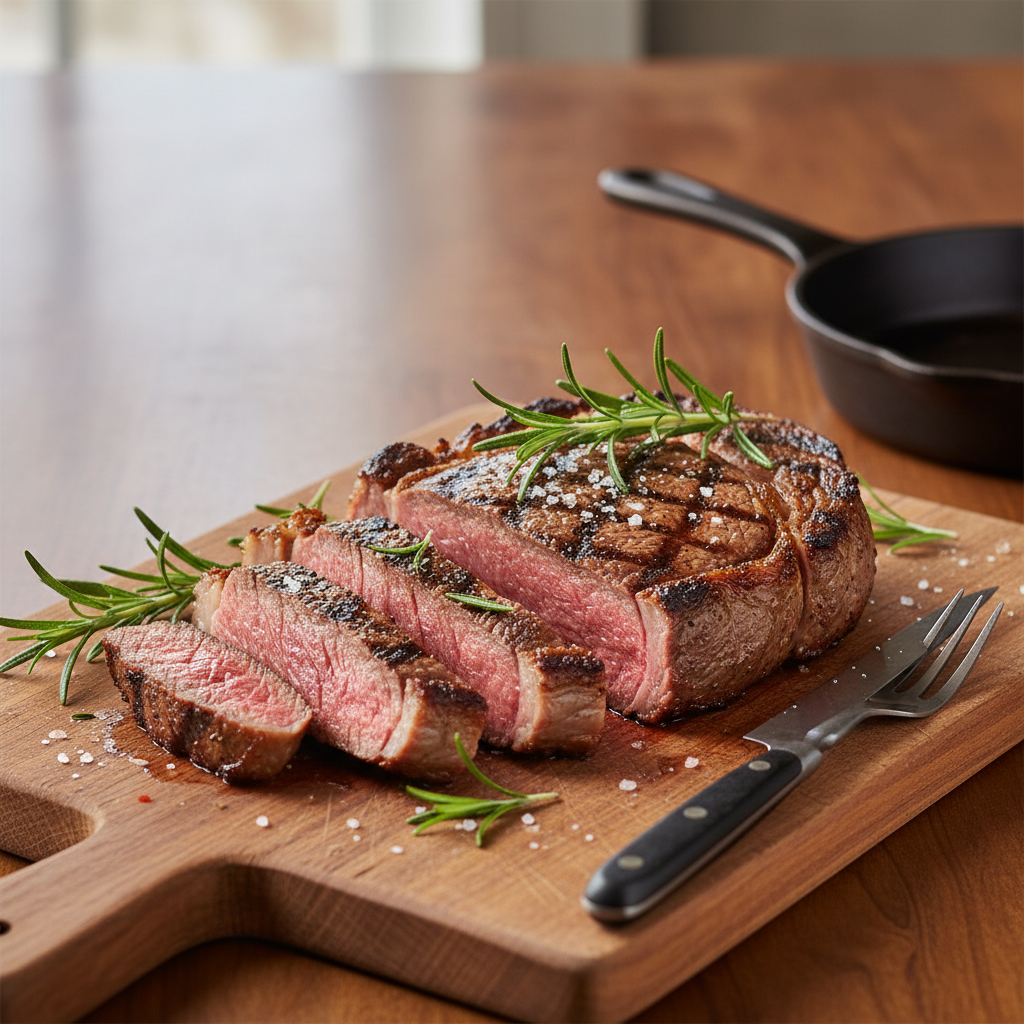
To cook a perfect rib eye steak, start by letting it rest at room temperature for 30 minutes, then season it generously with salt and pepper. Sear the steak in a very hot, oiled skillet for 3-5 minutes per side for a medium-rare finish. For best results, use a meat thermometer and let the steak rest for 10 minutes before slicing to ensure it’s juicy and tender.
Imagine a perfectly cooked rib eye steak—tender, juicy, and with a beautiful crust—made right in your own kitchen. For many home cooks, making a restaurant-quality steak at home can feel daunting. You might worry about overcooking it, not getting that perfect sear, or feeling overwhelmed by complicated instructions. But what if cooking a delicious rib eye is much simpler than you think?
At Recipesmondial, we believe cooking should be enjoyable, not stressful. That’s why our beginner-friendly rib eye recipe takes the guesswork out of the process. We provide clear, step-by-step instructions to build your confidence with every step. Forget about intimidating techniques and endless prep work. Our method focuses on approachable techniques and everyday ingredients to help you get a perfect sear and a juicy interior. Get ready to cook with confidence and create a meal that will impress.
You don’t need to be a gourmet chef to make an incredible meal. With our simple dinner recipes, you’ll see just how easy it is to bring the steakhouse experience home. Let’s dive into what makes this method for cooking the perfect rib eye so straightforward and enjoyable.
Why Is This the Easiest Rib Eye Steak Recipe?
Many home cooks feel overwhelmed by complex steak recipes, but preparing a perfect rib eye doesn’t have to be difficult. This simple recipe is designed to be enjoyable, not stressful, empowering you to create a restaurant-quality meal right in your own kitchen. Follow along to build your confidence and master the perfect steak.
So, why is this method the easiest rib eye steak recipe you will find?
- Minimal Ingredients: Forget long, confusing shopping lists. You only need a few pantry staples and a great rib eye steak. Salt, pepper, and a little oil are all it takes to create incredible flavor.
- Clear, Step-by-Step Guidance: We break down the entire process into simple, manageable actions. With no guesswork involved, you can follow our instructions with ease and achieve perfect results every time.
- Focus on Core Techniques: Without using complicated jargon, this recipe teaches you the essentials. You’ll learn how to get a fantastic sear and cook your steak to your preferred doneness.
- Reliable Results: Our straightforward method consistently delivers a tender, juicy, and flavorful rib eye. You’ll be proud to serve a steak that’s sure to impress your family and friends.
- Quick and Efficient: Perfect for busy weeknights, this recipe is a fantastic option for family-friendly meals. You can achieve delicious results without spending hours in the kitchen.
- Perfect for Beginners: If you’re new to cooking steak, this is the perfect recipe to start with. Our clear instructions and reliable method will have you cooking confidently in no time.
This approachable guide transforms culinary uncertainty into kitchen success. Get ready to discover the joy of preparing a perfect, stress-free steak dinner.
What You’ll Need for a Perfect Steak Dinner
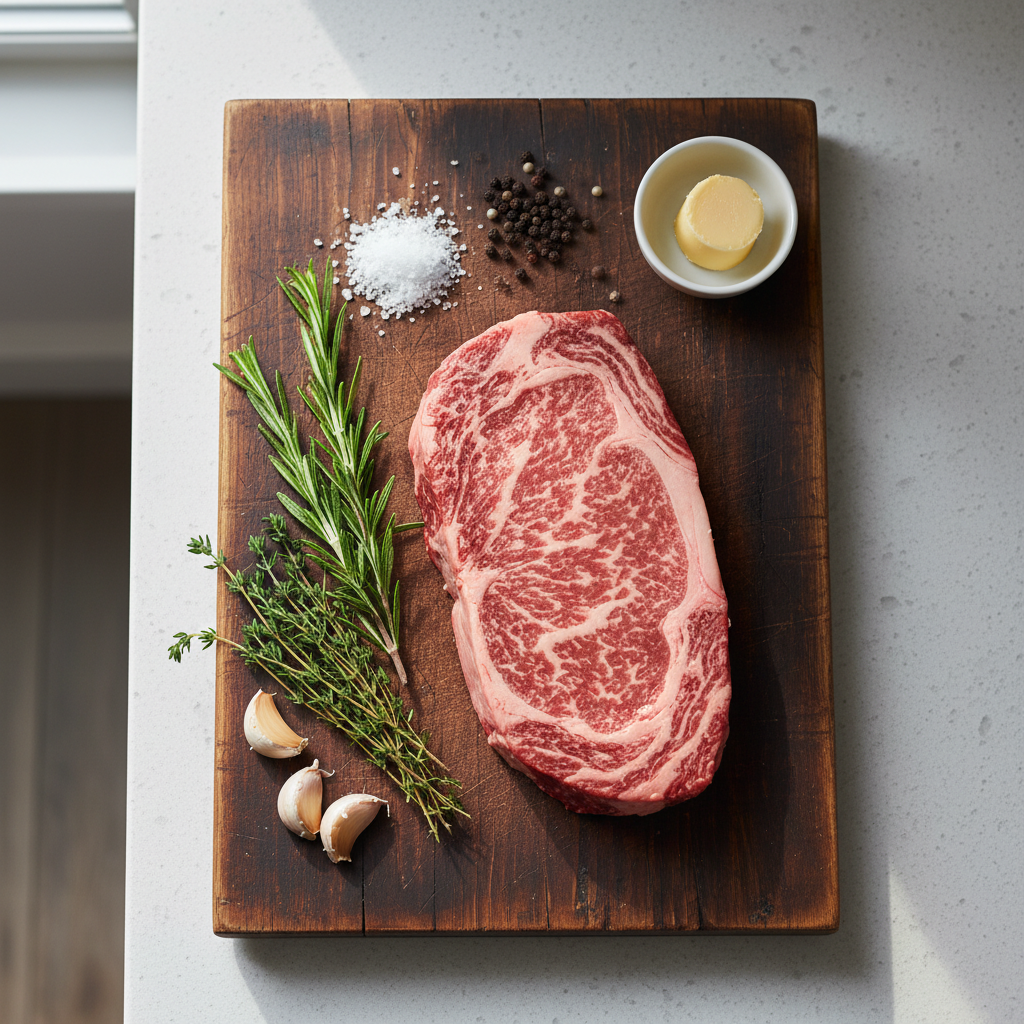
Key Ingredients
You don’t need a long list of fancy items for a delicious rib eye steak. These simple, easy-to-find ingredients are the backbone of a perfect steak dinner, making this a great beginner-friendly recipe.
- Rib Eye Steak: As the star of the meal, choose a cut that’s 1 to 1.5 inches thick. Look for good marbling—the small streaks of fat within the muscle. This fat melts as it cooks, infusing the steak with incredible flavor and tenderness.
- Coarse Sea Salt or Kosher Salt: Salt is crucial for enhancing the steak’s natural flavor. Don’t be shy; use a generous amount.
- Freshly Ground Black Pepper: Freshly ground pepper adds a subtle spice and the best aroma, beautifully complementing the rich taste of the beef.
- High Smoke Point Oil: Use an oil that can withstand high heat, like avocado, grapeseed, or canola oil. This is key to creating a beautiful, crisp crust without burning the steak.
- Unsalted Butter (optional but recommended): Adding a pat of butter during the final minutes of cooking adds richness and is perfect for basting. It makes a huge difference in flavor.
- Fresh Garlic and Herbs (optional): For extra aroma, toss a few garlic cloves and sprigs of rosemary or thyme into the pan with the butter. They’ll infuse the steak with a wonderful, herby flavor.
This list focuses on everyday items you can find at any grocery store. Mastering these basics will help you cook with confidence and master approachable home cooking.
Essential Kitchen Tools
The right tools make all the difference, but you don’t need any fancy gadgets. These simple items are all it takes to guarantee a successful steak dinner, making this an easy and approachable recipe.
- Cast Iron Skillet or Heavy-Bottomed Pan: A cast iron skillet is your most important tool because it heats evenly and retains heat exceptionally well. This is what creates that perfect, crispy sear on your steak.
- Tongs: A good pair of tongs is essential for safely flipping the steak and keeping your hands away from the hot pan.
- Instant-Read Meat Thermometer: Take the guesswork out of cooking and achieve reliable results every time. A meat thermometer is the only way to ensure your steak is cooked precisely to your preferred doneness.
- Wire Rack and Baking Sheet: After cooking, rest your steak on a wire rack set over a baking sheet. This allows air to circulate, preventing the bottom from getting soggy while the sheet catches any drippings.
- Cutting Board: Use a sturdy cutting board for seasoning and slicing. A board with a juice groove is ideal for catching any liquids from the rested steak.
- Sharp Knife: A sharp chef’s knife or carving knife is crucial for clean, even slices, which makes serving much easier.
Most of these tools are common kitchen staples. Using them correctly will help you cook a perfect steak confidently and without stress, simplifying the process of making delicious, family-friendly meals.
How to cook rib eye steak
Step 1: Let the Steak Come to Room Temperature
For a perfectly cooked rib eye, the steak must cook evenly. Starting with a cold steak can lead to an uneven result, where the outside burns before the inside is ready. To prevent this, take your rib eye out of the refrigerator and let it sit on the counter for 30 to 60 minutes.
This simple step allows the steak to warm up slightly, which makes a big difference in achieving a beautiful, consistent doneness throughout.
Step 2: Season Generously on All Sides
Flavor starts here! Don’t be shy when seasoning your steak, as this is key to a delicious result.
- Salt: Use coarse sea salt or Kosher salt to help create a fantastic crust.
- Black Pepper: Freshly ground black pepper adds a wonderful aroma and bite.
- Optional: A little garlic powder or onion powder can enhance the flavor. However, salt and pepper are truly all you need for a classic taste.
Apply the seasoning generously to all sides, including the edges. You can do this right before cooking, or for a deeper flavor, season the steak 15-20 minutes beforehand. This allows the salt to draw out moisture and then reabsorb it, flavoring the meat more thoroughly.
Step 3: Get Your Pan Perfectly Hot
A hot pan is essential for creating an irresistible crust. Use a heavy-bottomed pan, like a cast-iron skillet, which holds heat exceptionally well. Place the pan over high heat for 3-5 minutes, or until you see a wisp of smoke.
Next, add just enough high-smoke-point oil (like canola, grapeseed, or avocado oil) to lightly coat the bottom. Swirl the pan and wait until the oil shimmers before adding the steak. This ensures it won’t stick and helps form a perfect golden-brown crust.
Step 4: Sear for a Beautiful Crust
Now for the exciting part—searing your rib eye! Carefully place the seasoned steak into the hot pan. It should sizzle loudly; this sound means you’re doing it right!
- First Side: Sear the steak for 2-3 minutes without moving it to create a deep, dark crust.
- Second Side: Flip the steak and sear for another 2-3 minutes.
- Edges: Use tongs to hold the steak on its side and sear the fat cap and edges to render the fat beautifully.
To add even more flavor, add butter, fresh garlic cloves, and sprigs of rosemary or thyme to the pan during the last minute or two of searing. As the butter melts, tilt the pan and repeatedly spoon the liquid over the steak. This technique, known as basting, infuses the meat with incredible flavor and enhances the crust.
Step 5: Check for Doneness (Temperature Guide)
The best way to know when your steak is perfectly cooked is to use an instant-read meat thermometer. Insert it into the thickest part of the steak, avoiding any bone or large pieces of fat.
Keep in mind that the steak’s temperature will continue to rise a few degrees after it’s removed from the heat—a process called carry-over cooking. To achieve your target doneness, you should pull the steak from the pan when it’s a few degrees below the final temperature.
| Desired Doneness | Internal Temperature (Remove from Heat) | Final Resting Temperature |
|---|---|---|
| Rare | 120-125°F (49-52°C) | 125-130°F (52-54°C) |
| Medium-Rare | 125-130°F (52-54°C) | 130-135°F (54-57°C) |
| Medium | 130-135°F (54-57°C) | 135-140°F (57-60°C) |
| Medium-Well | 140-145°F (60-63°C) | 145-150°F (63-66°C) |
For food safety, the USDA recommends a minimum internal temperature of 145°F (63°C) for whole cuts of beef, followed by a 3-minute rest [1]. Adjust to your preference, but always use a thermometer for reliable results.
Step 6: Let It Rest Before Slicing
For a juicy steak, this step is non-negotiable. Resting allows the juices inside the meat to redistribute throughout. If you slice it too soon, those juices will run out onto the cutting board, leaving you with a dry steak.
- Remove: Transfer your cooked rib eye to a cutting board.
- Tent: Loosely tent it with aluminum foil.
- Wait: Let it rest for at least 5-10 minutes. Thicker steaks may require up to 15 minutes.
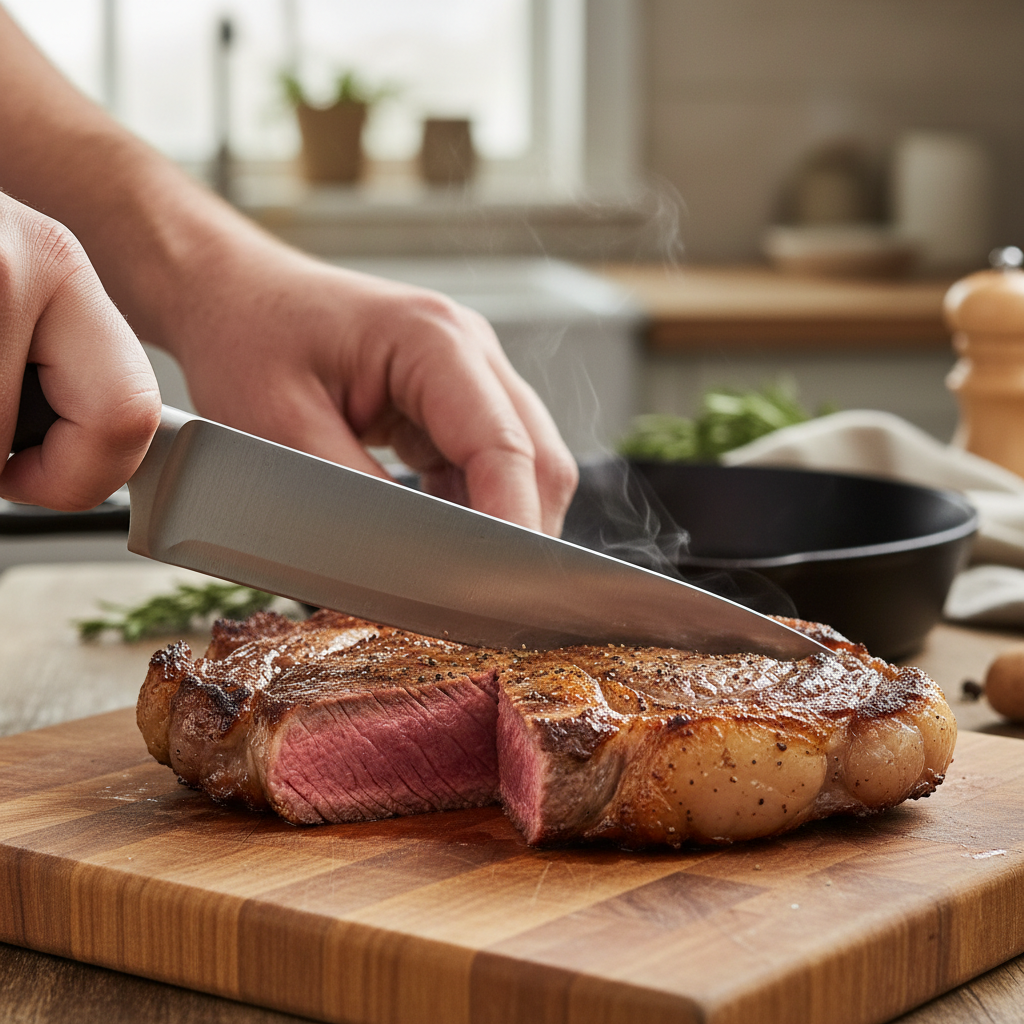
After resting, slice the steak against the grain (perpendicular to the muscle fibers) for maximum tenderness. Serve your perfect rib eye steak immediately and enjoy!
What to serve with rib eye steak
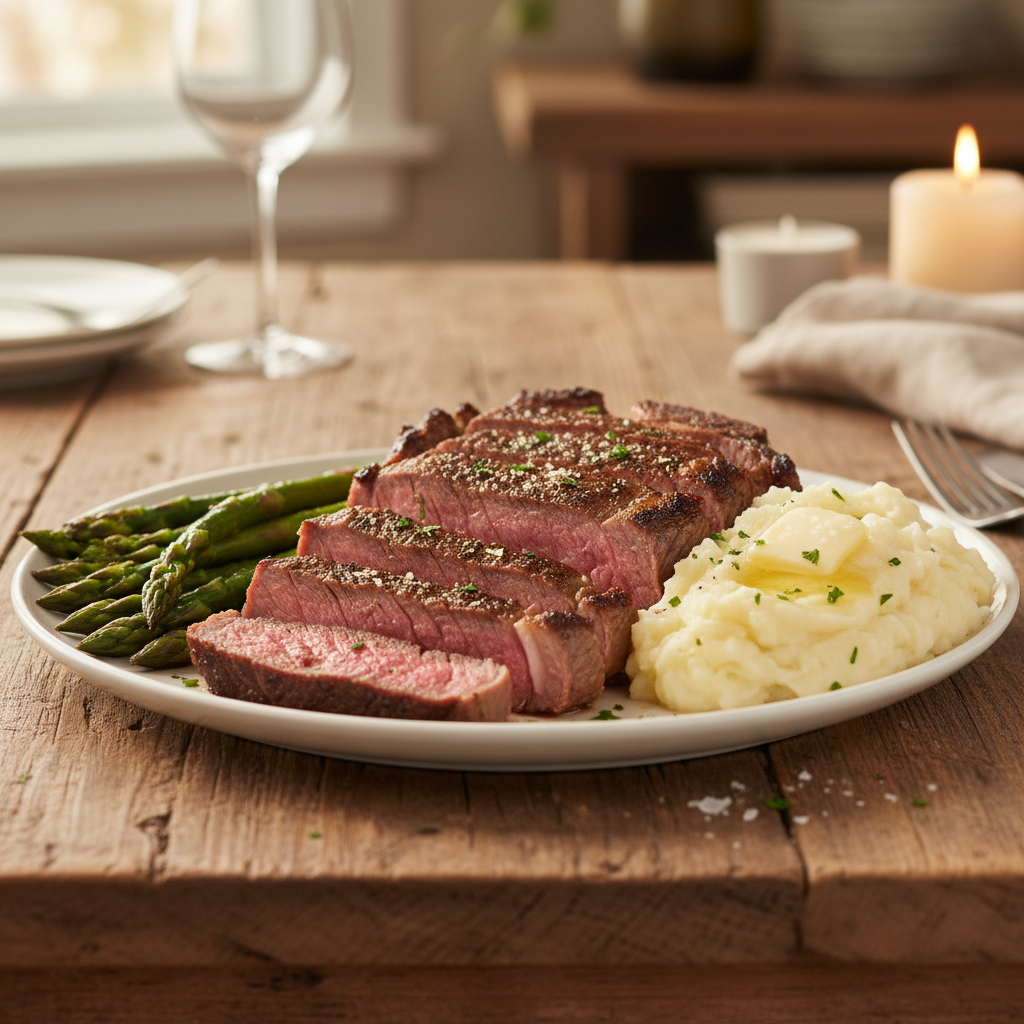
Classic Side Dishes
A perfectly cooked rib eye is the star of any meal, but it truly shines when paired with the right side dishes. These simple, flavorful additions can turn your meal into a restaurant-quality dinner at home. We’ve focused on classic, approachable recipes that anyone can master.
Potato Perfection
Potatoes are a comforting and always welcome companion to a rich rib eye. They are versatile and incredibly satisfying.
- Garlic Herb Roasted Potatoes: These are incredibly easy to make. Simply chop potatoes into bite-sized pieces, then toss them with olive oil, minced garlic, fresh rosemary or thyme, salt, and pepper. Roast until golden brown and crispy for a perfect family-friendly side.
- Creamy Mashed Potatoes: A classic for a reason. Boil potatoes until tender, then mash them with butter, warm milk, and a pinch of salt. For extra depth, mix in some roasted garlic. This simple side dish delivers big, comforting flavor.
Vibrant Vegetable Sides
Fresh vegetables balance the richness of the steak while adding color, texture, and nutrients to your plate. The following options are simple to prepare and packed with flavor.
- Sautéed Green Beans with Garlic: Quickly sauté fresh green beans in a hot pan with olive oil and minced garlic. Finish with salt and a squeeze of lemon juice for a flavorful side that’s ready in minutes.
- Roasted Asparagus: Toss asparagus spears with olive oil, salt, and pepper, then roast in a hot oven until tender-crisp. This elegant side is remarkably simple to prepare.
- Creamed Spinach: For a more indulgent option, cook down fresh spinach with a touch of cream cheese or heavy cream, garlic, and a grating of nutmeg. This recipe feels fancy but is straightforward enough for any beginner.
Fresh and Crisp Salads
A light salad offers a quick, healthy, and refreshing contrast to a hearty steak.
- Simple Green Salad: A simple mix of fresh greens, cherry tomatoes, and cucumber is perfect. Toss it with a light vinaigrette made from olive oil, vinegar, Dijon mustard, and honey for an easy, approachable side.
- Classic Caesar Salad: Romaine lettuce, crunchy croutons, and a creamy Caesar dressing are always a hit. You can use store-bought dressing for an even quicker preparation.
Simple Sauces and Toppings
You don’t need complex culinary skills to elevate your rib eye. The right sauce or topping can make all the difference by enhancing the steak’s natural flavor without overwhelming it. These beginner-friendly ideas are a great place to start.
Effortless Sauce Ideas
These sauces come together quickly and add a gourmet touch to any steak dinner.
- Garlic Herb Butter: While your steak rests, melt a tablespoon of butter in the same warm pan. Stir in minced garlic and fresh chopped herbs like parsley or chives, then spoon this luscious butter over the sliced steak for a quick flavor boost.
- Quick Pan Sauce: After removing the steak, deglaze the hot pan with a splash of beef broth or red wine, scraping up the delicious browned bits from the bottom. Simmer for a minute until slightly reduced and finish with a knob of butter for extra richness. This method creates a flavorful sauce right in the pan and is perfect for beginners.
- Fresh Chimichurri: This vibrant, herby sauce adds a wonderful burst of freshness. Simply combine finely chopped fresh parsley, cilantro, minced garlic, red wine vinegar, olive oil, and a pinch of red pepper flakes. It’s a surprisingly simple way to add bright, zesty flavor.
Simple Toppings
Sometimes, all you need is a sprinkle of something extra to enhance your steak.
- Crumbled Blue Cheese: A sprinkle of pungent blue cheese adds a creamy, tangy kick that pairs wonderfully with rib eye.
- Caramelized Onions: Slowly cook sliced onions in butter until deeply browned and sweet. This takes time, but the effort is minimal, and the reward is immense.
With these simple sides and sauces, you can transform a great rib eye steak into a memorable meal for the whole family. Recipesmondial helps you build confidence in the kitchen, making every cooking experience enjoyable and stress-free.
Tips and Tricks for a Restaurant-Quality Steak
Elevate Your Steak Selection and Prep
You’ve mastered the basics for a delicious rib eye, and now it’s time to unlock the secrets to a truly restaurant-quality steak. These expert tips will help you cook confidently and create flavorful meals with less stress.
- Choose Quality Rib Eye: Look for good marbling, as these flecks of fat melt during cooking to create incredible tenderness and rich flavor.
- Bring to Room Temperature: Letting your steak sit out for 30-60 minutes before cooking isn’t just a suggestion—it’s essential. A cold steak cooks unevenly, but this step ensures a perfect cook from edge to center [2].
- Pat it VERY Dry: Moisture is the enemy of a good sear. Use paper towels to pat your steak completely dry, because a dry surface is what allows the steak to brown beautifully and form a desirable crispy crust.
- Season Generously: Don’t be shy with salt and pepper, as they are essential for flavor. For extra depth, a pinch of garlic or onion powder can add a surprising amount of taste.
Master the Searing and Basting
Achieving a perfect crust and a juicy interior is simpler than you think. Follow these steps to take your rib eye to the next level.
- Heat Your Pan Properly: A screaming-hot pan is essential for creating a beautiful, deep brown crust quickly. Wait until it’s smoking slightly before you add the steak.
- Don’t Overcrowd the Pan: Cook only one or two steaks at a time. Overcrowding drops the pan’s temperature, causing the steak to steam instead of sear and preventing a crust from forming.
- The Butter Baste Secret: After searing one side, add a tablespoon or two of butter, some fresh herbs like rosemary or thyme, and a smashed garlic clove. For the last few minutes of cooking, tilt the pan and continuously spoon the melted, aromatic butter over the steak. This technique infuses the meat with tremendous flavor and helps create an even, golden-brown crust.
- Flip Often (But Not Too Often!): Flipping your steak every minute or so helps build a more even crust while promoting more even cooking throughout the steak [3].
Nail the Doneness and Resting
These final two steps are critical for a perfect, restaurant-quality steak. Don’t skip them, as they transform a good steak into an unforgettable one.
- Trust Your Thermometer: The most reliable way to check for doneness, especially for beginners, is with an instant-read thermometer. Relying on touch can be tricky, so use a thermometer to hit your target temperature perfectly.
- The Power of Resting: Once cooked, transfer the steak to a cutting board and let it rest for 5-10 minutes before slicing. This crucial step allows the juices to redistribute throughout the meat. If you cut it too soon, the juices will run out, leaving you with a dry, less flavorful steak. Resting ensures every bite is tender and juicy.
Add Simple Finishing Touches
For a truly exceptional dining experience, consider these easy additions that bring a gourmet flair to your steak dinner.
- Compound Butter: Nothing beats a pat of herb butter melting over a hot steak. Simply mix softened butter with minced garlic, fresh parsley, chives, or a touch of chili flakes. You can make it ahead of time and keep it in the fridge for an easy flavor boost.
- Fresh Herbs: A sprinkle of fresh chopped parsley or chives adds a welcome brightness and a lovely contrast of color.
- A Pinch of Flaky Sea Salt: Just before serving, a final sprinkle of flaky sea salt elevates the flavor and adds a delightful textural crunch.
Frequently Asked Questions
What is the difference between a rib steak and a ribeye?
While understanding different steak cuts can seem tricky, the difference between a rib steak and a ribeye is quite simple. Both cuts come from the cow’s rib section, an area known for excellent marbling and rich flavor.
The main distinction is the bone. A rib steak is bone-in, which adds flavor and helps keep the meat moist as it cooks. A ribeye steak, on the other hand, is the same cut with the bone removed. Because they are easier to handle, boneless cuts are often featured in beginner-friendly recipes.
Ultimately, both are fantastic choices for a flavorful meal. Your decision comes down to a personal preference for bone-in or boneless steak.
Why is rib eye steak often expensive?
Rib eye is a premium cut, and its price reflects several key factors. First, it comes from a little-used muscle, which makes it incredibly tender. This desirable texture is a key reason for its higher price. The cut also has significant marbling—the intramuscular fat that melts during cooking to add incredible flavor and juiciness. [4]
Furthermore, consistently high demand for premium beef also drives up the price. The butchering process and quality grade affect the cost as well. Higher grades like USDA Prime or Choice signify superior quality, which comes with a higher price tag. Despite the cost, many find it a worthwhile indulgence for special occasions because it delivers such a rich, satisfying culinary experience.
Is rib eye steak halal?
The term “halal” refers to anything permissible under Islamic law. Whether a rib eye steak is halal depends entirely on how the animal was raised and processed. A rib eye itself is simply a cut of beef, so it is not inherently halal or non-halal.
For a rib eye steak to be considered halal, the cattle must be slaughtered according to specific Islamic guidelines. These rules cover the method of slaughter, the recital of a prayer, and the complete draining of blood. [5]
If you are seeking halal meat, it is crucial to buy from a certified halal butcher or look for a halal certification label on the packaging. Always confirm with your butcher directly to ensure the product aligns with your dietary needs.
How should I store and reheat leftover steak?
To keep your leftover rib eye delicious and safe, proper storage and reheating are key. Follow these practical, beginner-friendly tips to make your flavorful meal last longer.
Storing Leftover Steak:
- Cool Quickly: Let cooked steak cool to room temperature, but for no more than two hours.
- Airtight Container: Place the cooled steak in an airtight container to prevent moisture loss and keep it fresh.
- Refrigerate Promptly: Store the container in the refrigerator immediately.
- Duration: Properly refrigerated cooked steak is best eaten within 3-4 days. [6]
Reheating Leftover Steak:
Reheating steak without overcooking or drying it out can be tricky. For best results, avoid the microwave, which often makes steak tough. Instead, try one of these simple methods:
- Oven Method (Recommended):
- Preheat your oven to a low temperature, around 250°F (120°C).
- Place the steak on a wire rack set over a baking sheet.
- Heat for 15-20 minutes, or until warmed through. This low-and-slow method is great for preventing the steak from overcooking.
- Pan Method:
- Heat a little butter or oil in a skillet over medium-low heat.
- Add the steak and heat for 2-3 minutes per side until warmed through.
- Covering the pan helps the steak retain moisture.
- Slice First: For faster, more even results, slice the steak thinly before warming. This is perfect for quick meals like steak and eggs.
- Add Moisture: A splash of beef broth or a pat of butter can help keep the steak juicy as it reheats.
Remember to reheat steak only once to maintain its quality and ensure food safety.
Sources
- https://www.fsis.usda.gov/food-safety/safe-food-handling-and-preparation/meat/beef-safety
- https://www.seriouseats.com/old-wives-tales-about-cooking-steak
- https://www.recipetineats.com/how-to-cook-steak/
- https://www.certifiedangusbeef.com/cuts/ribeye-steak/
- https://halalfoodauthority.com/what-is-halal
- https://www.foodsafety.gov/food-storage-chart