Tag: Beginner-friendly

  • The Perfect Prime Rib Recipe: A Simple Guide for Beginners

    The Perfect Prime Rib Recipe: A Simple Guide for Beginners

    Prime rib, also known as a standing rib roast, is a premium cut of beef celebrated for its rich flavor and tender texture. The best way to cook it is using a ‘reverse sear’ method: roast it low and slow in the oven until it’s about 15 degrees from your target temperature, let it rest, then sear it in a hot oven or pan for a perfect crust.

    Imagine serving a show-stopping meal that impresses everyone at the table: a perfectly cooked prime rib roast, golden-brown on the outside and wonderfully juicy within. For many home cooks, however, the idea of preparing a magnificent prime rib can feel daunting. You might worry about complex steps or lack confidence in your skills. But what if we told you that mastering this impressive dish is far simpler than you think? Here at Recipesmondial, we believe flavorful meals made easy are within everyone’s reach, and we’re here to guide you every step of the way.

    This prime rib recipe is designed to replace that intimidation with confidence. Whether you’re a novice cook or just need reliable step-by-step guidance, our beginner-friendly recipe delivers a stunning prime rib roast without the stress. We will walk you through the process of creating a tender, mouthwatering prime rib that will be the star of any holiday gathering or special family meal. Say goodbye to guesswork and hello to delicious results.

    Ready to unlock the secrets to a truly unforgettable roast? We’ll show you why this is more than just another recipe—it’s the definitive guide for approachable home cooking that guarantees success. Let’s dive in and discover why this is the best prime rib recipe for your kitchen.

    Why Is This the Best Prime Rib Recipe for Home Cooks?

    If you’re looking for an exceptional holiday meal, you’ve come to the right place. This isn’t just another prime rib recipe—it’s a guide designed specifically for home cooks. We’ll help you transform a daunting task into an enjoyable experience.

    Simplicity and Confidence in Every Step

    Cooking a majestic prime rib roast can feel overwhelming. Many recipes are filled with complex jargon and too many steps, leaving you unsure of where to start. At Recipesmondial, we believe in approachable home cooking and want you to feel confident in your kitchen.

    • No Overwhelm: Our step-by-step guidance breaks down the process into clear, manageable instructions, so you’ll never feel lost or intimidated.
    • Beginner-Friendly Focus: We avoid confusing culinary terms and use plain language, making it easy to master the basics.
    • Guaranteed Success: Follow our guide to achieve a perfectly cooked, flavorful standing rib roast. We set you up for success, just like with all our simple dinner recipes.

    Flavorful Results, Stress-Free Experience

    A delicious meal shouldn’t require hours of complex work. That’s why this prime rib recipe delivers maximum flavor with minimal fuss. We focus on simple techniques that work in a real home kitchen, allowing you to enjoy the cooking process from start to finish.

    • Everyday Ingredients: Our recipe relies on common ingredients you can find at any grocery store, so there’s no need for a special trip.
    • The Perfect Reverse Sear: We’ll guide you through the reverse sear, a chef-approved method that creates an incredible crust and ensures tender, evenly cooked meat.
    • Perfect Doneness Every Time: With our clear timing chart and meat thermometer tips, you can achieve your desired doneness without guesswork, resulting in a juicy, tender prime rib roast recipe.

    Designed for Your Recipesmondial Journey

    This prime rib guide is a perfect example of the Recipesmondial spirit. We’re dedicated to making mealtime stress-free with easy, family-friendly meals that help you build confidence and discover new flavors.

    • Clear Guidance: We present our recipes in a clear, easy-to-follow format, so you always know what to do next.
    • Practical Tips: We include smart substitutions and meal prep advice to help you save time and cook more efficiently.
    • Inspiring Creativity: This recipe provides a great foundation, inspiring you to explore other flavorful and simple meals.

    From simple breakfast ideas to comforting dinners, Recipesmondial supports your entire culinary journey. This prime rib roast is just one example of our commitment to helping you create memorable, delicious meals with ease.

    What’s the Difference Between Prime Rib and Standing Rib Roast?

    Navigating the world of beef roasts can feel like learning a new language. You might see recipes for “prime rib” and others for “standing rib roast,” leaving you to wonder what the difference is. The good news is, they’re just two names for the same fantastic cut of beef.

    It’s like how some people say “soda” while others say “pop” to describe the same fizzy drink. In the same way, prime rib and standing rib roast refer to the exact same delicious, impressive cut of meat.

    Understanding the Names

    While the names are interchangeable, each one tells a small part of the cut’s story:

    • Prime Rib: This name comes from the fact that the cut is from the “primal” rib section of the cow. While this cut was historically graded USDA “Prime” for its high quality, the name is now used more broadly. That means a roast labeled “prime rib” today might be of a different grade, like Choice or Select.
    • Standing Rib Roast: This name is more literal, describing how the roast is cooked. It “stands” on its rack of rib bones in the pan. This technique helps protect the meat from the direct heat of the pan and adds incredible flavor as the bones render.

    So, the next time you’re at the butcher shop, don’t let the terminology confuse you. A standing rib roast recipe is the same as a prime rib recipe. No matter what it’s called, you’re getting a tender, juicy, and incredibly flavorful centerpiece for your table.

    At Recipesmondial, our goal is to make cooking simple. Now that you know this secret, you’re one step closer to mastering a delicious prime rib, no matter what your recipe calls it!

    Choosing Your Cut: A Quick Shopping Guide

    Understanding Grades: Prime, Choice, and Select

    Choosing the perfect prime rib roast starts at the butcher’s counter, where you’ll often see different grades of beef. The United States Department of Agriculture (USDA) assigns these grades to indicate the meat’s quality, helping you know what to expect from your purchase.

    Understanding these grades makes shopping easier and helps you pick the right prime rib for your meal. Here’s a quick guide to the most common grades:

    • USDA Prime: This is the highest quality grade, characterized by abundant marbling—the small flecks of fat within the muscle. As the meat cooks, this fat melts, making Prime cuts incredibly tender, juicy, and flavorful. Often found in high-end restaurants, it’s an excellent choice for a truly special occasion.
    • USDA Choice: Choice is also a high-quality grade with less marbling than Prime, but still plenty to ensure a rich, tender, and flavorful cut. Widely available in supermarkets, Choice beef offers a fantastic balance of quality and value, making it an ideal option for most home cooks.
    • USDA Select: This grade is leaner, with the least amount of marbling. As a result, Select cuts are less juicy and tender than Prime or Choice. While they can be improved with marinades or slow cooking, this grade is not typically recommended for a show-stopping prime rib roast.

    For your perfect prime rib roast, we highly recommend a USDA Choice cut. It delivers amazing flavor and tenderness and is usually more budget-friendly than Prime.

    Bone-In vs. Boneless Prime Rib

    Next, you’ll need to decide between a bone-in and a boneless prime rib. While both options can make a wonderful meal, they offer slightly different benefits.

    • Bone-In Prime Rib (Standing Rib Roast): Often called a “standing rib roast” because it can stand on its own rib bones, many chefs prefer this cut. The bones are believed to add flavor and insulate the meat, which promotes even cooking. While a bone-in roast makes for an impressive presentation, it can be trickier to carve.
    • Boneless Prime Rib: A boneless prime rib is easier to season, carves more easily, and typically cooks a little faster than its bone-in counterpart. Butchers often tie it with string to help it hold a uniform shape. The main drawback is that some people find it slightly less flavorful without the bones.

    Ultimately, either option works well. If you prioritize ease of carving, go boneless. If you want maximum flavor and an impressive presentation, choose bone-in. Both will result in a delicious roast.

    How Much Prime Rib Per Person?

    Planning the right amount of prime rib ensures everyone gets a satisfying portion without creating food waste. Since prime rib is a rich cut, a little goes a long way. Your calculations should also factor in your guests’ appetites and how many side dishes you plan to serve. With many hearty sides, for example, you’ll likely need less meat.

    Here is a simple guide to help you plan your family-friendly meal:

    Roast Type Serving Size Per Person
    Bone-In Prime Rib About 1 pound (450g)
    Boneless Prime Rib About 1/2 pound to 3/4 pound (225g to 340g)

    For example, if you are serving six people, you would need a 6-pound bone-in roast or a 3- to 4.5-pound boneless roast. It’s always a good idea to buy a little extra to ensure enough for seconds—plus, leftover prime rib makes amazing sandwiches!

    Essential Ingredients & Tools for Your Roast

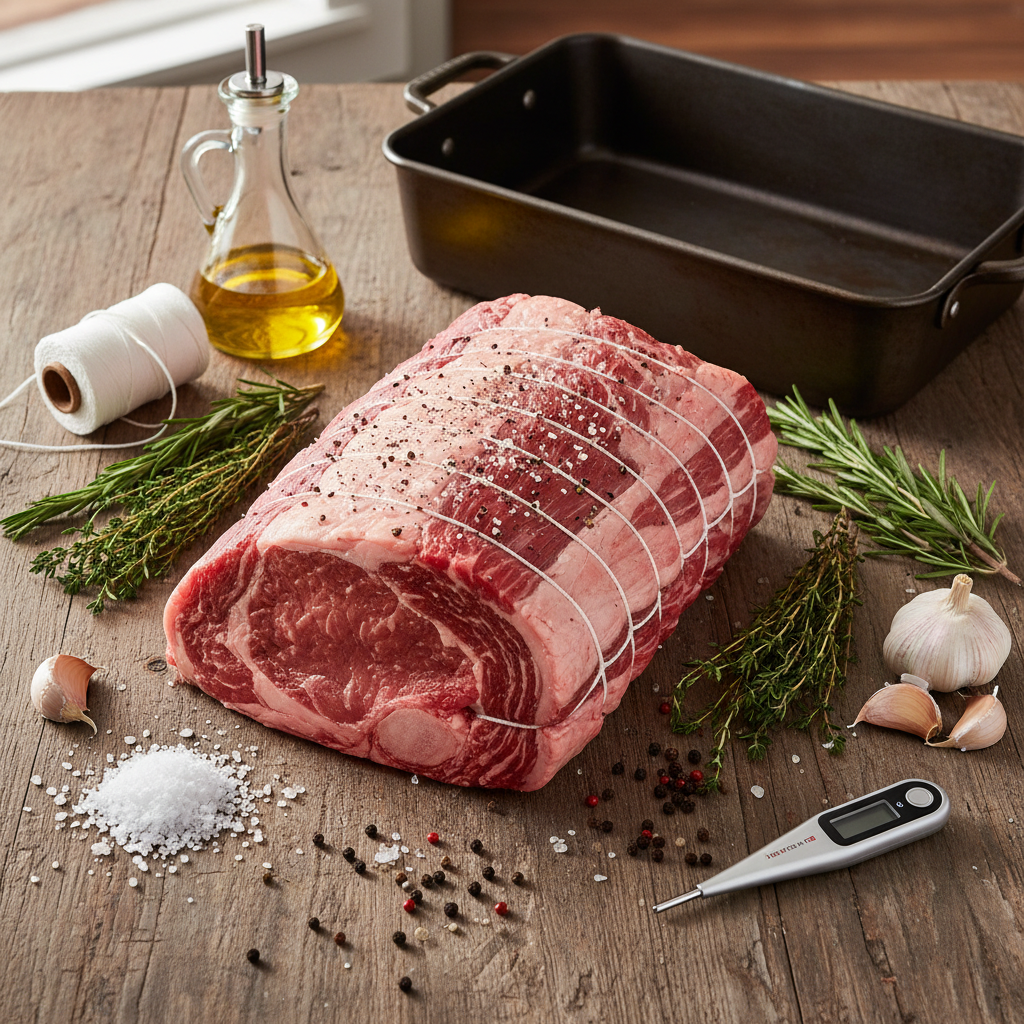
    A flat lay photo showing a raw prime rib roast, fresh herbs, garlic, salt, pepper, olive oil, a roasting pan, kitchen twine, and a meat thermometer on a wooden kitchen counter.
    A professional food photography, photorealistic, high-quality food magazine photo of a meticulously arranged flat lay on a clean, rustic wooden countertop. The main subject is a raw, beautiful prime rib roast, surrounded by essential ingredients: fresh rosemary and thyme sprigs, whole garlic cloves, coarse sea salt, black peppercorns, and a small bottle of olive oil. Adjacent to the ingredients are the key tools: a sturdy roasting pan, kitchen twine, and a digital meat thermometer. The lighting is warm and inviting, highlighting the textures and freshness of the ingredients, creating a sense of simplicity and readiness for cooking in a home kitchen setting. No human hands visible.

    For the Prime Rib Roast

    A truly memorable prime rib starts with a great cut of meat—it’s the foundation of your masterpiece. Let’s make sure your cooking experience is stress-free and yields delicious results.

    • A Quality Prime Rib Roast: Look for a standing rib roast (often called prime rib). You can choose bone-in or boneless, but bone-in roasts tend to add more flavor and promote even cooking.
    • Size Matters: Plan on 1 to 1.5 pounds per person for a bone-in roast or 0.75 to 1 pound for boneless. This calculation ensures everyone gets a generous serving.
    • USDA Choice or Prime: While “prime rib” is the name of the cut, the USDA grade is also important. Aim for “Choice” for excellent quality and value, or choose “Prime” for superior marbling and tenderness if your budget allows. [source: https://www.ams.usda.gov/grades-standards/beef-grades] If you’re unsure, your butcher can help you select the perfect roast.
    • Bringing it Home: Purchase your roast a day or two before you plan to cook it and store it in the refrigerator until you’re ready.

    Remember, starting with a quality roast is the first step to a successful, family-friendly meal that everyone will rave about.

    Simple Herb & Garlic Seasoning

    You don’t need fancy ingredients for incredible flavor. This simple herb and garlic rub will elevate your prime rib from good to absolutely amazing.

    • Fresh Garlic: 6-8 cloves, minced. Using fresh garlic provides the most aromatic flavor.
    • Fresh Rosemary: 2 tablespoons, finely chopped. Its piney notes are a beautiful complement to beef.
    • Fresh Thyme: 1 tablespoon, finely chopped, to add a subtle, earthy depth.
    • Coarse Kosher Salt: 2-3 tablespoons. Salt is crucial for seasoning the meat and creating a delicious crust.
    • Freshly Ground Black Pepper: 1-2 tablespoons. Grinding it fresh provides the best flavor.
    • Olive Oil: 2-3 tablespoons. The oil helps the seasoning adhere to the meat and promotes a beautiful sear.

    Simply combine these ingredients to create a robust, flavorful coating. You’ll be amazed at the flavor this easy blend produces!

    Kitchen Tools You’ll Need

    Having the right tools makes cooking a prime rib roast easier and more enjoyable. You don’t need a gourmet kitchen—these simple items are all it takes to achieve perfect results.

    • Large Roasting Pan with a Rack: This is an essential tool. The rack lifts the roast off the pan, allowing heat to circulate for even cooking and preventing a soggy bottom.
    • Instant-Read Meat Thermometer: This is your secret weapon for perfectly cooked meat, as it takes away all the guesswork. A reliable thermometer is especially invaluable for a beginner-friendly recipe.
    • Sharp Chef’s Knife: A sharp knife is necessary for preparing the herbs and garlic, and it also makes carving the finished roast much safer and easier.
    • Cutting Board: A sturdy board is crucial for both prep and carving your magnificent roast.
    • Small Bowl: For mixing your herb and garlic rub.
    • Butcher’s Twine (Optional, but Recommended): If your roast is irregularly shaped, tying it with twine helps it hold its shape and cook more evenly for consistent results.
    • Heavy-Bottomed Skillet or Cast Iron Pan (Optional, for Searing): If you choose to sear your roast before roasting, a good skillet creates an amazing crust.

    With these tools, you’ll be well-equipped to create a delicious prime rib with confidence. Making flavorful meals at home should be an easy and enjoyable process for everyone.

    How to Cook a Prime Rib Roast: Step-by-Step

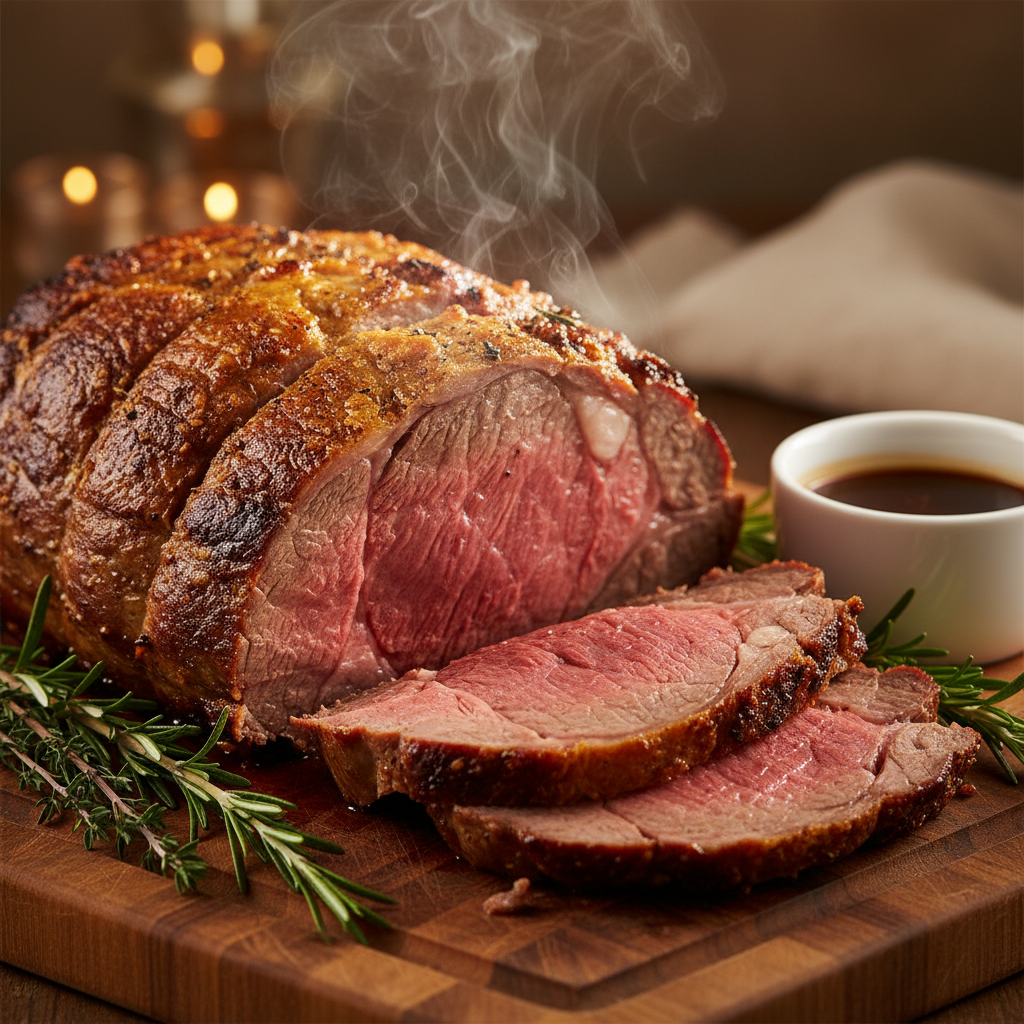
    Slices of perfectly cooked medium-rare prime rib roast on a wooden cutting board, garnished with fresh rosemary and thyme.
    A professional food photography, photorealistic, high-quality food magazine photo of a perfectly cooked, golden-brown prime rib roast, beautifully carved into thick, succulent slices, arranged on a rustic wooden cutting board. The interior of the meat should clearly display a tender, juicy medium-rare pink center with a flavorful, seared crust. A few sprigs of fresh rosemary and thyme are artfully placed on the board for garnish. Subtle steam rises from the warm meat. The background is softly blurred, suggesting a cozy, well-lit kitchen environment. The focus is entirely on the deliciousness and perfection of the finished roast, emphasizing its restaurant-quality appearance for home cooks.

    Step 1: Bring the Roast to Room Temperature

    This first step is crucial for an evenly cooked prime rib. Allowing the roast to come to room temperature before cooking prevents it from having a cold center and overcooked edges.

    • Plan ahead: Remove your prime rib from the refrigerator 3-4 hours before you plan to cook it. Larger roasts may need up to 5 hours.
    • Unwrap it: Let the roast sit unwrapped on a wire rack set over a baking sheet to allow for air circulation.
    • Even cooking: A room-temperature roast cooks more predictably, making it easier to reach your desired doneness.

    Step 2: Prepare the Herb and Garlic Rub

    This simple herb and garlic rub infuses the prime rib with flavor, creating a delicious crust and a fragrant aroma. It’s a key part of the recipe.

    In a small bowl, combine all the rub ingredients, which typically include:

    • Minced garlic
    • Fresh or dried rosemary
    • Fresh or dried thyme
    • Coarse salt
    • Freshly ground black pepper
    • Olive oil (to make a paste)

    Mix everything until it forms a thick paste. The olive oil helps the rub adhere to the meat and melds the flavors together.

    Step 3: Season the Prime Rib Generously

    Now it’s time to season the roast. Generous seasoning is the secret to a restaurant-quality prime rib, so don’t be shy with the rub.

    • Apply the rub: Use your hands to thoroughly coat the entire surface of the prime rib with the herb and garlic paste.
    • Massage it in: Gently massage the rub into every crevice to ensure maximum flavor penetration.
    • All sides: Make sure to cover the top, bottom, and all sides of the roast, including the bones.
    • Prep for success: This step is vital for developing a flavorful crust that locks in the juices.

    Step 4: Sear for a Perfect Crust

    To create an incredible, golden-brown crust, we’ll start with an initial high-heat sear in the oven. This technique adds immense flavor and texture to your prime rib.

    • Preheat your oven: Set your oven to a high temperature, around 450-500°F (232-260°C).
    • Place on a rack: Put the seasoned prime rib, fat-cap up, on a wire rack in a roasting pan.
    • Initial sear: Roast at this high temperature for 15-20 minutes. This creates a beautiful sear on your standing rib roast.
    • Lower the temperature: After the initial sear, reduce the oven temperature for the slow-roasting phase, as detailed in the next step.

    Expert Tip: A good sear adds depth of flavor and creates a satisfying texture contrast, making your prime rib truly special.

    Step 5: Roast to Your Desired Doneness

    After the initial sear, the next stage is slow roasting. This gentle cooking method ensures a tender, juicy interior. For this step, a meat thermometer is essential.

    • Reduce heat: Lower your oven temperature to 250-300°F (120-150°C) for the slow roast.
    • Insert thermometer: Place an oven-safe meat thermometer into the thickest part of the roast, being careful to avoid touching any bones.
    • Cook slowly: Continue roasting until the internal temperature is about 5-10°F (3-6°C) below your desired final doneness. For medium-rare, aim for 120-125°F (49-52°C) before removing it from the oven.
    • Check regularly: Monitor the temperature closely. While our prime rib cooking time chart offers estimates, always trust your thermometer, as cooking times can vary based on the roast’s size and your oven [1].

    Using a thermometer is the most reliable way to achieve your preferred doneness and transform simple ingredients into a delicious meal.

    Step 6: The Most Important Step – Let it Rest!

    This final step is non-negotiable for a succulent prime rib. Do not skip the resting period, as it is critical for a juicy result.

    • Remove from oven: Once your prime rib reaches its target temperature, take it out of the oven.
    • Tent loosely: Transfer the roast to a clean cutting board and tent it loosely with aluminum foil.
    • Resting time: Let the prime rib rest for at least 20-30 minutes. Larger roasts benefit from resting up to 45 minutes.
    • Why it matters: Resting allows the juices to redistribute throughout the meat, resulting in a tender and moist roast. Skipping this step will cause the juices to run out onto the cutting board when you slice it.
    • Carryover cooking: During the rest, the internal temperature will continue to rise by a few degrees. This is known as “carryover cooking.”

    This crucial resting period ensures every slice of your prime rib is perfectly juicy and flavorful. It’s the final key to a perfect result.

    How long to cook prime rib roast?

    Prime Rib Cooking Time Chart

    Cooking a show-stopping prime rib roast might seem daunting, but it’s simpler than you think. The key is to understand that cooking time depends on two main factors: the size of the roast and your desired doneness.

    The table below offers approximate cooking times, but remember, these are only guidelines. Factors like your specific oven and the roast’s starting temperature can cause variations. For the most accurate results, you should always use a reliable meat thermometer.

    The times in this chart are for the reverse sear method, an excellent beginner-friendly recipe approach. This technique uses a low oven temperature for roasting followed by a high-heat sear, which creates an even cook and a delicious, crispy crust.

    Roast Size (Weight) Rare (120-125°F) Medium-Rare (130-135°F) Medium (135-140°F)
    3-4 lbs (2 Ribs) 1.5 – 2 hours 2 – 2.5 hours 2.5 – 3 hours
    5-7 lbs (3-4 Ribs) 2 – 2.5 hours 2.5 – 3 hours 3 – 3.5 hours
    8-10 lbs (4-5 Ribs) 2.5 – 3 hours 3 – 3.5 hours 3.5 – 4 hours
    11-13 lbs (6-7 Ribs) 3 – 3.5 hours 3.5 – 4 hours 4 – 4.5 hours

    Don’t forget the resting period after roasting—it’s crucial. Your prime rib continues to cook even after it’s out of the oven, a process known as carry-over cooking. The internal temperature can rise by an additional 5-10°F. For this reason, you should always remove the roast from the oven slightly before it reaches your final target temperature.

    Using a Meat Thermometer for Perfect Results

    When cooking prime rib, a meat thermometer is your most essential tool. It eliminates guesswork and is the only reliable way to guarantee your desired doneness every time. Using one will give you confidence in the kitchen, which is why so many easy recipes recommend this technique for success.

    To achieve a *flavorful meal made easy*, here’s how to use your thermometer correctly:

    • Insert It Correctly: Push the thermometer into the thickest part of the roast. Make sure it doesn’t touch any bones, which conduct heat differently and can give an inaccurate reading.
    • Monitor Regularly: Begin checking the temperature about 30 minutes before the estimated cook time ends. This allows you to remove the roast at the perfect moment.
    • Know Your Temperatures: To get the exact result you want, you need to know the target internal temperature for your preferred level of doneness.

    Here are the target temperatures to guide you:

    • Rare: 120-125°F (pull from oven at 115-120°F)
    • Medium-Rare: 130-135°F (pull from oven at 125-130°F)
    • Medium: 135-140°F (pull from oven at 130-135°F)
    • Medium-Well: 145-150°F (pull from oven at 140°F)
    • Well-Done: 150-155°F (pull from oven at 145°F)

    For food safety, the USDA recommends cooking whole cuts of beef like prime rib to a minimum internal temperature of 145°F (63°C) [2]. However, many people prefer a lower temperature for optimal tenderness and flavor. If you choose a doneness below 145°F, be aware of the official guidelines and ensure everyone eating the roast is comfortable with this choice.

    Ultimately, using a thermometer is the key to achieving restaurant-quality results at home. It makes *approachable home cooking* a joy and helps build confidence, even if you feel you are *lacking confidence in cooking skills* right now. This simple step is what makes any *beginner-friendly recipe* for roasts a success.

    Tips for a Flawless, Restaurant-Style Prime Rib

    Transforming a beautiful cut of beef into a show-stopping, restaurant-style prime rib roast might seem challenging, but you can achieve incredible results right in your own kitchen. At Recipesmondial, we want to help you create memorable meals. These practical strategies will elevate your prime rib recipe and guide you toward a truly flawless feast.

    Achieving Restaurant-Quality Results at Home

    You can easily prepare a magnificent standing rib roast that rivals your favorite steakhouse, taking the stress out of cooking an impressive dish. To help you build confidence, we’ve made these tips straightforward and beginner-friendly, ensuring a delicious outcome every time.

    • Start at Room Temperature: For even cooking, this step is crucial. Remove your prime rib from the refrigerator 2-3 hours before roasting. Cold meat cooks unevenly, which means the outer layers can overcook before the center reaches your desired doneness.
    • Season Generously and Early: Don’t be shy with your seasoning—apply a liberal coating of salt, pepper, and herbs all over the roast. For the best flavor, season the meat at least 45 minutes to an hour before cooking. Many chefs even season it a day ahead, storing it uncovered in the fridge [3]. This technique helps draw out moisture to create a better crust.
    • Master the Sear: A high-heat sear is what creates an irresistible, flavorful crust. Whether you sear at the beginning (traditional method) or the end (reverse sear), high heat is key. Use a heavy-bottomed pan or cast-iron skillet to caramelize the exterior and add a deep, rich flavor.
    • Use a Reliable Meat Thermometer: A meat thermometer is your secret weapon for perfect results, as guessing often leads to an over or undercooked roast. Insert the probe into the thickest part of the meat, avoiding any bones. Remember to pull the roast from the oven when it’s 5-10°F below your target temperature to account for carryover cooking.
    • The Golden Rule: Let It Rest: This might be the most important step for a juicy prime rib roast. After removing it from the oven, tent the roast loosely with foil and let it rest for at least 20-30 minutes (or up to 45 for a large roast). This resting period allows the juices to redistribute throughout the meat, ensuring every slice is tender and succulent. Skipping this step will result in dry meat.
    • Carve Against the Grain: For maximum tenderness, always slice your prime rib against the grain. Look for the direction of the muscle fibers and slice perpendicularly across them. This shortens the fibers, making each bite tender and much easier to chew.
    • Make a Simple Jus or Sauce: Don’t discard the flavorful pan drippings. Deglaze the pan with a little wine or broth to create a simple jus or pan sauce. This adds another layer of restaurant-quality taste that truly elevates your prime rib recipe.

    Following these straightforward tips will help you create a memorable and delicious prime rib roast. Say goodbye to uncertainty and hello to confident cooking!

    What Should You Serve with Prime Rib?

    A plated meal featuring sliced prime rib, creamy mashed potatoes, roasted asparagus, and a side of au jus on a rustic dining table.
    A professional food photography, photorealistic, high-quality food magazine photo of a single, elegantly plated serving of prime rib, showcasing several thick, juicy slices with a perfect medium-rare interior. The prime rib is accompanied by classic, comforting side dishes: a generous scoop of creamy, fluffy mashed potatoes, and a vibrant portion of perfectly roasted green asparagus spears. A small, elegant ramekin of rich au jus is placed beside the plate. The setting is a warm, inviting rustic dining table, with soft, natural lighting, creating an appetizing and approachable feel. Shallow depth of field to keep the food in sharp focus.

    You’ve mastered the main course. Now, let’s complete your perfect prime rib meal! Pairing your magnificent roast with the right sides and sauces elevates the entire dining experience. Don’t feel overwhelmed by the choices; we have simple, flavorful ideas that will complement your roast beautifully and ensure a balanced, satisfying feast.

    Classic Side Dishes

    The right side dishes are key to complementing the rich flavors of your prime rib roast. To make your meal memorable, here are some easy recipes that pair perfectly.

    • Creamy Mashed Potatoes: These fluffy, rich potatoes are a timeless choice that soaks up all the delicious prime rib juices. You can easily make them with butter, milk, and a pinch of salt.
    • Roasted Asparagus: For a simple yet elegant green vegetable, toss fresh asparagus with olive oil, salt, and pepper, then roast until tender-crisp. This side adds a lovely, fresh contrast to the rich meat.
    • Yorkshire Pudding: This traditional English popover is a must-have for many prime rib enthusiasts. It’s made from a simple batter and cooked in hot beef drippings, resulting in a light, airy, and savory accompaniment.
    • Garlic Herb Roasted Potatoes: For an approachable side dish everyone loves, cut potatoes into bite-sized pieces and toss them with olive oil, rosemary, thyme, garlic, salt, and pepper. Roast until golden and crispy.
    • Creamed Spinach: Rich and savory, creamed spinach offers a wonderful texture and flavor contrast. It is surprisingly easy to prepare using fresh spinach, cream, and a touch of nutmeg.
    • Simple Green Salad with Vinaigrette: A light and tangy salad is sometimes all you need to cut through the richness of the meat. For a fresh option, use mixed greens, cherry tomatoes, and a homemade lemon vinaigrette.

    Easy Sauce and Gravy Ideas

    No prime rib is complete without a fantastic sauce to add extra moisture and bring out the best in your roast. With these easy ideas, you can confidently serve restaurant-quality gravy and sauces at home.

    • Homemade Gravy (Au Jus): Arguably the most essential accompaniment, this savory sauce is made directly from the rich pan drippings. After the prime rib rests, skim excess fat from the pan, then deglaze it with beef broth or red wine. Simmer until slightly reduced for a sauce packed with flavor.
    • Creamy Horseradish Sauce: This classic pairing adds a delightful zing and provides a fantastic counterpoint to the meat’s richness. Simply mix prepared horseradish with sour cream or Greek yogurt, then add a squeeze of lemon juice, a dash of Worcestershire sauce, and a pinch of salt and pepper.
    • Red Wine Reduction: For a touch of elegance, try a simple red wine reduction. Sauté shallots, add a red wine like Cabernet Sauvignon and beef broth, then simmer until the liquid reduces by half and thickens slightly. This easy yet flavorful sauce adds a deep, sophisticated note to your prime rib.

    Frequently Asked Questions About Prime Rib

    How to cook a small prime rib roast?

    Cooking a small prime rib roast is just like cooking a large one—you simply need to adjust the roasting time. The goal remains the same: a beautiful crust and a juicy, perfectly cooked interior. This makes it a great option for an easy family dinner or a smaller gathering.

    Here are the key things to keep in mind:

    • Follow the same prep: Always bring your roast to room temperature before cooking to ensure it cooks evenly. Then, season it generously with your favorite rub.
    • Sear it well: A good sear is essential for creating a delicious, flavorful crust. Don’t skip this step.
    • Adjust roasting time: A smaller roast will cook faster, so a meat thermometer is your most reliable guide for perfect results.
    • Rest is crucial: Like any large roast, a small one needs to rest after cooking. This allows the juices to redistribute, keeping your prime rib tender and moist.

    For specific temperature guidelines, refer to our Prime Rib Cooking Time Chart. Remember, using a meat thermometer takes the guesswork out of cooking and helps build confidence in the kitchen.

    What is the prime rib 500 rule?

    The “500-degree rule,” also known as the “high-heat method,” is a popular technique for cooking prime rib. The goal is to create a perfect crust while keeping the inside tender and juicy. While its simplicity appeals to many home cooks, this method requires a well-calibrated oven and careful monitoring.

    Here’s how it generally works:

    1. Preheat your oven: Preheat the oven to a very high temperature, usually between 450°F and 500°F (232-260°C).
    2. Sear the roast: Place the seasoned prime rib in the hot oven for a short time, typically 15-30 minutes, depending on its size.
    3. Turn off the heat: After the initial searing time, turn the oven off completely. It is critical that you do not open the oven door.
    4. Cook with residual heat: The roast continues to cook gently in the oven’s residual heat, which helps keep it incredibly juicy.
    5. Rest: Once the internal temperature reaches your target, remove the roast from the oven and let it rest before carving.

    While this method can produce excellent results, keep in mind that oven temperatures can vary significantly [4]. A well-insulated oven will work best. Above all, use a reliable meat thermometer to track the internal temperature. This is the only way to ensure your prime rib is cooked to your desired doneness safely.

    What is the difference between prime rib vs ribeye?

    Prime rib and ribeye both come from the same cut of beef—the primal rib section. The key difference lies in how they are prepared and sold. Understanding this distinction will help you choose the right cut for your meal.

    Here’s a simple breakdown:

    Feature Prime Rib (Standing Rib Roast) Ribeye Steak
    Cut A large roast containing several ribs, often sold with the bones attached. An individual steak cut from the prime rib roast before cooking. Usually boneless, but bone-in options are available.
    Cooking Method Slow-roasted whole in an oven, resulting in a tender and succulent roast. Cooked quickly over high heat, such as grilling, pan-searing, or broiling.
    Size & Presentation A grand centerpiece dish that serves multiple people and is often carved at the table. An individual portion perfect for a single serving or a weeknight steak dinner.
    Fat Content Known for its generous marbling, which provides incredible flavor and tenderness. Also highly marbled, giving the steak its signature rich taste and juicy texture.

    Essentially, prime rib is the entire roast, while a ribeye is an individual steak sliced from it. Both offer a luxurious and flavorful beef experience.

    Can I use a boneless prime rib recipe with a bone-in roast?

    Yes, you can absolutely adapt a boneless prime rib recipe for a bone-in roast. The core principles—seasoning, searing, and resting—remain the same. However, you’ll need to consider a few key adjustments to get the best results.

    Here’s what you should keep in mind:

    • Cooking Time: Bone-in roasts take longer to cook than boneless ones of the same weight [5]. The bones act as insulators, slowing down heat penetration. Always rely on a meat thermometer for accuracy.
    • Flavor: Many cooks believe the bones add significant flavor and help keep the meat moist during cooking.
    • Carving: Carving a bone-in roast requires you to slice along the bones to separate the meat. For easier carving, some butchers will cut the bones off and tie them back on, giving you flavor without the hassle.
    • Heat Distribution: The bones can sometimes lead to slightly uneven cooking in the meat directly surrounding them.

    The main takeaway is to allow for more cooking time. Always use a meat thermometer to check the internal temperature in several spots (avoiding the bone), and you’ll have a delicious and impressive prime rib roast.


    Sources

    1. https://www.fsis.usda.gov/food-safety/safe-food-handling-and-preparation/food-safety-basics/safe-minimum-internal-temperature-chart
    2. https://www.fsis.usda.gov/food-safety/safe-handling-instructions/meat-poultry-and-egg-products/beef-safety-qa
    3. https://www.seriouseats.com/how-to-dry-brine-meat-turkey-chicken-pork-ribs-steaks
    4. https://www.seriouseats.com/2014/11/what-does-the-temperature-knob-on-my-oven-actually-do.html
    5. https://www.foodnetwork.com/recipes/articles/food-network-kitchens-prime-rib-cooking-guide

  • How to Make The Best Carne Asada: An Easy Recipe for Beginners

    How to Make The Best Carne Asada: An Easy Recipe for Beginners

    Carne asada, which translates to ‘grilled meat,’ is a popular Mexican dish made from marinated and grilled steak, typically skirt or flank steak. The key to delicious carne asada is a flavorful marinade, usually featuring citrus juices, garlic, cilantro, and spices, which tenderizes the meat before it’s seared over high heat for a juicy, savory result.

    Dreaming of a tender, juicy steak bursting with smoky flavor? You can create that restaurant-quality experience right in your own kitchen. While many home cooks feel overwhelmed by complex recipes, we believe amazing food like carne asada should be accessible to everyone, regardless of skill level.

    That’s why we at Recipesmondial created the ultimate carne asada recipe designed for beginners. Forget intimidating techniques and long ingredient lists. Our simple yet authentic marinade infuses the steak with incredible flavor, turning a good cut of meat into a truly memorable meal. We will guide you step-by-step, helping you cook confidently and enjoy making a dish that’s perfect for family dinners or fun gatherings.

    Get ready to grill perfectly tender carne asada that will impress everyone, including yourself. We’re here to prove that making mouthwatering meals doesn’t have to be stressful or difficult. Let’s explore what makes this recipe so ideal for beginners, helping you build confidence and cook without stress.

    What Makes This Carne Asada Recipe Perfect for Beginners?

    Welcome to the world of delicious, easy-to-make meals! At Recipesmondial, we know cooking can feel overwhelming. That’s why this carne asada recipe is designed to turn a restaurant favorite into an approachable, beginner-friendly recipe.

    Our clear guidance helps you cook without stress. We break down every step to ensure a successful and flavorful result, building your confidence in the kitchen along the way.

    What Makes This Recipe So Easy?

    • Everyday Ingredients: We focus on widely available ingredients, so you won’t have to search for obscure items. Most are likely in your pantry already, which makes shopping simple and budget-friendly.
    • Simplified Marinade: Our carne asada marinade uses a balanced blend of common spices and citrus. It’s easy to mix but delivers maximum flavor to your steak.
    • Clear, Step-by-Step Instructions: Each part of the process is broken down into simple directions. We provide precise guidance from preparing the marinade to grilling the meat, using no confusing culinary terms.
    • Focus on Core Techniques: This carne asada recipe helps you master fundamental skills like marinating and grilling. These are valuable techniques for many simple dinner recipes.
    • Reliable Results: We’ve tested this recipe extensively to guarantee juicy, tender, and perfectly seasoned carne asada every time. This consistency is perfect for approachable home cooking.
    • Helpful Tips and Tricks: We include advice for avoiding common pitfalls, such as how to choose the right cut of meat and our best tips for achieving perfect tenderness.

    Our approach is designed to empower you, helping you move from being unsure in the kitchen to cooking with confidence. Get ready for truly flavorful meals made easy with this incredible carne asada recipe!

    What Ingredients Do You Need for Carne Asada?

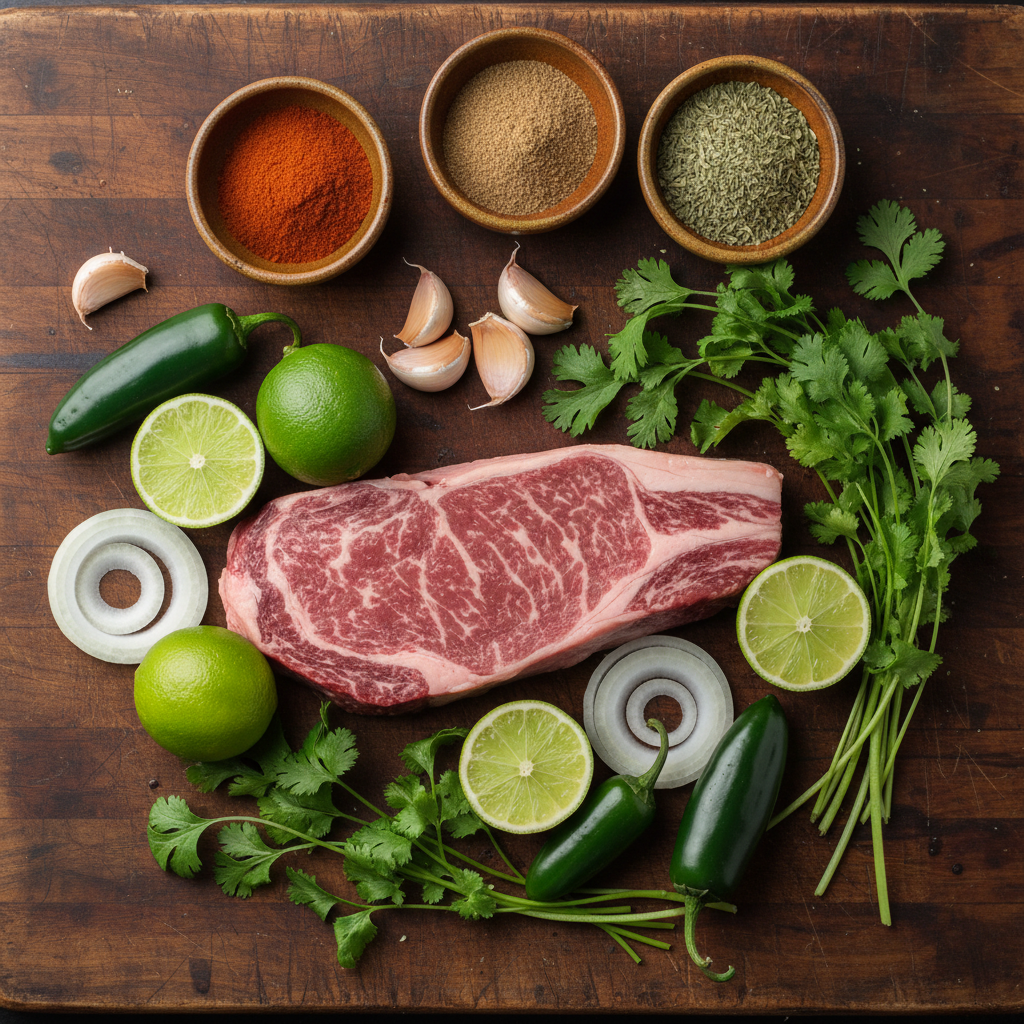
    An overhead shot of fresh carne asada ingredients, including raw steak, whole limes, a bunch of cilantro, garlic, chilies, onions, and various spices arranged neatly on a rustic wooden surface.
    A vibrant, well-organized flat lay of fresh, high-quality ingredients for carne asada. The centerpiece is a raw, perfectly marbled flank or skirt steak. Around it, arrange fresh limes, a bunch of vibrant green cilantro, whole garlic cloves, various chilies such as poblano and jalapeño, sliced white onions, and a selection of ground spices (cumin, chili powder, oregano) in small, rustic ceramic bowls. Everything should appear pristine, clean, and ready for cooking, set against a rustic wooden cutting board or tabletop background. Use soft, natural overhead lighting to highlight textures and colors. This must be professional food photography, 100 percent photorealistic, high-quality food magazine photo style, no artistic interpretations or illustrations.

    Crafting the best carne asada starts with the right ingredients. But don’t worry—this recipe is simple and approachable, our specialty at Recipesmondial. To help you cook with confidence, we’ve broken down exactly what you’ll need for this flavorful meal made easy.

    You’ll likely find most of these items are everyday staples at your local grocery store. Let’s gather your essentials for a truly delicious experience!

    For the Carne Asada Marinade

    The marinade is the heart of this easy carne asada recipe. It tenderizes the meat while infusing it with incredible, bright flavors. This beginner-friendly recipe uses common ingredients to deliver maximum impact.

    • 1/2 cup fresh orange juice: Freshly squeezed is best for that vibrant citrus note. It helps tenderize the meat, too!
    • 1/4 cup fresh lime juice: Adds a zesty tang and works alongside the orange juice for tenderizing.
    • 1/4 cup soy sauce: Provides umami depth and a hint of saltiness, rounding out the overall flavor.
    • 2 tablespoons olive oil: Helps carry flavors and keeps the meat moist.
    • 3 cloves garlic, minced: Essential for a robust, aromatic foundation.
    • 1/2 white onion, roughly chopped: Adds a subtle sweetness and aromatic base.
    • 1/2 cup fresh cilantro, chopped: Offers a fresh, herbaceous burst. (See variations if you prefer a carne asada marinade without cilantro.)
    • 1 teaspoon ground cumin: A warming spice that brings authentic Mexican flavor.
    • 1/2 teaspoon black pepper: Adds a gentle warmth and spiciness.
    • 1/4 teaspoon red pepper flakes (optional): For a little kick if you like some heat!

    Pro Tip: Using fresh citrus juice is key. The natural acids in the orange and lime juice break down tough meat fibers, which is the secret to incredibly tender and juicy carne asada [1]. This simple step makes all the difference.

    For the Steak

    Choosing the right cut of beef is crucial for the best carne asada. Our recipe makes it simple to pick the perfect one.

    • 2 pounds flank steak or skirt steak: These cuts are ideal for grilling, known for their rich beefy flavor and ability to absorb marinade beautifully. Flank steak is leaner, while skirt steak offers a slightly more intense flavor.

    A Note on Steak Selection: Both flank and skirt steak are thin, allowing them to cook quickly and absorb the marinade efficiently. This makes them excellent choices for a beginner-friendly recipe. Either option is easy to work with and will give you fantastic results for your family-friendly meals.

    How to Make Carne Asada (Step-by-Step Guide)

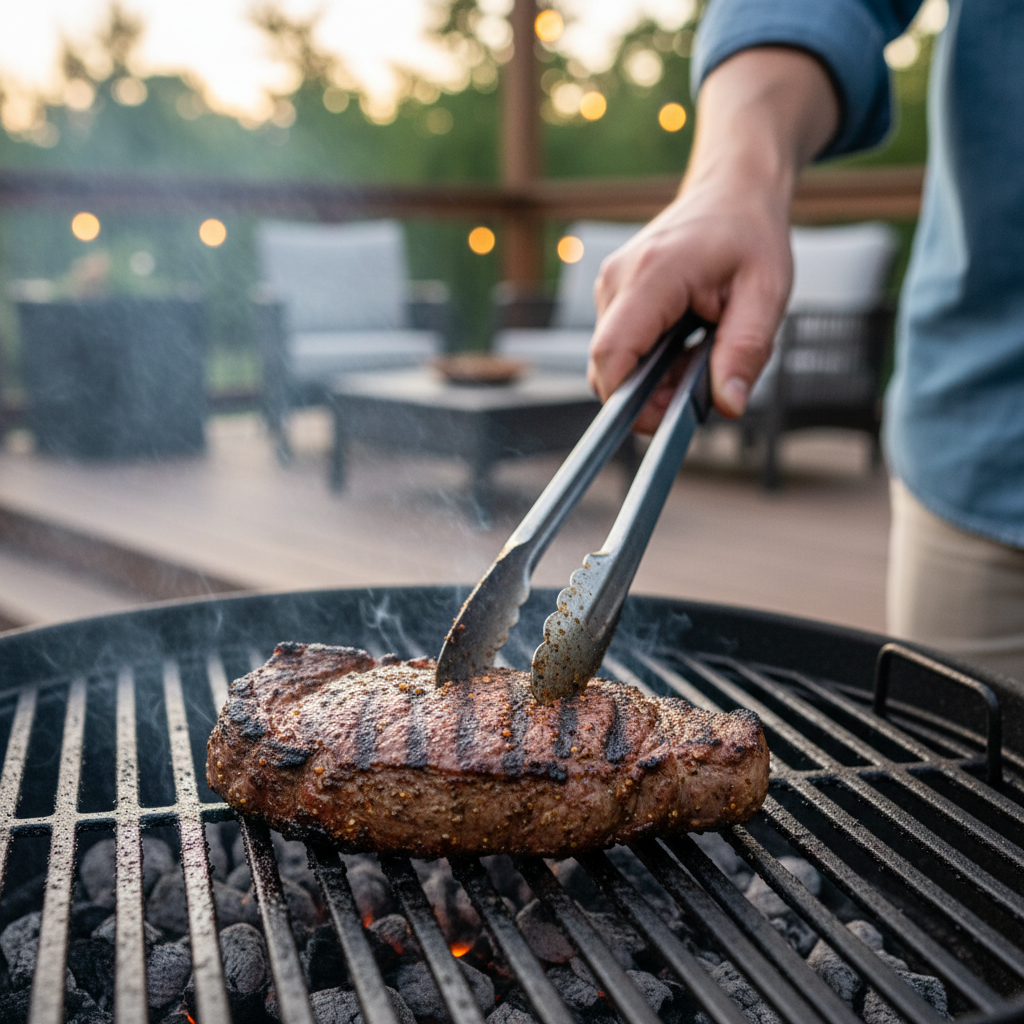
    A close-up of a juicy flank steak sizzling with char marks on an outdoor charcoal grill, being flipped by a home cook's hand with tongs.
    A dynamic, mouth-watering close-up shot of a seasoned and marinated flank steak grilling on a hot outdoor charcoal grill. Capture visible, appetizing char marks and gentle smoke rising from the steak. A real human hand, belonging to an approachable home cook, is using stainless steel tongs to carefully flip the steak, showing its juicy interior. The background should be softly blurred, hinting at an inviting backyard patio setting. Emphasize the rich, cooked color of the meat and the appealing sizzle. This must be professional food photography, 100 percent photorealistic, high-quality food magazine photo style, no artistic interpretations or illustrations.

    Step 1: Prepare the Authentic Carne Asada Marinade

    A fantastic marinade is the key to delicious carne asada. This simple recipe combines fresh citrus, herbs, and spices to infuse your steak with amazing flavor. You’ll be surprised at how easy it is to whip up.

    To create the marinade, combine the following ingredients in a large bowl or a resealable plastic bag:

    • 1/2 cup fresh orange juice (about 1-2 oranges)
    • 1/4 cup fresh lime juice (about 2-3 limes)
    • 1/4 cup olive oil
    • 1/4 cup finely chopped fresh cilantro
    • 4 cloves garlic, minced
    • 1 tablespoon chili powder
    • 1 teaspoon ground cumin
    • 1 teaspoon dried oregano
    • 1 teaspoon salt
    • 1/2 teaspoon black pepper
    • A pinch of cayenne pepper (optional, for a little kick)

    Whisk everything together until well combined. Your flavorful carne asada marinade is now ready for the steak. This mix is crucial for achieving that signature taste.

    Step 2: Marinate the Steak for Maximum Flavor

    With the marinade ready, it’s time to let the steak soak. Marinating not only tenderizes the meat but also infuses every bite with incredible flavor, transforming your carne asada from good to spectacular.

    1. Place your steak (about 1.5-2 pounds flank or skirt steak) into the bowl or bag with the marinade.
    2. Ensure the steak is fully coated by turning it a few times and gently massaging the marinade into the meat.
    3. Seal the bag or cover the bowl tightly.
    4. Refrigerate for at least 2 hours. For the best flavor, marinate for 4-6 hours. If you have time, marinating overnight (up to 12 hours) is fantastic.

    Pro Tip: Do not marinate for more than 12 hours, as the citrus juices can start to “cook” the meat and make it mushy. The goal is a tender steak, not an over-marinated one. This beginner-friendly recipe ensures perfect results every time.

    Step 3: Grill the Carne Asada to Perfection

    Grilling is what gives carne asada its signature char and smoky flavor. But don’t worry if you don’t have a grill—a cast-iron skillet works well too.

    1. Prepare your grill: Preheat your gas grill to high heat, or prepare a charcoal grill for direct high heat. Aim for a temperature around 450-500°F (230-260°C).
    2. Remove from marinade: Take the steak out of the marinade and let any excess drip off. Do not wipe it completely dry.
    3. Grill the steak: Place the steak directly on the hot grill grates and grill for 3-5 minutes per side for medium-rare to medium doneness. Adjust the time based on steak thickness.
    4. Check for doneness: Use a meat thermometer for accuracy. Aim for an internal temperature of 130-135°F (54-57°C) for medium-rare, or 135-140°F (57-60°C) for medium [2]. You’ll see a nice sear and char develop.
    5. Alternative cooking method: No grill? No problem. Heat a large cast-iron skillet over medium-high heat with a tablespoon of olive oil. Sear the steak for 4-6 minutes per side.

    This simple dinner recipe makes grilling fun. You’ll quickly gain confidence in your approachable home cooking skills!

    Step 4: Rest and Slice the Meat Correctly

    Don’t skip this final step—it’s vital for juicy, tender carne asada. Resting the meat allows the juices to redistribute throughout, ensuring every slice is incredibly flavorful and moist.

    1. Rest the steak: Once cooked, transfer the carne asada to a cutting board and cover it loosely with aluminum foil.
    2. Allow it to rest: Let the steak rest for at least 5-10 minutes. Resisting the urge to slice it too soon is key to a tender result.
    3. Slice against the grain: After resting, thinly slice the steak against the grain. Look for the direction of the muscle fibers and cut perpendicular to them. This simple technique shortens the fibers, making each bite much more tender.
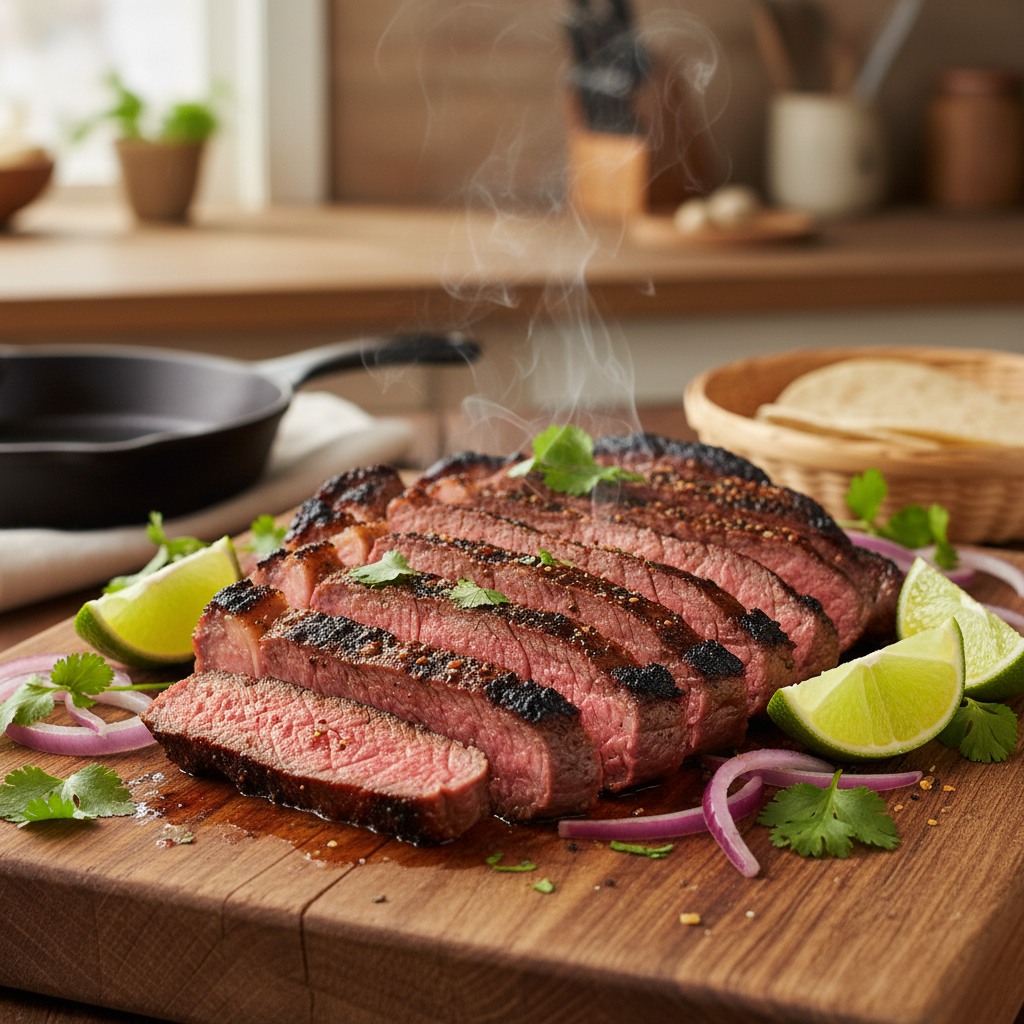
    4. Serve immediately: Your perfectly cooked and sliced carne asada is ready! Enjoy this truly flavorful meal made easy.

    Following these step-by-step cooking guidance tips will lead to a delicious outcome. You’ll be amazed at your culinary success!

    What Are the Best Tips for Juicy, Flavorful Carne Asada?

    Making truly juicy and flavorful carne asada is easier than you might think. With a few simple tricks, you can elevate your home cooking and create a delicious, memorable meal that will impress your family and friends.

    • Choose the Right Cut: Flank steak or skirt steak are fantastic choices for carne asada because they absorb marinade exceptionally well. These cuts are known for their rich flavor and become incredibly tender when cooked correctly.
    • Marinate Generously: Don’t rush this crucial step. A good marinade needs time to work its magic, tenderizing the meat and infusing it with flavor. Marinate your steak for at least 2 hours, but for the best results, aim for 4-12 hours.
    • Bring Steak to Room Temperature: Before grilling, remove the marinated steak from the fridge and let it sit on the counter for about 30 minutes. This helps the meat cook evenly from edge to center, preventing dry spots.
    • Heat Your Grill High: A blazing hot grill is essential for a perfect sear. High heat not only locks in the steak’s juices but also creates a delicious, caramelized crust that adds a deep layer of flavor.
    • Don’t Overcrowd the Grill: If necessary, cook your steak in batches. Placing too much meat on the grill at once lowers its temperature, which prevents a good sear and can cause the meat to steam instead. Give each piece enough space to achieve that desirable char.
    • Cook to Medium-Rare/Medium: To ensure your carne asada is as tender and juicy as possible, avoid overcooking it. Aim for a medium-rare to medium doneness, using a meat thermometer for accuracy. For perfect results, the internal temperature should be around 130-135°F (54-57°C).
    • Rest Your Meat: This is a critical step for a juicy steak. Once grilled, transfer the carne asada to a cutting board and cover it loosely with foil. Letting it rest for 5-10 minutes allows the juices to redistribute throughout the meat, resulting in a much more flavorful bite.
    • Slice Against the Grain: Before serving, identify the direction of the muscle fibers in the steak and slice perpendicular to them. This technique shortens the fibers, making each bite significantly more tender and easier to chew—an essential step for cuts like skirt and flank steak.

    Following these simple steps will ensure you make a fantastic, beginner-friendly carne asada every time. Enjoy your delicious, home-cooked meal with confidence!

    How Can You Serve Carne Asada?

    You’ve mastered grilling delicious carne asada, so now let’s transform it into amazing meals. This flavorful, versatile steak makes it easy to create quick weeknight dinners and family-friendly dishes. Recipesmondial is here to help you serve it creatively.

    From simple dinners to exciting meal prep, these approachable ideas ensure you get the most out of your perfectly cooked carne asada.

    Classic Carne Asada Tacos

    Tacos are a go-to choice for carne asada because they are simple to assemble, packed with incredible flavor, and loved by everyone. As a fantastic way to enjoy your juicy steak, this is the perfect beginner-friendly recipe.

    How to Assemble Your Tacos:

    • Warm Tortillas: First, gently warm corn or flour tortillas in a dry skillet, in the microwave, or on the grill.
    • Add Carne Asada: Next, spoon a generous amount of your sliced carne asada onto each tortilla.
    • Choose Your Toppings: Then, pile on your favorite fresh toppings.
    • Drizzle with Sauce: Finally, add a touch of salsa or crema for extra flavor.

    Popular Toppings to Consider:

    • Fresh Cilantro: Chopped for a burst of freshness.
    • Diced Onions: White or red onions add a nice bite.
    • Salsa Roja or Verde: A must-have for authentic flavor.
    • Guacamole or Sliced Avocado: Adds creamy richness.
    • Cotija Cheese: Crumbly, salty goodness.
    • Lime Wedges: A squeeze of fresh lime brightens everything.

    Burritos and Bowls

    For a heartier meal, carne asada shines in burritos and bowls. These options are fantastic for meal prep and busy weeknights because they offer endless customization and are perfect for using up leftovers.

    For a Flavorful Carne Asada Burrito:

    • Large Flour Tortilla: Start with a burrito-sized tortilla.
    • Layer Ingredients: Spread on a thin layer of refried beans or rice.
    • Add Carne Asada: Place your sliced steak down the center.
    • Include Fillings: Incorporate cheese, salsa, and guacamole.
    • Roll Tightly: Fold in the sides, then roll from the bottom up to create a snug burrito.

    Building a Delicious Carne Asada Bowl:

    • Start with a Base: Use fluffy rice (white or brown) or a bed of crisp lettuce.
    • Add Protein: Top generously with your tender carne asada.
    • Include Veggies: Add corn, black beans, bell peppers, or sautéed onions.
    • Finishing Touches: Garnish with avocado, a dollop of sour cream, and a drizzle of your favorite hot sauce.

    With Rice and Beans

    Sometimes, simple is best. Serving carne asada with rice and beans is a comforting, classic combination that makes for a satisfying and easy family meal. This simple pairing truly allows the delicious steak flavor to shine.

    Pairing Perfection:

    • Rice Options:
      • Cilantro Lime Rice: A fragrant and zesty choice.
      • Mexican Red Rice: Savory and deeply flavorful.
      • Simple White Rice: A perfect canvas for the steak.
    • Bean Options:
      • Black Beans: Often seasoned with garlic and cumin.
      • Pinto Beans: Creamy and mild, perfect refried or whole.
      • Frijoles Charros: Hearty “cowboy beans” with bacon and chorizo.
    • Optional Garnishes:
      • Chopped avocado
      • Fresh cilantro
      • A sprinkle of cheese
      • A squeeze of lime

    No matter how you serve it, your homemade carne asada is sure to be the highlight of the meal. Recipesmondial is here to help you create easy, flavorful dishes. Enjoy your cooking, discover new recipes, and make mealtime stress-free!

    Variations and Substitutions

    Can I Make Carne Asada in the Oven?

    Absolutely! While grilling gives carne asada its classic smoky char, you can make a delicious version right in your oven. This method is perfect for beginners and ideal for busy weeknights or when bad weather keeps you from cooking outdoors.

    Here’s how to adapt your carne asada recipe for the oven:

    • Preheat your oven: Get it nice and hot, around 400°F (200°C).
    • Use an oven-safe skillet: A cast-iron skillet is ideal because it retains heat so well. Place it in the oven to preheat for about 10-15 minutes.
    • Sear on the stovetop: Carefully remove the hot skillet from the oven. Add a tablespoon of oil and sear your marinated steak over medium-high heat for 2-3 minutes per side. This step creates a wonderful crust and locks in flavor.
    • Finish in the oven: Transfer the skillet to the preheated oven and cook for another 5-10 minutes, depending on your steak’s thickness and desired doneness. For medium-rare, aim for an internal temperature of 130-135°F (54-57°C). A meat thermometer will give you the most accurate results.
    • Rest the meat: Just as you would with grilling, always let your carne asada rest for 5-10 minutes before slicing. This step is crucial for keeping it juicy.

    Making carne asada in the oven is an easy recipe that proves you don’t need special equipment to enjoy flavorful, homemade meals.

    Carne Asada Marinade Without Cilantro

    Cilantro isn’t for everyone. For some people, its flavor is polarizing and can even taste like soap [3]. If you’re looking for a delicious carne asada marinade without cilantro, rest assured you can easily adjust the recipe to create a fantastic, flavorful steak.

    Here are some simple substitutions and variations:

    • Simply omit it: The marinade will still be incredibly flavorful thanks to the other ingredients like garlic, onion, and spices.
    • Fresh parsley: Flat-leaf parsley offers a fresh, herbaceous note without cilantro’s distinct flavor. Use it in the same amount.
    • Chives or green onions: For a milder, oniony freshness, add finely chopped chives or the green parts of scallions.
    • More citrus zest: Amp up the lime or orange zest for an extra-bright flavor kick.

    With these adjustments, this beginner-friendly recipe becomes even more versatile, ensuring everyone at the table can enjoy a delicious, family-friendly meal.

    Carne Asada Marinade Without Orange Juice

    In a traditional carne asada marinade, orange juice plays a key role. It adds acidity and a hint of sweetness that helps tenderize the meat and build flavor. However, if you don’t have orange juice or simply prefer a different taste, several excellent substitutions work just as well.

    Here are some practical alternatives for your marinade:

    • Lime juice: A classic substitute, lime juice provides a brighter, zesty acidity that beautifully complements the other Mexican-inspired flavors. Use an equal amount in place of orange juice.
    • Lemon juice: Similar to lime, lemon juice offers strong acidity and a fresh taste, making it a reliable alternative.
    • Pineapple juice: Because of its enzymes, a small amount of pineapple juice is great for tenderizing. Be careful not to marinate the meat for too long (more than 4-6 hours), as it can become mushy.
    • Vinegar: White wine vinegar, apple cider vinegar, or distilled white vinegar can provide the necessary acidity. Start with about half the amount you would use for citrus juice and adjust to taste.

    Choosing the right substitute ensures your homemade carne asada is always perfectly seasoned and tender, making this delicious meal easy to prepare with ingredients you already have on hand.

    Frequently Asked Questions About Carne Asada

    What is the best cut of meat for carne asada?

    For the most flavorful carne asada, choose either skirt steak or flank steak. Both cuts have an excellent texture and are known for absorbing marinades well. [4]

    • Skirt Steak: A popular choice from the cow’s diaphragm muscle, skirt steak has a rich, beefy flavor and a loose grain that makes it perfect for soaking up a delicious carne asada marinade.
    • Flank Steak: This is another excellent, leaner option from the abdominal muscles. While it has less fat than skirt steak, it still boasts great flavor and a distinct grain.

    Regardless of which cut you choose, look for good marbling—the small streaks of fat that add moisture and flavor. After cooking, it’s crucial to slice the meat thinly against the grain. This simple step ensures every bite is tender, a key tip for any beginner-friendly recipes using these cuts.

    How do you make carne asada for tacos?

    Making carne asada for tacos is simple because it follows the main carne asada recipe. The key difference for tacos is how you slice and serve the meat. Here’s an overview of the process:

    1. Marinate Well: Begin with a quality carne asada marinade. Allow your steak to soak for at least 2 hours, or overnight for the deepest flavor.
    2. Grill to Perfection: Cook the steak over high heat to achieve a beautiful sear on both sides. Cook to your preferred doneness, typically medium-rare to medium.
    3. Rest the Meat: This crucial step ensures juicy tacos. Let the cooked steak rest for 5-10 minutes to allow the juices to redistribute throughout the meat.
    4. Slice Against the Grain: Using a sharp knife, slice the carne asada thinly against the grain. This technique guarantees each piece is exceptionally tender.
    5. Assemble Your Tacos: Warm your favorite tortillas, then pile on the sliced carne asada and add toppings like chopped onions, cilantro, salsa, and a squeeze of lime. These easy recipes quickly become family-friendly meals!

    This method ensures every taco is bursting with flavor and tender meat, making it perfect for quick meals or a fun dinner party.

    What is in an authentic carne asada marinade?

    An authentic carne asada marinade is key for both flavoring and tenderizing the steak. It’s a vibrant blend of fresh ingredients and aromatic spices. While recipes vary, the following are core components:

    • Citrus Juices: Fresh orange juice and lime juice are essential. They add bright flavor, and the acidity helps break down muscle fibers, which tenderizes the meat.
    • Garlic: A generous amount of freshly minced garlic provides a pungent, savory base.
    • Cilantro: Freshly chopped cilantro contributes a distinct, herbaceous note.
    • Onion: Thinly sliced white onion is often included for sweetness and a subtle bite.
    • Oil: A quality olive oil or vegetable oil helps distribute the flavors and prevents the meat from sticking to the grill.
    • Spices: A typical spice blend includes:
      • Cumin (earthy, warm)
      • Chili powder (mild heat, depth of flavor)
      • Dried oregano (aromatic, slightly bitter)
      • Salt and black pepper (to season)

    This combination creates a complex marinade that will make your carne asada recipe stand out, delivering the deep flavors essential for flavorful meals made easy.

    How do you prepare juicy carne asada?

    To get juicy carne asada every time, follow a few simple, beginner-friendly techniques. Here’s how to avoid dry meat and ensure your steak is cooked perfectly:

    • Marinate Adequately: Let the steak marinate for at least two hours, or overnight for maximum flavor and tenderness. The acidic components in the carne asada marinade are essential for this process.
    • Start with Room Temperature Meat: Take your steak out of the fridge 30 minutes before grilling to help it cook more evenly.
    • Use High Heat: A very hot grill or cast-iron pan is essential. High heat quickly sears the outside of the steak, creating a flavorful crust that locks in the juices.
    • Don’t Overcook: Skirt and flank steak cook quickly. Aim for medium-rare to medium (130-135°F or 54-57°C for medium-rare). Use an instant-read thermometer for accuracy. [5]
    • Rest Your Meat: This step is non-negotiable for juicy steak. Once cooked, transfer the steak to a cutting board, cover it loosely with foil, and let it rest for 5-10 minutes. This resting period allows the juices to redistribute, making every slice tender and moist.
    • Slice Against the Grain: Finally, always slice the meat thinly against the grain. This shortens the muscle fibers, resulting in a much more tender bite.

    By following this step-by-step cooking guidance, you will master juicy carne asada with confidence and make your meal prep more enjoyable.


    Sources

    1. https://www.exploratorium.edu/cooking/meat/activity-marinate.html
    2. https://www.foodsafety.gov/food-safety-charts/safe-minimum-internal-temperature-chart
    3. https://www.britannica.com/story/why-does-cilantro-taste-like-soap-to-some-people
    4. https://www.usda.gov/media/blog/2013/01/22/meat-cut-carne-asada-mexican-steak-fajitas-or-grilling
    5. https://www.foodsafety.gov/food-safety-charts/safe-minimum-cooking-temperatures