
The classic French toast recipe involves dipping slices of bread into a custard mixture of beaten eggs, milk, sugar, and spices like cinnamon or vanilla. The soaked bread is then fried in a buttered pan on both sides until golden brown and cooked through. It is typically served warm with toppings like syrup, fruit, or powdered sugar.
Imagine a leisurely morning with the aroma of warm vanilla and cinnamon filling your kitchen as a plate of perfectly golden, fluffy French toast waits for you. Sounds like a dream, right? Often, we avoid special breakfasts because of complex recipes or a lack of time. But what if you could make restaurant-quality French toast at home? It’s not only achievable but also incredibly easy to transform simple ingredients into a memorable dish.
Here at Recipesmondial, we believe every home cook deserves to enjoy cooking without stress, and that includes mastering classics like French toast. Forget intimidating instructions. We’ll show you how to make the best easy French toast using everyday ingredients and clear, step-by-step guidance. This beginner-friendly recipe ensures delicious results every time, making it perfect for a quick breakfast, a weekend brunch, or a delightful family-friendly meal.
Get ready to boost your confidence in the kitchen and discover the joy of effortless, flavorful cooking. We’ll guide you through every detail, from selecting the best bread to mastering the perfect golden crisp. We will even share exciting variations like an easy french toast casserole or baked french toast. Let’s make your mealtime stress-free and wonderfully delicious!
Why Is This the Best Easy French Toast Recipe?
At Recipesmondial, we believe delicious meals shouldn’t be a fuss. That’s why we created our Easy French Toast Recipe. It’s designed to make your cooking experience enjoyable and stress-free, so you can have a fantastic breakfast that’s simple to prepare.
This isn’t just another french toast recipe. It’s the perfect solution for anyone who loves a classic breakfast but dislikes complex instructions. We’ve perfected the balance between ease and amazing flavor, so you can make this dish with confidence—even if you’re new to cooking.
Here’s why this stands out as the best easy french toast recipe:
- Effortless Step-by-Step Guidance: We break down each step into simple, actionable instructions. No more guessing—our clear guidance builds your confidence from start to finish.
- Quick Breakfast Ideas: This recipe is incredibly fast to whip up, making it perfect for busy mornings. You can enjoy a delightful breakfast in minutes without sacrificing precious time.
- Everyday Ingredients, Incredible Flavor: No special trips to the store are needed. This recipe uses common, affordable ingredients you likely already have to create a rich, comforting flavor.
- Reliable Results Every Time: Say goodbye to soggy or burnt French toast. Our precise ratios and cooking tips ensure perfect golden-brown slices with a tender, custardy center every single time.
- Family-Friendly Meals: French toast is a universal crowd-pleaser. This simple dinner recipe (or breakfast!) will delight everyone at the table, from picky kids to adventurous foodies.
- Perfect for Beginners: If you’re new to cooking, this recipe is the perfect place to start. It teaches fundamental skills without intimidating terms, helping you build confidence in the kitchen.
- A Gateway to Delicious Variations: Once you master this classic, you can easily explore other variations. Use this recipe as a base for french toast casserole, baked french toast, and more.
Our goal is to help you cook delicious, memorable meals with ease. This recipe is a perfect example of our commitment to approachable home cooking. We want to help you enjoy the process, turning simple ingredients into a delightful breakfast without the stress.
What Ingredients Do You Need for Classic French Toast?
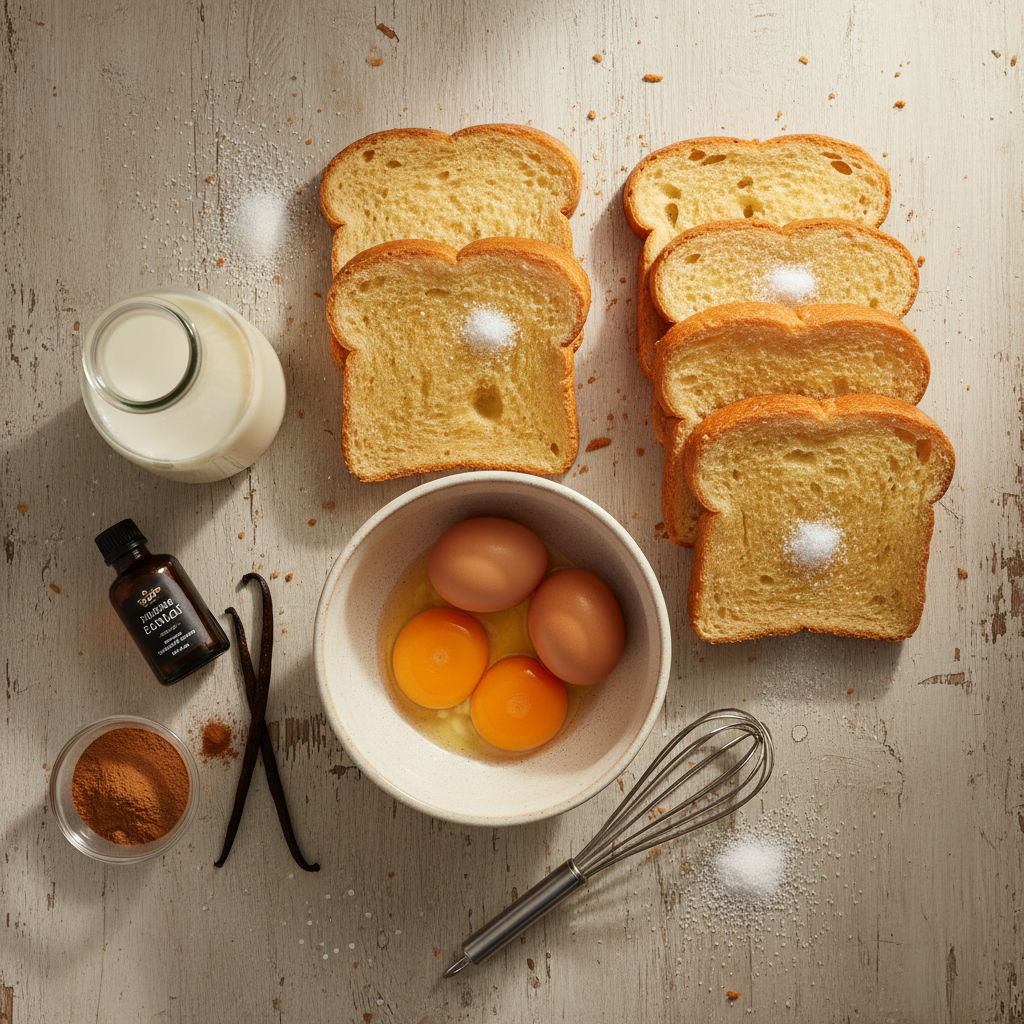
Making a delicious batch of classic French toast is simpler than you might think. This easy recipe uses everyday ingredients you probably already have in your kitchen, making it easy to whip up a flavorful breakfast the whole family will love. Best of all, there are no complicated steps involved!
To create your perfect, golden French toast, here is what you will need:
- Thick-Sliced Bread: As the star of the show, a hearty, thick-sliced bread yields the best results. Day-old bread works wonders because it absorbs the egg custard without becoming soggy. Brioche, challah, or a good-quality white bread are all fantastic choices for a truly special breakfast.
- Large Eggs: Eggs are essential for creating the rich custard that makes French toast so irresistible. They bind the ingredients and give the final dish its classic, tender texture.
- Milk (or Cream): To achieve a creamy custard, whole milk is a great choice for its richness, but 2% or non-dairy milks (like almond or oat) also work beautifully. For an extra-indulgent and luxurious treat, add a splash of heavy cream.
- Granulated Sugar: A touch of granulated sugar sweetens the custard and helps the bread caramelize as it cooks, creating those delicious golden edges. Feel free to adjust the amount to suit your taste.
- Pure Vanilla Extract: A dash of pure vanilla extract is the secret weapon that elevates your French toast from good to amazing, adding wonderful warmth and depth to every bite.
- Ground Cinnamon (Optional, but Recommended!): A sprinkle of ground cinnamon provides that cozy, familiar aroma and taste that pairs perfectly with vanilla and sugar. For extra warmth, you can also add a pinch of nutmeg.
- Butter (or Cooking Oil): You’ll need a little fat for the pan to create a beautiful golden crust and prevent sticking. Butter adds fantastic flavor, but a neutral cooking oil like canola or vegetable also works well.
With these simple ingredients, you’re well on your way to making a perfect breakfast that will quickly become a family favorite. Get ready for stress-free cooking and amazing flavor!
How to Make French Toast Step-by-Step
Prepare the Egg Custard
A rich, flavorful custard is the key to perfect French toast. This simple mixture ensures a moist inside and a beautifully crisp outside, making it a quick and easy breakfast.
- First, crack the eggs into a shallow dish.
- Next, add the milk, sugar, vanilla extract, and cinnamon.
- Whisk everything together until the mixture is a uniform color.
- Make sure no streaks of egg white remain. A smooth, even custard will give your French toast the best flavor.
- Expert Tip: A fork works just as well as a whisk for this step. The goal is a consistent, creamy mixture, which is key to avoiding dry French toast.
Soak the Bread
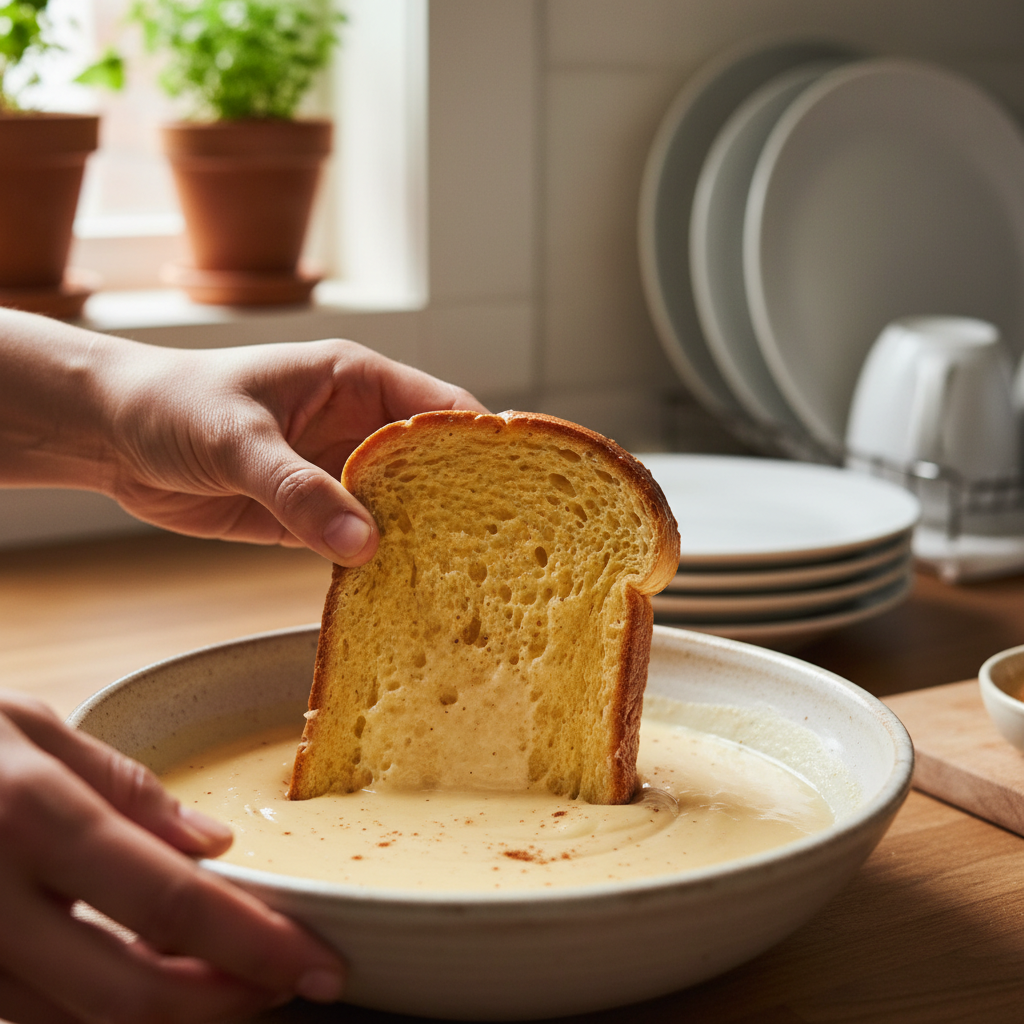
Properly soaking the bread is crucial for the perfect texture. Soaking too little leaves the bread dry, while soaking too much makes it soggy. Aim for a perfect balance.
- Place one slice of bread into the custard mixture.
- Allow it to soak for 15-20 seconds per side.
- Gently press down on the bread to help it absorb the liquid evenly.
- Carefully lift the bread from the custard, letting any excess drip back into the dish.
- Repeat with the remaining slices of bread.
- Helpful Hint: Thicker breads like brioche may need a slightly longer soak, while softer breads absorb the custard faster. Adjust your time as needed.
Cook to Golden Perfection
This is the final step to transform your soaked bread into delicious French toast. Follow these tips for a perfect, golden-brown finish every time.
- Heat a large non-stick skillet or griddle over medium heat.
- Add a tablespoon of butter or a swirl of oil to the pan.
- Once the butter is melted and sizzling, carefully place the soaked bread in the skillet.
- To ensure even cooking, do not overcrowd the pan; cook in batches if necessary.
- Cook for 2-4 minutes on each side, or until the bottom is golden brown.
- A golden-brown color indicates that the custard inside is cooked through.
- Flip carefully with a spatula and cook the other side until it is also golden.
- Serve immediately with your favorite toppings.
- Common Mistake to Avoid: Don’t use high heat, which can burn the outside before the inside is cooked. Medium heat is essential for achieving a perfect golden-brown crust.
What is the Best Bread for French Toast?
The secret to incredible French toast lies in the bread. Your choice significantly impacts the final texture and flavor of your easy French toast recipe. The ideal slice absorbs the rich custard without disintegrating, then cooks to a golden, crispy finish on the outside while staying soft and custardy inside.
To help you confidently choose the best loaf for your family-friendly meals, let’s explore the top contenders that will elevate your breakfast.
Brioche Bread
Brioche is often called the king of French toast breads, and for good reason. Originating from France, this rich, buttery, and slightly sweet bread is the perfect choice for a decadent breakfast. Its high egg and butter content creates a tender crumb that results in a beautiful golden crust when cooked.
- Flavor Profile: It adds a natural sweetness and richness, complementing the vanilla and cinnamon in your custard.
- Texture Perfection: Brioche is dense enough to absorb the custard without becoming soggy. It creates an incredibly soft, custardy interior.
- Golden Finish: Its richness ensures a lovely caramelized crust that’s crisp and inviting.
For the best French toast recipe, brioche is the go-to choice because it effortlessly elevates a simple breakfast into something extraordinary.
Challah
Challah is another fantastic choice for French toast. This traditional Jewish braided bread, made with eggs and oil, is slightly less buttery than brioche but delivers equally delicious results. It’s known for its beautiful golden color and a soft, slightly chewy texture.
- Eggy Goodness: Like brioche, its eggy nature helps it soak up the custard wonderfully.
- Great Structure: Challah holds its shape well during soaking and cooking. This prevents your French toast from becoming flimsy.
- Subtle Sweetness: It provides a gentle sweetness. This makes it versatile for both sweet and savory toppings.
If you’re looking for a reliably delicious option that’s a step above standard white bread, challah is a superb alternative.
Thick-Sliced White Bread
Don’t underestimate a good, thick-sliced white bread. While brioche and challah are often preferred, this everyday option can make delicious French toast, too. The key is to choose thick slices that can handle a good soaking without falling apart.
- Accessibility: It’s readily available in most grocery stores. This makes it a convenient option for quick breakfast ideas.
- Affordable: White bread is usually more budget-friendly. This helps you create budget-friendly meals.
- Crucial Tip: Always opt for thick slices. Thin slices can quickly become oversaturated and fall apart.
For the best results, use slightly stale white bread. Day-old bread is firmer, so it absorbs the custard more effectively without turning mushy. This simple trick ensures a perfect texture every time.
Tips for Restaurant-Style French Toast at Home

Ready to turn an everyday breakfast into a special occasion? Making perfect, restaurant-style French toast at home is easier than you think. With a few simple tweaks, you can elevate this classic dish to a new level of deliciousness. Get ready to impress family and friends with these pro tips from Recipesmondial!
Master the Custard for Rich Flavor
- Use a Richer Base: For truly decadent French toast, swap some of your milk for heavy cream or half-and-half. This adds richness and a silky texture that melts in your mouth.
- Boost the Flavor: Don’t be shy with your flavorings. A dash of pure vanilla extract is essential. For extra depth, try a pinch of cinnamon, nutmeg, or even a tiny splash of almond extract.
- Sweeten Thoughtfully: Add a tablespoon or two of sugar or maple syrup directly to the egg custard. This helps the bread caramelize during cooking for a beautiful golden-brown finish.
Perfect Your Soaking Technique
- Use Stale or Day-Old Bread: This is a game-changer. Stale bread absorbs the custard much better without becoming soggy. If your bread is fresh, gently toast the slices in a low-temperature oven for 10–15 minutes to dry them out.
- Thick Slices Are Key: Opt for slices at least 1-inch thick. This guarantees a fluffy interior that holds up to soaking and cooking, while thin slices can quickly become mushy.
- Soak Just Right: Dip each side of the bread for 20–30 seconds. You want it fully saturated but not falling apart. This allows the custard to penetrate the center, preventing a raw egg taste.
Cook Like a Pro
- Use Medium-Low Heat: Patience is crucial for restaurant-quality results. Cooking on a griddle or skillet over medium-low heat allows the center to cook through while the exterior develops a deep, golden-brown crust without burning.
- Add Plenty of Butter: Don’t skimp on the butter! A generous pat of unsalted butter in the pan before each batch adds incredible flavor and helps create a beautifully crisp, golden exterior.
- Don’t Crowd the Pan: Cook only two or three slices at a time. Overcrowding lowers the pan’s temperature and prevents the bread from browning evenly.
Elevate Your Presentation and Toppings
- Keep It Warm: To serve everything at once, place finished slices on a wire rack over a baking sheet in a warm oven (around 200°F/95°C). This keeps them hot and crispy until you’re ready to eat.
- Add a Dusting of Sugar: A light dusting of powdered sugar adds a professional touch that looks just like it came from your favorite brunch spot.
- Get Creative with Toppings: Go beyond plain syrup. Toppings like fresh berries, sliced bananas, whipped cream, or toasted nuts can transform your French toast into a gourmet delight. Fresh fruit is a great choice, as it adds both vibrant color and nutritional value [1].
By following these simple yet effective tips, you’ll be making the best French toast right in your own kitchen. It’s an easy way to bring joy and deliciousness to your breakfast table!
Recipe Variations to Try
Vanilla French Toast
Want to add extra warmth and sweetness to your breakfast? It’s incredibly easy to transform classic French toast into a delightful vanilla version. This simple tweak elevates the flavor, making your morning meal feel extra special.
To create the best vanilla French toast, follow these tips:
- Boost the Vanilla: Increase the vanilla extract in your egg custard. Instead of 1 teaspoon, try 1 ½ to 2 teaspoons for a more intense flavor.
- Vanilla Bean Paste: For a truly gourmet touch, use ½ teaspoon of vanilla bean paste instead of extract. It provides a richer flavor and beautiful vanilla bean specks.
- Sugary Finish: After cooking, dust your vanilla French toast with powdered sugar or drizzle it with maple syrup for a delicious combination.
This simple addition creates a quick and delicious breakfast. It’s perfect for mornings when you want extra flavor without any fuss.
Easy French Toast Casserole
A French toast casserole is the perfect family-friendly meal for feeding a crowd or prepping ahead. This make-ahead variation transforms individual slices into a single baked dish, making it a fantastic solution for busy families or a relaxed weekend brunch.
Here’s how to turn your French toast into a simple casserole:
- Use Stale Bread: Start with day-old bread, like brioche or challah, cut into cubes. Stale bread absorbs the custard more effectively.
- Prepare the Custard: Double or triple your French toast custard recipe to ensure you have enough to coat all the bread cubes generously.
- Assemble and Soak: Place the bread cubes in a greased 9×13 inch baking dish. Pour the custard over the top, ensuring all pieces are soaked. Cover and refrigerate for at least 2 hours, or overnight for the best flavor and texture.
- Bake to Perfection: The next morning, bake the casserole at 350°F (175°C) for 35-45 minutes, or until golden brown and set in the center.
This beginner-friendly recipe lets you enjoy French toast without standing over the stove, making breakfast easy and stress-free.
Baked French Toast
For the delicious taste of French toast without the pan-frying, try baking it. This hands-off approach is perfect for weekend mornings or when serving a crowd. It’s a great, stress-free alternative to the classic method.
Adapting your classic French toast recipe for baking is straightforward:
- Choose Your Bread: Use thick slices of bread, such as brioche or challah.
- Soak Thoroughly: Prepare your egg custard according to the main recipe. Let the bread slices soak for 1-2 minutes per side so they absorb plenty of the custard.
- Arrange on a Baking Sheet: Place the soaked slices in a single layer on a greased or parchment-lined baking sheet for easy cleanup.
- Bake Until Golden: Bake at 375°F (190°C) for 15-20 minutes, flipping halfway through. The French toast should be golden-brown with a slightly crispy edge.
This method gives you uniformly cooked French toast that is soft on the inside and perfectly golden on the outside. It’s a simple, time-saving technique and a great addition to your collection of quick breakfast ideas.
How to Store and Reheat Leftovers
Whipping up a big batch of our easy French toast recipe is a fantastic idea for meal prep. Storing and reheating leftovers correctly means you can enjoy a delicious breakfast all week long, with every bite as tasty as the first.
Storing Cooked French Toast
Proper storage is key to keeping your French toast fresh and preventing it from getting soggy. For the best results, follow these simple steps.
- Cool Completely: First, let your cooked French toast cool down completely on a wire rack. This allows air to circulate and prevents condensation, which makes the bread soggy.
- Refrigerate: For short-term storage, place the cooled slices in an airtight container, using parchment paper to separate the layers and prevent them from sticking. Stored this way, they make for great quick breakfast ideas and will keep in the refrigerator for up to 3-4 days.
- Freeze for Longer: To store your French toast for longer, flash-freeze the slices. Arrange them in a single layer on a baking sheet and freeze until firm, about 1-2 hours. Once frozen, transfer the slices to a freezer-safe bag or container, with parchment paper between the layers. They will keep well for up to 1-2 months, making future breakfasts incredibly easy.
- French Toast Casserole: If you made our easy French toast casserole, cover the dish tightly with plastic wrap and foil. It will last in the refrigerator for up to 3 days. To freeze the casserole (either baked or unbaked), wrap it just as securely; it will keep for up to 1 month.
Reheating French Toast Leftovers
There are several ways to reheat leftover French toast, each designed to restore its warm, delightful texture. Choose the method that works best for your schedule.
Microwave Method (Quickest)
When you’re short on time, the microwave is the fastest way to enjoy a quick breakfast.
- Place 1-2 slices of French toast on a microwave-safe plate.
- Heat for 30-60 seconds, then flip the slices.
- Heat for another 15-30 seconds until warmed through.
- Adjust the time based on your microwave’s power.
- Be careful not to overheat, as this can make the toast chewy.
Oven or Toaster Oven Method (Best Texture)
This method is best for achieving crispy edges that taste almost freshly made. It’s also a great choice when reheating several slices at once.
- Preheat your oven or toaster oven to 350°F (175°C).
- Arrange the French toast slices in a single layer on a baking sheet.
- Bake for 5-10 minutes if refrigerated.
- Bake for 10-15 minutes if frozen.
- The toast is ready when the center is warm and the edges are lightly crisped.
Skillet Method (Crispy and Warm)
Using a skillet is the perfect way to revive the original stovetop crispness of your French toast.
- Heat a non-stick skillet over medium-low heat with a small amount of butter or cooking spray.
- Place the French toast slices in the skillet.
- Cook for 2-3 minutes per side.
- Flip until both sides are lightly golden and warmed through.
No matter which reheating method you choose, your easy French toast recipe leftovers will be a delicious treat. These tips help make breakfast simple and stress-free. Enjoy cooking with Recipesmondial!
Frequently Asked Questions
How do you make a French toast recipe for 1?
Making French toast for one is simple and perfect for a quick solo breakfast or brunch. The key is to scale down the ingredients, which ensures a delicious meal without any waste.
Here’s what you’ll need:
- Bread: Use 1-2 slices of your preferred bread. Brioche or challah work wonderfully.
- Egg Custard:
- 1 large egg
- 2 tablespoons milk (any kind works)
- 1/2 teaspoon granulated sugar (or maple syrup)
- 1/4 teaspoon vanilla extract
- A tiny pinch of ground cinnamon (optional)
- Butter/Oil: A small pat for cooking.
Steps for one serving:
- In a shallow dish, whisk together the egg, milk, sugar, vanilla, and cinnamon.
- Dip each slice of bread into the mixture, coating both sides without letting them get soggy. About 15-20 seconds per side is usually enough.
- Heat a lightly buttered pan over medium heat.
- Cook the soaked bread for 2-3 minutes per side, until golden brown and cooked through.
- Serve immediately with your favorite toppings for a perfect single-serving meal.
What can I use if I don’t have milk for French toast?
No milk? No problem. You have several excellent substitutes that will still create a creamy, delicious French toast. These alternatives are perfect for when you’re short on ingredients.
Consider these simple swaps:
- Water: In a pinch, plain water works. Your French toast might be a little less rich, but it will still taste great.
- Cream or Half-and-Half: For an extra rich and decadent French toast, these options add a luxurious texture.
- Nut Milks: Almond, soy, oat, or cashew milk are fantastic non-dairy options that provide a similar creaminess and a subtle nutty flavor.
- Coconut Milk: The beverage type (not thick, canned cooking milk) adds a lovely, subtle tropical flavor and good richness.
- Buttermilk: This adds a slight tang and helps create a more tender texture.
- Yogurt (Thinned): Whisk plain yogurt with a little water until it reaches a pourable consistency. This adds both a nice tang and moisture.
Remember to adjust the sweetness if your substitute is unsweetened. Aim for 2 tablespoons of liquid per egg to achieve the perfect custard consistency.
Can you make French toast without eggs?
Absolutely! Making a delicious French toast without eggs is a fantastic option for anyone with egg allergies or dietary preferences. The key is to use a binder that mimics an egg’s role in creating that classic golden crust.
Here are some simple, actionable ways to make egg-free French toast:
- Flaxseed “Egg”:
- Whisk 1 tablespoon of ground flaxseed meal with 3 tablespoons of warm water.
- Let the mixture sit for 5 minutes until it thickens into a gel.
- Use this as a direct substitute for one egg in your custard.
- Cornstarch or Flour Slurry:
- Whisk 1-2 tablespoons of cornstarch or all-purpose flour with 1/2 cup of milk (dairy or non-dairy).
- Add your preferred sweetener and vanilla.
- This creates a thick batter that coats the bread well.
- Mashed Banana:
- Mash about 1/4 of a ripe banana until smooth.
- Mix it with your milk, sweetener, and vanilla.
- This adds natural sweetness, helps bind the mixture, and imparts a subtle banana flavor.
- Silken Tofu:
- Blend 1/4 cup of silken tofu with milk, sweetener, and vanilla until completely smooth.
- This creates a creamy, rich texture without the need for eggs.
Whichever method you choose, soak the bread in the mixture and cook as usual until golden brown. You’ll still get a comforting and flavorful breakfast.
How do you make French toast casserole easy?
A French toast casserole is a perfect make-ahead breakfast for busy mornings or family gatherings. This simple dish transforms the classic recipe into a low-stress meal that’s ideal for meal prep.
Here’s how to make it, even for beginner cooks:
- Choose Your Bread Wisely: Use day-old bread like challah, brioche, or a sturdy white bread, cubed into 1-inch pieces. Stale bread soaks up the custard without getting soggy.
- Simple Custard:
- Whisk 6-8 large eggs with 1 1/2 cups of milk (dairy or non-dairy).
- Add 1/2 cup of granulated sugar (or brown sugar for more depth).
- Stir in 1-2 teaspoons of vanilla extract and 1 teaspoon of ground cinnamon.
- Assembly is Key:
- Grease a 9×13 inch baking dish.
- Spread the bread cubes evenly in the dish.
- Pour the custard over the bread, ensuring all pieces are well coated. Gently press down any floating pieces.
- Chill Overnight (Optional but Recommended): This step is the secret to an easy morning! Cover the dish and refrigerate it overnight. This allows the bread to fully absorb the custard, leading to a richer flavor and better texture.
- Bake and Enjoy:
- Preheat your oven to 350°F (175°C).
- Bake uncovered for 35-45 minutes. The casserole is done when it’s puffed, golden brown, and a knife inserted into the center comes out clean.
- Let it cool slightly before serving.
For extra flavor, sprinkle a streusel topping (butter, flour, brown sugar, and cinnamon) over the casserole before baking. Serve with maple syrup, fresh berries, or a dusting of powdered sugar.