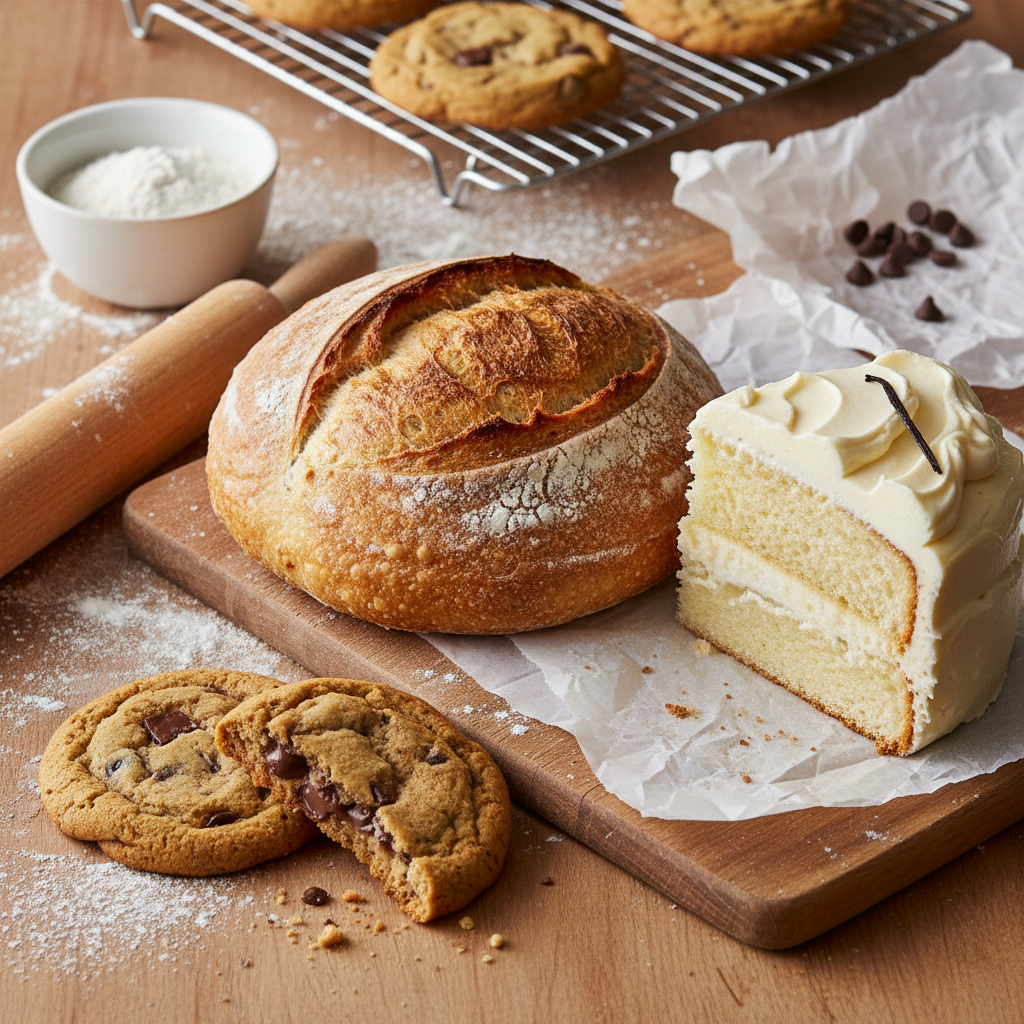
A sourdough bread recipe is a method for making bread using a fermented culture of flour and water called a sourdough starter, which acts as a natural leavening agent. The process involves activating the starter, mixing it with flour, water, and salt, then developing gluten through a series of folds. After a long fermentation and proofing period, the dough is baked in a hot oven to create a loaf with a distinctive tangy flavor, chewy crumb, and crisp crust.
There’s something uniquely satisfying about baking a warm, crusty loaf of sourdough at home. The aroma, the golden crust, and the chewy interior make it a culinary dream for many home cooks. However, the journey to a perfect loaf can seem daunting. If you’ve ever felt overwhelmed by complex recipes, technical terms, or lengthy processes, you’re not alone.
But what if it didn’t have to be so complicated? At Recipesmondial, we believe making delicious, restaurant-quality bread at home should be a stress-free experience. That’s why we’ve crafted the ultimate easy sourdough recipe specifically for beginners. This step-by-step guide will help you build confidence and bake an amazing, flavorful loaf that will impress your family and friends. Get ready to discover the joy of approachable home cooking!
Forget the intimidating jargon and endless proofing times. Our simplified approach focuses on practical tips, clear instructions, and reliable results, making it the perfect starting point for your sourdough adventure. We’ll show you exactly how to achieve that coveted tangy flavor and irresistible texture. This recipe will transform you from a hesitant baker into a confident bread master. So, what makes this sourdough recipe stand out as the best for beginners? Let’s dive in!
Why Is This the Best Sourdough Recipe for Beginners?
Learning to bake sourdough bread can feel like a challenge, especially with recipes full of complex jargon and confusing steps. We understand that frustration. That’s why we created this easy sourdough bread recipe, designed to be the perfect starting point for any home baker.
Our method focuses on simplicity. By removing unnecessary complications, we provide a clear, step-by-step guide. This approach ensures your first sourdough experience is both enjoyable and successful, helping you build confidence from the start.
Here’s why this is the ideal sourdough recipe for beginners:
- Simple, Actionable Steps: We break down the entire process into easy-to-understand instructions. We use plain language instead of confusing culinary terms to make home cooking more approachable.
- Focus on Key Techniques: You will learn the essential skills for making sourdough without getting lost in overly technical details. Our step-by-step guidance helps you master the basics.
- Forgiving Method: Sourdough can be intimidating, but this recipe is designed to be forgiving. Minor variations won’t ruin your loaf, which helps build your confidence in the kitchen.
- Reliable Results: Following our instructions leads to a beautiful and flavorful loaf. This repeatable success helps turn uncertainty into confidence.
- Minimal Equipment: You don’t need expensive or specialized tools. This recipe uses common kitchen items, keeping it simple and budget-friendly.
- Delicious Flavor Profile: Despite its simplicity, this recipe delivers incredible taste. You’ll bake a crusty, airy, and tangy sourdough bread—a truly flavorful meal made easy.
- Confidence Builder: Mastering sourdough may seem difficult, but our beginner-friendly recipe makes it achievable. You’ll be amazed at what you can create, allowing you to enjoy baking without stress.
This recipe is designed to demystify the sourdough process so you can focus on the joy of baking. Soon, you’ll be sharing delicious, homemade bread that will impress both you and your family!
What Equipment Do You Need to Make Sourdough?
Ready to dive into the world of homemade sourdough? Great news: you don’t need a kitchen full of specialized gadgets to get started. In fact, most home cooks already own the necessary tools. Our easy sourdough bread recipe focuses on simple techniques and minimal equipment, so you can start baking delicious loaves without feeling overwhelmed.
Essential Tools
These tools are key to making your sourdough journey smooth and successful. Using them will help you achieve consistent results with our sourdough bread recipe.
- Large Mixing Bowl: You’ll need a bowl spacious enough to comfortably mix your ingredients and hold the dough as it rises during bulk fermentation. A large glass or plastic bowl works well.
- Kitchen Scale: A kitchen scale is essential for baking sourdough. Measuring ingredients by weight, rather than volume, is far more accurate and helps prevent common baking mistakes. This precision ensures your sourdough recipe turns out perfectly every time. source: https://www.kingarthurbaking.com/blog/2018/03/29/baking-by-weight
- Dutch Oven or Baking Vessel: A Dutch oven creates a steamy environment that helps the crust develop beautifully and allows the bread to expand fully. Don’t have one? Don’t worry! Our guide also covers baking sourdough without a Dutch oven, using alternatives like a lidded pot or a baking stone with a pan of water.
- Bench Scraper: This flat, rectangular tool is incredibly versatile. Use it to scrape dough from your work surface, divide and shape your loaf, and make handling sticky dough much easier.
- Proofing Basket (Banneton) or Bowl with a Floured Cloth: A proofing basket (or banneton) holds the dough’s shape during its final rise, giving the loaf a lovely texture and preventing it from spreading. If you don’t have one, a regular bowl lined with a generously floured kitchen towel is a perfect beginner-friendly substitution.
Helpful-but-Not-Required Tools
While not strictly necessary for our basic sourdough recipe, these tools can make the process easier and more enjoyable. Think of them as useful upgrades for when you feel more comfortable.
- Dough Whisk (Danish Dough Whisk): This special whisk is designed to mix dough quickly and efficiently, combining flour and water without overdeveloping the gluten too early. While helpful, your hands or a sturdy spoon also work just fine.
- Lame (Scoring Tool): A lame is a small blade used for scoring the top of your dough. This scoring guides the bread’s expansion in the oven, creating beautiful patterns and a better rise. In a pinch, a very sharp razor blade or knife can be used instead.
- Digital Thermometer: A digital thermometer is the best way to ensure your bread is fully baked and prevent a gummy interior. Alternatively, you can test for doneness by tapping the bottom of the loaf—a hollow sound usually means it’s ready.
- Stand Mixer: A stand mixer with a dough hook can handle the initial mixing, but most sourdough recipes rely on hand mixing and stretching. Kneading by hand is not only satisfying but also the best way to feel the dough’s development, which is why our recipe focuses on this method.
What Simple Ingredients Are in Sourdough Bread?

You might be surprised to learn that a beautiful loaf of sourdough requires very few ingredients. It’s a testament to how simple components can create something extraordinary. You don’t need a pantry full of specialty items for this easy sourdough recipe; in fact, you only need four. Let’s explore the basic building blocks behind this flavorful bread.
Sourdough Starter
The sourdough starter is the heart of your bread. It’s a living mixture of flour and water, full of wild yeast and beneficial bacteria. These natural microorganisms are what make the dough rise and give sourdough its distinctive tangy flavor. Because the starter is a natural leavening agent, you won’t need any commercial yeast. A healthy, active starter is the key to a successful loaf, transforming simple ingredients into something magical.
Flour
Flour provides the main structure for sourdough bread. However, not all flours are created equal for baking this particular bread, as your choice will impact both the texture and flavor. For a reliable loaf, bread flour is often recommended due to its higher protein content, which helps develop a strong gluten network. This gluten is what gives the bread its signature chewiness and allows it to hold its shape. While you can use high-quality all-purpose flour for a beginner-friendly option, some bakers enjoy experimenting with whole wheat or rye for added depth. For best results when starting out, stick with bread flour or a strong all-purpose flour.
Water
Water is more than just a liquid in your sourdough; it plays a crucial role in activating the starter and hydrating the flour to develop gluten. For best results, use filtered water. Tap water often contains chlorine, which can inhibit the activity of your starter’s delicate wild yeasts and bacteria. If you must use tap water, let it sit out for a few hours to allow the chlorine to evaporate. It’s also best to use warm water when mixing your dough, as this encourages starter activity and helps the flour absorb the liquid more effectively.
Salt
Salt is a vital ingredient that contributes more than just flavor to your sourdough. It strengthens the gluten structure, leading to a better rise and crumb, and also controls the fermentation rate to prevent your dough from over-proofing. Of course, it also adds a crucial depth of flavor. Fine sea salt or kosher salt are excellent choices, but avoid iodized table salt, which can impart an off-flavor. Never skip the salt; it’s essential for both taste and texture in this easy sourdough recipe. Studies show that salt significantly influences dough rheology and bread quality [1].
How to Make Sourdough Bread: A Step-by-Step Guide

Making delicious sourdough bread at home is a rewarding journey. This easy-to-follow, step-by-step guide will lead you through each stage, helping you move from uncertainty to baking with confidence. Our goal is to make your cooking experience enjoyable and stress-free.
Let’s turn simple ingredients into a beautiful, flavorful loaf.
Step 1: Feed Your Sourdough Starter
A happy, active starter is the key to a great loaf of bread. Before you begin mixing your dough, your starter needs to be bubbly and lively. This crucial first step ensures your bread will rise beautifully.
How to Feed Your Starter:
- Discard: First, remove most of your starter from its jar, leaving just 1-2 tablespoons behind. This step is essential for keeping it active and preventing it from becoming too acidic.
- Feed: To the remaining starter, add 50 grams of unbleached all-purpose or bread flour and 50 grams of warm water.
- Mix: Stir everything together until there are no dry spots. Scrape down the sides of the jar for a clean start.
- Rest: Cover the jar loosely and let it sit at room temperature for 4-8 hours. It should become bubbly and visibly active, which means it’s ready for baking.
Tip: Your starter is ready when it has doubled in size and passes the “float test.” To check, drop a small spoonful into a glass of water. If it floats, it’s ready to use.
Step 2: Mix the Dough
Now it’s time to mix the dough. This is a straightforward process that doesn’t require any complex techniques.
Ingredients:
- 100 grams active sourdough starter
- 350 grams warm water (around 95-100°F / 35-38°C)
- 500 grams bread flour (or unbleached all-purpose flour)
- 10 grams fine sea salt
Mixing Instructions:
- Combine Water and Starter: In a large mixing bowl, pour in the warm water. Add your active sourdough starter and stir gently until it is mostly dissolved.
- Add Flour: Add the flour to the bowl. Use a spoon or your hands to mix until no dry flour remains. The dough will be shaggy and sticky.
- Rest (Autolyse): Cover the bowl with a clean kitchen towel and let the dough rest for 30 minutes. This process, called autolyse, allows the flour to fully hydrate. It also starts gluten development naturally, making the dough easier to work with later [2].
- Incorporate Salt: After the rest, sprinkle the salt evenly over the dough. Use your fingers to gently pinch and fold the salt into the dough until it is fully incorporated.
- Initial Stretch and Fold: Perform one quick set of stretch and folds to begin building strength. Grab a portion of the dough, stretch it upwards, and fold it over the center. Rotate the bowl and repeat this 4-6 times.
- Cover and Rest: Cover the bowl again and let the dough rest for another 30 minutes.
Tip: The dough will feel very sticky at first, but don’t worry. It will become smoother and more manageable as you continue.
Step 3: Bulk Fermentation (Stretches and Folds)
During this stage, often called “bulk ferment” or the “first rise,” your dough develops its flavor and strength. We’ll use a gentle technique called “stretch and fold” to build structure without kneading.
The Bulk Fermentation Process:
- Duration: Bulk fermentation typically takes 4-6 hours at room temperature (around 72-76°F / 22-24°C). The process will be slower in a cooler environment and faster in a warmer one.
- Stretch and Fold Technique:
- For the first 2-3 hours, perform a set of stretch and folds every 30-45 minutes.
- Lightly wet your hands to prevent the dough from sticking.
- Grab a portion of the dough from the edge of the bowl.
- Gently stretch it upward and then fold it over the center.
- Rotate the bowl a quarter turn and repeat this action 3-4 more times to complete one “set.”
- Rest: After each set, cover the bowl and let the dough rest until the next scheduled stretch and fold.
- Visual Cues: The dough is ready when it has increased in volume by about 30-50%. It will look smoother, feel more elastic, and you’ll see small bubbles on the surface.
Common Mistake to Avoid: Do not over-ferment your dough, as it will become sticky and lose its structure. Conversely, under-fermented dough won’t rise well. Pay close attention to these visual cues to know when it’s ready.
Step 4: Shape the Loaf
Shaping is a crucial step for achieving a good rise and an attractive loaf. The goal is to build tension in the dough, which helps it hold its form during baking.
How to Shape Your Sourdough Loaf:
- Prepare Your Surface: Lightly flour your work surface and gently turn the dough out onto it.
- Pre-shape (Round):
- Gently pat the dough into a loose rectangle.
- Fold the top edge down to the middle, then fold the bottom edge up to meet it.
- Fold the left side over, followed by the right side.
- Flip the dough over so the seams are on the bottom. Use your cupped hands to pull it towards you, creating a round shape with a taut surface.
- Let the dough rest on the counter, uncovered, for 20-30 minutes. This relaxes the gluten.
- Prepare Banneton: While the dough rests, lightly flour your banneton (proofing basket). If you don’t have one, use a bowl lined with a floured kitchen towel. Rice flour works best as it prevents sticking.
- Final Shape (Loaf):
- Gently flip the pre-shaped dough over so the smooth side is down.
- Starting from the edge farthest from you, fold the top third of the dough down.
- Fold the left and right sides in towards the center, like a letter.
- Tightly roll the dough from the top down towards you, creating a taut log or ball.
- Pinch the final seam together firmly to seal the dough.
- Place in Banneton: Carefully place the shaped dough into your prepared banneton with the seam-side facing up.
Tip: Shaping takes practice, so don’t be discouraged if your first few attempts aren’t perfect. The goal is to create tension across the surface of the dough without tearing it.
Step 5: The Final Rise (Cold Proof)
The final rise, also known as a “cold proof,” takes place in the refrigerator. This step is a game-changer for developing a deeper flavor and managing your baking schedule.
Cold Proofing Instructions:
- Cover: Once the dough is in the banneton, place it inside a plastic bag or cover it with plastic wrap to make it airtight.
- Refrigerate: Place the covered banneton in the refrigerator.
- Proofing Time: Let the dough proof for at least 8 hours, and up to 24 hours. The cold temperature slows down fermentation, which deepens the sourdough’s flavor and makes the cold dough much easier to score and handle.
Benefit: A long cold proof develops the characteristic tangy flavor of sourdough and helps you achieve a superior crust and crumb. This flexibility also allows you to bake fresh bread whenever you’re ready.
Step 6: Score and Bake Your Bread
This is the final step: baking your loaf to perfection. Scoring the dough before baking creates a weak spot, allowing it to expand predictably for a beautiful “ear.” A hot Dutch oven is key to achieving a crisp crust and a soft, airy interior.
Baking Your Sourdough:
- Preheat Oven & Dutch Oven: Place your Dutch oven, with the lid on, into your oven. Preheat the oven to 475°F (245°C) for at least 45-60 minutes to ensure the Dutch oven is extremely hot.
- Prepare Dough: Once the oven is preheated, carefully remove your dough from the refrigerator.
- Score the Dough:
- Gently flip the cold dough from the banneton onto a piece of parchment paper.
- Using a bread lame or a very sharp razor blade, make a single, confident slash about 1/2 inch deep across the top of the loaf. This score allows the bread to expand without tearing randomly.
- Bake with Lid On:
- Using the parchment paper as a sling, carefully lower the dough into the hot Dutch oven. Be cautious—it’s very hot!
- Place the lid back on and bake for 30 minutes. The trapped steam mimics a professional steam-injected oven, creating a fantastic crust.
- Bake with Lid Off:
- Carefully remove the lid from the Dutch oven.
- Reduce the oven temperature to 450°F (230°C).
- Continue baking for another 20-25 minutes, or until the crust is a deep golden brown and the loaf sounds hollow when tapped on the bottom.
- Cool: Immediately remove the bread from the Dutch oven and place it on a wire rack to cool completely. Wait at least 1-2 hours before slicing, as this allows the interior crumb to set.
Congratulations! You’ve just baked your own beautiful sourdough bread. Enjoy every delicious, well-earned slice!
How to Bake Sourdough Bread Without a Dutch Oven
Don’t worry if you don’t have a Dutch oven! It’s entirely possible to bake delicious, rustic sourdough bread using everyday kitchen items. The key is to create a steamy environment in your oven, which helps the loaf develop a beautiful, crisp crust and rise fully during baking. You can achieve fantastic results without any specialized equipment.
The Importance of Steam for Your Sourdough Recipe
A Dutch oven is effective because it traps steam around the loaf. This moisture keeps the crust soft during the initial baking phase, allowing the sourdough to expand as much as possible—a process known as “oven spring” [3]. Once the bread has risen, the crust can then bake to a beautiful, crisp finish. The goal is to replicate this steamy effect using tools you already own, making it easy to create bakery-quality bread at home.
Method 1: Baking Sheet with a Pan for Steam
This popular and effective method uses a simple pan to generate steam. For the steam pan, you can use a roasting pan, a cast iron skillet, or any other heavy, oven-safe pan.
- Preheat the Oven and Pans: Preheat your oven to 475°F (245°C). Place a heavy baking sheet or pizza stone on the middle rack and your empty steam pan (roasting pan, skillet, etc.) on the bottom rack. Allow everything to get very hot.
- Transfer the Loaf: Using parchment paper, carefully slide your shaped sourdough loaf onto the preheated baking sheet.
- Create Steam: Working quickly and carefully, pour about 1 cup of boiling water into the hot pan on the bottom rack. Be mindful of the burst of steam. Immediately close the oven door to trap it.
- Initial Bake: Bake for 20 minutes with steam. Do not open the oven during this time.
- Remove Steam and Lower Heat: After 20 minutes, carefully remove the pan of water from the oven. Lower the oven temperature to 425°F (220°C).
- Final Bake: Continue baking for another 25-35 minutes, or until the sourdough is deeply golden brown and sounds hollow when tapped on the bottom.
Method 2: Covered Oven-Safe Pot or Casserole Dish
Any oven-safe pot with a tight-fitting lid can serve as a substitute for a Dutch oven. A heavy ceramic casserole dish or a sturdy stockpot works perfectly because it traps the steam released by the dough itself.
- Preheat the Pot: Place your pot and its lid in the oven and preheat to 475°F (245°C). Getting the pot piping hot is crucial for a good oven spring.
- Transfer the Loaf: Carefully remove the hot pot from the oven. Using parchment paper as handles, gently lower your sourdough loaf into the pot.
- Bake Covered: Secure the lid on the pot and return it to the oven. Bake for 20 minutes.
- Remove Lid and Lower Heat: After 20 minutes, carefully remove the lid to allow the crust to brown. Lower the oven temperature to 425°F (220°C).
- Final Bake: Continue baking uncovered for another 25-35 minutes. The crust should be beautifully golden and crisp.
General Tips for Success
Follow these practical tips to bake your best loaf, even without fancy equipment.
- Always Preheat Thoroughly: Your oven and baking vessel (pot, baking sheet, etc.) must be fully preheated. This initial blast of intense heat is vital for a good oven spring.
- Use Parchment Paper: A sheet of parchment paper acts as a sling, making it much safer and easier to transfer your delicate loaf into a hot pot or onto a hot baking sheet.
- Score Your Loaf: Use a sharp knife or razor blade to score the top of your dough just before baking. This creates a weak spot that guides the bread’s expansion for a more beautiful result.
- Don’t Peek: Resist the urge to open the oven door for the first 20 minutes. Opening it releases the steam needed for the initial rise.
- Handle Steam with Care: Boiling water creates a large volume of steam instantly. Always use protective oven mitts and be extremely cautious when pouring water into a hot pan.
- Know When It’s Done: Every oven is different, so baking times are a guide. The bread is done when it has a deep golden-brown color and sounds hollow when you tap the bottom.
- Experiment: Don’t be afraid to try different methods and find what works best in your kitchen. Baking delicious sourdough at home is a rewarding learning process.
Tips for Perfect, Flavorful Sourdough Every Time
Crafting perfect, flavorful sourdough bread is a truly rewarding experience. While it takes practice, these simple tips will help you bake a delicious loaf every time. Say goodbye to feeling overwhelmed by complex recipes!
Our goal is to help you build confidence in the kitchen. With these practical insights, you’ll find that making sourdough can be an enjoyable and stress-free process.
Nurturing Your Sourdough Starter
- Use an Active Starter: Your starter is the heart of your bread, so it needs to be bubbly and lively before you mix the dough. An active starter should double in size within 4-8 hours after feeding [4]. This peak activity ensures a good rise.
- Consistency is Key: Feed your starter regularly and aim for a thick, pancake-batter-like consistency. This provides the ideal environment for yeast and bacteria to thrive.
- Smell Test: A healthy starter should smell slightly sweet and yeasty with a pleasant tang. If it smells like nail polish remover, it’s a sign that it’s hungry and needs a thorough feeding.
Accurate Measuring and Mixing
- Weigh Your Ingredients: For consistent results, a kitchen scale is your best friend. Measuring ingredients by weight is far more accurate than using cups.
- Hydration Matters: The amount of water affects how the dough handles. Since different flours absorb water differently, don’t be afraid to adjust the amount slightly to suit your flour.
- Gentle Mixing: Avoid the temptation to overmix. Simply combine your ingredients until no dry flour remains. The gluten will develop naturally during the bulk fermentation process.
The Art of Bulk Fermentation and Shaping
- Temperature Control: Dough temperature directly affects fermentation time. A warmer kitchen (around 75-80°F or 24-27°C) will speed up the process [5], while cooler temperatures will slow it down.
- Listen to Your Dough: Instead of following a strict timer, learn to observe your dough. It should look visibly puffy and feel jiggly, often with small bubbles appearing on the surface.
- Gentle Shaping: Handle the dough gently during shaping. The goal is to create surface tension for a strong loaf while being careful not to deflate the air bubbles.
Baking for a Beautiful Loaf
- Preheat Thoroughly: Always preheat your Dutch oven or baking vessel for at least 30-60 minutes. Starting with a hot surface helps the bread spring up quickly, creating a fantastic crust.
- Score Confidently: Use a sharp razor blade (lame) to score your dough. A deep, single slash allows the loaf to expand predictably as it bakes, often resulting in the best “oven spring.”
- Steam is Your Friend: Baking in a covered Dutch oven traps steam. This keeps the crust soft at first, allowing for maximum expansion before the crust begins to form and crisp up.
Patience: The Secret Ingredient
Sourdough is a journey, not a race. The long fermentation process, in particular, requires patience. This is what develops the deep, complex flavors that make sourdough so special. Don’t rush the steps—enjoy the process, and you’ll be rewarded with delicious homemade bread that your family will love.
How to Store Homemade Sourdough Bread
You’ve baked a beautiful, rustic loaf of homemade sourdough bread. Now, how do you keep it fresh and delicious for as long as possible? Proper storage is key to enjoying that perfect crust and tangy crumb you worked so hard to create. Don’t let your fantastic sourdough bread recipe go to waste!
Here are the best ways to store your sourdough, ensuring every slice is as delightful as the first:
Short-Term Storage (1-2 Days)
For the first day or two, your goal is to protect the sourdough from drying out while maintaining its crispy crust. The best place to do this is right on your kitchen counter.
- Cut-Side Down: If you’ve already sliced into your loaf, place the cut side down on a clean cutting board. This simple trick helps prevent moisture loss from the exposed crumb.
- Paper Bag or Tea Towel: Wrap the entire loaf loosely in a clean paper bag or a breathable linen/cotton tea towel. This allows enough air to circulate to keep the crust from becoming soggy while still protecting the bread.
- Bread Box: A bread box creates an ideal, slightly humid environment. It keeps your bread away from direct air currents that can dry it out and helps maintain a more consistent texture.
For short-term storage, avoid plastic bags if you want to preserve a crisp crust. Plastic traps moisture, which will soften the exterior.
Medium-Term Storage (Up to 5-7 Days)
If you plan to enjoy your sourdough over several days, you’ll need to shift your focus from crust preservation to overall freshness. The crust will naturally soften a bit over time.
- Plastic Bag or Airtight Container: After the first day, transfer your sourdough to an airtight container or a plastic bag. This significantly slows the staling process, keeping the interior soft and moist.
- Combination Method: Many bakers use a combination approach. They start with a paper bag or tea towel for the first day, then move the loaf into a plastic bag. This gives you the best of both worlds: initial crust integrity followed by prolonged softness.
A word of caution: Avoid the refrigerator for storing sourdough. The cool temperatures actually speed up the staling process, making your bread dry and tough much faster than if you left it on the counter [6].
Long-Term Storage (Up to 3 Months)
To keep your delicious sourdough recipe fresh for much longer, freezing is your best friend. This is a fantastic meal prep tip for busy families or anyone who loves having homemade bread ready to go.
- Freezing Whole Loaves:
- Let your freshly baked loaf cool completely to room temperature.
- Wrap the loaf tightly in plastic wrap, ensuring there are no air gaps.
- Add a second layer of aluminum foil or place the wrapped loaf in a large freezer-safe bag. This double layer prevents freezer burn.
- Store in the freezer for up to 3 months.
- To thaw, unwrap the frozen loaf and let it sit on the counter for several hours. To revive the crust, spritz it lightly with water and bake in a preheated oven at 350°F (175°C) for 10-15 minutes.
- Freezing Sliced Bread:
- Slice the cooled sourdough to your desired thickness.
- Arrange the slices in a single layer on a baking sheet and freeze for about 30 minutes until firm. This step prevents them from sticking together.
- Transfer the frozen slices to a freezer-safe bag or an airtight container.
- You can toast slices directly from the freezer or let them thaw on the counter for a few minutes.
Tips for Extending Freshness and Enjoyment
- Don’t Slice All at Once: Only slice what you plan to eat right away. Leaving the loaf whole is the best way to maintain moisture in the crumb.
- Revive Stale Sourdough: If your sourdough feels a bit dry, a quick refresh can work wonders. Spritz the loaf lightly with water and bake in a preheated oven at 300°F (150°C) for 5-10 minutes. This brings back a wonderful crust and warms the interior.
- Embrace Stale Bread: If your bread becomes truly stale, don’t throw it away! Turn it into delicious bread crumbs, croutons, or use it for recipes like French toast.
By following these simple storage guidelines, you can ensure your homemade sourdough bread stays fresh, flavorful, and ready to enjoy, making your approachable home cooking even more rewarding!
Frequently Asked Questions
What is the easiest sourdough bread recipe for a beginner?
You’ve found it. This guide provides the easiest sourdough bread recipe for beginners, designed for home cooks seeking flavorful meals made simple.
Our approach simplifies the entire process by breaking down each step clearly. This method helps you build confidence in the kitchen without feeling overwhelmed by complex instructions.
Here’s what makes this sourdough recipe beginner-friendly:
- Clear, Step-by-Step Instructions: We guide you through every stage, from mixing to baking.
- Minimal Kneading: Our recipe relies on simple stretch-and-fold techniques instead of intensive kneading.
- Everyday Ingredients: You won’t need any specialty flours or equipment to get started.
- Focus on Success: We provide practical tips to help you avoid common baking mistakes.
At Recipesmondial, we focus on approachable home cooking to ensure you get reliable results every time.
How do you make a sourdough starter from scratch?
Making a sourdough starter is simpler than you might think—it just requires a little patience. A starter is a living culture of wild yeast and bacteria, which gives sourdough its signature tangy flavor and airy rise.
Here’s a basic overview:
- Combine Flour and Water: In a clean jar, mix equal parts whole wheat flour and filtered water until no dry spots remain.
- Cover Loosely: Place a lid or plastic wrap on the jar, ensuring it’s loose enough to allow for air circulation.
- Daily Feedings: Each day, discard most of the starter and feed the remainder with fresh flour and water. You’ll soon see bubbles and growth.
- Watch for Activity: After about 7–14 days, your starter will become active and bubbly, consistently doubling in size a few hours after each feeding.
- Flavor Profile: While commercial yeast provides a quick rise, it doesn’t create the complex, tangy flavor unique to sourdough. That distinct taste comes from the wild yeasts and lactic acid bacteria in a natural starter.
- Digestion: Sourdough’s long fermentation process helps break down gluten and phytic acid, which can make the bread easier to digest. Breads made with commercial yeast do not undergo this extended fermentation.
- Texture: Traditional sourdough is known for its distinct open crumb and chewy texture. Commercial yeast typically produces a softer, more uniform crumb.
- Protein Content: Bread flour has a higher protein content, which helps develop a stronger gluten network. This is what gives sourdough its classic chewy texture and a better rise.
- Dough Handling: Dough made with AP flour may be stickier and less elastic, making it slightly more challenging to handle during shaping.
- Final Texture: Bread made with all-purpose flour might be slightly less chewy and have a denser crumb compared to a loaf made with bread flour.
- Reduce Water Slightly: AP flour absorbs less liquid than bread flour, so you may need to use a little less water to prevent the dough from becoming too sticky.
- Handle Gently: Be extra gentle with the dough to carefully develop its gluten structure during the stretch-and-fold steps.
ol>
For more in-depth instructions, many detailed guides are available online [7]. This simple process can transform your baking journey.
Can you make a sourdough bread recipe with commercial yeast?
You can certainly make a delicious loaf of bread using commercial yeast, but it won’t be true sourdough.
Here’s why:
If you’re looking for quick breakfast ideas or a simple dinner recipe, bread made with commercial yeast is a great choice. For an authentic sourdough experience, however, a healthy starter is essential.
Can I use all-purpose flour for this sourdough recipe?
Yes, you can use all-purpose (AP) flour for this sourdough bread recipe. However, bread flour is often preferred, and there are a few differences to keep in mind.
Here’s what to expect:
If you choose to use AP flour, consider these tips:
Don’t be afraid to experiment! This recipe is about approachable home cooking, so use what you have and enjoy the learning process.
Sources
- https://www.sciencedirect.com/science/article/pii/S073497501730075X
- https://www.kingarthurbaking.com/blog/2021/04/15/what-is-autolyse
- https://www.kingarthurbaking.com/blog/2017/02/09/baking-bread-with-steam
- https://artisanbreadandstarter.com/blogs/blog/how-to-tell-if-your-sourdough-starter-is-ready
- https://blog.kingarthurbaking.com/2021/04/09/how-to-proof-sourdough/
- https://www.sciencefocus.com/science/why-does-bread-go-stale-faster-in-the-fridge/
- https://www.kingarthurbaking.com/recipes/sourdough-starter-recipe