Tag: Easy Dinners

  • 10+ Easy Tortellini Recipes for Quick & Flavorful Family Dinners

    10+ Easy Tortellini Recipes for Quick & Flavorful Family Dinners

    Tortellini are small, ring-shaped pasta traditionally stuffed with a mix of meat, cheese, or vegetables. Originating from Italy’s Emilia-Romagna region, this versatile pasta is often served in a simple broth (tortellini in brodo) or with a variety of sauces, making it a popular choice for quick and flavorful meals.

    Are you searching for perfect weeknight dinners that are both satisfying and simple to prepare? As home cooks, we’ve all been there: staring into the fridge, wishing for a delicious meal that doesn’t require hours of prep. If you’re tired of complex recipes and struggling to plan family-friendly meals everyone will love, you’re in the right place. Enter tortellini—delightful, ring-shaped pasta pockets that are a game-changer for quick dinner ideas. Recipesmondial is here to show you how this humble pasta can transform your mealtime into a stress-free, flavorful experience.

    This article is your ultimate guide, featuring more than 10 easy tortellini recipes perfect for busy lives. We’ll explore a variety of simple dinner recipes, from creamy indulgences to hearty family meals that even beginners can master. You’ll find step-by-step guidance, practical tips, and plenty of inspiration to build your confidence in the kitchen. Get ready to discover just how versatile tortellini can be, turning everyday ingredients into extraordinary dishes.

    Before we get to the mouth-watering recipes, let’s start with the basics. If you’ve ever wondered what tortellini is or how to cook it perfectly, we’ve got you covered.

    What Exactly Is Tortellini?

    Welcome to the wonderful world of tortellini! As your friendly cooking companion at Recipesmondial, we’re here to demystify this delightful pasta. Many home cooks feel overwhelmed by complex recipes or unsure about different pasta shapes. But don’t worry—we make cooking flavorful meals easy!

    Tortellini are small, ring-shaped pasta originating from the Emilia-Romagna region of Italy, particularly Modena and Bologna. Traditionally, they are stuffed with a mix of meat—often pork loin, prosciutto, and mortadella—along with Parmigiano-Reggiano cheese and nutmeg [1]. Due to their unique shape, they are often compared to a “navel” or “belly button.” These tiny, filled pasta pockets are a fantastic base for simple dinner recipes and family-friendly meals.

    Because they cook quickly, tortellini are perfect for quick meals. You can use them to create countless easy tortellini recipes, from a hearty soup to a creamy pasta dish. It’s all about making home cooking approachable!

    What’s the Difference Between Tortellini and Tortelloni?

    Tortellini and tortelloni may look alike, but they have key differences. Knowing what sets them apart will help you choose the best pasta for your next meal. Don’t let the similar names fool you!

    Here’s a simple breakdown:

    • Size: This is the most noticeable difference. Tortellini are smaller, bite-sized rings, while tortelloni are significantly larger.
    • Fillings: Traditionally, tortellini are filled with a savory meat mixture of pork, prosciutto, and cheese. Tortelloni, on the other hand, typically feature vegetarian fillings, such as ricotta cheese, spinach, or pumpkin.
    • Serving: Due to their larger size and lighter fillings, tortelloni are often served with simple sauces like butter and sage. Tortellini are commonly enjoyed in broth or with richer sauces.

    Think of it this way: if you want a lighter, veggie-filled option for a healthy and balanced meal, tortelloni is your best pick. If you’re craving a rich, meaty indulgence, go for tortellini!

    Feature Tortellini Tortelloni
    Size Small, bite-sized Larger, often twice the size
    Traditional Filling Meat (pork, prosciutto, mortadella, cheese) Vegetarian (ricotta, spinach, pumpkin)
    Common Serving In broth or with cream/tomato sauces With lighter sauces like butter and sage

    What Is the Difference Between Tortellini and Ravioli?

    As you explore filled pasta, you’ll also encounter ravioli. While it’s another popular choice, ravioli differs quite a bit from tortellini. Understanding these differences will help you select the perfect pasta for your beginner-friendly recipes.

    Here’s how they compare:

    • Shape: Tortellini are ring-shaped and pinched to resemble a navel. Ravioli are typically square or round with crimped, sealed edges.
    • Sealing: Tortellini are formed from a single piece of pasta that is folded and twisted. Ravioli are made by placing a filling between two sheets of pasta, then cutting and sealing them.
    • Filling Variety: While both have diverse fillings, ravioli tend to offer an even wider variety of textures and ingredients, ranging from meat and cheese to seafood, vegetables, and even fruit.
    • Versatility: Both are incredibly versatile for approachable home cooking. You can use either for family-friendly meals and adapt them to many different sauces.

    Whether you choose tortellini or ravioli, Recipesmondial provides step-by-step cooking guidance to help you create a fantastic meal. You don’t need to be an expert to enjoy delicious filled pasta!

    Feature Tortellini Ravioli
    Shape Small, ring-shaped, pinched Typically square or round, with crimped edges
    Construction Single pasta sheet, folded and twisted Filling between two pasta sheets, sealed
    Filling Range Traditionally meat and cheese (can vary) Very wide range: meat, cheese, seafood, vegetables, fruits
    Serving Style Often in broth, or with cream/tomato sauces Paired with various sauces, from simple to complex

    How Do You Cook Tortellini Perfectly?

    Boiling Instructions for Perfect Tortellini

    Cooking tortellini perfectly is simple, making it a quick meal solution for busy evenings. Following these easy steps will ensure you achieve wonderfully tender and flavorful pasta every time.

    Here’s how to boil tortellini to create a fantastic base for your favorite dishes:

    1. Gather Your Tools: You will need a large pot, a colander, and your tortellini. A large pot is essential, as it allows the tortellini to move freely and cook evenly.
    2. Fill and Salt the Pot: Fill the pot with cold water and add a generous pinch of salt. Salting the water seasons the tortellini from the inside out. As a general rule, use about 1 teaspoon of salt per quart of water.
    3. Bring to a Rolling Boil: Place the pot on high heat and bring the water to a vigorous, rolling boil to ensure the pasta cooks evenly.
    4. Add the Tortellini: Carefully add the tortellini to the boiling water, stirring gently to prevent sticking. There is no need to thaw frozen tortellini first.
    5. Cook According to Package Directions: Cooking times vary by type: fresh tortellini takes 2-4 minutes, frozen takes 3-5, and dry takes 8-10. Always check the package for the most accurate cooking time.
    6. Test for Doneness: The best way to check for doneness is to taste a piece. It should be tender with a slight bite (al dente). You’ll also notice the tortellini will float to the surface when cooked.
    7. Drain Promptly: Once cooked, immediately drain the tortellini in a colander. Do not rinse the pasta, as the starch helps your sauce cling. Before draining, you can reserve a small cup of the starchy pasta water to use in your sauce later.
    8. Serve Immediately: Toss the hot tortellini with your favorite sauce right away. This helps the pasta absorb the sauce’s flavor.

    Tips for Not Overcooking Your Tortellini

    Overcooked tortellini can become mushy, but it’s a common mistake that is easy to avoid. Use these simple tips for perfectly cooked pasta every time.

    Follow these guidelines to prevent overcooking:

    • Read the Package Instructions: This is your most reliable guide. Different types of tortellini (fresh, frozen, and dry) have different cooking times, so always check the package first.
    • Set a Timer: Once the water returns to a boil after adding the tortellini, set a timer for the shortest recommended cooking time. This helps prevent accidental overcooking.
    • Taste, Don’t Guess: Start tasting the tortellini a minute or two before the timer goes off. You’re looking for an “al dente” texture, which means it’s firm to the bite but not hard or mushy.
    • Do Not Overcrowd the Pot: Use a large enough pot so the tortellini has space to move freely. Overcrowding lowers the water temperature and can lead to uneven, sticky pasta.
    • Keep an Eye on It: Tortellini cooks very quickly, especially fresh or frozen varieties. Do not walk away from the stove, as it can go from perfect to overcooked in a flash.
    • Cook Just Before Serving: Cook the tortellini just as your sauce is finishing. This ensures the pasta is hot and fresh when you serve it.
    • Reserve Pasta Water: Before draining all the water, scoop out about half a cup. This starchy water is excellent for thinning a sauce that is too thick and helps it cling better to the pasta.
    • Immediately Add to Sauce: Transfer the drained tortellini directly into your warm sauce. Tossing it right away prevents clumping and helps the pasta absorb the sauce’s flavors.

    What Are the Best Easy Tortellini Recipes?

    Tortellini turns simple ingredients into a flavorful meal in minutes, making it a perfect weeknight solution. If you’re looking for easy recipes that are both fast and delicious, tortellini is the answer. Whether you’re a beginner cook or just need simple dinner recipes for a busy family, Recipesmondial provides approachable, step-by-step guidance.

    From creamy sauces to hearty, meat-filled dishes and even plant-based options, tortellini adapts beautifully to any style. These ideas focus on everyday ingredients and straightforward techniques, so you can forget about feeling overwhelmed. This helps you build confidence in the kitchen and enjoy cooking without stress.

    Creamy Tortellini Recipes

    Nothing says comfort like a rich, creamy tortellini dish. These creamy tortellini recipes are perfect for a satisfying meal that’s easy to make, appealing to even the pickiest eaters. They are excellent family-friendly meals that come together quickly.

    Here are some simple, delicious ideas:

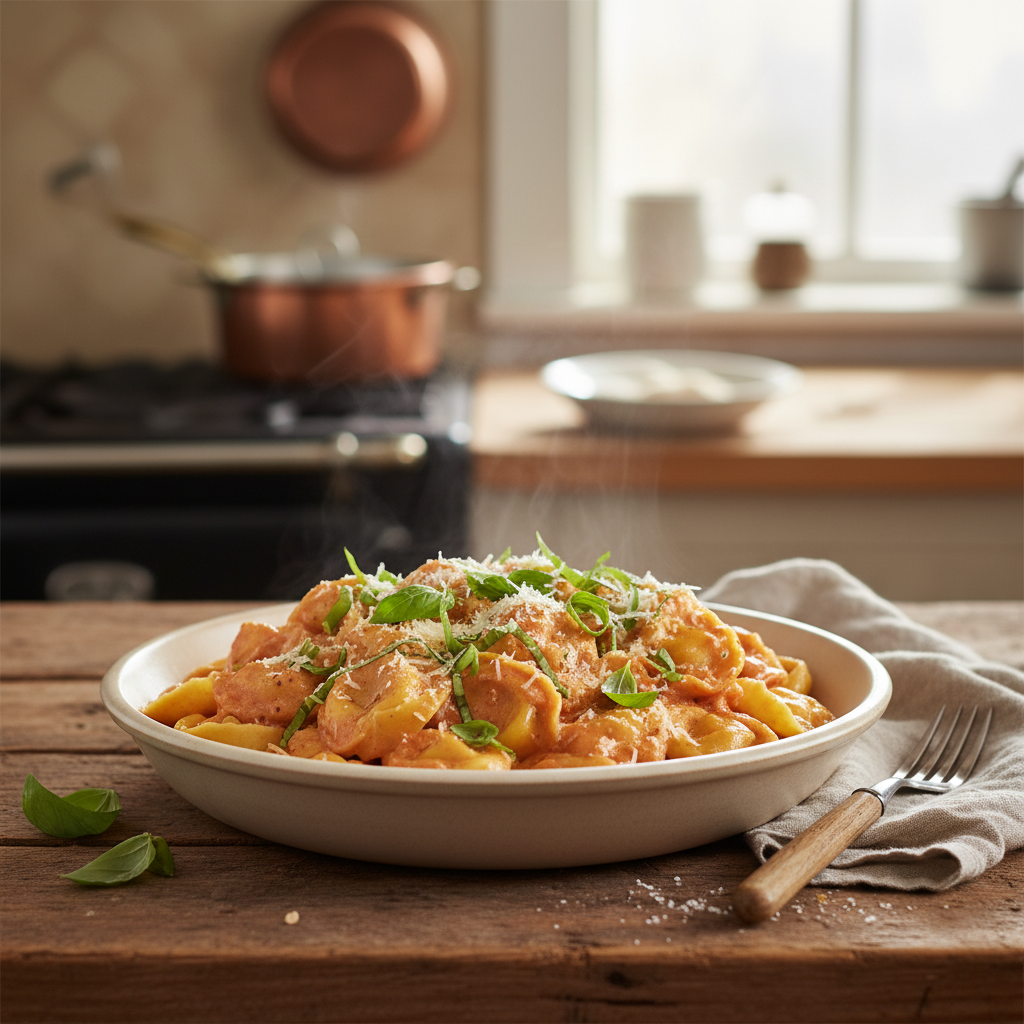
    • Creamy Tomato Tortellini: Combine cooked tortellini with a jar of your favorite marinara sauce and a splash of heavy cream or half-and-half. Stir in some fresh basil and Parmesan cheese for an irresistible finish.
    • Garlic Parmesan Cream Tortellini: Sauté minced garlic in butter, then whisk in heavy cream and Parmesan until thickened. Toss with tortellini and a sprinkle of parsley. This is a classic for a reason!
    • Spinach and Artichoke Tortellini: Stir cooked tortellini into a simple cream sauce (like the garlic Parmesan base) with chopped spinach and canned artichoke hearts. It adds a lovely texture and extra veggies.

    Tip: For an even quicker meal, use store-bought refrigerated tortellini. It cooks in just a few minutes, making these recipes genuine quick meals.

    Simple Tortellini Recipes with Chicken

    Adding chicken to tortellini transforms it into a more substantial, protein-packed dinner. These simple tortellini recipes with chicken are ideal for creating healthy and balanced meals that are also satisfying.

    Consider these straightforward combinations:

    • Chicken Pesto Tortellini: Toss cooked tortellini with pesto sauce and shredded rotisserie chicken. Add cherry tomatoes and a handful of fresh mozzarella balls for a burst of flavor and color.
    • Lemon Herb Chicken Tortellini: Sauté diced chicken breast with lemon zest, garlic, and your favorite herbs like oregano or thyme. Combine with cooked tortellini, a light broth, and a squeeze of fresh lemon juice.
    • Chicken and Vegetable Tortellini Soup: Stir cooked tortellini and shredded chicken into a comforting broth-based soup with plenty of chopped vegetables like carrots, celery, and peas. This is a wonderfully hearty option.

    Substitution Idea: If you don’t have time to cook chicken, use pre-cooked grilled chicken strips or leftover roast chicken. This helps you get dinner on the table even faster!

    Hearty Tortellini Recipes with Sausage or Ground Beef

    For nights when you need a comforting and filling dinner, pairing tortellini with sausage or ground beef is an excellent choice. These hearty tortellini recipes make perfect family-friendly meals that satisfy everyone at the table.

    Explore these robust options:

    • Sausage and Bell Pepper Tortellini: Brown Italian sausage (mild or hot, your choice!) with sliced bell peppers and onions. Add your favorite tomato sauce and cooked tortellini.
    • Ground Beef Bolognese Tortellini: Make a quick meat sauce by browning ground beef with garlic and onion, then simmering it in crushed tomatoes. Serve over hot tortellini for a simplified bolognese.
    • Cheesy Sausage Bake with Tortellini: Combine cooked tortellini with browned sausage, marinara sauce, and plenty of shredded mozzarella and Parmesan cheese. Bake until bubbly and golden for an easy casserole.

    Meal Prep Tip: Brown your sausage or ground beef ahead of time and store it in the fridge. This makes assembly even faster on a busy weeknight.

    Classic Cheese Tortellini Recipes

    Sometimes, the simplest approach is the most delicious. Classic cheese tortellini recipes let the pasta shine, making them fantastic beginner-friendly recipes and reliable favorites for any home cook.

    Here are some fuss-free ways to enjoy them:

    • Marinara and Cheese Tortellini: Toss cooked cheese tortellini with your favorite jarred marinara sauce. Sprinkle generously with fresh Parmesan cheese and a dash of red pepper flakes for a little kick.
    • Butter and Sage Tortellini: Melt butter in a pan until it turns a light golden brown (be careful not to burn it!). Add fresh sage leaves and cook for a minute, then toss with cooked tortellini. This is an elegant yet incredibly simple dish.
    • Pesto Tortellini with Cherry Tomatoes: Simply mix cooked tortellini with store-bought pesto. Halved cherry tomatoes add a burst of freshness and color. This is a vibrant and quick lunch or dinner.

    Fun Fact: Italy consumes approximately 23 kilograms (about 51 pounds) of pasta per person each year, far more than most countries, demonstrating its staple status [2].

    Simple Vegan Tortellini Dishes

    For those seeking plant-based options, these simple vegan tortellini dishes offer all the flavor and satisfaction without meat or dairy. As more vegan products become available, it’s easier than ever to create delicious and healthy meals.

    Try these fantastic vegan ideas:

    • Roasted Vegetable and Vegan Tortellini: Roast a medley of vegetables like zucchini, bell peppers, red onion, and cherry tomatoes with olive oil and herbs. Toss with cooked vegan tortellini and a light balsamic glaze.
    • Creamy Vegan Mushroom Tortellini: Sauté mushrooms and garlic, then add a plant-based cream sauce (made with cashews or coconut milk) and nutritional yeast for a cheesy flavor. Stir in cooked vegan tortellini.
    • Spinach and Garlic Vegan Tortellini: Sauté fresh spinach with plenty of garlic in olive oil. Add cooked vegan tortellini and a squeeze of lemon juice. A light and flavorful option that’s ready in minutes.

    Ingredient Tip: Look for vegan tortellini in the refrigerated or frozen pasta aisle of your grocery store. Many brands now offer delicious plant-based versions!

    What Is a Good Sauce for Tortellini?
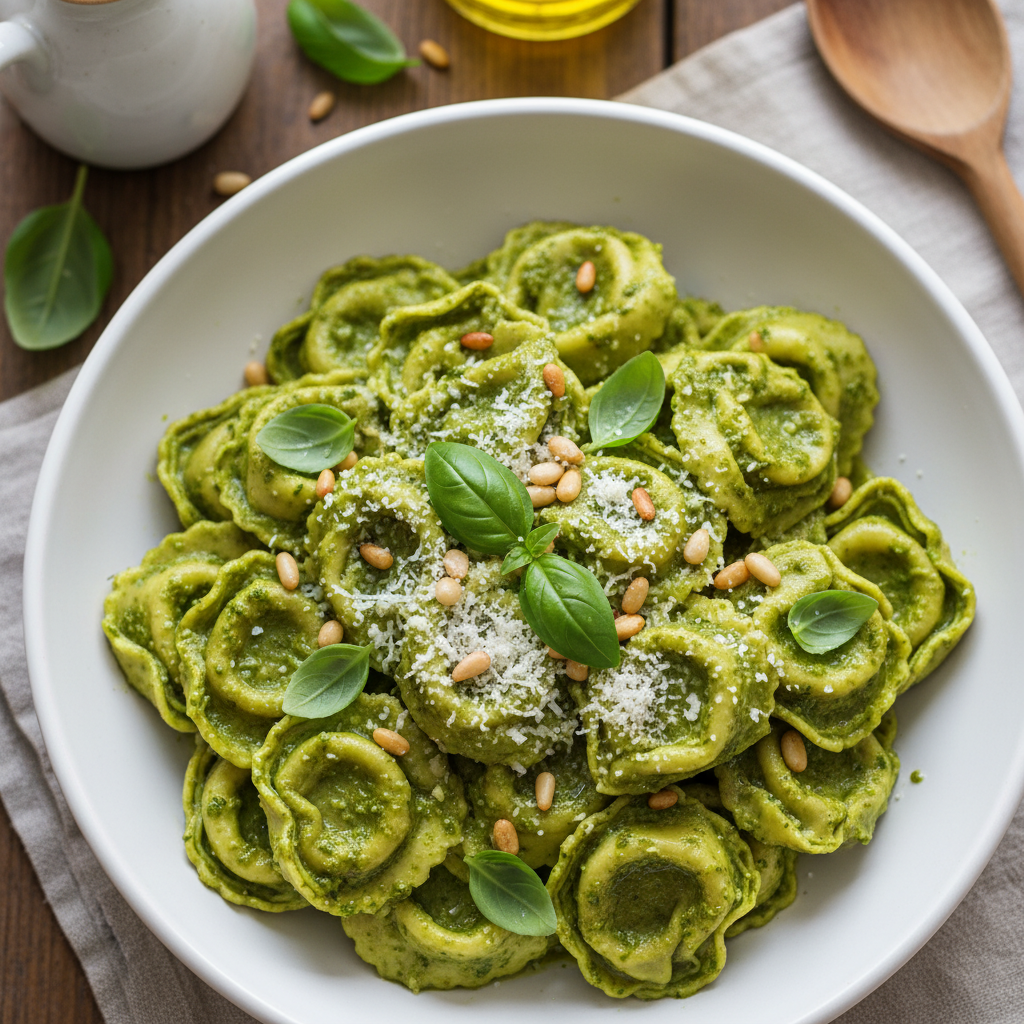
    Cooked tortellini pasta generously coated in fresh green basil pesto, garnished with pine nuts and Parmesan.
    Professional food photography, photorealistic, high-quality food magazine photo. A beautifully composed shot of cooked tortellini tossed with a vibrant, homemade basil pesto sauce, served in a shallow white pasta bowl. The tortellini are coated evenly with the bright green pesto, and the dish is sprinkled with toasted pine nuts and extra Parmesan cheese. A few fresh basil leaves are scattered on top. The background is a gently blurred, rustic kitchen scene with subtle hints of a wooden table and soft, natural light, creating an inviting and wholesome atmosphere. The image emphasizes the fresh ingredients and appetizing texture. NO artistic interpretations, NO illustrations, NO vector graphics, NO abstract art.

    Choosing the right sauce can elevate your tortellini from a simple meal to a memorable one. At Recipesmondial, we believe cooking should be enjoyable, not overwhelming. That’s why we’ve gathered four straightforward sauce recipes that deliver impressive flavor without the fuss. Perfect for busy families and quick dinners, these options are simple to prepare and incredibly versatile.

    Whether you crave something light and fresh or rich and creamy, you’ll find the perfect pairing for your favorite tortellini. These approachable recipes will help you build confidence in the kitchen. Get ready to see how a few simple ingredients can create truly delicious results!

    Classic Tomato and Basil Sauce

    A timeless choice, this classic tomato and basil sauce has fresh, bright flavors that beautifully complement tortellini. It’s a family-friendly option loved by all ages, and this beginner-friendly recipe is a staple for a reason.

    Ingredients:

    • 1 tablespoon olive oil
    • 2 cloves garlic, minced
    • 1 (28-ounce) can crushed tomatoes
    • 1/2 teaspoon dried oregano (optional)
    • Salt and black pepper to taste
    • 1/2 cup fresh basil leaves, chopped

    Simple Steps:

    1. Heat the olive oil in a medium saucepan over medium heat.
    2. Add the minced garlic and cook for about 1 minute until fragrant. Do not let it brown.
    3. Pour in the crushed tomatoes and add the oregano, if using.
    4. Bring the sauce to a gentle simmer.
    5. Reduce the heat to low and let it cook for 15-20 minutes, stirring occasionally to allow the flavors to meld.
    6. Season with salt and pepper to your liking.
    7. Stir in the fresh basil just before serving with your cooked tortellini.

    Chef’s Tips: For the best flavor, use high-quality canned tomatoes. Fresh basil is key, as its aroma truly elevates the dish. This simple sauce tastes gourmet.

    Rich Cream and Parmesan Sauce

    Indulgent and comforting, this rich cream and Parmesan sauce is a perfect match for cheesy tortellini. The recipe is incredibly satisfying, comes together quickly, and is ideal for busy weeknights.

    Ingredients:

    • 2 tablespoons unsalted butter
    • 2 cloves garlic, minced (optional, but highly recommended)
    • 1 1/2 cups heavy cream
    • 1 cup grated Parmesan cheese, plus more for serving
    • 1/4 teaspoon ground nutmeg (optional)
    • Salt and white pepper to taste

    Simple Steps:

    1. Melt the butter in a large skillet over medium-low heat.
    2. If using, add the minced garlic and cook for 1 minute until fragrant.
    3. Pour in the heavy cream and bring it to a gentle simmer, but do not boil.
    4. Reduce the heat to low. Gradually stir in the Parmesan cheese.
    5. Continue stirring until the cheese is fully melted and the sauce is smooth.
    6. Add the nutmeg, if desired, and season with salt and white pepper.
    7. Toss the cooked tortellini directly in the sauce and serve immediately.

    Chef’s Tips: Always grate your own Parmesan cheese for the smoothest texture and best flavor; pre-grated varieties can make the sauce grainy. Remember, low heat is your friend here, as it prevents the cream from curdling. This quick sauce makes any weeknight meal feel special.

    Simple Pesto Sauce

    Pesto offers a vibrant, fresh, and incredibly quick option for tortellini. Whether you make it from scratch or use a high-quality store-bought version, it’s perfect for a delicious meal in minutes. Its robust flavor comes from just a handful of simple ingredients.

    Ingredients:

    • 2 cups fresh basil leaves
    • 1/2 cup grated Parmesan cheese
    • 1/2 cup extra virgin olive oil
    • 1/4 cup pine nuts, lightly toasted (optional)
    • 2 cloves garlic
    • Salt and black pepper to taste

    Simple Steps (Homemade Pesto):

    1. Combine the basil, Parmesan, pine nuts (if using), and garlic in a food processor.
    2. Pulse until all ingredients are finely chopped.
    3. With the food processor running, slowly drizzle in the olive oil until a smooth paste forms.
    4. Season with salt and pepper.
    5. Toss with hot, cooked tortellini to serve.

    Simple Steps (Store-Bought Pesto):

    1. Gently warm your favorite store-bought pesto in a saucepan over low heat.
    2. Alternatively, simply toss the pesto with freshly cooked, hot tortellini; the heat from the pasta will warm it through.
    3. If the sauce is too thick, loosen it with a splash of the pasta cooking water.

    Chef’s Tips: Toasting the pine nuts adds a wonderful depth to homemade pesto. You can easily adjust the amount of garlic to your preference. Pesto is a truly versatile sauce, perfect for a quick and simple dinner.

    Brown Butter and Sage Sauce

    For an elegant yet simple sauce, brown butter and sage is an excellent choice. This combination offers a nutty, aromatic flavor that pairs beautifully with many tortellini fillings. It is a beginner-friendly recipe that feels sophisticated, making it ideal for a stress-free meal.

    Ingredients:

    • 1/2 cup unsalted butter
    • 15-20 fresh sage leaves
    • Salt and black pepper to taste
    • Pinch of red pepper flakes (optional)

    Simple Steps:

    1. Melt the butter in a large skillet over medium heat.
    2. Continue to cook, watching closely as the butter foams, then turns clear.
    3. The milk solids at the bottom of the pan will begin to turn golden brown. Swirl the pan occasionally for even cooking.
    4. Once the butter smells fragrant and nutty, immediately add the fresh sage leaves.
    5. Cook the sage for 30 to 60 seconds, until the leaves are crispy.
    6. Remove the skillet from the heat to prevent burning.
    7. Season with salt, pepper, and red pepper flakes, if using.
    8. Pour the sauce over your cooked tortellini and serve right away.

    Chef’s Tips: Browning butter requires your full attention, as it can go from perfect to burnt very quickly. Using a light-colored pan will help you monitor the color change more easily. This sauce proves that an elegant, flavorful meal doesn’t have to be complicated.

    Frequently Asked Questions

    Tortellini or tortelloni?

    While both are types of delicious filled pasta, tortellini and tortelloni have distinct characteristics. The main differences are their size and filling, which influences the best way to serve them.

    Here’s a quick guide to tell them apart:

    Feature Tortellini Tortelloni
    Size Smaller, bite-sized (about 1-inch) Larger, about twice the size of tortellini
    Shape Often folded into a ring or navel shape Also folded, but generally more pouch-like due to size
    Fillings Traditionally meat-filled (pork, prosciutto) in Emilia-Romagna [3] Typically filled with vegetarian options like ricotta cheese and spinach, or other vegetables
    Best Uses Perfect for lighter broths, cream sauces, or simple butter and sage sauces. Their small size makes them great for quick meals. Ideal for heartier sauces, like rich tomato sauces or robust butter sauces. Their larger size stands up well to bolder flavors.

    Ultimately, you can’t go wrong with either choice. Both tortellini and tortelloni are fantastic for creating simple, flavorful meals. Don’t be afraid to experiment!

    Tortellini vs ravioli?

    Ravioli is another popular stuffed pasta you’ll find alongside tortellini. Although both are filled, they have key differences in shape, size, and origin. Understanding these distinctions will help you choose the perfect pasta for your dish.

    Let’s compare them:

    Feature Tortellini Ravioli
    Shape Small, ring-shaped pasta, often compared to a “belly button” or navel [4]. The pasta disc is folded and the ends are joined to create a ring. Typically square or round, with crimped edges. Two sheets of pasta are used, with filling sandwiched between.
    Size Generally small, bite-sized (tortelloni are larger). Can vary greatly in size, from small squares to very large rounds.
    Origin Hails from the Emilia-Romagna region of Italy, especially Modena and Bologna. Has a broader origin across Italy, with variations found in many regions [5].
    Fillings Traditionally meat-based (pork, prosciutto), but also cheese and vegetable options. Offers a wider range of fillings, including cheese (ricotta, Parmesan), meat, seafood, and various vegetables (spinach, mushroom).
    Cooking Style Often served in broth or with lighter cream or tomato sauces. Versatile with many sauces, from simple butter and sage to hearty meat sauces.

    Both pastas are wonderfully versatile and can be the star of many simple recipes. Don’t feel overwhelmed by the choice—just pick the one that sounds best for the meal you have in mind!

    How do you pronounce tortellini?

    Italian pronunciations can be tricky, but this one is easy to master. You’ll be saying “tortellini” like a pro in no time.

    The correct pronunciation is: tor-tuh-LEE-nee.

    The key is to stress the “LEE” syllable in the middle. A confident pronunciation makes exploring new recipes even more fun!

    What is the meaning of tortellini?

    The name “tortellini” has a charming origin. In Italian, “tortellino” is the diminutive form of “tortello,” which translates to “little cake” or “small pie.”

    The pasta’s unique shape also plays a role in its identity. Its distinctive ring is said to resemble a navel, earning it a special nickname. According to folklore, the shape was inspired by the navel of the goddess Venus [6].

    This bit of history adds to the enjoyment of cooking and eating this classic pasta.


    Sources

    1. https://www.academiabarilla.com/it/blog/tutto-sul-tortellino-storia-e-tradizione-di-un-piatto-cult
    2. https://www.statista.com/statistics/743846/per-capita-consumption-of-pasta-worldwide-by-country/
    3. https://www.academiabarilla.com/italian-recipes/pastas-and-risottos/tortellini-bologna
    4. https://www.newworldencyclopedia.org/entry/Tortellini
    5. https://www.britannica.com/topic/ravioli
    6. https://en.wikipedia.org/wiki/Tortellini
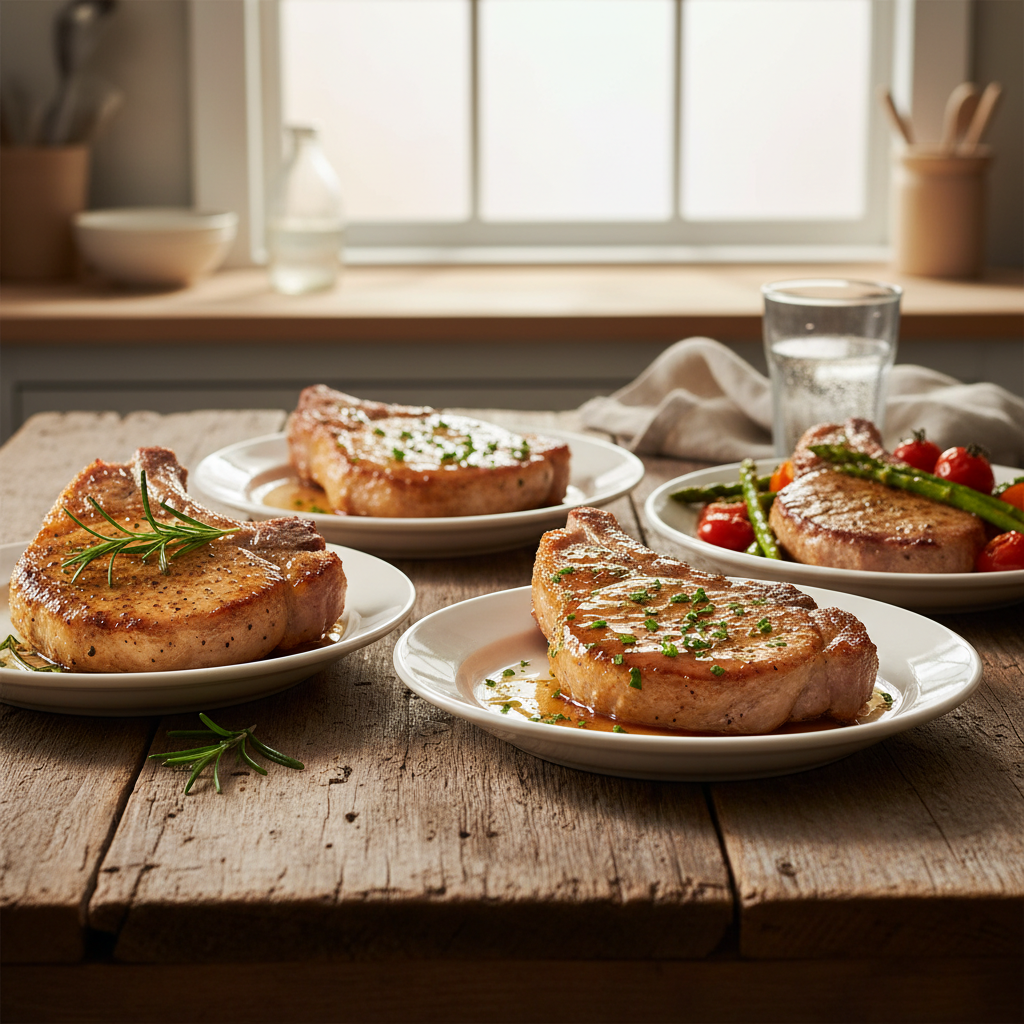
  • 10 Best Pork Chop Recipes for an Easy & Flavorful Dinner

    10 Best Pork Chop Recipes for an Easy & Flavorful Dinner

    The best pork chop recipes transform a simple cut of meat into a juicy, flavorful meal by using a quick cooking method like pan-searing, baking, or grilling. A key to success is not overcooking the pork and using a flavorful marinade, brine, or sauce to keep it tender. These simple recipes are perfect for beginner cooks looking for a reliable and easy family-friendly dinner.

    Searching for delicious, satisfying dinner ideas that don’t demand hours in the kitchen? After a long day, complex recipes can feel overwhelming. But creating a flavorful, family-friendly meal should be simple and stress-free. At Recipesmondial, we believe cooking is an enjoyable journey, not a daunting task.

    That’s why we’ve curated our top 10 pork chop recipes, designed to transform your weeknight dinners from stressful to sensational. This collection includes quick pan-fried dishes, savory one-pan wonders, and easy baked boneless pork chop recipes. Each one comes with step-by-step guidance to help you cook with confidence.

    With our clear guidance and practical tips, you’ll discover just how versatile and delicious pork chops can be. Say goodbye to dry, uninspired meals and hello to juicy, tender results that will have your family asking for seconds. Let’s explore why pork chops are a secret weapon for an easy and flavorful dinner any night of the week.

    Why Are Pork Chops a Perfect Weeknight Meal?

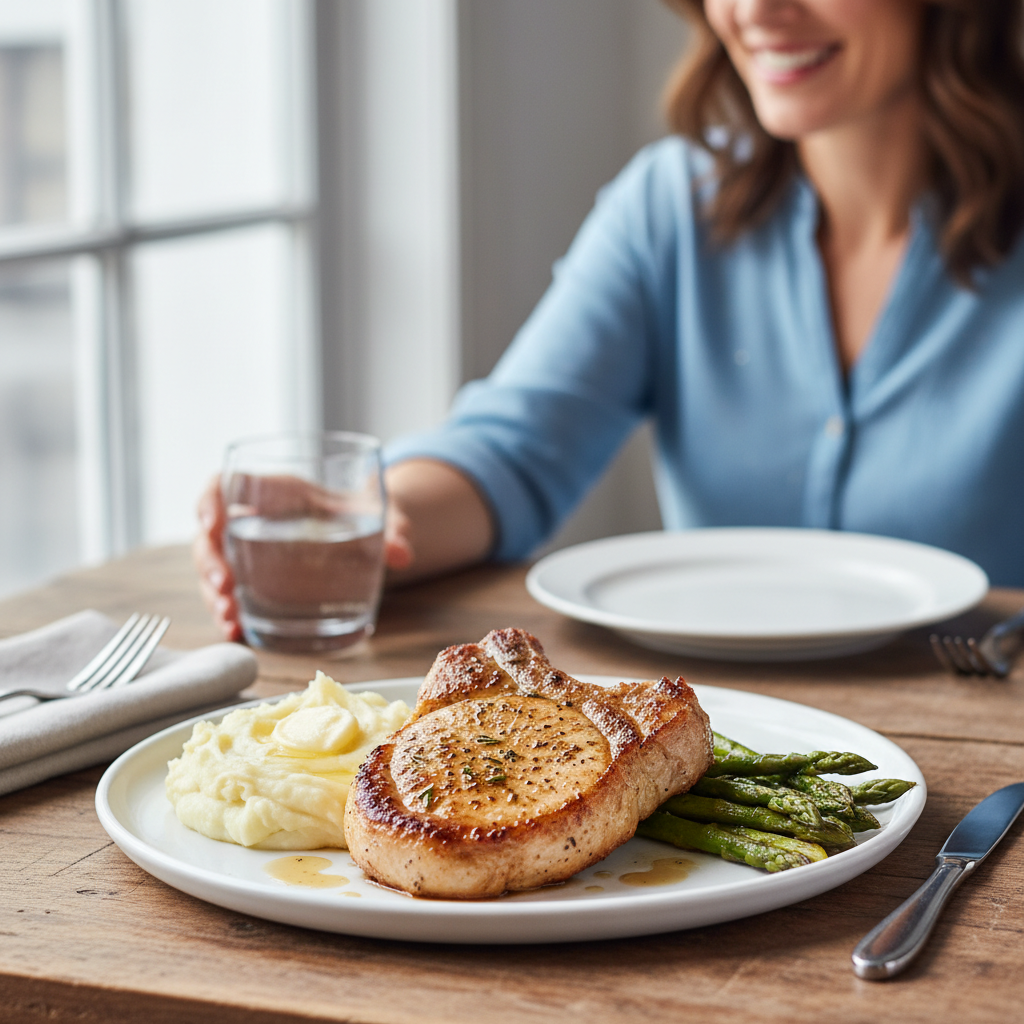
    A beautifully plated, golden-brown pork chop dinner with asparagus and mashed potatoes, set on a kitchen table with a happy home cook in the background.
    Professional food photography, photorealistic, high-quality food magazine photo. A perfectly cooked, golden-brown pork chop dinner served on a clean, simple white plate with a side of vibrant green roasted asparagus and fluffy mashed potatoes. The scene captures a warm, inviting kitchen table setting with soft natural light coming from a window. A relaxed, smiling female home cook in her 30s, with warm, approachable energy, is subtly visible in the soft-focus background, perhaps reaching for a water glass, conveying ease and enjoyment. The focus is on the delicious, ready-to-eat meal. No artistic interpretations, no illustrations, no vector graphics, no abstract art.

    Weeknights often feel like a race against the clock, but preparing a delicious, satisfying dinner shouldn’t add to the stress. That’s why pork chops are a perfect solution for busy home cooks.

    If you’re looking for reliable and easy recipes your family will love, pork chops are a fantastic answer. They offer a simple, stress-free way to get a great meal on the table any night of the week.

    Quick and Easy to Prepare

    One of the biggest advantages of pork chops is their speed. They cook much faster than many other protein options, making them ideal for busy evenings when time is short.

    • Fast cooking: Thin-cut pork chops can be ready in minutes on the stove. Thicker chops typically cook within 15-20 minutes.
    • Simple techniques: Many easy recipes for pork chops involve basic pan-frying, baking, or grilling. You do not need complex skills.
    • Minimal prep: Most boneless pork chop recipes require very little preparation. A quick seasoning is often all it takes.

    With pork chops, you can get a flavorful, healthy meal on the table in minutes. They take the guesswork out of making a quick and satisfying dinner.

    Incredibly Versatile and Flavorful

    Pork chops are a blank canvas for flavor, adapting to nearly any cuisine or taste preference. You can easily switch up your weeknight meals without getting bored.

    • Diverse flavor profiles: They pair well with sweet, savory, spicy, or tangy sauces. Think honey-garlic, creamy mushroom, or zesty lemon herb.
    • Many cooking methods: You can pan-fry, bake, grill, air fry, or even slow cook them. This offers endless options for simple dinner recipes.
    • Easy customization: Adjust seasonings to your family’s liking. Add your favorite vegetables to create a one-pan wonder.

    Their versatility makes it easy to add new dishes to your rotation, so you’ll never be stuck wondering what to make for a creative, flavorful dinner.

    A Family-Friendly Favorite

    Pork chops are generally a hit with everyone, including picky eaters, thanks to their mild flavor. This makes meal planning much easier for busy families.

    • Kid-approved: Simple seasoned or breaded pork chops are often very popular with children.
    • Healthy protein: They provide lean protein to fuel active bodies. A standard serving of cooked pork chop offers significant protein [source: USDA FoodData Central].
    • Satisfying meal: Pork chops are filling and hearty, leaving everyone satisfied after a long day.

    This makes pork chops a go-to choice for family-friendly meals, taking the struggle out of planning a dinner that everyone will enjoy.

    Budget-Friendly and Accessible

    Pork chops are often more affordable than other cuts of meat and are easy to find at any grocery store. This makes them a practical choice for everyday cooking.

    • Cost-effective protein: Look for sales on larger packs. You can freeze individual chops for later use.
    • Widely available: Fresh pork chops are a staple in most meat departments.
    • Great value: They deliver big on flavor and satisfaction without breaking the bank.

    For these reasons, pork chops fit perfectly into a budget-conscious meal plan, allowing you to serve delicious, high-quality meals without overspending.

    Overall, pork chops check all the boxes for a successful weeknight dinner. They’re quick, versatile, family-friendly, and easy on your budget, making them the perfect choice for anyone who wants to enjoy cooking delicious, stress-free meals.

    Our Top 10 Beginner-Friendly Pork Chop Recipes

    A perfectly pan-seared pork chop on a wooden cutting board, garnished with rosemary and a lemon wedge, showing a juicy interior.
    Professional food photography, photorealistic, high-quality food magazine photo. A close-up, overhead shot of a thick, perfectly pan-seared pork chop, glistening with a savory glaze, resting on a rustic wooden cutting board. The pork chop has a deep golden-brown crust and a visible tender, juicy interior. It’s garnished simply with a sprig of fresh rosemary and a lemon wedge. The background is a soft-focus, clean kitchen countertop, highlighting the deliciousness and simplicity of the meal. Steam is subtly rising. Focus on rich textures and appealing colors. No artistic interpretations, no illustrations, no vector graphics, no abstract art.

    Ready to transform your dinner routine? Pork chops are a fantastic and incredibly versatile canvas for countless flavors. We know that finding easy, reliable recipes can feel overwhelming, but Recipesmondial is here to help! We have gathered our top 10 beginner-friendly pork chop recipes, perfect for busy weeknights. These dishes promise rich flavors with simple steps, so you can say goodbye to dry, uninspired pork chops. Get ready to cook with confidence and enjoy truly delicious, family-friendly meals!

    1. Simple Pan-Fried Pork Chops

    This recipe is the ultimate starting point for any home cook. Pan-frying creates a beautiful golden crust while keeping the inside wonderfully juicy. Not only is this method incredibly quick, but it also builds a foundational skill for making flavorful meals with ease. For the best results, avoid overcrowding the pan and use a meat thermometer to guarantee perfect doneness and prevent overcooking.

    2. Easy Baked Boneless Pork Chops

    Baking offers a hands-off way to achieve tender, juicy pork chops. Ideal for busy families who need a simple dinner, this boneless pork chop recipe delivers maximum flavor with minimal effort. For extra tenderness, consider marinating the chops briefly. You can also add chopped vegetables to the pan to create a complete, one-pan meal with easy cleanup.

    3. Juicy Pork Chops with Mushroom Gravy

    Elevate your dinner with a rich, savory mushroom gravy. This surprisingly simple recipe transforms ordinary pork chops into an impressive meal that’s easy to make. Feel free to use any type of mushroom you love. For a comforting dish, serve these pork chops over mashed potatoes or rice.

    4. Crispy Breaded Pork Chop Recipe

    This classic recipe delivers that irresistible golden-brown crust everyone loves. Our easy breaded pork chops are wonderfully crispy on the outside and perfectly tender inside, making them a family-friendly favorite that livens up any simple dinner. For an extra-crispy texture, use panko breadcrumbs, and remember to season your breading mixture well for maximum flavor.

    5. Flavorful Grilled Boneless Pork Chops

    Grilling adds a wonderful smoky depth to pork chops, and this boneless recipe is perfect for any season. With simple preparation, you can achieve beautiful grill marks and fantastic flavor. The key is not to overcook the chops. For a quick and easy flavor boost, try a simple dry rub before grilling.

    6. Quick Stove Top Pork Chops with Garlic Butter

    A true lifesaver on busy weeknights, this recipe cooks quickly on the stove top. An incredible garlic butter sauce adds richness and aroma, creating a simple dinner that delivers big on taste. For the best results, use fresh garlic, and add a squeeze of lemon juice at the end to brighten the entire dish.

    7. Healthy Air Fryer Boneless Pork Chops

    The air fryer is perfect for making pork chops that are incredibly tender inside and wonderfully crispy outside. By using less oil, this boneless pork chop recipe offers a healthier way to enjoy a favorite meal, making it ideal for a quick family dinner. For consistent, crispy results, remember to preheat your air fryer and avoid overcrowding the basket.

    8. Savory Thin-Cut Pork Chops

    Perfect for when you’re short on time, thin-cut pork chops cook in a flash. This recipe ensures they remain juicy and full of savory flavor, making it an excellent choice for the busiest evenings. The most important tip is to be careful not to overcook them. A quick brine before cooking can also help the chops retain moisture.

    9. One-Pan Oven Pork Chops with Vegetables

    This one-pan oven recipe is the ultimate time-saver for a stress-free, family-friendly meal. Simply place your pork chops and favorite vegetables on a single sheet pan, and everything bakes together beautifully, which means cleanup is a breeze. For even cooking, cut your vegetables into similar-sized pieces. Root vegetables are an especially wonderful choice for this dish.

    10. Honey-Garlic Glazed Pork Chops

    This honey-garlic glaze is a true game-changer. The sticky, sweet, and savory coating transforms simple pork chops into a special meal that’s guaranteed to be a hit. To perfect the glaze, reduce the sauce until it’s thick and syrupy. For extra depth and richness, try adding a touch of soy sauce.

    What Are the Keys to a Perfect Pork Chop?

    A home cook uses a meat thermometer to check the doneness of a perfectly seared pork chop in a cast-iron skillet.
    Professional food photography, photorealistic, high-quality food magazine photo. A detailed close-up shot of a home cook’s hand, holding a meat thermometer, gently inserting it into the thickest part of a beautifully seared pork chop in a hot cast-iron skillet. The pork chop has a rich, caramelized crust. The skillet is on a stovetop burner, with a clean and organized home kitchen counter in the soft-focus background. The lighting is warm and inviting, highlighting the cooking process. The cook’s hand is clean and nails are well-maintained, suggesting a careful approach. No artistic interpretations, no illustrations, no vector graphics, no abstract art.

    What Are the Keys to a Perfect Pork Chop?

    Cooking a perfect pork chop might seem daunting, but it’s an achievable goal for any home cook. With a few key tips, you can transform your pork chops from good to truly amazing. Let’s unlock the secrets to consistently juicy, flavorful results.

    Choosing the Right Cut: Bone-In vs. Boneless

    Choosing the right cut is your first step to a fantastic meal. Both bone-in and boneless pork chops have their merits, and understanding the difference will help you cook with confidence.

    Here’s a simple breakdown:

    • Bone-In Pork Chops: These chops often stay juicier because the bone insulates the meat. It also adds extra flavor. While they might take a little longer to cook, the wait is often worth it for the added richness.
    • Boneless Pork Chops: Perfect for quick dinners! They cook faster and are easier to eat, making many boneless recipes incredibly beginner-friendly. Just be careful not to overcook them, as they can dry out more easily without the bone’s protection.

    For easy, family-friendly meals, boneless chops are a popular choice. Yet, for a richer flavor experience, don’t shy away from bone-in.

    The Secret to Juiciness: Brining and Seasoning

    A delicious pork chop is never dry. The secret to achieving that amazing juiciness starts before cooking with two key techniques: brining and proper seasoning.

    Why Brine?

    Brining is a game-changer for pork. It helps the meat retain moisture, resulting in a juicier, more tender chop every time. It also seasons the meat from within, and even a quick 30-minute brine makes a big difference.

    To brine your pork chops:

    • Dissolve 1 tablespoon of salt per cup of water. You can also add sugar, herbs, or spices.
    • Submerge your pork chops in the brine.
    • Refrigerate for at least 30 minutes or up to 4 hours.
    • Pat them very dry before cooking to ensure a great sear.

    Mastering Seasoning

    Seasoning is more than just salt and pepper; it’s how you build incredible flavor. Don’t be afraid to be generous!

    Here are some simple seasoning tips:

    • Salt and Pepper: This is your essential base. Use coarse salt for better adhesion and texture.
    • Garlic Powder & Onion Powder: These pantry staples add a comforting, savory depth.
    • Paprika: Sweet or smoked paprika adds beautiful color and a lovely smoky note.
    • Herbs: Dried thyme, rosemary, or sage pair wonderfully with pork chops.
    • Rub It In: Gently rub your chosen seasonings all over the chop to create a flavorful crust.

    Proper seasoning transforms a simple dinner into something special. It’s an easy step that makes a huge impact.

    Cooking to the Right Temperature (No More Dry Pork!)

    The main cause of dry pork chops is overcooking. The key to juicy results is cooking them to the correct internal temperature, which ensures they are both safe and delicious.

    Use a Meat Thermometer

    A meat thermometer is your best friend for this task. It takes the guesswork out of cooking, helping you avoid both undercooked and overcooked meat.

    Here’s what you need to know:

    • Insert the thermometer into the thickest part of the chop, being careful to avoid the bone.
    • The safe internal temperature for whole cuts of pork is 145°F (63°C), followed by a three-minute rest [1].
    • At this temperature, the pork may still have a slight pink tint. This is perfectly normal and safe.
    • Remove your pork chops from the heat a few degrees before they reach 145°F. The internal temperature will continue to rise as they rest, a process called carryover cooking.

    This simple technique will give you perfectly cooked, juicy pork chops every time and build your confidence in the kitchen.

    Why You Should Always Let Pork Chops Rest

    You’ve cooked your pork chops beautifully. Now for the final, crucial step: letting them rest. This simple pause makes all the difference in their final juiciness.

    The Magic of Resting

    When meat cooks, its muscle fibers tighten and push juices toward the center. If you slice into the chop immediately, those delicious juices will spill onto your plate, leaving you with a drier meal.

    However, letting the meat rest allows the magic to happen:

    • The muscle fibers relax.
    • The juices redistribute throughout the chop.
    • The result is an incredibly juicy and tender pork chop from edge to center.

    How to Rest Your Pork Chops

    • Once cooked, transfer your pork chops to a cutting board or plate.
    • Tent them loosely with aluminum foil to keep them warm without steaming them.
    • Allow them to rest for at least 5-10 minutes. Thicker chops may need a bit longer.
    • Then, slice and serve your perfectly juicy pork chops.

    Resting your pork chops is a small step with a huge flavor reward. Don’t skip it!

    Frequently Asked Questions About Pork Chop Recipes

    How to cook pork chops in a pan?

    Pan-frying is a fantastic way to cook juicy pork chops with a beautiful, golden-brown crust. It’s a quick and simple method, perfect for a busy weeknight dinner.

    Here’s a basic step-by-step guide to pan-frying pork chops:

    1. Prepare the Chops: Pat your pork chops completely dry with paper towels, as this helps them sear better. Season them generously with salt, black pepper, and any other seasonings you love. Garlic powder or paprika are excellent choices.
    2. Heat the Pan: Place a heavy-bottomed skillet (such as cast iron) over medium-high heat. Add one or two tablespoons of a high-smoke-point oil, like avocado or canola oil. The oil should be shimmering but not smoking.
    3. Sear the Chops: Carefully place the pork chops in the hot pan, making sure not to overcrowd it; cook in batches if necessary. Sear for 3-5 minutes per side, or until a beautiful golden-brown crust forms.
    4. Finish Cooking: Reduce the heat to medium-low. For thick chops (over 1 inch), you may want to cover the pan or transfer them to a preheated 375°F (190°C) oven to finish. This ensures they cook through without the outside burning. For thinner chops, continue cooking in the pan, flipping occasionally. Cook all chops until an internal thermometer reads 145°F (63°C).
    5. Rest Your Chops: This step is crucial! Remove the chops from the pan and let them rest on a cutting board for at least 5 minutes. Resting allows the juices to redistribute throughout the meat, which makes them extra juicy.

    This simple method makes it easy to create flavorful meals and build your confidence in the kitchen.

    What are some easy boneless pork chop recipes?

    Boneless pork chops are ideal for quick meals and simple dinners. They cook fast, are incredibly versatile, and Recipesmondial is here to help you discover new simple dishes.

    Here are some of our favorite easy boneless pork chop recipes for family-friendly meals:

    • Garlic Butter Pan-Seared Chops: A classic for a reason. Season your chops, sear them in a hot pan, then add butter, minced garlic, and fresh herbs like thyme or rosemary. Baste the chops with the flavored butter as they finish cooking.
    • One-Pan Baked Pork Chops with Veggies: Place boneless chops on a baking sheet with your favorite chopped vegetables, such as broccoli, bell peppers, and potatoes. Toss everything with olive oil and your preferred seasoning blend, then bake until the chops are cooked through and the vegetables are tender.
    • Air Fryer Boneless Pork Chops: For a healthy and speedy option, the air fryer is your best friend. Season your chops well, then air fry at 375°F (190°C) for 10-15 minutes, flipping halfway. Cooking times will vary depending on the thickness of the chops.
    • Honey-Garlic Glazed Chops: After pan-searing or baking your chops, brush them with a delicious homemade honey-garlic glaze during the last few minutes of cooking. This glaze adds incredible flavor and a lovely sheen.
    • Crispy Breaded Pork Chops: Dredge boneless chops in seasoned flour, then egg wash, and finally breadcrumbs. Pan-fry until golden brown and cooked through for a wonderfully crispy exterior and tender interior.

    These beginner-friendly recipes are perfect for busy families and help you enjoy cooking without stress.

    How do you make pork chops with gravy?

    Adding a pan gravy takes your pork chop dinner to a new level of deliciousness. Making it is easier than you think and a fantastic way to use the flavorful pan drippings.

    Follow these steps to create a savory gravy right in the same pan:

    1. Cook Your Pork Chops: First, cook your pork chops using the pan-frying method described above. Once done, remove them from the pan to rest. Do not clean the skillet; the delicious drippings and browned bits are key to your gravy’s flavor.
    2. Create the Roux: If there isn’t much fat left in the pan, add a tablespoon of butter or oil. Once it has melted, sprinkle in 1-2 tablespoons of all-purpose flour. Whisk continuously for 1-2 minutes over medium heat. This mixture, known as a roux, is what will thicken your gravy.
    3. Add Liquid: While whisking constantly to prevent lumps, slowly pour in 1 to 1.5 cups of liquid, such as chicken or beef broth. For extra flavor, you can also add a splash of white wine.
    4. Simmer and Thicken: Bring the gravy to a gentle simmer, continuing to whisk as it begins to thicken. Let it simmer for 3-5 minutes, or until it reaches your desired consistency.
    5. Season and Serve: Taste the gravy and adjust the seasonings. Add salt, pepper, a dash of garlic powder, or a pinch of dried thyme. For a richer flavor, stir in a tablespoon of heavy cream. Pour the warm gravy over your rested pork chops and serve.

    This easy technique for making flavorful gravy will quickly become a favorite!

    What is the nutrition of pork chops?

    Pork chops can be a wonderful, lean source of protein for a healthy and balanced meal. They offer essential nutrients, and many cuts of pork are as lean as, or even leaner than, chicken [2].

    Here’s a general overview of the nutrition in a typical 3-ounce serving of a cooked, lean pork chop:

    Nutrient Approximate Amount (3 oz serving)
    Calories 120-150
    Protein 22-25 grams
    Fat 3-6 grams
    Saturated Fat 1-2 grams
    Cholesterol 60-70 mg

    Pork chops are also packed with important vitamins and minerals, including:

    • Thiamin (Vitamin B1): Essential for energy metabolism.
    • Niacin (Vitamin B3): Supports digestion and nerve function.
    • Vitamin B6: Important for brain development and immune function.
    • Vitamin B12: Crucial for nerve function and red blood cell formation.
    • Selenium: An antioxidant that protects cells from damage.
    • Zinc: Supports immune health and wound healing.
    • Phosphorus: Key for bone health and energy production.

    To keep your meals lighter, choose leaner cuts like loin chops or boneless pork chops, and be sure to trim any visible fat before cooking. This helps you confidently prepare healthy and tasty meals.


    Sources

    1. https://www.fsis.usda.gov/food-safety/safe-handling-instructions/meat-poultry-egg-products/pork-farm-table
    2. https://www.pork.org/facts/pork-nutrition/