Tag: Easy recipe

  • How to Make The Best Carne Asada: An Easy Recipe for Beginners

    How to Make The Best Carne Asada: An Easy Recipe for Beginners

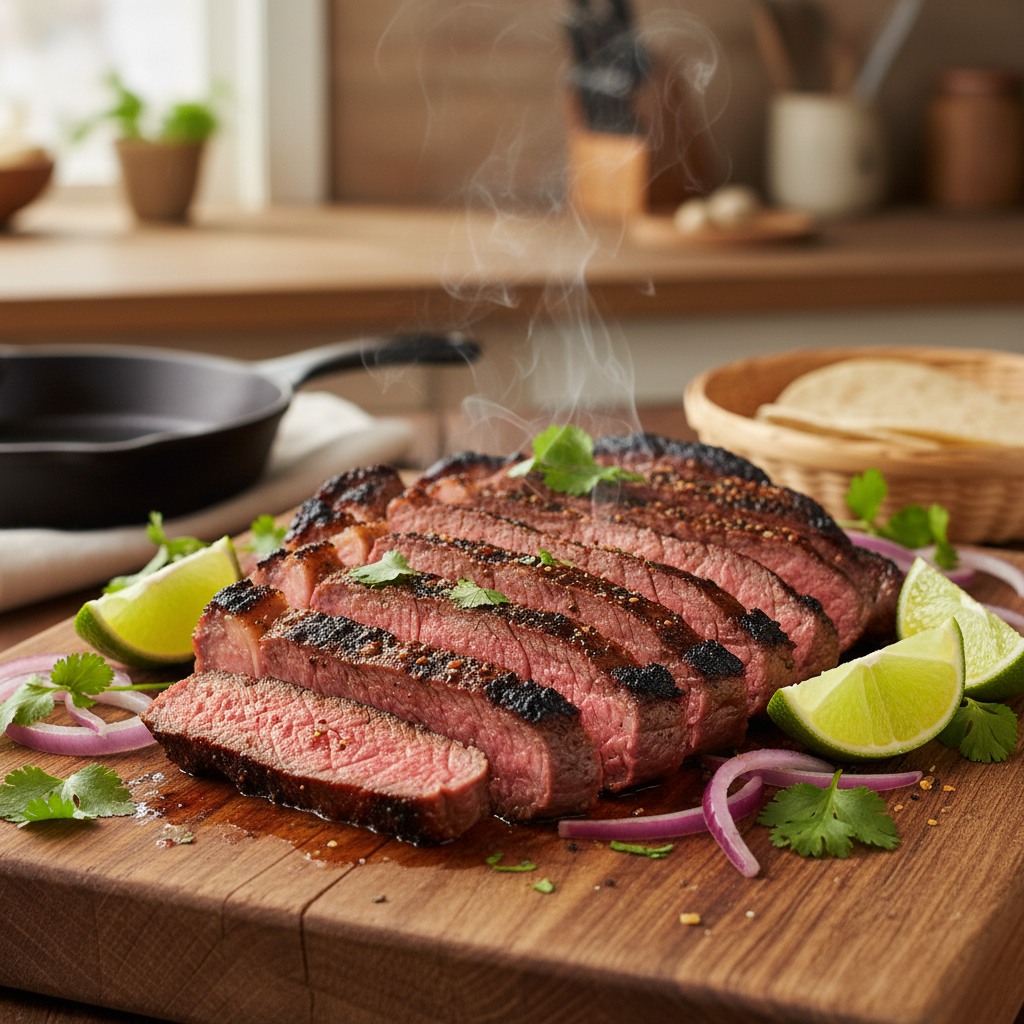
    Carne asada, which translates to ‘grilled meat,’ is a popular Mexican dish made from marinated and grilled steak, typically skirt or flank steak. The key to delicious carne asada is a flavorful marinade, usually featuring citrus juices, garlic, cilantro, and spices, which tenderizes the meat before it’s seared over high heat for a juicy, savory result.

    Dreaming of a tender, juicy steak bursting with smoky flavor? You can create that restaurant-quality experience right in your own kitchen. While many home cooks feel overwhelmed by complex recipes, we believe amazing food like carne asada should be accessible to everyone, regardless of skill level.

    That’s why we at Recipesmondial created the ultimate carne asada recipe designed for beginners. Forget intimidating techniques and long ingredient lists. Our simple yet authentic marinade infuses the steak with incredible flavor, turning a good cut of meat into a truly memorable meal. We will guide you step-by-step, helping you cook confidently and enjoy making a dish that’s perfect for family dinners or fun gatherings.

    Get ready to grill perfectly tender carne asada that will impress everyone, including yourself. We’re here to prove that making mouthwatering meals doesn’t have to be stressful or difficult. Let’s explore what makes this recipe so ideal for beginners, helping you build confidence and cook without stress.

    What Makes This Carne Asada Recipe Perfect for Beginners?

    Welcome to the world of delicious, easy-to-make meals! At Recipesmondial, we know cooking can feel overwhelming. That’s why this carne asada recipe is designed to turn a restaurant favorite into an approachable, beginner-friendly recipe.

    Our clear guidance helps you cook without stress. We break down every step to ensure a successful and flavorful result, building your confidence in the kitchen along the way.

    What Makes This Recipe So Easy?

    • Everyday Ingredients: We focus on widely available ingredients, so you won’t have to search for obscure items. Most are likely in your pantry already, which makes shopping simple and budget-friendly.
    • Simplified Marinade: Our carne asada marinade uses a balanced blend of common spices and citrus. It’s easy to mix but delivers maximum flavor to your steak.
    • Clear, Step-by-Step Instructions: Each part of the process is broken down into simple directions. We provide precise guidance from preparing the marinade to grilling the meat, using no confusing culinary terms.
    • Focus on Core Techniques: This carne asada recipe helps you master fundamental skills like marinating and grilling. These are valuable techniques for many simple dinner recipes.
    • Reliable Results: We’ve tested this recipe extensively to guarantee juicy, tender, and perfectly seasoned carne asada every time. This consistency is perfect for approachable home cooking.
    • Helpful Tips and Tricks: We include advice for avoiding common pitfalls, such as how to choose the right cut of meat and our best tips for achieving perfect tenderness.

    Our approach is designed to empower you, helping you move from being unsure in the kitchen to cooking with confidence. Get ready for truly flavorful meals made easy with this incredible carne asada recipe!

    What Ingredients Do You Need for Carne Asada?

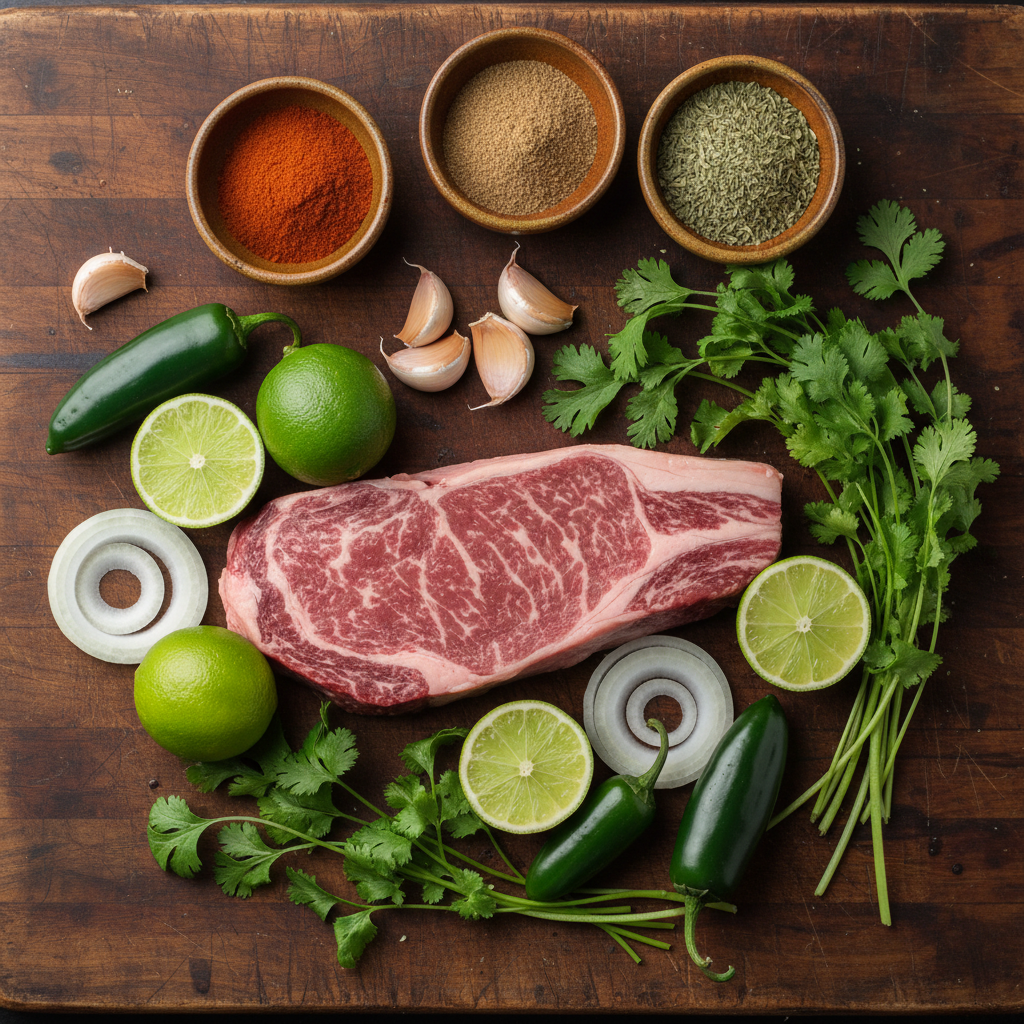
    An overhead shot of fresh carne asada ingredients, including raw steak, whole limes, a bunch of cilantro, garlic, chilies, onions, and various spices arranged neatly on a rustic wooden surface.
    A vibrant, well-organized flat lay of fresh, high-quality ingredients for carne asada. The centerpiece is a raw, perfectly marbled flank or skirt steak. Around it, arrange fresh limes, a bunch of vibrant green cilantro, whole garlic cloves, various chilies such as poblano and jalapeño, sliced white onions, and a selection of ground spices (cumin, chili powder, oregano) in small, rustic ceramic bowls. Everything should appear pristine, clean, and ready for cooking, set against a rustic wooden cutting board or tabletop background. Use soft, natural overhead lighting to highlight textures and colors. This must be professional food photography, 100 percent photorealistic, high-quality food magazine photo style, no artistic interpretations or illustrations.

    Crafting the best carne asada starts with the right ingredients. But don’t worry—this recipe is simple and approachable, our specialty at Recipesmondial. To help you cook with confidence, we’ve broken down exactly what you’ll need for this flavorful meal made easy.

    You’ll likely find most of these items are everyday staples at your local grocery store. Let’s gather your essentials for a truly delicious experience!

    For the Carne Asada Marinade

    The marinade is the heart of this easy carne asada recipe. It tenderizes the meat while infusing it with incredible, bright flavors. This beginner-friendly recipe uses common ingredients to deliver maximum impact.

    • 1/2 cup fresh orange juice: Freshly squeezed is best for that vibrant citrus note. It helps tenderize the meat, too!
    • 1/4 cup fresh lime juice: Adds a zesty tang and works alongside the orange juice for tenderizing.
    • 1/4 cup soy sauce: Provides umami depth and a hint of saltiness, rounding out the overall flavor.
    • 2 tablespoons olive oil: Helps carry flavors and keeps the meat moist.
    • 3 cloves garlic, minced: Essential for a robust, aromatic foundation.
    • 1/2 white onion, roughly chopped: Adds a subtle sweetness and aromatic base.
    • 1/2 cup fresh cilantro, chopped: Offers a fresh, herbaceous burst. (See variations if you prefer a carne asada marinade without cilantro.)
    • 1 teaspoon ground cumin: A warming spice that brings authentic Mexican flavor.
    • 1/2 teaspoon black pepper: Adds a gentle warmth and spiciness.
    • 1/4 teaspoon red pepper flakes (optional): For a little kick if you like some heat!

    Pro Tip: Using fresh citrus juice is key. The natural acids in the orange and lime juice break down tough meat fibers, which is the secret to incredibly tender and juicy carne asada [1]. This simple step makes all the difference.

    For the Steak

    Choosing the right cut of beef is crucial for the best carne asada. Our recipe makes it simple to pick the perfect one.

    • 2 pounds flank steak or skirt steak: These cuts are ideal for grilling, known for their rich beefy flavor and ability to absorb marinade beautifully. Flank steak is leaner, while skirt steak offers a slightly more intense flavor.

    A Note on Steak Selection: Both flank and skirt steak are thin, allowing them to cook quickly and absorb the marinade efficiently. This makes them excellent choices for a beginner-friendly recipe. Either option is easy to work with and will give you fantastic results for your family-friendly meals.

    How to Make Carne Asada (Step-by-Step Guide)

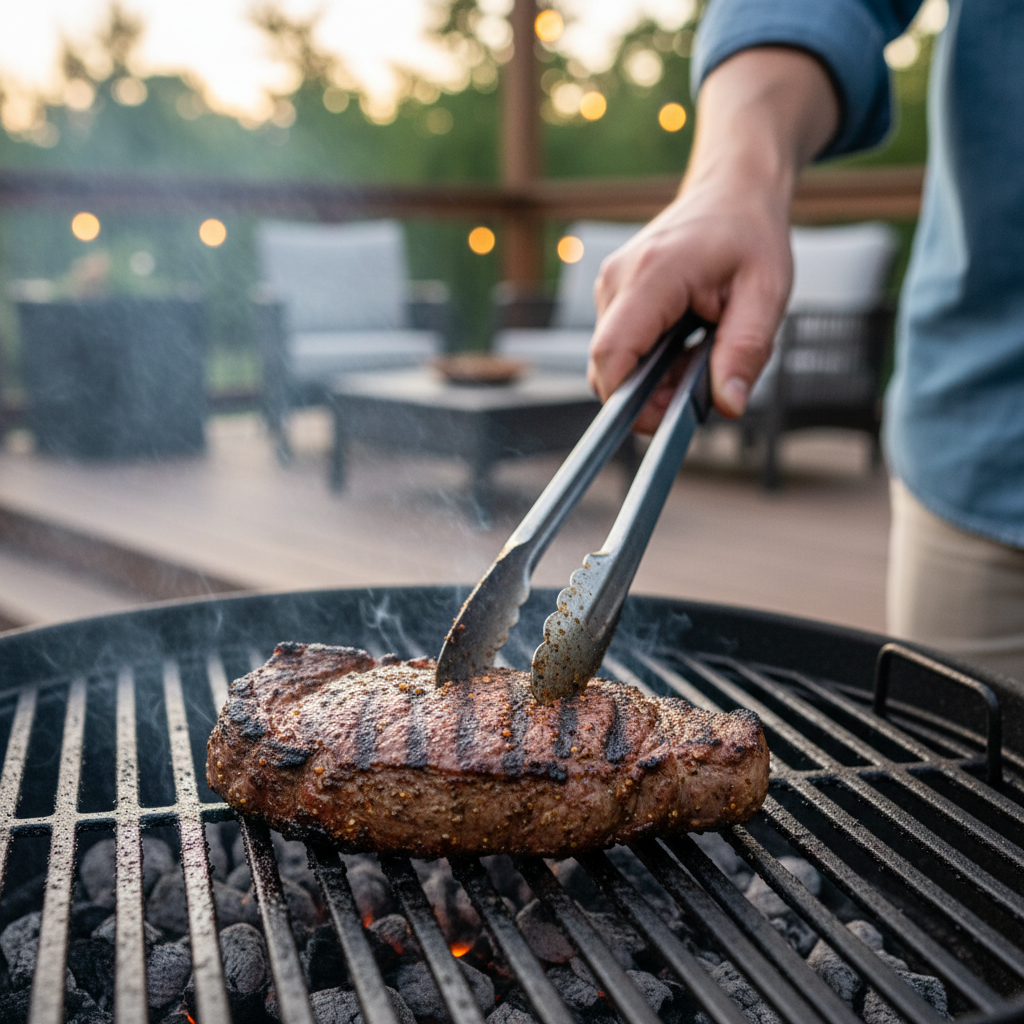
    A close-up of a juicy flank steak sizzling with char marks on an outdoor charcoal grill, being flipped by a home cook's hand with tongs.
    A dynamic, mouth-watering close-up shot of a seasoned and marinated flank steak grilling on a hot outdoor charcoal grill. Capture visible, appetizing char marks and gentle smoke rising from the steak. A real human hand, belonging to an approachable home cook, is using stainless steel tongs to carefully flip the steak, showing its juicy interior. The background should be softly blurred, hinting at an inviting backyard patio setting. Emphasize the rich, cooked color of the meat and the appealing sizzle. This must be professional food photography, 100 percent photorealistic, high-quality food magazine photo style, no artistic interpretations or illustrations.

    Step 1: Prepare the Authentic Carne Asada Marinade

    A fantastic marinade is the key to delicious carne asada. This simple recipe combines fresh citrus, herbs, and spices to infuse your steak with amazing flavor. You’ll be surprised at how easy it is to whip up.

    To create the marinade, combine the following ingredients in a large bowl or a resealable plastic bag:

    • 1/2 cup fresh orange juice (about 1-2 oranges)
    • 1/4 cup fresh lime juice (about 2-3 limes)
    • 1/4 cup olive oil
    • 1/4 cup finely chopped fresh cilantro
    • 4 cloves garlic, minced
    • 1 tablespoon chili powder
    • 1 teaspoon ground cumin
    • 1 teaspoon dried oregano
    • 1 teaspoon salt
    • 1/2 teaspoon black pepper
    • A pinch of cayenne pepper (optional, for a little kick)

    Whisk everything together until well combined. Your flavorful carne asada marinade is now ready for the steak. This mix is crucial for achieving that signature taste.

    Step 2: Marinate the Steak for Maximum Flavor

    With the marinade ready, it’s time to let the steak soak. Marinating not only tenderizes the meat but also infuses every bite with incredible flavor, transforming your carne asada from good to spectacular.

    1. Place your steak (about 1.5-2 pounds flank or skirt steak) into the bowl or bag with the marinade.
    2. Ensure the steak is fully coated by turning it a few times and gently massaging the marinade into the meat.
    3. Seal the bag or cover the bowl tightly.
    4. Refrigerate for at least 2 hours. For the best flavor, marinate for 4-6 hours. If you have time, marinating overnight (up to 12 hours) is fantastic.

    Pro Tip: Do not marinate for more than 12 hours, as the citrus juices can start to “cook” the meat and make it mushy. The goal is a tender steak, not an over-marinated one. This beginner-friendly recipe ensures perfect results every time.

    Step 3: Grill the Carne Asada to Perfection

    Grilling is what gives carne asada its signature char and smoky flavor. But don’t worry if you don’t have a grill—a cast-iron skillet works well too.

    1. Prepare your grill: Preheat your gas grill to high heat, or prepare a charcoal grill for direct high heat. Aim for a temperature around 450-500°F (230-260°C).
    2. Remove from marinade: Take the steak out of the marinade and let any excess drip off. Do not wipe it completely dry.
    3. Grill the steak: Place the steak directly on the hot grill grates and grill for 3-5 minutes per side for medium-rare to medium doneness. Adjust the time based on steak thickness.
    4. Check for doneness: Use a meat thermometer for accuracy. Aim for an internal temperature of 130-135°F (54-57°C) for medium-rare, or 135-140°F (57-60°C) for medium [2]. You’ll see a nice sear and char develop.
    5. Alternative cooking method: No grill? No problem. Heat a large cast-iron skillet over medium-high heat with a tablespoon of olive oil. Sear the steak for 4-6 minutes per side.

    This simple dinner recipe makes grilling fun. You’ll quickly gain confidence in your approachable home cooking skills!

    Step 4: Rest and Slice the Meat Correctly

    Don’t skip this final step—it’s vital for juicy, tender carne asada. Resting the meat allows the juices to redistribute throughout, ensuring every slice is incredibly flavorful and moist.

    1. Rest the steak: Once cooked, transfer the carne asada to a cutting board and cover it loosely with aluminum foil.
    2. Allow it to rest: Let the steak rest for at least 5-10 minutes. Resisting the urge to slice it too soon is key to a tender result.
    3. Slice against the grain: After resting, thinly slice the steak against the grain. Look for the direction of the muscle fibers and cut perpendicular to them. This simple technique shortens the fibers, making each bite much more tender.
    4. Serve immediately: Your perfectly cooked and sliced carne asada is ready! Enjoy this truly flavorful meal made easy.

    Following these step-by-step cooking guidance tips will lead to a delicious outcome. You’ll be amazed at your culinary success!

    What Are the Best Tips for Juicy, Flavorful Carne Asada?

    Making truly juicy and flavorful carne asada is easier than you might think. With a few simple tricks, you can elevate your home cooking and create a delicious, memorable meal that will impress your family and friends.

    • Choose the Right Cut: Flank steak or skirt steak are fantastic choices for carne asada because they absorb marinade exceptionally well. These cuts are known for their rich flavor and become incredibly tender when cooked correctly.
    • Marinate Generously: Don’t rush this crucial step. A good marinade needs time to work its magic, tenderizing the meat and infusing it with flavor. Marinate your steak for at least 2 hours, but for the best results, aim for 4-12 hours.
    • Bring Steak to Room Temperature: Before grilling, remove the marinated steak from the fridge and let it sit on the counter for about 30 minutes. This helps the meat cook evenly from edge to center, preventing dry spots.
    • Heat Your Grill High: A blazing hot grill is essential for a perfect sear. High heat not only locks in the steak’s juices but also creates a delicious, caramelized crust that adds a deep layer of flavor.
    • Don’t Overcrowd the Grill: If necessary, cook your steak in batches. Placing too much meat on the grill at once lowers its temperature, which prevents a good sear and can cause the meat to steam instead. Give each piece enough space to achieve that desirable char.
    • Cook to Medium-Rare/Medium: To ensure your carne asada is as tender and juicy as possible, avoid overcooking it. Aim for a medium-rare to medium doneness, using a meat thermometer for accuracy. For perfect results, the internal temperature should be around 130-135°F (54-57°C).
    • Rest Your Meat: This is a critical step for a juicy steak. Once grilled, transfer the carne asada to a cutting board and cover it loosely with foil. Letting it rest for 5-10 minutes allows the juices to redistribute throughout the meat, resulting in a much more flavorful bite.
    • Slice Against the Grain: Before serving, identify the direction of the muscle fibers in the steak and slice perpendicular to them. This technique shortens the fibers, making each bite significantly more tender and easier to chew—an essential step for cuts like skirt and flank steak.

    Following these simple steps will ensure you make a fantastic, beginner-friendly carne asada every time. Enjoy your delicious, home-cooked meal with confidence!

    How Can You Serve Carne Asada?

    You’ve mastered grilling delicious carne asada, so now let’s transform it into amazing meals. This flavorful, versatile steak makes it easy to create quick weeknight dinners and family-friendly dishes. Recipesmondial is here to help you serve it creatively.

    From simple dinners to exciting meal prep, these approachable ideas ensure you get the most out of your perfectly cooked carne asada.

    Classic Carne Asada Tacos

    Tacos are a go-to choice for carne asada because they are simple to assemble, packed with incredible flavor, and loved by everyone. As a fantastic way to enjoy your juicy steak, this is the perfect beginner-friendly recipe.

    How to Assemble Your Tacos:

    • Warm Tortillas: First, gently warm corn or flour tortillas in a dry skillet, in the microwave, or on the grill.
    • Add Carne Asada: Next, spoon a generous amount of your sliced carne asada onto each tortilla.
    • Choose Your Toppings: Then, pile on your favorite fresh toppings.
    • Drizzle with Sauce: Finally, add a touch of salsa or crema for extra flavor.

    Popular Toppings to Consider:

    • Fresh Cilantro: Chopped for a burst of freshness.
    • Diced Onions: White or red onions add a nice bite.
    • Salsa Roja or Verde: A must-have for authentic flavor.
    • Guacamole or Sliced Avocado: Adds creamy richness.
    • Cotija Cheese: Crumbly, salty goodness.
    • Lime Wedges: A squeeze of fresh lime brightens everything.

    Burritos and Bowls

    For a heartier meal, carne asada shines in burritos and bowls. These options are fantastic for meal prep and busy weeknights because they offer endless customization and are perfect for using up leftovers.

    For a Flavorful Carne Asada Burrito:

    • Large Flour Tortilla: Start with a burrito-sized tortilla.
    • Layer Ingredients: Spread on a thin layer of refried beans or rice.
    • Add Carne Asada: Place your sliced steak down the center.
    • Include Fillings: Incorporate cheese, salsa, and guacamole.
    • Roll Tightly: Fold in the sides, then roll from the bottom up to create a snug burrito.

    Building a Delicious Carne Asada Bowl:

    • Start with a Base: Use fluffy rice (white or brown) or a bed of crisp lettuce.
    • Add Protein: Top generously with your tender carne asada.
    • Include Veggies: Add corn, black beans, bell peppers, or sautéed onions.
    • Finishing Touches: Garnish with avocado, a dollop of sour cream, and a drizzle of your favorite hot sauce.

    With Rice and Beans

    Sometimes, simple is best. Serving carne asada with rice and beans is a comforting, classic combination that makes for a satisfying and easy family meal. This simple pairing truly allows the delicious steak flavor to shine.

    Pairing Perfection:

    • Rice Options:
      • Cilantro Lime Rice: A fragrant and zesty choice.
      • Mexican Red Rice: Savory and deeply flavorful.
      • Simple White Rice: A perfect canvas for the steak.
    • Bean Options:
      • Black Beans: Often seasoned with garlic and cumin.
      • Pinto Beans: Creamy and mild, perfect refried or whole.
      • Frijoles Charros: Hearty “cowboy beans” with bacon and chorizo.
    • Optional Garnishes:
      • Chopped avocado
      • Fresh cilantro
      • A sprinkle of cheese
      • A squeeze of lime

    No matter how you serve it, your homemade carne asada is sure to be the highlight of the meal. Recipesmondial is here to help you create easy, flavorful dishes. Enjoy your cooking, discover new recipes, and make mealtime stress-free!

    Variations and Substitutions

    Can I Make Carne Asada in the Oven?

    Absolutely! While grilling gives carne asada its classic smoky char, you can make a delicious version right in your oven. This method is perfect for beginners and ideal for busy weeknights or when bad weather keeps you from cooking outdoors.

    Here’s how to adapt your carne asada recipe for the oven:

    • Preheat your oven: Get it nice and hot, around 400°F (200°C).
    • Use an oven-safe skillet: A cast-iron skillet is ideal because it retains heat so well. Place it in the oven to preheat for about 10-15 minutes.
    • Sear on the stovetop: Carefully remove the hot skillet from the oven. Add a tablespoon of oil and sear your marinated steak over medium-high heat for 2-3 minutes per side. This step creates a wonderful crust and locks in flavor.
    • Finish in the oven: Transfer the skillet to the preheated oven and cook for another 5-10 minutes, depending on your steak’s thickness and desired doneness. For medium-rare, aim for an internal temperature of 130-135°F (54-57°C). A meat thermometer will give you the most accurate results.
    • Rest the meat: Just as you would with grilling, always let your carne asada rest for 5-10 minutes before slicing. This step is crucial for keeping it juicy.

    Making carne asada in the oven is an easy recipe that proves you don’t need special equipment to enjoy flavorful, homemade meals.

    Carne Asada Marinade Without Cilantro

    Cilantro isn’t for everyone. For some people, its flavor is polarizing and can even taste like soap [3]. If you’re looking for a delicious carne asada marinade without cilantro, rest assured you can easily adjust the recipe to create a fantastic, flavorful steak.

    Here are some simple substitutions and variations:

    • Simply omit it: The marinade will still be incredibly flavorful thanks to the other ingredients like garlic, onion, and spices.
    • Fresh parsley: Flat-leaf parsley offers a fresh, herbaceous note without cilantro’s distinct flavor. Use it in the same amount.
    • Chives or green onions: For a milder, oniony freshness, add finely chopped chives or the green parts of scallions.
    • More citrus zest: Amp up the lime or orange zest for an extra-bright flavor kick.

    With these adjustments, this beginner-friendly recipe becomes even more versatile, ensuring everyone at the table can enjoy a delicious, family-friendly meal.

    Carne Asada Marinade Without Orange Juice

    In a traditional carne asada marinade, orange juice plays a key role. It adds acidity and a hint of sweetness that helps tenderize the meat and build flavor. However, if you don’t have orange juice or simply prefer a different taste, several excellent substitutions work just as well.

    Here are some practical alternatives for your marinade:

    • Lime juice: A classic substitute, lime juice provides a brighter, zesty acidity that beautifully complements the other Mexican-inspired flavors. Use an equal amount in place of orange juice.
    • Lemon juice: Similar to lime, lemon juice offers strong acidity and a fresh taste, making it a reliable alternative.
    • Pineapple juice: Because of its enzymes, a small amount of pineapple juice is great for tenderizing. Be careful not to marinate the meat for too long (more than 4-6 hours), as it can become mushy.
    • Vinegar: White wine vinegar, apple cider vinegar, or distilled white vinegar can provide the necessary acidity. Start with about half the amount you would use for citrus juice and adjust to taste.

    Choosing the right substitute ensures your homemade carne asada is always perfectly seasoned and tender, making this delicious meal easy to prepare with ingredients you already have on hand.

    Frequently Asked Questions About Carne Asada

    What is the best cut of meat for carne asada?

    For the most flavorful carne asada, choose either skirt steak or flank steak. Both cuts have an excellent texture and are known for absorbing marinades well. [4]

    • Skirt Steak: A popular choice from the cow’s diaphragm muscle, skirt steak has a rich, beefy flavor and a loose grain that makes it perfect for soaking up a delicious carne asada marinade.
    • Flank Steak: This is another excellent, leaner option from the abdominal muscles. While it has less fat than skirt steak, it still boasts great flavor and a distinct grain.

    Regardless of which cut you choose, look for good marbling—the small streaks of fat that add moisture and flavor. After cooking, it’s crucial to slice the meat thinly against the grain. This simple step ensures every bite is tender, a key tip for any beginner-friendly recipes using these cuts.

    How do you make carne asada for tacos?

    Making carne asada for tacos is simple because it follows the main carne asada recipe. The key difference for tacos is how you slice and serve the meat. Here’s an overview of the process:

    1. Marinate Well: Begin with a quality carne asada marinade. Allow your steak to soak for at least 2 hours, or overnight for the deepest flavor.
    2. Grill to Perfection: Cook the steak over high heat to achieve a beautiful sear on both sides. Cook to your preferred doneness, typically medium-rare to medium.
    3. Rest the Meat: This crucial step ensures juicy tacos. Let the cooked steak rest for 5-10 minutes to allow the juices to redistribute throughout the meat.
    4. Slice Against the Grain: Using a sharp knife, slice the carne asada thinly against the grain. This technique guarantees each piece is exceptionally tender.
    5. Assemble Your Tacos: Warm your favorite tortillas, then pile on the sliced carne asada and add toppings like chopped onions, cilantro, salsa, and a squeeze of lime. These easy recipes quickly become family-friendly meals!

    This method ensures every taco is bursting with flavor and tender meat, making it perfect for quick meals or a fun dinner party.

    What is in an authentic carne asada marinade?

    An authentic carne asada marinade is key for both flavoring and tenderizing the steak. It’s a vibrant blend of fresh ingredients and aromatic spices. While recipes vary, the following are core components:

    • Citrus Juices: Fresh orange juice and lime juice are essential. They add bright flavor, and the acidity helps break down muscle fibers, which tenderizes the meat.
    • Garlic: A generous amount of freshly minced garlic provides a pungent, savory base.
    • Cilantro: Freshly chopped cilantro contributes a distinct, herbaceous note.
    • Onion: Thinly sliced white onion is often included for sweetness and a subtle bite.
    • Oil: A quality olive oil or vegetable oil helps distribute the flavors and prevents the meat from sticking to the grill.
    • Spices: A typical spice blend includes:
      • Cumin (earthy, warm)
      • Chili powder (mild heat, depth of flavor)
      • Dried oregano (aromatic, slightly bitter)
      • Salt and black pepper (to season)

    This combination creates a complex marinade that will make your carne asada recipe stand out, delivering the deep flavors essential for flavorful meals made easy.

    How do you prepare juicy carne asada?

    To get juicy carne asada every time, follow a few simple, beginner-friendly techniques. Here’s how to avoid dry meat and ensure your steak is cooked perfectly:

    • Marinate Adequately: Let the steak marinate for at least two hours, or overnight for maximum flavor and tenderness. The acidic components in the carne asada marinade are essential for this process.
    • Start with Room Temperature Meat: Take your steak out of the fridge 30 minutes before grilling to help it cook more evenly.
    • Use High Heat: A very hot grill or cast-iron pan is essential. High heat quickly sears the outside of the steak, creating a flavorful crust that locks in the juices.
    • Don’t Overcook: Skirt and flank steak cook quickly. Aim for medium-rare to medium (130-135°F or 54-57°C for medium-rare). Use an instant-read thermometer for accuracy. [5]
    • Rest Your Meat: This step is non-negotiable for juicy steak. Once cooked, transfer the steak to a cutting board, cover it loosely with foil, and let it rest for 5-10 minutes. This resting period allows the juices to redistribute, making every slice tender and moist.
    • Slice Against the Grain: Finally, always slice the meat thinly against the grain. This shortens the muscle fibers, resulting in a much more tender bite.

    By following this step-by-step cooking guidance, you will master juicy carne asada with confidence and make your meal prep more enjoyable.


    Sources

    1. https://www.exploratorium.edu/cooking/meat/activity-marinate.html
    2. https://www.foodsafety.gov/food-safety-charts/safe-minimum-internal-temperature-chart
    3. https://www.britannica.com/story/why-does-cilantro-taste-like-soap-to-some-people
    4. https://www.usda.gov/media/blog/2013/01/22/meat-cut-carne-asada-mexican-steak-fajitas-or-grilling
    5. https://www.foodsafety.gov/food-safety-charts/safe-minimum-cooking-temperatures

  • How to Make The Best Green Bean Casserole (Easy Step-by-Step Recipe)

    How to Make The Best Green Bean Casserole (Easy Step-by-Step Recipe)

    Green bean casserole is a classic American baked side dish perfect for holidays like Thanksgiving. It combines tender green beans and a creamy sauce made from cream of mushroom soup, which is then topped with crispy fried onions. This simple, comforting dish is baked until golden and bubbly, making it a family-friendly favorite.

    Are you dreaming of that classic, creamy, and crispy green bean casserole? It’s a beloved staple for holiday tables and a comforting side dish for any family dinner, but making it can feel daunting. Perhaps you’ve been overwhelmed by complex recipes or are simply looking for a foolproof method for perfect results. We believe cooking should be an enjoyable experience, not a source of stress.

    Here at Recipesmondial, we make home cooking simple, flavorful, and inspiring. That’s why we perfected this easy, step-by-step green bean casserole recipe—it delivers the best results without any fuss. This guide is perfect for beginner cooks building confidence and for busy home cooks seeking reliable meal solutions. You’ll learn how to transform simple ingredients into a memorable dish, ensuring your table is always set for success.

    Get ready to impress your family and friends with an exceptional green bean casserole. We’re confident this method will become your go-to for the timeless classic. So, what makes this recipe stand out? Let’s dive in and discover exactly why this is the best green bean casserole recipe you’ll ever make.

    Why Is This the Best Green Bean Casserole Recipe?

    Are you searching for the ultimate green bean casserole recipe? You’ve found it. This isn’t just another recipe—it’s your new go-to for a dish that consistently shines. At Recipesmondial, we specialize in reliable and delicious recipes with easy-to-follow instructions.

    Our goal is to make cooking enjoyable and stress-free, and this green bean casserole is a perfect example. It delivers incredible flavor without complicated steps or hard-to-find ingredients. Say goodbye to guesswork and hello to confidence in the kitchen!

    Here’s why this recipe stands out as the best:

    • Uncomplicated Steps: We provide simple, step-by-step guidance. You won’t be overwhelmed by confusing instructions or technical terms.
    • Everyday Ingredients: This recipe uses accessible, common ingredients you likely already have. No special shopping trips are needed.
    • Reliably Delicious: Enjoy a creamy, savory, and perfectly crispy green bean casserole every time. It’s a family-friendly dish that’s guaranteed to be a hit.
    • Flavorful Simplicity: We focus on maximizing classic, comforting flavor with minimal fuss. You can get rich taste without endless effort.
    • Quick to Prepare: Designed for busy schedules, this recipe helps you get a delicious side dish on the table fast.
    • Versatile & Adaptable: This recipe works beautifully with fresh, frozen, or canned green beans. We also include simple variations to suit different tastes and dietary needs.
    • Boosts Your Confidence: Our clear instructions help you build skills in the kitchen, so you can create flavorful meals like a pro.

    At Recipesmondial, we believe in stress-free cooking. This green bean casserole is the perfect example of how simple ingredients can create truly delicious results. Get ready to impress your family and friends with this foolproof dish!

    What Ingredients Do You Need for Green Bean Casserole?

    Choosing Your Green Beans: Canned, Frozen, or Fresh?

    Your green bean casserole journey begins with choosing the right beans. Each option—canned, frozen, or fresh—offers unique benefits, so let’s explore which is best for you.

    • Canned Green Beans: Super convenient and pre-cooked, canned beans are ready to use, making them perfect for quick meals and simple dinner recipes. Be sure to drain them well before mixing.
    • Frozen Green Beans: Frozen beans often taste fresher than canned and still save on prep time. Simply thaw them or blanch them quickly to help maintain their bright color. They are a great middle-ground choice.
    • Fresh Green Beans: For the best flavor and crisp-tender texture, choose fresh green beans. You will need to trim the ends and blanch them briefly to ensure they are perfectly tender, but fresh beans elevate the casserole with a vibrant, garden-fresh taste.

    Tip: No matter which type you choose, ensure your green beans are tender-crisp, not mushy, to create the best possible texture for your casserole.

    For the Creamy Mushroom Sauce

    The rich, creamy sauce is the heart of any classic green bean casserole, bringing all the ingredients together with incredible savory depth. Making it is straightforward with these key ingredients.

    • Canned Cream of Mushroom Soup (10.5 ounces): This traditional base provides instant creaminess and a savory, earthy mushroom flavor. Using canned soup is a significant time-saver, perfect for a family-friendly meal.
    • Milk (1/2 cup): Any type of milk works, though whole milk makes the sauce extra rich. Milk helps thin the soup slightly to create a smoother, more pourable consistency.
    • Soy Sauce (1 teaspoon): This secret ingredient adds a boost of umami! It deepens the savory notes and balances the flavors beautifully, so don’t skip this small but mighty addition.
    • Black Pepper (1/4 teaspoon): A pinch of pepper adds a little kick and enhances all the other flavors. Freshly ground pepper is always best.

    Substitution Tip: If you prefer a homemade approach, you can make your own mushroom sauce for a fresher taste. While we cover this variation later, canned soup is a winner for an easy, stress-free recipe.

    For the Crispy Onion Topping

    The iconic crispy onion topping is a must-have, providing a delightful crunch that makes this casserole truly special. It’s the perfect finishing touch.

    • Canned Crispy Fried Onions (2.8 ounces): These are the classic choice, offering a golden, crunchy texture and savory flavor that perfectly complements the creamy beans. For the best result, divide the onions: use some in the casserole and save the rest for the top to ensure a final crunch.

    Variation Idea: Feel free to get creative with your topping. Crushed crackers, panko breadcrumbs, or even homemade crispy fried onions are all excellent alternatives. Trying these variations is a fun way to create personalized, flavorful meals and discover new simple dishes.

    How to Make Green Bean Casserole From Scratch

    Step 1: Prepare Your Green Beans

    The first step is preparing the green beans. Whether you use fresh, frozen, or canned, follow these simple instructions.

    For Canned Green Beans:

    • Thoroughly drain two (14.5-ounce) cans of cut green beans.
    • Pat them dry with a paper towel to prevent a watery casserole.

    For Frozen Green Beans:

    • Cook two (10-ounce) packages of frozen cut green beans according to package directions until tender-crisp.
    • Drain thoroughly to remove all excess water.

    For Fresh Green Beans:

    • Wash and trim one pound of fresh green beans.
    • Blanch in boiling, salted water for 5-7 minutes or steam until tender-crisp.
    • Immediately plunge into an ice bath to stop the cooking and preserve their vibrant green color.
    • Drain completely before using.

    Tip: Draining the green beans properly is the key to a creamy, not soupy, casserole.

    Step 2: Mix the Casserole Base

    Now it’s time to mix the creamy casserole base. This step comes together in just a few minutes.

    1. Preheat the oven to 375°F (190°C) and lightly grease a 1½-quart baking dish.
    2. In a large bowl, whisk together the cream of mushroom soup, milk, black pepper, and garlic powder until smooth.
    3. Gently fold in the prepared green beans until they are evenly coated.
    4. Pour the mixture into the prepared baking dish and spread evenly.

    Beginner-Friendly Tip: Feel free to taste the sauce before adding the green beans and adjust the seasonings to your liking.

    Step 3: Bake to Bubbly Perfection

    The first bake heats the casserole through, creating a warm, bubbly base for the crispy topping.

    1. Place the baking dish in the preheated oven.
    2. Bake for 25-30 minutes, until the sauce is bubbly around the edges and the beans are tender.

    Watch Out For: Avoid overbaking at this stage. You are simply heating the casserole before adding the topping in the final step.

    Step 4: Add the Final Crispy Topping

    The final step adds the classic crunchy texture that makes this dish a favorite.

    1. Carefully remove the casserole from the oven.
    2. Sprinkle the crispy fried onions evenly over the top.
    3. Return the casserole to the oven and bake for an additional 5-10 minutes, until the onions are golden brown and crisp.

    Serving Suggestion: Let the casserole rest for a few minutes before serving. This allows the sauce to set slightly.

    Enjoy your homemade green bean casserole! Recipesmondial is here to help you discover more approachable recipes that build confidence in the kitchen.

    What are some variations on the green bean casserole recipe?

    Cheesy Green Bean Casserole

    Want to elevate your classic green bean casserole? Adding cheese is a fantastic and easy way to make it richer and more comforting. This family-friendly variation introduces new textures and flavors that everyone will love.

    For a cheesy twist, simply mix shredded cheese into the green bean and mushroom sauce mixture before baking. You can also sprinkle extra cheese on top during the last few minutes in the oven to create a gorgeous, melted crust.

    • Cheese Options:
      • Cheddar: Sharp or mild, it adds a familiar, savory tang.
      • Monterey Jack: This cheese melts beautifully and offers a milder flavor.
      • Parmesan: Sprinkle this on top for a salty, umami kick.
      • Swiss: This brings a slightly nutty note to the casserole.
    • When to Add: Stir about 1 cup of shredded cheese into the green bean mixture before transferring it to the baking dish. For a bubbly, golden-brown top, sprinkle an additional 1/2 cup over the casserole during the last 10-15 minutes of baking.
    • Pro Tip: For an extra-crispy topping, mix the shredded cheese with panko breadcrumbs before sprinkling it over the casserole. This creates a wonderful textural contrast.

    Homemade Mushroom Sauce (No Canned Soup)

    Prefer cooking from scratch and avoiding canned ingredients? Making your own mushroom sauce is a surprisingly simple, beginner-friendly way to elevate your green bean casserole. A homemade sauce delivers a fresh, vibrant flavor that canned soup can’t match, and it’s often a healthier choice for family-friendly meals.

    Here’s how to create a rich, creamy sauce without any canned soup:

    • Ingredients You’ll Need:
      • 2 tablespoons unsalted butter
      • 8 ounces fresh mushrooms (cremini or button), sliced
      • 1/2 cup finely diced yellow onion
      • 2 cloves garlic, minced
      • 1/4 cup all-purpose flour
      • 2 cups chicken or vegetable broth
      • 1/2 cup heavy cream (or milk for a lighter version)
      • Salt and black pepper to taste
    • Step-by-Step Instructions:
      1. Sauté Aromatics: Melt butter in a medium saucepan over medium heat. Add the mushrooms and onion, cooking until the mushrooms release their liquid and brown, about 5-7 minutes. Stir in the garlic and cook for one more minute until fragrant.
      2. Make a Roux: Sprinkle the flour over the mushroom mixture and cook, stirring constantly, for 1-2 minutes to cook out the raw flour taste.
      3. Whisk in Liquid: Slowly whisk in the broth a little at a time to keep the mixture smooth. Continue whisking as the sauce thickens and comes to a gentle boil.
      4. Finish with Cream: Reduce the heat to low and stir in the heavy cream or milk. Season with salt and pepper, then simmer for a few minutes until the sauce is creamy and heated through.
    • Why You’ll Love It: This homemade sauce offers a deeper, more natural mushroom flavor and gives you complete control over the ingredients. Knowing exactly what’s in your food is a great confidence booster. Furthermore, homemade sauces often contain less sodium than their canned counterparts [1].

    Adding Bacon for Extra Flavor

    For a smoky, savory kick, add bacon to your green bean casserole. This simple addition is a game-changer, bringing incredible texture and a new depth of flavor that makes this family-friendly dish even more exciting.

    You can mix crumbled bacon into the casserole, sprinkle it on top with the crispy onions, or do both for maximum flavor.

    • How to Prepare Bacon:
      1. Cook Bacon: Cook 6-8 slices of bacon in a skillet over medium heat until crispy.
      2. Drain & Crumble: Transfer the bacon to a paper towel-lined plate to drain the grease. Once cool enough to handle, crumble it into small pieces.
    • When to Add Bacon:
      • Into the Mix: Stir half of the crumbled bacon into the green bean and sauce mixture before baking to infuse the entire casserole with smoky flavor.
      • As a Topping: Sprinkle the remaining bacon over the casserole along with the crispy fried onions during the last few minutes of baking. This adds a delightful crunch and visual appeal.
    • Chef’s Tip: Save a tablespoon or two of the rendered bacon fat and use it in your homemade mushroom sauce instead of butter. This simple trick creates an even richer, smokier flavor profile, adding a whole new dimension to the dish.

    Tips for the Perfect Casserole Every Time

    A friendly home cook proudly holding a perfectly baked green bean casserole with a golden, crispy topping.
    A professional food photography scene of a home cook, a friendly and encouraging woman in her 40s, smiling warmly while holding a freshly baked, perfectly golden green bean casserole. She is in a clean, inviting kitchen with warm lighting. Her hands are gently supporting the casserole dish, which is steaming slightly. The casserole top is beautifully browned with abundant crispy fried onions. The image conveys success, ease, and the joy of home cooking. Photorealistic, high-quality food magazine photo.

    How to Avoid a Watery Casserole

    A watery green bean casserole is a common and frustrating problem. Luckily, you can prevent it with a few simple tricks. Follow these tips to ensure a perfectly creamy and delicious result every time.

    • Drain Green Beans Thoroughly: This is the most crucial step to prevent a soupy casserole. Whether you&#39re using canned or frozen green beans, drain them well in a colander. For the best results, gently press on the beans to remove any remaining water.
    • Thicken Your Sauce: If you&#39re making a homemade sauce, ensure it’s properly thickened. A roux (a simple butter and flour mixture) is perfect for this. Cook it into a smooth paste before adding your liquids to create a rich, creamy base.
    • Don’t Overcrowd the Dish: Give your casserole ingredients room to breathe in the baking dish. An overcrowded dish traps steam, which creates excess moisture. If your ingredients seem too packed, simply switch to a larger dish.
    • Bake at the Right Temperature: A hot, properly preheated oven helps excess moisture evaporate as the casserole bakes. This ensures a consistent texture and prevents a watery bottom.

    Make-Ahead and Storage Instructions

    Preparing your green bean casserole in advance can save so much time, making it a perfect dish for holidays or busy weeknights. Here’s how to make it ahead and store any leftovers.

    Make-Ahead Instructions:

    • Assemble Without Topping: Mix the green beans and creamy sauce, then pour the mixture into your baking dish. Cover it tightly with plastic wrap or foil.
    • Refrigerate: You can store the unbaked casserole in the refrigerator for up to 2 days.
    • Before Baking: Let the casserole sit at room temperature for about 30 minutes to help it bake more evenly. Add the crispy onion topping just before baking as directed. You may need to add 5-10 minutes to the total baking time.

    Storing Leftovers:

    • Cool Completely: Let the casserole cool to room temperature before storing.
    • Refrigerate: Transfer leftovers to an airtight container and store them in the refrigerator for up to 3-4 days.
    • Freezing (Optional): For longer storage, place cooled leftovers in a freezer-safe container. The casserole will keep well for up to 2-3 months. Thaw it overnight in the refrigerator before reheating.
    • Reheating: Reheat individual portions in the microwave or warm larger amounts in a 300°F (150°C) oven until heated through. If it seems dry, add a splash of milk or broth.

    What to Serve with Green Bean Casserole

    A beloved classic, green bean casserole pairs wonderfully with many main courses, from holiday feasts to simple weeknight dinners. Here are some family-friendly and delicious pairings to consider.

    • Roasted Turkey or Chicken: This is a classic combination, as the savory flavors complement each other perfectly.
    • Ham: A glazed ham is another fantastic partner. The sweetness of the ham balances the richness of the casserole.
    • Pot Roast: For a comforting dinner, serve it alongside a tender pot roast for a hearty and satisfying meal.
    • Pork Loin: A juicy pork loin is a lighter, yet equally delicious, option.
    • Mashed Potatoes: You can never go wrong with another comforting side. Mashed potatoes create a truly indulgent plate.
    • Cranberry Sauce: The tartness of cranberry sauce cuts through the richness and provides a lovely contrast in flavors.
    • Simple Salad: A fresh, crisp green salad adds brightness and a healthy balance to the creamy casserole.
    • Dinner Rolls: Warm dinner rolls are perfect for soaking up any delicious sauce.

    Frequently Asked Questions

    Can you make green bean casserole with fresh green beans?

    Yes, you absolutely can! Using fresh green beans is a wonderful way to bring a vibrant, garden-fresh flavor to this classic comfort food.

    Fresh beans offer a crisp-tender texture that contrasts beautifully with the creamy sauce, giving the casserole a more gourmet touch.

    Here’s how to adapt your recipe for fresh green beans:

    • Prepare the Beans: Wash and trim about 1 1/2 pounds of fresh green beans, snapping off both ends.
    • Blanch Them: Bring a pot of salted water to a boil. Add the green beans and cook for 5-7 minutes until they are bright green and tender-crisp.
    • Shock Them: Immediately transfer the blanched beans to an ice bath. This stops the cooking process, helping them retain their bright color and snap.
    • Drain Well: Drain the beans thoroughly and pat them dry with a paper towel. Excess water can make your casserole watery.
    • Proceed with Recipe: Use these prepared beans in place of canned or frozen ones, then follow the rest of your green bean casserole recipe as written.

    This simple switch results in a truly flavorful meal and is a perfect step up for home cooks wanting to impress!

    How do you make a 3 ingredient green bean casserole?

    Making a green bean casserole with just three ingredients is incredibly easy, making it a perfect quick meal for busy families or beginner cooks. This recipe proves that delicious dishes don’t need to be complex.

    Here’s what you need and how to do it:

    • Ingredients:
      • 2 (14.5 ounce) cans green beans, drained (or 1 pound frozen green beans, thawed and drained)
      • 1 (10.5 ounce) can condensed cream of mushroom soup
      • 1 (6 ounce) can crispy fried onions
    • Instructions:
      1. Preheat Oven: Set your oven to 350°F (175°C).
      2. Combine: In a medium mixing bowl, gently stir together the drained green beans and cream of mushroom soup.
      3. Pour: Transfer the mixture into an 8×8 inch baking dish.
      4. Bake: Bake for 20-25 minutes, or until the casserole is hot and bubbly.
      5. Add Topping: Remove from the oven and sprinkle the crispy fried onions evenly over the top.
      6. Finish Baking: Return to the oven for another 5 minutes, until the onions are golden brown and extra crispy.
      7. Serve: Let it cool for a few minutes before serving warm.

    This easy recipe is a true time-saver and a fantastic option for a stress-free meal.

    What is in a classic old fashioned green bean casserole recipe?

    A beloved side dish, the classic old-fashioned green bean casserole has been a staple on dinner tables for decades, especially during holidays. This simple yet satisfying recipe was invented in 1955 by Dorcas Reilly at Campbell’s Soup Company [2].

    Famous for its creamy texture and crispy topping, this iconic dish relies on just a few key ingredients that blend together to create a comforting, flavorful experience. It’s an approachable home cooking classic.

    The essential ingredients for a classic green bean casserole recipe are:

    • Canned Green Beans: Usually cut or French-style, they provide the tender vegetable base.
    • Condensed Cream of Mushroom Soup: This is the secret to the signature creamy sauce, adding a rich, savory flavor.
    • Milk: A splash of milk thins the soup slightly to ensure a smooth consistency.
    • Black Pepper: This simple seasoning enhances the overall taste.
    • Crispy Fried Onions: Sprinkled on top, these provide a delightful crunchy texture and savory kick.

    These straightforward components combine to create a timeless and delicious side—a true taste of tradition.

    Can you make green bean casserole in a slow cooker?

    Absolutely! Making green bean casserole in a slow cooker is a fantastic and convenient option, especially during busy holidays. This method frees up valuable oven space and allows you to prepare the side dish with minimal effort, making it perfect for any home cook.

    Using a slow cooker is simple and results in a wonderfully creamy and flavorful dish, making it a great choice for a family-friendly meal.

    Here’s how you can adapt your favorite green bean casserole recipe for the slow cooker:

    • Grease the Slow Cooker: Lightly grease the inside of your slow cooker insert to prevent sticking.
    • Combine Ingredients: In a large bowl, mix together the green beans (drained canned or thawed frozen), cream of mushroom soup, milk, and any seasonings like black pepper or garlic powder.
    • Transfer: Pour the mixture into your prepared slow cooker.
    • Cook Time:
      • Cook on LOW for 3-4 hours.
      • Alternatively, cook on HIGH for 1.5-2 hours.

      The casserole should be heated through and bubbling around the edges.

    • Add Topping: About 15-20 minutes before serving, stir in about half of the crispy fried onions and sprinkle the remaining onions on top.
    • Finish: Continue cooking until the onions are warm. For extra crispiness, you can then transfer the casserole to a baking dish and broil for a few minutes. Watch carefully to prevent burning!

    This flexible method is a reliable way to make a comforting side dish without stress.


    Sources

    1. https://www.heart.org/en/healthy-living/healthy-eating/eat-smart/sodium/sodium-and-your-health
    2. https://news.campbells.com/how-the-green-bean-casserole-became-an-american-classic/

  • How to Make The Best Homemade Mac and Cheese Recipe (Easy & Creamy!)

    The best mac and cheese recipe starts with a classic béchamel sauce made from a butter and flour roux, whole milk, and plenty of sharp cheddar cheese. Cooked macaroni is folded into the creamy sauce and can be served immediately for a stovetop version or topped with breadcrumbs and baked until golden for a classic baked mac and cheese.

    Imagine a dish so rich, so cheesy, and so utterly comforting it brings a smile to everyone’s face. That’s the magic of a truly incredible homemade mac and cheese recipe. Perhaps you’ve felt overwhelmed by complex recipes, or maybe you’re just struggling to plan family-friendly meals that everyone will love. At Recipesmondial, we believe cooking should be a joy, not a chore. We’ll show you that achieving the perfect, creamy mac and cheese is easier than you think.

    At Recipesmondial, we understand you want to enjoy cooking without stress. Our goal is to turn kitchen uncertainty into confident culinary success. This easy mac and cheese recipe is your go-to solution for a quick, reliable, and flavorful meal. We’ve broken down every step into simple, approachable home cooking guidance. This ensures that even beginner cooks can achieve a delightfully creamy, perfectly cheesy result.

    Get ready to transform simple ingredients into the best homemade mac and cheese your family has ever tasted. We’ll share our secrets for the creamiest sauce and tips for choosing the perfect cheeses. We’ll also offer variations to fit your busy life, like an easy baked mac and cheese or a quick instant pot mac and cheese. Say goodbye to uninspiring dinners and hello to a truly satisfying recipe that will become a staple in your home. Let’s make some magic in the kitchen!

    What Makes This The Best Homemade Mac and Cheese Recipe?

    A close-up of a bubbling, golden-brown baked mac and cheese with a scoop taken out, showing creamy cheese sauce and macaroni noodles.
    A close-up, mouth-watering, eye-level shot of a golden-brown baked mac and cheese casserole, still bubbling slightly, with a generous scoop freshly taken out of the dish. The scoop reveals incredibly creamy, rich, velvety cheese sauce coating every macaroni noodle, stretching slightly. Soft, natural light highlights the texture and steam gently rising. Garnished with a sprinkle of fresh chopped parsley. Photorealistic, professional food photography, high-quality food magazine photo.

    Welcome to your new favorite homemade mac and cheese! At Recipesmondial, we know you want delicious food without the fuss. That’s why we created this go-to easy mac and cheese solution. It delivers incredible flavor with minimal stress, making it more than just another recipe.

    We crafted this mac and cheese recipe with home cooks like you in mind. If you feel overwhelmed by complex recipes or struggle to plan family-friendly meals, this dish is for you. We focus on clarity and simplicity so you can cook with confidence. Consider this recipe your secret weapon for a satisfying meal.

    Uncomplicated and Beginner-Friendly Steps

    Our approach removes all the guesswork from cooking. You don’t need to be a gourmet chef to succeed, as this recipe uses the best principles of simple dinner recipes. We break down each step so clearly that anyone can make this amazing dish. Our guidance is designed to help you build confidence in the kitchen.

    • Clear Instructions: We provide step-by-step cooking guidance. This makes the process incredibly straightforward.
    • Everyday Ingredients: You will use common items found in any grocery store. No special trips are needed.
    • Quick Preparation: This recipe is designed for those seeking quick meals. You will have dinner on the table in no time.

    Irresistibly Creamy and Flavorful Results

    The hallmark of great mac and cheese is its texture and taste, and our recipe delivers on both. We’ll show you how to achieve maximum creaminess and rich, cheesy goodness in every bite—all without any fuss. The result is a stunningly delicious dish that truly shines.

    • Perfectly Smooth Sauce: Say goodbye to grainy sauces. Our method ensures a silky, luscious cheese sauce.
    • Rich Cheese Blend: We recommend a blend that maximizes flavor. This creates a deep, comforting taste.
    • Consistent Excellence: Each batch will be as delicious as the last. This recipe is reliably flavorful.

    Family-Friendly and Versatile

    Perfect for any occasion, this homemade mac and cheese is a guaranteed crowd-pleaser that busy families will love. It’s also incredibly easy to customize to your liking. We offer delightful variations, including options for a baked mac and cheese recipe or a simple crockpot mac and cheese.

    • Kid-Approved: Even picky eaters will ask for seconds. This is a true family favorite.
    • Customizable: Add your favorite proteins or vegetables. Make it your own special dish.
    • Multiple Methods: Explore options like instant pot mac and cheese. You can even try smoked mac and cheese for a twist.

    Reliable and Rewarding Cooking Experience

    At Recipesmondial, our goal is to help you enjoy cooking without stress. This macaroni and cheese recipe is a prime example of that philosophy, offering a foolproof way to prepare a beloved classic. You’ll not only love the delicious outcome but also gain confidence with every plate you serve.

    • Guaranteed Success: Follow our simple steps for perfect results. You will feel proud of your creation.
    • Stress-Free Meals: Our approachable home cooking philosophy shines through. Dinner becomes an enjoyable event.
    • Inspiring Creativity: Learn the basics, then get creative. Discover new flavors and techniques easily.

    This best mac and cheese recipe will truly transform your mealtime. It guides you from uncertainty to confidence, turning simple ingredients into a delicious, visually appealing meal. Get ready to enjoy the ultimate comfort food!

    What are the ingredients for mac and cheese?

    An overhead view of all fresh ingredients for mac and cheese laid out: uncooked macaroni, cheddar cheese, milk, butter, flour, and spices.
    An overhead shot (flat lay) of all the fresh, high-quality ingredients for homemade mac and cheese artfully arranged on a light-colored marble or rustic wooden countertop. Ingredients include uncooked elbow macaroni in a small bowl, a solid block of sharp cheddar cheese, a glass measuring cup of whole milk, sticks of unsalted butter, a small pile of all-purpose flour, small bowls with mustard powder, paprika, salt, and black pepper. Everything is clean, fresh, and visually appealing, with bright, natural light. Photorealistic, professional food photography, high-quality food magazine photo.

    For the Pasta

    Every fantastic mac and cheese recipe starts with the perfect pasta. We choose elbow macaroni for our classic homemade version—it’s the traditional shape everyone loves!

    Elbow macaroni is the ideal choice. Its small, curved shape captures the creamy cheese sauce beautifully, ensuring a delicious bite every time. Cooking your pasta properly is a simple but crucial step for success.

    • Elbow Macaroni: 1 pound (about 450g) is perfect. It’s the classic choice for a reason.
    • Water: Enough to boil your pasta.
    • Salt: 1-2 teaspoons for the boiling water. Seasoning the water adds flavor directly to the pasta.

    Quick Tip: While elbow macaroni is a staple, feel free to use other small pasta shapes. Shells, cavatappi, or even penne work wonderfully because they also hold onto that rich, creamy sauce well. This helps you create a truly satisfying macaroni and cheese dish.

    For the Creamy Cheese Sauce

    The heart of any truly amazing mac n cheese recipe is its luscious, velvety cheese sauce. Better yet, this sauce is surprisingly simple to make from scratch using everyday ingredients to create a rich, flavorful base.

    Our approach ensures a smooth, non-grainy sauce that melts perfectly over every piece of pasta. Get ready for the best homemade mac and cheese!

    • Unsalted Butter: 1/2 cup (113g). Butter creates the base of our roux and adds incredible richness.
    • All-Purpose Flour: 1/2 cup (60g). This combines with butter to form a roux, which thickens the sauce beautifully.
    • Whole Milk: 4 cups (about 960ml). Whole milk provides the creamiest texture. While 2% milk works, whole milk gives the best results.
    • Sharp Cheddar Cheese: 3 cups (about 340g), freshly shredded. Cheddar offers that iconic tangy flavor. Always shred your own cheese for the smoothest melt.
    • Gruyère Cheese: 1 cup (about 115g), freshly shredded. Gruyère adds a nutty, complex flavor and melts beautifully into the sauce.
    • Monterey Jack Cheese: 1 cup (about 115g), freshly shredded. This cheese brings extra creaminess with a mild, buttery taste.
    • Dijon Mustard: 1 teaspoon. A tiny bit of Dijon enhances the cheese flavor without making the sauce taste like mustard.
    • Salt: 1 teaspoon, or to taste.
    • Black Pepper: 1/2 teaspoon, freshly ground, or to taste.
    • Pinch of Nutmeg: This optional secret ingredient adds a warm, subtle complexity that complements cheese perfectly.

    Pro Tip for Success: Always shred your own cheese. Pre-shredded cheeses contain anti-caking agents that can make your sauce gritty, while fresh-shredded cheese melts much more smoothly. This is a vital step for a truly creamy sauce and makes all the difference in your macaroni cheese.

    Substitution Idea: For a lighter sauce, you can use 2% milk, but remember that whole milk delivers the richest flavor and texture. Feel free to experiment with your favorite cheese combinations too. Colby, fontina, or even a smoked gouda can add wonderful new twists!

    How to Make Our Step-by-Step Macaroni and Cheese Recipe

    A home cook's hand scooping a generous portion of hot, creamy mac and cheese from a baking dish into a white bowl.
    A warm, inviting scene in a home kitchen. A friendly and approachable home cook, with neatly rolled-up sleeves and clean hands, is using a large serving spoon to scoop a generous portion of hot, creamy homemade mac and cheese from a rustic ceramic baking dish into a modern white serving bowl. The mac and cheese is perfectly golden and slightly crisp on top, with a rich, bubbling interior, and steam gently rising, highlighting its warmth and freshness. The background is a softly blurred, cozy kitchen countertop with hints of kitchen utensils. Photorealistic, professional food photography, high-quality food magazine photo.

    Step 1: Cook the Macaroni

    First, let’s cook the heart of your mac and cheese: the macaroni. This simple step sets the stage for a truly comforting dish.

    Here’s how to do it perfectly:

    1. Boil Water: Fill a large pot with about 6 quarts of water. Bring it to a rolling boil over high heat.
    2. Season Well: Add a generous tablespoon of salt to the boiling water. This flavors the pasta from the inside out and is a key secret for a truly delicious macaroni and cheese.
    3. Add Pasta: Pour in 1 pound (about 450g) of elbow macaroni. Stir immediately to prevent sticking.
    4. Cook to Al Dente: Cook the pasta according to package directions, usually 7 to 9 minutes. Aim for “al dente,” meaning it’s still slightly firm to the bite. Remember, it will finish cooking in the hot cheese sauce, so avoid overcooking.
    5. Drain: Drain the cooked macaroni in a colander. Do not rinse it. The starch left on the pasta helps the sauce stick beautifully.

    Quick Tip: Cooking your pasta al dente is key for the best texture in your mac and cheese recipe. It prevents a mushy outcome.

    Step 2: Create the Roux

    A roux is the foundation for our creamy cheese sauce. It’s a simple mixture of butter and flour. Don’t be intimidated—this is an easy skill to master and a building block for many beginner-friendly recipes.

    Follow these simple steps:

    1. Melt Butter: In a large, heavy-bottomed pot or Dutch oven, melt 1/2 cup (113g) of unsalted butter over medium heat.
    2. Whisk in Flour: Once the butter is melted and bubbly, add 1/2 cup (60g) of all-purpose flour.
    3. Cook the Roux: Whisk continuously for 1 to 2 minutes until the mixture forms a thick paste. This step cooks out the raw flour taste. The roux should be pale yellow, not browned, for our homemade mac and cheese.

    Why it Matters: A properly made roux ensures a smooth, lump-free sauce. It’s essential for that rich, velvety texture we crave.

    Step 3: Make the Béchamel Sauce

    Now, we’ll turn the roux into a luscious béchamel sauce—the perfect canvas for our cheese. Follow this step-by-step cooking guidance to create a truly comforting meal.

    Here’s how to build your sauce:

    1. Warm Milk: Gently warm 4 cups (about 1 liter) of whole milk in a separate saucepan. Do not boil it. Using warm milk helps prevent lumps when added to the roux.
    2. Add Milk Gradually: Slowly pour the warm milk into the roux, about 1/2 cup at a time, whisking constantly as you add.
    3. Continue Whisking: Keep whisking until each addition of milk is fully incorporated and the sauce is perfectly smooth.
    4. Thicken the Sauce: Bring the sauce to a gentle simmer over medium heat, still whisking. Let it cook for 5 to 7 minutes, or until it thickens enough to coat the back of a spoon. It will be silky and rich.
    5. Season: Remove the pot from the heat. Stir in 1 teaspoon of salt, 1/2 teaspoon of black pepper, and 1/4 teaspoon of nutmeg. Nutmeg adds a lovely warmth that complements cheese sauces.

    Troubleshooting Tip: If your sauce has a few lumps, don’t worry. A quick pass with an immersion blender or pushing it through a fine-mesh sieve will make it perfectly smooth. It’s a great trick for approachable home cooking.

    Step 4: Melt the Cheeses

    This is where the magic happens! Adding cheese to your warm béchamel creates the gooey, irresistible heart of your mac n cheese recipe. Using high-quality, freshly grated cheese makes all the difference.

    Let’s get cheesy:

    1. Remove from Heat: Ensure your béchamel sauce is off the direct heat. This prevents the cheese from separating or becoming oily.
    2. Add Cheeses in Batches: Gradually add your shredded cheeses (4 cups total, e.g., 2 cups sharp cheddar, 1 cup Gruyère, 1 cup Monterey Jack) to the warm sauce, about one-third at a time.
    3. Stir Until Smooth: Stir constantly with a wooden spoon or whisk until the cheese is completely melted. Your sauce will become incredibly creamy and smooth.
    4. Taste and Adjust: Taste the cheese sauce and add more salt, pepper, or a pinch of cayenne pepper if you like a little kick. This makes it your best mac and cheese recipe.

    Expert Advice: Always grate your own cheese. Pre-shredded cheeses often contain anti-caking agents that can make your sauce gritty. Freshly grated cheese melts much more smoothly, leading to the creamiest macaroni cheese imaginable.

    Step 5: Combine and Serve

    The moment you’ve been waiting for! Let’s combine the cooked macaroni and rich cheese sauce to complete this easy mac and cheese masterpiece. It’s a flavorful meal made easy that your whole family will love.

    Finish your dish with these steps:

    1. Add Pasta to Sauce: Pour the drained, cooked macaroni directly into the pot with the warm cheese sauce.
    2. Gently Combine: Use a large spoon or spatula to gently fold the macaroni into the cheese sauce. Make sure every piece of pasta is coated in that luscious goodness.
    3. Serve Immediately: Transfer your glorious macaroni and cheese to serving bowls. It’s best enjoyed fresh and warm.
    4. Optional Garnish: If desired, sprinkle with fresh parsley or chives. A dash of paprika also adds a pop of color and subtle flavor.

    Mealtime Made Easy: This family-friendly meal comes together quickly, proving that simple dinner recipes can be incredibly satisfying. Stop wondering “how to cook tasty meals quickly” and start enjoying them stress-free with Recipesmondial!

    How Can You Customize This Recipe?

    Our classic homemade mac and cheese is wonderfully delicious as is. However, we love helping you make dishes your own! Customizing this recipe is a fantastic way to discover new flavors and tailor it to your family’s preferences. Here are some popular variations to try.

    Classic Baked Mac and Cheese Variation

    Transforming your stovetop mac and cheese into a bubbling, golden-brown baked version is incredibly easy. This variation adds a delightful crispy topping and a richer, more comforting texture. It’s perfect for a family-friendly meal or a potluck dish.

    To make a baked mac and cheese:

    • Prepare your base: Follow our step-by-step guidance for the stovetop mac and cheese as described in the main recipe.
    • Preheat oven: Set your oven to 375°F (190°C).
    • Choose your dish: Lightly butter a 9×13-inch baking dish.
    • Add a little liquid: Stir an extra 1/4 cup of milk into your prepared mac and cheese. This helps keep it moist during baking.
    • Transfer: Pour the macaroni and cheese mixture into the prepared baking dish and spread it evenly.
    • Create the topping: In a small bowl, combine 1 cup of panko breadcrumbs with 2 tablespoons of melted butter. You can also add 1/2 cup of shredded cheddar or Parmesan for extra flavor.
    • Bake: Sprinkle the breadcrumb mixture evenly over the top. Bake for 20-25 minutes, or until the topping is golden brown and the cheese is bubbly.
    • Serve: Let it rest for a few minutes before serving. This allows the sauce to set.

    This baked macaroni and cheese is a true crowd-pleaser. It’s also a simple dinner recipe that feels extra special.

    Easy Crockpot Mac and Cheese Method

    For days when you need a simple mac and cheese without the fuss, your Crockpot is your best friend. This hands-off method delivers a creamy dish that’s ideal for busy families. It’s also an excellent option for meal prep!

    Here’s how to make Crockpot mac and cheese:

    • Combine ingredients: In your slow cooker, mix 1 pound of uncooked elbow macaroni, 4 cups of whole milk, 1 teaspoon of salt, 1/2 teaspoon of black pepper, and 1/4 cup of unsalted butter (cut into pieces).
    • Stir well: Ensure the pasta is mostly submerged in the liquid.
    • Cook: Cover and cook on LOW for 2-3 hours, or on HIGH for 1-1.5 hours.
    • Stir during cooking: Stir the mixture gently halfway through to prevent sticking and ensure even cooking. The pasta should be tender.
    • Add cheese: Once the pasta is cooked, stir in 8 ounces of shredded sharp cheddar and 4 ounces of shredded Gruyère or Monterey Jack until completely melted and smooth.
    • Serve warm: Enjoy your delicious, creamy crockpot mac and cheese!

    This method saves you from boiling pasta separately. It also keeps your kitchen clean, making it a perfect quick meal solution.

    Quick Instant Pot Mac and Cheese Guide

    When time is short, the Instant Pot is a game-changer for making quick mac and cheese. You can have a creamy, flavorful dish on the table in minutes. It’s the perfect solution for a simple dinner after a long day.

    Follow these steps for Instant Pot mac and cheese:

    • Add pasta and liquid: Pour 1 pound of elbow macaroni, 4 cups of water or chicken broth, and 1 tablespoon of unsalted butter into your Instant Pot. Add 1/2 teaspoon of salt.
    • Cook: Close the lid and set the valve to sealing. Cook on HIGH pressure for 4 minutes.
    • Release pressure: Once cooking is complete, perform a quick pressure release by carefully turning the valve to venting.
    • Stir in dairy: Open the lid and stir in 1/2 cup of whole milk or evaporated milk and 1/4 teaspoon of black pepper.
    • Melt cheese: Add 8 ounces of shredded sharp cheddar and 4 ounces of shredded Monterey Jack or Colby. Stir continuously until the cheese is melted and the sauce is smooth.
    • Serve immediately: This easy mac and cheese is best enjoyed fresh from the pot.

    The Instant Pot creates a gourmet-tasting mac and cheese with minimal effort. It’s one of the best easy recipes for busy weeknights.

    Smoked Mac and Cheese for Extra Flavor

    Ready to elevate your homemade mac and cheese? Adding a smoky twist introduces an incredible depth of flavor. This variation is fantastic for barbecues and other gatherings. It brings a uniquely flavorful meal to your table.

    There are two main ways to achieve a delicious smoked mac and cheese:

    Method 1: Smoking the Assembled Dish

    • Prepare the base: Make our stovetop mac and cheese recipe up to the point of combining the pasta and sauce.
    • Transfer: Pour the creamy mac and cheese into an aluminum foil pan or a cast-iron skillet.
    • Preheat smoker: Set your smoker to 225-250°F (107-121°C). Use wood chips like apple, cherry, or pecan for a mild, sweet smoke. [1]
    • Smoke: Place the dish in the smoker for 1.5-2 hours. Stir occasionally to ensure even smoke distribution.
    • Add topping (optional): For the last 30 minutes, you can top it with extra shredded cheese and breadcrumbs for a crispy crust.
    • Serve: The result is a delightfully smoky, comforting dish.

    Method 2: Incorporating Smoked Ingredients

    • Use smoked cheese: Swap some of the cheddar or Gruyère for a smoked gouda or smoked cheddar. This adds a subtle smoky note directly into the sauce.
    • Add smoked paprika: Stir 1/2 to 1 teaspoon of smoked paprika into your cheese sauce for an earthy, smoky flavor without needing a smoker.
    • Cook with bacon: Crispy bacon bits, or rendered bacon fat used in the roux, also imparts a fantastic smoky essence.

    Smoked mac and cheese is an adventurous yet approachable option. It proves that an easy-to-make meal can also be incredibly unique.

    What Are the Secrets to the Creamiest Mac and Cheese?

    Choosing the Best Cheeses for Your Sauce

    Crafting the perfect mac and cheese starts with amazing cheese. The right blend makes all the difference. You want a creamy, smooth sauce that’s full of flavor. Luckily, you don’t need fancy cheeses for an outstanding result.

    Here’s what to look for when choosing your cheeses:

    • Good Melting Properties: Some cheeses melt beautifully into a silky sauce, while others can become clumpy or oily. Always pick cheeses known for melting smoothly.
    • Flavor Balance: A mix of sharp, mild, and nutty cheeses creates depth. This ensures your mac and cheese is neither bland nor overwhelming.

    These are some of our favorite cheeses for the creamiest mac and cheese:

    • Sharp Cheddar: A classic for a reason. It offers that signature tangy, rich flavor.
    • Gouda: Known for its mild, nutty, and slightly sweet notes. Gouda melts incredibly well, adding to the silkiness.
    • Gruyère: This Swiss cheese brings a sophisticated, savory, and complex flavor. It melts like a dream.
    • Fontina: This Italian cheese is buttery and nutty. It provides an amazing stretch and creaminess to your sauce.
    • Monterey Jack: Mild and very easy to melt. It’s fantastic for balancing stronger flavors and ensuring a smooth texture.

    Here’s a helpful tip for the best homemade mac and cheese: always shred your own cheese. Pre-shredded packages contain anti-caking agents that can make your sauce grainy or less smooth. Taking a few extra minutes to grate it fresh is well worth the effort for a perfect texture.

    Tips to Avoid a Grainy Cheese Sauce

    A grainy cheese sauce can be disappointing after all your effort. The secret to the best mac and cheese is a smooth, velvety sauce that elevates your family-friendly meal. Thankfully, achieving this perfect texture is easy. Avoid common mistakes with these simple tips:

    • Start with a Good Roux: This is the foundation of your cheese sauce. Melt butter, then whisk in an equal amount of flour. Cook it for a minute or two until it forms a paste, which cooks out the raw flour taste.
    • Use Warm Milk: When adding milk to your roux, make sure it’s at least room temperature, or even slightly warm. Adding cold milk to a hot roux can cause clumps.
    • Add Cheese Gradually: Don’t dump all your cheese in at once. Add a handful at a time, whisking each addition until fully melted before adding more.
    • Keep the Heat Low: Cheese melts best over low to medium-low heat. High heat can cause the proteins in cheese to seize, separating the fat and resulting in a grainy or oily texture.
    • Don’t Overcook: As soon as the cheese is fully melted and incorporated, remove the sauce from the heat. Continued cooking can ruin the texture as proteins tighten and fat separates.
    • Consider Room Temperature Cheese: Let your shredded cheese sit at room temperature for 15-20 minutes before you add it. This simple step helps it melt more smoothly and evenly into the sauce.

    Following these steps will help you create a wonderfully creamy and smooth sauce every time. Your easy mac and cheese will be perfectly luxurious.

    Storing and Reheating Leftover Macaroni and Cheese

    Delicious mac and cheese rarely leaves leftovers. But if you have some, you’ll want to keep it tasting great. Properly storing and reheating your homemade mac and cheese ensures it’s still a delightful treat the next day. This also works as a great meal prep tip for busy families.

    Here’s how to handle your leftovers:

    Storing Your Mac and Cheese

    • Cool Quickly: Let your mac and cheese cool down to room temperature within two hours of cooking. This prevents bacterial growth [2].
    • Airtight Container: Transfer the cooled mac and cheese to an airtight container. This keeps it fresh and prevents it from drying out in the fridge.
    • Refrigeration: Store in the refrigerator for up to 3-4 days. For longer storage, you can freeze it, but the texture may change slightly upon thawing.

    Reheating Leftover Macaroni and Cheese

    Reheating can sometimes make mac and cheese dry, but you can bring it back to life. The secret is adding a splash of liquid.

    • Stovetop Method (Best for Creaminess):
      1. Place your mac and cheese in a saucepan over low heat.
      2. Add a splash of milk, cream, or even water. Start with a tablespoon or two.
      3. Stir gently and continuously.
      4. Heat until warmed through and creamy again. Add more liquid if needed.
    • Oven Method (Good for Baked Varieties):
      1. Preheat your oven to 325°F (160°C).
      2. Place mac and cheese in an oven-safe dish.
      3. Add a few tablespoons of milk or cream over the top. Cover the dish loosely with foil.
      4. Bake for 15-25 minutes, or until heated through.
    • Microwave Method (Quickest Option):
      1. Put a single serving in a microwave-safe dish.
      2. Add a small amount of milk or cream (about 1-2 teaspoons).
      3. Cover and heat on medium power for 1-2 minutes.
      4. Stir well, then continue heating in 30-second intervals until warmed.

    With these simple tips, your leftover mac and cheese can be almost as good as fresh. This makes for easy lunches or quick dinners on busy days. Recipesmondial aims to make your family-friendly meals enjoyable and stress-free, even with leftovers!

    Frequently Asked Questions About Homemade Mac and Cheese

    What is a simple mac and cheese recipe?

    Making a delicious, simple mac and cheese is easier than you think. It’s a perfect beginner-friendly recipe for a comforting meal. Our approach focuses on minimal steps and everyday ingredients.

    Here’s a simplified breakdown of how to make a creamy, quick mac and cheese:

    • Cook your pasta: Start by boiling your favorite macaroni until it’s al dente. Drain it well, but save a little pasta water. This water adds a wonderful richness to your sauce.
    • Make a quick roux: In the same pot, melt some butter. Then, whisk in an equal amount of flour. Cook this mixture for about a minute. This creates the base for your creamy sauce.
    • Whisk in milk: Slowly pour in warm milk, whisking constantly. Continue to stir until the sauce thickens. This forms a smooth béchamel.
    • Melt the cheese: Remove the pot from the heat. Stir in your shredded cheeses until they are completely melted and smooth. A pinch of salt and pepper enhances the flavor.
    • Combine and enjoy: Add your cooked macaroni back into the cheese sauce. Stir everything together until it is perfectly coated. Serve your homemade mac and cheese immediately for the best taste!

    This easy mac and cheese method delivers a flavorful, family-friendly meal with little fuss. It’s perfect for those busy weeknights.

    What is the best cheese for mac and cheese?

    Choosing the best cheese for mac and cheese is key to getting incredible flavor and creaminess. For the best results, use a blend of cheeses. This combination creates a rich, complex taste. It’s also important to know that some cheeses melt better than others—generally, younger cheeses melt smoother than aged ones [3].

    Consider these popular options for your ultimate homemade mac and cheese:

    • Sharp Cheddar: This is a classic for a reason. It provides that iconic, tangy mac n cheese flavor.
    • Gruyère: For a nutty, sophisticated depth, Gruyère is an excellent choice. It melts beautifully into a silky sauce.
    • Fontina: This Italian cheese offers a wonderfully mild, buttery flavor. It adds incredible meltiness to your sauce.
    • Monterey Jack: A mild, semi-hard cheese that melts exceptionally well. It contributes to a super smooth texture.
    • Smoked Gouda: If you love a hint of smoky flavor, add some smoked Gouda. It makes for a unique twist on the traditional.

    Pro Tip: Always grate your own cheese from a block. Pre-shredded cheeses often contain anti-caking agents. These can make your cheese sauce grainy or prevent it from melting smoothly. Freshly grated cheese melts like a dream, giving you the creamiest mac and cheese every time.

    How do you make old fashioned baked macaroni and cheese?

    An old fashioned baked macaroni and cheese takes comfort food to another level with its delightful crispy topping and deeper flavors. This baked mac and cheese recipe is ideal for feeding a crowd or a special family dinner.

    Here’s how to elevate your stovetop mac and cheese into a classic baked dish:

    • Prepare your basic mac and cheese: Follow the steps for our creamy stovetop macaroni and cheese recipe. Make sure your cheese sauce is well-seasoned and perfectly smooth.
    • Preheat and prep: Preheat your oven to 375°F (190°C). Lightly grease a 9×13 inch baking dish. This prevents sticking.
    • Add a topping: For that signature crunch, combine breadcrumbs with a little melted butter. You can also mix in some grated Parmesan cheese for extra flavor.
    • Layer in the dish: Pour your prepared macaroni and cheese into the greased baking dish. Spread it evenly.
    • Sprinkle and bake: Generously sprinkle the breadcrumb mixture over the top of the macaroni and cheese. Bake for 20-25 minutes. Look for a bubbly sauce and a golden-brown, crispy topping.
    • Rest and serve: Let the baked macaroni and cheese rest for 5-10 minutes after baking. This allows the sauce to set slightly. Then, scoop out generous portions and enjoy!

    This method transforms simple dinner recipes into an approachable home cooking masterpiece. It’s a truly satisfying and family-friendly meal that everyone will love.


    Sources

    1. https://www.traeger.com/recipes/smoked-mac-and-cheese
    2. https://www.fsis.usda.gov/food-safety/safe-food-handling-and-preparation/food-safety-basics/danger-zone-40f-140f
    3. https://www.seriouseats.com/the-science-of-melted-cheese-what-makes-a-cheese-melt-nicely

  • The Best Classic Meatloaf Recipe (Easy, Juicy, and Flavorful!)

    The Best Classic Meatloaf Recipe (Easy, Juicy, and Flavorful!)

    This classic meatloaf recipe creates a perfectly moist and flavorful dinner using simple ingredients like ground beef, breadcrumbs, onion, milk, and a sweet, tangy ketchup-based glaze. The key to a juicy result is not overmixing the ingredients and allowing the loaf to rest after baking. This easy, step-by-step guide is perfect for a comforting family-friendly meal.

    A classic meatloaf is more than just a meal—it’s a comforting memory that brings families together. But creating that perfect, juicy loaf can feel like a challenge. Many home cooks worry about dry results or get frustrated by overly complex recipes. We understand, and we believe enjoying this timeless dish should be simple and stress-free.

    That’s where Recipesmondial comes in. We’re here to help you cook with confidence, starting with beloved dishes like this one. Our best classic meatloaf recipe is designed to be an incredibly easy meatloaf recipe. It’s perfect for beginner cooks and guarantees a juicy, tender result every time. Say goodbye to complicated steps. It’s time for approachable home cooking that delivers on taste and makes preparing family-friendly meals a joy.

    This meatloaf recipe isn’t just simple; it’s also packed with incredible flavor. It’s a true family favorite that will have everyone asking for seconds. We’ll walk you through every step, from choosing the right ingredients to forming the perfect loaf and creating that irresistible tangy glaze. Get ready to discover why this will become your go-to meatloaf. Flavorful meals made easy are truly within reach.

    Why Is This the Best Meatloaf Recipe?

    A thick slice of glazed meatloaf on a plate, revealing its juicy interior, served with mashed potatoes and green beans.
    A single, generous slice of classic meatloaf, showcasing a perfectly moist and tender interior, rich brown crust, and glistening glaze, artfully arranged on a rustic white ceramic plate with a small side of creamy mashed potatoes and green beans. The meatloaf has a slight sheen from the glaze. The background is a blurred, warm, inviting home kitchen. Photorealistic, professional food photography, high-quality food magazine photo, warm, soft lighting, focus on deliciousness and texture.

    If you’re looking for a meatloaf recipe that’s easy to make, incredibly juicy, and packed with flavor, you’ve found it. This classic recipe from Recipesmondial is perfect for home cooks of all skill levels and is quickly becoming a favorite for busy families everywhere.

    Cooking should be enjoyable, not stressful. You want delicious, reliable results, which is why we perfected this simple dinner recipe to turn everyday ingredients into a memorable meal. Say goodbye to complex instructions and dry, crumbly meatloaf—our method focuses on clear steps and incredible flavor.

    Here’s what makes this the best meatloaf recipe you’ll ever try:

    • Unbeatable Juiciness: Our special technique locks in moisture, ensuring a tender, juicy meatloaf every single time. No more dry, disappointing results.
    • Rich, Savory Flavor: A perfect blend of seasonings creates deep, comforting flavors. The savory meat is perfectly balanced for a meal that’s both simple and delicious.
    • Perfectly Tangy Glaze: Our simple, sweet, and tangy glaze elevates the entire dish. It bakes right onto the loaf, adding a beautiful finish and an irresistible taste.
    • Beginner-Friendly Approach: With clear, step-by-step instructions, even new cooks can feel confident in the kitchen. This is a truly approachable home cooking experience.
    • Quick & Easy Preparation: We know your time is valuable. This recipe uses simple techniques so you can get a delicious meal on the table without feeling overwhelmed.
    • Reliable Results: This recipe is tested to work every time. You can count on this classic meatloaf to turn out perfectly, making it a dependable choice for family-friendly meals.
    • Versatile & Adaptable: We include practical tips and substitutions, so you can easily adjust the recipe to fit your family’s preferences. It’s a great base for your own culinary creativity.

    This meatloaf isn’t just a meal—it’s an invitation to enjoy cooking again and build confidence in the kitchen. Get ready to impress your family with an outstanding dish they will request again and again.

    What Ingredients Do You Need for a Classic Meatloaf?

    An overhead view of classic meatloaf ingredients, including ground beef, eggs, breadcrumbs, and vegetables, neatly arranged on a wooden board.
    A visually appealing flat lay of all classic meatloaf ingredients arranged on a rustic wooden cutting board or light-colored kitchen counter. Includes fresh ground beef in a small bowl, eggs, breadcrumbs, finely chopped onion and garlic, milk, Worcestershire sauce, ketchup, mustard, and a sprig of fresh parsley. Ingredients are clean, vibrant, and neatly presented, with good separation. Photorealistic, professional food photography, high-quality food magazine photo, bright, natural lighting, overhead shot.

    Ready to make a delicious meatloaf that will become a family favorite? The secret to the best meatloaf recipe is using simple, fresh ingredients—many of which you likely already have on hand. This makes preparing a flavorful and stress-free meal easier than ever.

    We’ve broken down the ingredients into two main parts: the juicy meatloaf mixture and the irresistible tangy glaze. With this simple guide, you’ll have everything you need to cook with confidence.

    For the Meatloaf Mixture

    The foundation of any great meatloaf is a well-seasoned, balanced mixture. These ingredients work together to ensure your meatloaf is moist, flavorful, and holds its shape perfectly.

    • 1 ½ pounds ground beef (80/20 lean): This is our star ingredient! The 80/20 blend is perfect, offering enough fat for moisture and flavor without being greasy. For a leaner option, you can use 90/10 ground beef.
    • 1 small yellow onion, finely diced: Onion adds a wonderful savory depth. Dicing it finely ensures it blends seamlessly into the meatloaf.
    • 2 cloves garlic, minced: Fresh garlic brings a warm, aromatic touch that elevates the overall flavor.
    • ¾ cup plain breadcrumbs: Breadcrumbs act as a binder, helping absorb moisture and keeping the meatloaf tender. For a gluten-free option, use gluten-free breadcrumbs or crushed crackers.
    • 1 large egg: As another essential binder, the egg helps hold everything together and prevents your meatloaf from crumbling.
    • ½ cup milk (whole or low-fat): Milk adds essential moisture, which is key for a juicy texture. You can use any type you prefer.
    • 2 tablespoons Worcestershire sauce: This ingredient adds a fantastic umami kick that deepens the meat’s savory flavor.
    • 1 tablespoon ketchup: A little ketchup in the mixture adds a hint of sweetness and tang for that classic meatloaf flavor.
    • 1 teaspoon Dijon mustard: Dijon mustard offers a subtle, sharp flavor that beautifully complements the other savory ingredients.
    • 1 teaspoon salt: Essential for seasoning your meatloaf just right.
    • ½ teaspoon black pepper: Adds a touch of warmth and spice.
    • ½ teaspoon dried Italian seasoning (or a mix of dried parsley, oregano, and basil): These herbs add aromatic notes that tie all the flavors together for a classic, comforting taste.

    For the tangy meatloaf glaze

    A classic meatloaf isn’t complete without its tangy and slightly sweet glaze. This simple topping adds a beautiful finish and an extra layer of flavor, making the final dish irresistible.

    • ½ cup ketchup: This forms the base of the glaze, providing a rich, tomatoey flavor.
    • ¼ cup packed light brown sugar: Brown sugar adds sweetness to balance the tang and gives the glaze a lovely caramelization.
    • 1 tablespoon apple cider vinegar: The vinegar brings a bright, tangy note that cuts through the richness of the meatloaf.
    • 1 tablespoon Worcestershire sauce: As in the meatloaf mixture, this sauce adds a savory, complex depth to the glaze.
    • 1 teaspoon Dijon mustard: A touch of mustard enhances the tang and gives the glaze an extra zing.

    How Do You Make Meatloaf from Scratch?

    A home cook's hands gently mixing ground beef and other ingredients for meatloaf in a large bowl.
    A warm, inviting close-up action shot of a real human home cook’s hands gently mixing the meatloaf ingredients in a large, clean stainless steel or ceramic mixing bowl. The ingredients, including ground beef, chopped vegetables, and binder, are clearly visible and well-combined, showcasing the rich texture. The kitchen background is slightly blurred, suggesting a cozy, approachable home cooking environment with good counter space. Photorealistic, professional food photography, high-quality food magazine photo, natural, soft lighting, focus on the hands and ingredients, conveying ease and engagement.

    Step 1: Prepare the Meatloaf Mixture

    A great meatloaf starts with the right mixture. Follow these steps to create a flavorful foundation, remembering to mix gently for the best texture.

    1. Sauté the Aromatics: Melt olive oil in a skillet over medium heat. Add the chopped onion, bell pepper, and garlic, then cook for 5–7 minutes until soft and fragrant. Let the vegetables cool slightly before adding them to the meat.
    2. Combine Wet Ingredients: In a large mixing bowl, whisk together the milk, eggs, Worcestershire sauce, ketchup, Dijon mustard, salt, and black pepper until well combined.
    3. Add Dry Binders: Stir the breadcrumbs and fresh parsley into the wet mixture. This step helps the breadcrumbs absorb moisture, which will bind the meatloaf together.
    4. Introduce the Meat and Veggies: Add the ground beef and the cooled sautéed vegetables to the bowl with the wet ingredients.
    5. Mix Gently: Use your hands to gently combine all the ingredients. Be careful not to overmix, as this can result in a tough meatloaf. Mix only until everything is incorporated.

    Step 2: Shape the Loaf

    Properly shaping the meatloaf ensures it cooks evenly and holds its form. Follow these steps for a perfect loaf.

    1. Choose Your Pan: Use a standard loaf pan for a classic shape, or form the loaf freehand on a parchment-lined baking sheet. A baking sheet will yield a crustier exterior.
    2. Transfer the Mixture: Carefully move the meat mixture to your chosen pan or baking sheet.
    3. Shape and Compact: If using a loaf pan, gently press the mixture down to eliminate air pockets. If shaping freehand, form it into an oval about 9 inches long and 4–5 inches wide. Slope the sides slightly to help the loaf hold its shape while baking.

    Step 3: Make the Glaze

    This tangy glaze is the secret to an exceptional meatloaf, adding a final layer of moisture and flavor. Making it is quick and simple.

    1. Gather Ingredients: In a small bowl, combine the ketchup, brown sugar, apple cider vinegar, and a dash of ground mustard.
    2. Whisk Together: Whisk the ingredients until the brown sugar has completely dissolved and the glaze is smooth.
    3. Set Aside: Set the glaze aside to use later in the baking process.

    Step 4: Bake and Glaze the Meatloaf

    The key to a perfectly caramelized finish is adding the glaze at the right time during baking. Follow these steps for a straightforward cooking process.

    1. Preheat Your Oven: Preheat your oven to 350°F (175°C). This moderate temperature ensures the meatloaf cooks evenly.
    2. Initial Bake: Place the meatloaf in the preheated oven and bake for 45 minutes. This initial bake, without the glaze, helps the loaf set.
    3. Apply the Glaze: After 45 minutes, carefully remove the meatloaf from the oven and spread about two-thirds of the glaze evenly over the top and sides.
    4. Continue Baking: Return the meatloaf to the oven and bake for an additional 15-20 minutes, or until the glaze is bubbly and lightly caramelized.
    5. Check for Doneness: To ensure the meatloaf is cooked through, insert an instant-read thermometer into the center. It is safe to eat when the internal temperature reaches 160°F (71°C) [source: https://www.fsis.usda.gov/food-safety/safe-food-handling-and-preparation/food-safety-basics/safe-temperature-chart].

    Step 5: Rest and Serve

    Don’t skip this final step. Resting the meatloaf is crucial for locking in juices, which makes it more flavorful and easier to slice.

    1. Rest the Meatloaf: Remove the meatloaf from the oven and let it rest for at least 10–15 minutes before slicing. This crucial step allows the juices to redistribute, ensuring every slice is moist and tender.
    2. Slice and Serve: After resting, transfer the meatloaf to a cutting board and slice it into thick portions.
    3. Garnish: For extra flavor and a touch of color, drizzle with the remaining glaze and garnish with fresh parsley.
    4. Enjoy Your Creation: Serve the meatloaf hot and enjoy this classic comfort food with your family.

    Expert Tips for the Juiciest, Most Flavorful Meatloaf

    Crafting the perfect meatloaf is easier than you think. With a few simple tricks, you can elevate your classic recipe from good to absolutely incredible. These expert tips focus on maximizing juiciness and flavor, helping you achieve a truly memorable meal every time.

    Recipesmondial is here to guide you. Say goodbye to dry, bland meatloaf and get ready for a delicious, family-friendly meal that everyone will love!

    Choosing Your Meat for Ultimate Flavor and Juiciness

    • Embrace a Meat Blend: For the most flavorful and juicy meatloaf, use a mix of ground meats. An 80/20 ground beef provides richness, while ground pork or veal boosts moisture and complex flavor. This combination is the key to a tender result.
    • Fat Content Matters: Opt for ground beef with an 80% lean to 20% fat ratio. The fat renders during baking, which adds incredible flavor and keeps the meatloaf from drying out. Using leaner meats can result in a drier loaf.

    The Secret to a Tender and Moist Loaf

    • Don’t Overmix: This is a crucial step for a tender meatloaf. Gently mix the ingredients with your hands just until they are combined. Overworking the meat develops proteins that will make your final loaf tough and dense.
    • Boost Moisture with Liquids: Incorporate a liquid like milk, beef broth, or tomato juice into your mixture. This adds essential moisture that keeps the meatloaf tender and prevents it from drying out as it bakes.
    • Sauté Your Aromatics: Always sauté aromatics like onions, garlic, and bell peppers before adding them to the mix. This process softens them and deepens their flavor, adding complexity and preventing any raw, crunchy bits in your finished meatloaf.
    • Use the Right Binder: Breadcrumbs and eggs are essential binders. They not only hold the loaf together but also absorb moisture, which contributes to a tender texture. For the best results, use fresh breadcrumbs whenever possible.

    Baking and Glazing for Perfection

    • Shape Your Loaf Properly: For a better crust, form your meatloaf into a free-form loaf on a baking sheet instead of pressing it into a pan. This allows heat to circulate more evenly, creating a delicious crust on all sides.
    • The Magic of Glaze: A tangy glaze adds a burst of flavor and creates a beautiful, caramelized exterior. For the best results, apply half of the glaze at the start of baking and the remaining half about 15-20 minutes before it’s done cooking.
    • Bake to the Right Temperature: Use a meat thermometer to guarantee your meatloaf is cooked perfectly. Remove it from the oven when the internal temperature reaches 160°F (71°C) [1]. This ensures it is safe to eat and prevents the meat from overcooking.

    The Essential Resting Period

    • Rest Your Meatloaf: Once baked, let your meatloaf rest for at least 10-15 minutes before slicing. This vital step allows the juices to redistribute throughout the loaf, ensuring every slice is incredibly moist. Cutting it too soon will cause those flavorful juices to run out.

    Following these simple tips will transform your meatloaf into a juicy, flavorful, and truly satisfying dish. Enjoy cooking this easy, family-friendly meal with confidence!

    What Should You Serve With Meatloaf?

    A delicious, juicy meatloaf is the star of any dinner plate, but pairing it with the right side dishes turns it into a complete and comforting meal. For busy home cooks, choosing easy and flavorful sides is the key to success.

    At Recipesmondial, we love helping you create amazing family-friendly meals without the stress. Here are some of our favorite simple side dish ideas to serve with your classic meatloaf for a delightful and balanced dinner.

    Classic Comfort Sides

    These go-to choices are simple, heartwarming recipes that bring a sense of satisfaction to the dinner table.

    • Creamy Mashed Potatoes: There’s a reason this pairing is timeless! Fluffy, buttery mashed potatoes are perfect for soaking up extra meatloaf glaze. You can easily make them ahead of time for quick meal prep.
    • Cheesy Macaroni and Cheese: For a truly indulgent and family-friendly meal, creamy mac and cheese is a winner. Its comforting flavor beautifully balances the savory meatloaf.
    • Warm Dinner Rolls or Crusty Bread: Don’t underestimate the power of a good roll. They are wonderful for sopping up every last bit of glaze or gravy. Serve them warm for an extra touch of coziness.

    Fresh & Flavorful Vegetable Sides

    Adding a vegetable is the easiest way to create a healthy, balanced meal. These quick and beginner-friendly options add both freshness and flavor.

    • Garlic Green Beans: Lightly steamed or sautéed green beans with a hint of garlic are crisp and refreshing, providing a lovely contrast to the richness of the meatloaf.
    • Roasted Asparagus: Toss fresh asparagus with olive oil, salt, and pepper, then roast until tender-crisp. This elegant side is surprisingly simple and adds a pop of color.
    • Sweet Glazed Carrots: Carrots cooked until tender and lightly glazed with butter and a touch of brown sugar offer a sweet complement. It’s a simple side dish loved by all ages.
    • Steamed Broccoli: A classic for good reason, steamed broccoli is quick, healthy, and versatile. A squeeze of lemon or a sprinkle of cheese can easily elevate it.
    • Creamed Corn or Corn on the Cob: Sweet corn, whether creamed for a rich texture or served simply on the cob, is a delightful addition. This simple side dish always pleases.

    Hearty Starchy Alternatives

    Looking for an alternative to mashed potatoes? These satisfying options are just as delicious and easy to prepare.

    • Crispy Roasted Potatoes: Cubed potatoes roasted until golden and tender make a fantastic side. Season them with herbs like rosemary or thyme for extra flavor.
    • Baked Sweet Potatoes: A healthier and naturally sweet alternative. Simply bake them until tender and serve with a dollop of butter or a sprinkle of cinnamon for a different flavor profile that pairs wonderfully.
    • Rice Pilaf: For a lighter grain option, a fluffy rice pilaf is an excellent choice. It’s flavorful without being too heavy, making it an ideal side for a hearty main like meatloaf.

    Tips for Perfect Pairings

    To create the perfect meal, focus on balance. Since meatloaf is a rich dish, it benefits from sides that offer contrasting textures and flavors.

    • Balance Richness: Pair the savory meatloaf with lighter, fresher vegetables to prevent the meal from feeling too heavy.
    • Mix Textures: Combine creamy sides, crunchy vegetables, and soft bread. A variety of textures makes the meal more enjoyable.
    • Add Color: A vibrant plate is more appealing. Green beans, bright carrots, or other colorful vegetables can make your dinner visually exciting.

    With these simple side dish ideas, you can easily create a flavorful meatloaf dinner that’s a joy to both cook and eat. Enjoy!

    Recipe Variations and Substitutions

    Meat Variations

    While our classic meatloaf recipe shines with ground beef, you can easily switch things up with other meats. Each type brings a unique flavor and texture, allowing you to tailor the meatloaf to your family’s preferences. It’s a great way to make family-friendly meals even more special.

    • Ground Beef (Lean or Medium): This is the traditional choice for a juicy, flavorful meatloaf recipe. We recommend an 80/20 lean-to-fat ratio for the best meatloaf recipe, as it ensures moisture without being too greasy.
    • Pork: Adding ground pork provides extra moisture and richness. For a deeper flavor, try combining half ground beef with half ground pork. This blend, common in many easy meatloaf recipe variations, also helps keep the meatloaf tender.
    • Veal: Ground veal offers a very tender and mild flavor. It’s often combined with beef and pork to create a “meatloaf mix” that’s incredibly succulent. This blend is truly a flavorful meal made easy.
    • Ground Turkey or Chicken: For a lighter option, use ground turkey or chicken. Keep in mind that these leaner meats can dry out more easily. To maintain moisture, add a bit more liquid to the mixture, such as extra broth, milk (or a dairy-free alternative), or even a touch of olive oil. For the best results, choose dark meat ground turkey for more flavor and moisture.
    • Custom Blends: Feel free to experiment with your own combinations. A popular choice is a mix of beef, pork, and veal, which yields the ultimate rich and juicy meatloaf. You can also blend leaner meats with a small amount of fattier meat to help maintain tenderness and flavor.

    How to Make it Gluten-Free

    Making our easy meatloaf recipe gluten-free is simple. The main ingredient to replace is the breadcrumbs, which bind the meatloaf and add moisture. Luckily, with so many great gluten-free substitutes available, you can still enjoy a delicious, beginner-friendly recipe that fits your dietary needs.

    • Gluten-Free Breadcrumbs: For the easiest swap, simply use an equal amount of your favorite gluten-free breadcrumbs. They work just like the regular kind.
    • Rolled Oats (Gluten-Free Certified): Old-fashioned rolled oats are an excellent binder and add a lovely texture. Use them in place of breadcrumbs, but be sure to choose a certified gluten-free brand to prevent cross-contamination.
    • Crushed Gluten-Free Crackers: Crushed plain gluten-free crackers also work well as a replacement for regular breadcrumbs and add a savory touch.
    • Cooked Quinoa or Rice: For a different approach, try using about 1/2 to 3/4 cup of cooked and cooled quinoa or rice per pound of meat. These options add moisture and bind the meatloaf effectively.

    Always double-check the labels of all your ingredients to ensure the entire meatloaf recipe remains gluten-free.

    Making Meatloaf Without Milk

    Prefer to make meatloaf without milk? No problem. While milk adds moisture and helps tenderize the meat, several easy substitutions work perfectly. With these simple swaps, you can still achieve a wonderfully juicy and flavorful result, ensuring your approachable home cooking always meets your needs.

    • Water: Plain water is the simplest substitute. Use the same amount called for in the recipe to add moisture without changing the flavor.
    • Beef or Chicken Broth: Broth not only keeps the meatloaf moist but also adds an extra layer of savory flavor. To control the saltiness, opt for a low-sodium version. This is a fantastic choice for a flavorful meal made easy.
    • Vegetable Broth: For a non-meat option, vegetable broth works well, providing moisture and a subtle savory depth.
    • Non-Dairy Milk: Unsweetened non-dairy milks like almond, soy, or oat milk are also great alternatives. They function just like regular milk to maintain moisture and tenderness, but be sure they’re unsweetened to avoid altering the taste.

    These simple changes ensure everyone can enjoy this best meatloaf recipe. It’s all about making cooking enjoyable and stress-free.

    How to Store and Reheat Leftovers

    Storing Your Delicious Meatloaf Leftovers

    Enjoyed your meatloaf and have leftovers? Great! Proper storage will keep it fresh and flavorful for another easy meal. Follow these simple steps to preserve your meatloaf perfectly.

    Refrigeration for Short-Term Storage

    Cooked meatloaf can be safely stored in the refrigerator for a few days. This is perfect for quick lunches or a second dinner.

    • Cool Down Quickly: First, allow the meatloaf to cool completely at room temperature. To prevent bacterial growth, this should take no more than two hours [2].
    • Portion and Pack: For convenience, slice the meatloaf into individual servings. Transfer the slices or the whole loaf into an airtight container.
    • Seal and Store: Ensure the container is sealed tightly before placing it in the refrigerator.
    • Enjoy Within: Your meatloaf will stay fresh for 3 to 4 days when stored this way.

    Freezing for Longer-Term Meal Prep

    For longer storage, freezing is an excellent option. It’s a great way to plan future meals, allowing you to enjoy your meatloaf weeks later.

    • Cool Completely: As with refrigeration, let the meatloaf cool entirely before freezing.
    • Wrap Well: Wrap individual slices or smaller portions tightly in plastic wrap, then add a layer of aluminum foil. This double layer protects against freezer burn.
    • Use Freezer-Safe Containers: Alternatively, place wrapped portions into a freezer-safe bag or airtight container, removing as much air as possible.
    • Label Clearly: Always label the container with the date so you know how long it’s been stored.
    • Freeze Duration: Frozen meatloaf maintains its best quality for up to 3 months.
    • Thaw Safely: When you’re ready to eat, thaw the frozen meatloaf in the refrigerator overnight. For a quicker option, use the defrost setting on your microwave.

    Reheating Your Leftover Meatloaf

    When it’s time to eat your leftovers, reheating them properly will keep the meatloaf juicy and delicious. Here are a few simple methods that work for any schedule.

    Oven Reheating for Best Results

    The oven is the best method for reheating meatloaf because it helps preserve the original texture and flavor.

    • Preheat Oven: Set your oven to a low temperature, around 250°F (120°C), to prevent drying out the meat.
    • Add Moisture: Place meatloaf slices in an oven-safe dish and add a tablespoon or two of beef broth or water. This creates steam and keeps the meatloaf moist.
    • Cover and Heat: Cover the dish tightly with aluminum foil to trap moisture.
    • Reheat Time: Heat for 20-30 minutes, or until an instant-read thermometer shows the internal temperature has reached 165°F (74°C) [3].

    Microwave for Quick Servings

    For speedy individual portions, the microwave is your best bet. It’s perfect for a quick lunch or for busy families.

    • Portion Out: Place a slice or two of meatloaf on a microwave-safe plate.
    • Add Moisture: Drizzle a small amount of water or broth over the meatloaf. Cover it loosely with a damp paper towel or a microwave-safe lid.
    • Heat in Bursts: Microwave on medium power for 1-2 minutes. Check and rearrange the meatloaf, then continue heating in 30-second intervals until it’s hot throughout.
    • Check Temperature: For food safety, make sure the meatloaf reaches an internal temperature of 165°F (74°C).

    Pan-Frying for Crispy Edges

    If you love crispy edges, pan-frying individual slices is a fantastic option. This method adds a delicious new texture to your leftovers.

    • Heat Skillet: Warm a small amount of oil or butter in a non-stick skillet over medium heat.
    • Sear Slices: Carefully place the meatloaf slices in the hot skillet.
    • Cook Until Crispy: Cook for 3-5 minutes per side, until a delicious caramelized crust forms.
    • Ensure Warmth: Make sure the center of each slice is heated through before serving.

    With these simple tips, your leftover meatloaf will be just as delicious as when it was first baked. Enjoy cooking confidently with Recipesmondial!

    Frequently Asked Questions

    What are the main ingredients in a traditional meatloaf?

    A classic meatloaf is a comforting, family-friendly dish that combines simple, everyday ingredients to create a rich, savory flavor. It’s a longtime favorite for many home cooks.

    Here are the core components you’ll typically find:

    • Ground Meat: Ground beef is the most common choice, but a mix of beef, pork, and veal also creates a delicious taste and texture.
    • Binder: To help hold the loaf together, breadcrumbs or crushed crackers are common binders.
    • Liquid: Milk, broth, or tomato juice adds moisture, which keeps your meatloaf from drying out.
    • Eggs: Acting as an additional binder, eggs are crucial for preventing the meatloaf from crumbling.
    • Aromatics: Finely chopped onion and garlic are essential for providing a deep, savory base flavor.
    • Seasonings: Standard seasonings include salt, pepper, and herbs like parsley, while a touch of Worcestershire sauce can add extra richness.
    • Glaze: A traditional meatloaf is often finished with a sweet and tangy topping. Ketchup-based glazes are the most popular [4].

    Together, these simple ingredients create a truly satisfying and flavorful meal, making it an approachable home cooking staple.

    What is the secret to keeping meatloaf from falling apart?

    Nobody wants a crumbly meatloaf. Fortunately, keeping it intact is easy with a few simple techniques. Following these tips will help you get a perfect slice every time.

    Follow these expert tips for a sturdy meatloaf:

    • Use a Good Binder: Breadcrumbs and eggs are your best friends for creating a strong structure. They also absorb moisture, which prevents a soggy, loose texture.
    • Don’t Overmix: Mix the ingredients just until they are combined. Overmixing not only makes the meat tough but also breaks down the binding proteins, making your loaf more likely to fall apart.
    • Shape It Firmly: When shaping the mixture, be gentle but firm. Compacting it into an even loaf removes air pockets, which can weaken the structure during baking.
    • Choose the Right Fat Content: Using ground meat with a moderate fat content, such as 80/20 ground beef, is ideal. The fat helps bind the loaf while also adding essential flavor and moisture.
    • Rest Before Slicing: This step is crucial for clean slices. Always let your meatloaf rest for 10-15 minutes after baking. This allows the juices to redistribute and gives the loaf time to firm up [5].

    By following these straightforward steps, you can confidently create a beautiful meatloaf that won’t crumble.

    How do you make an easy meatloaf with few ingredients?

    When life gets busy, a delicious dinner doesn’t have to be complicated. This easy meatloaf recipe is perfect for a quick, family-friendly meal, as it uses just a few basic ingredients.

    Here’s how to simplify your meatloaf:

    • Essential Ingredients:
      • 1.5 lbs ground beef (80/20 is ideal)
      • 1 large egg
      • 1/2 cup plain breadcrumbs
      • 1/4 cup milk or water
      • 1/2 cup finely chopped onion (optional, but adds great flavor)
      • Salt and black pepper to taste
      • 1/2 cup ketchup for the glaze
    • Simple Steps:
      1. Preheat your oven to 350°F (175°C).
      2. In a large bowl, use your hands to gently combine the ground beef, egg, breadcrumbs, milk, onion (if using), salt, and pepper. Be careful not to overmix.
      3. Shape the mixture into an even loaf on a baking sheet.
      4. Spread the ketchup evenly over the top of the loaf.
      5. Bake for 55-65 minutes, or until an instant-read thermometer confirms the internal temperature has reached 160°F (71°C) [6].
      6. Let it rest for 10 minutes before slicing and serving.

    This beginner-friendly recipe is a quick and reliable solution for a flavorful meal any night of the week.

    What can I use if I don’t have breadcrumbs for meatloaf?

    Running out of breadcrumbs shouldn’t stop you from making a delicious meatloaf. While they are a popular binder, many other ingredients work just as well, offering flexibility for your home cooking.

    Here are excellent breadcrumb alternatives to keep your meatloaf juicy and cohesive:

    • Crushed Crackers: Finely crushed saltines, Ritz, or other plain crackers can be used in an equal amount. They provide a similar texture and binding power.
    • Rolled Oats: Quick-cooking or old-fashioned oats work wonderfully, adding a slightly chewier texture. Use about 3/4 cup of oats for every 1 cup of breadcrumbs.
    • Crushed Cereal: Crushed plain cornflakes or rice cereal offer a neutral flavor and serve as a good binder.
    • Cooked Rice: Leftover cooked rice is a great binder that adds a unique texture. As a rule of thumb, use about 1 cup of cooked rice per pound of meat.
    • Flour or Cornstarch: For a gluten-free option, a few tablespoons of all-purpose flour or cornstarch can thicken the mixture. Use a smaller amount—about 2-3 tablespoons per pound of meat—and add extra liquid if the mixture seems too dry.
    • Panko Breadcrumbs: Panko is a fantastic substitute that creates a lighter, airier texture in the finished loaf.

    Each of these alternatives helps absorb moisture and prevent the meatloaf from falling apart. This flexibility makes dinner planning stress-free, allowing you to create simple, delicious dishes with the ingredients you have on hand.


    Sources

    1. https://www.fsis.usda.gov/food-safety/safe-food-handling-and-preparation/meat-poultry-and-egg-products/ground-beef-and-food-safety
    2. https://www.fsis.usda.gov/food-safety/safe-food-handling-and-preparation/food-safety-basics/how-chill-food
    3. https://www.fsis.usda.gov/food-safety/safe-temperature-chart-food
    4. https://www.foodnetwork.com/recipes/articles/history-of-meatloaf
    5. https://www.seriouseats.com/the-food-lab-how-to-make-the-best-meatloaf
    6. https://www.foodsafety.gov/food-safety-charts/safe-minimum-cooking-temperatures