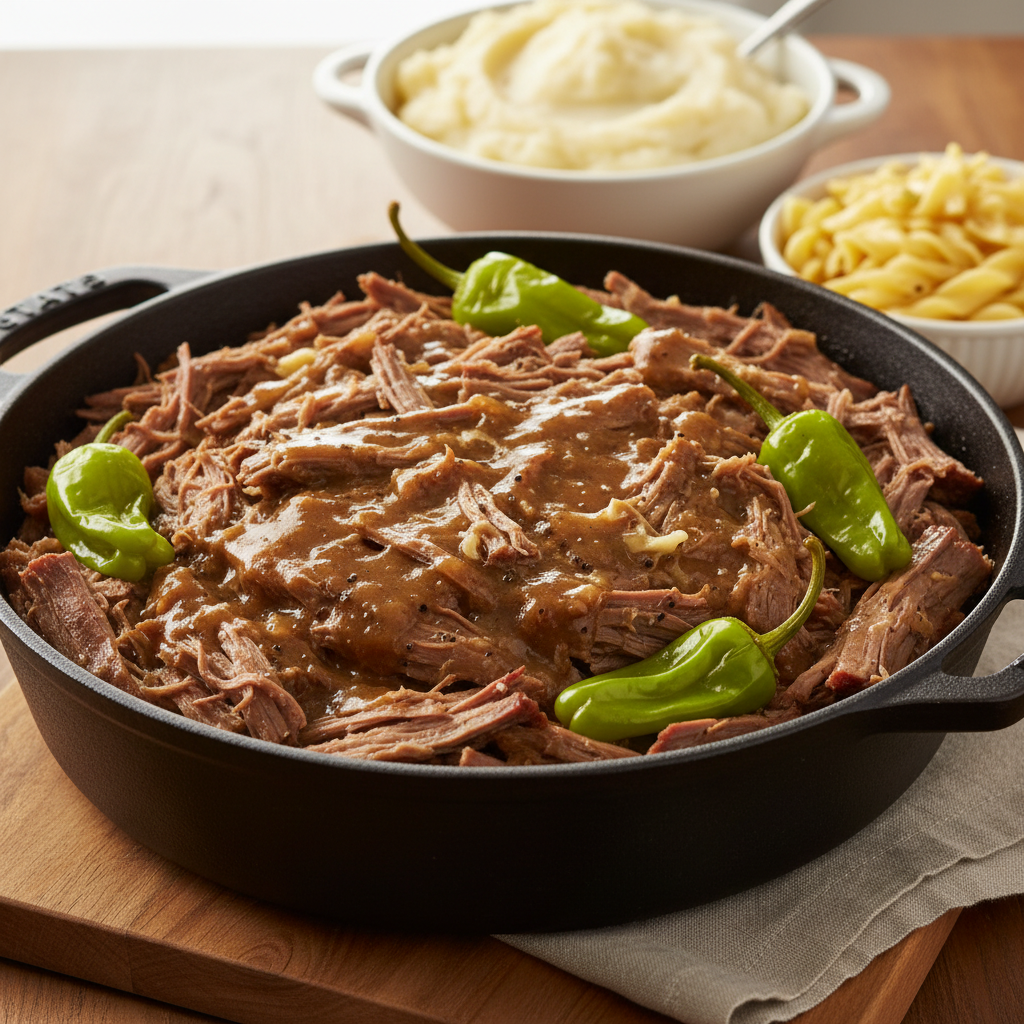
Mississippi Pot Roast is a famously tender and flavorful slow-cooked beef roast, celebrated for its simplicity. It requires just five main ingredients: a beef chuck roast, a packet of ranch seasoning, a packet of au jus gravy mix, a stick of butter, and pepperoncini peppers. The combination results in a savory, tangy, and rich dish that’s incredibly easy for any home cook to prepare.
Finding a dinner recipe with big flavor that doesn’t require a mountain of effort can be a challenge. It’s easy to feel overwhelmed by complex instructions or the struggle to find family-friendly meals everyone will love. If this sounds familiar, meet your new weeknight hero: the Mississippi Pot Roast. This beloved dish is famous for a reason. It’s an incredibly simple dinner recipe that delivers fall-apart tender meat and a rich, savory gravy with very little fuss.
We believe cooking should be enjoyable, not stressful. Delicious meals shouldn’t require gourmet skills or a lengthy ingredient list, which is why we’re so excited to share our ultimate Mississippi Pot Roast recipe. It’s the perfect example of approachable home cooking, transforming a few simple ingredients into an unforgettable meal. More than just an easy recipe, it proves that simple techniques can produce incredibly flavorful results. This dish is perfect for building your confidence in the kitchen and making mealtime stress-free, whether you’re a beginner or an experienced cook looking for a reliable favorite.
Discover why this Mississippi Pot Roast recipe is hailed as one of the easiest and most satisfying family-friendly meals around. We’ll provide step-by-step guidance to help you achieve a perfect, melt-in-your-mouth roast every time. Along the way, we’ll share practical tips, serving suggestions, and delicious variations. Let’s make some magic in your kitchen!
Why Is This the Best Mississippi Pot Roast Recipe?
Are you searching for a dinner that’s packed with rich flavor but requires minimal effort? Our Mississippi Pot Roast recipe is the ultimate choice. We know home cooks want delicious, reliable meals without the stress, and this recipe is designed to make your cooking journey both enjoyable and successful.
Here’s why our Mississippi Pot Roast stands out:
- Unbeatable Simplicity: This truly easy recipe requires just a few pantry staples and can be made in a slow cooker, Instant Pot, or Dutch oven. It fits perfectly into any busy schedule and is ideal for cooks of all skill levels.
- Mouth-Watering Flavor: This pot roast melts in your mouth, offering a perfect balance of savory, tangy, and slightly spicy notes. From the incredible aroma to the last comforting bite, it’s a true delight.
- Consistently Tender Results: Say goodbye to tough, dry roasts. Our simple dinner recipe guarantees fall-apart tender results every single time, giving you confidence in the kitchen.
- Perfect for Any Family: This family-friendly meal is a crowd-pleaser that brings everyone to the table for a hearty and satisfying dinner.
- Stress-Free Cooking: Avoid feeling overwhelmed by complex instructions. Our step-by-step cooking guidance makes the process clear and simple, so you can enjoy your time in the kitchen.
- Versatile & Adaptable: Easily tailor this approachable home cooking dish to your liking. Add vegetables for a complete one-pot meal, or adjust the seasonings to suit your taste.
At Recipesmondial, we are dedicated to helping you cook with confidence, and this Mississippi Pot Roast exemplifies our mission of making flavorful meals easy. Get ready to impress your family and friends with a delicious dinner that requires minimal effort.
What Do You Need for Mississippi Pot Roast?
About the 5 Simple Ingredients
Making a delicious Mississippi Pot Roast is surprisingly simple, requiring just five core ingredients. These common items are available at any grocery store and combine to create a deeply flavorful, comforting meal perfect for any night of the week.
This easy recipe for Mississippi pot roast makes preparing family-friendly meals a breeze. Here’s a closer look at what you’ll need:
- Chuck Roast: The star of this dish is the chuck roast. This humble cut of beef becomes exceptionally tender when slow-cooked. We’ll discuss why it’s the best choice in more detail below.
- Ranch Seasoning Mix: A packet of dry Ranch dressing mix adds a tangy, herbaceous flavor and is one of the unique secrets to this recipe’s success.
- Au Jus Gravy Mix: This seasoning packet provides a rich, savory depth that helps create the wonderful gravy.
- Butter: A stick of unsalted butter melts over the roast as it cooks, adding a luxurious richness and helping to tenderize the meat.
- Pepperoncini Peppers (and their juice!): Don’t be intimidated by the name! These mild, pickled peppers are not spicy. Instead, they provide a tangy, briny counterpoint that adds a delightful brightness to the rich beef. Be sure to include a splash of their juice for extra flavor!
These simple dinner recipes truly shine with minimal effort. You’ll be amazed at the flavor you get from these common ingredients!
Which Cut of Beef is Best?
To achieve the incredibly fall-apart tender roast this recipe is famous for, choosing the right cut of beef is essential. For this beginner-friendly recipe, you’ll want a cut that benefits from long, slow cooking. This method allows the tough connective tissues to break down, resulting in exceptionally juicy and tender meat.
Here are the best cuts of beef for your Mississippi pot roast recipe:
- Chuck Roast: This is, without a doubt, the top choice. Often labeled as “chuck eye roast,” “chuck roll,” or simply “pot roast,” this cut comes from the shoulder. It has excellent marbling (streaks of fat) and plenty of connective tissue. During the slow cooking process, this fat and collagen melt, making the meat incredibly moist and flavorful. Many culinary experts agree that chuck roast is ideal for slow cooking [1].
- Bottom Round Roast: While leaner than a chuck roast, the bottom round is still a good option. It will be slightly less tender, but the long cooking time will yield a delicious result.
- Brisket (Flat or Point): Brisket is another excellent choice for slow cooking. Both the leaner flat cut and the fattier point cut will become wonderfully tender.
When you’re at the grocery store, look for a roast with visible marbling, as this fat ensures a more flavorful and juicy result. A 3- to 4-pound roast is a great size for family-friendly meals and typically serves 4 to 6 people.
How to Make Mississippi Pot Roast Step-by-Step
Creating a truly delicious Mississippi Pot Roast is easier than you think. This classic comfort food delivers incredible flavor with minimal effort. At Recipesmondial, we want you to feel confident in the kitchen, so we provide clear, step-by-step guidance for three popular cooking methods. Each technique yields the same result: a fall-apart tender, savory roast that will become a family favorite.
Crock-Pot / Slow Cooker Instructions
The slow cooker method is a favorite for a reason—it’s the ultimate “set it and forget it” approach. Perfect for busy days, it fills your home with an amazing aroma and guarantees a simple, satisfying dinner is ready when you are.
- Sear the Beef (Optional, but Recommended): Heat a tablespoon of olive oil in a large skillet over medium-high heat. Sear all sides of the chuck roast until beautifully browned. This step locks in flavor and creates a richer final dish.
- Place in Slow Cooker: Transfer the seared chuck roast to your slow cooker. If you skipped searing, simply place the raw roast inside.
- Add Seasonings: Sprinkle one packet of ranch seasoning mix, followed by one packet of au jus gravy mix, evenly over the beef.
- Add Butter and Peppers: Place a stick of unsalted butter directly on top of the roast. Arrange about 1/4 cup of pepperoncini peppers around the beef, adding a splash of their juice for extra tang.
- Cook Low and Slow: Cover and cook on LOW for 6-8 hours or on HIGH for 3-4 hours. The beef is done when it’s incredibly tender and pulls apart easily with a fork.
- Shred and Serve: Carefully remove the roast from the slow cooker and place it on a cutting board. Use two forks to shred the beef, then return it to the cooking liquid. Stir well to coat and serve warm with your favorite sides.
Recipesmondial Tips for Slow Cooker Success:
- No Extra Liquid: Resist the urge to add water or broth. The roast and butter will release plenty of their own juices, creating a rich, flavorful sauce.
- Butter Boost: The butter is essential for adding richness and helping to tenderize the beef, so don’t skip it!
- Don’t Peek: Keep the lid closed while cooking. Opening it releases heat and steam, which can extend the cooking time.
Instant Pot Instructions
When you’re short on time, the Instant Pot is your best friend. This method delivers the same fork-tender results of a slow-braised roast in a fraction of the time, making it perfect for a last-minute, flavorful meal.
- Sear the Beef: Press the “Sauté” button on your Instant Pot and add a tablespoon of olive oil. Once hot, sear all sides of the chuck roast until browned. Remove the beef, set it aside, and press “Cancel.”
- Deglaze the Pot: Pour in 1/2 cup of beef broth or water. Use a wooden spoon to scrape up any browned bits from the bottom. This step is crucial for building flavor and preventing a “Burn” warning.
- Add Remaining Ingredients: Return the seared roast to the Instant Pot. Sprinkle both the ranch seasoning and au jus gravy mixes over the top. Add the stick of unsalted butter, then arrange 1/4 cup of pepperoncini peppers and a splash of their juice around the roast.
- Pressure Cook: Secure the lid and ensure the venting knob is in the “Sealing” position. Select “Manual” or “Pressure Cook” on High Pressure and set the timer for 60 minutes.
- Natural Release: When the cooking time is complete, allow the pressure to release naturally for at least 15 minutes. This important step helps keep the meat tender and juicy. Afterward, carefully turn the venting knob to release any remaining pressure before opening the lid.
- Shred and Serve: Remove the cooked roast from the pot and shred it with two forks. Return the shredded beef to the flavorful cooking liquid and stir to coat. Enjoy your quick, delicious roast!
Recipesmondial Tips for Instant Pot Perfection:
- Prevent Burn Notices: Always deglaze the pot thoroughly after searing to remove any food particles that could trigger the “Burn” message.
- Natural Release is Key: Don’t rush the natural release; it allows the meat fibers to relax, resulting in incredibly tender beef.
- Liquid Amount: While the Instant Pot requires some liquid to come to pressure, don’t add too much. The beef will release plenty of its own juices as it cooks.
Dutch Oven / Oven-Braised Instructions
For a traditional, deeply flavorful roast, the Dutch oven is the perfect tool. This classic oven-braising method develops rich, complex flavors and results in incredibly tender meat, filling your kitchen with the comforting aroma of a slow-cooked meal.
- Preheat Oven & Sear Beef: Preheat your oven to 300°F (150°C). On your stovetop, heat a tablespoon of olive oil in a large Dutch oven over medium-high heat. Sear all sides of the chuck roast until deeply browned.
- Add Seasonings and Liquid: Briefly remove the roast from the pot. Pour in 1/2 cup of beef broth or water and scrape up any browned bits from the bottom. Return the roast to the pot and sprinkle the ranch and au jus mixes over the top.
- Add Butter and Peppers: Place the stick of unsalted butter on top of the roast. Arrange 1/4 cup of pepperoncini peppers around the beef and pour in a splash of their tangy juice.
- Braise in the Oven: Cover the Dutch oven with its lid and transfer it to the preheated oven. Braise for 3 to 4 hours, or until the beef is fork-tender and shreds easily. The exact time will depend on the size of your roast.
- Rest and Shred: Remove the Dutch oven from the oven and let the roast rest in the pot, covered, for 10-15 minutes. This allows the juices to redistribute throughout the meat. Then, remove the roast, shred it using two forks, and stir it back into the sauce.
- Serve: Spoon the flavorful Mississippi pot roast and its sauce onto plates alongside your favorite hearty sides.
Recipesmondial Tips for Oven-Braised Success:
- Tight-Fitting Lid: A tight-fitting lid is crucial for oven braising, as it traps moisture and flavor to ensure a tender, juicy result.
- Low and Slow: Don’t rush the oven time. The low, slow heat is what breaks down the tough meat fibers, yielding that signature fall-apart texture.
- Check for Tenderness: The best way to know if the roast is done is to test it with a fork. If it still feels tough, it needs more time in the oven.
Tips for Perfect, Fall-Apart Tender Roast Every Time
The secret to an incredible Mississippi Pot Roast is achieving a melt-in-your-mouth, fall-apart tender texture—and it’s easier than you think. By following a few simple tips, you can confidently transform a humble cut of beef into a spectacular meal. Here’s how to get it right every time for a delicious, stress-free family dinner.
-
Start with the Right Cut
For a truly tender pot roast, start with a chuck roast. Also known as chuck eye or chuck shoulder, this cut has the ideal amount of fat and connective tissue. During slow cooking, these elements break down into rich, flavorful gelatin, making the beef incredibly tender.
-
Sear for Deeper Flavor
Never skip the searing step. Browning the roast in a hot pan before slow cooking creates a deeply flavorful crust. This simple action adds incredible depth and complexity to the finished dish by developing rich, savory notes.
-
Go Low and Slow
Patience is crucial for a tender mississippi pot roast. No matter your cooking method—slow cooker, Instant Pot, or Dutch oven—the key is to cook at a low temperature for a long time. This gentle, slow process allows the tough connective tissues to break down, resulting in that signature fall-apart texture. Rushing this step will only lead to tough meat.
-
Maintain Enough Liquid
Make sure there is always enough liquid in the pot. The combination of broth, pepperoncini juice, and butter not only keeps the roast moist but also creates the base for an incredible sauce. Without enough liquid, the roast will become dry and tough, as the braising liquid is essential for tenderizing the meat.
-
Keep it Covered
Keep the pot tightly covered throughout the cooking process, whether you’re using a slow cooker, Dutch oven, or Instant Pot. This traps steam and moisture, which helps tenderize the meat evenly while preventing the surface from drying out.
-
Don’t Overcrowd the Pot
Give the meat enough space. If you’re cooking a large mississippi roast, use a pot that’s big enough to hold it comfortably. Overcrowding prevents heat from circulating evenly, causing the meat to steam rather than braise. Proper spacing ensures every part of the roast cooks perfectly.
-
Let it Rest
After cooking, don’t shred the meat right away. Let the mississippi pot roast recipe rest for 10-15 minutes out of the pot. This crucial step allows the juices to redistribute throughout the meat, making every bite more tender and moist. It’s a simple action that makes a huge difference.
What to serve with Mississippi pot roast?
Classic Side Dishes
Once your flavorful Mississippi pot roast is ready, you’ll want to pair it with sides that complement its rich flavors. These classic choices are easy to prepare and perfect for soaking up the delicious gravy, helping you create a satisfying, family-friendly dinner.
- Creamy Mashed Potatoes: A timeless choice, fluffy mashed potatoes are ideal for absorbing the savory pot roast juices for a truly comforting combination.
- Fluffy White Rice: Simple and versatile, white rice provides a neutral base that lets the roast’s bold flavors shine. It’s also an incredibly easy side for any cook to master.
- Buttery Egg Noodles: Tender egg noodles tossed with a bit of butter are perfect for catching every drop of the incredible sauce, making for an especially hearty meal.
- Classic Cornbread: Slightly sweet cornbread beautifully balances the savory roast and adds a delightful texture to your plate. It’s a much-loved family favorite.
- Steamed Green Beans or Asparagus: For a fresh, crisp counterpoint, add steamed vegetables. They bring a touch of green that lightens the meal and are quick and simple to cook.
Low-Carb Options
If you’re looking for lighter, low-carb alternatives, the Mississippi pot roast itself is a fantastic start. Because the beef is naturally low in carbohydrates, it’s easy to build a healthy, balanced meal around it. These simple sides keep the focus on flavor without adding extra carbs.
- Cauliflower Mash: For an excellent low-carb substitute for mashed potatoes, try cauliflower mash. Simply steam or boil cauliflower, then mash it with butter and seasoning for a similar creamy texture.
- Zucchini Noodles (Zoodles): Light and refreshing, zucchini noodles absorb the roast’s juices without adding significant carbs. For a quick side, simply sauté them until tender.
- Roasted Asparagus or Broccoli: Roasting vegetables like asparagus and broccoli brings out their natural sweetness. A simple drizzle of olive oil, salt, and pepper is all you need for a flavorful, healthy side.
- Garlic Green Beans: Sautéing fresh green beans with garlic creates a flavorful, low-carb side dish that adds a vibrant crunch to your plate.
- Simple Side Salad: A fresh green salad with a light vinaigrette offers a crisp, easy contrast to the rich roast. It’s a perfect way to add more fresh vegetables to your meal.
Recipe Variations & Substitutions
Making it with Chicken or Pork
While classic Mississippi Pot Roast uses beef, the recipe is versatile. The rich, savory, and tangy sauce also pairs wonderfully with other proteins, like chicken and pork. It’s a great way to enjoy this flavorful meal even if you’re out of beef or simply want to try something new.
Here are some easy options:
- Chicken: Use boneless, skinless chicken breasts or thighs for a delicious alternative. Since chicken cooks faster than beef, you’ll need to adjust the cooking time to prevent it from drying out. Chicken thighs are a great choice as they are more forgiving and stay juicy.
- Pork: A pork shoulder (Boston butt) or pork loin are excellent substitutes. Pork shoulder will give you a fall-apart texture similar to beef chuck roast, making it perfect for shredding. Pork loin is a leaner option that cooks more quickly.
Follow the same cooking method for any protein you choose. Just be sure to adjust the cooking time, as chicken and pork loin cook faster than beef. The goal is to achieve tender, flavorful meat every time.
Adding Potatoes and Carrots
Turn your Mississippi Pot Roast into a complete one-pot meal by adding vegetables. Cooking them directly with the meat creates a hearty dinner perfect for busy nights and simplifies cleanup.
Consider these simple additions:
- Potatoes: Small new potatoes, red potatoes, or Yukon Gold potatoes are ideal. Cut larger potatoes into 1-2 inch chunks. These starchy veggies soak up all the wonderful flavors of the roast.
- Carrots: Whole baby carrots or large carrots cut into 1-inch pieces add sweetness and color. They also hold their shape well during slow cooking.
- Onions: Quartered onions or pearl onions can be added for an extra layer of savory flavor.
For the best texture, add vegetables to the slow cooker during the last 1.5 to 2 hours of cooking. If you add them at the beginning, they can become too soft. This timing ensures they cook until perfectly tender while still holding their shape.
Making Your Own Seasoning Mix
Making your own seasoning mix is a great way to customize the flavor of your pot roast. It allows you to control the ingredients, especially sodium, and adjust the taste to your preference.
Here’s a simple, homemade alternative to a ranch seasoning packet:
Homemade “Ranch-Style” Seasoning Mix:
Combine these dried spices in a small bowl:
- 1 tablespoon dried parsley
- 1 teaspoon garlic powder
- 1 teaspoon onion powder
- ½ teaspoon dried dill
- ½ teaspoon salt (adjust to your preference)
- ¼ teaspoon black pepper
Tips for your homemade mix:
- Adjust Flavors: Feel free to increase or decrease any spice to match your taste. For example, add more garlic powder for a stronger garlic kick.
- Add a Spicy Kick: Add a pinch of cayenne pepper for a little heat.
- Storage: Make a larger batch and store it in an airtight container to have on hand for future meals.
Using a homemade seasoning mix gives you complete control over what goes into your meal, making it a perfect option for a family-friendly dinner.
How to Store and Reheat Leftovers
This Mississippi Pot Roast recipe is so easy and delicious, you might not have any leftovers! But if you do, don’t let that flavorful meat go to waste. Properly storing and reheating your pot roast ensures every bite is just as tender and tasty as the first. It’s a fantastic option for meal prep or quick family dinners throughout the week.
Storing Your Delicious Mississippi Pot Roast
Keeping your leftover Mississippi Pot Roast fresh is simple. Follow these guidelines to enjoy it safely for days to come.
In the Refrigerator:
- Cool It Down Quickly: To ensure food safety, let the pot roast cool to room temperature within two hours of cooking.
- Use Airtight Containers: Transfer the roast and its juices into shallow, airtight containers. This will protect it from air and other food odors.
- Refrigerate Promptly: Place the containers in the refrigerator. For best quality and safety, eat the leftovers within 3 to 4 days [2].
In the Freezer (For Longer Storage):
For longer storage, freezing is an excellent choice. It’s also perfect for meal prepping and planning ahead.
- Portion It Out: Divide the cooled pot roast into individual or family-sized servings for easy reheating later.
- Use Proper Storage: Place portions in heavy-duty freezer bags or freezer-safe containers. If using bags, press out as much air as possible to prevent freezer burn.
- Label and Date: Don’t forget to label your containers with the contents and the date.
- Store Safely: Your Mississippi Pot Roast will keep in the freezer for up to 3 months.
- Thaw Before Reheating: For best results, thaw the frozen pot roast overnight in the refrigerator. You can also use the defrost setting on your microwave if you’re short on time.
How to Reheat Mississippi Pot Roast
The key to reheating pot roast is to keep it from drying out. Follow these methods to restore its original flavor and tenderness.
In the Oven (Recommended Method):
Using the oven is the best way to keep the meat moist and tender, just like when it was first cooked.
- Preheat your oven to 300°F (150°C).
- Place the thawed pot roast and its juices in an oven-safe dish. If needed, add a splash of beef broth to add moisture.
- Cover the dish tightly with aluminum foil to trap steam and ensure even heating.
- Heat for 20–30 minutes, or until the roast is warmed through. The time will vary based on the portion size.
On the Stovetop (For Smaller Portions):
This is a quick and effective method, especially for smaller amounts of pot roast.
- Place the pot roast and its juices into a saucepan or skillet.
- Add a tablespoon or two of beef broth or water to create steam.
- Cover and heat over medium-low, stirring occasionally to prevent sticking.
- Once it reaches a gentle simmer, it’s ready to serve. This gentle heating keeps the meat from drying out.
In the Microwave (Quickest Method):
While the microwave is the fastest option, be careful not to overcook the meat.
- Place a single serving of pot roast and gravy in a microwave-safe dish.
- Cover the dish loosely to allow steam to vent while keeping the meat moist.
- Heat on medium power (50%) for 1–2 minutes to start.
- Stir the pot roast, then continue heating in 30-second intervals until it’s warmed through.
Tips for Using Leftover Pot Roast
Leftover Mississippi Pot Roast is incredibly versatile and can be transformed into brand new meals. Here are a few ideas:
- Always Add Moisture: No matter how you reheat it, always include some of the original cooking liquid or gravy. This is the key to preventing dry meat.
- Shred for New Meals: Shred the leftover meat to use in sandwiches, tacos, quesadillas, or sliders. It’s also a fantastic topping for loaded baked potatoes or nachos.
- Avoid Overheating: Gently reheat the roast only until it is warmed through. Overcooking will make the meat tough and dry, ruining its signature fall-apart texture.
Frequently Asked Questions About Mississippi Pot Roast
Is Mississippi pot roast spicy?
Many home cooks wonder about the spice level of Mississippi pot roast. The good news is that it’s generally not spicy. In fact, this dish is wonderfully flavorful and very mild.
The pepperoncini peppers are the key ingredient that causes this confusion. However, these peppers add a tangy, zesty kick rather than true heat. They provide a bright, acidic counterpoint to the rich beef, similar to a gourmet pickle. The mild brine from the jar also contributes delicious flavor without adding heat.
So, you can confidently enjoy this comforting dish. It’s a perfect family-friendly meal, even for those sensitive to spice.
What are the ingredients for Mississippi Pot Roast?
The beauty of the classic Mississippi pot roast recipe is its simplicity. You only need five core ingredients to create an incredibly rich and tender dish:
- A large cut of beef roast: A chuck roast is the typical choice, as it becomes wonderfully fall-apart tender when slow-cooked.
- Ranch seasoning mix: This dry packet adds a savory, herb-infused flavor.
- Au jus gravy mix: This dry packet adds a deep, beefy flavor and helps create a delicious sauce.
- Butter: Unsalted butter is often used. It melts into the roast, adding incredible richness and moisture.
- Pepperoncini peppers (and some of their brine): These provide the signature tangy, zesty flavor that balances the rich meat.
That’s it! With these easy-to-find ingredients, you are well on your way to a simple and flavorful meal.
Can I make this recipe without pepperoncini peppers?
Yes, you can certainly make Mississippi pot roast without pepperoncini peppers, and it will still be delicious. While they are a signature ingredient, they mainly add a unique tangy note that cuts through the richness of the beef and butter.
If you leave them out, the flavor profile will be richer and more savory, but it will lack that distinct zesty tang. If you’re looking for a similar acidic balance, consider these easy substitutions:
- A splash of apple cider vinegar: This can offer a mild tang. Use sparingly, starting with 1-2 tablespoons.
- A squeeze of lemon juice: Add this toward the end of cooking for a touch of brightness.
- Dill pickle slices or relish: If you enjoy dill, a few slices or a spoonful of relish can mimic some of the tang and brininess.
Ultimately, part of the fun is making this beginner-friendly recipe your own. Feel free to adjust it based on your family’s preferences and what you have on hand.
Why is my pot roast tough?
It’s disappointing when your pot roast doesn’t turn out fall-apart tender. This is a common issue, but a tough roast is usually caused by a few key factors. Understanding them will help you achieve perfect results every time.
Here are the main reasons why your pot roast might be tough:
- Not enough cooking time: This is the most common reason. Chuck roast, the preferred cut, is full of tough connective tissue. It needs a long, slow cooking time for this tissue to break down into tender gelatin. If you cut the cooking time short, the meat will remain tough. Aim for at least 6-8 hours on low in a slow cooker or 3-4 hours in a Dutch oven.
- Too high heat: Cooking the roast at too high a temperature can make the muscle fibers contract, resulting in dry, tough meat. The secret to a juicy pot roast is cooking it “low and slow.”
- The wrong cut of beef: While other cuts can work, chuck roast (also called shoulder roast or blade roast) is ideal. Leaner cuts, like sirloin or round roast, have less fat and connective tissue, so they are more likely to dry out and become tough. For best results, always choose a well-marbled chuck roast.
- Not enough liquid: Although this recipe doesn’t require much added liquid, there needs to be enough moisture in the pot to steam and braise the meat. The butter and pepperoncini brine usually provide plenty.
Don’t get discouraged! With these tips, you can cook confidently and enjoy wonderfully tender pot roast. Remember, patience is the key ingredient.