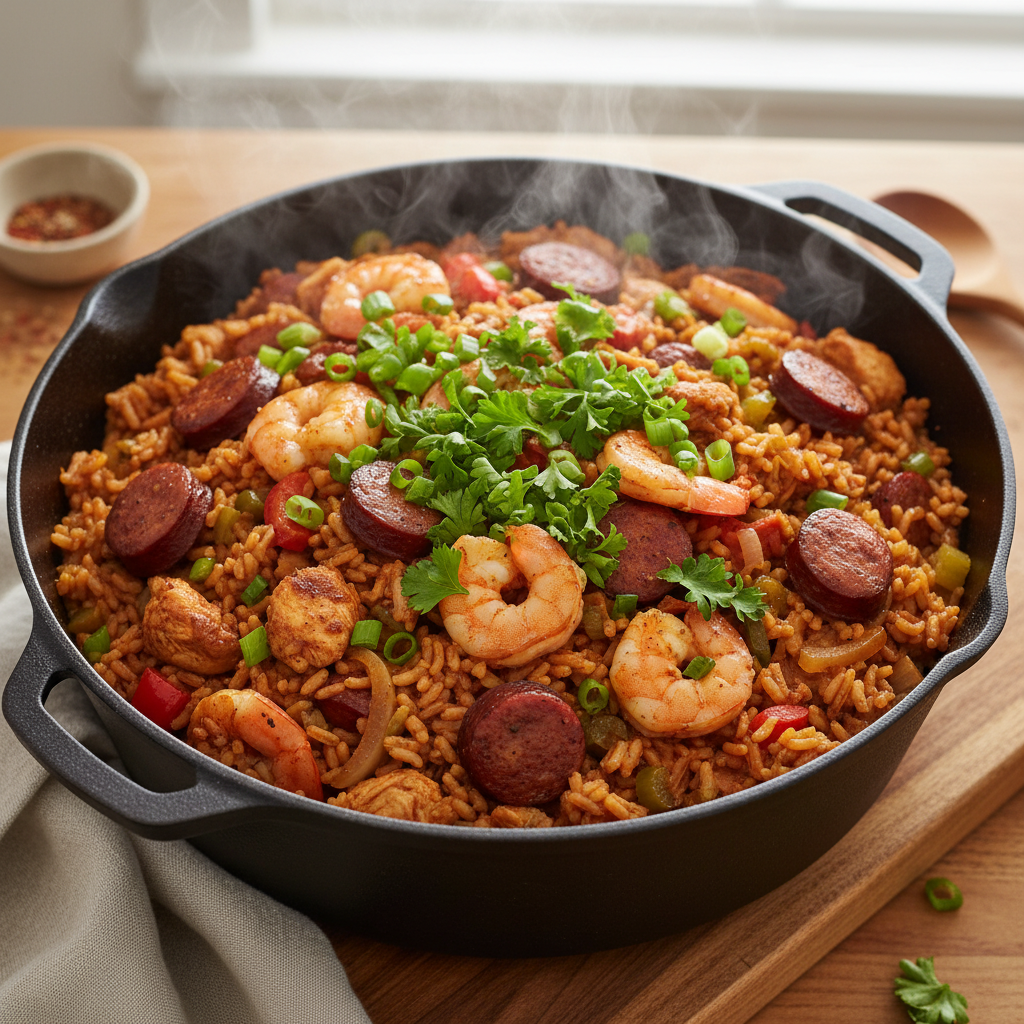
Jambalaya is a popular Louisiana comfort food dish with Spanish, French, and West African influences, consisting of meat, vegetables, and rice cooked together in one pot. The core ingredients typically include sausage (like andouille), chicken or pork, and seafood such as shrimp, all seasoned with a mix of onions, bell peppers, and celery known as the ‘holy trinity’.
Craving a hearty, flavorful meal for the whole family but feel overwhelmed by complex recipes? Imagine serving a vibrant, comforting dish that tastes like it took hours, yet comes together easily in just one pot. That’s the magic of a truly great jambalaya!
At Recipesmondial, we believe cooking should be stress-free and rewarding. Our easy jambalaya recipe is designed for beginners, offering clear, step-by-step guidance to build your confidence in the kitchen. We’ll show you how to combine everyday ingredients into an incredible meal, proving that delicious, family-friendly meals don’t have to be complicated.
Get ready to discover why this simple jambalaya recipe will become a new favorite in your kitchen. We’ll guide you through every step, from selecting the right ingredients to mastering the perfect simmer, so you can create an authentic, mouthwatering dish with amazing results every time.
Why You’ll Love This Simple Jambalaya Recipe
Ready to find your new favorite weeknight meal? This easy jambalaya recipe is your path to stress-free, delicious cooking. We believe cooking should be enjoyable, not a chore, and this dish is the perfect proof.
Here’s why you’ll absolutely love making this simple jambalaya:
- It’s a One-Pot Wonder: Forget about a sink full of dishes! This flavorful meal comes together in a single pot, meaning less cleanup and more time to enjoy your dinner. It’s the ultimate easy recipe for busy evenings.
- Perfect for Beginners: We’ve broken down the recipe into simple, clear instructions—without any intimidating culinary jargon. This approachable home cooking guide is designed to build your confidence in the kitchen.
- Packed with Flavor: Get incredible taste without complicated techniques. Each bite of this jambalaya offers a satisfying blend of savory spices, tender meats, and perfectly cooked rice.
- A Family Favorite: This hearty and comforting meal is sure to please everyone at the table. Kids and adults alike will devour this dish, putting an end to mealtime struggles.
- Quick and Convenient: Get a delicious, homemade dinner on the table in no time. This recipe is perfect for anyone seeking quick meals without sacrificing flavor, making weeknight decisions easy.
- Builds Your Cooking Skills: Our step-by-step guidance helps you master basic techniques while creating an impressive dish. You’ll grow your kitchen confidence and see just how simple cooking can be.
This simple jambalaya is more than just a recipe; it’s a way to cook confidently and eat well. It shows you how to transform basic ingredients into a delicious, memorable meal. Get ready to enjoy stress-free cooking and bring incredible flavor to your table!
What Ingredients Do You Need for Jambalaya?
The ‘Holy Trinity’ of Cajun Cooking
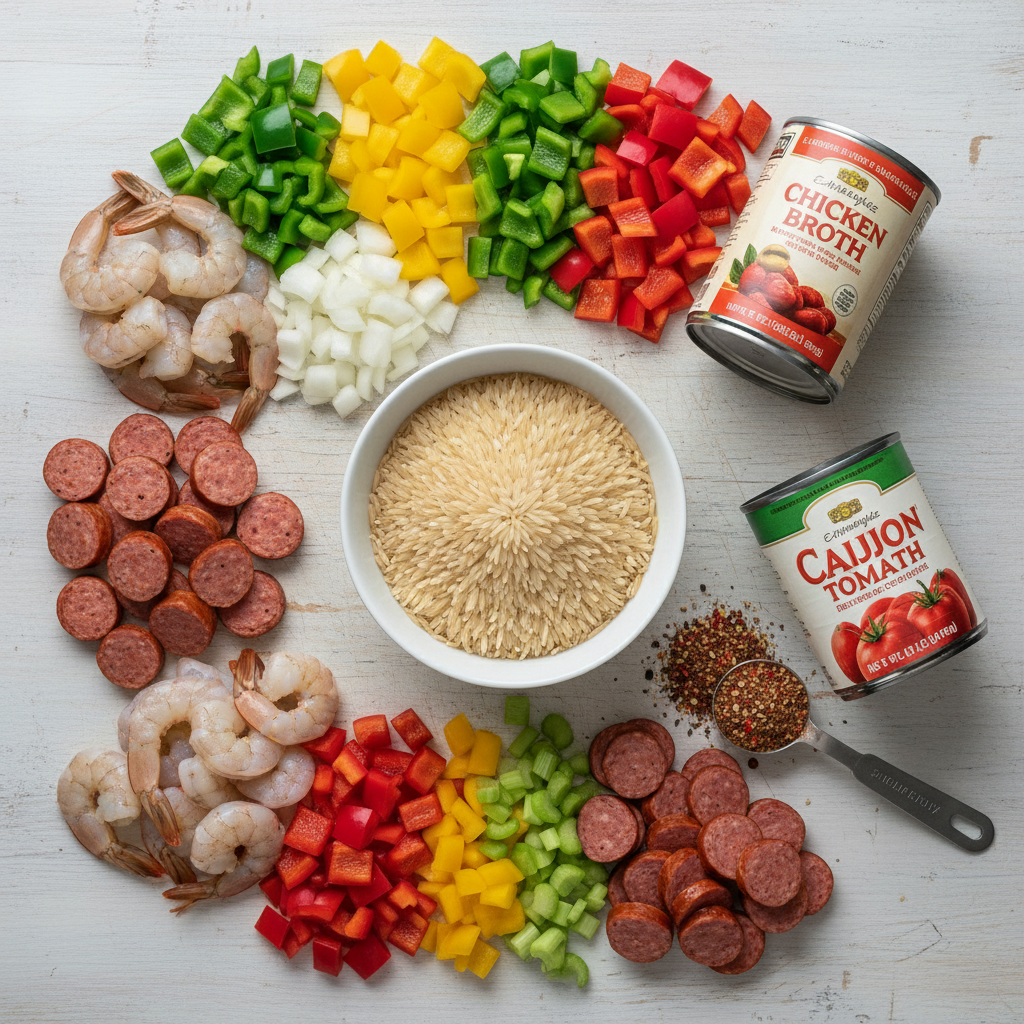
Every authentic jambalaya starts with a foundational blend of vegetables known as the “Holy Trinity” in Cajun and Creole cooking. This trio builds the base flavor for countless dishes, including this easy jambalaya.
The Holy Trinity consists of three simple, yet powerful, ingredients:
- Onion: Adds sweetness and depth to the dish.
- Celery: Provides a subtle, earthy flavor and texture.
- Green Bell Pepper: Brings a fresh, slightly bitter note that balances the richness.
These vegetables are diced and sautéed together, a process that builds a rich aroma and taste. This is the essential first step for developing that incredible jambalaya flavor. Best of all, you can find these common ingredients in any grocery store, making this a delicious and accessible meal.
Choosing Your Protein: Sausage, Chicken, and Shrimp
One of the best parts about jambalaya is its versatility. Feel free to use a combination of proteins or stick to just one, making it an adaptable dinner recipe. Our beginner-friendly version uses a classic mix for a truly satisfying meal.
Here are the proteins we recommend for a flavorful jambalaya:
- Andouille Sausage: This traditional, smoked sausage adds a wonderful spicy and smoky depth. Look for a good quality brand at your local butcher or supermarket. If you cannot find Andouille, smoked kielbasa or a spicy Italian sausage makes a great substitute.
- Chicken: Boneless, skinless chicken thighs are perfect because they stay moist and tender during cooking. Cut them into bite-sized pieces to ensure they cook evenly. While chicken breasts can also be used, be careful not to overcook them, as they can become dry. Chicken makes the dish extra hearty.
- Shrimp: Add raw, peeled, and deveined shrimp near the end of cooking. This timing is key to ensuring they cook quickly and remain succulent. Both fresh and frozen shrimp work well; just be sure to thaw frozen shrimp completely before adding them to the pot. The shrimp provides a delicious seafood element that makes the jambalaya feel extra special.
Feel free to adjust the protein amounts to suit your budget or preferences. For a quicker meal, you can use just the sausage and omit the other proteins. This flexibility makes jambalaya a great, stress-free option for dinner.
The Best Rice and Spices for Authentic Flavor
The right rice and spice blend are crucial for transforming simple ingredients into a deeply flavorful jambalaya. Following these tips will help ensure your dish turns out perfectly every time.
Getting the Rice Right
Choosing the right rice is key to preventing a mushy jambalaya. Long-grain white rice is the standard choice because it absorbs the rich broth while still holding its shape, ensuring each grain remains separate and flavorful [1].
- Long-Grain White Rice: This is the non-negotiable choice for authentic jambalaya. While varieties like Jasmine or Basmati can also work, the key is to always rinse your rice before cooking. Rinsing removes excess starch and helps prevent the final dish from becoming sticky.
Avoid short-grain or medium-grain rice varieties, as they release too much starch and can make your jambalaya sticky and clumpy.
Spices for that Signature Taste
The spice blend brings all the flavors together and gives jambalaya its characteristic warmth and zest. You can use a pre-made Cajun seasoning or create your own blend.
Essential spices and aromatics include:
- Cajun Seasoning: A good quality blend is your shortcut to flavor. It typically contains paprika, garlic powder, onion powder, cayenne pepper, and dried herbs.
- Garlic: Fresh minced garlic adds a pungent, aromatic base.
- Dried Thyme: Earthy and slightly floral, it’s a classic Cajun herb.
- Bay Leaves: These infuse the dish with a subtle, aromatic background flavor. Remember to remove them before serving.
- Paprika: Sweet paprika adds color and a mild, peppery flavor. For a smokier taste, opt for smoked paprika.
- Cayenne Pepper: For adjustable heat. Add more or less depending on your preference.
- Salt and Black Pepper: Essential for seasoning the dish to perfection. Taste and adjust as you go.
Building these layers of flavor is what makes home-cooked jambalaya so rewarding. These spices are readily available in most grocery stores and are key to creating the dish’s signature taste. Mastering this blend will give you the confidence to tackle many other classic Cajun recipes.
How to Make Jambalaya Step-by-Step
Step 1: Brown the Sausage and Chicken
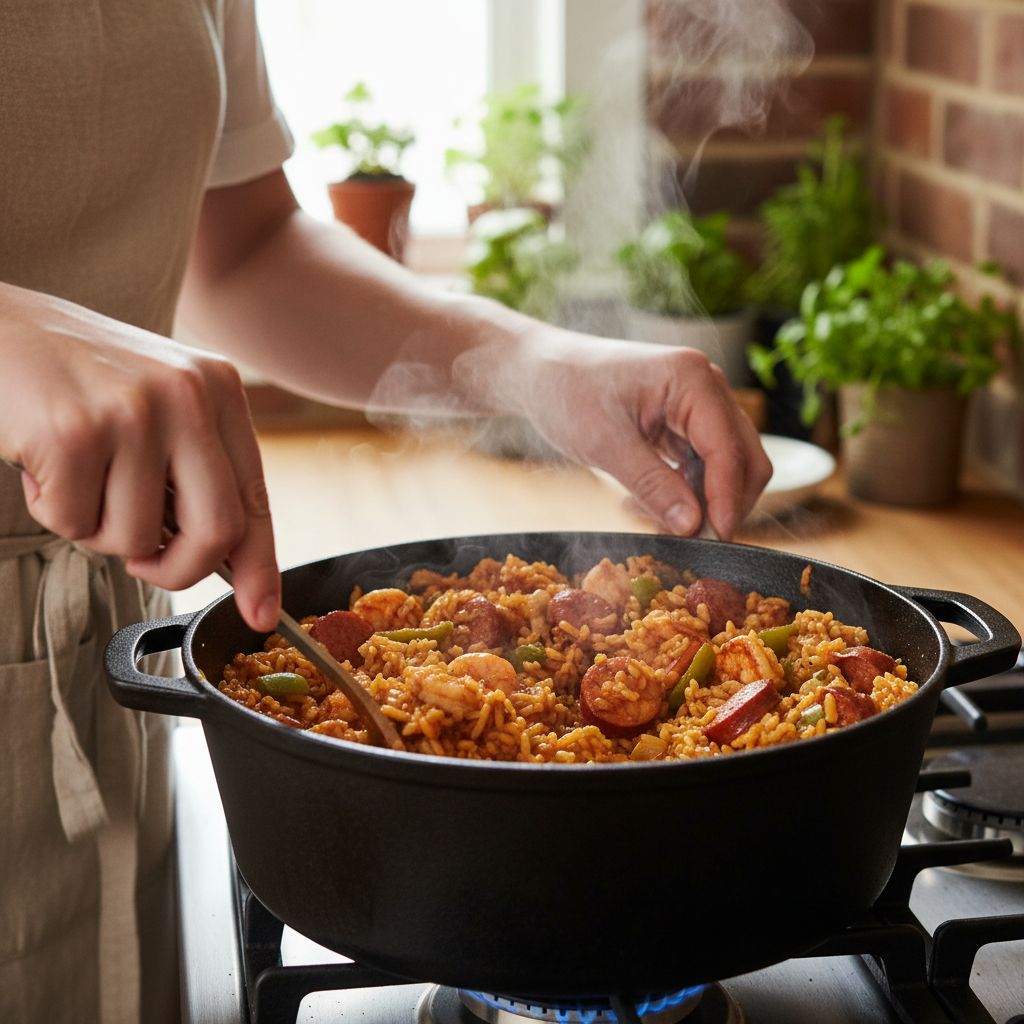
To create a deep, savory foundation for your jambalaya, start by browning the sausage and chicken. This crucial first step unlocks rich flavors and builds complexity with minimal effort.
Don’t be intimidated; this simple technique is the secret to a flavorful base for any one-pot meal.
- Heat a large, heavy-bottomed pot or Dutch oven over medium-high heat.
- Add 1 tablespoon of olive oil (if needed, depending on your sausage).
- Place the sliced smoked sausage (like Andouille) into the hot pot.
- Cook for 5-7 minutes, stirring occasionally, until it’s nicely caramelized.
- Remove the sausage with a slotted spoon and set it aside on a plate.
- Add the diced chicken to the same pot.
- Brown the chicken on all sides, which usually takes 5-8 minutes.
- Ensure the chicken is cooked through with no pink remaining.
- Remove the chicken and add it to the plate with the sausage.
Tip for Success: For the best flavor, don’t overcrowd the pot. Cook the meats in batches if needed to ensure they brown properly instead of steaming.
Step 2: Sauté the Vegetables
Next, build aromatic depth with the “Holy Trinity” of Cajun cooking: onion, bell pepper, and celery. This trio is a cornerstone of flavor in many authentic global comfort foods.
This straightforward step transforms simple ingredients into the heart of your jambalaya, making it a beginner-friendly way to build a delicious base.
- Reduce the heat to medium.
- Add the remaining 1 tablespoon of olive oil to the pot, if the pot is dry.
- Stir in 1 large chopped onion, 1 large chopped green bell pepper, and 2 chopped celery stalks.
- Cook for 8-10 minutes, until the vegetables soften and become translucent.
- As you stir, scrape up any browned bits from the bottom of the pot. These bits add immense flavor.
- Add 3 cloves of minced garlic during the last minute of cooking.
- Stir constantly for that final minute to prevent the garlic from burning.
Substitution Idea: No green bell pepper? Red or yellow peppers work wonderfully, offering a slightly sweeter flavor that’s perfect for family-friendly meals.
Step 3: Toast the Spices and Add Liquids
Awaken the spices by toasting them directly in the pot. This simple technique deepens their flavor and makes your jambalaya incredibly fragrant.
Pouring in the liquids immediately after toasting allows all the flavors to meld perfectly, creating a well-balanced dish.
- Sprinkle 2 teaspoons of Creole seasoning (or Cajun seasoning), 1 teaspoon of dried thyme, and ½ teaspoon of black pepper over the sautéed vegetables.
- Stir for about 1 minute until the spices become fragrant.
- Pour in 1 (14.5 ounce) can of diced tomatoes with their juices.
- Add 4 cups of chicken broth to the pot.
- Stir everything together, scraping any final bits from the bottom.
- Bring the mixture to a gentle simmer.
Meal Prep Tip: To save time on a busy weeknight, chop your vegetables ahead of time and store them in an airtight container in the fridge.
Step 4: Cook the Rice
Now, it’s time to bring the dish together. By cooking the rice directly in the seasoned broth, you’ll infuse every single grain with flavor. Following these steps will ensure perfect results.
If you’re worried about sticky or undercooked rice, don’t be. These clear instructions are designed to guarantee a great texture.
- Add 2 cups of uncooked long-grain white rice to the simmering liquid.
- Stir gently just once to combine, ensuring the rice is fully submerged.
- Return the browned sausage and chicken to the pot.
- Bring the liquid back to a simmer.
- Cover the pot with a tight-fitting lid.
- Reduce the heat to low.
- Cook for 20-25 minutes. Do not lift the lid during this time.
- After 20-25 minutes, all the liquid should be absorbed by the rice.
Common Mistake to Avoid: Avoid stirring the rice as it cooks. Stirring releases starch, which can make the jambalaya gummy. For the best texture, let it simmer undisturbed.
Step 5: Add the Shrimp and Finish
In this final step, you’ll add shrimp for a burst of fresh seafood flavor. Since shrimp cooks very quickly, adding it at the end ensures it will be perfectly tender, not rubbery.
With this finishing touch, your delicious, family-friendly meal is just moments away from the table.
- After the rice has cooked for 20-25 minutes, remove the pot from the heat.
- Immediately stir in 1 pound of peeled and deveined raw shrimp.
- Replace the lid securely.
- Let the jambalaya stand, covered, for another 5-7 minutes.
- The residual heat from the pot will cook the shrimp to pink perfection.
- Uncover and gently fluff the jambalaya with a fork.
- Garnish with fresh chopped parsley or green onions.
- Serve your magnificent jambalaya immediately.
Flavorful Finish: For an extra kick, finish with a dash of your favorite hot sauce, like Tabasco or Crystal. It’s an optional but delicious addition for anyone who enjoys a bit of heat.
Expert Tips for the Perfect Jambalaya
Recipe Variations and Substitutions
Jambalaya is a wonderfully adaptable dish, making it a creative cooking experience. You can easily adjust the recipe to fit your pantry, preferences, or dietary needs. These simple tweaks will help you cook with confidence.
- Protein Power: Experiment with your protein choices. For a lighter version, use diced boneless, skinless chicken breast. For a vegetarian option, replace the meat with kidney beans, black beans, or chickpeas. Plant-based sausages also work well, providing a similar texture and flavor.
- Spice Level Swaps: Control the heat by adjusting the cayenne pepper to your liking. Reduce or omit it for a milder jambalaya. For those who like more spice, add a dash of hot sauce to individual servings.
- Veggie Boosts: Feel free to add more vegetables to this recipe. Sliced bell peppers of different colors add sweetness and vibrant appeal. You can also stir in a handful of fresh spinach at the very end; it will wilt perfectly into the hot rice. [2]
- Broth Choices: Opt for low-sodium chicken or vegetable broth to control the final saltiness. If you have homemade broth, use it for an even deeper flavor.
- Dietary Friendly: This jambalaya recipe is naturally gluten-free, but always double-check your sausage and broth labels to ensure they are certified. This makes it an easy meal solution for those with gluten sensitivities.
How to Store and Reheat Leftovers
One of the best things about jambalaya is the leftovers—it often tastes even better the next day! This makes it perfect for meal prep and stress-free weekday lunches.
- Refrigeration: For food safety, first allow the jambalaya to cool completely. Then, transfer it to an airtight container and refrigerate within two hours of cooking. It will stay fresh for 3 to 4 days.
- Freezing for Later: Jambalaya freezes beautifully, making it a great option for meal planning. To freeze, portion the cooled jambalaya into freezer-safe bags or containers, labeling each with the date. It will keep for up to 3 months. Thaw it overnight in the refrigerator before reheating.
- Reheating Methods:
- Microwave: Place a single serving in a microwave-safe dish. To prevent it from drying out, add a splash of broth or water (1 to 2 tablespoons). Cover and heat on medium power for 2 to 3 minutes, stirring halfway through, until thoroughly hot.
- Stovetop: For larger batches, transfer the leftovers to a pot or skillet. Add a little broth or water and heat over medium-low, stirring often until steaming and heated through.
Common Mistakes to Avoid
Even beginners can make perfect jambalaya by avoiding a few common pitfalls. Follow these simple tips for success in the kitchen.
- Over-Stirring the Rice: Resist the urge to stir the rice constantly after adding it. Over-stirring releases starches that can make the final dish gummy or mushy. Stir only when the recipe directs you to.
- Skipping the Browning Step: Don’t rush the browning step for the sausage and chicken. Searing the meat is a crucial step that builds a deep, caramelized flavor base for the entire dish.
- Lifting the Lid Too Often: Once the rice and liquid are simmering, keep the lid on tightly. Lifting the lid releases steam, which is essential for cooking the rice properly. Keeping it covered ensures every grain becomes tender and fluffy.
- Incorrect Liquid Ratio: Using the correct liquid-to-rice ratio is key. Too much liquid will make the jambalaya soupy, while too little will leave the rice hard and undercooked. Follow the recipe’s measurements carefully to achieve the perfect consistency.
- Overcrowding the Pot: Use a wide, heavy-bottomed pot to avoid overcrowding. A cramped pot prevents ingredients from browning properly and leads to uneven cooking. If your pot isn’t large enough, brown the sausage and chicken in batches to ensure even heat and the best flavor.
Frequently Asked Questions About Jambalaya
What are the types of jambalaya?
There are two primary styles of jambalaya: Cajun and Creole. Both are delicious one-pot meals, perfect for feeding a crowd or enjoying as a hearty family dinner.
- Cajun Jambalaya: Originating in rural Louisiana, this version is known for its brown color. It gets its deep flavor from browning meat in the pot and does not contain tomatoes.
- Creole Jambalaya: Hailing from New Orleans, this style is often called “red jambalaya” because it includes tomatoes. It tends to have a more complex flavor from a wider variety of spices.
Both versions bring the signature taste of Louisiana to your kitchen and are surprisingly simple to prepare at home.
What is the difference between Cajun and Creole jambalaya?
While both jambalaya styles are delicious, their key differences lie in the ingredients and cooking methods. Understanding these distinctions will help you appreciate the unique culinary heritage of each dish.
Here’s a quick comparison:
| Feature | Cajun Jambalaya | Creole Jambalaya |
|---|---|---|
| Origin | Rural Louisiana | New Orleans [3] |
| Tomatoes | No tomatoes are used. | Always includes tomatoes or tomato paste. |
| Color | Brown, from browned meat and stock. | Red or orange, due to the tomatoes. |
| Roux | Flavor comes from browning meat to create a fond. A dark roux is sometimes used. | A roux is less common, but a light one may be used for thickening. |
| Flavor Profile | Hearty, smoky, and meat-focused. | Slightly brighter, with a complex flavor from a wider array of spices. |
Our easy jambalaya recipe is a Creole-style version with tomatoes, making it a vibrant and flavorful meal perfect for beginners.
What is the best rice for jambalaya?
The best choice for authentic jambalaya is a good quality long-grain white rice. This type of rice is ideal for several reasons:
- Absorbs Flavor: Long-grain rice soaks up the spices and broth without becoming mushy, ensuring every bite is flavorful.
- Maintains Texture: Unlike stickier varieties, long-grain kernels remain separate after cooking, which gives jambalaya its classic texture.
- Provides Consistent Results: It’s a forgiving rice that’s easy to cook correctly, making it a reliable choice for cooks of all levels.
Avoid short-grain or medium-grain rice, as they can release too much starch and make the dish sticky. While Basmati or jasmine rice can work in a pinch, standard long-grain white rice will give you the best results.
What sausage is best for a jambalaya recipe?
For the most authentic flavor, Andouille sausage is the top choice. This smoked pork sausage brings a rich, spicy, and savory flavor that is essential to a classic jambalaya.
If you can’t find Andouille, several other types of sausage work well:
- Smoked Sausage: A high-quality smoked sausage, such as Kielbasa, is an excellent alternative. Look for one with a robust, smoky flavor.
- Spicy Italian Sausage: If you prefer extra heat, spicy Italian sausage adds a great kick. Be sure to brown it thoroughly to render the fat.
- Spanish Chorizo: Not to be confused with Mexican chorizo, this firm, cured sausage lends a delicious smoky and spicy flavor.
The goal is to use a flavorful sausage that holds its shape during cooking. Any of these options will ensure your jambalaya is bursting with taste.