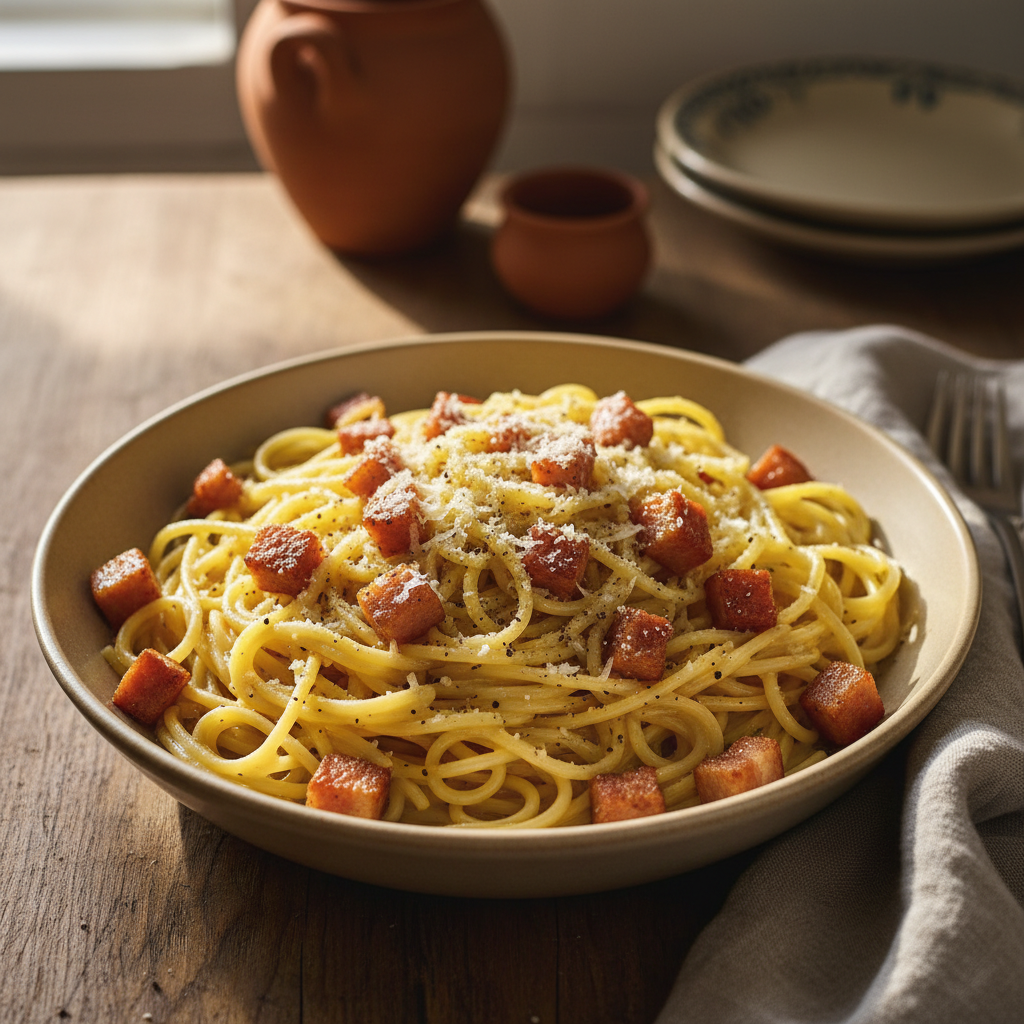
Tag: Pasta

  • How to Make Authentic Carbonara: A Simple Step-by-Step Recipe

    How to Make Authentic Carbonara: A Simple Step-by-Step Recipe

    Carbonara is a classic Italian pasta dish from Rome made with eggs, hard cheese (typically Pecorino Romano), cured pork (guanciale), and black pepper. The creamy sauce is created without any cream by combining the hot pasta with a mixture of raw eggs, cheese, and the rendered pork fat, which emulsifies into a rich coating.

    Imagine a bowl of silky pasta coated in a rich, luscious sauce of egg, cheese, and crispy pork. This is authentic carbonara, a timeless Italian classic that many home cooks find intimidating. The biggest fears? Scrambling the eggs and failing to create that perfectly creamy sauce. But what if you could master a truly delicious pasta carbonara with confidence? Our recipe makes it much simpler than you think—no professional chef skills required.

    Our simple, step-by-step guide is designed to make the process joyful and foolproof. We’ll walk you through every detail to ensure you get a perfectly creamy, intensely flavorful spaghetti carbonara. Best of all, it takes only 20 minutes from start to finish. This makes it an ideal family-friendly meal for a quick weeknight dinner, yet it’s special enough for any occasion.

    We’ll break down the secrets to a flawless carbonara, showing you how to achieve its iconic creamy texture using just a few simple ingredients—no cream needed. You’ll gain confidence in the kitchen and experience the satisfaction of serving a restaurant-quality meal at home. So, what makes this the ultimate carbonara recipe for home cooks? Let’s dive in and find out.

    Why Is This The Best Carbonara Recipe for Home Cooks?

    Welcome to the ultimate guide for making authentic, delicious, and surprisingly simple carbonara at home. If you’ve ever felt intimidated by classic Italian pasta, you’re not alone. Many home cooks struggle to create that perfect, creamy sauce, often ending up with scrambled eggs or a dry dish.

    At Recipesmondial, we believe cooking should be enjoyable, not stressful. That’s why we’ve crafted this carbonara recipe specifically for the home cook. We simplified the process without sacrificing an ounce of authentic flavor, so you can cook confidently and enjoy one of Italy’s most beloved dishes.

    This spaghetti carbonara recipe unlocks a stress-free kitchen experience by offering:

    • Simplified Step-by-Step Cooking Guidance: We break down every stage into clear, manageable steps. From prep to plating, you’ll move with ease—even if you’re a beginner.
    • Reliable, Creamy Results: Our instructions deliver a luscious, silky carbonara sauce every single time. Say goodbye to scrambled eggs and dry pasta—this recipe guarantees success.
    • Focus on Essential, Flavorful Ingredients: You won’t find a long, confusing list here. We highlight the five key ingredients that make an authentic carbonara sing, and we’ll guide you on choosing and using them for maximum flavor.
    • Practical Tips for Success: We share all the secrets, from perfectly emulsifying the sauce to rendering the pork just right. These practical tips make great home cooking approachable.
    • Confidence-Building Techniques: This isn’t just a recipe; it’s a cooking lesson. You’ll learn fundamental techniques you can apply to many other easy recipes. As you build your skills, you’ll transform from an unsure cook into one who truly enjoys the process.
    • Quick and Easy Preparation: We know you need delicious meals fast. This pasta carbonara recipe is designed for efficiency, delivering flavorful meals made easy right to your weeknight table.

    Enjoy gourmet flavor without being overwhelmed by complex instructions. Our beginner-friendly recipes are designed to inspire creativity and make mealtime exciting. This carbonara recipe is a perfect example of how Recipesmondial helps you cook confidently and eat well, every day.

    What Are the 5 Ingredients for Authentic Carbonara?
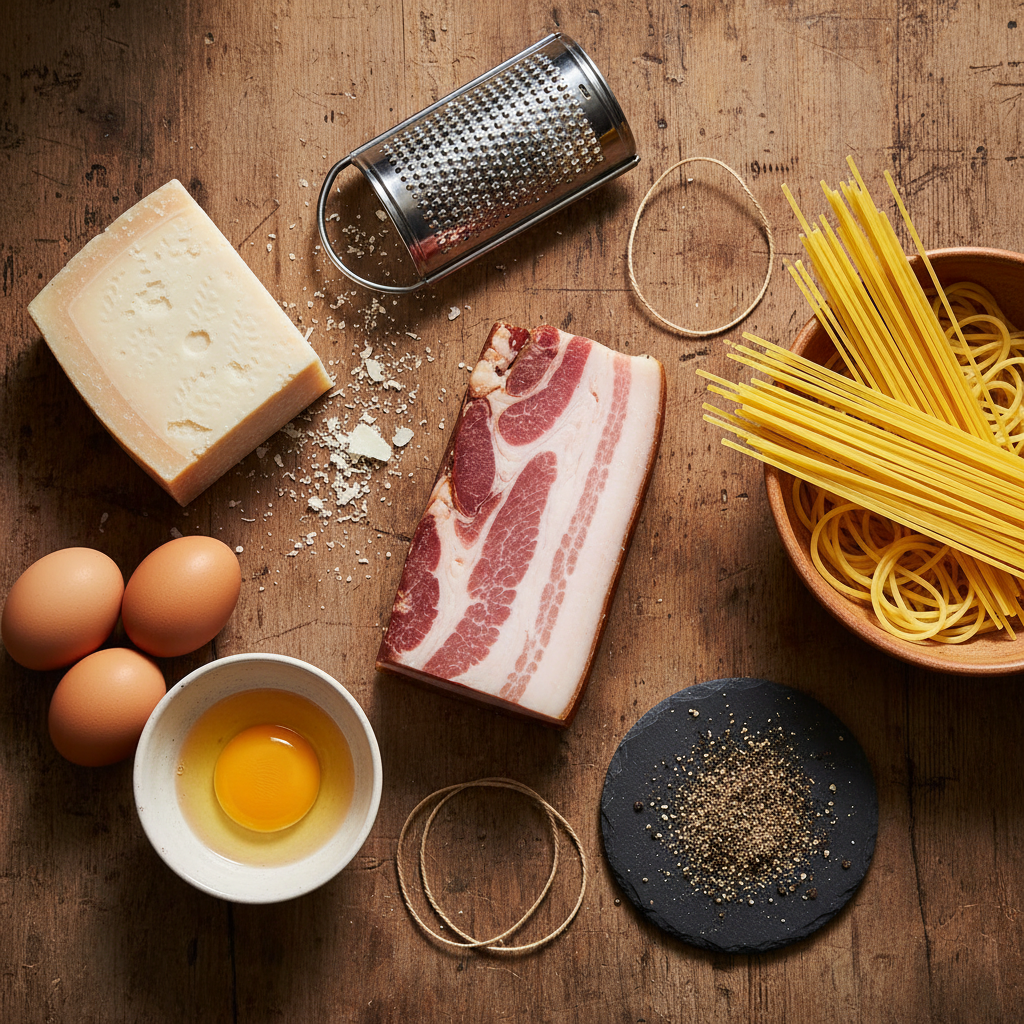
    The five essential ingredients for authentic carbonara: guanciale, Pecorino Romano cheese, eggs, black pepper, and spaghetti, neatly arranged on a wooden surface.
    Professional food photography, photorealistic, high-quality food magazine photo of the five essential ingredients for authentic spaghetti carbonara laid out on a rustic wooden countertop. The ingredients include fresh eggs (some whole, some with yolks separated), a block of Pecorino Romano cheese with a grater nearby, a generous slab of guanciale, a bowl of whole dried spaghetti, and a small pile of freshly cracked black pepper. The lighting is warm and inviting, showcasing the textures and freshness of each item. The composition is clean and appealing, ready for a home cook to begin.

    Authentic Carbonara is all about a few key ingredients working together to create its irresistible creamy sauce. The focus is on simplicity and flavor, ensuring your recipe turns out perfectly every time. Forget complex instructions—let’s break down the five essential components for an easy-to-make, classic Carbonara.

    Here are the five essential ingredients for an authentic, easy-to-make Carbonara:

    Guanciale vs. Pancetta vs. Bacon

    The heart of any classic Carbonara is cured pork, and guanciale is the most traditional choice. This cured pork jowl is prized for its rich flavor and the unique texture it develops when rendered. Its fat melts into a silky base for the sauce [source: https://www.eataly.com/us_en/what-is-guanciale].

    Since guanciale can be hard to find, **pancetta** (cured pork belly) is a fantastic substitute that offers a similar depth of flavor and is more widely available. While not traditional, **bacon** is another accessible option. Its smoky flavor delivers savory notes and crispy bits, creating a comforting, family-friendly meal. Each choice brings something unique to your pasta carbonara.

    Here is a quick comparison to help you choose:

    Ingredient Description Flavor Profile Availability Authenticity
    Guanciale Cured pork jowl Rich, fatty, intense pork flavor Specialty stores Most authentic
    Pancetta Cured pork belly Salty, savory, milder than guanciale Most grocery stores Excellent alternative
    Bacon Smoked pork belly Smoky, salty, crispy Widely available Common substitution (less authentic)

    The Best Cheese for Carbonara: Pecorino Romano or Parmesan?

    For the signature creamy, tangy sauce, cheese is crucial. **Pecorino Romano** is the authentic choice. Made from sheep’s milk, this hard, salty cheese has a sharp, pungent flavor that cuts through the richness of the pork and eggs [source: https://www.cheese.com/pecorino-romano/].

    If Pecorino Romano isn’t available, **Parmigiano Reggiano** (Parmesan) is a delicious alternative. This cow’s milk cheese offers a nuttier, more savory taste and is widely available. For a more balanced profile, you can even use a blend of both. No matter which you choose, always use freshly grated cheese. Pre-grated varieties contain anti-caking agents that can make your sauce gritty.

    The Role of Eggs in the Creamy Sauce

    Eggs are what give Carbonara its luxurious, silky sauce—no cream required. The secret is a combination of whole eggs and egg yolks. Yolks provide richness and help emulsify the sauce, while whole eggs add body. Many traditional recipes call for one whole egg and two additional yolks for the ideal consistency. This mixture is combined with the hot pasta and a splash of starchy pasta water to create the sauce.

    To avoid scrambling the eggs, it’s crucial to temper them gently. This beginner-friendly recipe will help you master the technique. Using fresh, high-quality eggs also makes a significant difference in the final flavor and texture of your spaghetti carbonara. This simple dinner recipe is all about technique.

    What is the best pasta for carbonara?

    Choosing the right pasta shape is essential. **Spaghetti** is the traditional and most popular choice, as its long, thin strands coat evenly with the creamy sauce [source: https://www.barilla.com/en-us/products/pasta/classic-blue-box/spaghetti-no-5]. This ensures you get a consistent flavor in every bite.

    While spaghetti is classic, other shapes also work well:

    • Bucatini: This pasta resembles thick spaghetti with a hole through the center, which captures the sauce beautifully.
    • Rigatoni: A shorter, ridged tube pasta. The ridges and hollow center hold onto the sauce effectively.
    • Fettuccine: Wider, flat strands offer a different mouthfeel and are still great for rich sauces.

    The key is to select a pasta that holds the sauce effectively. No matter which shape you choose, be sure to cook it al dente (firm to the bite). This texture is crucial for a perfect finish to your easy carbonara recipe.

    Freshly Ground Black Pepper

    Don’t overlook the **freshly ground black pepper**—it’s a non-negotiable ingredient in authentic Carbonara. More than just a garnish, pepper provides a warm, pungent counterpoint to the dish’s rich, savory flavors. It adds a subtle kick and complexity that elevates the final result. For the best aroma and taste, always use freshly ground whole peppercorns instead of pre-ground pepper; this small detail makes a huge difference.

    A generous amount ground directly over the pasta creates a classic “cacio e pepe” (cheese and pepper) effect, transforming simple ingredients into a flavorful meal. Remember, fresh is always best for this crucial seasoning.

    How to Make Perfect Spaghetti Carbonara Step-by-Step

    A home cook's hands gently toss spaghetti with creamy carbonara sauce and crispy guanciale in a large pan.
    Professional food photography, photorealistic, high-quality food magazine photo depicting a close-up of a home cook’s hands, in a warm, friendly kitchen, expertly tossing freshly cooked spaghetti with the creamy, emulsified egg and Pecorino Romano sauce in a large stainless steel pan. Steam gently rises from the pasta, highlighting the perfect coating of the rich, golden sauce on each strand. The guanciale pieces are visible, crispy and well-integrated. The focus is on the action and the appealing texture of the developing carbonara. The scene conveys a sense of ease and mastery for a beginner cook.

    Making authentic spaghetti carbonara can seem intimidating, but this recipe makes it wonderfully simple. At Recipesmondial, our goal is to make cooking enjoyable and stress-free. Follow these steps to create a truly flavorful meal without feeling overwhelmed.

    This beginner-friendly recipe focuses on core techniques, so you can forget the stress of elaborate cooking. You’ll quickly learn how to transform a few simple ingredients into a creamy, delicious dish. Let’s get started on your authentic spaghetti carbonara.

    Step 1: Prepare the Egg and Cheese Mixture

    This crucial step creates the creamy base for your carbonara sauce, so it’s important to get it ready before your pasta finishes cooking.

    • Crack 2 whole large eggs and 2 extra large egg yolks into a medium-sized bowl. The extra yolks add richness and creaminess.
    • Add 1 cup (about 80g) of finely grated Pecorino Romano cheese. This traditional cheese provides a sharp, salty flavor, but finely grated Parmesan is a great substitute if you prefer a milder taste.
    • Grind in a generous amount of freshly ground black pepper. We recommend about 1 teaspoon, but feel free to adjust to your preference. Freshly ground pepper adds a wonderful aroma and spice.
    • Whisk the mixture vigorously with a fork until it is thoroughly combined and smooth. It should look like a thick, pale yellow paste. Set this bowl aside.

    Step 2: Cook the Pasta

    Perfectly cooked pasta is key to a great carbonara. You want it to be al dente, which means it should be slightly firm to the bite.

    • Bring a large pot of water to a rolling boil.
    • Add a generous amount of salt to the boiling water. It should taste like the sea [1].
    • Add 12 ounces (about 340g) of spaghetti or your preferred pasta to the boiling water.
    • Cook the pasta according to the package directions, but aim for 1-2 minutes less than the recommended time for al dente. This prevents the pasta from getting mushy when it finishes cooking in the sauce.
    • Before draining, reserve about 1½ cups of the starchy pasta cooking water. This cloudy water is the secret to a luscious sauce.
    • Drain the pasta well, but do not rinse it.

    Step 3: Render the Pork

    The pork provides incredible flavor and the essential fat for the carbonara sauce. While guanciale is traditional, pancetta or bacon are also delicious alternatives.

    • Dice 4 ounces (about 115g) of guanciale (or pancetta/bacon) into small, uniform ¼-inch pieces. Cutting them to an even size helps them cook more evenly.
    • Place the diced pork in a large, cold skillet. Make sure the skillet is large enough to hold all of the pasta later.
    • Turn the heat to medium-low. Cook slowly, stirring occasionally, until the pork is crispy and its fat has rendered. This process usually takes 8-10 minutes.
    • Use a slotted spoon to remove the crispy pork pieces from the skillet. Set them on a paper towel-lined plate to drain excess fat.
    • Leave the flavorful rendered fat in the skillet—it is a crucial part of the sauce. Keep the skillet over very low heat to ensure the fat stays warm.

    Step 4: Combine Everything to Create the Sauce

    This is where the magic happens! To get a creamy, emulsified sauce instead of scrambled eggs, you need to work quickly and confidently. This final step transforms your ingredients into an irresistible pasta carbonara.

    • Immediately add the hot, drained pasta to the skillet with the warm pork fat. Toss well to coat every strand of spaghetti.
    • Pour about ¼ cup of the hot, reserved pasta water into the skillet and stir to combine.
    • Now, remove the skillet from the heat completely. This is the most important step to prevent the eggs from scrambling.
    • Quickly pour the egg and cheese mixture over the hot pasta.
    • Using tongs, toss and stir everything continuously and very quickly. The residual heat from the pasta and the skillet gently cooks the eggs, while the starchy water helps create a rich, creamy sauce. It is essential that you do not stop stirring.
    • The sauce will thicken as you stir. If it seems too thick, add more of the reserved pasta water, one tablespoon at a time, until it reaches a silky, creamy consistency.
    • Stir in most of the crispy pork, saving a small amount for garnish.
    • Serve immediately in warm bowls. Garnish with the remaining pork, an extra sprinkle of Pecorino Romano, and another grind of black pepper.

    And there you have it: a perfect spaghetti carbonara, made easy and approachable. Enjoy this delicious, restaurant-quality meal, cooked with confidence in your own kitchen.

    Top Tips for a Flawless, Creamy Carbonara (Without Cream)

    A close-up of a beautifully plated bowl of creamy, authentic spaghetti carbonara, garnished with fresh black pepper and grated Pecorino Romano cheese.
    Professional food photography, photorealistic, high-quality food magazine photo of a perfectly plated, steaming bowl of authentic spaghetti carbonara, presented on a simple, elegant white plate. The spaghetti is glistening, coated generously with a luscious, creamy, emulsified sauce that has no visible liquid or cream, demonstrating the flawless technique. It is garnished with abundant freshly cracked black pepper and finely grated Pecorino Romano cheese. The lighting is soft and inviting, emphasizing the rich texture and delicious appeal of the dish, making it look incredibly appetizing and achievable for a home cook.

    Making a perfectly rich and creamy carbonara is simpler than you might think—and it doesn’t require any cream. The magic lies in a few key techniques. Follow our pro tips to achieve a restaurant-quality spaghetti carbonara recipe at home. You’ll master this classic pasta carbonara in no time.

    Avoid Scrambled Eggs

    A common fear when making a classic carbonara recipe is accidentally scrambling the eggs. To avoid this, the key is temperature control.

    • Remove from Heat: Always take your hot pasta off the stove before adding the egg and cheese mixture.
    • Temper the Eggs: Whisk constantly while slowly drizzling a spoonful or two of hot pasta water into the egg and cheese mixture. This gentle warming process helps prevent the eggs from curdling when they meet the hot pasta [2].
    • Constant Motion: As you add the egg mixture to the pasta, stir continuously. This constant movement is what creates a smooth, velvety sauce instead of unwanted chunky bits.

    Follow these steps, and your pasta carbonara sauce will be perfectly smooth and creamy.

    Use Pasta Water

    The starchy water from cooking your pasta is liquid gold. This secret ingredient binds the sauce together, creating a luscious, creamy texture without any cream.

    • Save It: Before draining your pasta, reserve at least one cup of the cooking water.
    • Add Gradually: Slowly drizzle the starchy water into your pasta and egg mixture, just a tablespoon or two at a time, until the sauce reaches your desired consistency.
    • Emulsify: The starch in the water is essential for emulsifying the sauce. It helps blend the fat from the pork with the cheese and eggs, creating a silky, cohesive coating for your spaghetti carbonara.

    This simple trick makes all the difference for an authentic carbonara recipe.

    Work Quickly

    Timing is crucial for a creamy carbonara. Once the pasta is cooked and the pork is rendered, the final steps must be done quickly.

    • Be Prepared: Have all your ingredients measured and ready before you begin. This includes the egg mixture, rendered pork, and reserved pasta water.
    • Combine Fast: Immediately after taking the pasta off the heat, toss it with the pork, and then pour in the egg mixture.
    • Stir Vigorously: Stir quickly and constantly to coat every strand of pasta. This rapid movement helps the sauce emulsify while preventing the eggs from overcooking.

    Working swiftly is key to a fluid sauce that clings perfectly to the pasta.

    Serve Immediately

    Carbonara is best enjoyed the moment it’s made. The delicate sauce changes consistency as it cools, so timing is everything.

    • Enjoy Fresh: Have everyone at the table and ready to eat as soon as the pasta carbonara is finished.
    • Best Texture: The sauce is at its peak creamy consistency right after it’s made—warm, velvety, and coating the pasta perfectly.
    • Avoid Thickening: If it sits for too long, the sauce will thicken, and the pasta may clump together.

    Plate it immediately, garnish with extra cheese and pepper, and enjoy your delicious carbonara recipe!

    Easy Carbonara Recipe Variations

    While authentic carbonara is a masterpiece, sometimes a recipe needs to adapt. Whether it’s to fit your pantry, suit dietary needs, or simply try something new, we’re here to help! At Recipesmondial, we love showing you how versatile cooking can be. These easy carbonara variations are perfect for beginner cooks and busy families. They provide simple, flavorful dinner recipes so you can enjoy cooking without stress.

    Vegetarian Carbonara

    Going vegetarian doesn’t mean sacrificing flavor, and creating a delicious veggie carbonara is simple. Just replace the guanciale or pancetta with a savory, plant-based alternative. This variation is a wonderful way to enjoy a comforting pasta dish and makes a great family-friendly meal.

    Here are some fantastic substitutes for the cured pork:

    • Mushrooms: Sauté sliced cremini, shiitake, or portobello mushrooms until deeply browned and slightly crispy. They offer a rich, umami flavor and a satisfying chew.
    • Smoked Tofu or Tempeh: Dice smoked tofu or tempeh into small cubes and pan-fry them until golden and crisp. This adds a lovely smoky depth that mimics bacon.
    • Sun-dried Tomatoes: Finely chop oil-packed sun-dried tomatoes. Sauté them briefly to warm them through and release their concentrated flavor for a sweet and tangy contrast.
    • Zucchini or Asparagus: For a lighter touch, roast or sauté diced zucchini or asparagus until tender-crisp. These vegetables add freshness and a pop of color.

    Pro Tip: Whichever option you choose, cook it until it has a good sear or crispiness. This step is key to mimicking the texture and savory flavor of the pork, ensuring your vegetarian carbonara is just as satisfying. Remember to use a vegetarian-friendly hard cheese, as some Pecorino Romano varieties contain animal rennet.

    Carbonara with Bacon

    While guanciale is traditional, bacon is a more common ingredient in many home kitchens. This simple swap makes the classic Italian dish more approachable for everyday cooking, and you can still achieve a wonderfully rich and creamy result.

    Here’s how to adapt the recipe:

    • Choose Good Quality Bacon: Opt for thick-cut, smoked bacon if possible. It will provide the best flavor and texture.
    • Render Slowly: Cut the bacon into small pieces. Cook it slowly in a cold pan over medium-low heat to gradually render the fat and perfectly crisp the bacon.
    • Save the Fat: Keep a tablespoon or two of the rendered bacon fat in the pan. This flavorful fat is crucial for tossing with the pasta and emulsifying the sauce. Drain any excess.
    • Adjust Seasoning: Bacon is generally saltier than guanciale. Taste the crispy bacon before adding extra salt to your pasta water or cheese mixture, as you might need less overall.

    This simple swap creates an easy weeknight meal with all the comforting flavor you expect—no specialty ingredients required. Bacon carbonara is a fantastic family-friendly dish that everyone will love.

    Using Different Pasta Shapes

    Spaghetti is the classic choice for carbonara because the creamy sauce coats each strand so well. However, you can absolutely use other pasta shapes. Experimenting with different pastas is a fun way to add variety to this simple dinner and keep mealtime exciting.

    Here are some excellent alternatives:

    • Bucatini: This thick, spaghetti-like pasta has a hole through the center, making it fantastic for trapping sauce inside and out for a satisfying bite.
    • Rigatoni: These large, ridged tubes are perfect for catching the rich carbonara sauce. Their ridges and hollow centers ensure every mouthful is packed with flavor.
    • Penne: Similar to rigatoni but smaller, penne also has ridges and a hollow interior that holds sauce well. It’s a widely available choice that offers a slightly different texture.
    • Fettuccine or Tagliatelle: These wider, flat ribbons provide a different mouthfeel and pair wonderfully with rich sauces, creating a substantial base for the carbonara.
    • Mezzi Rigatoni or Maccheroni: Shorter, smaller pasta shapes also work well. They are ideal if you prefer a more bite-sized pasta in your carbonara.

    The key is to choose a pasta shape that the egg and cheese sauce can cling to well. These variations ensure that even if you’re out of spaghetti, you can still enjoy a delicious carbonara with minimal fuss. Learning these simple cooking tips will boost your confidence in the kitchen!

    Frequently Asked Questions about Carbonara

    What makes a carbonara recipe authentic?

    An authentic spaghetti carbonara recipe is simpler than you might think. The secret lies in using a few high-quality ingredients and the right technique to create a rich, creamy sauce without any cream.

    Here are the key elements for an authentic pasta carbonara:

    • Guanciale: This cured pork jowl is essential for its rich fat and distinct flavor. If you can’t find it, good-quality pancetta is the next best thing.
    • Pecorino Romano Cheese: A hard, salty sheep’s milk cheese, Pecorino Romano adds a sharp, tangy taste that is non-negotiable for true authenticity.
    • Eggs: The sauce uses a mix of whole eggs and extra yolks. This mixture creates the silky, emulsified coating for the pasta.
    • Black Pepper: Freshly ground black pepper is crucial, adding a delightful warmth and spice.
    • Pasta: While spaghetti is the traditional choice, other pasta shapes like rigatoni or bucatini also work well.
    • Pasta Water: Starchy pasta water is vital. It helps emulsify the sauce and makes it incredibly creamy.

    A truly authentic carbonara never includes cream, garlic, onions, or mushrooms. Instead, its incredible flavor comes from the simple combination of these core ingredients [3].

    Can you make carbonara with cream?

    For an authentic Italian carbonara recipe, the answer is a firm “no.” Traditional pasta carbonara achieves its creaminess through a clever emulsion of rendered pork fat, egg yolks, Pecorino Romano cheese, and starchy pasta water. This process creates a rich, velvety sauce without any dairy cream.

    Many recipes, especially those outside of Italy, add cream to make the sauce-making process easier and reduce the risk of scrambling the eggs. However, adding cream significantly changes the dish’s texture and flavor, moving it away from what makes a classic spaghetti carbonara so special. We focus on authentic flavor, showing you how to achieve that perfect creaminess the traditional way. Mastering this technique is a rewarding experience.

    What’s the difference between Italian and Filipino Carbonara?

    While both are beloved pasta dishes, Italian and Filipino carbonara recipes are quite different, reflecting local ingredients and culinary preferences. Here’s a quick comparison:

    Feature Italian Carbonara Filipino Carbonara
    Main Pork Product Guanciale (cured pork jowl) Bacon, ham, or hotdogs
    Dairy Base No cream; uses eggs, Pecorino Romano, and pasta water for creaminess Cream, evaporated milk, or condensed milk for a sweeter, richer sauce
    Cheese Pecorino Romano (salty sheep’s milk cheese) Parmesan cheese, often grated, for a milder flavor
    Additional Ingredients Freshly ground black pepper, minimal other additions Often includes mushrooms, onions, garlic, and sometimes a touch of sugar for a sweeter profile [4]
    Flavor Profile Savory, peppery, cheesy, rich umami Creamier, often sweeter, milder cheese flavor, sometimes smoky from bacon

    Both versions are delicious and showcase how a classic dish can evolve across different cultures. Recipesmondial celebrates these diverse, flavorful meals made easy!

    Can I use bacon instead of guanciale in carbonara?

    Yes, absolutely! While guanciale is traditional for an authentic carbonara recipe, bacon is a common and perfectly acceptable substitute. Since guanciale can be hard to find, using bacon makes this delicious dish more accessible to home cooks.

    Here’s what to keep in mind when using bacon for your spaghetti carbonara:

    • Choose Wisely: Opt for good-quality, thick-cut bacon. Avoid heavily smoked or maple-cured varieties, as their strong flavors can overpower the dish.
    • Render Slowly: Cook the bacon gently over low heat until it’s crispy. This process renders out the fat, which is a crucial component of the sauce.
    • Flavor Difference: Bacon gives the carbonara a smokier flavor, while guanciale offers a deeper, porkier richness. Even so, bacon still creates a fantastic and flavorful meal.

    Our easy recipes are all about helping you create delicious family-friendly meals with what you have on hand. Don’t let the lack of guanciale stop you from enjoying a wonderful plate of pasta carbonara!

    Sources

    1. https://www.seriouseats.com/how-to-salt-pasta-water
    2. https://www.seriouseats.com/what-is-tempering-eggs-guide
    3. https://www.accademiaitalianachef.com/en/blog/carbonara-history-and-original-recipe/
    4. https://www.foxyfolksy.com/filipino-style-carbonara-recipe/

  • How to Make The Best Lasagna Recipe (A Simple Step-by-Step Guide)

    How to Make The Best Lasagna Recipe (A Simple Step-by-Step Guide)

    A classic lasagna recipe consists of layering flat pasta sheets with alternating fillings of a rich meat sauce (ragù) and a creamy cheese mixture, typically made with ricotta, mozzarella, and Parmesan. The assembled dish is then baked in the oven until it is hot, bubbly, and golden-brown on top. This guide provides a simple, step-by-step method perfect for beginner home cooks.

    Few dishes are as comforting as a classic lasagna. Just thinking about its tender pasta layers, rich meat sauce, and bubbling cheese is enough to make your mouth water. For many home cooks, however, making one from scratch can feel daunting, suggesting complex instructions and long hours in the kitchen. But what if we told you that creating an incredible homemade lasagna doesn’t have to be overwhelming?

    At Recipesmondial, we believe delicious family-friendly meals should be accessible to everyone, regardless of cooking experience. That’s why we’ve crafted this easy lasagna recipe to guide you through each step with clarity. We want to help you master this beloved dish, transforming simple ingredients into a show-stopping meal that tastes like it came straight from an Italian nonna’s kitchen.

    This comprehensive, step-by-step guide is perfect for both beginners and intermediate cooks seeking beginner-friendly recipes. Our goal is to ensure your experience is stress-free and full of flavor. Get ready to impress your family and friends with a hearty, cheesy, and utterly delicious lasagna that will become a go-to favorite in your kitchen.

    Why Is This The Best Easy Lasagna Recipe for Your Family?

    There’s nothing quite like a bubbling, cheesy tray of homemade lasagna. It’s the ultimate comfort food, but many lasagna recipe options can seem daunting with their long ingredient lists and complex instructions.

    Here at Recipesmondial, we understand you want delicious meals without the stress. That’s exactly why we created the best easy lasagna recipe for your family, simplifying the process without sacrificing flavor.

    We designed this recipe with busy home cooks in mind, ensuring a mouthwatering result every single time. Our goal is to help you build confidence in the kitchen so you no longer feel overwhelmed by complex recipes!

    Why Our Easy Lasagna Recipe Stands Out

    We believe cooking should be an enjoyable experience, not a chore. Our easy lasagna recipe focuses on clear instructions and incredible flavor, making it perfect for family-friendly meals.

    • Simple, Everyday Ingredients: We use common items you probably have in your pantry already, saving you a trip to the store.
    • Straightforward Step-by-Step Guidance: Forget confusing jargon. Our instructions are clear and easy to follow, making homemade lasagna accessible for everyone.
    • Time-Saving Techniques: We streamline the process so you can create a fantastic meal without spending all day in the kitchen. It’s truly a simple dinner recipe.
    • Guaranteed Delicious Results: This lasagna recipe consistently delivers rich, savory flavors and gooey cheese. Your family will ask for seconds.
    • Perfect for All Skill Levels: Whether you’re looking for beginner-friendly recipes or you’re a seasoned cook, you’ll love how easy this is. Build your cooking confidence with us.
    • Flexible and Adaptable: We include tips for variations so you can customize the dish to fit your family’s tastes. Meal prep tips are also included.

    If you’re struggling to plan family-friendly meals or lacking confidence in cooking skills, this lasagne recipe is the perfect solution. It’s more than just a dish—it’s an invitation to enjoy cooking without stress. Discover just how easy it is to make flavorful meals made easy today!

    What Are the Ingredients for a Classic Lasagna?

    A beautiful flat lay of fresh lasagna ingredients: pasta sheets, meat sauce, ricotta, mozzarella, Parmesan, basil, tomatoes, ground beef, onion, garlic, and olive oil.
    A highly detailed, 100 percent photorealistic, professional food photography flat lay shot showcasing all the fresh, high-quality ingredients for a classic homemade lasagna. The arrangement includes fresh pasta sheets, a rich, simmering red meat sauce (ragu) in a small bowl, creamy ricotta cheese, shredded mozzarella, grated Parmesan, a vibrant bunch of fresh basil leaves, a can of crushed tomatoes, uncooked ground beef, a halved onion, cloves of garlic, and a bottle of extra virgin olive oil. All elements are neatly and attractively arranged on a rustic light-colored wooden table with soft, natural daylight, emphasizing freshness, quality, and readiness for cooking. This is a high-quality food magazine photo, evoking a sense of warmth and invitation to cook.

    For the Rich Meat Sauce

    A rich, savory meat sauce is the heart of any great lasagna. Our simple recipe is full of comforting flavors your family will adore, transforming everyday ingredients into a truly special meal.

    • Ground Beef: We suggest 80/20 lean ground beef for the best flavor, but ground turkey also works as a lighter option.
    • Onion & Garlic: These aromatics are essential for building the sauce’s flavor foundation.
    • Crushed Tomatoes: High-quality canned crushed tomatoes provide the perfect texture and tangy base for a classic sauce.
    • Tomato Paste: This adds depth and richness by concentrating the tomato flavor.
    • Dried Herbs: Traditional dried herbs like oregano, basil, and a bay leaf infuse the sauce with aromatic Italian flavors.
    • Olive Oil: A good quality extra virgin olive oil is used for sautéing the aromatics and enhancing the overall taste.
    • Salt & Pepper: Seasoning is vital, so be sure to taste and adjust as you cook for the best results.

    This combination creates a hearty, robust sauce that’s perfect for family meals. You’ll be surprised how easily it develops such a deep, satisfying flavor.

    For the Creamy Ricotta Cheese Layer

    The creamy ricotta layer provides a cool, tangy contrast to the rich meat sauce. This luscious filling is a key part of what makes homemade lasagna so irresistible and comforting.

    • Ricotta Cheese: Whole milk ricotta is recommended for the creamiest, most luscious texture.
    • Egg: A large egg binds the cheese mixture, preventing it from becoming runny during baking.
    • Parmesan Cheese: Freshly grated Parmesan adds salty, nutty notes that boost the overall cheese flavor.
    • Mozzarella Cheese: Use shredded low-moisture mozzarella in this layer, as it melts beautifully and adds a satisfying stretch.
    • Fresh Parsley: Chopped fresh parsley adds a touch of brightness and a lovely herbaceous flavor.
    • Salt & Pepper: A pinch of salt and pepper seasons the cheese filling, ensuring every layer is perfectly flavored.

    This simple, beginner-friendly blend creates the rich and luscious filling that makes your lasagna truly special.

    For Assembling the Lasagna

    Assembling the lasagna is where all the components come together. Choosing the right noodles and cheese is key to a perfect bake, and this part of the process is surprisingly straightforward.

    • Lasagna Noodles: You have a choice of noodles. Traditional noodles require pre-boiling, while oven-ready (no-boil) noodles are a fantastic time-saver. Both work well, though many home cooks prefer the convenience of no-boil noodles to make cooking quicker and less messy [1].
    • Mozzarella Cheese: You’ll need extra shredded mozzarella for the layers and to create that iconic gooey, cheesy top.
    • Parmesan Cheese: A final sprinkle of Parmesan creates a beautiful golden-brown crust and adds a final layer of savory flavor.

    With these ingredients ready, you’re prepared to assemble your delicious homemade lasagna. Get ready to enjoy one of the best meals you’ve ever made!

    How to Make Homemade Lasagna: A Step-by-Step Guide

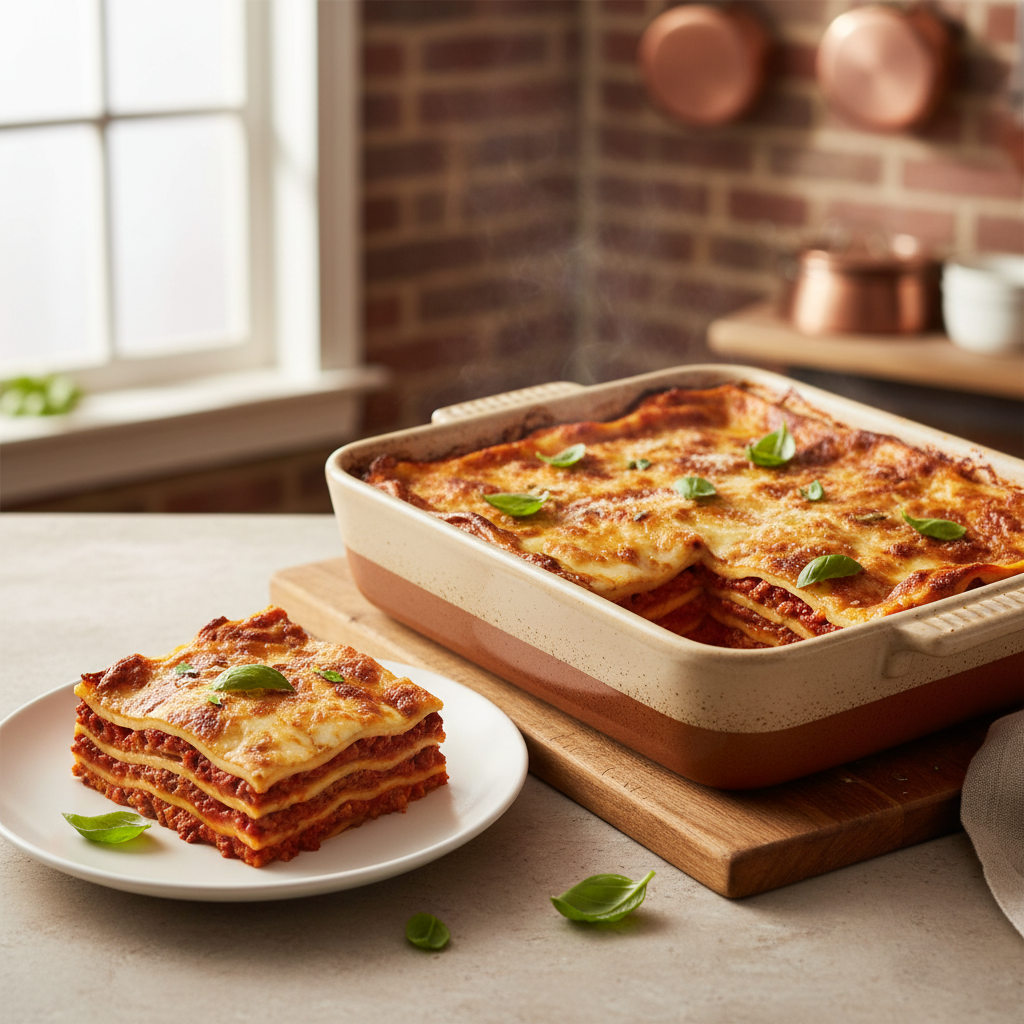
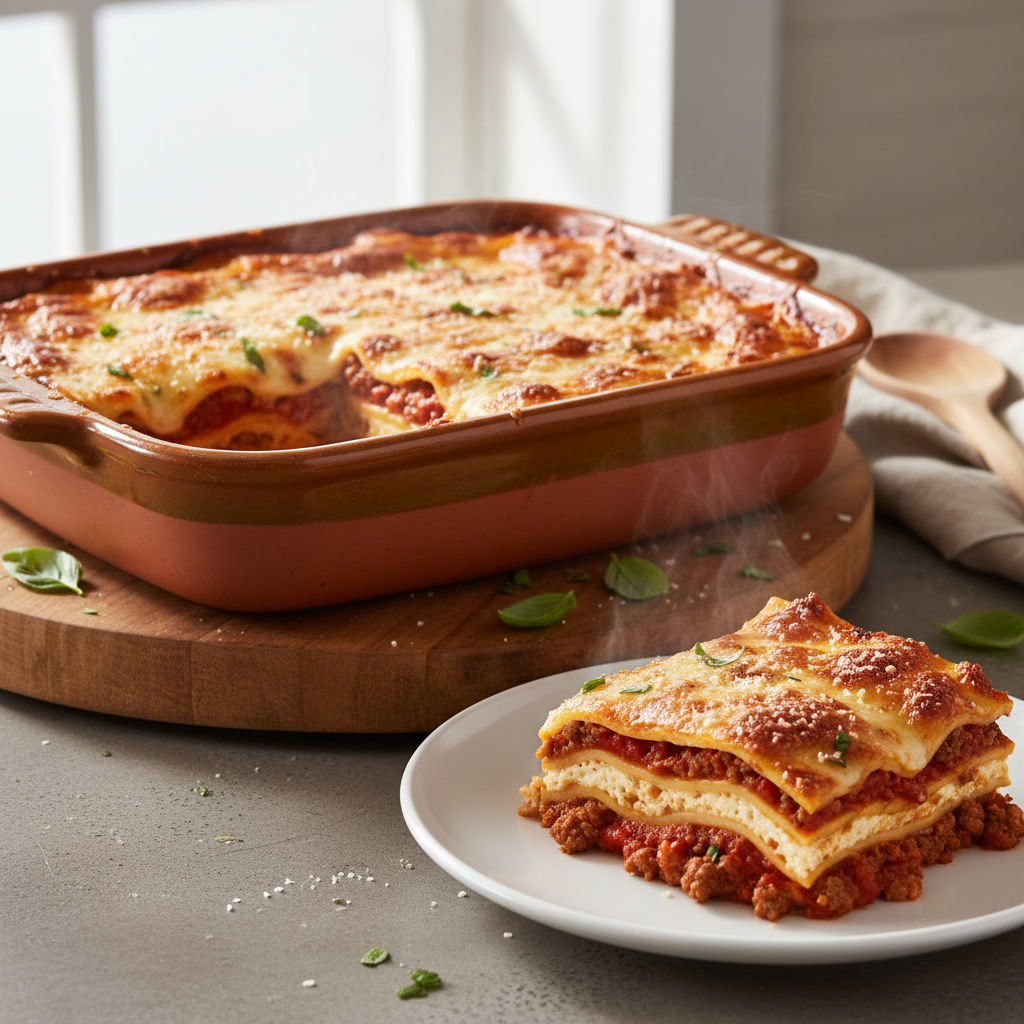
    A golden-brown, bubbling baked lasagna in a ceramic dish, with a slice removed onto a plate, revealing its perfectly layered pasta, cheese, and meat sauce.
    A close-up, 100 percent photorealistic, professional food photography shot of a golden-brown, bubbling, freshly baked lasagna straight out of the oven. The lasagna is in an attractive ceramic baking dish, perfectly positioned on a heat-resistant surface in a warm, inviting home kitchen setting. The top layer of melted mozzarella and Parmesan cheese is slightly browned and caramelized in spots, with visible rich red sauce and tender pasta peeking out from the edges. A perfect, generous slice has been carefully removed and placed onto a white serving plate, revealing the distinct, well-defined layers of pasta, creamy ricotta, hearty meat sauce, and more cheese. Subtle steam rises from the dish and the cut slice. The lighting is soft, natural, and highlights the textures and delicious appeal of the dish. This is a high-quality food magazine photo, designed to inspire hunger and confidence in cooking.

    Step 1: Cook the Hearty Meat Sauce

    The first step to an incredible homemade lasagna is creating a rich, flavorful meat sauce. This easy recipe forms the foundation of the dish and is a true game-changer for family meals. Follow these simple instructions for a delicious start.

    1. Brown the Ground Meat: Heat a large pot or Dutch oven over medium heat with a touch of olive oil. Add your ground beef (or a mix of beef and Italian sausage) and cook, breaking it up with a spoon, until browned. Drain any excess fat for a lighter sauce.
    2. Sauté Aromatics: Add the chopped onion and minced garlic to the pot. Cook, stirring frequently, until the onion is soft and translucent, about 5-7 minutes. This step builds a deep flavor base.
    3. Add Tomatoes and Seasonings: Pour in the crushed tomatoes, tomato paste, and diced tomatoes (if using). Stir in dried herbs like oregano and basil, then add salt, black pepper, and a pinch of sugar to balance the tomato acidity.
    4. Simmer to Perfection: Bring the sauce to a simmer, then reduce the heat to low. Cover the pot loosely and let it cook for at least 30 minutes, or up to an hour for deeper flavor. Stir occasionally to prevent sticking. The longer the sauce simmers, the richer it will become.

    Quick Tip: You can make this meat sauce a day ahead. The flavors often meld and taste even better the next day, making it a great meal prep option.

    Step 2: Prepare the Cheese Filling

    Next, create the creamy ricotta cheese layer. This simple filling adds a wonderful texture and tangy balance to the rich meat sauce, and it only takes a few minutes to prepare.

    1. Combine Ingredients: In a large mixing bowl, combine the ricotta cheese, one large egg, grated Parmesan cheese, chopped fresh parsley, salt, and pepper.
    2. Mix Until Smooth: Use a spoon or spatula to gently mix until the ingredients are smooth and well combined. The egg is essential, as it helps bind the cheese and prevents a watery filling.
    3. Check for Consistency: The filling should be thick but easy to spread. If it seems too thin, stir in a little more Parmesan cheese to reach the desired consistency.

    Substitution Idea: For a lasagna without ricotta cheese, you can use well-drained cottage cheese. Alternatively, try a blend of shredded mozzarella and a creamy béchamel sauce for a different texture.

    Step 3: Layer Your Lasagna Like a Pro

    Assembling the lasagna is where all the elements come together. Following these layering instructions will help you build a beautiful, structurally sound dish that holds its shape when sliced.

    1. Prepare Your Baking Dish: Lightly grease a 9×13 inch baking dish to prevent sticking and make serving easier.
    2. Start with Sauce: Spread a thin layer of meat sauce on the bottom of the dish. This creates a base that prevents the noodles from sticking.
    3. First Noodle Layer: Arrange a single layer of lasagna noodles over the sauce, overlapping them slightly to cover the surface. Oven-ready (no-boil) noodles are a great time-saver.
    4. Add Ricotta Filling: Carefully spread half of the ricotta cheese mixture evenly over the noodles.
    5. Add Sauce and Mozzarella: Spoon about one-third of the remaining meat sauce over the ricotta. Sprinkle generously with shredded mozzarella cheese.
    6. Repeat the Layers: Add a second layer of noodles. Top with the remaining ricotta mixture, another third of the meat sauce, and more mozzarella.
    7. Final Layer: Place the last layer of noodles on top. Cover with the remaining meat sauce and finish with a generous sprinkle of mozzarella and Parmesan cheese for a perfect golden crust.

    Pro Tip for No-Boil Noodles: If you’re using no-boil noodles, ensure your sauce is moist enough, as the noodles will absorb liquid while baking to become tender.

    Step 4: Bake Until Bubbly and Golden

    Baking is the final step that melts all the flavors together. You’re just moments away from serving a delicious homemade lasagna your family will love.

    1. Preheat Oven: Preheat your oven to 375°F (190°C).
    2. Cover and Bake: Cover the baking dish tightly with aluminum foil to trap steam and cook the noodles. Bake for 25 minutes.
    3. Uncover and Finish Baking: Remove the foil and continue baking for another 20-25 minutes, or until the sauce is bubbling and the cheese on top is golden-brown.
    4. Rest Before Serving: This step is crucial. Remove the lasagna from the oven and let it rest for at least 15-20 minutes before slicing. This allows the layers to set, ensuring clean cuts.

    Why Resting Matters: Letting the lasagna rest is the secret to perfect slices. It gives the layers time to firm up, making it much easier to serve without falling apart.

    Tips for Making the Perfect Lasagna Every Time

    Making the perfect lasagna doesn’t have to be complicated. With a few simple tricks, you can elevate your homemade dish from good to truly amazing. These tips will help you create a delicious, family-friendly meal with confidence every time.

    Master Your Meat Sauce

    The secret to an exceptional lasagna is the sauce. A rich, flavorful meat sauce forms the heart of the dish, so don’t skip these crucial steps.

    • Simmer Slowly: Allow your meat sauce to simmer gently for at least 30-60 minutes. This extended cooking time melds the flavors, resulting in a deeper, more complex taste.
    • Layer Flavors: Start by sautéing aromatic vegetables like onions and garlic before browning your ground meat. Next, add crushed tomatoes, herbs, and spices. Each addition builds the sauce’s complexity and flavor.
    • Taste and Adjust: Always taste your sauce before layering. You may need to adjust seasonings like salt, pepper, or even a pinch of sugar to ensure the flavor is perfectly balanced.

    Perfect Your Noodle Strategy

    Noodles provide the essential structure for lasagna, so preparing them correctly is vital for a successful dish.

    • No-Boil Noodles: A true time-saver, these noodles absorb moisture directly from the sauce as they bake. This method dramatically cuts down on preparation and cleanup.
    • Regular Noodles: If using traditional noodles, cook them only until al dente, meaning they still have a slight firmness. Overcooked noodles can become mushy in the final dish.
    • Prevent Sticking: When boiling regular noodles, add salt and a small amount of olive oil to the water to prevent sticking. After draining, lay them flat on parchment paper to cool.

    Creamy Ricotta Cheese Layer Secrets

    The ricotta layer brings a delightful creaminess that balances the rich meat sauce, making it a key component for a comforting, flavorful lasagna.

    • Drain Excess Liquid: Ricotta holds a lot of water, which can make your lasagna runny. To prevent this, place the ricotta in a fine-mesh sieve for 15-30 minutes to drain before using.
    • Season Well: Be sure to season the ricotta mixture. Stir in an egg, grated Parmesan, fresh parsley, salt, and pepper. The egg acts as a binder, helping the layer hold its shape.
    • Fresh Herbs Matter: Whenever possible, use fresh herbs like parsley or basil. They contribute a vibrant flavor that dried alternatives cannot replicate.

    Layering Like a Pro

    Proper assembly is key to a lasagna that holds together beautifully and bakes evenly, resulting in perfect portions every time.

    • Start with Sauce: Always spread a thin layer of meat sauce on the bottom of the baking dish. This adds moisture and prevents the first layer of noodles from sticking.
    • Don’t Overdo It: Use just enough sauce and cheese to cover the noodles in each layer. Avoid making them excessively thick, as too much filling can cause the lasagna to be messy and difficult to slice.
    • Consistent Layers: Aim for consistent, even layers of noodles, ricotta, sauce, and mozzarella. This ensures every bite is perfectly balanced and creates a visually appealing result.
    • Finish with Cheese: The top layer should be a final spread of sauce, generously covered with shredded mozzarella to create an irresistible golden, bubbly crust.

    The Importance of Resting Time

    This often-overlooked tip is critical for serving a perfect slice. Letting the lasagna rest after baking prevents it from becoming a messy, collapsed dish.

    • Let it Settle: After removing the lasagna from the oven, cover it loosely with foil and let it rest on the counter for at least 15-20 minutes. This allows the layers to set properly.
    • Prevents Collapse: Resting helps the cheese and sauce firm up, so your lasagna will slice cleanly into neat, intact portions.
    • Enhances Flavor: As the lasagna rests, the flavors continue to meld and deepen. Resting also improves food safety by ensuring heat is distributed evenly throughout the dish [2].

    Achieving the Perfect Bake

    Proper baking is the final step to a bubbly and delicious lasagna. Follow these guidelines to get it just right.

    • Cover Initially: Bake the lasagna covered with foil for most of the cooking time. This steams the noodles and prevents the top from burning.
    • Uncover for Browning: Remove the foil for the final 10-15 minutes. This allows the cheese to melt and turn a beautiful golden brown. Keep a close eye on it to prevent scorching.
    • Check for Doneness: The lasagna is ready when the sauce is bubbly and the cheese is melted and lightly browned. For best results, check that the internal temperature has reached 165°F (74°C).

    Recipe Variations to Try

    Lasagna Recipe Vegetarian Option

    You don’t need meat to make a delicious lasagna. A vegetarian version can be just as hearty and flavorful, making it an excellent way to enjoy a comforting dish while adding more vegetables to your family’s table. This family-friendly meal proves that easy recipes can be both nutritious and incredibly tasty.

    Here are some simple ways to make a vegetarian lasagna:

    • Mushroom Power: Replace ground meat with finely chopped mushrooms. Sauté them until they release their liquid and brown beautifully. This process creates a rich, umami flavor that mimics meat.
    • Lentil Love: Cook brown or green lentils until tender, then simmer them in your favorite marinara sauce. Lentils add a wonderful texture and protein, making your homemade lasagna truly satisfying.
    • Spinach and Zucchini Delight: For a fresh, vibrant filling, wilt a generous amount of spinach and sauté sliced zucchini and yellow squash until tender. Then, combine them with your tomato sauce.
    • Eggplant Excellence: Roast thin slices of eggplant until soft and layer them with your sauce and cheeses. Eggplant adds a lovely texture and depth of flavor to your easy lasagna recipe.

    Feel free to mix and match these vegetables, or add diced bell peppers, onions, and crumbled tofu for extra protein. Just remember to cook your vegetables until tender before layering to ensure your lasagna bakes perfectly. This flavorful variation makes weekly meal planning a breeze and is perfect for beginner cooks exploring new twists on classic dishes.

    Easy Lasagna Recipe Without Ricotta Cheese

    Don’t have ricotta cheese on hand, or simply not a fan? No problem. You can still create an incredibly creamy and delicious lasagna without it. In fact, many homemade recipes skip ricotta entirely, making this an approachable option for any home cook.

    Here are fantastic alternatives for a super creamy layer:

    • Cottage Cheese: A popular and easy substitute is small-curd cottage cheese. Simply mix it with an egg and a pinch of salt, just as you would with ricotta. While the texture is slightly different, the flavor is wonderfully similar.
    • Cream Cheese Blend: For a rich and smooth layer, soften 8 ounces of cream cheese and mix it with half a cup of milk or heavy cream and one egg. Stir in a dash of grated Parmesan cheese for extra flavor.
    • Béchamel Sauce: For a classic Italian style, make a simple béchamel sauce. Melt 3 tablespoons of butter, stir in 3 tablespoons of flour, and cook for one minute. Slowly whisk in 2 cups of warm milk until the sauce thickens. Season with salt, pepper, and a pinch of nutmeg for a velvety, luxurious layer.
    • Extra Mozzarella and Parmesan: For a simple and gooey result, just increase the amount of mozzarella and Parmesan cheese you layer between the noodles and sauce. This method is perfect for a simple dinner, relying on ingredients you likely already have.

    Whichever option you choose, your lasagna will be packed with flavor. These simple substitutions prove you don’t need fancy ingredients to create an amazing meal, allowing you to cook confidently even when pantry staples are limited.

    How to Store, Freeze, and Reheat Lasagna

    Mastering our easy lasagna recipe gives you a fantastic meal for today and an easy one for later. Properly storing, freezing, and reheating your homemade lasagna reduces food waste and provides delicious, stress-free meals on demand. This is a perfect choice for busy families and anyone looking for smart meal prep tips!

    Storing Cooked Lasagna in the Refrigerator

    Got leftovers? Great! Storing cooked lasagna properly will keep it fresh and delicious for days. This makes it an excellent way to prepare family-friendly meals in advance.

    • Cool Completely: Before refrigerating, let the lasagna cool to room temperature, which takes about 30-60 minutes. For food safety, do not leave it out for more than two hours [3].
    • Airtight Container: Transfer the cooled lasagna to an airtight container. If you keep it in the baking dish, cover it tightly with plastic wrap and then a layer of aluminum foil.
    • Refrigerate Promptly: Store your lasagna in the refrigerator and enjoy it within 3 to 4 days.

    Freezing Lasagna for Future Meals

    Freezing lasagna is a fantastic way to save time on busy weeknights. It’s a game-changer for anyone who wants quick, comforting meals without the fuss.

    Freezing Baked Lasagna

    If you have leftover baked lasagna or you’ve made a double batch, freezing the cooked dish is incredibly convenient.

    • Cool It Down: First, let the baked lasagna cool completely to room temperature. This is a crucial step to prevent ice crystals from forming.
    • Portion if Desired: For quick individual meals, cut the lasagna into single servings before wrapping. This also makes reheating much faster.
    • Wrap Securely: Tightly wrap individual portions or the entire dish with plastic wrap, followed by a layer of aluminum foil for extra protection.
    • Label and Date: Clearly write the date on the foil or container. Frozen baked lasagna is best enjoyed within 2-3 months for optimal flavor and texture [4].

    Freezing Unbaked Lasagna

    Assembling an unbaked lasagna for the freezer is a smart way to have a meal ready to bake for unexpected guests or a busy evening. This simple meal prep strategy makes weeknight dinners effortless.

    • Assemble as Usual: Follow the layering steps in our homemade lasagna recipe, but do not bake it.
    • Cover Thoroughly: Cover the baking dish with plastic wrap, pressing it directly onto the lasagna’s surface to prevent freezer burn. Add a second layer of plastic wrap, then cover securely with aluminum foil.
    • Freeze: Place the covered dish in the freezer. Unbaked lasagna can be frozen for up to 2 months.
    • Ready to Bake: To bake, first thaw the lasagna overnight in the refrigerator. Then, bake as the recipe directs, adding 10-15 minutes to the cooking time. For a no-thaw option, bake it from frozen (covered with foil) at 375°F (190°C) for 1.5 to 2 hours, uncovering it for the last 30 minutes.

    Reheating Lasagna to Perfection

    Whether it’s from the fridge or the freezer, reheating lasagna properly is the key to ensuring it stays moist and delicious.

    Reheating from the Refrigerator

    • Oven Method (Recommended): For the best results, preheat your oven to 375°F (190°C). Cover the lasagna with foil to prevent it from drying out and bake for 20-30 minutes, or until heated through and bubbly.
    • Microwave Method (Quickest): Place a single serving on a microwave-safe plate. Cover it loosely with a paper towel or microwave-safe lid and heat on high for 2-4 minutes, checking halfway through.

    Reheating from Frozen (Baked Lasagna)

    • Thawing First: For the best texture, transfer the frozen baked lasagna to the refrigerator and let it thaw overnight. Then, follow the oven reheating method described above.
    • From Frozen (No Thaw): If you’re short on time, you can reheat directly from frozen. Keep the lasagna covered with foil and bake in a preheated 350°F (175°C) oven for 60-90 minutes. Remove the foil for the last 15-20 minutes to brown the cheese. For food safety, ensure the internal temperature reaches 165°F (74°C) [5].

    Pro Tips for Reheating Success

    • Add Moisture: If your lasagna looks dry, add a splash of water or broth around the edges of the dish before placing it in the oven.
    • Cheese Check: If the cheese on top starts to brown too quickly, cover the dish loosely with foil.
    • Rest Before Serving: Like a freshly baked lasagna, let the reheated dish rest for 5-10 minutes. This helps it set, making it easier to slice and serve.

    With these simple storage and reheating tips, your homemade lasagna becomes a reliable and delightful meal you can enjoy anytime. Cook without stress, knowing a delicious meal is always ready to go!

    Frequently Asked Questions

    What is in a traditional beef lasagna recipe?

    A classic beef lasagna is a comforting, family-friendly meal built from delicious layers that combine to create an amazing flavor. Most traditional recipes contain three main components:

    • A Rich Meat Sauce: This is typically a hearty Bolognese-style sauce featuring ground beef cooked with onions, garlic, and sometimes carrots or celery. A deep, savory base is created with crushed tomatoes, tomato paste, and Italian herbs like oregano and basil.
    • Creamy Cheese Filling: Most traditional lasagnas use a ricotta cheese mixture. Ricotta is blended with eggs, Parmesan, and fresh parsley to create a wonderfully creamy and flavorful layer.
    • Pasta and Cheese Topping: Lasagna noodles are used to separate the savory layers. The dish is then topped with a generous amount of mozzarella cheese, which melts to create an irresistible golden-brown crust. Some recipes also include an extra sprinkle of Parmesan.

    At Recipesmondial, we focus on making flavorful meals easy. Our version simplifies these elements for home cooks, delivering a fantastic result without complex steps.

    Can you use cottage cheese instead of ricotta in lasagna?

    Yes, you can absolutely use cottage cheese in your lasagna. It’s a common substitution that works well if you don’t have ricotta or simply prefer a different texture. Many easy lasagna recipes call for it.

    However, keep a few key differences in mind:

    • Texture Difference: Cottage cheese has a grainier texture, while ricotta is much smoother.
    • Moisture Content: Cottage cheese contains more liquid, so it’s best to drain it first to prevent your lasagna from becoming watery. To do this, simply place it in a fine-mesh sieve for 15-20 minutes.
    • Flavor Profile: Ricotta has a mild, slightly sweet flavor, while cottage cheese is a bit tangier. To balance this, you can add a pinch of sugar or extra Parmesan cheese to your filling.

    Using cottage cheese is a fantastic way to adapt recipes. This kind of flexible substitution shows how approachable home cooking can be. Feel free to experiment to create family-friendly meals that suit your tastes.

    How do you make lasagna sauce from scratch?

    Making a flavorful lasagna sauce from scratch is surprisingly easy and adds incredible depth to your dish. This step-by-step method is perfect for beginners.

    1. Brown the Meat: First, heat a large pot or Dutch oven over medium-high heat. Add the ground beef and cook until fully browned, breaking it apart with a spoon. Drain any excess fat.
    2. Sauté Aromatics: Next, add a chopped onion and minced garlic to the pot. Sauté for 5-7 minutes until they have softened and become fragrant.
    3. Add Tomatoes and Flavor: Pour in the crushed tomatoes, tomato paste, and a splash of beef broth for extra richness. Stir well to combine.
    4. Season Generously: Now it’s time for seasoning. Stir in dried oregano, basil, a bay leaf, salt, and black pepper. For a subtle kick, add a pinch of red pepper flakes.
    5. Simmer for Flavor: Bring the sauce to a simmer, then reduce the heat to low. Cover loosely and let it simmer for at least 30 minutes (an hour is even better) to allow the flavors to meld. Be sure to stir occasionally to prevent sticking.
    6. Taste and Adjust: Finally, taste the sauce and adjust seasonings as needed. Remember to remove the bay leaf before using the sauce.

    This simple method creates a rich and savory sauce that forms the perfect base for your lasagna. Enjoy the process of creating flavorful meals made easy!

    Do you have to cook lasagna noodles before baking?

    Whether you need to cook lasagna noodles before baking depends entirely on the type you are using. This is a common question, and understanding the difference will make your preparation easier.

    • Traditional Lasagna Noodles: Most standard lasagna noodles require pre-boiling in salted water until al dente (still firm). This step ensures they soften completely during baking and prevents a tough, undercooked texture in the final dish.
    • No-Boil Lasagna Noodles: These noodles are a wonderful time-saver because they are designed to absorb moisture directly from the sauce and cheese while baking [6]. This means you can layer them into your dish dry. Just make sure your sauce is moist enough to hydrate them properly.

    For best results, always check the package instructions for your specific noodles. At Recipesmondial, we aim to provide clear cooking guidance that makes creating delicious, family-friendly meals enjoyable and stress-free.


    Sources

    1. https://www.bonappetit.com/test-kitchen/how-to/article/no-boil-lasagna-noodles
    2. https://www.foodsafety.gov/keep/charts/cooktemp.html
    3. https://www.fsis.usda.gov/food-safety/safe-food-handling-and-preparation/food-safety-basics/food-safety-charts
    4. https://nchfp.uga.edu/how/freeze/lasagna.html
    5. https://www.foodsafety.gov/keep/charts/mintemp.html
    6. https://www.seriouseats.com/no-boil-lasagna-noodles-how-they-work