Tag: Side dish

  • The Perfect Creamy Polenta Recipe (Beginner-Friendly Guide)

    The Perfect Creamy Polenta Recipe (Beginner-Friendly Guide)

    Polenta is a classic Italian dish made from boiled cornmeal. It can be served as a creamy, porridge-like side dish, or cooled until firm and then fried, baked, or grilled. This versatile and budget-friendly recipe is a comforting base for sauces, meats, and vegetables.

    Ever crave a comforting, delicious side dish that feels gourmet but is surprisingly simple? It’s easy to feel overwhelmed by complex recipes. That’s where creamy polenta comes in. This wonderfully versatile and naturally gluten-free option can transform your weeknight dinners into something special, without any stress. Humble yet flavorful, this dish is about to become your new favorite. Here at Recipesmondial, we believe cooking should be an enjoyable, confidence-building experience, and this easy polenta recipe is the perfect example.

    If you’re looking for a beginner-friendly recipe with reliably delicious results, you’ve come to the right place. This step-by-step guide takes the guesswork out of making polenta. We’ll show you how to get a beautifully smooth, rich, and creamy texture without any technical jargon or complicated techniques. We cover everything from basic ingredients to essential tips, so you can confidently whip up this Italian staple. Ready to discover what makes polenta such a beloved classic?

    Ready to Make the Creamiest Polenta Ever?
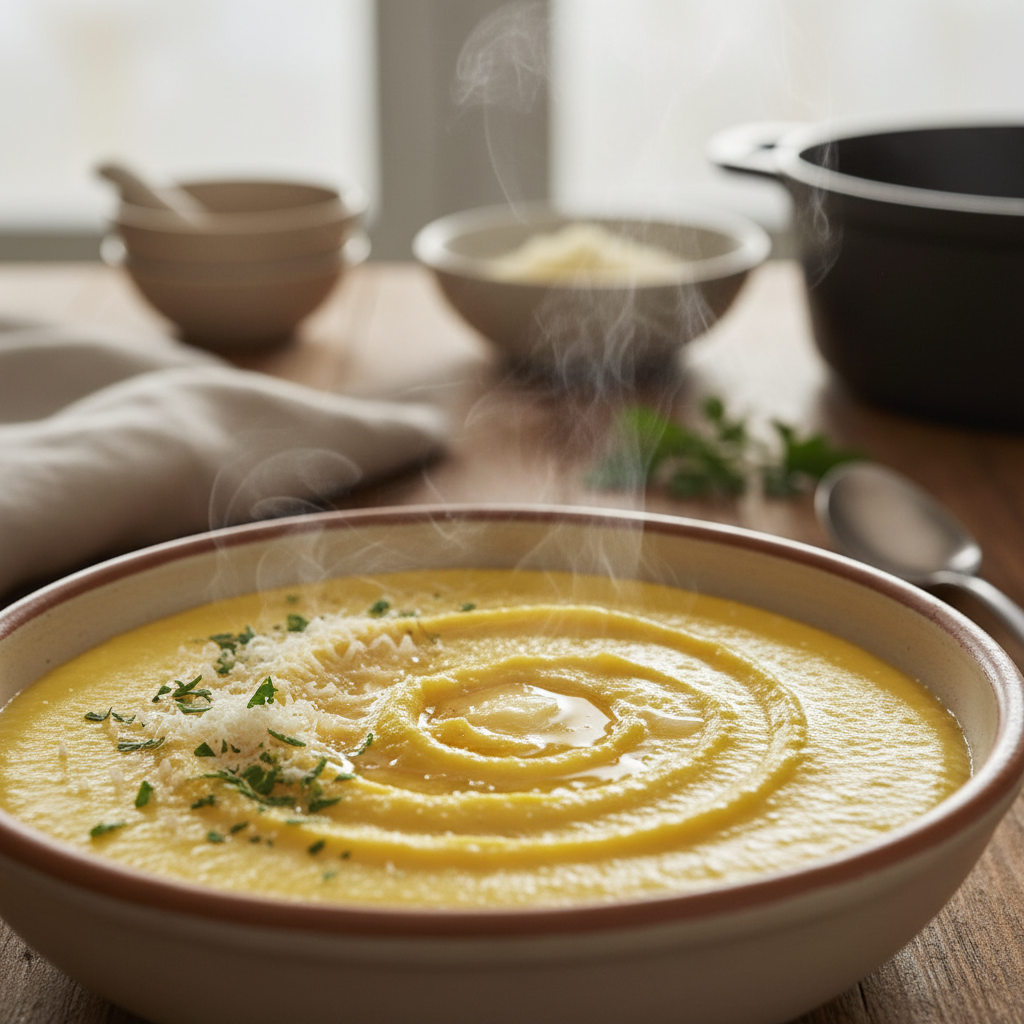
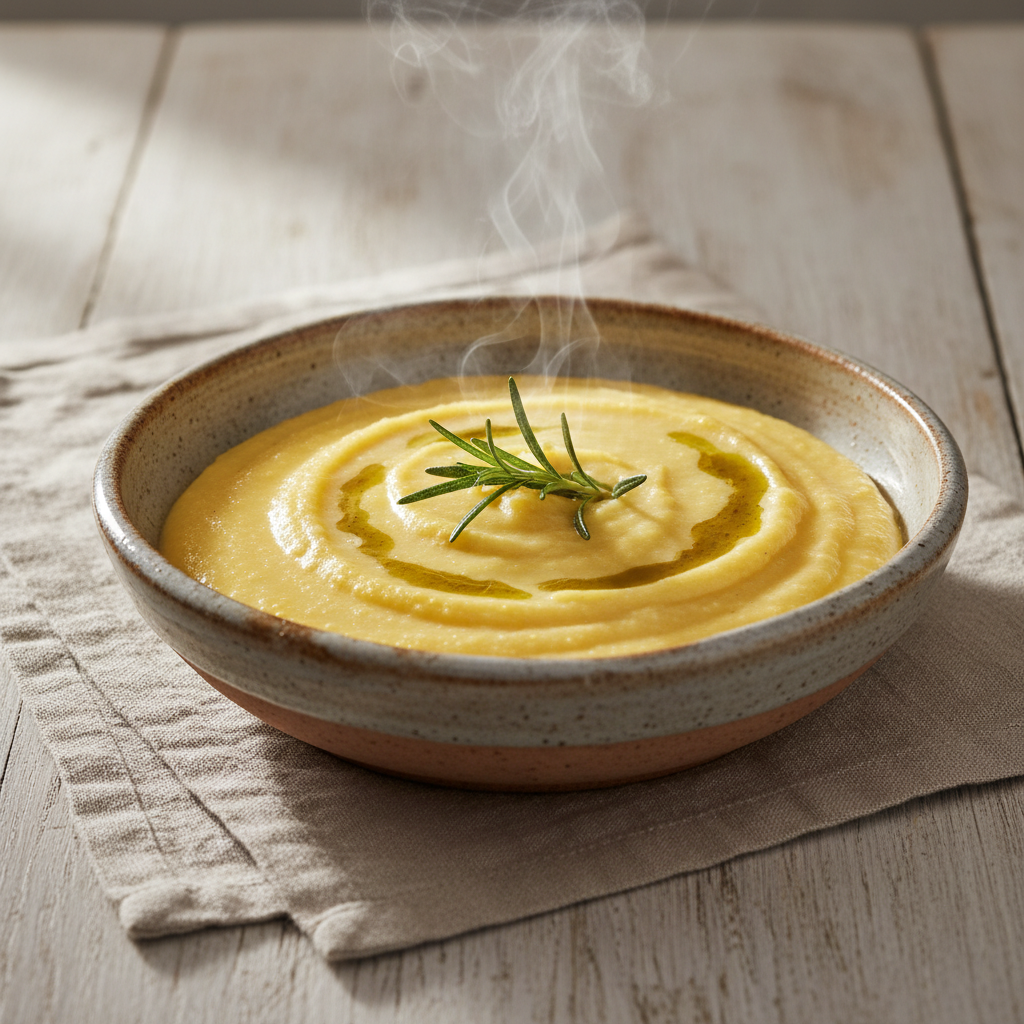
    A steaming bowl of perfectly creamy, golden yellow polenta with a slight swirl.
    Professional food photography, photorealistic, high-quality food magazine photo: A close-up shot of a steaming bowl of perfectly creamy, golden yellow polenta, with a slight swirl from a spoon. The polenta should have a smooth, velvety texture, glistening slightly under warm, natural light. The background is softly blurred with subtle kitchen elements, creating a warm and inviting atmosphere. Focus on the rich texture and comforting appeal of the polenta. No people.

    Are you ready to create a dish that’s incredibly comforting and deeply satisfying? Perhaps you’ve heard of polenta, that golden, creamy Italian staple. It’s a wonderful base for so many delicious meals.

    However, many home cooks find polenta intimidating. You might worry about getting lumps, ending up with a bland taste, or simply not knowing how to achieve that perfect texture. But we’re here to show you that making flawless, creamy polenta is surprisingly simple. At Recipesmondial, we believe cooking should be a joy, not a chore.

    This beginner-friendly guide will change the way you think about this versatile dish. We’ll provide clear, step-by-step cooking guidance to help you master a creamy polenta recipe. Using just a few everyday ingredients, you’ll create a truly flavorful meal made easy. Get ready to cook with confidence and enjoy every single bite. Let’s turn simple cornmeal into a delicious, warm masterpiece!

    What exactly is polenta?

    Polenta is more than just a dish; it’s a comforting, versatile, and easy-to-make staple that has graced tables for centuries. This simple porridge, made from ground cornmeal, is beloved for its creamy texture and ability to pair with countless flavors. Whether you’re looking for simple dinner recipes or delicious family-friendly meals, understanding polenta is a great place to start.

    A Brief History of This Italian Staple

    Polenta has a rich history that predates the corn we associate with it today. Originally, the term “polenta” referred to any porridge made from ground grains. For instance, ancient Romans enjoyed a similar dish made from barley, farro, or chickpeas, and it was a common, hearty meal across various cultures [1].

    The corn-based polenta we know today only emerged after corn, or maize, was brought to Europe from the Americas in the 16th century. It thrived in the fertile plains of Northern Italy—especially in regions like Veneto, Lombardy, and Emilia-Romagna—where farmers found it to be a robust and economical crop.

    As a result, cornmeal quickly became the primary ingredient for polenta, transforming it into a crucial, inexpensive, and satisfying food for many Italian families. This traditional staple provided warmth and sustenance, particularly during colder months. It was often served with simple sauces, hearty stews, or just a drizzle of olive oil. Today, polenta remains a beloved component of Italian cuisine, a testament to its simple and enduring appeal.

    Polenta vs. Grits: What’s the Difference?

    It’s easy to confuse polenta with grits, as both are popular dishes made from ground corn. However, several key distinctions in their origin, corn type, and preparation set them apart. Understanding these differences can help you appreciate each one more. Here’s a simple breakdown:

    Feature Polenta Grits
    Origin Northern Italy Southern United States
    Type of Corn Typically made from yellow flint corn. This variety is drier and starchier, which gives polenta a firmer texture as it cooks and cools. Usually made from white dent corn. This softer corn has a higher moisture content, which results in a creamier, more tender texture.
    Grind Size The grind is often coarse, contributing to its slightly toothier texture. Can range from fine to coarse. Stone-ground grits are typically coarser, while instant grits are very fine.
    Processing Usually dried and then stone-ground. Often undergoes nixtamalization, a process where the corn is soaked and cooked in an alkaline solution. This step enhances both nutritional value and flavor [2].
    Typical Flavor Profile Subtly sweet, nutty, and earthy. It is often served with savory sauces, cheeses, or meats. Mild corn flavor that can be slightly tangy from nixtamalization. Grits can be served savory or sweet but are often paired with butter, cheese, or shrimp.

    In essence, while both polenta and grits offer a comforting meal, their distinct origins and preparation methods give them unique identities. Appreciating these differences helps home cooks choose the right ingredients for their desired dish, making the experience of preparing a perfect creamy polenta all the more satisfying.

    How to Make Our Easy Polenta Recipe
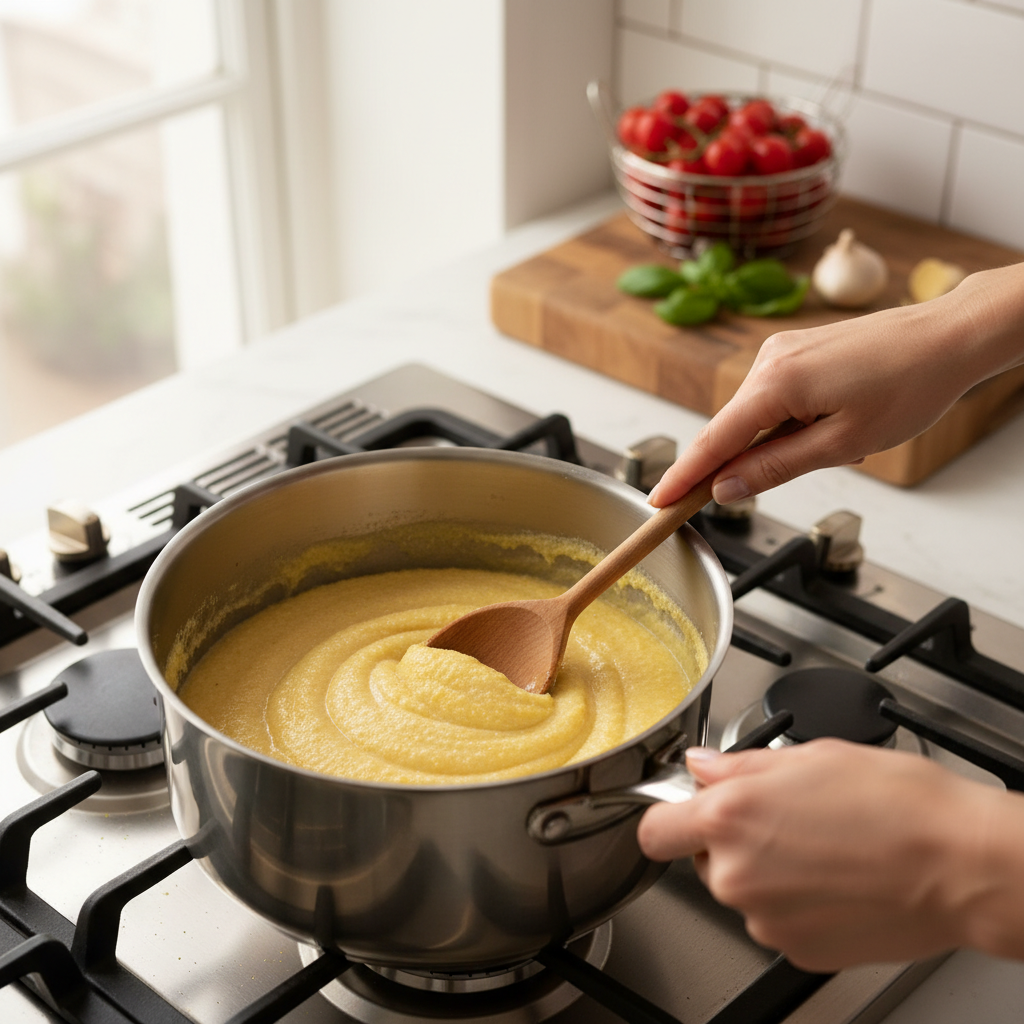
    Hands stirring creamy polenta in a stainless steel pot on a stove.
    Professional food photography, photorealistic, high-quality food magazine photo: A home cook’s hands, with clean, manicured nails, gently stirring creamy polenta in a heavy-bottomed stainless steel pot on a stove. The polenta is a beautiful light yellow, bubbling softly, and has a smooth, rich consistency. The kitchen setting is clean and well-lit, with a warm, inviting ambiance. Focus on the action and the texture of the polenta. No face visible, only hands and the cooking process.

    Ingredients You’ll Need

    Gathering your ingredients first makes cooking much smoother. This simple polenta recipe uses just a few staples to create a comforting and delicious dish.

    • 4 cups (960 ml) cold water or vegetable broth: Using broth adds extra flavor.
    • 1 cup (150 g) fine or medium-ground cornmeal (polenta): Choose good quality polenta for the best texture.
    • 1 teaspoon salt: Adjust to your taste.
    • 2 tablespoons unsalted butter: This creates a creamy, rich texture.
    • ½ cup (50 g) grated Parmesan cheese (optional): Freshly grated is always best for flavor.

    Step-by-Step Cooking Instructions

    Follow these simple steps for perfect, creamy polenta every time. This beginner-friendly method is incredibly easy to follow.

    1. Prepare your pot: Choose a heavy-bottomed saucepan to distribute heat evenly and prevent sticking.
    2. Heat the liquid: Pour the cold water or broth into the pot and add the salt. Bring to a gentle boil over medium-high heat.
    3. Whisk in polenta: Once boiling, slowly drizzle in the cornmeal while whisking continuously. This prevents lumps and ensures a smooth texture.
    4. Reduce heat and stir: Immediately reduce the heat to low so the mixture is at a bare simmer. Stir almost constantly for the first 5-10 minutes.
    5. Continue to cook: Cook for 25-30 minutes, stirring every few minutes to prevent sticking. The polenta will thicken and become creamy.
    6. Check for doneness: The polenta is ready when it’s soft, creamy, and pulls away from the sides of the pot. Taste it to ensure the grains are tender and not gritty.
    7. Stir in finishing touches: Remove the pot from the heat. Stir in the butter and Parmesan cheese (if using) for richness and savory flavor.
    8. Serve immediately: Spoon the polenta into bowls and enjoy while it’s warm and creamy.

    Tips for Perfect, Lump-Free Polenta

    Want to guarantee your polenta is perfectly smooth? Follow these tips to avoid lumps and achieve a delicious, creamy texture.

    • Start with cold liquid: Adding cornmeal to cold or lukewarm liquid allows the grains to hydrate gradually, which helps prevent lumps from forming.
    • Drizzle and whisk: Pour the cornmeal in a slow, steady stream while whisking vigorously. This is key to a smooth, lump-free mixture.
    • Use a heavy-bottomed pot: A thick-bottomed pot distributes heat more evenly, which minimizes scorching and sticking.
    • Stir frequently: Regular stirring, especially at the beginning, keeps the polenta from clumping. It also helps release starches for a creamier texture.
    • Cook slowly: Low and slow cooking allows the polenta grains to soften fully, ensuring a tender, non-gritty final product.
    • Adjust consistency: If your polenta becomes too thick, whisk in a splash of warm water or broth until you reach your desired consistency.
    • Consider nutritional benefits: Cornmeal, the base of polenta, is a whole grain that provides dietary fiber and essential nutrients, contributing to a healthy and balanced meal [source: https://www.nal.usda.gov/fnic/food-composition-databases].

    What do you do with polenta?

    Delicious Serving Suggestions

    Once you’ve mastered our easy polenta recipe, a world of delicious possibilities opens up. This creamy, comforting dish is incredibly versatile, able to serve as the star of your meal or as a wonderful side. Here are some fantastic ways to enjoy your freshly made polenta:

    • Classic Comfort: Serve warm, creamy polenta with a rich ragu or slow-cooked Bolognese for a satisfying, family-friendly meal that always impresses.
    • Savory & Simple: For a quick and delightful meal, swirl in extra butter, a generous sprinkle of Parmesan cheese, and fresh herbs like chives or parsley. Finish with a dash of black pepper.
    • Roasted Vegetable Delight: For a healthy and balanced meal, top your polenta with a medley of roasted seasonal vegetables like cherry tomatoes, bell peppers, and zucchini. A drizzle of balsamic glaze adds the perfect finishing touch.
    • Hearty Meat Pairings: Polenta is a beautiful partner for braised short ribs, Italian sausages, or rustic chicken cacciatore. Its creamy texture is perfect for soaking up every drop of flavorful sauce.
    • Mushroom Magic: Create a gourmet-style topping with sautéed wild mushrooms, garlic, and thyme. Adding a splash of white wine gives the sauce extra depth. This recipe is surprisingly simple and beginner-friendly.
    • As a Side Dish: Substitute polenta for mashed potatoes or rice to elevate any meal. It’s a perfect complement to grilled meats, fish, and stews.
    • Breakfast Treat: For a surprisingly delightful breakfast, warm up leftover creamy polenta and serve it with fresh berries, a drizzle of honey, or a sprinkle of cinnamon.

    Polenta is all about approachable home cooking. Enjoy the process without stress as you discover delicious new ways to prepare this simple ingredient.

    Recipe Variations: Firm Polenta, Fried Polenta, and More

    The beauty of polenta is its versatility. Beyond its creamy form, you can transform it into entirely new textures and dishes. These variations are perfect for meal prep and will help you add creativity to your weekly menu with confidence.

    Making Firm Polenta

    Firm polenta is the secret to many exciting dishes, as it can be sliced, grilled, or fried. To make it, simply follow the creamy polenta recipe but reduce the liquid slightly or cook it a bit longer. You’ll know it’s ready when it’s very thick and pulls away from the sides of the pot. This technique echoes traditional methods where Italian chefs cooked polenta for extended periods to achieve a sliceable consistency [3].

    1. Prepare & Spread: Once cooked, immediately pour the hot, thick polenta into a lightly oiled baking dish (an 8×8 inch dish works well).
    2. Chill & Set: Smooth the top with a spatula, cover, and refrigerate for at least 2 hours, or until completely firm. This can be prepared the day before.

    Fun Ways to Use Firm Polenta

    Once your polenta is firm, the fun can begin! Here are a few simple ideas for quick and delicious meals.

    • Grilled or Pan-Fried Slices:
      1. Slice It: Once firm, invert the polenta onto a cutting board. Slice it into squares, triangles, or rectangles about ½-inch thick.
      2. Oil & Season: Lightly brush each slice with olive oil and season with salt, pepper, and your favorite herbs.
      3. Cook: Grill or pan-fry the slices in a hot skillet over medium-high heat for 3-5 minutes per side, until golden brown and slightly crispy.
      4. Serve: Top the grilled slices with bruschetta, roasted vegetables, or a dollop of pesto for a great appetizer or unique side dish.
    • Crispy Polenta Fries:
      1. Cut into Sticks: Cut the block of firm polenta into fry-shaped sticks.
      2. Bake or Air Fry: Toss the sticks with a little olive oil, salt, and pepper. Bake at 400°F (200°C) for 20-25 minutes, flipping halfway. Or, air fry at 375°F (190°C) for 15-20 minutes until golden and crisp.
      3. Dip Away: Serve with marinara sauce, spicy aioli, or ketchup for a family-friendly side that everyone will love.
    • Baked Polenta Casseroles:
      1. Layer It: Use slices of firm polenta as the base layers in a casserole dish.
      2. Add Fillings: Alternate with layers of tomato sauce, cheese, cooked vegetables, or ground meat.
      3. Bake: Bake until bubbly and golden for a comforting dinner. This dish is similar to a lasagna but offers a unique, gluten-free twist.

    Exploring these variations will boost your cooking confidence, helping you create delicious, visually appealing meals from simple ingredients. Recipesmondial is here to help you enjoy cooking without stress, one recipe at a time!

    What are some common mistakes when making polenta?

    Making creamy, delicious polenta is easier than you might think. However, a few common pitfalls can trip up even experienced home cooks. Don’t worry—with these simple tips from Recipesmondial, you’ll learn how to avoid them and make perfect, lump-free polenta every time.

    Avoiding Common Polenta Problems

    Here are the top mistakes to watch out for and how to ensure your polenta turns out wonderfully:

    • Adding Polenta Too Quickly or All at Once: This is the most common culprit for lumpy polenta. When dry polenta hits hot liquid all at once, it clumps together instantly.
      • The Fix: Pour the polenta into your simmering liquid in a thin, steady stream while whisking continuously. This prevents the grains from clumping and helps them absorb moisture evenly. Think of it as a gentle rain, not a sudden downpour.
    • Not Stirring Enough: Polenta needs attention. If you don’t stir frequently, especially in the initial stages, it can stick to the bottom of the pot, burn, and develop an inconsistent texture.
      • The Fix: Whisk vigorously as you add the polenta and until it begins to thicken. Afterward, switch to a wooden spoon and stir frequently to ensure even cooking and prevent sticking. Constant stirring isn’t necessary once it reaches a gentle simmer.
    • Using Cold Liquid: Starting with cold liquid means the polenta will take much longer to cook and can lead to an uneven, lumpy consistency.
      • The Fix: Always bring your liquid (water, broth, or milk) to a simmer before you start adding the polenta. A hot start ensures the grains begin cooking immediately and evenly for the smoothest possible texture.
    • Not Cooking Long Enough: Rushing the process is a sure way to get gritty, undercooked polenta. The cornmeal needs time to fully soften and swell.
      • The Fix: Be patient, as proper cooking takes time. Most recipes require at least 30-45 minutes for the cornmeal to fully soften. Always taste it before serving—the texture should be creamy and tender, with no grittiness. For truly authentic results, some Italian chefs cook polenta for an hour or more [4].
    • Incorrect Liquid-to-Polenta Ratio: Too much liquid will make your polenta soupy, while too little will make it thick, dry, and dense.
      • The Fix: Start by following your recipe’s recommended ratio. Remember, it’s easy to stir in a splash of extra hot liquid if your polenta gets too thick, but it’s difficult to fix if it’s too thin.
    • Forgetting to Season Properly: On its own, polenta is quite bland. A common mistake is not seasoning it enough or at the right time.
      • The Fix: Season the cooking liquid with salt before adding the polenta. Since ingredients like cheese and butter will change the flavor, always taste and adjust the seasoning again just before serving. This is a crucial step for a flavorful result.
    • Using the Wrong Type of Cornmeal: Not all cornmeal is the same. Instant, fine, and medium-grind cornmeal all cook very differently and yield different results.
      • The Fix: Pay close attention to the type of cornmeal your recipe calls for. For a classic creamy texture, medium-grind polenta is often the best choice. While instant polenta is faster, be aware that its flavor and texture will not be the same.

    By keeping these simple tips in mind, you will avoid common mistakes and feel more confident making impressive, flavorful polenta. Master this comforting dish, and you’ll have a wonderful meal for any occasion.

    Frequently Asked Questions About Polenta

    Is polenta the same as grits?

    While polenta and grits aren’t the same, they are very similar. Both are comforting porridges made from ground corn.

    The main differences are the type of corn used and the size of the grind. Here’s a quick comparison:

    Feature Polenta Grits
    Corn Type Typically made from yellow flint or dent corn, which gives it a slightly sweet, earthy flavor. Often made from hominy—corn that has been treated with an alkali [5]. This process changes its flavor and texture.
    Grind Usually a coarser grind, which leads to a more textured and hearty finished dish. Can be fine, medium, or coarse, but it is often finer than polenta for a smoother consistency.
    Origin A staple in Northern Italian cuisine. A traditional dish from the Southern United States.

    In short, while they are both corn-based porridges, their distinct origins and processing methods give them unique characteristics. You can enjoy both as a comforting, quick meal!

    Is polenta healthy or fattening?

    On its own, polenta is a very healthy food. As a whole grain made from ground corn, it offers several nutritional benefits.

    Here’s why polenta can be a great addition to your diet:

    • Good Source of Energy: Polenta provides complex carbohydrates for sustained energy.
    • Rich in Fiber: It contains dietary fiber, which is important for digestive health and helps you feel full, aiding in weight management [6].
    • Vitamins and Minerals: Polenta can be a good source of vitamins and minerals, including B vitamins, iron, and magnesium.
    • Naturally Gluten-Free: It is a great option for those with celiac disease or gluten sensitivities.

    Whether polenta becomes “fattening” depends on its preparation. Cooked simply with water or broth, polenta is low in fat and calories. However, adding butter, cream, or large amounts of cheese will significantly increase its calorie and fat content, turning it into a richer dish.

    For a healthy and flavorful meal, serve polenta with plenty of fresh vegetables and lean proteins to create a balanced and satisfying dish.

    How do Italians eat polenta?

    In Italy, especially in the northern regions, polenta is a cherished comfort food, not just a simple side dish. It is incredibly versatile and served in many delicious ways.

    Here are some popular ways Italians serve polenta:

    • Creamy Polenta (Polenta Morbida): This soft, smooth version is served much like mashed potatoes. It often accompanies rich, slow-cooked meat stews, braised mushrooms, or a sprinkle of Parmesan or Gorgonzola cheese [7].
    • Firm Polenta (Polenta Solida): Once cooled, polenta becomes firm enough to be sliced. These slices can then be:
      • Grilled or Pan-Fried: This method creates a crisp outside and a tender inside. Slices are fantastic with roasted vegetables, sausages, or seafood.
      • Baked: Slices are used in layered dishes, similar to a savory lasagna, with cheese and tomato sauce.
    • Breakfast Polenta: In some regions, a sweeter polenta is enjoyed for breakfast, served with milk, sugar, or honey.
    • As a Base for Soups and Stews: A scoop of thick polenta is often served in a bowl and topped with hearty soups or stews, soaking up all the rich flavors.

    Essentially, Italians use polenta as a wonderful canvas for many different flavors, making it a truly adaptable ingredient for home cooking.

    What’s the difference between cornmeal and polenta?

    This is a common question! The key distinction is that “polenta” refers to both a specific dish and the type of cornmeal used to make it. While all polenta is a form of cornmeal, not all cornmeal is ideal for making the classic polenta dish.

    Here’s what sets polenta apart from general cornmeal:

    • Grind Size: Polenta is typically made from coarsely ground yellow corn. This texture gives the finished dish its characteristic hearty bite. General cornmeal can range from very fine to coarse.
    • Corn Type: Authentic polenta is often made from specific Italian varieties of corn, like flint or dent, which are known for their distinct flavor and texture. Regular cornmeal can be made from any type of corn.
    • Labeling: A package labeled “polenta” contains cornmeal that is the correct grind for making the classic creamy dish. You may also see “instant” or “quick-cooking” polenta, which is pre-cooked or more finely ground for faster preparation.

    So, can you use any cornmeal to make polenta? Yes, but the texture will vary. Fine cornmeal will result in a much smoother, creamier dish. For the traditional, heartier texture, it’s best to use a cornmeal specifically labeled “polenta” or one that is coarsely ground.


    Sources

    1. https://www.britannica.com/topic/polenta
    2. https://www.nccorn.com/nixtamalization-what-is-it/
    3. https://www.academiabarilla.com/italian-recipes/polenta-traditional-dish-italian-cuisine
    4. https://www.academiabarilla.com/the-italian-food-academy/polenta-a-staple-of-northern-italian-cuisine/
    5. https://nchfp.uga.edu/how/can_06/hominy.html
    6. https://www.hsph.harvard.edu/nutritionsource/carbohydrates/fiber/
    7. https://www.lacucinaitaliana.com/glossary/polenta
  • How to Make The Perfect Pasta Salad: An Easy Step-by-Step Recipe

    How to Make The Perfect Pasta Salad: An Easy Step-by-Step Recipe

    A classic pasta salad recipe combines cooked and chilled pasta with fresh vegetables, cheese, and sometimes meat, all tossed in a vinaigrette or creamy dressing. It’s a versatile, make-ahead dish perfect for potlucks, picnics, and easy family meals, with popular variations including Italian, Greek, and creamy mayo-based styles.

    Are you looking for an ultimate side dish or light meal that’s both easy and satisfying? Complex recipes can feel overwhelming, and planning family-friendly meals that please everyone is a common challenge. Look no further. The perfect pasta salad is the solution, offering a delightful blend of textures and vibrant flavors. It’s ideal for potlucks, picnics, or a simple weeknight dinner, bringing joy to your table without adding stress to your kitchen.

    At Recipesmondial, we believe cooking should be an enjoyable, confidence-building experience—not a chore. That’s why we’re excited to share our guide to making the perfect pasta salad. Forget complicated techniques. Our step-by-step instructions are designed for beginner-friendly recipes and approachable home cooking. We’ll show you how to turn simple ingredients into a flavorful meal with reliable results every time. Whether you need a quick family dinner or want a stress-free recipe, this classic dish is the perfect place to start.

    This comprehensive guide will walk you through everything needed to create a show-stopping pasta salad. We make every step clear and simple, from choosing the best pasta shape and preparing fresh ingredients to whisking up a zesty dressing. You’ll also find popular variations, like classic Italian or refreshing Greek pasta salad, plus pro tips for ingredient swaps and meal prep. Get ready to build your confidence in the kitchen and master this versatile, delicious dish!

    Why Will You Love This Simple Pasta Salad Recipe?

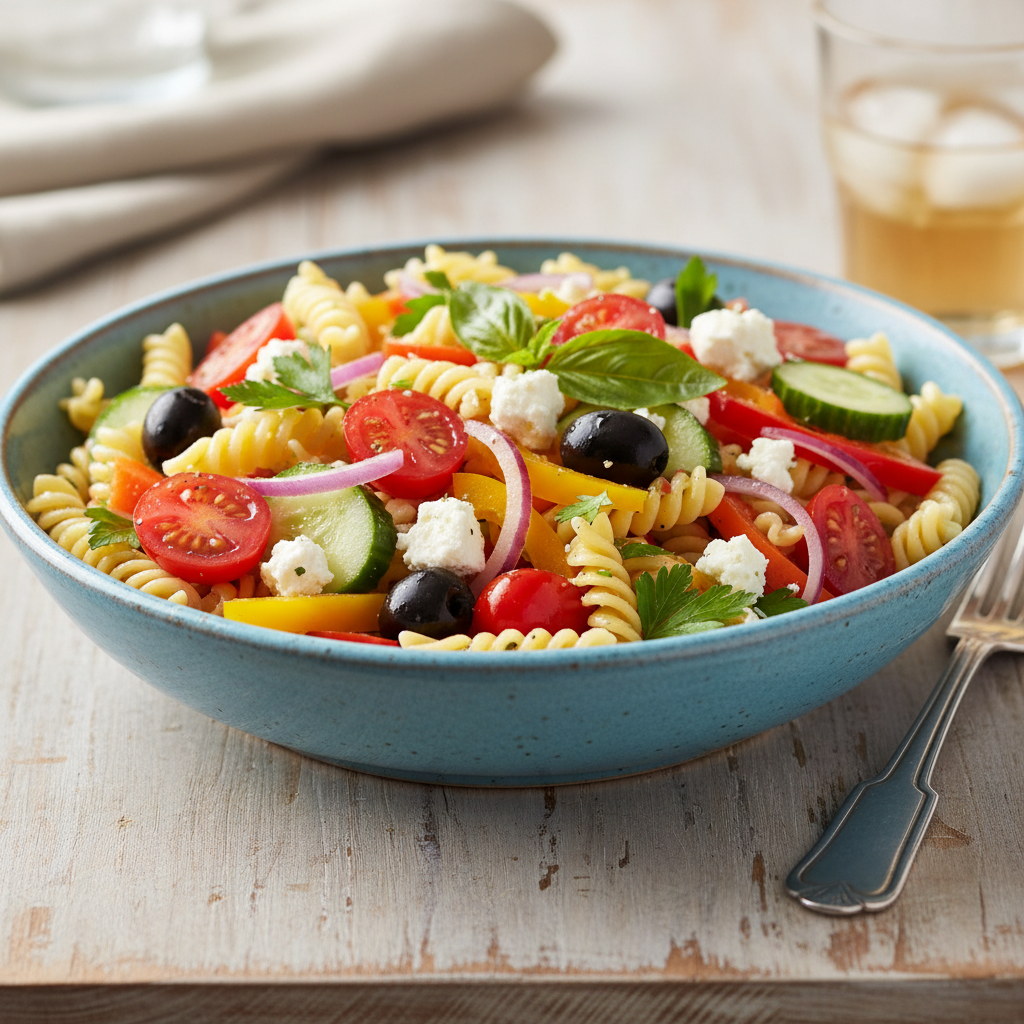
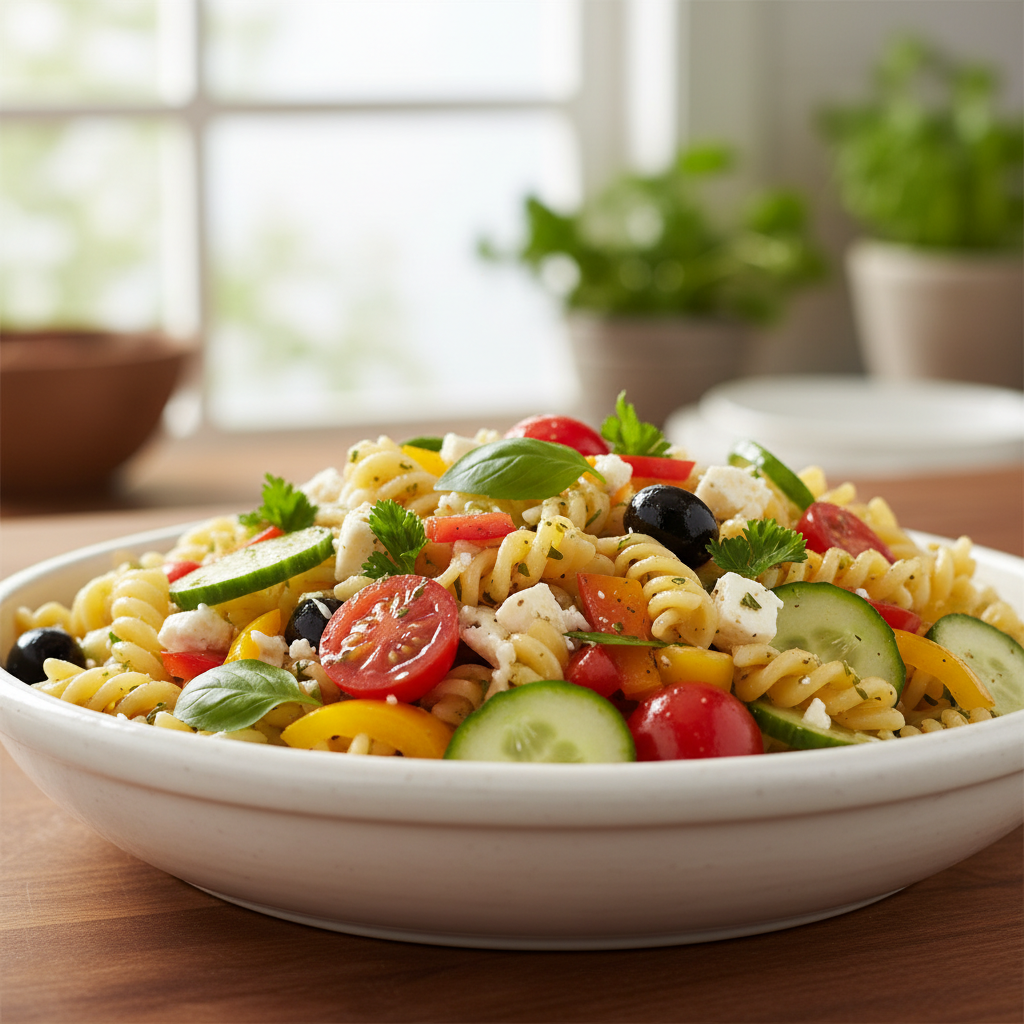
    A beautiful, large serving bowl filled with a fresh, vibrant, and colorful pasta salad, garnished with herbs.
    Professional food photography, photorealistic, high-quality food magazine photo of a stunning hero shot of a perfectly prepared, inviting pasta salad. The salad is served in an elegant, rustic ceramic serving bowl (light cream or sky blue color) placed on a clean, light-colored wooden table. The bowl is generously filled with al dente fusilli pasta, abundant with chopped fresh cherry tomatoes, crisp cucumber, diced colorful bell peppers (red, yellow, orange), thinly sliced red onion, crumbled feta cheese, and Kalamata olives. Fresh green parsley and basil leaves are sprinkled on top as a garnish. The lighting is soft, natural, and even, creating subtle shadows and highlights that make the salad look incredibly fresh, delicious, and irresistible. A small, silver serving spoon or fork rests beside the bowl, suggesting readiness to serve.

    Ready to discover your new favorite go-to dish? This simple pasta salad recipe is more than just a side dish—it’s a delightful, stress-free solution for any meal. Perfect for cooks of all levels, our recipe helps you ditch complicated instructions and enjoy every step of the process with confidence.

    Here’s why you’ll love adding this incredible pasta salad to your regular meal rotation:

    • Effortless Preparation: This recipe is truly beginner-friendly. Our clear, step-by-step instructions make it easy to whip up a delicious meal, boosting your confidence in the kitchen and delivering reliable results every time.
    • Bursting with Flavor: Every bite is packed with fresh, vibrant tastes. This recipe combines simple ingredients to create a flavorful meal without any fuss, making it easy to discover new flavor combinations you’ll love.
    • Incredibly Versatile: This pasta salad is the perfect fit for any situation, whether you need a quick lunch, a family-friendly meal, or a dish for your next potluck. It’s also fantastic for meal prep, making weekly planning a breeze.
    • Customize to Your Heart’s Content: We provide a fantastic base recipe, but feel free to get creative. Add your favorite vegetables, cheeses, or proteins to make it your own. Craving an Italian pasta salad? Mix in mozzarella and pepperoni. Dreaming of a Greek version? Feta and olives are your friends!
    • Perfect for Any Occasion: From summer picnics to easy weeknight dinners, this cold pasta salad is always a crowd-pleaser.

    Get ready to transform simple ingredients into a delicious, beautiful dish that everyone will love. This easy pasta salad is your ticket to stress-free, flavorful cooking!

    What Ingredients Do You Need for Pasta Salad?

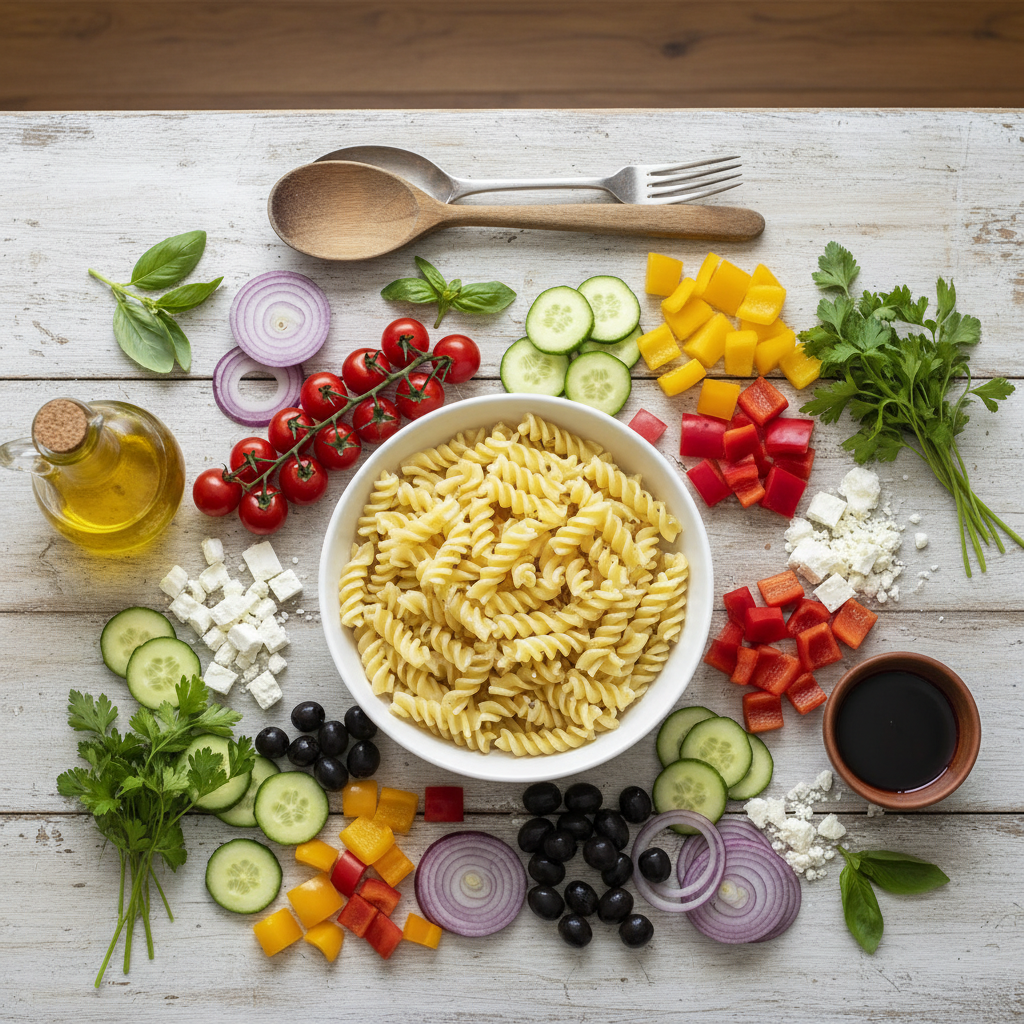
    An overhead view of various fresh ingredients for pasta salad, including pasta, colorful vegetables, feta cheese, and herbs, arranged on a wooden table.
    Professional food photography, photorealistic, high-quality food magazine photo of a vibrant flat lay of all fresh, raw and cooked ingredients required for pasta salad, neatly arranged on a rustic light wooden table. The composition includes cooked rotini pasta in a small white bowl, bright red cherry tomatoes, sliced green cucumber, diced red, yellow, and orange bell peppers, thinly sliced red onion, fresh green parsley and basil sprigs, crumbled feta cheese, and whole black olives. There is also a small glass bottle of olive oil and a small bowl of red wine vinegar. The lighting is soft, natural, and overhead, highlighting the textures and vibrant colors of each ingredient. The background is clean and slightly out of focus, maintaining a warm and inviting atmosphere.

    Choosing the Best Pasta Shape

    A great pasta salad recipe starts with the right pasta. The shape you choose is important because it needs to hold onto the dressing and other ingredients.

    Look for shapes with nooks, ridges, or twists, as these features are perfect for catching flavor. Selecting the right pasta ensures every bite is bursting with taste.

    Here are some of our top picks for a fantastic pasta salad:

    • Rotini: These corkscrew spirals are excellent because they have plenty of ridges for the dressing to cling to.
    • Fusilli: Similar to rotini, fusilli has a spiraled shape that works wonderfully in cold salads.
    • Penne: Penne are short, tubular shapes with ridged surfaces, making them ideal for holding chunky ingredients and dressing.
    • Farfalle (Bow Ties): These pretty bow-tie shapes add a fun visual element, and their central pinch helps scoop up other ingredients.
    • Ditalini: Small and tube-shaped, ditalini is great for salads with smaller ingredients, as it blends easily into every forkful.

    Ultimately, pick a shape you love. Just make sure it’s sturdy enough to hold up to mixing and chilling. This simple choice makes a big difference in the final dish.

    Essential Vegetables and Add-Ins

    The beauty of pasta salad lies in its vibrant mix of fresh ingredients, which add crunch, color, and nutrition. Think of this as your canvas to create a truly irresistible dish.

    Fresh, crisp vegetables will elevate your salad from good to amazing. They also add a wonderful texture contrast to the soft pasta.

    Here are the core ingredients you’ll want for a fantastic pasta salad recipe:

    • Cherry Tomatoes: Halved for juicy sweetness and easy eating.
    • Cucumber: Diced for a refreshing crunch.
    • Bell Peppers: Chopped red, yellow, or orange peppers add sweetness and color.
    • Red Onion: Thinly sliced or finely diced for a pleasant sharpness.
    • Fresh Parsley: Chopped for a bright, herbaceous note.

    Want to take your pasta salad to the next level? Consider these delicious additions:

    • Black Olives: Sliced for a briny, savory touch, especially in an Italian pasta salad.
    • Feta Cheese: Crumbled feta adds a tangy, creamy bite and is essential for a great Greek pasta salad.
    • Mozzarella Balls (Bocconcini): Small, fresh mozzarella adds a mild, milky texture.
    • Artichoke Hearts: Quartered for a tender, slightly tangy flavor.
    • Chickpeas: A great plant-based protein that makes the salad more filling.
    • Cooked Chicken or Shrimp: Add these for a heartier main course and a complete family meal.

    Feel free to mix and match based on what your family loves. This is a perfect opportunity to get creative in the kitchen.

    Ingredients for a Zesty Dressing

    Every great pasta salad needs a delicious dressing to tie all the flavors together. This zesty homemade dressing coats every ingredient with a bright, tangy, and savory finish.

    Making your own dressing is simple and tastes so much better than store-bought. Plus, you can control the ingredients for a fresh and healthy result.

    Here’s what you’ll need for our simple, flavorful dressing:

    • Extra Virgin Olive Oil: Use a good quality oil for the best flavor, as it’s the base of the dressing.
    • Red Wine Vinegar: Provides the essential tang and brightness.
    • Dijon Mustard: Adds a subtle sharpness and helps emulsify the dressing.
    • Garlic: Minced fresh garlic for aromatic depth.
    • Dried Oregano: A classic herb that brings an earthy, savory note, especially for an Italian pasta salad.
    • Salt and Black Pepper: Season to taste to enhance all the other flavors.
    • Honey or Maple Syrup (Optional): A small touch balances the acidity with a hint of sweetness.

    Simply whisk these ingredients together. This quick step creates a dressing that will completely transform your pasta salad into a memorable meal.

    How to Make Pasta Salad Step-by-Step

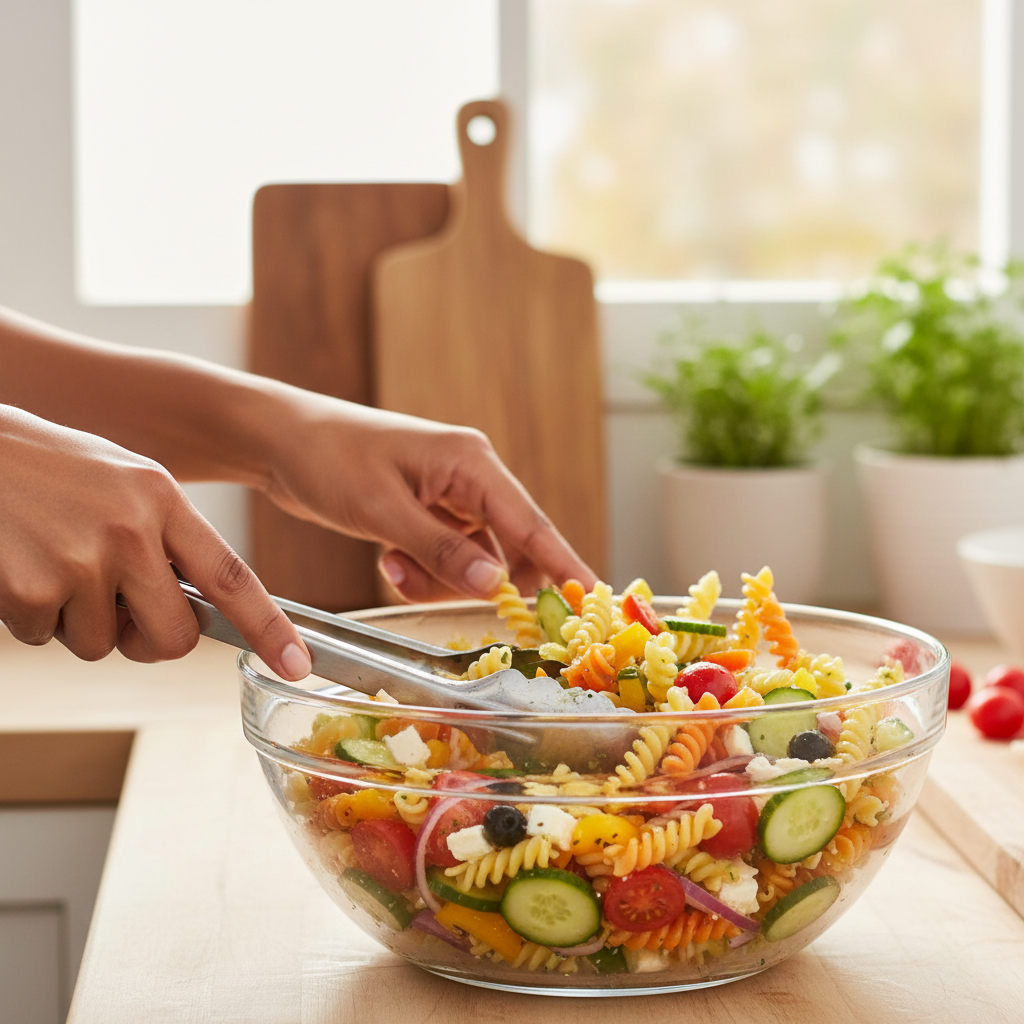
    A home cook's hands using tongs to toss a vibrant, colorful pasta salad in a large clear glass bowl.
    Professional food photography, photorealistic, high-quality food magazine photo of a close-up, action shot in a warm, inviting home kitchen. A real human home cook’s hands (warm skin tone) are gently tossing a vibrant, freshly made pasta salad in a large, clear glass mixing bowl using silver salad tongs. The salad is a colorful mix of al dente rotini pasta, chopped cherry tomatoes, cucumber, bell peppers, red onion, feta cheese, and olives, glistening with a light dressing. The background is a slightly blurred, bright kitchen countertop with natural light streaming in, conveying a sense of fresh preparation and ease. Focus is sharp on the salad and hands, showing movement.

    Step 1: Cook the Pasta Perfectly

    The first step to a great pasta salad is cooking the pasta perfectly. Avoid mushy pasta, a common mistake that can ruin the texture. The goal is firm, flavorful pasta that holds its shape.

    1. Boil the Water: Fill a large pot with water, add a generous tablespoon of salt, and bring it to a rolling boil. Salting the water seasons the pasta from the inside out.
    2. Add Pasta: Carefully add 1 pound of your chosen pasta shape to the boiling water. Stir occasionally to prevent sticking.
    3. Cook to Al Dente: Follow the package directions, but aim for “al dente.” This means the pasta should be cooked through but still have a firm, pleasant bite. It should not be soft. For most pasta shapes, this takes 8-10 minutes.
    4. Drain Thoroughly: Immediately drain the pasta in a colander. Do not rinse the pasta, as the starch helps the dressing cling to it for better flavor.
    5. Cool Slightly: Spread the drained pasta on a baking sheet in a single layer to cool for 10-15 minutes. This step stops the cooking, prevents clumping, and helps the pasta absorb the dressing more effectively.

    Step 2: Prepare the Vegetables and Mix-ins

    While the pasta is cooling, prepare the rest of your ingredients. This is the perfect time to chop the vegetables that will add fresh flavor, color, and crunch to the salad.

    • Chop Your Veggies: Dice 1 cup of cucumber, 1 cup of cherry tomatoes (halved), and 1/2 cup of red onion. Aim for bite-sized pieces of a similar size to ensure an even distribution of flavors.
    • Add Flavorful Extras: Slice 1/2 cup of black olives and 1/2 cup of feta cheese (crumbled or cubed). These add salty, Mediterranean-inspired notes. For a heartier salad, consider adding cooked chicken or chickpeas.
    • Get Creative: Feel free to add or swap other vegetables you enjoy. Bell peppers, carrots, or corn are all delicious additions.

    Step 3: Whisk Together the Dressing

    A zesty dressing ties all the flavors of the salad together. This simple recipe is quick to prepare and makes a big difference in the final dish.

    1. Gather Ingredients: In a medium bowl, combine 1/2 cup of extra virgin olive oil, 1/4 cup of red wine vinegar, 2 tablespoons of fresh lemon juice, 1 teaspoon of dried oregano, 1/2 teaspoon of garlic powder, 1/4 teaspoon of salt, and 1/8 teaspoon of black pepper.
    2. Whisk Vigorously: Whisk the ingredients together until the dressing is emulsified. An emulsified dressing will look slightly thicker and well-blended, not separated.
    3. Taste and Adjust: Taste the dressing and adjust the seasonings as needed. Add more salt for flavor or more vinegar for tang until it’s balanced to your preference.

    Step 4: Combine and Chill for the Best Flavor

    The final step is to combine all the components. Properly mixing and chilling the salad is essential for allowing the flavors to meld together for the best taste.

    1. Combine Ingredients: In a large mixing bowl, add the cooled pasta, chopped vegetables, and all other mix-ins.
    2. Pour the Dressing: Drizzle the whisked dressing evenly over the pasta and vegetables.
    3. Toss Gently: Use a large spoon or spatula to gently toss everything together, ensuring all ingredients are evenly coated with the dressing.
    4. Cover and Chill: Cover the bowl tightly and refrigerate for at least 1-2 hours. This chilling time is crucial for the flavors to meld together. For the best result, chill it overnight.
    5. Serve and Enjoy: Before serving, give the salad another gentle toss. If it appears a bit dry after chilling, stir in a tablespoon of extra olive oil or lemon juice to refresh it.

    What Are Some Popular Pasta Salad Variations?

    Classic Italian Pasta Salad

    Craving a taste of Italy without the fuss? Our classic Italian pasta salad is a delightful and easy choice. Packed with vibrant flavors and fresh ingredients, it’s a satisfying meal that’s simple to prepare.

    This beginner-friendly recipe comes together quickly, making it perfect for potlucks, picnics, or a simple weeknight dinner. It offers a wonderful blend of savory and tangy notes and is easy to adapt, making it a family favorite.

    Here are some popular ingredients for an Italian pasta salad:

    • Pasta: Rotini, fusilli, or penne work best.
    • Vegetables: Cherry tomatoes, sliced bell peppers (red and green), red onion, and black olives add color and crunch.
    • Cheese: Small mozzarella balls (bocconcini) are a must.
    • Meats (optional): Sliced pepperoni or salami bring a savory kick.
    • Dressing: A zesty Italian dressing, often vinaigrette-based, ties everything together.
    • Herbs: Fresh basil or oregano elevates the flavor.

    Our step-by-step guidance helps you create a dish everyone will love. It’s simple, delicious, and a true crowd-pleaser.

    Zesty Greek Pasta Salad

    If you’re looking for a refreshing and healthy option, the zesty Greek pasta salad is a superb choice that brings Mediterranean sunshine to your plate. It’s an excellent and reliable option for a quick meal or for anyone looking to try a new, simple dish.

    Known for its bright, tangy dressing and fresh components, this salad offers a balanced and flavorful experience. It’s perfect for summer gatherings or a light lunch, and you’ll appreciate how easy it is to prepare.

    Key ingredients often found in a Greek pasta salad include:

    • Pasta: Orzo, rotini, or small shells are great choices.
    • Vegetables: Crisp cucumbers, juicy cherry tomatoes, sliced red onion, and colorful bell peppers.
    • Olives: Briny Kalamata olives are essential.
    • Cheese: Crumbled feta cheese provides a salty, tangy counterpoint.
    • Dressing: A lemon and herb vinaigrette, typically with oregano, olive oil, and red wine vinegar.

    This variation helps home cooks make healthy, tasty meals quickly. It’s a vibrant and satisfying dish that proves cooking can be both easy and flavorful.

    Creamy Pasta Salad with Mayo

    For those who love a rich and comforting classic, the creamy pasta salad with mayo is a beloved choice. This version often evokes nostalgic memories of family picnics. As a family-friendly meal that’s always a hit, it’s also ideal for meal prep and effortless entertaining.

    The creamy dressing makes this pasta salad wonderfully indulgent. The salad is also incredibly versatile, so you can easily customize it with delicious additions to suit your preferences.

    Typical ingredients for a creamy pasta salad are:

    • Pasta: Elbow macaroni, shells, or ditalini are commonly used.
    • Dressing: A luscious blend of mayonnaise, a touch of mustard, vinegar, and seasonings.
    • Vegetables: Diced celery, finely chopped red onion, and sweet peas add texture and freshness.
    • Protein (optional): Cooked chicken, tuna, or hard-boiled eggs make it a more substantial dish.
    • Seasonings: Salt, black pepper, and sometimes a hint of sugar balance the flavors.

    This reliable recipe helps home cooks make quick, flavorful meals without stress. It’s proof that simple ingredients can create a truly comforting dish, making it a great recipe for building confidence in the kitchen.

    Pro Tips for the Best Cold Pasta Salad

    How to Avoid Mushy Pasta

    The key to a perfect cold pasta salad is perfectly cooked pasta—no one wants a mushy texture! Follow these easy steps to ensure your pasta stays firm and delicious from the start.

    • Cook Al Dente: Always cook your pasta “al dente,” which means it should be firm to the bite, not soft. To achieve this, check the package instructions and simply reduce the recommended cooking time by 1-2 minutes. This small change keeps it resilient.
    • Rinse Immediately: As soon as the pasta is done, drain it and immediately rinse it under cold running water. This crucial step stops the cooking process and washes away excess starch, which prevents sticking and mushiness.
    • Drain Well: After rinsing, drain the pasta thoroughly, as any excess water will dilute your dressing. Gently shake the colander and let it sit for a few minutes to remove as much water as possible.
    • Toss with a Little Oil: For extra insurance against sticking, toss the cooled and drained pasta with a small amount of olive oil. This also adds a subtle layer of flavor.
    • Choose Wisely: Some pasta shapes hold up better in cold salads than others. Sturdy shapes like rotini, fusilli, penne, and farfalle are excellent choices because they embrace dressings and mix-ins without falling apart.

    Make-Ahead and Storage Guide

    Pasta salad is a fantastic meal prep solution that often tastes even better as the flavors meld. Here’s how to prepare and store your creation for maximum enjoyment.

    • Chill for Flavor: For the best taste, chill your pasta salad for at least 30 minutes before serving. An hour or two is even better, as this allows the flavors to truly mingle and deepen.
    • Dress in Stages (Optional): If making a large batch to enjoy later, consider dressing it in stages. Initially, combine the pasta and vegetables with about half the dressing. Add the rest just before serving to keep everything crisp and fresh.
    • Airtight is Key: Store leftover pasta salad in an airtight container to keep it fresh, prevent it from drying out, and protect it from absorbing other fridge odors.
    • Refrigerate Promptly: To ensure food safety, always refrigerate your pasta salad within two hours of preparation.
    • Storage Duration: Stored properly, cold pasta salad typically lasts for 3-5 days in the refrigerator [1]. However, always trust your senses; discard the salad if it smells off or looks unusual.
    • Refreshing Before Serving: If the salad seems a bit dry after storage, refresh it by gently tossing it with a splash of extra dressing, a touch of olive oil, or a squeeze of lemon juice.

    Creative Ingredient Swaps and Substitutions

    One of the best things about pasta salad is its versatility. Feel free to experiment with what you have on hand or what you love. Use these simple swaps to easily adapt any recipe to your family’s tastes or dietary needs.

    • Pasta Power:
      • Gluten-Free: Swap traditional pasta for one of the many great gluten-free varieties now available.
      • Whole Wheat: Choose whole wheat pasta for added fiber and nutrients, creating a more balanced meal.
      • Other Shapes: Don’t be afraid to try orecchiette, cavatappi, or even tiny ditalini.
    • Veggie Adventures:
      • Greens: Add a handful of spinach, arugula, or finely chopped kale for a nutritional boost.
      • Crunchy Veggies: Classic choices include bell peppers, cucumbers, red onion, and carrots. For a different texture, try adding snap peas or radishes.
      • Roasted Veggies: For a deeper flavor, add roasted zucchini, eggplant, or cherry tomatoes. Just be sure to let them cool completely before mixing them in.
    • Protein Punch (for a more filling meal):
      • Chicken: Shredded rotisserie chicken or grilled chicken breast pieces are excellent additions.
      • Chickpeas: Add roasted or canned chickpeas for an easy, plant-based protein—perfect for vegetarian recipes.
      • Tuna or Salmon: Flaked canned tuna or salmon quickly transforms a side dish into a simple and satisfying lunch.
      • Hard-Boiled Eggs: Chopped hard-boiled eggs provide an extra boost of protein.
    • Cheese Choices:
      • Feta: Crumbled feta cheese is perfect for a Greek-inspired pasta salad.
      • Mozzarella: Mini mozzarella balls (bocconcini) are wonderful in an Italian pasta salad.
      • Parmesan: Shaved or grated Parmesan adds a salty, umami kick.
      • Vegan Cheese: Nutritional yeast or dairy-free feta alternatives work well for a vegan option.
    • Dress It Up:
      • Pesto: Swirl in some basil pesto for a vibrant, herbaceous flavor.
      • Creamy: For a creamier texture, add a dollop of Greek yogurt or a touch of mayonnaise.
      • Herb-Based: Fresh herbs like dill, parsley, cilantro, or mint can completely change the flavor profile.
      • Citrusy: A squeeze of fresh lemon or lime juice can brighten the entire salad.

    Frequently Asked Questions

    What ingredients are in a Greek pasta salad?

    Creating a delicious Greek pasta salad is a wonderful, beginner-friendly way to bring vibrant and refreshing flavors to your table. This salad is naturally packed with goodness and is simple to prepare.

    Here are the core components you will typically find:

    • Pasta: Short pasta shapes like rotini, penne, or orzo work best.
    • Fresh Vegetables: Crisp cucumber, juicy cherry tomatoes, sliced red onion, and colorful bell peppers are essential.
    • Olives: Briny Kalamata olives add a distinct Mediterranean flavor.
    • Feta Cheese: Crumbled feta cheese provides a key salty, tangy counterpoint.
    • Herbs: Fresh or dried oregano is a must, while parsley adds brightness.
    • Greek Dressing: A mix of extra virgin olive oil, red wine vinegar, minced garlic, dried oregano, salt, and pepper ties all the flavors together beautifully.

    This easy recipe creates a satisfying meal that’s perfect for family dinners or gatherings.

    How do you make a simple creamy pasta salad?

    A simple, creamy pasta salad is a classic for a reason: it’s an incredibly easy, go-to dish for quick lunches, weeknight dinners, or anyone new to cooking.

    Here’s how to create this comforting dish:

    1. Cook Your Pasta: Start by cooking 1 pound of a short pasta like rotini, elbow macaroni, or shells until al dente. Rinse with cold water and drain well to stop the cooking process and prevent mushiness.
    2. Prepare Your Veggies: For great texture, chop about 1.5 to 2 cups of mixed vegetables, such as crisp celery, shredded carrots, finely diced red onion, and bell peppers.
    3. Make the Creamy Dressing: In a large bowl, whisk together 1 to 1.5 cups of mayonnaise, 1 tablespoon of Dijon mustard, 1 tablespoon of apple cider vinegar, and 1 teaspoon of sugar (optional). Season with salt and black pepper to taste. For extra creaminess, add a splash of milk.
    4. Combine Everything: Add the cooled pasta and chopped vegetables to the dressing. Gently mix until everything is well coated.
    5. Chill and Serve: Cover the salad and chill in the refrigerator for at least 30 minutes to allow the flavors to meld. It tastes even better after a few hours or overnight.

    As a fantastic option for meal prep, this beginner-friendly recipe simplifies mealtime decisions and is sure to become a favorite.

    What is the best dressing for an Italian pasta salad?

    The best dressing for an Italian pasta salad is vibrant and tangy, infusing every bite with a wonderful depth of flavor. This simple yet impactful dressing truly makes the salad shine.

    A classic Italian dressing features a base of quality extra virgin olive oil and red wine vinegar. Here’s how to make one:

    • Olive Oil: Use 1/2 cup of extra virgin olive oil for a rich foundation.
    • Red Wine Vinegar: Add 1/4 cup of red wine vinegar for the essential tang.
    • Garlic: Include 2 cloves of minced garlic for the best punch of flavor.
    • Dried Herbs: Use 1 teaspoon each of dried oregano and dried basil for classic Italian flavor.
    • Dijon Mustard: Add about 1 teaspoon to help emulsify the dressing and add a subtle zing.
    • Seasoning: Use salt and freshly ground black pepper to taste.
    • Optional Add-ins: For extra richness, consider a sprinkle of grated Parmesan cheese or a pinch of red pepper flakes for heat.

    Whisk these ingredients together until the dressing is flavorful and well-balanced. It is the heart of any great Italian pasta salad, and this approachable home cooking method yields fantastic results.

    Can you make pasta salad vegetarian?

    Absolutely! Most pasta salads are inherently vegetarian, making them a fantastic and adaptable choice for healthy, balanced meals. You can easily adjust the ingredients to fit any dietary preference.

    Traditional pasta salads often feature an array of vegetarian ingredients like pasta, fresh vegetables, cheese, and plant-based dressings, making them naturally meat-free. If a recipe calls for meat like pepperoni or chicken, you can simply omit it or swap it for a delicious plant-based protein to create a flavorful meal.

    Here are some fantastic vegetarian substitutes:

    • Chickpeas: Roasted or canned chickpeas add protein and a satisfying texture.
    • White Beans: Cannellini or other white beans are creamy and filling.
    • Grilled Tofu or Tempeh: Marinate and grill these for a smoky, savory addition.
    • Extra Vegetables: Add more of your favorites, like roasted bell peppers, zucchini, or sun-dried tomatoes.
    • Artichoke Hearts: Marinated artichoke hearts bring a tangy, meaty texture.
    • Olives: A variety of olives can add different flavor notes.

    Making your pasta salad vegetarian is an easy way to enjoy a wholesome dish and a quick solution for simple dinners or healthy snacks. Recipesmondial is here to help you discover new simple dishes and cook confidently.


    Sources

    1. https://www.foodsafety.gov/keep-food-safe/food-safety-by-food-type/meat-poultry-seafood#chicken

  • 7 Best Potato Salad Recipes (From Classic American to No-Mayo!)

    7 Best Potato Salad Recipes (From Classic American to No-Mayo!)

    A potato salad recipe is a classic side dish made by combining boiled, cubed potatoes with a creamy or vinaigrette-based dressing and various mix-ins. The most common American version uses a mayonnaise dressing with hard-boiled eggs, celery, and onions. Variations are popular worldwide, including German potato salad which uses a vinegar-based dressing and is often served warm.

    Is there anything quite as comforting and versatile as a good potato salad? It’s the perfect crowd-pleaser for a summer picnic, a backyard barbecue, or as a delicious side dish to elevate your weeknight dinner. However, finding the best potato salad recipe—one that matches your taste and is also simple to prepare—can be a challenge.

    We believe cooking should be enjoyable, not stressful. That’s why we’ve gathered our best potato salad variations, each with clear, step-by-step guidance to take the guesswork out of mealtime. These approachable recipes are designed to help you build confidence in the kitchen and create flavorful meals with ease.

    In this guide, you’ll find 7 incredible potato salad recipes. We cover everything from the classic American style with egg to tangy, no-mayo German options and other light, fresh alternatives. Each beginner-friendly recipe is crafted to deliver reliable and delicious results. Get ready to transform humble potatoes into an unforgettable dish!

    What Makes the Perfect Potato Salad?

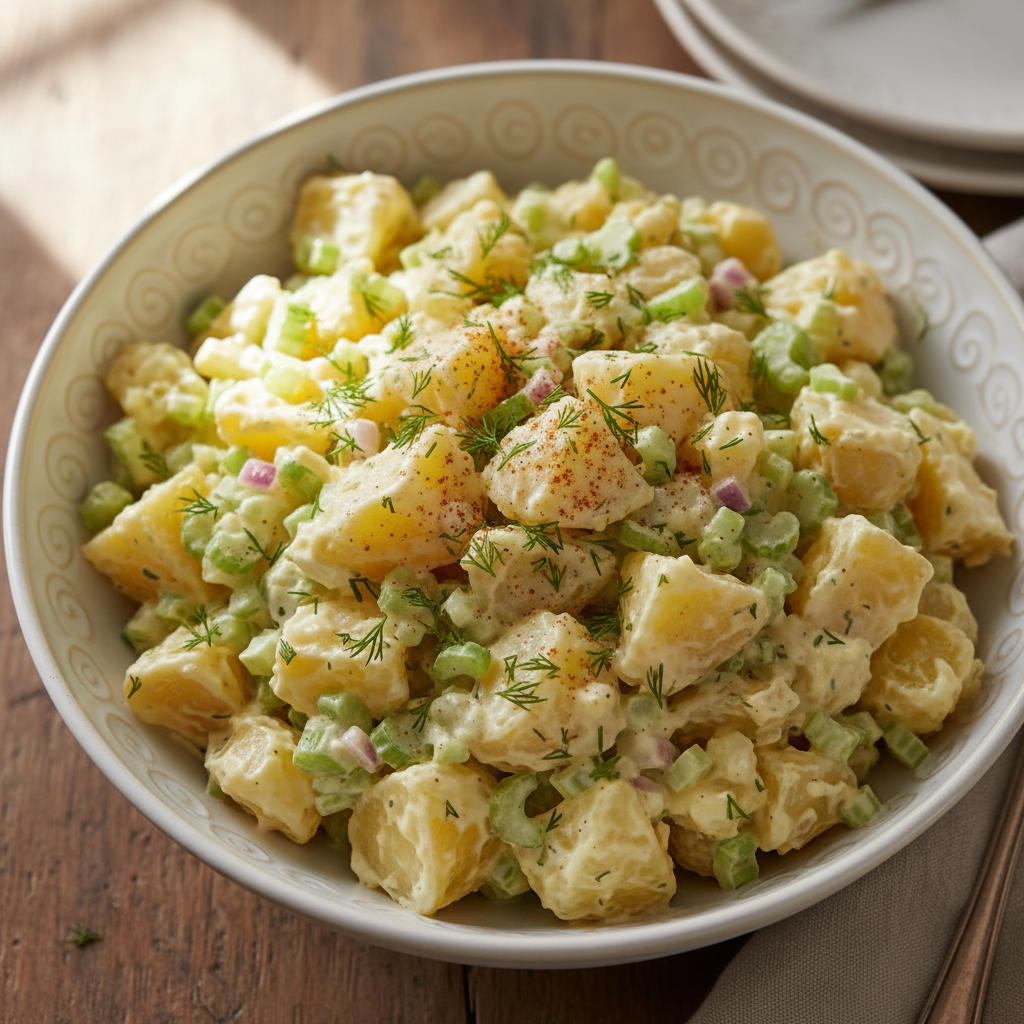
    A close-up shot of a beautifully prepared classic creamy potato salad, garnished with fresh dill and paprika in a white ceramic bowl.
    Professional food photography, photorealistic, high-quality food magazine photo of a perfect, classic American potato salad in an elegant ceramic bowl. The potato salad should be creamy with visible tender potato chunks, finely chopped celery, and a sprinkle of fresh dill and paprika on top. The dressing should look rich and well-integrated. Natural, soft daylight from a window illuminates the scene, creating inviting highlights. The background is softly blurred, suggesting a warm kitchen environment.

    Crafting the “perfect” potato salad is a delightful journey for any home cook. It’s more than just a side dish—it’s a celebration of simple ingredients. At Recipesmondial, we believe the best potato salad recipe is easy to follow and incredibly flavorful, making your cooking experience both stress-free and enjoyable.

    While there’s no single definition of “perfect,” certain elements consistently elevate a potato salad from good to truly unforgettable. Let’s explore the key components needed to create that ideal, mouth-watering dish.

    The Star: Perfectly Cooked Potatoes

    The foundation of any great potato salad is the potatoes themselves. Choosing the right type and cooking them correctly is crucial. You want pieces that are tender yet firm, hold their shape, and readily absorb the dressing.

    • Choose Wisely: Waxy or all-purpose potatoes like Yukon Gold, red potatoes, or fingerlings work best. These varieties have less starch, so they hold their shape instead of falling apart. For example, Yukon Golds are a fantastic choice for their creamy texture and subtle sweetness [1].
    • Cook Them Right: Boil or steam your potatoes until they are fork-tender but not mushy. Overcooked potatoes turn to mash, while undercooked ones are too firm. Adding a little salt to the cooking water seasons them from the start.
    • Cool Properly: After cooking, drain the potatoes well. For the best flavor absorption, let them cool slightly before dressing them while they are still warm.

    The Heart: A Flavorful Dressing

    The dressing ties all the ingredients together, infusing them with incredible flavor. Whether you prefer a creamy classic or a tangy vinaigrette, the key is balance.

    • Creamy Classic: Many easy potato salad recipes use a mayonnaise-based dressing. This typically includes mayonnaise, mustard (Dijon or yellow), a touch of vinegar or lemon juice for brightness, and seasonings.
    • Tangy & Light: For a lighter take, a vinaigrette-style dressing is a wonderful choice. A mix of olive oil, vinegar (like apple cider or white wine), fresh herbs, and spices creates a vibrant flavor. This is a fantastic option if you’re looking for a fresh-tasting side dish.
    • Balance the Flavors: A great dressing should have a balanced mix of savory, tangy, and sweet notes. Always taste your dressing before adding it to the potatoes and adjust the seasonings as needed.

    The Personality: Fresh Mix-Ins

    Mix-ins add texture, color, and extra layers of flavor. This is where you can truly personalize your potato salad and make it your own.

    • Classic Choices: Finely diced celery adds a satisfying crunch, while red or green onions bring a mild bite. Hard-boiled eggs are also a beloved addition in traditional American potato salads, contributing a rich, creamy texture.
    • Creative Additions: Don’t be afraid to experiment! Consider chopped pickles for tang, bell peppers for sweetness, fresh dill for herbaceous notes, or crispy bacon for a savory crunch. These simple additions can elevate many simple dinner recipes, and potato salad is a perfect example.
    • Texture Matters: Using a variety of textures makes each bite more interesting. Aim for a balanced combination of soft potatoes, crunchy vegetables, and the creamy texture of hard-boiled eggs.

    The Secret Touch: Seasoning and Resting

    Even with perfect ingredients, proper seasoning and a little patience can make all the difference in your final dish.

    • Season Generously: Don’t be shy with salt and pepper, as potatoes absorb a lot of seasoning. Taste as you go and adjust. A pinch of sugar can also help balance the acidity in the dressing.
    • Let it Mingle: For the best flavor, allow the finished potato salad to chill in the refrigerator for at least one hour, or ideally several hours. This resting time allows all the flavors to meld together, creating a more harmonious and delicious result. This simple step is key to taking your potato salad from good to great.

    At Recipesmondial, we provide step-by-step guidance to help you master this classic dish. We aim to make cooking enjoyable for everyone, ensuring your journey from simple ingredients to a delicious, rewarding meal is a seamless one.

    Our 7 Best Potato Salad Recipes for Any Occasion

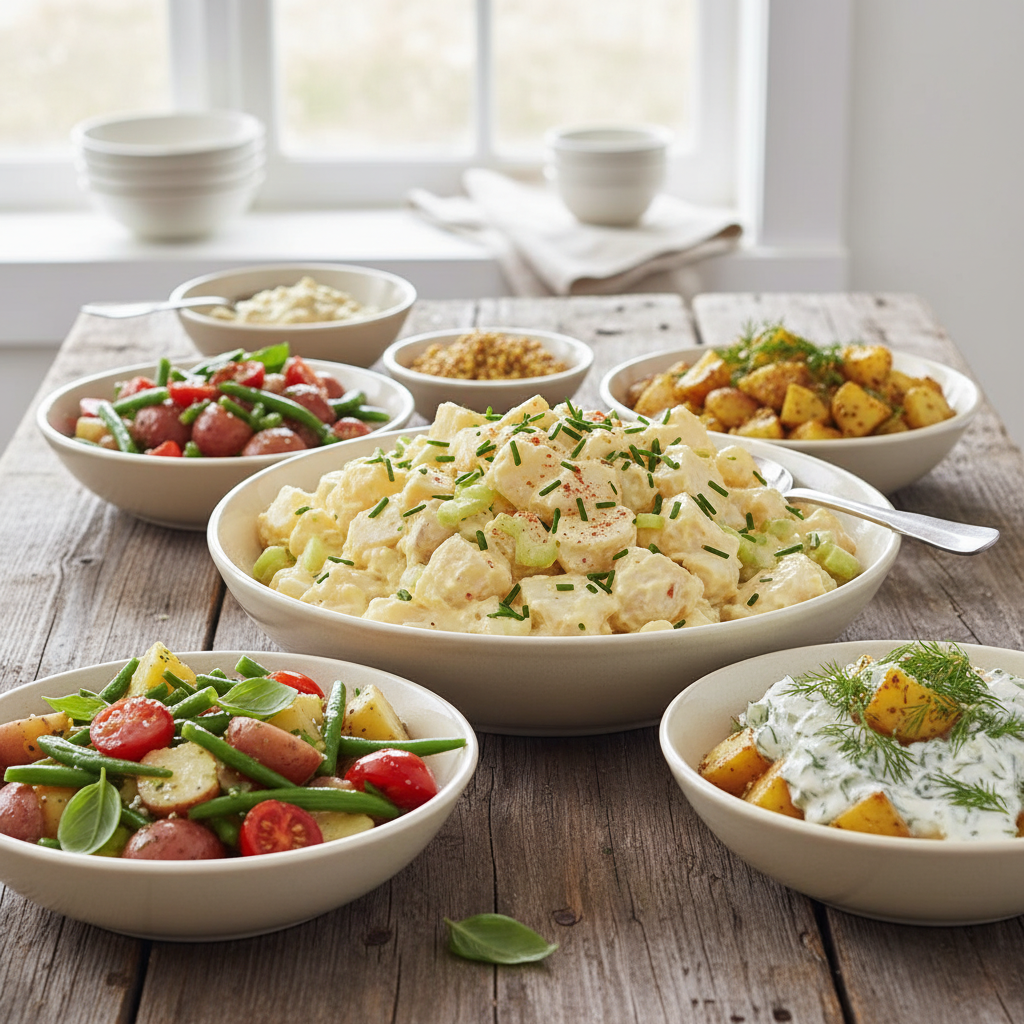
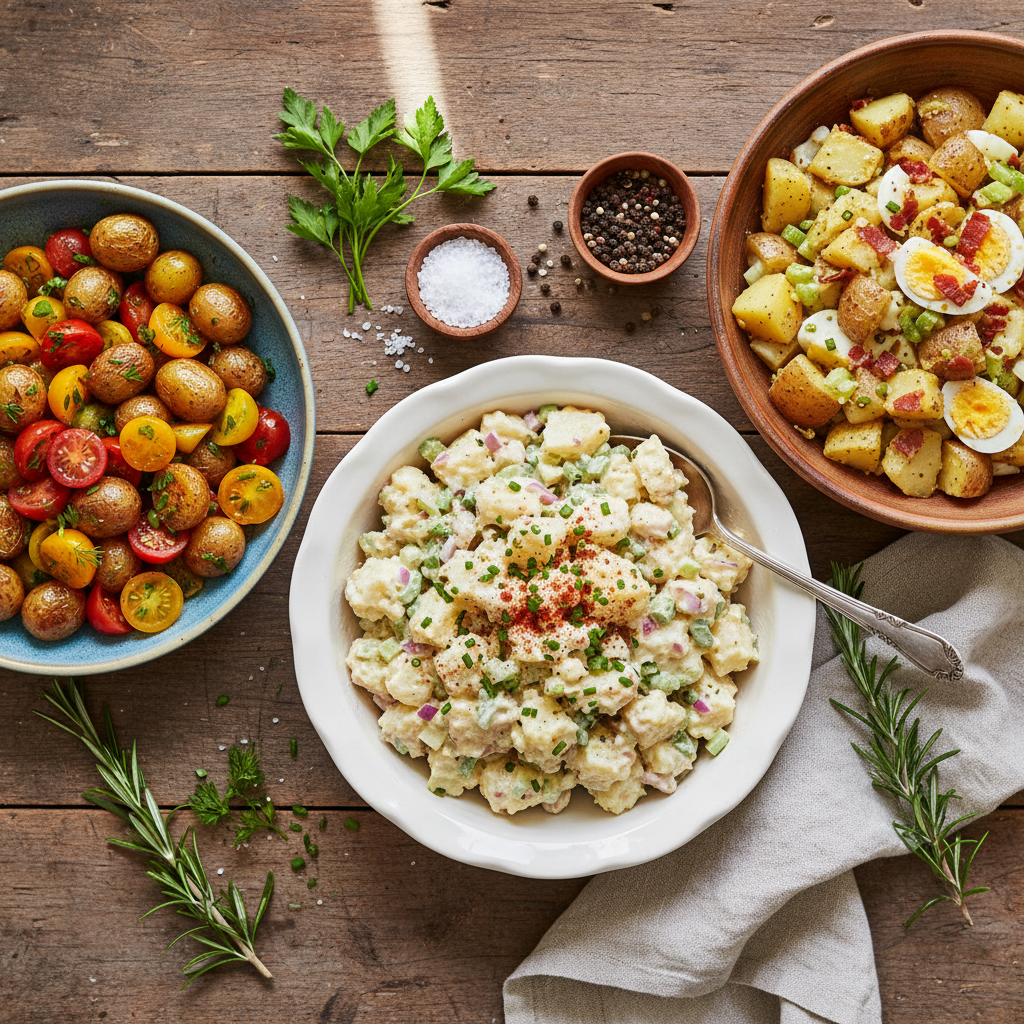
    An overhead view of three distinct potato salads, showcasing various styles like a classic creamy one, a vibrant herby one, and a hearty deli-style version, arranged on a rustic wooden table.
    Professional food photography, photorealistic, high-quality food magazine photo of a vibrant flat lay featuring three distinct potato salads on a rustic wooden table. One is a classic creamy American style, garnished with paprika and chives. Another is a colorful no-mayo version with roasted potatoes, fresh herbs like parsley and dill, cherry tomatoes, and a light vinaigrette. The third is a hearty, deli-style potato salad with visible bacon bits and hard-boiled eggs. Each salad is in a unique, aesthetically pleasing bowl, showcasing variety in texture and color. The lighting is bright and natural, creating an inviting, abundant feel.

    Ready to discover your next favorite side dish? At Recipesmondial, we believe every meal should be delicious and easy. That’s why we’ve gathered our best potato salad recipes for every taste and occasion. Whether you’re looking for classic comfort food or a fresh new twist, we’ve got you covered. Get ready to turn simple ingredients into an unforgettable side dish!

    1. The Classic American Potato Salad Recipe (With Egg)

    There’s nothing quite like a traditional American potato salad. This crowd-pleasing recipe is a staple for any gathering, from family meals to summer barbecues. You’ll find creamy potatoes, crisp celery, a hint of onion, and perfectly cooked hard-boiled eggs. Everything is tossed in a rich, tangy mayonnaise dressing for a side dish that is simple, satisfying, and always a hit.

    • Flavor Profile: Creamy, tangy, savory, and comforting.
    • Why You’ll Love It: It evokes nostalgia with a familiar, delicious taste. This classic side dish pairs well with almost anything.
    • Best For: Potlucks, picnics, holiday gatherings, and Sunday dinners.

    2. Simple Potato Salad Recipe for Beginners

    New to cooking or overwhelmed by complex instructions? This beginner-friendly recipe is for you. With straightforward steps and minimal ingredients, it’s designed to help you build confidence in the kitchen. This recipe skips the fancy additions, highlighting the natural flavor of potatoes with a simple yet delicious creamy dressing. It’s a fantastic way to enjoy cooking without stress.

    • Flavor Profile: Mild, creamy, and wonderfully balanced.
    • Why You’ll Love It: It’s incredibly easy to follow and quick to prepare, guaranteeing reliable results every time.
    • Best For: First-time cooks, quick lunch ideas, or a fuss-free side dish.

    3. Tangy German Potato Salad (A No-Mayo Favorite)

    Step outside the box with this vibrant German potato salad. As a delightful no-mayo option, it’s perfect for those seeking something new. Served warm or at room temperature, it features tender potatoes tossed in a zesty, vinegar-based dressing. Crispy bacon, sautéed onions, and fresh parsley add incredible depth, making its tangy flavor a refreshing alternative to traditional creamy versions.

    • Flavor Profile: Tangy, savory, smoky, and bright.
    • Why You’ll Love It: It’s naturally lighter than mayo-based salads and packed with bold flavors, making it excellent for outdoor events where refrigeration might be an issue.
    • Best For: Barbecues, Oktoberfest celebrations, or a unique weeknight side.

    4. Creamy Potato Salad Recipe with Sour Cream

    If you love extra creaminess and a touch of tang, this recipe is a must-try. It uses sour cream to add a rich, luxurious texture and a delightful zest that complements the potatoes beautifully. We combine it with classic ingredients to create a truly indulgent side dish, offering a lovely variation on the traditional mayo-based recipe. It’s a simple, comforting, and approachable dish.

    • Flavor Profile: Rich, creamy, slightly tart, and comforting.
    • Why You’ll Love It: The sour cream creates a wonderfully smooth consistency and a unique flavor that feels both familiar and special.
    • Best For: Sunday lunches, potlucks, or when you want an extra-creamy side.

    5. Easy No-Egg Potato Salad Recipe

    Not a fan of hard-boiled eggs in your potato salad? This recipe is designed for you. It delivers all the classic, comforting flavor you expect, just without the eggs. Instead, we focus on perfectly cooked potatoes, crisp veggies, and a delicious creamy dressing. This version ensures everyone at the table can enjoy this classic side. It’s a straightforward alternative that doesn’t compromise on taste.

    • Flavor Profile: Classic creamy, savory, and fresh.
    • Why You’ll Love It: It caters to dietary preferences or simple dislikes, offering a reliably delicious potato salad every time.
    • Best For: Egg-free diets, picnics, or when you want a simpler preparation.

    6. A Crowd-Pleasing Potato Salad with No Pickles

    Pickles not your thing? You’re not alone! This crowd-pleasing recipe skips the pickles entirely. Instead, we use other crisp vegetables and seasonings to achieve a perfect balance of flavor and texture. Bell peppers, celery, and a touch of mustard or white wine vinegar provide the ideal tang and crunch. This version is a guaranteed hit with everyone.

    • Flavor Profile: Savory, creamy, and fresh without the pickle brine.
    • Why You’ll Love It: It’s ideal for those who dislike pickles but still want a flavorful potato salad, making this version universally appealing.
    • Best For: Large gatherings, fussy eaters, or anytime you want a guaranteed crowd-pleaser.

    7. Light & Fresh Potato Salad Without Mayo

    Looking for a healthier twist or a lighter side dish? This fresh potato salad without mayo is the perfect answer. It features a bright, zesty vinaigrette made with olive oil, lemon juice, and fresh herbs. We also add crisp vegetables like cucumbers and cherry tomatoes for a vibrant, flavorful finish. It’s a refreshing option that’s full of taste but feels much lighter.

    • Flavor Profile: Bright, zesty, herbaceous, and incredibly fresh.
    • Why You’ll Love It: It’s a fantastic lighter option packed with fresh flavors, making it great for warm weather.
    • Best For: Summer barbecues, healthy meal plans, or a refreshing side to grilled fish.

    What not to put in potato salad?

    Hey there, fellow home cooks! While making a delicious potato salad is an art, it’s also about knowing what to avoid. Simple mistakes can easily turn a potential crowd-pleaser into a less-than-stellar dish. Don’t worry, we’re here to help! At Recipesmondial, we want your cooking journey to be enjoyable and stress-free. Let’s dive into the common pitfalls to ensure your homemade potato salad is always a hit.

    By avoiding these missteps, you can create a potato salad that is flavorful, perfectly textured, and truly irresistible. These practical tips will help you build confidence in the kitchen and master this classic dish.

    • Overcooked or Undercooked Potatoes:

      The texture of your potatoes is crucial. Overcooked potatoes become mushy and lose their structure, while undercooked ones are hard and have an unpleasant, gritty texture. For the best potato salad, you want potato pieces that are tender yet firm. The goal is fork-tender, not falling apart.

    • Too Much Mayonnaise or Dressing:

      It’s easy to drown potato salad in dressing, but this common mistake can make it greasy, soupy, and overpower the other fresh flavors. Start with a smaller amount of dressing and mix gently. You can always add more if needed. The goal is to lightly coat the potatoes, not have them swimming in dressing, to achieve the perfect balance.

    • Raw, Overpowering Onions or Garlic:

      The sharp bite of raw onions or garlic can easily overpower the other flavors in your potato salad, leaving a pungent aftertaste. To mellow the flavor of raw onions, chop them finely and soak them in cold water for 10-15 minutes before adding them. For a sweeter, less assertive garlic flavor, try roasting it lightly first.

    • Adding Dressing to Hot Potatoes (for Creamy Salads):

      For creamy, mayonnaise-based salads, avoid adding the dressing while the potatoes are still hot. Hot potatoes absorb the dressing too quickly, which can cause the mayonnaise to separate and turn the salad oily or watery. Let them cool until they are just warm before mixing. This ensures the perfect creamy texture. Note that this rule doesn’t apply to all recipes; warm German potato salad, for instance, often requires adding a vinaigrette to hot potatoes.

    • Watery Ingredients:

      Excess water from any ingredient will dilute the dressing, wash away flavors, and make your potato salad soggy. To prevent this, ensure your cooked potatoes are drained thoroughly. Additionally, pat watery vegetables like celery or cucumbers dry with a paper towel before adding them to the salad. This simple step is key to a crisp, flavorful result.

    • Ignoring Chill Time:

      Potato salad tastes best when the flavors have had time to meld together. Serving it immediately after mixing often results in a bland dish. For a much richer taste, allow the salad to chill in the refrigerator for at least one hour before serving—two to four hours is even better. This resting period is essential for developing flavor. For food safety, always keep potato salad refrigerated [2].

    • Old or Poor-Quality Ingredients:

      The quality of your final dish depends entirely on the quality of your ingredients. Stale herbs, old mayonnaise, or potatoes past their prime will compromise the flavor of your salad. For the best results, always use the freshest, highest-quality ingredients you can find. Be sure to check expiration dates and choose crisp produce for a truly delicious potato salad.

    By avoiding these common pitfalls, you’re well on your way to creating a potato salad that’s perfect every time. Recipesmondial is here to guide you toward more confident and joyful cooking!

    Pro Tips for the Best Homemade Potato Salad

    Choosing the Right Type of Potato

    Choosing the right potato is the first step to making the best potato salad recipe. Because different potatoes behave differently when cooked, selecting the correct variety is key to preventing a mushy or crumbly salad. This simple choice makes a big difference in the final texture and taste.

    • Waxy Potatoes are Best: These potatoes have less starch and thinner skins, which helps them hold their shape well after cooking. This quality makes them perfect for absorbing dressing without falling apart.
    • Top Choices:
      • Yukon Gold: A fantastic all-purpose choice, these have a slightly buttery flavor and creamy texture. They hold their shape beautifully.
      • Red Bliss (New Potatoes): These small, firm, and waxy potatoes don’t need peeling if you prefer a rustic look. They also have an excellent delicate flavor.
      • Fingerlings: Another great waxy option, these potatoes are often thin and elongated. They offer a unique presentation, especially when cut into rounds.
    • Avoid Starchy Potatoes: Varieties like Russet or Idaho are high in starch, which causes them to become fluffy and break apart easily when boiled. This can lead to a pasty, unappetizing potato salad.

    For a consistently good texture, always choose waxy potatoes. This ensures your homemade potato salad is both firm and flavorful.

    How to Cook Potatoes Perfectly Every Time

    Properly cooked potatoes are the foundation of an amazing potato salad. Overcooked potatoes turn mushy, while undercooked ones are unpleasantly hard. Follow these simple steps for perfect results every time.

    1. Clean and Cut: First, wash your potatoes thoroughly. You can peel them or leave the skin on for extra flavor and nutrients. Next, cut them into uniform 1-inch pieces to ensure they cook evenly.
    2. Start with Cold Water: Place the cut potatoes in a large pot and cover them with about an inch of cold water. Salting the water is an important step because it seasons the potatoes from the inside out, boosting their flavor [3]. A good rule of thumb is 1 tablespoon of salt per gallon of water.
    3. Bring to a Boil, Then Simmer: Bring the water to a boil over medium-high heat. Once it’s boiling, reduce the heat to maintain a gentle simmer. Cook until the potatoes are tender but not falling apart.
    4. Check for Doneness: Test a potato piece with a fork or small knife. It should slide in easily with only slight resistance. This typically takes 10 to 15 minutes, depending on the potato size, so be careful not to overcook them.
    5. Drain and Cool: Immediately drain the potatoes in a colander and let them sit for a few minutes to steam dry. This removes excess moisture. You can also spread them on a baking sheet to cool slightly before dressing.

    This method provides the ideal base for any potato salad recipe. It prevents mushiness and ensures a delightful texture, helping even beginners achieve perfect results.

    Assembling Your Salad for Maximum Flavor

    Assembling your homemade potato salad is where the magic happens. A few key techniques will ensure every bite is bursting with flavor and transform your dish into a crowd-pleaser.

    • Dress While Warm: For the most flavorful result, toss the warm, cooked potatoes with about half of your dressing. Warm potatoes absorb flavors more readily, which creates a much deeper taste profile. This is a pro tip for the best potato salad recipe.
    • Layer Your Flavors: Instead of dumping everything in at once, add ingredients in stages.
      • Start with chopped onions, celery, or pickles to add a textural crunch.
      • Next, add fresh herbs like dill or parsley for brightness.
      • Finally, gently fold in eggs or other additions.
    • Taste and Adjust: Always taste your salad as you go. Add more salt, pepper, or a splash of vinegar if needed. A squeeze of lemon juice can also brighten the flavors. This step ensures the salad is seasoned perfectly to your liking.
    • Don’t Overmix: Be gentle when stirring, as overmixing can break down the potatoes. Use a rubber spatula to fold ingredients together, which helps keep the potato chunks intact.

    Following these steps will help you create a truly flavorful and balanced potato salad, taking your dish from good to absolutely amazing.

    Make-Ahead and Storage Tips

    Making your potato salad ahead of time is a smart move, as it allows the flavors to meld beautifully. Proper storage will keep your delicious creation fresh and safe to eat, making it perfect for meal prep and family gatherings.

    • Chill for Flavor Development: After assembling, cover your potato salad tightly and refrigerate it for at least 2 hours. For the best results, chill it for 4 hours or overnight. This resting time allows the ingredients to mingle and deepens the flavor.
    • Proper Storage: Always keep your homemade potato salad in an airtight container in the refrigerator. This prevents it from drying out or absorbing other food odors.
    • Shelf Life: Potato salad, especially if it contains mayonnaise or other perishable ingredients, should be eaten within 3 to 4 days when stored properly [4]. To ensure food safety, discard any leftovers after this time.
    • Revitalizing Leftovers: If your salad seems a bit dry after chilling, you can easily refresh it. Add a spoonful of mayonnaise, a dollop of sour cream, or a splash of vinegar and stir gently to restore its texture and flavor.

    These simple make-ahead and storage tips help you enjoy your best potato salad recipe whenever you’re ready. They also minimize kitchen stress, making your cooking experience more organized and enjoyable.

    Frequently Asked Questions

    How to Make Potato Salad with Mayonnaise?

    A classic, creamy potato salad with mayonnaise is a fantastic and comforting side dish. This simple recipe delivers big flavor without the stress. Here’s a step-by-step guide to a delicious, beginner-friendly version:

    1. Cook Your Potatoes: Start with about 2 pounds of waxy potatoes, like Yukon Gold or red potatoes. Wash them well, peel if you prefer, and cut them into bite-sized cubes. Boil them in salted water until tender but still firm, which usually takes 10-15 minutes. Drain the potatoes thoroughly and let them cool slightly.
    2. Prep Your Veggies: While the potatoes cool, finely chop about 1 cup of celery and half a small red onion or a few scallions. These ingredients add a wonderful crunch and a hint of sharpness.
    3. Whisk the Dressing: In a large bowl, combine 1 cup of quality mayonnaise, 2 tablespoons of yellow mustard (or Dijon for a tangier kick), 1 tablespoon of apple cider vinegar, salt, and black pepper to taste. You can also add a teaspoon of sugar for a sweeter dressing or a tablespoon of pickle relish for extra zest.
    4. Combine and Chill: Gently add the cooled potatoes and chopped vegetables to the dressing. Fold everything together carefully to coat the potatoes without mashing them. Taste and adjust the seasonings as needed.
    5. Let it Mingle: Cover the bowl and refrigerate your potato salad for at least 1 hour. This step allows all the delicious flavors to blend together.

    This simple method results in a flavorful side dish, perfect for family meals or gatherings.

    What Are the Main Ingredients in a Simple Potato Salad?

    A simple potato salad combines a few key components into a harmonious and satisfying dish. It’s an approachable home cooking staple that every cook should have in their repertoire. Below are the main ingredients you’ll typically find:

    • Cooked Potatoes: The star of the show. Waxy varieties like red potatoes, Yukon Gold, or new potatoes work best because they hold their shape well after cooking.
    • Creamy Dressing: This is most often mayonnaise-based. However, some variations use sour cream, Greek yogurt, or a mix of these for a lighter touch.
    • Flavor Enhancers: Mustard (yellow or Dijon) and vinegar (apple cider, white, or red wine) are crucial for adding tang and depth to the dressing.
    • Crunchy Additions: Celery is a classic choice for a refreshing bite. Finely diced onion, scallions, or bell peppers also offer great texture and flavor.
    • Seasonings: Salt and black pepper are essential. Many recipes also include a touch of sugar, paprika, or fresh herbs like dill or parsley for extra brightness.

    With these basic ingredients, you can whip up a delicious side dish that’s sure to be a crowd-pleaser.

    What Is in a German Potato Salad?

    German potato salad is a delightful departure from the creamy, mayonnaise-based versions many are familiar with. Instead, this style features a tangy, vibrant dressing and is often served warm or at room temperature. Here’s what makes it unique:

    • Waxy Potatoes: Similar to American versions, waxy potatoes are preferred for their ability to maintain their texture.
    • Bacon: This is a signature ingredient. Crispy bacon bits add smoky flavor and a satisfying crunch, while the rendered bacon fat is crucial for the dressing.
    • Onion: Finely diced yellow or red onion is often sautéed in the bacon fat, which makes it tender and sweet.
    • Vinegar-Based Dressing: Instead of mayo, German potato salad uses a warm dressing made from vinegar (white or apple cider), water or broth, sugar, and flavorful bacon fat. This creates its distinctive tangy and slightly sweet profile.
    • Fresh Herbs: Chopped fresh parsley is a common addition that adds a fresh, green finish.
    • Optional Additions: Some variations include a touch of mustard, caraway seeds, or a sprinkle of paprika for extra flavor.

    The absence of mayonnaise makes German potato salad a lighter, yet incredibly flavorful, option perfect for outdoor gatherings and meal prep.

    How Long Does Homemade Potato Salad Last in the Fridge?

    Proper storage is key to enjoying your homemade potato salad safely. When stored correctly, a mayonnaise-based potato salad lasts for 3 to 4 days in the refrigerator [5]. Following proper storage guidelines helps with meal prep and reduces food waste.

    Here are some important tips for safe storage:

    • Refrigerate Promptly: Chill your potato salad as soon as possible after making it. Do not leave it at room temperature for more than 2 hours (or 1 hour if the temperature is above 90°F / 32°C).
    • Airtight Container: Store your potato salad in a clean, airtight container to prevent it from absorbing odors and to keep it fresh.
    • Keep it Cold: Ensure your refrigerator is set at or below 40°F (4°C).
    • Check for Spoilage: Before serving, always check for off odors, discoloration, or mold. If you notice any of these signs, discard the salad.

    Following these simple guidelines will help keep your potato salad safe and delicious for days.


    Sources

    1. https://www.potatogoodness.com/potato-types/
    2. https://www.fsis.usda.gov/food-safety/safe-food-handling-and-preparation/food-safety-basics/refrigeration-and-food-safety
    3. https://www.seriouseats.com/salt-water-for-cooking-potatoes-theory-and-practice
    4. https://www.foodsafety.gov/keep-food-safe/food-safety-by-the-numbers
    5. https://www.foodsafety.gov/food-safety-charts/cold-food-storage-chart
  • The Easiest Creamy Coleslaw Recipe (A Simple Step-by-Step Guide)

    The Easiest Creamy Coleslaw Recipe (A Simple Step-by-Step Guide)

    A classic coleslaw recipe combines finely shredded green cabbage and carrots with a creamy dressing. The dressing is typically made from a base of mayonnaise, a splash of vinegar for tang, and a small amount of sugar for sweetness, resulting in a perfectly balanced, crunchy, and refreshing side dish.

    Are you looking for a perfect side dish that complements any meal, adds a delightful crunch, and has everyone asking for the recipe? If you’re tired of complex instructions and want to make healthy, tasty food for your family, you’ve come to the right place. We specialize in simple, flavorful meals, and our Easiest Creamy Coleslaw is here to transform your dinner table. This classic recipe is incredibly easy to follow and guarantees a delicious result that will quickly become a family favorite.

    Our goal is to make Approachable home cooking a reality for everyone. We offer clear, step-by-step guidance without intimidating jargon. Whether you’re a beginner building confidence or a busy home cook who needs quick, family-friendly meals, this easy slaw is the perfect solution. We’ll show you how to make the perfect creamy dressing using everyday ingredients, complete with practical tips, substitutions, and even a KFC-style variation. Get ready to enjoy stress-free cooking and discover how simple homemade coleslaw can be!

    Why You’ll Love This Easy Coleslaw Recipe

    A close-up of a large serving bowl filled with creamy coleslaw, featuring shredded green and purple cabbage and carrots, garnished with fresh parsley.
    Professional food photography, photorealistic, high-quality food magazine photo. A vibrant and enticing close-up shot of a large serving bowl filled with freshly made creamy coleslaw. The coleslaw should feature finely shredded green cabbage, purple cabbage, and bright orange carrots, all generously coated in a rich, smooth, creamy white dressing. Garnish with a sprinkle of fresh chopped parsley. The bowl is placed on a light wooden surface or a rustic linen tablecloth. Soft, natural light illuminates the dish from the side, highlighting the glossy texture of the dressing and the crispness of the vegetables. Shallow depth of field, warm and inviting atmosphere.

    Searching for a side dish that’s both delicious and simple? This easy coleslaw recipe is your new go-to, delivering a creamy, refreshing crunch with minimal effort.

    We know that complex recipes and long ingredient lists can be overwhelming. That’s why this creamy coleslaw is so beginner-friendly. It’s designed to help you build confidence in the kitchen, one simple step at a time.

    • Super Simple & Quick: Ready in minutes, this recipe is perfect for busy weeknights or last-minute gatherings. It’s a delicious solution that’s even faster than ordering takeout.
    • Flavorful & Satisfying: Our homemade dressing strikes the perfect balance of sweet and tangy, while the crisp cabbage adds a delightful texture for a satisfying crunch in every bite.
    • Family-Friendly Favorite: As a classic side dish loved by all ages, coleslaw is an ideal addition to any family meal. Even picky eaters often enjoy its mild, refreshing taste.
    • Approachable Home Cooking: No fancy culinary skills required! Our step-by-step guidance makes this recipe foolproof, helping you master a classic dish with confidence.
    • Versatile for Any Occasion: From picnics and potlucks to weeknight dinners, this slaw complements countless dishes. Serve it alongside barbecue, fried chicken, or even fish tacos.
    • Enjoy Cooking Without Stress: Forget complicated steps and long prep times. This simple recipe lets you relax and create something delicious with ease.

    At Recipesmondial, we believe cooking should be enjoyable, not daunting. This easy coleslaw recipe perfectly embodies our mission by offering reliable results and incredible flavor. Get ready to discover your new favorite side dish!

    What Ingredients Do You Need for Coleslaw?

    A top-down view of fresh ingredients for creamy coleslaw, including whole green and purple cabbage, carrots, mayonnaise, apple cider vinegar, sugar, salt, and pepper.
    Professional food photography, photorealistic, high-quality food magazine photo. A beautifully arranged flat lay or overhead shot displaying all the fresh ingredients needed for creamy coleslaw. Include a head of green cabbage, a smaller portion of purple cabbage, whole carrots, a jar of mayonnaise, a bottle of apple cider vinegar, a small bowl of granulated sugar, and pinches of salt and black pepper. Each ingredient should look fresh, vibrant, and perfectly prepared (e.g., washed carrots, whole cabbage). They are neatly organized on a clean, light-colored kitchen counter or a light wooden board. The lighting is bright and even, emphasizing the natural colors and textures of the ingredients. No hands or cooking utensils present, just the raw ingredients.

    For the Cabbage Slaw

    The secret to a perfect creamy coleslaw is using fresh, vibrant vegetables. You don’t need fancy ingredients—just everyday staples that combine to create that classic crunch and fresh taste. It makes an amazing component for any simple dinner recipe.

    Here’s what you’ll need for the slaw base:

    • 1 medium head green cabbage (about 2 pounds): This is the heart of your coleslaw. Look for a firm head that feels heavy for its size. You’ll want to finely shred it.
    • 2 medium carrots: Carrots add a lovely sweetness and a pop of color. Shred them finely too.

    Quick Tip for the Slaw: To save time, buy a pre-shredded coleslaw mix—it’s perfect for quick meals. For extra visual appeal and texture, add a bit of shredded red cabbage to the mix.

    For the Creamy Coleslaw Dressing

    The magic of great coleslaw is in the dressing. This simple recipe creates a perfectly balanced sweet and tangy creaminess that coats the vegetables beautifully. Best of all, the ingredients are likely already in your pantry, making it incredibly easy to whip up.

    Here are the simple ingredients for our delicious dressing:

    • 1 cup mayonnaise: This forms the rich, creamy base of your coleslaw dressing. Use your favorite brand for the best results.
    • 2 tablespoons white vinegar: Vinegar adds that essential tang that brightens up the flavors. You can also use apple cider vinegar for a slightly different note.
    • 2 tablespoons granulated sugar: A touch of sugar balances the tanginess of the vinegar and enhances the natural sweetness of the carrots.
    • 1 teaspoon Dijon mustard: Dijon mustard adds a subtle depth and a hint of zest, and it also helps to emulsify the dressing.
    • ½ teaspoon celery salt: This is the secret to a classic, deli-style coleslaw flavor. If you don’t have any, substitute with ¼ teaspoon regular salt and ¼ teaspoon celery seed.
    • ¼ teaspoon black pepper: A pinch of fresh black pepper helps round out all the flavors.

    Substitution Ideas for Your Dressing: This recipe is very flexible. For a lighter dressing, replace half of the mayonnaise with Greek yogurt. To reduce the sweetness, simply use less sugar or your favorite sugar substitute.

    How to Make Coleslaw: A Step-by-Step Guide

    A person's hands gently mixing shredded cabbage and carrots with a creamy dressing in a large glass bowl using a wooden spoon.
    Professional food photography, photorealistic, high-quality food magazine photo. A dynamic, candid shot focusing on the hands of a home cook gently mixing creamy coleslaw in a large glass mixing bowl. The bowl contains a generous amount of shredded green and purple cabbage and bright orange carrots, with the creamy dressing visibly coating the vegetables. The cook’s hands are holding a wooden spoon, actively tossing and combining the ingredients. The background is a slightly blurred, warm, and inviting kitchen setting, perhaps with a subtle hint of a clean countertop or a window. Natural, soft lighting highlights the movement and the texture of the coleslaw. The scene evokes a sense of ease and satisfaction in home cooking.

    Ready to whip up the perfect creamy coleslaw? This step-by-step guide makes it a breeze. You don’t need to be a chef to create this delightful side dish, as our easy-to-follow recipe is designed for home cooks building confidence. Get ready to enjoy a stress-free cooking experience.

    Making delicious slaw is incredibly simple. With this guide, you will quickly master the classic recipe and achieve reliable, flavorful results every time. Follow these clear steps to create a vibrant dish that is sure to become a family favorite.

    1. Prepare Your Veggies: Begin with fresh cabbage and carrots. If using a whole head of cabbage, shred it finely with a sharp knife or a food processor. Next, grate the carrots. For a convenient shortcut, a pre-shredded coleslaw mix is a fantastic option that saves time without sacrificing flavor. This is a great tip for quick meals.
    2. Whisk the Creamy Dressing: In a large mixing bowl, combine the mayonnaise, apple cider vinegar, sugar, and seasonings. Whisk everything together until the mixture is smooth and well-combined. Be sure there are no lumps. Taste the dressing and adjust the sweetness or tanginess to your liking, as a little extra sugar or vinegar can make a big difference.
    3. Combine and Toss: Add the shredded cabbage and carrots to the bowl with the dressing. Gently toss until the vegetables are fully and evenly coated. Be careful not to overmix, which can make the cabbage watery. Simply mix until everything looks uniformly dressed.
    4. Chill for Flavor Development: This step is crucial for the best taste. Cover the bowl with plastic wrap and refrigerate the coleslaw for at least 30 minutes, though an hour is even better. Chilling allows the flavors to meld beautifully and the dressing to slightly soften the cabbage, creating that perfect coleslaw texture. This dish tastes even better if made a few hours ahead, making it great for meal prep.
    5. Serve and Enjoy: Before serving, give the coleslaw another gentle stir to ensure the dressing is evenly distributed. Serve this fresh, creamy side dish alongside your favorite meals. It’s a versatile accompaniment that pairs well with almost anything.

    Tips for the Best Traditional Coleslaw

    Crafting the perfect coleslaw is simple with a few helpful pointers. These tips will ensure your dish is always a hit, helping you cook with confidence.

    • Freshness Matters: Always use the freshest cabbage and carrots you can find. Crisp ingredients make a huge difference in the final taste and crunch.
    • Don’t Overdress: It’s easier to add more dressing than it is to remove it. Start with a little less than you think you need to avoid a soggy result.
    • Season to Taste: Taste your dressing before you combine it with the vegetables. Adjust the salt, pepper, and sugar levels to suit your personal preference.
    • Chilling is Key: Don’t skip the chilling step. This essential time allows the flavors to deepen and ensures the cabbage softens to the ideal texture.
    • Shredding Size: For a consistent texture, aim to shred your vegetables uniformly. This ensures every bite is perfect.
    • Make Ahead: Coleslaw is a fantastic make-ahead dish. Preparing it a few hours in advance makes mealtime stress-free and can even enhance the flavor, making it a great family-friendly meal component.
    • Spice it Up (Optional): For a little kick, try adding a pinch of cayenne pepper to the dressing.

    Tips for Making the Best Traditional Coleslaw

    Making the best traditional coleslaw is simpler than you think. With a few key tips, you can transform simple ingredients into a creamy, crunchy side dish that everyone will love. These pointers will help you avoid common pitfalls and master this classic recipe.

    Choose Your Cabbage Wisely

    The foundation of any great coleslaw is fresh cabbage. The quality of your cabbage directly impacts the final taste and texture of the slaw.

    • Freshness First: Pick a head of cabbage that feels heavy for its size. The leaves should be crisp and vibrant, with no signs of wilting or discoloration.
    • Green or Red Cabbage: While green cabbage is traditional, red cabbage adds a pop of color and a slightly earthier flavor. For the best visual appeal and depth, try using a mix of both.
    • Shredding Methods: You can shred cabbage by hand with a sharp knife, but a food processor with a shredding disc makes the job much faster. A mandoline also works well for creating uniform pieces.

    Perfecting the Dressing Balance

    The dressing is where the magic happens. A well-balanced creamy dressing is the key to a memorable coleslaw.

    • Sweetness is Essential: Don’t skip the sugar, as it balances the tang from the vinegar. Granulated sugar, honey, or a touch of maple syrup all work well.
    • Tang for Brightness: Apple cider vinegar is a classic choice. For an extra zesty note, add a squeeze of fresh lemon juice.
    • Creaminess Counts: Mayonnaise provides the creamy base. Use full-fat mayo for maximum richness or a lighter version if you prefer. For added depth, try mixing in a spoonful of buttermilk.
    • Season Generously: Always taste the dressing and adjust the seasonings. Salt and pepper are essential for enhancing the flavors, and a pinch of celery seed is a classic secret ingredient in many a coleslaw recipe.

    Preventing Watery Coleslaw

    Nobody enjoys a soggy slaw. Follow these steps to keep your coleslaw crisp and delicious.

    • Salt the Cabbage: After shredding, place the cabbage in a colander and toss it with about 1 teaspoon of salt. Let it sit for 15-30 minutes. This simple step draws out excess moisture.
    • Squeeze and Drain: Next, rinse the cabbage thoroughly under cold water to remove the salt. Squeeze out as much water as possible using your hands or a clean kitchen towel. This step is crucial for a crunchy texture.

    The Magic of Chilling Time

    Patience is key when making coleslaw. Allowing the slaw to rest before serving makes a significant difference.

    • Mellow Flavors: For the best taste, let your coleslaw chill in the refrigerator for at least 30 minutes, or ideally for 2-4 hours. This resting period allows the flavors of the dressing to meld with the cabbage [1].
    • Softer Texture: Chilling also helps the cabbage soften just enough to absorb the dressing, resulting in a more cohesive and enjoyable texture.

    Adding Extra Flair to Your Slaw

    While classic coleslaw is fantastic on its own, you can easily add extra crunch and flavor with a few simple ingredients.

    • Carrot and Onion: Shredded carrots provide natural sweetness and vibrant color, while finely minced red or green onion offers a mild, zesty bite.
    • Crispy Add-ins: For a welcome textural contrast, try adding toasted sunflower seeds, chopped nuts, or bacon bits just before serving.
    • Fresh Herbs: A sprinkle of fresh parsley or dill brightens the flavor of your coleslaw and adds an aromatic finish.

    By following these tips, you’ll be able to create a consistently delicious traditional coleslaw. It’s the perfect side dish for cookouts, potlucks, and family-friendly meals.

    What Are Some Different Coleslaw Recipes and Variations?

    KFC Style Coleslaw Recipe

    Craving that iconic, creamy, and slightly sweet coleslaw from KFC? You’re in luck! Recreating this family favorite at home is much simpler than you might think.

    The secret to its signature taste is an extra-fine chop of the vegetables and a perfectly balanced sweet and tangy dressing.

    How to Achieve That Signature Taste and Texture:

    • Finely Chop Your Veggies: For the creamiest texture, use a food processor to get a quick and consistent chop. You want the cabbage and carrots to be almost minced, not thickly shredded.
    • Sweet and Tangy Dressing: The dressing is a smooth blend of mayonnaise, milk, a touch of buttermilk (or lemon juice for tang), sugar, white vinegar, and a pinch of onion powder.
    • Let it Chill: Like the original, this slaw tastes best after chilling for at least an hour or two. This gives the flavors time to meld together.

    This beginner-friendly recipe is a quick and reliable way to bring a classic comfort food to any gathering.

    Coleslaw Recipe Without Mayo (Vinegar Slaw)

    For a lighter, brighter take on coleslaw, a vinegar-based slaw is the perfect answer. This version is naturally dairy-free and offers a refreshing tang instead of creamy richness.

    This slaw is perfect for warmer weather, for cutting through rich main dishes, or simply for when you’re out of mayonnaise.

    Simple Vinegar Dressing Ingredients:

    • Oil: A neutral oil like canola or sunflower oil works well. Olive oil can also be used for a robust flavor.
    • Vinegar: Apple cider vinegar is a popular choice for its mild, fruity tang. White wine vinegar or even rice vinegar can also be used.
    • Sweetener: A little sugar, honey, or maple syrup balances the tartness.
    • Seasonings: Salt, black pepper, and perhaps a touch of celery seed or dried dill add depth.
    • Optional Flavor Boosters: A finely minced shallot or a spoonful of Dijon mustard can elevate the taste.

    Simply whisk these ingredients together and toss with your shredded cabbage and carrots for a delicious result every time.

    Fun Add-ins for Extra Flavor and Crunch

    One of the best parts of making coleslaw from scratch is how easily you can customize it. Simple additions can transform a basic recipe into something uniquely yours.

    Here are some of our favorite additions to boost flavor, texture, and visual appeal:

    • For Extra Crunch:
      • Toasted Nuts: Pecans, walnuts, or slivered almonds add a lovely nutty depth.
      • Seeds: Sunflower seeds, pumpkin seeds, or sesame seeds provide a delicate crunch.
      • Crispy Noodles: Fried wonton strips or ramen noodles (untoasted) can be a fun addition.
      • Bell Peppers: Finely diced red, yellow, or orange bell peppers add a fresh snap.
    • For Sweetness and Fruitiness:
      • Dried Cranberries or Raisins: These add a chewy sweetness.
      • Apple: Diced Granny Smith or Fuji apples offer a crisp, juicy bite.
      • Pineapple: Crushed or tidbit pineapple can bring a tropical flair (drain well!).
    • For Bold Flavors:
      • Fresh Herbs: Chopped parsley, cilantro, dill, or chives brighten the flavor.
      • Jalapeño: A finely minced jalapeño (seeds removed for less heat) adds a gentle kick.
      • Red Onion: Thinly sliced red onion provides a sharper, more pungent flavor.
      • Blue Cheese Crumbles: For a gourmet touch, especially with a creamy dressing.

    Experiment with these ideas to find your favorite combinations and create a signature slaw.

    What Can You Serve With Coleslaw?

    With its cool crunch and tangy flavor, creamy homemade coleslaw is an incredibly versatile side dish. This easy coleslaw recipe is the perfect companion for countless family-friendly meals.

    Classic BBQ and Comfort Food Pairings

    As a staple at any barbecue or picnic, coleslaw is also the go-to side for many beloved comfort foods.

    • Pulled Pork Sandwiches: The crisp, cool slaw perfectly balances the rich, smoky flavor of pulled pork, creating an easy and delicious meal.
    • BBQ Ribs: A tangy dressing adds a refreshing contrast that beautifully complements both sweet and savory BBQ ribs.
    • Grilled Chicken: A generous scoop alongside grilled chicken breasts or thighs creates a fresh and satisfying plate.
    • Fried Chicken: Our creamy recipe tastes just like the classic KFC coleslaw, making it the ideal companion for a crispy fried chicken dinner.
    • Fish and Chips: Coleslaw offers a zesty, crisp counterpoint to rich, battered fish and hot fries.

    Elevating Everyday Meals

    This simple coleslaw isn’t just for special occasions. It’s a fantastic way to elevate everyday meals, from quick lunches to simple dinners, making your cooking more enjoyable and stress-free.

    • Tacos and Wraps:
      • Fish Tacos: Use coleslaw as a crunchy, flavorful topping to add amazing texture and zest.
      • Chicken or Pork Wraps: For a fast and delicious lunch, fill wraps with leftover cooked meat and a spoonful of slaw. This is also a great meal prep idea.
    • Sandwiches and Burgers:
      • Hamburgers and Hot Dogs: Add a dollop to your burger or hot dog for an extra burst of crunch and flavor.
      • Veggie Burgers: Transform a basic veggie burger into a special meal by adding a scoop of fresh coleslaw.
    • Baked and Roasted Mains:
      • Roasted Chicken or Pork: A side of fresh slaw brightens up any comforting roasted meat dinner.
      • Baked Salmon: The creamy texture and tang of the slaw pair wonderfully with flaky baked salmon.

    Creative Ways to Enjoy Your Slaw

    Don’t limit this delicious recipe to a traditional side dish. Get creative with your flavorful coleslaw!

    • Salad Topper: Add a spoonful to a green salad for extra crunch and a creamy, zesty element.
    • Picnic Staple: As a refreshing addition to any outdoor gathering, coleslaw is a lighter alternative to heavier pasta or potato salads.

    As you can see, homemade coleslaw is remarkably versatile, pairing well with everything from quick weeknight lunches to impressive weekend dinners. Enjoy discovering all the delightful ways to serve this simple, flavorful side! You are now equipped to make cooking enjoyable and stress-free with Recipesmondial’s easy recipes.

    How to Store Leftover Coleslaw

    You’ve whipped up a fantastic batch of our easy creamy coleslaw recipe! It’s so fresh and flavorful, you might not have leftovers. However, if you do, storing them correctly is key. Proper storage helps you enjoy every last bite, minimize food waste, and simplify future meal prep.

    How to Keep Your Coleslaw Fresh

    To ensure your leftover coleslaw stays delicious and safe to eat, follow these simple steps for the best results:

    • Use an Airtight Container: Transfer any remaining coleslaw into a clean, airtight container. This prevents air from drying out the cabbage and degrading the dressing. It also seals out other refrigerator odors.
    • Refrigerate Promptly: Always store coleslaw in the refrigerator, as the cool temperature slows bacterial growth. This step is especially important for dressings that contain mayonnaise.
    • Check the Shelf Life: When stored properly in the fridge, homemade creamy coleslaw usually stays fresh for 3 to 4 days [2]. After this period, the texture and flavor may start to decline.

    Dealing with Watery Coleslaw

    One common issue with leftover coleslaw is that it can become watery over time. This happens because salt in the dressing draws moisture out of the cabbage. Don’t worry—this is simple to manage.

    • Drain Excess Liquid: Before serving your leftovers, give the coleslaw a gentle stir. If you see a pool of liquid at the bottom of the container, carefully drain it off to improve the texture.
    • Consider Separate Storage (Pro Tip): If you’re making a large batch for meal prep, store the shredded cabbage mix and the creamy dressing separately. Combine them just before serving to keep the slaw extra crunchy for longer.
    • Stir Before Serving: Always give your stored coleslaw a good stir right before you eat it. This will help reincorporate the dressing and distribute any separated liquid evenly.

    Even if it’s a little softer the next day, leftover coleslaw is still wonderful as a quick side dish or a topping for sandwiches. Learning how to store food correctly builds confidence in the kitchen and makes approachable home cooking even more rewarding. Enjoy your delicious recipes to the last bite!

    Frequently Asked Questions

    What are the ingredients in a traditional coleslaw?

    A traditional coleslaw recipe is simple, focusing on fresh, crisp vegetables and a creamy dressing. The main ingredient is cabbage, often a mix of green and red varieties for color.

    Here are the key components:

    • Shredded Cabbage: Typically green cabbage, often mixed with a bit of red cabbage.
    • Shredded Carrots: These add a touch of sweetness and vibrant color.
    • Creamy Dressing: This usually features mayonnaise as its base.

    This classic combination creates a refreshing side dish and is a fantastic, beginner-friendly recipe for any home cook.

    How do you make a simple coleslaw dressing?

    Making a simple, creamy coleslaw dressing is quick and easy. This recipe comes together in just a few minutes and adds fantastic flavor to shredded vegetables.

    Here’s what you need for a basic yet flavorful dressing:

    • Mayonnaise
    • White vinegar or apple cider vinegar
    • Sugar or a natural sweetener
    • A touch of Dijon mustard
    • Salt and black pepper to taste

    To make the dressing:

    1. In a medium bowl, combine the mayonnaise, vinegar, sugar, and Dijon mustard.
    2. Whisk everything together until the mixture is smooth and well combined.
    3. Season with salt and pepper. Taste the dressing and adjust as needed.
    4. Pour the dressing over your shredded cabbage and carrots, then toss gently to coat.

    This dressing transforms simple ingredients into a flavorful side dish, perfect for a quick family meal.

    Can you make coleslaw dressing without mayo?

    Yes, you can easily make a delicious coleslaw dressing without mayonnaise. For a lighter option or if you prefer to avoid mayo, this variation—often called a vinegar slaw—is a great alternative.

    A vinegar-based dressing provides a tangy, bright flavor and holds up well in the refrigerator, making it a great option for meal prep.

    Common ingredients for a mayo-free dressing include:

    • Olive oil or another neutral oil
    • Vinegar (apple cider vinegar, white vinegar, or rice vinegar work well)
    • Sugar or honey, to balance the tang
    • Dijon mustard for a little kick
    • Salt and pepper
    • Optional additions: celery seeds, poppy seeds, or a pinch of red pepper flakes

    To prepare it, simply whisk all the ingredients together and pour the dressing over your shredded vegetables. This fresh take on slaw is a wonderful way to enjoy a classic side dish with a different twist, creating a healthy option for family meals.

    Get the Easiest Creamy Coleslaw Recipe

    Ready for a perfect, creamy, and undeniably delicious coleslaw recipe? Forget complicated instructions and bland, watery results. This simple guide guarantees a crowd-pleasing side dish every single time.

    At Recipesmondial, we believe cooking should be an enjoyable experience, not a chore. This easy coleslaw recipe was designed with that in mind. It’s perfect for home cooks, busy families, and anyone who wants a great meal without the stress.

    Here’s why this is the easiest and best creamy coleslaw you’ll ever make:

    • Beginner-Friendly: Our step-by-step guidance makes it nearly impossible to go wrong. You’ll build kitchen confidence with every simple chop and stir.
    • Quick to Make: This coleslaw comes together in minutes, making it the ideal side for busy weeknights or last-minute potlucks.
    • Family-Friendly: The classic, creamy flavor is a hit with everyone, even picky eaters. It’s a versatile side that complements almost any meal.
    • Simply Flavorful: We use fresh, everyday ingredients to deliver maximum taste without any fuss. The homemade coleslaw dressing recipe is the true star.
    • Approachable Cooking: Say goodbye to overwhelming instructions. We keep our recipes clear, practical, and focused on incredible flavor.

    This classic, homemade slaw is more than just a side dish—it’s proof that simple ingredients can create something truly special. Whether you’re craving the iconic taste of a KFC coleslaw recipe or just want a fresh, crunchy addition to your dinner, this recipe delivers.

    So, go ahead and give it a try! You’re moments away from serving the freshest, most delicious homemade creamy coleslaw. Let Recipesmondial help you discover new flavors and make mealtime stress-free. Happy cooking!


    Sources

    1. https://www.thekitchn.com/why-you-should-let-your-salads-rest-229606
    2. https://www.foodsafety.gov/food-safety-by-events/cookouts-and-picnics
  • How to Make the Best Mashed Potatoes: An Easy Step-by-Step Recipe

    How to Make the Best Mashed Potatoes: An Easy Step-by-Step Recipe

    To make the best mashed potatoes, start by boiling peeled, evenly-cut potatoes like Russets or Yukon Golds in salted water until fork-tender. Drain them thoroughly, then mash with warmed butter, milk, or cream. Season generously with salt and pepper until you reach a smooth, creamy, and flavorful consistency.

    Few dishes bring comfort to the table quite like a steaming bowl of perfectly creamy mashed potatoes. It’s a classic star side dish for a holiday feast and a simple addition to any weeknight meal. But have you ever felt overwhelmed by complicated recipes? At Recipesmondial, we believe finding reliable and easy recipes for family-friendly meals is key to making cooking enjoyable, not stressful. That’s why we are sharing our ultimate mashed potatoes recipe, designed to take the guesswork out of this beloved side.

    You can forget about dry, lumpy, or gummy results for good. Our best mashed potatoes recipe offers clear, step-by-step cooking guidance that even beginners can follow with confidence. We’ll show you everything, from selecting the right potatoes to the simple techniques for achieving that incredible, melt-in-your-mouth creaminess. With our approachable home cooking tips, you’ll master the best mashed potatoes and serve delicious homemade mashed potatoes everyone will love. Get ready to transform everyday ingredients into truly flavorful meals made easy and build your confidence in the kitchen.

    Why You’ll Love This Easy Homemade Mashed Potatoes Recipe

    Simple, Everyday Ingredients

    You don’t need a pantry full of specialty items to make these incredible homemade mashed potatoes. Our recipe prioritizes common ingredients you likely already have, like humble potatoes, fresh milk, rich butter, and simple seasonings. This budget-friendly approach makes cooking accessible and stress-free, allowing you to create a flavorful meal without extra trips to the store.

    Foolproof for Beginners

    If you’re often overwhelmed by complex recipes or lack confidence in the kitchen, this mashed potato recipe is for you. It’s truly foolproof and designed for beginners. We provide clear, step-by-step guidance to support you through each stage, ensuring you get perfect results every time. This recipe will help you build confidence and make preparing delicious, family-friendly meals an enjoyable experience.

    The Perfect Creamy Texture

    Our recipe delivers wonderfully light, fluffy, and incredibly smooth mashed potatoes—never gummy or lumpy. Each bite offers a rich, comforting experience. The secret lies in a few simple techniques and the perfect ratio of ingredients, allowing you to achieve a restaurant-quality texture right at home. It’s a classic, flavorful dish your family will adore.

    What ingredients to put in mashed potatoes?

    An inviting flat lay of fresh ingredients for mashed potatoes: whole potatoes, butter, milk, salt, pepper, and chives.
    A professional food photography shot, 100 percent photorealistic, high-quality food magazine photo. A clean, organized flat lay composition of fresh, high-quality mashed potato ingredients on a light-colored wooden cutting board or marble countertop. The arrangement includes whole, unpeeled golden Yukon Gold potatoes, a stick of unsalted butter, a small glass pitcher of whole milk or heavy cream, a small ceramic bowl containing a pinch of coarse sea salt and freshly ground black pepper, and a small bunch of fresh green chives. Each ingredient is perfectly lit with soft, natural light, emphasizing freshness and quality, set against a clean, uncluttered background that evokes a bright home kitchen.

    Creating delicious homemade mashed potatoes is simpler than you think—it all starts with choosing the right ingredients. We’ll focus on everyday staples that combine to make a side dish that is both comforting and full of flavor. Selecting the best components will help you build kitchen confidence and achieve perfect results every time.

    The Best Potatoes for Mashing

    The type of potato you choose is crucial for the final texture of your dish. To achieve a light, fluffy, and creamy mash, select a variety that is high in starch. Starchy potatoes break down easily during cooking and absorb dairy without becoming gummy.

    • Russet Potatoes (Idaho Potatoes): Often considered the champions of mashed potatoes, Russets have a high starch content and a fluffy texture. This makes them ideal for absorbing butter and milk, resulting in a wonderfully airy mash. They are excellent for family-friendly meals.
    • Yukon Gold Potatoes: If you prefer a denser, creamier mash with a naturally buttery flavor, Yukon Golds are a fantastic choice. With their medium starch content and lovely golden hue, many home cooks love them for their rich taste, making them perfect for flavorful meals made easy.

    Quick Tip: Avoid waxy potatoes like red bliss or new potatoes. They have less starch and more moisture, which will make them gluey and dense—not light and fluffy—when mashed [1].

    Essential Dairy: Butter, Milk, or Cream

    Dairy is what transforms cooked potatoes into a rich, decadent side dish. For best results, warm your dairy before adding it. This key step keeps the potatoes from cooling down and helps them absorb the liquid more effectively.

    • Unsalted Butter: Using unsalted butter gives you complete control over the saltiness of your dish. It also adds incredible richness and flavor, so don’t be shy.
    • Whole Milk: For a smooth consistency that isn’t overly heavy, whole milk is a reliable choice. It provides a perfect balance of creaminess for your beginner-friendly mashed potatoes.
    • Heavy Cream or Half-and-Half: To create an extra luxurious and ultra-creamy texture, use heavy cream or half-and-half. These additions make your mashed potatoes incredibly indulgent and are wonderful for elevating simple dinner recipes.

    Substitution Idea: For a dairy-free version, you can use a dairy-free milk alternative (like unsweetened almond or oat milk) and plant-based butter. This makes it an adaptable easy recipe for various dietary needs.

    Simple Seasonings for Maximum Flavor

    Proper seasoning is crucial for bringing out the full flavor of your best mashed potatoes recipe. Don’t be afraid to taste as you go and adjust accordingly.

    • Salt: Kosher salt is ideal. Add it to the potato boiling water and again while mashing to layer the flavor beautifully.
    • Black Pepper: Freshly ground black pepper adds a subtle kick and aroma that perfectly complements the creamy potatoes.
    • Optional Flavor Boosters:
      • Garlic Powder or Roasted Garlic: A pinch of garlic powder or a few cloves of mashed roasted garlic offers a wonderful savory depth.
      • Fresh Herbs: Add a bright, fresh note with finely chopped chives, parsley, or thyme. Stir them in just before serving.
      • Onion Powder: Similar to garlic powder, a little onion powder can add another layer of savory taste without being overpowering.

    Start with these basic yet high-quality ingredients, and you’ll be on your way to mastering homemade mashed potatoes. Recipesmondial is here to help you turn simple components into something truly special, making your time in the kitchen enjoyable and stress-free.

    How to Make the Best Mashed Potatoes: Step-by-Step

    A home cook's hands mashing steaming potatoes in a large pot with a potato masher.
    A professional food photography shot, 100 percent photorealistic, high-quality food magazine photo. A close-up, action shot in a real, brightly lit home kitchen. A home cook’s hands are actively using a sturdy, silver potato masher to mash freshly boiled, steaming potatoes in a large, stainless steel heavy-bottomed pot. The potatoes are visibly soft, fluffy, and perfectly cooked, with subtle steam rising from the pot. The cook’s hands are natural and confident, conveying ease and approachability. The background is softly blurred, showing hints of a clean, warm kitchen counter and possibly a window, maintaining a focus on the mashing process.

    Step 1: Peel and Boil the Potatoes

    Properly preparing your potatoes is the cornerstone of creamy mashed potatoes. This first step ensures they cook evenly, setting the stage for a perfectly smooth final texture.

    • Peel your potatoes: Use a vegetable peeler to remove all the skin. A sturdy Y-peeler works best for quick peeling.
    • Cut into equal pieces: Slice the peeled potatoes into uniform 1.5 to 2-inch chunks. This ensures every piece cooks at the same rate, preventing hard spots or overcooked edges.
    • Rinse them well: Place the cut potatoes in a colander and rinse them under cold water. This washes away excess starch, which helps prevent a gummy texture.
    • Place in a pot: Transfer the rinsed potatoes to a large pot and cover them with cold water by about one inch.
    • Add salt: Generously salt the water with about 1 tablespoon of salt per gallon, similar to how you would for pasta. Salting the water seasons the potatoes from the inside out, making a huge difference in the final flavor [2].
    • Boil until tender: Bring the water to a boil, then reduce the heat to a simmer. Cook for 15-20 minutes, or until a fork slides easily into a potato chunk.

    Step 2: Drain and Steam Dry

    Do not overlook this crucial step. Draining and steam-drying the potatoes is the secret to a light, fluffy texture, preventing them from becoming watery or dense.

    • Drain thoroughly: Carefully pour the potatoes into a colander and shake gently to let all the hot water drain away.
    • Return to the hot pot: Return the drained potatoes directly to the still-warm pot. The residual heat will help steam them dry.
    • Steam for a few minutes: Let the potatoes sit for 3-5 minutes, allowing the steam to evaporate any excess moisture. This creates a drier potato, which is essential for a fluffy result.

    Step 3: Warm Your Butter and Milk

    Warming your butter and milk is essential for a smooth, lump-free texture. Cold dairy can cool the potatoes, preventing them from absorbing the fat evenly and resulting in a less silky finish. This quick step ensures creamy results.

    • Combine dairy: Combine the butter and milk (or cream) in a small saucepan or a microwave-safe bowl.
    • Gently heat: Warm the mixture over low heat, stirring occasionally, until the butter is melted and the milk is warm to the touch. Be careful not to let it boil.
    • Keep it ready: Set the warm dairy mixture aside so it’s ready to add to the potatoes.

    Step 4: Mash to Creamy Perfection

    Now it’s time to mash. The key to a perfect creamy texture is to work gently and avoid overmixing, which can make the potatoes gummy.

    • Return potatoes to pot: Ensure the steam-dried potatoes are in the pot you used for boiling.
    • Mash them well: Use a potato ricer or a hand masher to break down the potatoes until they are mostly smooth. A ricer will create the lightest, fluffiest texture.
    • Add warm dairy: Gradually pour in about two-thirds of the warm butter and milk mixture. It’s best to start with less, as you can always add more.
    • Mix gently: Using a sturdy spoon or spatula, fold the dairy into the potatoes until just combined and creamy. Do not overmix! Overmixing develops the starch and leads to gluey potatoes.
    • Season to taste: Season with salt and freshly ground black pepper. Taste and adjust as needed, adding more warm milk for a creamier consistency if desired.
    • Serve immediately: For the best taste and texture, serve your mashed potatoes immediately while they are warm.

    What is the secret to really good mashed potatoes?

    Tip 1: Use the Right Kind of Potato

    Excellent mashed potatoes start with the right type of potato. Starchy potatoes are your best friend here because they break down easily and absorb butter and milk beautifully. This creates the light, fluffy texture everyone loves.

    Waxy potatoes, on the other hand, have less starch and hold their shape well, which is great for salads. However, when mashed, they can become gluey and dense, resulting in a less enjoyable texture.

    For the ultimate creamy, fluffy mashed potatoes, reach for these varieties:

    • Russet Potatoes: Also known as Idaho potatoes, these are high in starch and low in moisture. They cook up light and fluffy, perfect for absorbing all the delicious dairy you add.
    • Yukon Gold Potatoes: These have a naturally buttery flavor and creamy texture. While slightly less starchy than Russets, they still mash wonderfully and give your dish a lovely yellow hue.

    Choosing the right potato from the start makes the entire process easier and helps you avoid common mistakes. [3]

    Tip 2: Always Use Warm Milk and Butter

    This tip is a game-changer for homemade mashed potatoes. Adding cold ingredients to hot potatoes cools them down, which prevents them from fully absorbing the dairy. This can lead to a lumpy or uneven consistency.

    Instead, gently warm your milk (or cream) and butter together in a small saucepan over low heat until the butter is melted. The mixture should be warm, not boiling. Warm ingredients incorporate more smoothly into hot potatoes, creating a silky and perfectly consistent texture. This simple step elevates your mashed potatoes, making them reliably smooth and flavorful.

    Tip 3: Don’t Overwork or Over-mix

    Overworking potatoes is the most common cause of a gummy, gluey texture. When potatoes are mashed too aggressively, their starch cells break down and release excess starch, which creates that unappetizing stickiness.

    To achieve the best results, be gentle. Mash your cooked potatoes until they are mostly broken down. Then, add your warm milk and butter mixture and mix just until everything is combined and creamy. A potato ricer or a hand masher works best for this. Avoid using a food processor or an electric mixer, as these tools are too aggressive and will quickly overwork the potatoes. Remember, stopping at the right moment is the key to a perfectly fluffy result.

    Tip 4: Salt Your Cooking Water

    Building flavor should start early in the cooking process. Salting the cooking water is essential because as the potatoes boil, they absorb the salt, seasoning them from the inside out. Since potatoes are bland on their own, they need this foundation of seasoning.

    Think of it like cooking pasta—you want the water to be well-seasoned. A good guideline is to add 1-2 tablespoons of salt per gallon of water before adding your potatoes. This initial salting makes a huge difference, ensuring every bite of your mashed potatoes is flavorful and well-balanced. It’s a small step that guarantees a delicious result.

    What is a common mistake when making mashed potatoes?

    Mistake 1: Using the Wrong Tool to Mash

    The secret to perfectly creamy mashed potatoes is using the right tool. Many beginners reach for a food processor or an electric mixer, but these high-speed gadgets can actually ruin the texture.

    Here’s why:

    • Overworks the Starch: High-speed blades and beaters break down the potato cells too aggressively. This process releases an excessive amount of starch.
    • Creates a Gummy Texture: All that extra starch is what turns fluffy potatoes into a sticky, glue-like mess.

    For the best results, use a hand-held potato masher or a potato ricer. These tools gently break down the potatoes without overworking the starches, giving you the light and fluffy texture you want.

    Mistake 2: Adding Cold Ingredients

    Adding cold ingredients to hot potatoes can ruin their texture and flavor. This common oversight prevents the potatoes from becoming perfectly smooth and creamy.

    Here’s the impact:

    • Cools the Potatoes Down: Cold dairy instantly lowers the temperature of your potatoes, which makes them more difficult to mash into a smooth consistency.
    • Prevents Proper Absorption: Warm potatoes absorb liquids much more effectively. Adding cold ingredients prevents them from blending seamlessly, resulting in a lumpy, less creamy texture.

    The fix is simple: gently warm your butter, milk, or cream before adding them. This small step ensures all the ingredients combine smoothly for the richest, creamiest result.

    Mistake 3: Not Draining the Potatoes Properly

    Watery mashed potatoes are a common disappointment, usually caused by one simple mistake: not draining them properly. Getting rid of excess moisture is a crucial step for great results.

    Here’s how it affects your dish:

    • Dilutes the Flavor: Excess water dilutes the taste of the potatoes and any seasonings you add, making your final dish bland.
    • Creates a Soupy Texture: Instead of being thick and fluffy, potatoes with too much water will turn thin and runny.
    • Inhibits Creaminess: The presence of water makes it difficult for potatoes to absorb the butter and cream, preventing a rich, creamy result.

    After boiling, drain the potatoes thoroughly in a colander. For an extra step, return them to the hot, empty pot and place it over low heat for a minute. This allows any remaining moisture to steam off, leaving your potatoes perfectly dry and ready to absorb the butter and cream.

    Easy Variations for Your Mashed Potatoes

    Creamy Garlic Mashed Potatoes

    Ready for a simple twist on classic mashed potatoes? Adding garlic creates a wonderful depth of flavor that will impress everyone. This easy variation is perfect for simple dinner recipes and a fantastic way to elevate family-friendly meals.

    Here’s how to make your mashed potatoes deliciously garlicky:

    • Prepare the Garlic: You have two easy options.
      • Sautéed Garlic: Mince 3-4 cloves of garlic, then sauté them gently in a tablespoon of butter or olive oil for 1-2 minutes until fragrant. Be careful not to let the garlic brown, as it can become bitter.
      • Roasted Garlic: For a milder, sweeter flavor, slice the top off a head of garlic. Drizzle it with olive oil, wrap it in foil, and roast at 400°F (200°C) for 30-40 minutes until soft. Simply squeeze the soft cloves out of the peel.
    • Mix It In: After mashing your potatoes, it’s time to add the garlic. For sautéed garlic, stir it in with the warm milk and butter. For roasted garlic, mash the soft cloves directly into the potatoes until well combined.
    • Taste and Adjust: Finally, taste your homemade mashed potatoes and add more salt or pepper if needed. Enjoy this flavorful meal made easy!

    Cheesy Mashed Potatoes

    Who doesn’t love cheese? Turning your best mashed potatoes recipe into a cheesy delight is incredibly simple. This variation adds a comforting flavor and is a guaranteed hit for all your family-friendly meals.

    Follow these quick steps to create a cheesy masterpiece:

    • Choose Your Cheese: Medium or sharp cheddar is a popular choice, but Monterey Jack, Gruyere, or a blend of cheeses also work wonderfully. For a standard batch (about 2 pounds of potatoes), you’ll need about 1 cup of shredded cheese.
    • Add the Cheese: The key is to add the shredded cheese right after you’ve mashed the potatoes and mixed in the warm milk and butter. The residual heat will melt it beautifully.
    • Stir and Serve: Gently stir until the cheese is fully melted and incorporated, creating lovely, gooey strings. For the best texture, serve immediately. This easy recipe adds big flavor!

    Mashed Potatoes Recipe Without Milk (Dairy-Free)

    Need a dairy-free option? You can still enjoy creamy, delicious mashed potatoes without milk or butter. This fantastic beginner-friendly recipe proves that approachable home cooking can cater to everyone’s dietary needs.

    Here are some simple substitutions to make your mashed potatoes dairy-free:

    • Plant-Based Milk: Swap regular milk or cream for an unsweetened, plain variety like almond, oat, or soy milk. Start with a smaller amount and add more as needed, since some plant-based milks are thinner than dairy milk.
    • Dairy-Free Fat: To get that silky texture, replace butter with a high-quality olive oil or your favorite vegan butter alternative. This will add the necessary richness.
    • Flavor Boosters: For a deeper, savory flavor, consider using vegetable broth instead of plant-based milk. You can also add nutritional yeast for a cheesy, umami note.
    • Preparation: Simply follow the main recipe steps, but substitute the dairy ingredients with their plant-based counterparts. Be sure to warm your chosen plant-based milk and dairy-free fat together before adding them to the mashed potatoes.

    Your mashed potatoes recipe without milk will be just as comforting and delicious!

    Herbed Mashed Potatoes

    Adding fresh herbs is an easy way to bring a vibrant, earthy flavor to your homemade mashed potatoes. This simple variation makes a big impact and is a wonderful way to boost your confidence in the kitchen.

    Here’s how to infuse your potatoes with wonderful herbal notes:

    • Choose Your Herbs: Fresh chives, parsley, rosemary, and thyme are all excellent choices. Feel free to use a single herb or create a combination. For a standard batch, aim for 2-3 tablespoons of finely chopped fresh herbs.
    • Prep the Herbs: Thoroughly wash your chosen herbs, pat them completely dry, and then finely chop them.
    • Add at the End: For the best flavor and color, stir the fresh herbs into your mashed potatoes just before serving. Adding them too early can dull both their taste and appearance.
    • Seasoning Tip: Before adding extra salt, taste your herbed mashed potatoes. Some herbs, like chives, have a natural savory note that may be enough.

    Enjoy this delightful and flavorful meal made easy with the simple addition of fresh herbs!

    How to Store and Reheat Leftovers

    Making a big batch of your favorite homemade mashed potatoes is a smart move, as they’re perfect for holiday meals or as a comforting side dish any night of the week. Knowing how to store and reheat them properly turns them into delicious, stress-free leftovers. This also makes them a fantastic option for meal prep ideas that can save you time later.

    Storing Mashed Potatoes Safely

    Proper storage is key to keeping your mashed potatoes fresh, delicious, and safe to eat. Following food safety guidelines is especially important when preparing family-friendly meals.

    • Cool Down Quickly: Let your mashed potatoes cool to room temperature within two hours of cooking. This crucial step prevents harmful bacteria growth [4].
    • Airtight Container: Once cooled, transfer the mashed potatoes to an airtight container. This will prevent them from drying out or absorbing other odors from the fridge.
    • Refrigerate Promptly: Stored in the refrigerator, mashed potatoes will last for 3-4 days, making them perfect for planning quick meals to enjoy throughout the week.

    Can You Freeze Mashed Potatoes?

    Absolutely! Freezing homemade mashed potatoes is a brilliant way to extend their shelf life. This meal-prep hack ensures you always have a delicious side dish ready for future easy recipes.

    Here’s how to freeze your best mashed potatoes:

    1. Cool Completely: Ensure your mashed potatoes are completely cool before freezing to prevent ice crystals from forming.
    2. Portion Out: Divide the mashed potatoes into single-serving or family-sized portions to make thawing and reheating much easier later.
    3. Wrap Well: Place portions in freezer-safe bags or airtight containers. If using bags, press out all excess air to help prevent freezer burn. For extra protection, you can cover the surface of the potatoes with a thin layer of melted butter.
    4. Label and Freeze: Label each container or bag with the date. Your mashed potatoes will keep well in the freezer for up to two months, ensuring they taste great when you’re ready to enjoy them.

    Reheating Mashed Potatoes for the Best Flavor

    Reheating can sometimes dry out mashed potatoes, but a few simple tricks can bring them back to their original creamy glory. This ensures your leftovers contribute to flavorful meals made easy.

    The key to perfect reheating is restoring moisture. No matter which method you choose, plan to stir in a splash of warm milk, cream, or broth and a pat of butter. This will bring back their signature creamy texture.

    Reheating in the Oven (Recommended for Large Batches)

    The oven is the best method for reheating large quantities, especially if you want to create a slightly crisp top. It evenly warms the potatoes, restoring their delicious texture.

    1. Preheat Oven: Set your oven to 350°F (175°C).
    2. Prepare Dish: Spread the mashed potatoes in an oven-safe dish and add a tablespoon or two of milk or broth over the top.
    3. Cover and Heat: Cover the dish tightly with foil to prevent the potatoes from drying out.
    4. Bake: Bake for 20-30 minutes, or until heated through. For the most even heating, give them a stir halfway through the cooking time.

    Reheating on the Stovetop (Quick and Easy)

    The stovetop method is fast, efficient, and perfect for reheating smaller or individual portions of homemade mashed potatoes.

    1. Use a Pot: Transfer the mashed potatoes to a saucepan or pot.
    2. Add Liquid: Add a splash of milk, cream, or broth, using about 1-2 tablespoons per cup of potatoes.
    3. Heat Gently: Heat over medium-low, stirring constantly to prevent sticking and ensure the potatoes warm up evenly.
    4. Serve When Ready: Continue stirring until the potatoes are hot, smooth, and ready to serve.

    Reheating in the Microwave (Fastest Method)

    When speed is your top priority, the microwave is the fastest reheating method. It’s ideal for a quick meal on a busy day.

    1. Microwave-Safe Dish: Place the mashed potatoes in a microwave-safe bowl.
    2. Add Liquid: Stir in a small amount of milk or broth to add moisture.
    3. Cover and Heat: Cover the bowl with a microwave-safe lid or plastic wrap, leaving a corner vented to allow steam to escape.
    4. Heat in Intervals: Heat on medium power for 1-2 minutes, then stir well. Continue heating in 30-second intervals, stirring each time, until the potatoes are hot throughout. This frequent stirring is key to preventing hot spots.

    With these simple tips, your leftover mashed potatoes will be just as comforting and delicious as when they were freshly made. Enjoy confident, approachable home cooking with Recipesmondial!

    Frequently Asked Questions About Mashed Potatoes

    How do you make mashed potatoes creamy and not gummy?

    Gummy mashed potatoes are a common problem caused by overworking the starch. To achieve a perfectly creamy and smooth consistency instead, follow a few key techniques.

    • Choose the Right Potatoes: Select starchy varieties like Russets or Yukon Golds. These are perfect for a fluffy mash because they break down easily and absorb butter and milk beautifully. [5]
    • Cook Evenly: Cut potatoes into uniform pieces to ensure they cook at the same rate. Unevenly cooked potatoes can result in a lumpy or inconsistent mash.
    • Drain and Steam Dry: After cooking, drain the potatoes thoroughly. Return them to the hot pot for a minute or two to steam dry. Removing this excess water is a crucial step to prevent a watery, gummy mash.
    • Warm Your Dairy: Gently warm your milk, cream, and butter before adding them. Cold ingredients cool the potatoes down, making them difficult to mash and preventing the butter from emulsifying properly.
    • Use the Right Tool: For the best texture, use a potato ricer or a handheld masher. Avoid a food processor or blender, as these tools overwork the starch quickly and will make your potatoes gluey.
    • Mash Gently: Be careful not to over-mix. Mash the potatoes gently and stop as soon as they are smooth and combined. Overworking them develops too much starch, which creates a gummy consistency.

    Can I make mashed potatoes ahead of time?

    Yes, you can absolutely make mashed potatoes ahead of time. This is a fantastic time-saver for holiday meal prep or busy weeknights, helping you get a delicious side dish on the table with less stress.

    1. Prepare your homemade mashed potatoes as directed in your recipe, making sure they are perfectly seasoned.
    2. After mashing, allow them to cool completely. This step is important for safe storage.
    3. Transfer the cooled mashed potatoes to an airtight container. Store them in the refrigerator for up to 3-4 days or freeze them for up to one month.

    When you’re ready to serve, reheating is simple. Adding a splash of warm milk or cream while reheating will help restore the potatoes’ original creamy texture and flavor.

    • Oven: Place mashed potatoes in an oven-safe dish with a splash of warm milk or cream. Cover with foil and bake at 350°F (175°C) for 20-30 minutes, stirring occasionally until heated through.
    • Stovetop: Transfer potatoes to a saucepan over low heat. Add a little warm milk or butter and stir frequently until warmed through and creamy.
    • Slow Cooker: For a large batch, place the potatoes in a slow cooker on low. Add a bit of liquid and stir often. This keeps them warm for hours, which is perfect for gatherings.
    • Microwave: For a single serving, place potatoes in a microwave-safe bowl with a tablespoon of milk. Heat in 1-minute increments, stirring between each, until hot.

    Should you peel potatoes for mashed potatoes?

    Traditionally, potatoes are peeled to create the smoothest, most refined texture. Removing the skin ensures your mash is consistently creamy and gives it a classic, elegant look.

    However, for a more rustic and flavorful result, you can leave the skins on. This method works especially well with thin-skinned varieties like Yukon Golds or red potatoes. Just be sure to scrub them thoroughly before boiling.

    Leaving the skins on adds extra fiber and nutrients [6]. It also provides a rustic visual appeal, saves on prep time, and adds more character to the dish.

    The choice really depends on your personal preference. Do you prefer a silky smooth texture or a slightly more wholesome, textured mash? Both are delicious, and Recipesmondial supports your culinary adventure!


    Sources

    1. https://www.idahopotato.com/recipes/mashed-potatoes-faq
    2. https://www.seriouseats.com/the-best-mashed-potatoes-recipe
    3. https://www.potatogoodness.com/potato-fun-facts/potato-types-and-varieties/
    4. https://www.foodsafety.gov/food-safety-charts/cold-food-storage-charts
    5. https://www.idahopotato.com/recipes/how-to-make-mashed-potatoes
    6. https://www.potatogoodness.com/potato-nutrition-facts/
  • How to Make The Best Green Bean Casserole (Easy Step-by-Step Recipe)

    How to Make The Best Green Bean Casserole (Easy Step-by-Step Recipe)

    Green bean casserole is a classic American baked side dish perfect for holidays like Thanksgiving. It combines tender green beans and a creamy sauce made from cream of mushroom soup, which is then topped with crispy fried onions. This simple, comforting dish is baked until golden and bubbly, making it a family-friendly favorite.

    Are you dreaming of that classic, creamy, and crispy green bean casserole? It’s a beloved staple for holiday tables and a comforting side dish for any family dinner, but making it can feel daunting. Perhaps you’ve been overwhelmed by complex recipes or are simply looking for a foolproof method for perfect results. We believe cooking should be an enjoyable experience, not a source of stress.

    Here at Recipesmondial, we make home cooking simple, flavorful, and inspiring. That’s why we perfected this easy, step-by-step green bean casserole recipe—it delivers the best results without any fuss. This guide is perfect for beginner cooks building confidence and for busy home cooks seeking reliable meal solutions. You’ll learn how to transform simple ingredients into a memorable dish, ensuring your table is always set for success.

    Get ready to impress your family and friends with an exceptional green bean casserole. We’re confident this method will become your go-to for the timeless classic. So, what makes this recipe stand out? Let’s dive in and discover exactly why this is the best green bean casserole recipe you’ll ever make.

    Why Is This the Best Green Bean Casserole Recipe?

    Are you searching for the ultimate green bean casserole recipe? You’ve found it. This isn’t just another recipe—it’s your new go-to for a dish that consistently shines. At Recipesmondial, we specialize in reliable and delicious recipes with easy-to-follow instructions.

    Our goal is to make cooking enjoyable and stress-free, and this green bean casserole is a perfect example. It delivers incredible flavor without complicated steps or hard-to-find ingredients. Say goodbye to guesswork and hello to confidence in the kitchen!

    Here’s why this recipe stands out as the best:

    • Uncomplicated Steps: We provide simple, step-by-step guidance. You won’t be overwhelmed by confusing instructions or technical terms.
    • Everyday Ingredients: This recipe uses accessible, common ingredients you likely already have. No special shopping trips are needed.
    • Reliably Delicious: Enjoy a creamy, savory, and perfectly crispy green bean casserole every time. It’s a family-friendly dish that’s guaranteed to be a hit.
    • Flavorful Simplicity: We focus on maximizing classic, comforting flavor with minimal fuss. You can get rich taste without endless effort.
    • Quick to Prepare: Designed for busy schedules, this recipe helps you get a delicious side dish on the table fast.
    • Versatile & Adaptable: This recipe works beautifully with fresh, frozen, or canned green beans. We also include simple variations to suit different tastes and dietary needs.
    • Boosts Your Confidence: Our clear instructions help you build skills in the kitchen, so you can create flavorful meals like a pro.

    At Recipesmondial, we believe in stress-free cooking. This green bean casserole is the perfect example of how simple ingredients can create truly delicious results. Get ready to impress your family and friends with this foolproof dish!

    What Ingredients Do You Need for Green Bean Casserole?

    Choosing Your Green Beans: Canned, Frozen, or Fresh?

    Your green bean casserole journey begins with choosing the right beans. Each option—canned, frozen, or fresh—offers unique benefits, so let’s explore which is best for you.

    • Canned Green Beans: Super convenient and pre-cooked, canned beans are ready to use, making them perfect for quick meals and simple dinner recipes. Be sure to drain them well before mixing.
    • Frozen Green Beans: Frozen beans often taste fresher than canned and still save on prep time. Simply thaw them or blanch them quickly to help maintain their bright color. They are a great middle-ground choice.
    • Fresh Green Beans: For the best flavor and crisp-tender texture, choose fresh green beans. You will need to trim the ends and blanch them briefly to ensure they are perfectly tender, but fresh beans elevate the casserole with a vibrant, garden-fresh taste.

    Tip: No matter which type you choose, ensure your green beans are tender-crisp, not mushy, to create the best possible texture for your casserole.

    For the Creamy Mushroom Sauce

    The rich, creamy sauce is the heart of any classic green bean casserole, bringing all the ingredients together with incredible savory depth. Making it is straightforward with these key ingredients.

    • Canned Cream of Mushroom Soup (10.5 ounces): This traditional base provides instant creaminess and a savory, earthy mushroom flavor. Using canned soup is a significant time-saver, perfect for a family-friendly meal.
    • Milk (1/2 cup): Any type of milk works, though whole milk makes the sauce extra rich. Milk helps thin the soup slightly to create a smoother, more pourable consistency.
    • Soy Sauce (1 teaspoon): This secret ingredient adds a boost of umami! It deepens the savory notes and balances the flavors beautifully, so don’t skip this small but mighty addition.
    • Black Pepper (1/4 teaspoon): A pinch of pepper adds a little kick and enhances all the other flavors. Freshly ground pepper is always best.

    Substitution Tip: If you prefer a homemade approach, you can make your own mushroom sauce for a fresher taste. While we cover this variation later, canned soup is a winner for an easy, stress-free recipe.

    For the Crispy Onion Topping

    The iconic crispy onion topping is a must-have, providing a delightful crunch that makes this casserole truly special. It’s the perfect finishing touch.

    • Canned Crispy Fried Onions (2.8 ounces): These are the classic choice, offering a golden, crunchy texture and savory flavor that perfectly complements the creamy beans. For the best result, divide the onions: use some in the casserole and save the rest for the top to ensure a final crunch.

    Variation Idea: Feel free to get creative with your topping. Crushed crackers, panko breadcrumbs, or even homemade crispy fried onions are all excellent alternatives. Trying these variations is a fun way to create personalized, flavorful meals and discover new simple dishes.

    How to Make Green Bean Casserole From Scratch

    Step 1: Prepare Your Green Beans

    The first step is preparing the green beans. Whether you use fresh, frozen, or canned, follow these simple instructions.

    For Canned Green Beans:

    • Thoroughly drain two (14.5-ounce) cans of cut green beans.
    • Pat them dry with a paper towel to prevent a watery casserole.

    For Frozen Green Beans:

    • Cook two (10-ounce) packages of frozen cut green beans according to package directions until tender-crisp.
    • Drain thoroughly to remove all excess water.

    For Fresh Green Beans:

    • Wash and trim one pound of fresh green beans.
    • Blanch in boiling, salted water for 5-7 minutes or steam until tender-crisp.
    • Immediately plunge into an ice bath to stop the cooking and preserve their vibrant green color.
    • Drain completely before using.

    Tip: Draining the green beans properly is the key to a creamy, not soupy, casserole.

    Step 2: Mix the Casserole Base

    Now it’s time to mix the creamy casserole base. This step comes together in just a few minutes.

    1. Preheat the oven to 375°F (190°C) and lightly grease a 1½-quart baking dish.
    2. In a large bowl, whisk together the cream of mushroom soup, milk, black pepper, and garlic powder until smooth.
    3. Gently fold in the prepared green beans until they are evenly coated.
    4. Pour the mixture into the prepared baking dish and spread evenly.

    Beginner-Friendly Tip: Feel free to taste the sauce before adding the green beans and adjust the seasonings to your liking.

    Step 3: Bake to Bubbly Perfection

    The first bake heats the casserole through, creating a warm, bubbly base for the crispy topping.

    1. Place the baking dish in the preheated oven.
    2. Bake for 25-30 minutes, until the sauce is bubbly around the edges and the beans are tender.

    Watch Out For: Avoid overbaking at this stage. You are simply heating the casserole before adding the topping in the final step.

    Step 4: Add the Final Crispy Topping

    The final step adds the classic crunchy texture that makes this dish a favorite.

    1. Carefully remove the casserole from the oven.
    2. Sprinkle the crispy fried onions evenly over the top.
    3. Return the casserole to the oven and bake for an additional 5-10 minutes, until the onions are golden brown and crisp.

    Serving Suggestion: Let the casserole rest for a few minutes before serving. This allows the sauce to set slightly.

    Enjoy your homemade green bean casserole! Recipesmondial is here to help you discover more approachable recipes that build confidence in the kitchen.

    What are some variations on the green bean casserole recipe?

    Cheesy Green Bean Casserole

    Want to elevate your classic green bean casserole? Adding cheese is a fantastic and easy way to make it richer and more comforting. This family-friendly variation introduces new textures and flavors that everyone will love.

    For a cheesy twist, simply mix shredded cheese into the green bean and mushroom sauce mixture before baking. You can also sprinkle extra cheese on top during the last few minutes in the oven to create a gorgeous, melted crust.

    • Cheese Options:
      • Cheddar: Sharp or mild, it adds a familiar, savory tang.
      • Monterey Jack: This cheese melts beautifully and offers a milder flavor.
      • Parmesan: Sprinkle this on top for a salty, umami kick.
      • Swiss: This brings a slightly nutty note to the casserole.
    • When to Add: Stir about 1 cup of shredded cheese into the green bean mixture before transferring it to the baking dish. For a bubbly, golden-brown top, sprinkle an additional 1/2 cup over the casserole during the last 10-15 minutes of baking.
    • Pro Tip: For an extra-crispy topping, mix the shredded cheese with panko breadcrumbs before sprinkling it over the casserole. This creates a wonderful textural contrast.

    Homemade Mushroom Sauce (No Canned Soup)

    Prefer cooking from scratch and avoiding canned ingredients? Making your own mushroom sauce is a surprisingly simple, beginner-friendly way to elevate your green bean casserole. A homemade sauce delivers a fresh, vibrant flavor that canned soup can’t match, and it’s often a healthier choice for family-friendly meals.

    Here’s how to create a rich, creamy sauce without any canned soup:

    • Ingredients You’ll Need:
      • 2 tablespoons unsalted butter
      • 8 ounces fresh mushrooms (cremini or button), sliced
      • 1/2 cup finely diced yellow onion
      • 2 cloves garlic, minced
      • 1/4 cup all-purpose flour
      • 2 cups chicken or vegetable broth
      • 1/2 cup heavy cream (or milk for a lighter version)
      • Salt and black pepper to taste
    • Step-by-Step Instructions:
      1. Sauté Aromatics: Melt butter in a medium saucepan over medium heat. Add the mushrooms and onion, cooking until the mushrooms release their liquid and brown, about 5-7 minutes. Stir in the garlic and cook for one more minute until fragrant.
      2. Make a Roux: Sprinkle the flour over the mushroom mixture and cook, stirring constantly, for 1-2 minutes to cook out the raw flour taste.
      3. Whisk in Liquid: Slowly whisk in the broth a little at a time to keep the mixture smooth. Continue whisking as the sauce thickens and comes to a gentle boil.
      4. Finish with Cream: Reduce the heat to low and stir in the heavy cream or milk. Season with salt and pepper, then simmer for a few minutes until the sauce is creamy and heated through.
    • Why You’ll Love It: This homemade sauce offers a deeper, more natural mushroom flavor and gives you complete control over the ingredients. Knowing exactly what’s in your food is a great confidence booster. Furthermore, homemade sauces often contain less sodium than their canned counterparts [1].

    Adding Bacon for Extra Flavor

    For a smoky, savory kick, add bacon to your green bean casserole. This simple addition is a game-changer, bringing incredible texture and a new depth of flavor that makes this family-friendly dish even more exciting.

    You can mix crumbled bacon into the casserole, sprinkle it on top with the crispy onions, or do both for maximum flavor.

    • How to Prepare Bacon:
      1. Cook Bacon: Cook 6-8 slices of bacon in a skillet over medium heat until crispy.
      2. Drain & Crumble: Transfer the bacon to a paper towel-lined plate to drain the grease. Once cool enough to handle, crumble it into small pieces.
    • When to Add Bacon:
      • Into the Mix: Stir half of the crumbled bacon into the green bean and sauce mixture before baking to infuse the entire casserole with smoky flavor.
      • As a Topping: Sprinkle the remaining bacon over the casserole along with the crispy fried onions during the last few minutes of baking. This adds a delightful crunch and visual appeal.
    • Chef’s Tip: Save a tablespoon or two of the rendered bacon fat and use it in your homemade mushroom sauce instead of butter. This simple trick creates an even richer, smokier flavor profile, adding a whole new dimension to the dish.

    Tips for the Perfect Casserole Every Time

    A friendly home cook proudly holding a perfectly baked green bean casserole with a golden, crispy topping.
    A professional food photography scene of a home cook, a friendly and encouraging woman in her 40s, smiling warmly while holding a freshly baked, perfectly golden green bean casserole. She is in a clean, inviting kitchen with warm lighting. Her hands are gently supporting the casserole dish, which is steaming slightly. The casserole top is beautifully browned with abundant crispy fried onions. The image conveys success, ease, and the joy of home cooking. Photorealistic, high-quality food magazine photo.

    How to Avoid a Watery Casserole

    A watery green bean casserole is a common and frustrating problem. Luckily, you can prevent it with a few simple tricks. Follow these tips to ensure a perfectly creamy and delicious result every time.

    • Drain Green Beans Thoroughly: This is the most crucial step to prevent a soupy casserole. Whether you&#39re using canned or frozen green beans, drain them well in a colander. For the best results, gently press on the beans to remove any remaining water.
    • Thicken Your Sauce: If you&#39re making a homemade sauce, ensure it’s properly thickened. A roux (a simple butter and flour mixture) is perfect for this. Cook it into a smooth paste before adding your liquids to create a rich, creamy base.
    • Don’t Overcrowd the Dish: Give your casserole ingredients room to breathe in the baking dish. An overcrowded dish traps steam, which creates excess moisture. If your ingredients seem too packed, simply switch to a larger dish.
    • Bake at the Right Temperature: A hot, properly preheated oven helps excess moisture evaporate as the casserole bakes. This ensures a consistent texture and prevents a watery bottom.

    Make-Ahead and Storage Instructions

    Preparing your green bean casserole in advance can save so much time, making it a perfect dish for holidays or busy weeknights. Here’s how to make it ahead and store any leftovers.

    Make-Ahead Instructions:

    • Assemble Without Topping: Mix the green beans and creamy sauce, then pour the mixture into your baking dish. Cover it tightly with plastic wrap or foil.
    • Refrigerate: You can store the unbaked casserole in the refrigerator for up to 2 days.
    • Before Baking: Let the casserole sit at room temperature for about 30 minutes to help it bake more evenly. Add the crispy onion topping just before baking as directed. You may need to add 5-10 minutes to the total baking time.

    Storing Leftovers:

    • Cool Completely: Let the casserole cool to room temperature before storing.
    • Refrigerate: Transfer leftovers to an airtight container and store them in the refrigerator for up to 3-4 days.
    • Freezing (Optional): For longer storage, place cooled leftovers in a freezer-safe container. The casserole will keep well for up to 2-3 months. Thaw it overnight in the refrigerator before reheating.
    • Reheating: Reheat individual portions in the microwave or warm larger amounts in a 300°F (150°C) oven until heated through. If it seems dry, add a splash of milk or broth.

    What to Serve with Green Bean Casserole

    A beloved classic, green bean casserole pairs wonderfully with many main courses, from holiday feasts to simple weeknight dinners. Here are some family-friendly and delicious pairings to consider.

    • Roasted Turkey or Chicken: This is a classic combination, as the savory flavors complement each other perfectly.
    • Ham: A glazed ham is another fantastic partner. The sweetness of the ham balances the richness of the casserole.
    • Pot Roast: For a comforting dinner, serve it alongside a tender pot roast for a hearty and satisfying meal.
    • Pork Loin: A juicy pork loin is a lighter, yet equally delicious, option.
    • Mashed Potatoes: You can never go wrong with another comforting side. Mashed potatoes create a truly indulgent plate.
    • Cranberry Sauce: The tartness of cranberry sauce cuts through the richness and provides a lovely contrast in flavors.
    • Simple Salad: A fresh, crisp green salad adds brightness and a healthy balance to the creamy casserole.
    • Dinner Rolls: Warm dinner rolls are perfect for soaking up any delicious sauce.

    Frequently Asked Questions

    Can you make green bean casserole with fresh green beans?

    Yes, you absolutely can! Using fresh green beans is a wonderful way to bring a vibrant, garden-fresh flavor to this classic comfort food.

    Fresh beans offer a crisp-tender texture that contrasts beautifully with the creamy sauce, giving the casserole a more gourmet touch.

    Here’s how to adapt your recipe for fresh green beans:

    • Prepare the Beans: Wash and trim about 1 1/2 pounds of fresh green beans, snapping off both ends.
    • Blanch Them: Bring a pot of salted water to a boil. Add the green beans and cook for 5-7 minutes until they are bright green and tender-crisp.
    • Shock Them: Immediately transfer the blanched beans to an ice bath. This stops the cooking process, helping them retain their bright color and snap.
    • Drain Well: Drain the beans thoroughly and pat them dry with a paper towel. Excess water can make your casserole watery.
    • Proceed with Recipe: Use these prepared beans in place of canned or frozen ones, then follow the rest of your green bean casserole recipe as written.

    This simple switch results in a truly flavorful meal and is a perfect step up for home cooks wanting to impress!

    How do you make a 3 ingredient green bean casserole?

    Making a green bean casserole with just three ingredients is incredibly easy, making it a perfect quick meal for busy families or beginner cooks. This recipe proves that delicious dishes don’t need to be complex.

    Here’s what you need and how to do it:

    • Ingredients:
      • 2 (14.5 ounce) cans green beans, drained (or 1 pound frozen green beans, thawed and drained)
      • 1 (10.5 ounce) can condensed cream of mushroom soup
      • 1 (6 ounce) can crispy fried onions
    • Instructions:
      1. Preheat Oven: Set your oven to 350°F (175°C).
      2. Combine: In a medium mixing bowl, gently stir together the drained green beans and cream of mushroom soup.
      3. Pour: Transfer the mixture into an 8×8 inch baking dish.
      4. Bake: Bake for 20-25 minutes, or until the casserole is hot and bubbly.
      5. Add Topping: Remove from the oven and sprinkle the crispy fried onions evenly over the top.
      6. Finish Baking: Return to the oven for another 5 minutes, until the onions are golden brown and extra crispy.
      7. Serve: Let it cool for a few minutes before serving warm.

    This easy recipe is a true time-saver and a fantastic option for a stress-free meal.

    What is in a classic old fashioned green bean casserole recipe?

    A beloved side dish, the classic old-fashioned green bean casserole has been a staple on dinner tables for decades, especially during holidays. This simple yet satisfying recipe was invented in 1955 by Dorcas Reilly at Campbell’s Soup Company [2].

    Famous for its creamy texture and crispy topping, this iconic dish relies on just a few key ingredients that blend together to create a comforting, flavorful experience. It’s an approachable home cooking classic.

    The essential ingredients for a classic green bean casserole recipe are:

    • Canned Green Beans: Usually cut or French-style, they provide the tender vegetable base.
    • Condensed Cream of Mushroom Soup: This is the secret to the signature creamy sauce, adding a rich, savory flavor.
    • Milk: A splash of milk thins the soup slightly to ensure a smooth consistency.
    • Black Pepper: This simple seasoning enhances the overall taste.
    • Crispy Fried Onions: Sprinkled on top, these provide a delightful crunchy texture and savory kick.

    These straightforward components combine to create a timeless and delicious side—a true taste of tradition.

    Can you make green bean casserole in a slow cooker?

    Absolutely! Making green bean casserole in a slow cooker is a fantastic and convenient option, especially during busy holidays. This method frees up valuable oven space and allows you to prepare the side dish with minimal effort, making it perfect for any home cook.

    Using a slow cooker is simple and results in a wonderfully creamy and flavorful dish, making it a great choice for a family-friendly meal.

    Here’s how you can adapt your favorite green bean casserole recipe for the slow cooker:

    • Grease the Slow Cooker: Lightly grease the inside of your slow cooker insert to prevent sticking.
    • Combine Ingredients: In a large bowl, mix together the green beans (drained canned or thawed frozen), cream of mushroom soup, milk, and any seasonings like black pepper or garlic powder.
    • Transfer: Pour the mixture into your prepared slow cooker.
    • Cook Time:
      • Cook on LOW for 3-4 hours.
      • Alternatively, cook on HIGH for 1.5-2 hours.

      The casserole should be heated through and bubbling around the edges.

    • Add Topping: About 15-20 minutes before serving, stir in about half of the crispy fried onions and sprinkle the remaining onions on top.
    • Finish: Continue cooking until the onions are warm. For extra crispiness, you can then transfer the casserole to a baking dish and broil for a few minutes. Watch carefully to prevent burning!

    This flexible method is a reliable way to make a comforting side dish without stress.


    Sources

    1. https://www.heart.org/en/healthy-living/healthy-eating/eat-smart/sodium/sodium-and-your-health
    2. https://news.campbells.com/how-the-green-bean-casserole-became-an-american-classic/